LTN, Lake Tahoe TV to talk paid parking

Pass or fail, South Lake Tahoe paid parking will be the topic of Austin Sass’ “The High Sierra Report” on June 4.

In the television studio as his guest will be Kathryn Reed, Lake Tahoe News publisher.

They will discuss Measure P, which is on today’s ballot, and what the outcome means for the city.

The program will air on Lake Tahoe TV (available to Charter Cable customers) on June 4 at 1:30pm, 4:30pm and 7:30pm.


Calif. wrestles with need for more dams

By Matt Weiser and Jeremy B. White, Sacramento Bee

As California struggles through a third year of drought, elected officials from both parties are proposing to spend billions of dollars in public money on new dams and reservoirs. Seven different bills are pending in the Legislature that would use varying amounts of state bond funding to launch a new era of dam construction with the aim of increasing the state’s capacity to store precious mountain snowmelt.

The surge of proposals has stoked familiar arguments in California’s historic battles over limited water supplies: Water users in many cities and throughout the state’s arid central farm belt say new reservoirs are vital to capture snowmelt that would otherwise flow “wasted” to the sea. Environmental groups counter that habitat and wildlife need that water, and call for more sweeping conservation measures and water recycling instead.

But this year, as California faces long-term supply shortages, some water policy experts are raising deeper questions: Is there enough water left in California to justify the cost of dams? If taxpayers do front some money, what are they really buying? Are they propping up a project with shaky economics, or buying something with real public value?

The bills before the Legislature aim to place a bond measure on the November ballot.

Read the whole story


Snippets about Lake Tahoe

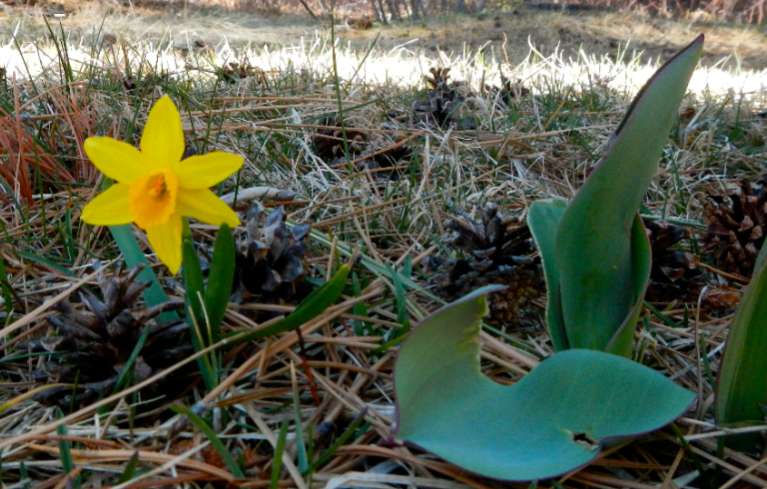
flower• Roger Rosenberger presents “Wildflowers … Here and There” on June 25 at 6pm at the South Lake Tahoe Library, 1000 Rufus Allen Blvd.

• The free Thursday night Live at Lakeview concerts in South Lake Tahoe start June 26.

• River Ranch Lodge & Restaurant will donate 30 percent of diners’ total food bill to the Tahoe Truckee Land Trust on June 12 from 6-9pm. Mention the trust when making reservations, 530.583.4264.

• Ward Fansler it Truckee Donner Land Trust’s director of finance.

• South Lake Tahoe Library is having a stuffed animal sleepover July 9.Bring a stuffed animal or toy to the library at 1000 Rufus Allen Blvd. Library staff will put a name tag on it and take picture of their nighttime adventures in the library. Owners can pick up their animal the next day.


Early wildflower season in Lake Tahoe

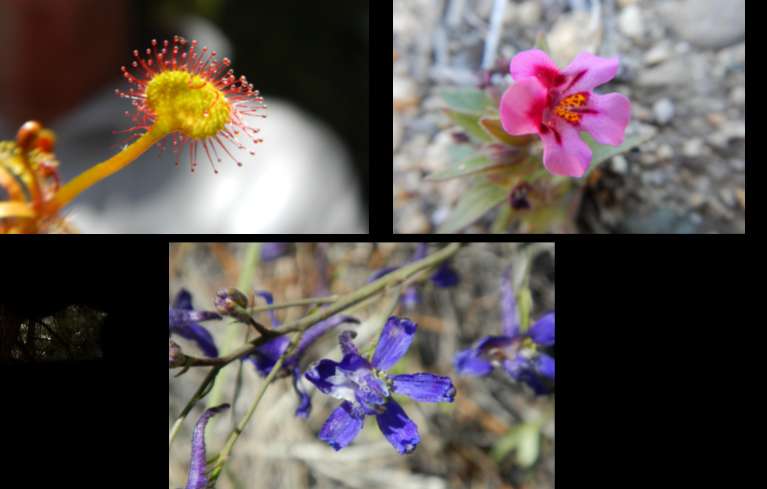
Wildflowers in Washoe Meadows State Park. Photos/Kathryn Reed

Wildflowers in Washoe Meadows State Park. Photos/Kathryn Reed

By Kathryn Reed

MEYERS – Wildflower season in Lake Tahoe is going to be a bit unusual this year because of the drought. There is less of everything now compared to this time last year.

Lisa Berry with the California Native Plant Society on June 1 led two dozen people on an excursion to find wildflowers in Washoe Meadows State Park. And while there were plenty to see, it was better with an experienced guide because some of them are so tiny the average person would just walk on by.

But two flowers that might be more prolific because of the drought are death camas and Sierra wall flowers, according to Berry. She added, that this area is already in midseason when it comes to wildflowers.

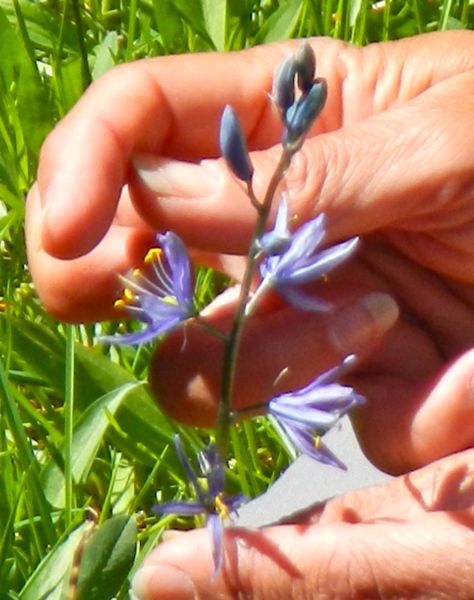
Lisa Berry shows the various aspects of a flower.

Lisa Berry shows the various aspects of a flower.

Some people were rather serious during the three-hour trek as they took copious notes and a multitude of photos. Others admitted to having guidebooks they didn’t find useful, while some said they identify flowers by nothing more than color.

“All of these wildflowers do not like a controlled environment,” Berry told the group. This means they want freedom to grow and not to be given water like one does to flowers at their home.

Sunday was also a lesson in anatomy as Berry went over the different parts of a flower that went well beyond flower, stem and petal. Berry talked about the long stock starwort having “a superior ovary.” There are four main parts of a flower’s anatomy — pistils, stamens, petals, and sepals. Those are all important so they can reproduce.

Nuttall’s larkspur is one of the taller flowers with its deep lavender petals. This is the most common larkspur.

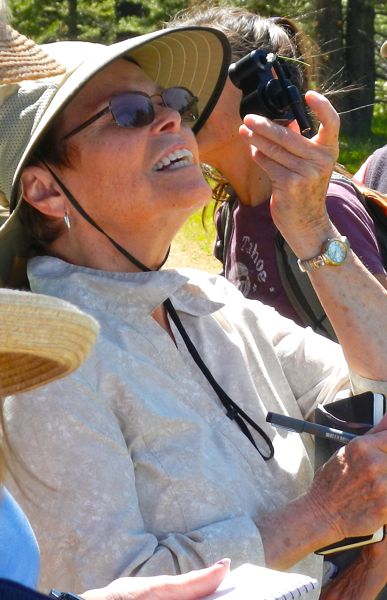
Suzanne Stone uses a discovery scope to better see small flowers.

Suzanne Stone uses a discovery scope to better see small flowers.

For some of the smaller flowers Berry passed around a discovery scope which magnifies the image. The anatomy is much easier to understand this way.

Wild strawberries are tucked just off the trail and about 12 free from where a distinct bear paw print has been left in the mud. And while this fruit, which is part of the rose family, is edible by humans, usually critters get to them before people ever can.

The hike is also a lesson in the importance of vernal pools – like the one that sits in front of the old Celio barn in one of the meadows, as well as fens that filter out sediment.

Some of the other flowers along the walk included graceful phlox, paintbrushes, star lily, cinquefoil, ladies tresses, dwarf monkey flower and pussypaws.

Washoe Meadows Community organized the free excursion.

“We like to get people to know about the park,” Lynne Paulson with the community group told Lake Tahoe News.

Washoe Meadows Community is fighting California State Parks over its desire to move part of Lake Tahoe Golf Course into the park area. Berry said it would be a mistake to encroach on this area with its wild flora.

—-

Notes:

• Lisa Berry is teaching Wildflower Hikes at Lake Tahoe Community College in July. The course number is WLD-137C.

• The Lake Tahoe chapter of the California Native Plant Society is online.

• More info about Washoe Meadows Community is online.


Letter: Meyers deserves more than political hyperbole

To the community,

I love my old truck even though it’s a little unsightly. It always gets me there and back, gets good gas mileage and it’s paid for. It is not the end of the world if I spill a little paint in the truck bed or load a river-wet dog into the front seat. Indeed, my yellow Lab believes stoplights are made for shaking.

I can be seen on any summer day, at any red light, with muddy water dripping from my face and arms, and a spiky-wet yellow dog laughing next to me.

Just last week, I was disheartened to hear, yet again, from one of our public servants, that “The Meyers people want a bikeable/walkable community so there will be no need for cars”. No, we never said that. However, the county and TRPA did say that and repeat it every chance they get. What was actually said at the meetings I attended was that we would like to have our bike paths finished.

Good grief, Pat Lowe would roll over in her grave if she knew how many grants were applied for to finish a bike path that was essentially paid for 20 years ago. As long as our bike paths remain unfinished, these “sustainable” groups and agency consultants will keep applying for grants and get them.

I also went around and around with the county regarding zone changes in Meyers. My shop was in the Commercial/Light Industrial zone, one of four separate zones in our commercial corridor. The TRPA’s Regional Plan update changed all four zones to one zone called Town Center, which is mixed use: residential, commercial, industrial, retail and tourist accommodation, all thrown together in a sort of “no-zone” zoning.

I asked what that means and the answer was akin to the old Abbot and Costello skit “Who’s on first”.

It went like this:

“Has my property zone changed?”

“No.”

“This new zoning map shows my property in the Town Center zone.”

“Yes.”

“So, is it Town Center or Commercial/Light Industrial?”

“It’s Commercial/Light Industrial.”

“Then why doesn’t the map say Commercial/Light industrial Zone?”

“Because you are zoned Town Center.”

“What?!”

No, what’s on third.

The walkable part of this bikeable/walkable community sounds all snuggly in theory, but I wouldn’t enjoy being forced to hump my groceries home every day because cars aren’t allowed. It’s simply unrealistic to “incentivize” people out of their cars. In the big city maybe, but not in Meyers. Who really wants to walk to an appointment in a snowstorm? Are we really going to walk to some new transit center, catch a bus to town, walk to another bus stop to catch another bus to Stateline or wherever? Do we really have that kind of spare time? And more important, are wet pets allowed on public transportation?

If you see “multi-use” in a planning document where “multi-use” wasn’t before, pay attention, your property value just changed. Why? Because now, a condo can be built right next door. Wonder how those tenants are going to feel when I fire up my panel saw at 10pm? Just like every other business owner, I work late far more often than I care to admit.

A housing project for seasonal ski resort employees could go in beside the Cabinet Shop. Have you ever experience the decibels of a high RPM power tool called a Router, at say, 6am? I can hear the sheriff’s banging on our doors already. If we can’t do our work in an area that we invested our money and futures on, in an area that was Commercial/Light Industrial but which the TRPA changed over 18 months ago without notification I might add, that, changes our property values and our lives. These small service businesses will be forced to move. Perhaps we don’t contribute enough tax dollars for the agencies liking? Perhaps a large housing project/condo/hotel would keep the TRPA fat for a while, but who is going to fix a frozen pipe or overflowing toilet on a freezing January night? By the time a plumber comes up from Gardnerville they’d be all wet. Which begs the question, are wet agency staffers allowed on public transportation?

Look, we have an outgoing county supervisor that is shoving this bikeable/walkable business down our throats. She has also been working hard to push this Meyer’s plan through, and sadly, will not disclose why this has to be adopted before she leaves office. Every candidate for Supervisor 5 has publicly stated that this plan should be held until after the election. They don’t want to inherit a nightmare any more than we residents do.

There was a private meeting three weeks ago that our supervisor organized to presumably have the six members of the Meyers Community Advisory Council vote this plan forward. As of this writing, the homeowner’s, business owners and residents of Meyers have not had access to this revised Meyer’s Area Plan. Thank goodness this was thwarted by a handful of party crashing Meyers residents who left work, left their important projects to stop this mess. They did not vote that day, nor did the attending MCAC endorse the plan.

I would hate to open the “paper” one day and read that “Meyers is thrilled to have their new area plan adopted and are moving forward to become the nation’s prototype for Pack & Stack living” but if we, as a community, don’t keep our eyes open, it just might happen.

For more information on the current Meyers Area Plan, go online.

Angela Olson, Meyers resident and business owner


Letter: Library measure deserves a yes vote

To the community,

Tuesday is election day. What an awesome opportunity for the voters of South Lake Tahoe to have their voices heard. When the polls close, there will be winners and there will be losers, as is the case with all elections.

That said, if Measure L passes, the number of winners will be immense. A yes vote for continuing the existing parcel tax to fund the library benefits us all by allowing our library doors to remain open, employing our helpful and knowledgeable staff and by giving our community a wealth of services only a library can provide.

If you have yet to cast your vote, please vote yes on Measure L. Let’s guarantee that the South Lake Tahoe Library will remain “the people’s university” – a place available to all, regardless of age, skill level, or ability to pay- making us all winners.

Denise Haerr, South Lake Tahoe


K’s Kitchen: Salsa without fresh tomatoes

By Kathryn Reed

There was a time when the only kind of salsa you could buy was in a jar. And it seldom had much flavor.

Now there are a ton of fresh salsas on the market that can satisfy most any taste.

But sometimes a homemade salsa is what tastes best. But what do you do when it’s not tomato season? The recipe below is the answer to that question. Canned tomatoes this time of year have more flavor than those waxy things being sold in the grocery store. It’s also easier to open a can than it is to dice tomatoes.

This version is rather mild – in my opinion – but ideal if you are sharing with others when you don’t know how much heat they can take. Salsa is also one of those things that just gets better the longer the ingredients meld. For that reason, I would recommend making this at least a day before you plan to use it.

While I used a fresh jalapeno, you could use canned.

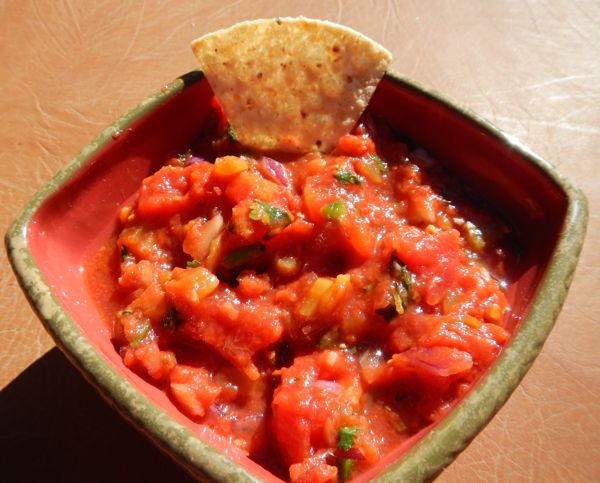
salsa

Salsa (makes 5 cups)

2 14 ounce cans stewed tomatoes

1 8 ounce can tomato sauce

1 large onion, finely chopped

5 green onions, finally chopped

7 ounces diced chiles

3 cloves garlic, minced

¼ C cilantro, chopped

½ tsp ground cumin

1 large jalapeno, minced

Salt and pepper to taste

Mix all the ingredients together. Cut tomatoes so they are bite (or chip) size.


2 Calif. counties trying to form new state

By Reuters

Creating the state of California took a revolt that led to the short-lived Bear Republic, a war with Mexico, and various international treaties. Now, some northern natives hope to take it apart, starting with a couple of ballot initiatives.

Tuesday, voters in Del Norte and Tehama counties will consider a measure calling for separation from California and the formation of a new state. Supporters are hoping to generate momentum for pulling together portions of northern California and southern Oregon into an entity to be called Jefferson. Thomas Jefferson once imagined that part of western North America might develop into a freestanding republic.

Local vexations with state government were cited by Aaron Funk, an aptly named organizer of the movement: “lack of representation, lack of infrastructure, inability to use a lot of our resources.”

Opponents of the measure say it sounds an economic death knell for the area, given its poverty and high unemployment.

Efforts to chop up California boast a long history. Disgruntled residents first proposed a state of Jefferson, also comprising counties in nearby southern Oregon, in the 1940s.

Read the whole story


Whooping cough numbers low in El Dorado, Placer

By Cynthia H. Craft, Sacramento Bee

Pertussis is continuing to spread across California, public health officials said Friday.

However, in El Dorado and Placer counties it’s not so bad.

El Dorado County has reported only two cases so far this year, compared with last year’s total of four. And Placer County has confirmed 37 cases, less than half of the 85 cases reported in 2013.

Sacramento County so far this year has seen nearly double the cases it did for all of 2013.

Health officials say whooping cough is a cyclical disease that peaks every three or four years and then settles down. It was so widespread in California in 2010 that officials made vaccinations mandatory before a child could attend public school – except in cases when parents opted not to get their kids immunized.

Read the whole story


Study: Cyclists more apt to be hit from behind

By Paul Rauber, Sierra

A major study by the League of American Bicyclists finds that the most likely type of fatal bicycle crash is “motorist overtaking bicycle” — that is, being struck from behind.

Such collisions account for 40 percent of cyclist fatalities — far more than the T-bone (10 percent), head-on (8 percent), or right hook (6 percent).

The most likely reason is that the driver was texting/Web browsing/eating/talking on the phone: 42 percent of drivers involved in fatal collisions with cyclists (in cases where driver behavior was noted) were “reported to be operating their vehicle in a careless or inattentive manner.”

The League of American Bicyclists researched as many of the 726 cyclist deaths in 2012 as they could, mostly through reports from newspapers, TV, and blogs; they were able to find information in three quarters of the cases.

Read the whole story