Snippets about Lake Tahoe

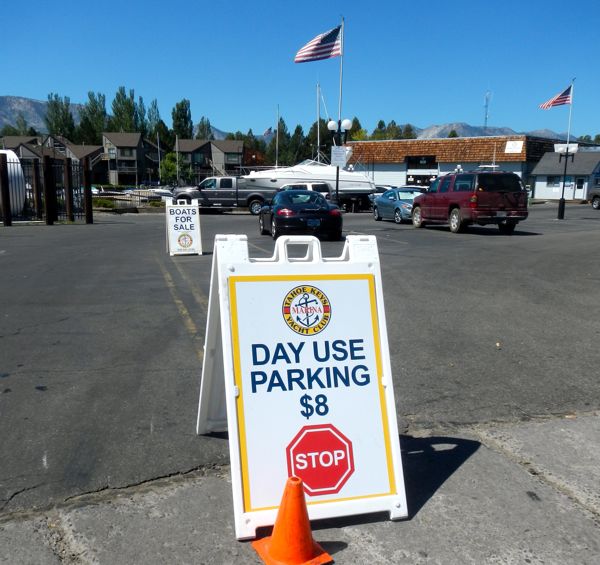
• People associated with the Tahoe Keys Marina helped prevent the city from putting in parking meters on Venice Drive, but this summer they started charging to park in their lot.

• Follow this blog to know where South Shore’s ski legend Glen Plake is as he and others attempt to ski Manaslu in Nepal.

• El Dorado County Board of Supervisors is having a special budget meeting on Sept. 17 at 9am at the Placerville boardroom.

• In August, the cables at Half Dome in Yosemite National Park were listed on the National Register of Historic Places.

• The 18th annual Critical Issues Conference put on by the Business Council of Douglas County is Sept. 27 from 7am-1pm at Carson Valley Inn in Minden.


Time to make sure chimneys are clean

With the cooler nights soon to be upon us, it’s time to make sure your chimney is in safe working order.

We at the South Lake Tahoe Fire Department annually respond to numerous chimney fires, mainly due to creosote buildup in the chimney flue. This type of fire has the potential to extend into your house and do major damage.

To prevent this from happening, the fire department recommends periodic cleaning of your chimney.

Thanks for helping keep our community fire safe.

— Sallie Ross-Filgo


Hear in person what S. Tahoe council candidates have to say

Lake Tahoe News with the South Tahoe Association of Realtors and Lake Tahoe Lodging Association is putting on the first South Lake Tahoe City Council candidates’ forum of the season.

The five council candidates will be at Inn by the Lake’s conference center Oct. 1 at 11am explaining why he or she should be elected.

Hayley Williamson and Sharon Kerrigan with STAR will be the moderators.

The public is encouraged to attend to find out what the candidates’ views are on a variety of topics.

Lake Tahoe News is also publishing Q&A profiles of each candidate, having started on Sept. 10. They will run for five Mondays.


Opinion: TRPA’s 21st century role is fostering regional cooperation

By Joanne Marchetta

The Lake Tahoe Regional Plan update has spurred many important discussions about the vision for Lake Tahoe and what future role the Tahoe Regional Planning Agency should play. As we consider changes to TRPA’s goals and policies, we’re taking a hard look at how the agency can add the most value to our lake and community. TRPA’s role is changing in the 21st century, and our history foretells the need for change.

Since its creation in 1969, TRPA’s role has touched the spectrum of resource protection and land use planning, evolving as needs change. At first, TRPA’s primary role was to stop subdivision sprawl in the Lake Tahoe Basin. However, without regulatory teeth, the agency’s effectiveness was limited and some environmentally harmful developments were allowed in the 1970s. In 1980, the states redefined TRPA’s role by revising the Bi-State Compact and assigning cutting-edge environmental targets called Threshold Carrying Capacities.

Joanne Marchetta

Through the 1990s, TRPA implemented a development code that ensured new buildings and remodels helped move environmental goals forward. However, little was done to repair and restore past damage, nor was much done to apply modern environmental design to buildings that existed before TRPA was created — which make up the bulk of our development today.

With the initiation of the Lake Tahoe Environmental Improvement Program in 1997, TRPA took a leadership role to bring together more than 50 organizations to implement ecosystem restoration. That regional cooperation role continues to define the agency as competition for public funding increases and the need for strategic collaboration across boundaries grows.

TRPA’s collaboration brings a basinwide, coordinated approach to critical programs like transportation, stormwater infiltration, and the emergent threats of aquatic invasive species and catastrophic wildfire. With California’s greenhouse gas reduction bill, SB375, TRPA is providing the coordinated framework for regional compliance. TRPA has secured substantial state and federal grant funds to assist local governments in meeting new mandates while at the same time advancing innovative policies proposed in the Regional Plan update.

Similarly, the Lake Tahoe Total Maximum Daily Load creates a framework for local improvements and the need for regional cooperation. The TMDL in itself is a quantum leap forward for Lake Tahoe. Adopted by the two states and U.S. Environmental Protection Agency in 2011, the program better defines water quality goals by setting pollution reduction targets for each jurisdiction, but it also leaves implementation up to local governments.

TRPA plans to work with the states and local jurisdictions to secure the funds necessary to implement stormwater improvements. While the expense of continued water quality restoration is daunting in the face of shrinking government funds, by working together in this cooperative framework, we have a greater opportunity to position Tahoe as a national treasure worthy of additional government and private investment.

TRPA’s updated land use policies in the proposed Regional Plan update are again moving TRPA’s touch-point on the spectrum of resource protection. To restore the lake’s clarity, our policy updates will help build the public-private partnerships needed to meet TMDL reduction targets. The draft plan provides economic incentives and an improved permitting system for property owners in order to encourage environmental redevelopment of rundown properties. With more permitting responsibilities shifting to local governments, TRPA can focus on important regional environmental issues.

In the area of monitoring and research, TRPA’s unique role is to apply the scientific findings of research institutions and others studying Lake Tahoe. For more than 40 years, TRPA has been using the best available science to shape policies. As new scientific information becomes available, that role has grown stronger. Researchers are monitoring socioeconomic impacts of redevelopment, studying the effects of climate change on Lake Tahoe, and uncovering the factors that affect clarity of near shore waters. TRPA will use scientific findings to update regional policies more frequently in a 4-year cycle in order to ensure regulations don’t become stale.

If you’d like to learn more about TRPA’s changing role in Lake Tahoe’s future, come to our Community Appreciation Day event at our offices on Lower Kingsbury Grade on Sept. 27 from 4-7pm. This event is TRPA’s way of showing our appreciation for the often unknown everyday efforts around the basin that help create a healthy, sustainable Lake Tahoe. For more information, go online.

Joanne Marchetta is executive director of the Tahoe Regional Planning Agency.


TTD board, staff ready to take fresh approach with loop road

By Kathryn Reed

STATELINE – Wiping the slate clean. That was one of the overriding messages the Tahoe Transportation District staff and board wanted people on all sides of the loop road to hear and embrace.

That doesn’t mean the proposed reroute of Highway 50 through the South Shore that has caused so much consternation has gone away. What is means is more ideas will be studied in addition to what was originally on the table.

While a loop road has been talked about since the 1980s, this is one of the few times it has gotten this far in the planning process.

A goal of a loop road -- wherever it goes -- is to make the route through the Stateline casinos a city street so the area would be more pedestrian friendly. Photo/LTN file

Better communication with the public is also a main objective as plans go forward. So many people believed decisions were being made without public input – especially the property owners who would be relocated.

To help move things forward the TTD board on Sept. 14 approved $810,828 for public planning process facilitation, preliminary engineering and design, environmental studies, and economic analysis. This brings the contract with Wood Rodgers to $2,810,828.

TTD Executive Director Carl Hasty said the additional money is available through grants. And he said, “The dollar amount reflects a worst case.” In other words, it could cost less to do the work.

Board member Norma Santiago, who represents El Dorado County, asked how the economic analysis is different from what has been done with the South Shore Vision Plan.

Hasty explained the vision plan economic study covers a larger geographic area and the study TTD has done just involved road analysis. The new study will look at the impact – good and/or bad – on businesses if the loop road were to be put in.

LSA Associates will be responsible for the environmental studies. Economic Planning System Inc. will do the economic study. Wood Rodgers will do the public outreach, preliminary engineering and technical studies.

Hasty noted the South Lake Tahoe City Council wants part of the outreach to include a public workshop that the city would televise.

TTD is the lead agency, but all the residents, housing and businesses that would need to be relocated or go by the wayside are in South Lake Tahoe. Previous city councils have agreed not to use eminent domain again. It would take a four-fifths vote to change that policy. But if all the property owners agree to sell and Caltrans signs off on the project, the city would not have much, if any, power to stop to project from going forward.

On the Sept. 18 City Council meeting is an item about the loop road.

Councilwoman Angela Swanson, who is the city’s rep on the TTD board, said with the council on Tuesday discussing the loop road, Tahoe Regional Planning Agency Regional Plan update, and whether to pursue the Tahoe Valley or Stateline plan, that clarity should emerge as to what the city envisions for the future. Swanson said it is her belief the council will pick the Stateline plan to pursue first, but acknowledged it still requires a vote.

Councilmen Bruce Grego, who is the city’s alternate on the TTD board, and Hal Cole were in the audience. It is unusual for councilmembers to attend meetings like this where one of their colleagues is on the board.

Grego was one of the six members of the public who spoke Friday morning. He is concerned public perception will be that the slate isn’t really wiped clean because the contentious route is still on the table.

It’s on the table so it can be thoroughly vetted – as in beyond the public emotion meter.

Hasty made it clear no additional alternatives have been worked on to date – but they will be going forward. Getting the board to approve the allocation of money and having an outreach plan were the priorities of the past few months.


Don Lane to give talk about Tahoe’s wilderness

Don Lane, a leader who has guided the management of Tahoe wilderness for more than 30 years, will be the guest speaker at the Tahoe Area Sierra Club meeting Sept. 19 at 7pm.

Learn about some of the colorful characters who have shaped Tahoe and the surrounding wilderness. Lane has been responsible for overseeing all of the National Forest campgrounds, beaches, picnic areas, trails and backcountry programs within the Lake Tahoe Basin.

The free event is at Unity at the Lake, 1195 Rufus Allen Blvd., South Lake Tahoe.


Snowboarding pioneer Tom Sims leaves lasting legacy

By Pat Bridges, Snowboarder

On Sept. 12, snowboarding pioneer Tom Sims passed away after suffering a heart attack. Tom’s legacy looms large for anyone who has ever aspired to achieve a sideways descent down snow-covered slopes.

Born Dec. 6, 1950, in Haddon Field, N.J., Tom has often relayed the story of how he conceived of and created the first snowboard while only 13 years old in his junior high school woodshop class.

After traveling to the West Coast, Tom was introduced to surfing and skateboarding and eventually relocated to California and became immersed in what is today known as the action sports lifestyle, going on to create Sims Skateboards and sponsoring Lester Kasai, Jeff Phillips, and Christian Hosoi.

During the early 1980s as the founder of Sims Snowboards, Tom took the initiative of lobbying an apprehensive ski community to allow snowboarders on their hallowed slopes. Given the litigious paranoia of the era, this was no easy task.

Due to the diligence of Tom Sims, Jake Burton, and others, one-by-one, ski resorts began to accept the fledgling sport. According to an interview Tom gave in 1995, “The world has woken up and realized that the best way and most enjoyable way down a mountain is on a snowboard. Prior to 1985, I had to beg a ski area owner to let me on their precious chairlifts. The same guy that kicked me off the hill 10 years ago now begs me for a board for his grandson.”

In addition to his innovative snowboard equipment designs, which include the first kick tails, pro models, women’s specific decks, and folding highbacks, Tom Sims created the world’s first halfpipe of snow at Soda Springs ski area in Lake Tahoe, was featured riding in the opening of the 1985 James Bond film “A View To A Kill,” earned national and world downhill championship titles, and founded one of the most iconic snowboard brands of all time which sponsored influential riders including Terry Kidwell, Shaun Palmer, Chris Roach, Noah Salasnek, Tara Dakides, Marc Frank Montoya, John Jackson, Craig Kelly, Tina Basich, Shannon Dunn, Kurt Wastell, Todd Richards, and an unending list of other notable pro snowboarders.

Nearly five decades after first testing his invention, Tom Sims continued to be an avid snowboarder and the virtues he brought to our sport still ring true. According to Sims, “Riding, just pure riding, is what snowboarding is all about.”


Vail Resorts Tahoe employees give back to community

Employees from Heavenly and Kirkwood mountain resorts spent a day working at Lakeview Commons.

Through Vail Resorts Echo Day on Sept. 8, 179 resort employees, friends and family members planted trees and shrubs, laid sod, installed park benches, picked up trash, and redistributed sand to even out the beach. Volunteers also conducted a neighborhood cleanup around the area.

Launched in August 2010, VR Echo Day is an annual, companywide volunteer day for Vail Resorts employees and their families. Focused on projects that are meaningful in the local communities where the company operates, VR Echo Day hosted seven events for employees and their family and friends last weekend.


Amazon to charge California customers sales tax starting this week

By Dale Kasler, Sacramento Bee

Spurred on by fanatically loyal shoppers like Christine Dugger of Sacramento, e-commerce giant Amazon.com is doing something it spent years trying to avoid.

On Saturday, Amazon will begin collecting sales tax from California customers.

The move will erase some of the price advantage Amazon enjoys over brick-and-mortar stores. But it will allow Amazon to blanket the state with distribution centers – the better to speed orders to consumers such as Dugger.

“I get anywhere from two to four shipments a week,” said Dugger, a new mom who shops Amazon exclusively for diapers, formula, sippy cups and other baby supplies.

With shoppers craving overnight and even same-day delivery, Amazon plans to build a network of warehouses, or fulfillment centers, in California. The first two will be in Patterson, southwest of Modesto, and San Bernardino.

Before the centers could open, the company had to make a deal with Gov. Jerry Brown. So it bowed to political pressure, backing a law requiring Internet merchants to collect sales tax if they have a warehouse or other major physical presence in the state.

Amazon essentially traded taxes for warehouse space.

“They’ve taken a pretty calculated approach,” said Scot Wingo, chief executive of e-commerce technology company ChannelAdvisor. “It’s worth it to bite the bullet, collect the taxes (and) get a fulfillment center within a day of LA, Sacramento and San Francisco.”

It’s doubtful that other online merchants will start collecting when the law takes effect Saturday. They maintain they don’t have a physical presence in California.

Amazon, more than other Internet retailers, is in a rush to build warehouses.

That’s true outside California, too, prompting Amazon to give ground on the tax issue in multiple states. The company still drives a hard bargain where it can, but is gradually conceding that the era of Internet sales tax is at hand.

In Texas, Amazon closed a Dallas-area warehouse last year rather than collect sales tax. But two months ago, it started collecting the tax and promised to create 2,500 jobs over four years.

In South Carolina, the company agreed to build two warehouses after being granted a five-year tax holiday. After lawmakers killed the deal last year, Amazon halted construction – until the Legislature reversed course.

Amazon is also lobbying Congress in support of a nationwide law that would give states clear authority to tax Internet sales.

Amazon realized it was losing the political battle over taxes and “turned this into a strategic advantage,” said Bryan Gildenberg, an e-commerce analyst with Boston consultant Kantar Retail.

“Kudos to Amazon for making … a really good lemonade out of this brand of lemons,” he said.

Amazon will open at least eight fulfillment centers in the United States this fall, including one in San Bernardino, expanding its distribution capacity by around 25 percent. The Patterson facility opens next spring.

The company offers same-day delivery in 10 U.S. cities, such as New York and Chicago. Wingo said same-day service likely will come to the Bay Area and Southern California once San Bernardino and Patterson are operational. Sacramento is less certain.

Shrinking delivery times is increasingly important in online retailing, Wingo said. Shoppers don’t mind waiting a few days for computers or TV sets, but they want quick turnarounds on smaller items. And they’re willing to pay for speed.

Dugger, like about 10 percent of Amazon’s customers, belongs to Amazon Prime, in which shoppers pay a $79 annual fee and get free two-day delivery on most items.

To her delight, some of the shipments “come the next day,” said the McGeorge School of Law student. “That’s a huge benefit to us.”

Dugger said paying sales tax is her civic duty. Others don’t see it that way, and might stop buying from Amazon once the company starts collecting.

Spencer Christy, a Sacramentan who spends $600 a year buying college textbooks on Amazon, said he’ll now shop elsewhere.

“When you’re a poor college student like me, you have to pinch every penny,” said Christy, a student at Cal Poly, San Luis Obispo.

Overall, however, experts say Amazon’s new strategy will boost sales. Its prices will still be lower than most competitors’, and its speed will enhance customer loyalty.

Building more warehouses does more than just quicken deliveries; it also reduces shipping costs.

“We’re trying to get geographically closer to customers,” Amazon Chief Financial Officer Tom Szkutak told investment analysts recently. Company officials weren’t available to discuss the warehouse strategy for this story.

Geography has always been important to Amazon.

The U.S. Supreme Court ruled years ago that catalog retailers couldn’t be forced to collect sales tax unless they had a physical presence in the state. It’s the reason Amazon’s home office is in Seattle, and not the Bay Area – the company didn’t want to collect sales tax in the state with the most customers.

California legislators for years pursued Amazon on the tax issue anyway, crafting bills aimed at getting around the Supreme Court case. Not only did Amazon represent an estimated $150 million in annual tax revenue, brick-and-mortar stores complained that online retailers had an unfair edge by not collecting tax.

The Legislature passed two bills taxing e-commerce; they were vetoed by former Govs. Gray Davis and Arnold Schwarzenegger.

Last year, though, Brown sided with lawmakers. He signed a bill that said a retailer’s California “affiliates” amounted to a physical presence, satisfying court requirements. Affiliates are websites that earn fees by referring visitors to Internet retailers.

Amazon refused to collect the tax and fired its affiliates. It also launched a ballot fight to overturn the law.

Then the company backed off and agreed to a compromise. The Legislature passed a new law. Amazon would collect the tax, following a one-year grace period that runs out Saturday.

Amazon rehired its affiliates and promised to bring 10,000 jobs to California. The Patterson and San Bernardino warehouses, announced in May, will employ 2,000 workers combined.

Will many other e-retailers collect the tax? Not likely.

The state has queried 200 Internet merchants. About 20 have responded, saying they won’t collect taxes because they don’t have a physical presence in California, said George Runner, a member of the Board of Equalization, the state’s sales tax agency.

That’s a concern for brick-and-mortar retailers, who believe all Internet merchants should have to collect.

“The playing field isn’t level,” said Rachelle Bernstein, tax counsel at the National Retail Federation.

As it opens new warehouses, Amazon has made deals in the past year to collect sales taxes in eight more states, bringing the total to 13.

California: Begins on Saturday.

Nevada: Begins in 2014.

New Jersey: Begins in July 2013.

Pennsylvania: Began on Sept. 1.

South Carolina: Begins in 2016.

Tennessee: Begins in 2014.

Texas: Began on July 1.

Virginia: Begins in September 2013.


Study: Woodchips tilled into soil best for erosion, fire concerns

A three-year study in the Lake Tahoe Basin has determined that tilling aged woodchips into the soil is the most effective way to minimize fire risk and preventing erosion.

Integrated Environmental Restoration Services Inc. in collaboration with Tahoe Resource Conservation District, Meeks Bay Fire Protection District, North Tahoe Fire District, and Homewood Mountain Resort, recently completed study. The goal was to find common ground between landscape treatments that are effective at preventing soil erosion and minimizing the risk of fire.

Different materials and practices were used, like pine needles, aged duff, woodchips, composted woodchips, landscape bark purchased in stores, and duff and wood chips tilled into the soil, for erosion and fire risk.

The materials were exposed to a simulated rainstorm. To test for fire risk, materials were set on fire using a drip torch by firefighters and measured for flame height, rate of flame spread and burn temperature of the different materials.

Of all the treatments tested, the study found that mixing 1 to 3 inches of wood chips into soil to a depth of 4 to 6 inches promotes water infiltration.