Nevada continues to reel from housing crisis

By Jennifer Oldham, Bloomberg

Tamara Harris and her neighbors are gambling that lenders won’t foreclose on their Spanish-style homes in the Las Vegas neighborhood of Southern Highlands.

Harris, 38, stopped paying her mortgage three years ago after her accounting business lost its biggest client and her home’s value plummeted 52 percent. Some neighbors are also delinquent on their mortgages.

“There are so many people like me who aren’t paying their mortgage so they can buy groceries and gas,” said Harris, who was rejected for loan-modification programs. “It’s creating this whole false economy.”

As the nation emerges from the worst housing crisis since the Great Depression, Nevada remains the only state in which the total value of single-family homes is less than the amount owed on them, according to second-quarter statistics released this week by CoreLogic, a Santa Ana data provider.

A 57 percent drop in value since 2006 trapped two out of three Las Vegas residents in homes worth less than they paid and caused a steep decline in property-tax collections that – in a state without income tax – make up a third of city and county budgets.

Multimillion-dollar property-tax losses required Clark County probation officers to take over more juvenile offenders, the county’s school district to deplete its reserves and Reno to cut police officers. North Las Vegas declared a state of emergency in June, citing a 37 percent decline in property-tax revenue, to an estimated $39 million in 2012 from $62 million in 2009.

Lawmakers say they’re concerned that public-sector job reductions will contribute to a second wave of foreclosures in an economy already reeling from the nation’s worst unemployment rate. They are working on programs to help homeowners like Harris.

Housing decline

Other states are also battling high rates of negative equity. About half of homeowners are underwater in Atlanta, Phoenix, Orlando, and Riverside, according to Seattle-based Zillow’s second-quarter negative-equity report.

The impacts of the housing crisis continue to ripple through the Nevada economy.

“We’ve never seen the depth of housing decline we’ve seen in Las Vegas,” said Mark Fleming, chief economist for CoreLogic. “A large majority of Vegas’ housing stock was built during the housing boom and is much more sensitive to negative-equity risk as opposed to California, where a much larger segment of the housing stock was built in prior decades.”

Boom and plunge

Nevada was the fastest-growing state in the country in the past quarter-century, with more than 6,000 people a month moving in during the 2000s. That fueled a boom in housing construction until price appreciation slowed in 2006. Since then, construction has plunged to 1993 levels, with 75,000 jobs lost over five years, according to Colliers International, a Seattle real estate broker.

Home builders think the inventory of existing homes is being suppressed by a law enacted last year that requires banks to present the original deeds of trust before starting foreclosures, said John Oceguera, the Nevada state Assembly speaker and a congressional candidate.

Since AB284 took effect in October, foreclosures have plunged. July’s figures were 71 percent below a year earlier, to 2,827, according to Irvine-based RealtyTrac Inc., a foreclosure-data provider.

“A lot of contractors and developers are uneasy about putting new product on the market – they think there are 40,000 to 50,000 houses out there to be foreclosed upon,” said Oceguera, who said his own home is 50 percent underwater.

Lawmakers and banks need to discuss a program that would reduce the principal homeowners like Harris owe on underwater mortgages in exchange for the lending institution receiving part of the profit when a house sells, he said.

Delinquency concerns


Nevada’s stagnant housing market precipitated a 33 percent decline in property-tax collections since fiscal 2009 in Clark County, which covers an area the size of New Jersey and includes Las Vegas and about 74 percent of the state’s population. The decrease prompted county commissioners to cut 2,000 positions from an 8,505-person workforce.

A 45 percent decline in the assessed value of single-family homes has required the Clark County School District – the nation’s fifth-largest – to cut $500 million from its budget in four years, said Jeff Weiler, the district’s chief financial officer.

In Reno, declining property taxes required the police department to cut its force 31.5 percent, after its budget shrank 15 percent from fiscal 2009, said Deputy Chief Tom Robinson.

To help homeowners like Harris, officials are working on a proposal that would allow the state to acquire and restructure mortgages by issuing bonds backed by private investors, said Johnson, director of the state’s Building & Industry Department.

Johnson said among his biggest concerns is the rate of delinquency among underwater homeowners. One in 6 Las Vegas mortgage holders is 30 days or more past due, according to a July report from SalesTraq, a Las Vegas provider of housing research.



Opinion: Bread & Broth thanks special volunteers

To the community,

Bread & Broth is once again very appreciative of the response of members of the South Lake Tahoe community for their support in providing hot, nutritious meals to the neediest members of our community. From April 30 through July 3h, of the fourteen Monday meals servings, eight of the meals had sponsors who participated in Bread & Broth’s Adopt a Day of Nourishment.

The donors sponsorship of $250, covered the cost of the food, supplies and utilities needed in preparation of serving the meals. In addition to their generous donation, six of the AAD sponsors provided volunteer teams to work side by side with the B&B volunteer staff members in setting up, serving and cleaning up during their Monday sponsorship dinner.

Heavenly Mountain Resort continued their monthly support of B&B by sponsoring three Adopt a Days (May 21, June 25 and July 16) during this three-month period. Once again, the Heavenly volunteers enthusiastically worked side by side with B&B volunteers, with many of the Heavenly volunteers having served at previous Heavenly sponsorships.

On April 30, Hope Lutheran Church of the Sierra hosted the first of two sponsorships that they will be hosting this year. Hope Lutheran Church’s volunteer crew consisted of members of their congregation of which many were regular B&B Team 5 (normally volunteering the fifth Monday of the month) members.

Two new sponsors for the Bread & Broth’s Adopt A Day of Nourishment program were Zephyr Computer and Lake Tahoe Community College. Zephyr Computer owned by David and Judy Ratz sponsored July 2. They were delighted to be involved in helping their community and expressed an interest in sponsoring a future day. Lake Tahoe Community College hosted July 30 by having members of the LTCC administrative and instructional staff act as crew volunteers. Lake Tahoe Community College members are so committed to their support of the South Lake Tahoe community that they have already signed up to adopt Nov. 26.

In addition, anonymous donors sponsored the May 14 and July 23 Monday evening meals.

To find out how your family, business or club/organization can Adopt a Day of Nourishment or make any donation to Bread & Broth, contact Carol Gerard at carolsgerard@aol.com or (530) 542.2876.

The volunteers:

April 30 — Hope Lutheran Church — Kim Blanck, Arlene Wolfe, Mort Meiers, Carolyn Meiers, Juanita Brock, Linda Amundson, Bonnie Driscoll, Julia Martinez and Angie Peart.

May 21 — Heavenly — Frank Papandrea, Jolena Hearn, Nancy McCoy, Barbara Knapp.

June 25 — Heavenly — Barrett Burghard, Brandy Thomsen, Steve Turner, Tom Fortune.

July 16 — Heavenly — Frank Papandrea, Kelly Campbell, Cathie Rahbeck, Wren Buxton, Rick Buxton.

July 30 — Lake Tahoe Community College — Aaron McVean, Kurt Green, Kindred Murillo, Michelle Sower, Virginia Boyar.

Bread & Broth


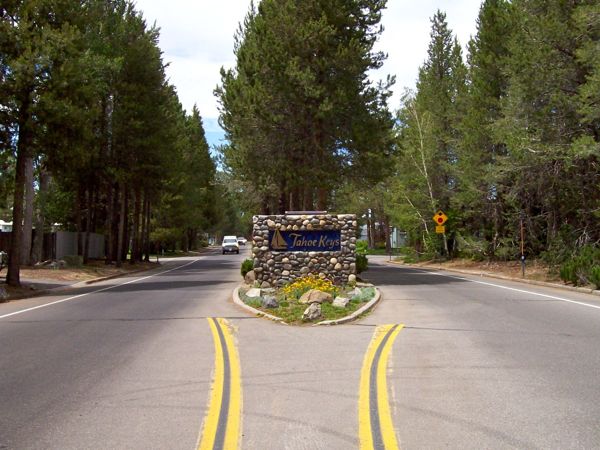
Then and now: Tahoe Keys transforms section of South Shore

This is the Tahoe Key sign in 1963. Notice the lack of trees and houses. Photos/Bill Kingman

What the entrance to the Keys looks like in 2012.

It wasn’t always called Tahoe Keys Boulevard.

This well known street in South Lake Tahoe was originally known as First Street.

The photos represent what the entrance to the housing development looked like in 1963 and 2012.

— Bill Kingman


Members of defunct transit system accused of fraud by bankruptcy court trustee

By Kathryn Reed

Former members of South Tahoe Area Transit Authority, Tahoe Regional Planning Agency, and the law firm of Feldman, Shaw & McLaughlin received more bad news this month from the U.S. Bankruptcy Court in Reno.

David Thompson, the federal bankruptcy trustee, filed a complaint against STATA’s member agencies in which he states that STATA’s members “sought to hinder, delay, and defraud” MV Transportation’s collection of funds that STATA owed MV by depositing more than $1 million of STATA’s funds in a Feldman Client Trust Account.

STATA failed to list the cash in the Feldman Client Trust Account in its bankruptcy filing. Mike McLaughlin was the attorney for STATA.

While transit officials on the South Shore fight over millions of dollars, older bus riders in South Lake Tahoe sit in the sun or snow, depending on the season, without a shelter at BlueGo bus stops. Photo/LTN

The trustee report dated Sept. 7 says that trust account was used to pay TRC, the operator of the BlueGo bus system that replaced MV.

The complaint also states that STATA’s board of directors participated in a scheme to wrongfully transfer STATA’s assets to the Tahoe Transportation District in order to avoid paying MV the money the Fairfield-based company was owed. It also says the records are so poorly kept that it is hard to know what money was transferred when. Depending on when the transfers were made, “they are fraudulent,” Thompson writes.

TRPA’s staff recommended STATA hire MV Transportation to provide transit services – primarily the BlueGo buses. The STATA board did so in November 2008.

According to the trustee, STATA immediately asked MV to provide a higher level of service than STATA could afford. Almost immediately STATA had trouble paying MV for the services it provided.

According to the federal bankruptcy trustee, STATA owed MV approximately $3 million by June 2010. That is the month STATA terminated its contract with MV Transportation. Unwilling to pay MV the money it was owed, STATA filed for bankruptcy in September 2010, disbanded by the end of that year and essentially merged with Tahoe Transportation District.

In the complaint, the trustee states that the participation agreement requires member agencies to contribute additional funds in the event of any budget shortfalls.

The trustee’s complaint asks the court to approve specific judgments against member agencies and others as follows: Feldman, Shaw & McLaughlin, $1,035,197; Tahoe Transportation District, $142,000; South Lake Tahoe, $193,779; Heavenly Mountain Resort, $558,336; Harveys, $26,085; MontBleu, $6,133; Horizon, $3,800; Douglas County, $20,000; and Transit Resource Center of Nevada, $692,669.

In reviewing the court documents, it appears the trustee also asked the court to approve a judgment against all of STATA’s members including the El Dorado County and the TRPA in the amount of $2.29 million, plus interest for which all members would be jointly responsible.

El Dorado County had settled its case with MV, but the trustee is dragging that public body back into the mix by questioning whether that settlement agreement was legal.

No mention of the trustee report was made during the open session of TTD’s Sept. 14 meeting, though it was listed as a closed session item.

Ironically, at that meeting John Busskohl with Keolis Transit America gave a report about how things have been going with BlueGo since taking over the operations July 8, 2011.

Busskohl said when his firm took over 60 percent of the fleet was out of service, but that has since been rectified. Three terminals instead of one are being used. An automatic vehicle location system has been installed. This summer’s East Shore Express was deemed a success.

Financials, according to TTD Executive Carl Hasty, are positive. The financials for the past year will be revealed and discussed at the October TTD board meeting.

As for the STATA case, the defendants now have an opportunity to respond to the charges leveled by the court trustee. U.S. Bankruptcy Court Judge Gregg Zive in November could make a decision to dismiss the case or send it to trial.


Washoe County, state tax revenue dispute resolved

By Sean Whaley, Nevada News Bureau

CARSON CITY – The state Board of Examiners voted to settle a legal dispute with Washoe County over local tax revenue taken by the 2009 Legislature to balance the state budget.

The settlement provides an immediate payment of $1.25 million to the county, with another $6 million being allocated later for major road maintenance projects. As part of the agreement, the road projects will be moved up in the state’s funding priorities.

The original legal claim submitted in 2011 was for $21.4 million, but the county later revised its demand to about $17.9 million.

Gov. Brian Sandoval, a member of the board, called it a good deal for the state since the projects to be paid for with state highway funds have already been approved for funding by the state Transportation Department. The agreement also makes it clear there is no admission by either side that there is fault or a legal liability for the settlement, he said.

The cash portion of the settlement equates to about 7 cents on the dollar, Sandoval noted.

If the highway piece of the settlement is included, the deal provides about 40 percent of what the county had sought in its revised request, said state Budget Director Jeff Mohlenkamp.

“It’s a good settlement and I think it’s important to recognize, as I said, that there was no admission of liability by either party,” Sandoval said after this week’s meeting. “I don’t think it’s ever a good idea to be having litigation or disputes between governmental entities.”

Washoe County submitted the claim last year, citing a Nevada Supreme Court ruling in May 2011 that said the Nevada Legislature improperly took $62 million in 2010 from the Clark County Clean Water Coalition fund to balance the state budget. The county said the ruling applied to actions taken by lawmakers in 2009 as well.

Clark County has also submitted a claim based on the same legal decision, and is seeking $102.5 million in local taxes also taken by the 2009 Legislature. But the county in June opted to sue rather than continue with negotiations.

Even so, Sandoval said today that negotiations continue with the county to resolve the dispute, which occurred prior to his term as governor.

But the state has just recently received a new claim, from the city of Reno, based on the same Supreme Court ruling.

Reno City Manager Andrew Clinger appeared before the board to briefly discuss the claim filed for $2 million. The settlement with Washoe County approved today did not provide any direct benefit to the city, he said.

Sandoval said the claim will be reviewed by the Attorney General’s Office as has been done with the other requests.


Deer mice being killed in Yosemite because of hantavirus outbreak

By Reuters

Yosemite National Park has begun trapping and killing deer mice whose growing numbers may have helped create the conditions that led to a hantavirus outbreak that has infected eight park visitors, killing three, public health officials said on Tuesday.

Yosemite officials in recent weeks have warned some 22,000 people who stayed in the park in California over the summer that they may have been exposed to the rodent-borne lung disease, which kills over a third of those infected.

The U.S. Centers for Disease Control and Prevention has also sounded a worldwide alert, saying visitors to the park’s popular Curry Village lodging area between June and August may be at risk. Park officials have closed nearly 100 tent cabins in Curry Village infested with deer mice, which carry the virus.

“From an ecological perspective, it appears that there was an unnaturally high population of rodents in the area. We are being proactive and reducing the population,” Danielle Buttke, a veterinary epidemiologist for the National Park Service, told Reuters.

Buttke said the mice were being trapped in several areas of the park for monitoring purposes but believed they were being killed only in the Curry Village area, using snap traps.

Seven of the eight people confirmed to have been infected are believed to have contracted the virus in the village, while one stayed elsewhere in the park.

Public health officials trapped three times as many deer mice in the park’s Tuolumne Meadows last week than were caught in a 2008 period, indicating that the deer mice population has grown, said Dr. Vicki Kramer, chief of vector-borne diseases at the state Public Health Department.

Dr. Charles Chiu, an infectious disease specialist at UC San Francisco, said the growing deer mice population might help explain the outbreak.

“This could be an explanation for why we’re seeing this particular cluster,” Chiu said. “What you may have is the perfect storm of conditions: increasing prevalence of deer mice and campers with the same or common exposure to (lodging) infested with deer mice.”

Officials are concerned that more Yosemite visitors could still fall ill because the virus can incubate for up to six weeks after exposure. There is no cure for the syndrome but early detection and hospital care increase survival rates.

The virus can lead to severe breathing difficulties and death. Early flu-like symptoms include headache, fever, muscle aches, shortness of breath and coughing.

Last month, authorities began trapping rodents in Yosemite to examine whether deer mice there were more likely to be infected with the hantavirus than deer mice elsewhere, Buttke said, but found they were not.

When authorities first identified the Yosemite hantavirus outbreak, rangers balked at the idea of trying to exterminate the deer mice, arguing that the mice play an important role in the Yosemite ecosystem.

But when they realized the deer mice population had swelled, they decided to thin it in an effort to rebalance the ecosystem, Buttke said. She theorized that weather combined with visitors bringing in food led to Yosemite’s abundance of deer mice.

Deer mice release hantavirus in their urine and droppings. People can contract the virus when they breath contaminated air. Children rarely contract the virus, probably because it is often transmitted when adults sweep or vacuum droppings or cut and stack wood.

People usually contract the virus in small, confined spaces with poor ventilation. They also can become infected by eating contaminated food, touching tainted surfaces or being bitten by infected rodents.

The disease has killed 65 Californians and some 600 Americans since hantavirus was identified in 1993, but it has never been known to be transmitted between humans.


Smokers being offered incentives to not light up

By Cynthia H. Craft, Sacramento Bee

The federal health care overhaul is a complex structure woven through with carrots and sticks, incentives and disincentives.

Physicians get payments to implement sleek new electronic health records systems. Hospitals get penalized financially if too many patients require readmittance.

Now, in California, an Affordable Care Act grant is offering select Medi-Cal enrollees $20 retail gift cards in a leading-edge, anti-smoking trial. All they must do is call the California Smokers’ Helpline and complete the sign-up protocol to participate in telephone counseling sessions.

Skeptics may dub it dialing for dollars. But experts say the program may show monetary incentives to be an important tool in improving health and reducing the growth of health care costs in the long run.

An initial pilot project already finished in Sacramento showed positive results, doubling the number of calls to the Smokers’ Helpline, said Elisa Tong, an associate professor at UC Davis Medical Center and a member of the outreach team for the project.

Sacramento was a natural place to begin because it has an “embarrassingly high” number of Medi-Cal enrollees with health complications who smoke, Tong said. Medi-Cal is California’s version of the federal Medicaid program for people with low incomes or who have certain disabilities.

Compared with the statewide average of about 12 percent, 35 percent of at-risk Medi-Cal consumers in Sacramento are smokers.

California’s Department of Health Care Services recently expanded the pilot project statewide, to further test the effectiveness of offering financial incentives. Researchers involved in the project will identify Medi-Cal patients with chronic conditions and invite them to take part.

Within that group, some will be selected in a randomized, controlled trial to receive certificates of completion that can be traded for free nicotine patches. Another slice of the larger group will be eligible to receive $10 retail gift cards for each relapse-prevention call they complete to the hotline.

Also being tested is another tier of incentives for those who tried but were unable to quit smoking. This would allow a selected number of beneficiaries to receive up to $40 to re-enroll.

Broadly speaking, the California project is but one of many layers of carrots and sticks nestled in the Affordable Care Act with the aim of re-engineering the nation’s health care system into one of better outcomes, fewer mistakes and lower costs.

California received a federal grant of $10 million to pay for the program, which will target 75,000 Medi-Cal members over five years of incentives and study.

The state was deemed well-positioned for the project because the California Smokers’ Helpline has been up and running for 20 years at the University of California, San Diego.

Controls and tracking methods are in place to prevent fraud, Tong said, and the trained hotline counselors are able to weed out profiteers who may be attracted to the program by the $20 gift cards.

The gift cards are good at major retailers such as Walmart, Target and Safeway, said Norman Williams, deputy director for public affairs at the state Department of Health Care Services. Williams said it makes sense to seek out ailing Medi-Cal members who smoke to try to change their behavior.

“If you have a chronic disease, we are going to pay especially close attention to you,” Williams said, noting that treating tobacco-related disease absorbs 11 percent, or $15 billion, of Medi-Cal’s budget.

Tong hopes the hotline program will take hold in California’s rural areas, which have smoking rates among Medi-Cal enrollees as high as 45 percent.

“It’s long overdue in rural California,” she said. “We need to address this quickly.”

A 2004 study in the American Journal of Preventive Medicine determined that economic incentives to change consumers’ preventive health behaviors worked 73 percent of the time.

“Economic incentives are effective in the short run for simple preventive care, and distinct, well-defined behavioral goals,” according to the abstract of the study. “Small incentives can produce finite changes, but it is not clear what size of incentive is needed to yield a major sustained effect.”

Tong said California researchers hope to pull together a comprehensive picture of what combination of financial incentives are most effective at changing behavior.

Already, she said, the project is “helping to generate a lot of discussion about how this program can become a model for the nation.”


Hantavirus remains a mysterious disease despite recent incidents

By Kate Mather and Anna Gorman, Los Angeles Times

LOS ANGELES – In his 30-plus years as a doctor, Bruce Tempest had never seen anything like it.

A Navajo man having trouble breathing showed up at the emergency room of a small hospital in Gallup, N.M. Less than an hour later, he was dead. The man had been young, athletic and otherwise healthy. His fiancee had died days before, also from sudden breathing problems.

“This is something different,” Tempest, now 76, remembered thinking of the 1993 illnesses. “It just doesn’t fit.”

Tempest contacted area doctors, looking for other cases. Then he asked the University of New Mexico for help. Soon, the patients were being flown to Albuquerque. They arrived with chills and aches but soon were in complete respiratory distress. Physicians were at a loss: Was it sepsis? Influenza? Bubonic plague?

Doctors had a medical mystery, and they knew it had to be solved quickly. Patients were showing up at the hospital “not feeling well one day and being dead the next,” said Gregory Glass, an epidemiologist at Johns Hopkins University.

When the cases hit television, a lucky clue came in. A doctor called and said the illness sounded a lot like a virus he had observed in Korea in the 1950s. It was called hantavirus.

This summer’s hantavirus outbreak in Yosemite National Park is as a sobering reminder: Mystery still surrounds the disease.

“The biggest mystery is we don’t have a good explanation,” said Barbara Knust, a U.S. Centers for Disease Control and Prevention epidemiologist. “For Yosemite, why this year of all years is there an increased number of cases?”

Nearly 20 years after being identified in the U.S., hantavirus is better understood but no less vexing. Researchers now know it causes hantavirus pulmonary syndrome, a severe respiratory disease. It is transmitted through the droppings and urine of deer mice, and not through person-to-person contact. Treated early, patients have a better chance of survival. But there is no cure, and more than one-third of patients die.

The Yosemite cases follow the pattern: Three of the eight visitors who fell ill died. Health officials have called the Yosemite outbreak unprecedented – more than one hantavirus infection from the same location in the same year is very rare.

The National Park Service has closed the cabins believed to be at the heart of the outbreak. State and federal scientists are scouring the park, trapping mice and conducting laboratory tests. Public health officials are warning doctors worldwide to watch for possible symptoms, which can be confused with the flu and can take weeks to show up.

And the California Department of Public Health said the risk of new cases remains, even as the summer surge of visitors wanes.

“These are not isolated cases in the hospitals in the mountains,” said Daniel Uslan, assistant professor of infectious diseases at the UCLA medical school. “These are potentially people coming back to Los Angeles or other urban centers where doctors are perhaps not as aware of the infection.”

Officials investigating the Yosemite cases have more to go on than a lucky tip. But just like in 1993, they are under pressure to quickly learn more about a disease that is pervasive and deadly.

As patients continued dying in the Four Corners region, doctors and epidemiologists had to accomplish three monumental tasks: pinpoint the cause of the illness, determine why only some people were getting it and track down its origin.

The CDC analyzed tissue from survivors and those who had died. Researchers tested for antibodies against viruses and hoped for a hit, said Glass, the Johns Hopkins epidemiologist. When they tried hantavirus, they got a match.

Still, they didn’t know why certain people got sick and others didn’t. Paul Ettestad, part of the CDC team, visited homes throughout the Four Corners and asked relatives what the victims did in the days before they got sick. He also compared the victims’ homes with neighbors’ homes.

Researchers also tried to find the source of the disease. Knowing that rodents carried hantavirus, they trapped hundreds of small mammals and found the virus in nearly one-third of the deer mice, according to the CDC. By year-end, scientists isolated the specific type of hantavirus that caused the Four Corners cases and grew it in a laboratory.

“From an epidemiologist’s point of view, this was amazing,” Glass said. “We use it as a textbook case of how to do a really good epidemiology.”

The CDC started tracking every case of hantavirus pulmonary syndrome across the U.S. In 1993, 48 people became ill. From 1994 to 2011, an average of 28 people got the disease each year.

Cases are more common in the Southwest but still are rare, said Elisabeth Lawaczeck, a public health veterinarian for the state of Colorado. “You have to be in the wrong place, in the wrong time, do the wrong thing – and inhale,” she said.

Scientists still don’t know why certain deer mice get hantavirus or how they spread it. And even though deer mice are ubiquitous, they haven’t figured out why outbreaks occur in certain areas at certain times.

The Four Corners cases were eventually linked to heavy rainfall that year, which meant more vegetation – and more food – for deer mice, causing a population boom. There were 10 times more deer mice in the Four Corners in May 1993 than a year earlier, according to the CDC.

Yosemite may provide more clues in the long-running hantavirus mystery. Public health officials and epidemiologists are compiling information about the cases, hoping they can determine the deadly combination of factors that led to the outbreak.

The construction of the cabins in Curry Village – with more insulation and less ventilation – may have contributed, said Stan Deresinksi, an infectious disease specialist at Stanford University School of Medicine. Seven of Yosemite’s eight hantavirus cases originated in those cabins.

Or perhaps there was something different about this year’s deer mouse population. Were there more of them? Were they clustered closer to humans? Whatever the reason, experts warn that deer mice aren’t going anywhere, so hantavirus isn’t either.

“The Sierra are their home, and there are 4 million visitors a year to Yosemite,” Deresinksi said. “It is amazing there haven’t been more cases.”


Nevadans being offered chance to learn about AIS

The Tahoe Resource Conservation District wants to teach all boaters, anglers, paddlers, swimmers and water-lovers! how and why to prevent the spread of aquatic invasive species.

Asian clams, zebra and quagga mussels and invasive weeds like Eurasian water milfoil are just a few of the plants and critters that currently threaten your local waters.

These pests could cost millions to the local economy and irreparably damage our environment, affecting everyone in the region.

Staff from Nevada Department of Wildlife will be discussing the NV Watercraft Decal program that will go into effect Jan. 1.

The meeting is Sept. 26 at 6:30pm at REI Reno, 2225 Harvard Way.


Tara Llanes Classic mountain bike event returning to Northstar

Registration is open for the 2012 Tara Llanes Classic at Northstar on Sept. 29-30.

TLC offers cross country, super D and industry cup (a team event for anyone working in the mountain bike industry) events, as well as a Shimano kids race and a screening of “Where the Trail Ends”, a Red Bull media house and freeride entertainment feature-length film by Derek Westerlund.

First held in 2007 to help Tara cover her medical costs after a crash left her paralyzed from the waist down that ended her 15-year racing career, the TLC now raises funds for spinal cord research and for mountain bikers who have suffered life-altering injuries.

In 2011, the event raised more than $40,000 for a variety of groups, including the Reeve-Irvine Research Center, the Center of Restorative Exercise and the Tara Llanes Road to Recovery Fund. The Tara Llanes Road to Recovery Fund provides injured mountain bikers financial grants for equipment, rehabilitation, and long-term disability assistance. The event raises funds through sponsorship, registrations fees, retail sales and a successful raffle each year.

Event descriptions and registration information may be found online.