Sandoval wants funds for long-term student performance data system

By Sean Whaley, Nevada News Bureau

CARSON CITY – Gov. Brian Sandoval will support some level of funding in his next budget to continue the work of implementing a statewide longitudinal data system to allow for the measurement of individual student performance over time.

Sandoval, in a Sept. 13 letter to Sen. Barbara Cegavske, R-Las Vegas, the chairwoman of Nevada’s P-16 Advisory Council, said he supports the group’s recommendations for moving forward with the measurement tool, which will help improve student achievement and provide for better teacher evaluations.

“I commend the council for developing a set of recommendations that is based on a high level of cross-agency collaboration and I thank them for their hours of research and dedication to our state’s children,” Sandoval said. “The council’s work related to the development of Nevada’s SLDS is critical to education in our state. I am committed to providing leadership and support to this project, and my staff will continue to assist Senator Cegavske and the council on this important project.”

Additionally, Sandoval informed the council he will submit a budget appropriation bill during the 2013 legislative session that allocates funds to support the development of Nevada’s SLDS, though it is unclear precisely to what extent the state will be able to financially support the development of the state’s SLDS at this preliminary stage.

Sandoval noted in the letter, however, that, “the success of important education reforms hinge on the establishment of a SLDS, so you have my commitment that I will work hard to ensure the appropriate level of funding.”

Along with supporting the recommendations, Sandoval asked the P-16 Advisory Council to convene a data governance committee to establish a cross-agency data governance structure.

Sandoval also notified Cegavske that he has submitted a bill draft request for the 2013 legislative session that will propose the expansion of the P-16 Council to include representatives of, among others, the Department of Employment, Training and Rehabilitation as well as grant the council policy authority for the state’s SLDS.

In its report adopted in July, the council suggested that as much as $4 million in state funding would be needed to continue the implementation of the data system, which is intended to track individual student performance from preschool through entry into the workforce.

Sandoval issued an Executive Order on Oct. 7, 2011, asking the council to take the necessary steps to create the system to track students, following the lead of other states as part of an effort to reform education and improve student performance in Nevada.

The effort got a boost in June when the Nevada Department of Education was awarded a $4 million grant from the Institute of Education Sciences (IES) to develop the SLDS. Nevada was one of 24 states to receive funding to support the design and implementation of its tracking system.

The three-year grant will create and assign a Unique State Personal Identifier so that students, teachers and those in the workforce can be followed from pre-school through grade 12, into post-secondary education and on into the workforce.

The grant will also be used to fund an in-depth technical needs assessment at the state Department of Education, the Nevada System of Higher Education and the state Department of Employment, Training and Rehabilitation to determine solutions for implementing the enhanced SLDS. The assessment is expected to be completed by June 2013.

But the P-16 Council, in its report, said that state funding will be needed to accomplish the solutions identified in the assessment. In addition, funding will be needed to incorporate early childhood data into the SLDS – a project that is not included within the grant.



Study: Reading literature a good way to stimulate brain

By Corrie Goldman, Stanford University

The inside of an MRI machine might not seem like the best place to cozy up and concentrate on a good novel, but a team of researchers at Stanford are asking readers to do just that.

In an innovative interdisciplinary study, neurobiological experts, radiologists and humanities scholars are working together to explore the relationship between reading, attention and distraction – by reading Jane Austen.

Surprising preliminary results reveal a dramatic and unexpected increase in blood flow to regions of the brain beyond those responsible for “executive function,” areas which would normally be associated with paying close attention to a task, such as reading, said Natalie Phillips, the literary scholar leading the project.

During a series of ongoing experiments, functional magnetic resonance images track blood flow in the brains of subjects as they read excerpts of a Jane Austen novel. Experiment participants are first asked to leisurely skim a passage as they might do in a bookstore, and then to read more closely, as they would while studying for an exam.

Phillips said the global increase in blood flow during close reading suggests that “paying attention to literary texts requires the coordination of multiple complex cognitive functions.” Blood flow also increased during pleasure reading, but in different areas of the brain. Phillips suggested that each style of reading may create distinct patterns in the brain that are “far more complex than just work and play.”

The experiment focuses on literary attention, or more specifically, the cognitive dynamics of the different kinds of focus we bring to reading. This experiment grew out of Phillips’ ongoing research about Enlightenment writers who were concerned about issues of attention span, or what they called “wandering attention.”

Phillips, who received her doctorate in English literature at Stanford in 2010, is now an assistant professor of English at Michigan State University. She said one of the primary goals of the research is to investigate the value of studying literature. Beyond producing good writers and thinkers, she is interested in “how this training engages the brain.”

Read the whole story


Blood drive in South Tahoe

Barton Memorial Hospital Auxiliary is sponsoring a blood drive Oct. 1 from noon-6pm.

The drive is at Embassy Suites in South Lake Tahoe.

Be sure to eat and drink before donating.

For more information, call Dan Kerr at (775) 781.5343.


BASE jumper dangles in tree for 5 hours

By Brian Hickey, KCRA-TV

AUBURN — A BASE jumper was rescued under the Foresthill Bridge on Tuesday morning after his parachute got snagged in a tree.

CalFire rescuers were called to the bridge at 8:55pm Monday when the jumper’s parachute tangled in the branches of a 150-foot-tall pine tree.

The 26-year-old man from Canada was left dangling more than 100 feet above the ground for five hours while rescuers came up with a plan to lower him.

Rescuers used a bulldozer to dig a road to the base of the tree.

A PG&E truck with a 90-foot boom was then called in to raise rescuers up to the victim.

They were able to get the man out of his harness just after 2am, but left the parachute hanging in the tree, according to incident commander Jeff Brand.

The man was treated for minor injuries and then handed over to the Placer County Sheriff’s Office to be charged with illegally jumping from the bridge.

A friend of the victim was also in custody following the failed stunt.

CalFire rescuers said they were in the canyon for a similar rescue just a few months earlier.

Foresthill Bridge is the tallest bridge in California at 730 feet above the canyon floor, making it a popular destination for thrill seekers.


Snippets about Lake Tahoe

• The 34th annual Freaker’s Ball at MontBleu is Oct. 27.

• Lake Tahoe South Shore Chamber of Commerce is putting on South Lake Tahoe City Council candidates forum Oct. 10, 6-8pm at the theater at South Tahoe High School.

• Shuttle passes for SnowGlobe go on sale today and the lineup will be released, too.

• The Bicycle Advisory Committee of the South Lake Tahoe Recreation Facilities Joint Powers Authority will meet Oct. 5 from 9-11am at Lake Tahoe Airport.

• South Lake Tahoe library is having a Halloween Party on Oct. 27 at 2 pm. Wear costumes. For more info, call (530) 573.3185.


Locals write what they like about Lake Tahoe

What do you appreciate about Lake Tahoe?

That was the question Live Violence Free asked people at this month’s Lifestyle Festival at Bijou Community Park.

Here is what people had to say:

1. Tahoe is an amazing place for family and friends. We had a lovely day at the Barton Health Fair, thanks for everything.

2. My teacher Mrs. Rider is awesome because she is fun.

3. I appreciate Tahoe because Tahoe folks appreciate natural experience over manufactured experience. Ben L

4. LTCC-CDC is the best daycare in Tahoe. The preschool teachers ROCK! And so do all the teachers.

5. The Grocery Outlet Rocks!

6. Thank you South Lake Tahoe – Michael Hair Salon

7. Thank you to Moxy Fitness for giving me direction and the support I needed to make a healthy, positive change in my life. You are all an inspiration and I wouldn’t be where I am today without the Moxy gals.

8. Thank you Tahoe – Mikey Jr.

9. School is cool.

10. Thank you for a wonderful School District for our kids; they help keep them safe and inspire them.

11. Live Violence Free, one of the finest programs! We moved to Tahoe from one of the most difficult situations possible. They helped us start over, feel safe and become proactive again. I don’t know what we would have done without them! A thousand thank yous!!! – A.M.F.

12. To Sharon Bishop of the Community Clinic at Barton for everything she does and who she is! – Stephanie Yuzbick

13. Live each day as it were your last.

14. Tahoe is beautiful place to live. There a lot of outdoor activities, good air, small town, most people are friendly, and a good place to raise children. – Maria

15. I love the dog park!

16. I appreciate Tahoe because it is a beautiful place to live and the community likes to stick together.

17. We get along really well as a town.

18. Weather is great here in July, August and September.

19. Lake Tahoe has a great community of people helping each other and living a healthy lifestyle.

20. I called a representative from South Shore Glass to my home to give me an estimate to replace some damaged windows. He noticed the brand of windows I had and said they were warranted for 10 years and that the manufacturer would likely replace them for free. He easily could have given me a bid and gotten the work but he placed a higher value on being honest and helpful. Thank you South Shore Glass!

21. Barton is a great place to work – Jennifer W

22. City of South Lake Tahoe – Thank you for the outpouring of love and support for my son, Ansel White. He was in a motorcycle accident on Memorial Day and the community has come together to send so much love and prayer that he was released from the Reno Hospital and is again home with family and friends. Much love to all!

23. I’d like to thank Mark Salmon, coach of soccer club South Lake Tahoe teams Hawks and outlaws. Your time and support for the youth of this community is immensely appreciated! – Jacqui B

24. I would like to give a BIG thanks to AAUW South Lake Tahoe Branch, for giving young girls like myself the opportunity to go to Tech Trek 2012 at UC Davis. – Angelika C.

25. I appreciate our local South Lake Tahoe Police Department.

26. I’m so lucky to live in South Lake Tahoe and work for Barton Health!

27. Living in Tahoe is awesome – we love its beauty!

28. Pastor Robb Orr has done so much for so many people in his 25 years with the Hospice Program!

29. Tahoe has the most beautiful landscape! We love the lake, trails, and mountains!

30. Congratulations Shelia Kennedy, you’re the best!

31. I love walking out my door and being in the forest in five minutes or less to walk or snowshoe. – JoAnn Conner

32. I love bike riding in the mountains!

33. I appreciate all my coworkers at Live Violence Free for their dedication to abuse survivors in our community – Heather Knox.


Opinion: Advertising is more than a pretty design

By Megan Murray

In Lake Tahoe, September and October is a time when marketing departments at the ski resorts, lodging properties, casinos and rental companies start buying advertising media in preparation for their winter tourism advertising campaigns. At the bigger companies around Tahoe, its likely that the people buying advertising media have a strong background in media buying so they are well equipped to make informed decisions about planning and buying media for their campaigns.

Unfortunately, for smaller companies and local small business owners, many people don’t have an education or any background experience in advertising media buying. This leaves these business owners at a disadvantage when meeting with advertising sales reps and discussing their advertising needs .

We thought this would be a good time to provide an overview and description of common advertising media terminology and key strategies for buying various types of advertising media in Lake Tahoe. We’ll start with defining the most common terms used by sales reps selling online advertising media buying.

This list covers the more basic terms one must understand when engaging in an online media buying discussion:

Display Ads – Display ads are the same as banner ads. The common box shaped ads seen on websites. Display ad is the official term used in the online media world. Display (banner) ads are usually sold in standardized sizes regardless of what website you are advertising on. This includes: skyscrapers, leader boards, large boxes, etc.

Pop Up Ads — These ads are more intrusive online ads that appear to “pop up” in a new browser window. Flash based “floating ads” and “slide-in ads” are also considered other forms of pop-up ads.

Pre Roll Video Ads – Short form online video advertising targeted to relevant website content & audiences via a website video player or video websites like YouTube. An advertiser’s short video ad will play prior to, during or after the featured video ­content.

Video Ad Overlay – A video ad overlay is displayed on a video player on a given website. The ad overlay is seen as a semi-transparent banner, typically across the bottom of the video screen. The banners appear during the course of a video’s broadcast, displaying an ad unit to the viewer of the video content.

Above The Fold — This is in reference to the part of a computer screen visible to user before the user has to scroll down to see more of the screen on their monitor.

Landing Page — The designated web page on an advertisers website as the final destination of a click through from a banner ad in the advertisers online campaign. A unique landing page is usually designed for a specific promotion and directly correlate with the creative being served in the banner ads, typically with the intent of compelling the visitor to make a desired action.

Geo Targeting — Refers to serving up online ads to users based on their geographical location.

Behavioral Targeting — Is the practice of targeting users and serving up ads based on the user’s unique online web browsing activity, such as the pages they’ve already visited or their keyword search histories. Behaviorally targeting allows for the serving up of ads that are more relevant to the interests of a person viewing a particular web page.

Contextual Targeting — Ads that are served based on the actual content of the particular webpage a viewer is visiting. Contextual ads scan the text of a Web site for keywords and then serves up ads to the Web page based on what the user is viewing,

IP targeting — Is the ability to serve online ads based on a user’s IP address.

Impressions — The number of times an online advertisement is served by the website publisher. Most online publishers sell ad space according to the number of impressions served. Impression is a measure of the number of times an ad is displayed, whether it is clicked on or not. (Impressions are simply “ad views” by audience on a particular website.)

Conversions — A conversion is a pre-defined action on the advertisers website that will determine the success rate of a given online campaign. This predefined action could be a newsletter signup, completed sale, a click thru or a simple lead form.

CPC – CPC stands or Cost Per Click. This is pay rate based on the number of times clicks a display ad gets click on. The advertiser pays the web publisher the pre-negotiated CPC rate for al clicks generated over the course of the display campaign.

PPC – PPC stands for Pay Per Click –This is the same as CPC, the preferred terminology is CPC.

CPM – CPM stands for cost-per-thousand (mille) impressions. A pay rate based on CPM, means that the advertiser pays the web publisher a pre-negotiated rate every time the web publisher serves up a 1,000 impressions for the advertisers ad.

CTR – CTR stands for Click through Rate. The CTR is determined by taking the number of clicks a display ad receives and dividing that by the number of times the display ad was served (ie, # of total of impressions for that display ad.)

Marketers use the CTR as a metric for gauging and measuring the ability of an ad to generate interest and get people to learn more about the featured product or brand. *Note, many factors can effect CTRs. There is much more to measuring your online ad than simply measuring click though rates in a vacuum. We will discuss online measurement in another blog.

CPL (Cost Per Lead) — The rate paid per lead generated within a campaign.

Call To Action/CTA — The portion of an online ad’s copy that directly appeals to the target audience and compels them to make an action.

Megan Murray works for Tahoe Production House in marketing and design.


Study: Too many rooms, prices too low on South Shore

By Kathryn Reed

STATELINE – The $35,000 economic study involving the South Shore Vision Plan has been completed, but is not being released to the public.

Carl Ribaudo with Strategic Marketing Group gave a presentation to the Lake Tahoe Visitors Authority board last week, but because he neither provided members nor staff with a written or electronic version of his PowerPoint, it is not a public record, according to the Douglas County District Attorney’s Office.

Nancy McDermid, Douglas County’s rep on the LTVA board, and Tom Davis, South Lake Tahoe’s rep, were surprised after the Sept. 14 meeting to learn it was not public. They are the only two public officials on the board. The rest represent private entities.

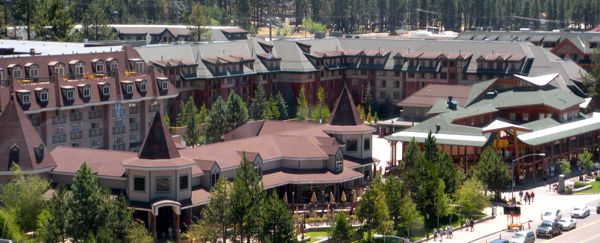
Embassy Suites has the highest occupancy on the South Shore and the Marriott properties are among a handful built from the ground up in the last 15 years. Photo/LTN file

However, when Ribaudo makes his presentation to the South Lake Tahoe City Council in October, it will have to be public – whether he hands anything out or not, per California opening meeting laws, according to city officials.

Ribaudo told Lake Tahoe News he did not want to physically release the data to his clients – and by default the public – until all had heard his presentation. This is why Lake Tahoe News does not have a full report on the economic study. Douglas County commissioners are expected to hear from Ribaudo in November.

Douglas, South Lake Tahoe and LTVA each contributed $10,000 to the study, while South Tahoe Association of Resorts put in $5,000.

Ribaudo told the LTVA board with every town seeming to tout a tourist attraction, Lake Tahoe has more competition than ever before.

Besides tribal gaming taking a hit on casinos throughout Northern Nevada, the introduction about 15 years ago of cheap air service from the Bay Area to Las Vegas has whisked people away.

John Koster, general manager for Harrah’s Lake Tahoe and LTVA board member, acknowledged the deals being offered are significant – including what his parent company is putting out there.

Ribaudo noted that the value of the lake itself is missing when it comes to the rate of a hotel room. Lakefront lodging is not doing substantially better than the rest of the South Shore. Embassy Suites is doing best in terms of occupancy and average daily rate.

Non-casino lodging on the South Shore represents 34 percent of the inventory, but where only 20 percent of the visitors are spending the night. This highlights the fact that many of the hotel rooms in South Lake Tahoe are not where tourists want to stay. Many have become weekly and monthly rentals.

It also points to the problem that the number of hotel rooms far exceeds any anticipated demand. Those rooms also drive down the price of rooms throughout the region.

Part of the problem is anyone who might want to buy the rundown motels are handcuffed by the regulatory process. McDermid, who also sits on the Tahoe Regional Planning Agency board, said the Regional Plan update should give more flexibility to people wanting to repurpose those properties.

Her LTVA colleagues were more skeptical in what might emerge in the Regional Plan that is supposed to be adopted in December. Davis would like to turn tourist accommodation units into commercial floor area. Both are commodities based on how the TRPA does business.

But, as attorney Lew Feldman pointed out, “We also have too much commercial that is unsustainable.”

Ribaudo did note the campgrounds in the area are faring quite well.

He shared data from Smith Travel that said South Lake Tahoe has an occupancy rate of 43 percent, with an average daily room rate of $102. This, Ribaudo said, is well below the regions South Shore is competing with – like Napa and Monterey.

In 2001, at the peak of gaming, hotel occupancy in the area was 50 percent. Ribaudo said the lodging was built to sustain the once $400 million gaming industry. Now gaming is a $190 million industry in Stateline.

It was also noted that the South Shore has had few lodging properties built from scratch in the last 15 years and that most hotel chains are getting rid of exterior room entrances. But when hotels are remodeled on the South Shore that isn’t the case.

Ribaudo said based on his research it’s not a matter of if things should change, but what should the changes be.

Economic study history

SMG was one of three firms to send in bids to do the report. The others were from Las Vegas and Denver.

Mike Bradford, with Lakeside Inn and Casino, has been leading the South Shore Vision Project for Douglas County, which initiated the idea. Bradford said it was through the county’s Economic Vitality Department that a request for proposal was put out to find someone to do the economic study.

Bradford and Mitchell Mize, director of real estate for Edgewood Tahoe, are the two who reviewed the three bids. They picked Ribaudo. (Lynda Ribaudo, Carl’s wife, is CFO for Edgewood Companies.)

Ribaudo’s study also has specific applications for LTVA – called the Destination Decision Model – that will allow the tourism bureau to use “what if?” scenarios for economic forecasting. The goal is LTVA will be able to track its marketing dollars better and see if there is a return on investment.


Youth invited to free running contest

The Lake Tahoe Marathon Optimist Kids Fun Run is Sept. 29 at Pope Beach.

Runners 13 years old and younger from all over the country are invited to participate. The distances range from one-eighth mile for those 5 years and under to 1½ miles for the 12-13 age group.

All runners will receive a medal, free hot dog and drink. Free registration starts at noon and the first races begins at 2pm.

For more information, contact Terry Powers at (530) 544.5025.


Northstar employees donate time to improve environment

More than 100 Northstar employees and their family members participated in the third annual Vail Resorts Echo Day, partnering with the Truckee River Watershed Council to donate their time to work on a section of the Truckee River Legacy Trail.

Participants worked Sept. 8 to remove invasive weeds, install irrigation, mulch, and reseed the area with native plants.

Each year, local nonprofit organizations are invited to submit projects to be considered for Echo Day. The project was selected by resort employees as an opportunity to give back to the community. Vail Resorts gives a cash grant to the nonprofit to help cover the cost of tools, supplies and more for the project.

The Truckee River Watershed Council focuses on collaborative solutions for the protection, enhancement and restoration of the Truckee River Watershed.