It may be smart to hold back third-graders who can’t read well

By Kayla Webley, Time

If you want kids to succeed in school, look no further than the third grade. So says a body of research showing that if kids haven’t mastered reading by then, their ability to keep up in other subjects starts to decline.

That has led 32 states to adopt policies specifically targeting third-grade reading skills. In 2012, 13 states have passed laws that aim to identify struggling readers and intervene before they reach fourth grade; 14 have gone so far as to require schools to hold back third-graders who don’t score high enough on the state reading test.

Legislators advocating intervention have seized on studies like the one published last year by Donald Hernandez, a sociology professor at the City University of New York, that analyzed the reading scores and graduation rates of nearly 4,000 students born from 1979 to 1989 and found that 1 in 6 who couldn’t read at grade level by third grade didn’t finish high school by age 19–four times the rate of proficient readers.

Better to keep them back when they’re young, advocates argue, to help them catch up.

But doing so is a pricey proposition: the U.S. already spends an estimated $12 billion a year on K-12 students who are repeating a grade. And the new laws requiring thousands of kids to sit through third grade a second time go against a half-century of education policy. Schools have long argued that “social promotion” — pushing students on the bubble up to the next grade — is better than subjecting them to bullying from their peers and other potentially detrimental effects that often coincide with repeating a grade.

Numerous studies have shown that students who are held back have less confidence and less attachment to school, which makes them more likely to drop out.

It’s hard to know whether academic deficits are the cause of kids’ social problems or the result of them. In August the Brookings Institution shed new light on this debate when it released a report that attempts to isolate the impact of a child’s being held back from other factors, including poverty and parental involvement.

The study’s author, Professor Martin West of Harvard’s Graduate School of Education, looked at the outcomes of thousands of students in Florida, which since 2003 has been holding back third-graders who fail the state reading test and providing them with extensive remediation. (In the policy’s first year, 21,799 students had to repeat third grade, up from 4,819 the previous year.)

West studied two very similar groups of kids–one group scored exactly at the cutoff on Florida’s third-grade reading test, and the other scored just one point above–and found that by the time they were in eighth grade, students who repeated third grade scored higher on reading and math tests than their peers who had been promoted to fourth grade without a hitch.

It’s worth noting, however, that Florida doesn’t simply make children repeat third grade. Students who are held back are to be assigned to a high-performing teacher and get 90 minutes of research-based reading instruction each day, and the state has started to give struggling readers more help as early as kindergarten.

In other words, there’s not some magical aspect to third grade.

“That shift from learning to read to reading to learn is much more of a gradual transition than a sudden event,” West says. These policies, he adds, “are meant to serve as an accountability device to ensure that all students receive sound instruction in reading in the early grades.”

It’s hard to argue with that.


Tahoe authors snare readers with evocative readings

By Kathryn Reed

CAMP RICHARDSON – The outdoors and sex. Those are the overriding themes of people in Lake Tahoe want to hear about.

Seven books were featured during the annual Celebration of Writers earlier this month at the Valhalla Grand Hall. Tahoe Writers Works each fall brings together a group of authors who either live in the Lake Tahoe area or write about the region.

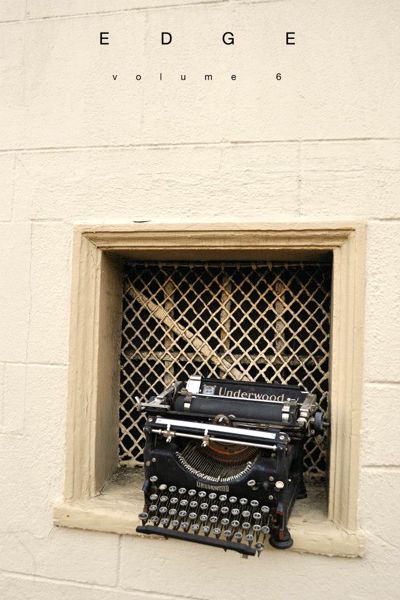
"Edge" -- now in its sixth volume -- is put out annually by Tahoe Writers Works.

It gives people a chance to hear the words – and then be inspired to pick up a copy of the book to read it in its entirety. One of the great things about the reading is the inflection of the writer’s voice is real as opposed to what the reader might hear in her mind. And then there is the back-story to the passage being read that is only available during a reading like this one.

Frank Riley and Joan Douglas started the evening by reading their essays that are captured in “Tahoe Blues” – which is 60 micro-essays and flash fiction all about Tahoe. Bona Fide Books in Meyers published the book earlier this year.

Riley takes people on a hiking escapade that involves getting close enough to know what a bear’s breath smells like.

Douglas’ was a bit eerie to read – not to mention disturbing. Hearing it was even more ominous. Living in the lake after dying. The sounds of people on shore, but unable to make any noise. All the children she is surrounded by. It is haunting. While it’s well written, it’s just not a Tahoe I want to even think about.

A much happier take involving the outdoors was next. Tim Hauserman spoke from his cross country skiing book about all the types of snow – from boilerplate to butter to mash potatoes.

Suzanne Roberts was able to combine sex appeal and the outdoors as she read a chapter out of “Almost Somewhere” – a book about hiking the John Muir Trail. This vignette is about how three recent female college graduates go about getting a quarreling couple to leave their campsite.

Roberts and Scott Lukas, who was the next reader, teach at Lake Tahoe Community College. Roberts is in the English department, while Lukas is a professor of anthropology and sociology. Their books clearly reflect their different specialties.

Lukas read from “The Immersive Worlds Handbook: Designing Theme Parks and Consumer Spaces”.

Steve Robinson’s delivery is so refreshing it makes me want to read “Why Stevie Can’t Date”. He describes the book as a collection of autobiographical short stories that are not all connected. The section he read this particular Friday evening was about when he was a 17-year-old who looked older than 21 working at the Sahara in Stateline and what a second date in the showroom meant. This was the time when Tahoe had its A-game when it came to attracting entertainment.

Author Stefanie Freele offered the audience a choice of topics – sex, revenge and Tahoe. The listeners picked sex and revenge. These were part of her collection of short stories in “Surrounded by Water”.

Last up for the evening was Jared Manninen who read segments from his book about his experience on the Appalachian Trail.

It was an evening that proved Tahoe is rich with writers.


Every American is on the dole to some degree

By Michael Grunwald, Time

The sun is shining on Miami Beach, and I wake up in subsidized housing. I throw on a T-shirt made of subsidized cotton, brush my teeth with subsidized water and eat cereal made of subsidized grain. Soon the chaos begins, two hours of pillow forts, dance parties and other craziness with two hyper kids and two hyper Boston terriers, until our subsidized nanny arrives to watch our 2-year-old.

My wife Cristina then drives to her subsidized job while listening to the subsidized news on public radio. I bike our 4-year-old to school on public roads, play tennis on a public court and head home for a subsidized shower. Then I turn on my computer with subsidized electricity and start work in my subsidized home office.

It’s just another manic Monday, brought to us by the deep pockets of Big Government. The sunshine is a natural perk, and while our kids are tax-deductible, the fun we have with them is not. The dogs are on our dime too. Otherwise, taxpayers help support just about every aspect of our lives.

Of course, we’re taxpayers too, and we don’t exactly fit the stereotype of entitled welfare queens.

Cristina is an attorney and until recently was a small-business owner. I’m a journalist, an economic red flag these days, but I work for the company behind the Harry Potter and Batman movies, so at press time I was still getting paid.

My family’s subsidies are not the handouts to the poor that help fuel America’s political culture wars but the kind of government goodies that make the comfortable even more comfortable. Our federally subsidized housing, for example, is a two-story Art Deco home in the overpriced heart of South Beach. But our mortgage interest is a personal deduction, my home office is a business deduction, and federal subsidies keep our flood insurance cheap. Even our property taxes are deductible.

So thanks for your help.

The 2012 election is shaping up as a debate over Big Government, but it is only loosely tethered to the reality of Big Government. The vast majority of federal spending goes to defense, health care and Social Security plus interest payments on the debt we’ve run up paying for defense, health care and Social Security. Nondefense discretionary spending–Washingtonese for “everything else,” from the FBI to the TSA to the center for grape genetics–amounts to only 12 percent of the budget.

Still, it’s a big government. The U.S. did not spend even $1 billion in 1912; it will spend $3.8 trillion in 2012 on everything from Missing Alzheimer’s Disease Patient Assistance ($593,842) to Snow Survey and Water Supply Forecasting ($9,409,400), from mortgage insurance for manufactured homes ($64,724,187) to ironworker training on Indian reservations.

There will be an additional $1.3 trillion in tax expenditures, federal benefits (like the deductions for my 401(k) and my nanny’s salary) that are basically identical to those normal spending programs except that they happen to be provided through the tax code.

The rise of the Tea Party and the weakness of the Obama economy have fueled a Republican narrative about Big Government as a threat to liberty, redistributing wealth from honorable Americans to undeserving moochers, from taxpaying “makers” to freeloading “takers.”

In fact, most Americans are makers and takers — proud of our making, blind to our taking.

Republicans often point out that only half the country pays income taxes, but just about all Americans pay taxes: payroll taxes, state and local taxes, gas taxes and much more. The problem is that we pay in $2.5 trillion and pay out $3.8 trillion. And those trillions of dollars don’t all go to undeserving moochers, except insofar as we’re all undeserving moochers.

7am: Subsidized food, water, electricity and clothing

The right routinely portrays government as a giant mess of Solyndra failures, lavish agency conferences in Vegas and pork for society’s leeches. But my taxpayer-supported morning didn’t feel like mooching at the time.

For example, my family pays for that water I use to brush my teeth, about $100 a month. But that’s a small fraction of the true cost of delivering clean water to our home and treating the sewage that leaves our home. And it certainly doesn’t reflect the $15 billion federal project to protect and restore the ravaged Everglades, which sit on top of the aquifers that provide our drinking water.

Most Americans think of the water that comes out of our faucets as an entitlement, not a handout, but it’s a government service, and it’s often subsidized.

Similarly, my family pays more than $200 a month for the electricity that powers our toaster at breakfast. But that number would be much higher if the feds didn’t subsidize the construction, liability insurance and just about every other cost associated with my utility’s nuclear power plants while also providing generous tax advantages (“depletion allowances,” “intangible drilling costs” and so forth) for natural gas and other fossil fuels.

The $487 we’re paying this year for federal flood insurance is also outrageously low, considering that our low-lying street floods all the time, that a major hurricane could wipe out Miami Beach and that the Property Casualty Insurers Association of America estimates that premiums in high-risk areas would be three times as high without government aid.

Some federal largesse — tax breaks for NASCAR racetracks ($40 million) and subsidies for rum distilleries ($172 million) and rural airports ($200 million)–is just silly. There’s no reason my poker buddies should be able to deduct the gambling losses I inflict on them once a month. (Just kidding, guys!)

The silliest handouts that brighten my morning are the boondoggles that funnel billions to America’s cotton and grain farmers and maybe knock a few cents off the price of my T-shirts and my kids’ breakfast waffles. Uncle Sam sends at least $15 billion every year to farmers and agribusinesses in the form of grants, loans, crop insurance and other goodies. The farm lobby is so omnipotent in Washington that when the World Trade Organization ruled that U.S. handouts give our cotton farmers an unfair advantage over Brazil, the U.S. cut a deal to shovel $147 million a year to Brazilian cotton farmers rather than kick our own farmers off the dole. Our food and clothing may seem cheap, but, oh, we pay for them.

Read the whole story


Clarification: Southwest Gas ‘scam’ may be legit

Southwest Gas is alerting people that three private contractors are working in South Lake Tahoe. There are two contractors and one inspection company that work with customers on various weatherization programs.

The three companies are:

Residential Weatherization Inc. (installation contractor), Project Go Inc. (installation contractor), and Richard Heath and Associates (third party inspections).

To determine if a customer qualifies for one of the weatherization programs, the contractors will ask for income verification. The types of income included in household income are determined by the California Public Utilities Commission.


Author doing her part to put cheese on all plates

By Kathryn Reed

TRUCKEE – Cheese is more than a food to Laura Werlin – it’s a passion, almost an obsession. After all, her sixth book on the subject will be released in early December.

Lake Tahoe News caught up with the energetic author of all things cheese earlier this month before she gave a seminar called Belgian Brews and Artisan Cheese Pairing as part of the annual Lake Tahoe Autumn Food and Wine Festival at Northstar.

Laura Werlin

“I’ve loved cheese since I’ve had teeth,” Werlin says. Her first memory of cheese is of single slices of American cheese on Wonder bread that was then grilled.

While her taste buds have evolved, her love of grilled cheese has not faded. In fact, in 2004 she published “Great Grilled Cheese” and in 2011 she came out with “Grilled Cheese, Please!”

“The All American Cheese and Wine Book” earned her a James Beard award.

She transitioned from being in the television news business to being a food writer to now being an author of cheese. American cheese is her focus.

Werlin’s initial goal with her books was to answer all the questions she had about cheese because she figured other people had those same questions.

What she discovered is many people find cheese to be intimidating. That’s why people stick with the same Brie or cheddar they’ve always had.

The industry is growing, with cheese now made in nearly every state.

“Unlike wine, you don’t need the perfect climate,” Werlin said. “It’s being made in remote and more urban places. Not every cheesemaker has animals. They buy the milk.”

With more people paying attention to where their food comes from, it’s now possible to buy local cheeses no matter what corner of the continent one calls home.

For her tasting at Northstar she brought a cheese from Aspen, another was from Holland.

Werlin likes that more and more farmers markets have cheese purveyors who allow shoppers to sample the goods. She says this breaks down barriers – which means cheese becomes less intimidating.

She embraces the European tradition of serving cheese after a meal instead of the American ritual of cheese as an appetizer.

Werlin said the problem with starting with cheese is “it’s filling and will impact your appetite.”

And cheese does not have to be expensive to be part of one’s repertoire. In Werlin’s book about macaroni and cheese she has two recipes that call for Velveeta.

“What matters to me is that cheese is made well and it tastes good,” Werlin said.


Truckee CHP officer accused of sex acts with minor

By AP

TRUCKEE — The California Highway Patrol has arrested one of its own on suspicion of engaging in sexual acts with a minor.

Truckee CHP Officer Robert Holland was arrested at his Loyalton home Tuesday afternoon after other officers searched his home. They also seized his phone and computer.

CHP Cmdr. Timothy Malone says the 46-year-old Holland resigned the next day after 15 years on the force.

The arrest followed allegations brought to the agency’s attention. While the CHP typically doesn’t investigate sex crimes, Malone says the Sierra County sheriff asked his division to lead the investigation.

Police did not release the minor’s age or gender. Malone says the alleged sexual acts happened while the officer was off-duty.

Holland was being held in Nevada County Jail on $500,000 bail.


STHS grad expected to start Sunday for Jets

By Mike Vorkunov, Star-Ledger

Aaron Maybin remembers the conversation he had with Garrett McIntyre before the 2011 season began and neither knew their fate — when McIntyre considered this his last chance at the NFL. Both linebackers were with the Jets, having been recycled through the league and hoping to latch on. Maybin had been the No. 11 overall pick just two years earlier so he had tasted glory once, but McIntyre had to pull himself up from the depths.

To understand McIntyre’s path is to know his failures. His lowest moment came the first time he was cut by an NFL team — the Seattle Seahawks let him go in 2006 after bringing him in as an undrafted free agent out of Fresno State. One body blow was followed by others in a span of months.

The South Tahoe High School grad was released twice more that summer, starting a sojourn that took him from the Arena Football League with San Jose to the Canadian Football League with Hamilton.

Maybin remembered his teammate’s situation this week, in the glow of McIntyre’s game last Sunday in Pittsburgh. Starting at outside linebacker for the injured Bryan Thomas, as he likely will again on Sunday against Miami with Thomas listed as doubtful on the injury report, McIntyre sacked Ben Roethlisberger twice.

It was not a surprising performance inside the Jets locker room. McIntyre and Maybin have become close — Maybin credits him with telling him the plays and what to do on the field for his first two months with the Jets — and it was more a reinforcement of how far McIntyre has come.

“The more that you have to fight for, the more you understand and you really appreciate,” Maybin said. “One thing that I know will never be the case with Garrett is him taking a thing for granted, whether that’s a play, whether that’s an opportunity. He is somebody that is always going to make the most of everything he gets because he knows what it’s like to not to be able to live your dream everyday.”

After McIntyre was cut by three teams six years ago, it set him off on a circuitous route. Already a former walk-on who starred at Fresno State, he moved to the Arena Football League, in which he played for the San Jose SaberCats for two years. After knee surgery and the demise of the AFL, he wondered if he should keep playing as a long, painful rehabilitation ensued and then a move to the Canadian Football League followed as he joined the Hamilton Tiger-Cats. In the offseasons, he worked in construction for his father, Bob, in South Lake Tahoe, then became a personal trainer.

“There’s times, like when I was playing Arena Football and the league got shut down, I was like, what do I do?” said McIntyre, who has been with the Jets since 2011. “Do I still want to play? Is it worth beating my brains up every week for okay pay. You’re not going to get rich doing it, but you can make some decent money in those leagues. You can make a decent living but not NFL money. By about Week 15 your body is killing you and you’re like, I’m doing the same thing these guys are doing down here for about one-16th of the pay. There’s times where you question yourself.”

McIntyre will be a key as the Jets look to stop Dolphins running back Reggie Bush on Sunday. Bush ran for 172 yards last week and gave the Jets fits last season — when they had trouble stopping perimeter runs and speedy rushers. Bush had 71 yards on 10 carries against them last season, including a 36-yard run.

“It’s a defensive team effort, it can’t just be one guy or a couple of guys,” McIntyre said. “You have to swarm him constantly, put some helmets on him, make him feel a little bit. For my position we have to set edges, we can’t let him get around that corner.”

Even if McIntyre plays well again, his tireless attitude won’t let him feel satiated. His father said that when he watches Garrett on TV, no matter where the play goes, he always sees him end up around the ball when it ends. That same pursuit won’t let him feel comfortable.

“I don’t,” McIntyre said. “I can’t. I’m not the type of guy that’s ever comfortable.”


Retailers don’t use traditional calendar for pushing holiday goods

By McClatchy Newspapers

September had barely started, but that didn’t stop retailers from talking Christmas: Wal-Mart said it would begin its holiday-layaway promotion just two weeks after Labor Day – a full month early. A few days later, Toys R Us and Kmart said they’d do away with layaway fees altogether.

One might say they were late to the holiday party. A Neiman Marcus in Oak Brook, Ill., debuted a decked-out display of Christmas trees, collectibles and holiday decor in August.

Fretting that an upcoming presidential election, rising energy and food costs as well as ongoing job fears could cause skittish consumers to tighten their purse strings, retailers are drumming up ways to persuade them to shop early and often.

They’ll spend the next few months vying for shoppers’ attention and dollars, aiming to drive all-important holiday sales, which make up roughly 25 percent of their yearly profits, according to the International Council of Shopping Centers.

By starting promotions while it’s still hot outside, retailers are making a calculated move to stay in front of consumers and lock in their loyalty early, say retail experts. Early estimates from ShopperTrak predict a 3.3 percent gain this year from last. Foot traffic in stores, which was down last year, is expected to pick up 2.8 percent.

That’s a brighter forecast than the 3 percent gain predicted for the last year’s holiday-shopping season, which ended up as a mixed bag for retailers. Many scratched out sales gains of 3.4 percent year-over-year, according to Thomson Reuters, but that was bolstered by deep discounts. By comparison, in 2010, retailers realized same-store sales gains of 4 percent.

If consumers start spending earlier, they’re more likely to spend more and buy more if they aren’t rushed by a holiday deadline, added Edward Fox, associate professor of marketing at Southern Methodist University’s Cox School of Business in Dallas.

But that’s one big if.

Overall, retail sales this year have been bumpy. Consumer confidence has been low and employment gains uneven. Robust back-to-school sales, however, gave a number of retailers a boost, with a nearly 6 percent gain in August, according to research firm Retail Metrics.

Working in retailers’ favor is that they’ll have more time this year to complete sales. This year, the calendar dictates that the holiday-shopping season will last five weeks, instead of the typical four.

Analysts also are betting on an uptick in online shopping this year, namely in electronics and appliances, as shoppers continue “showrooming” – browsing retailers’ brick-and-mortar stores for items and then searching online for the best deal.


Snippets about Lake Tahoe

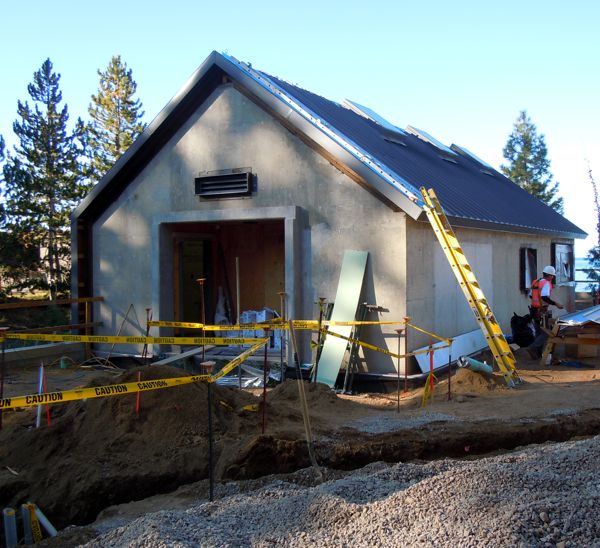
• The boathouse at Lakeview Commons has been certified LEED gold.

• The U.S. Department of Agriculture declared Placer County a natural disaster, opening the door for local farmers and ranchers to seek assistance for drought-related losses.

• Barton Memorial Hospital in South Lake Tahoe was the setting this month for an independent film that has aspirations of being part of the Sundance Film Festival.

• Squaw Valley and Alpine Meadows will be hosting a seasonal job interview fair Nov. 3 from 10am-6pm at the Olympic House at Squaw Valley.

• Barton Health conducted a community survey last spring to identify the health gaps in the South Lake Tahoe area. The survey consisted of 400 phone surveys, two community focus groups and the collection of secondary data from Public Health and other resources. A website with interactive screens and the results is now live.


Opinion: Sage grouses’ fate subject to power grab

By Cliff Gardner

I don’t know how many folks have read Gov. Brian Sandoval’s sage grouse plan, recently completed and released. I was fearful of what it might entail.

I had no idea it would be as bad as it is.

By all appearances, it should be titled the “Kenneth Mayer Plan” rather than the governor’s plan.

It designates the Nevada Department of Wildlife, directed by Kenneth Mayer, as the primary agency for making habitat determinations in consultation with the federal Bureau of Land Management, the U.S. Forest Service and the U.S. Fish and Wildlife Service.

It calls for the establishment of a “regulatory process” for the management of all occupied, suitable and potential habitat for the ground-dwelling bird.

It calls for the creation of an advisory council, which will mirror the makeup of the Governor’s Sage Grouse Advisory Committee, whose responsibility will be to resolve conflicts between industry, land owners and resource managers.

It calls for the establishment of a sage grouse mitigation program – similar to what was established in Southern Nevada for the desert tortoise, whereby those altering landscapes will be allowed to proceed only when certain amounts of money are paid into a fund that is to be used for sage grouse enhancement projects.

It calls for the creation of a “technical team” – using the Tahoe Conservation Team as a model – with the responsibility of providing consultation for those wanting to conduct activities in occupied or potential sage grouse habitats.

It’s hard to believe that persons calling themselves Americans would be advocating a program of this nature. Clearly, the plan is designed not to help sage grouse, the environment or anything else. It is designed to advance the goals of those in government. It’s a power grab of the worst kind.

Cliff Gardner is a cattle rancher in the Ruby Valley, south of Elko.