Kokanee running event targets all abilities

The 23rd annual Kokanee Trail Run is Oct. 7.

Races include 5K, 10K, half marathon, and half-mile kids run.

Run with the salmon at Taylor Creek.

The half marathon begins at 9am sharp, Tadpole Trot kids run begins at 9:30am, and 5K and 10K at 10am.

Register online.

The event is put on by the Tahoe Mountain Milers Running Club in partnership with U.S. Forest Service and Camp Richardson Resort.


Carter Springs Fire 30% contained

Nearly 3,500 acres have burned in Carter Springs Fire in Douglas County.

The fire is burning mostly unburned areas within the fire perimeter, predominately on Bureau of Land Management property in the southern Pine Nut Mountains.

No structures have been lost. Power lines down at the fire scene, but they are de-energized, which is impacting some local rural residences.

The fire that started Sept. 21 is about 30 percent contained and is expected to by fully contained by Sept. 25.

— Lake Tahoe News staff report


Glen Plake roughed up in Nepal avalanche that killed 11

By Steve Casimiro

A massive avalanche struck Manaslu, the world’s eighth-highest mountain, in Nepal shortly before 5am this morning, sweeping through teams of climbers and skiers camped at 7000 meters, including South Shore’s Glen Plake and Greg Hill, both of whom survived. Eleven people have been confirmed dead and as many as six are still missing, among them Plake’s teammates Rémy Lécluse and Greg Costa. Reports that Eric Hjorleifson was on Manaslu were untrue; the skier currently is in Canada.

Hill reported on his Facebook page, “A huge avalanche swept through camp 3 at 4:45am on Manaslu, catching lots of people in their sleeping bags, many dead, and injured. Luckily our team is fine, and helped with the rescue, Glen Plake is also fine but my heart goes out to all the others…”

International Mountain Guides has a crew on the mountain and reported that the slide was caused by a serac fall, which was confirmed by Italian mountaineer Silvio Mondinelli.

“IMG Manaslu leader Mike Hamill reports that about 4:30am (local time) a serac fell triggering a slide that hit Camp 3. The IMG team is at Camp 2 and they are all safe and sound. Mike and several other guides are now responding to Camp 3 to assist. We’ll be waiting for more info.”

Garrett Madison, a guide with Alpine Ascents Internation, told Outside, “We counted 11 total deceased or missing,” wrote Madison. “We were able to assist the French and German survivors some who were in pretty bad shape. We made a heli-pad and coordinated a rescue and evac’d about 15 people, and a few bodies. A lot of gear and a few bodies are still up there as the clouds moved in mid-day.”

Plake was swept nearly a thousand feet in his tent, was banged up and lost teeth, but was otherwise OK.

Read the story


2-day women’s wellness weekend in Tahoe City

The annual Lake Tahoe Women’s Wellness Weekend at Granlibakken that is dedicated to health and wellness, will also offer continuing education credits to nursing professionals.

Committed to creating healthy associations within the community, Tahoe Forest Hospital has established the Nov. 10-11 event.

National and regional authors and practitioners, all experts in their fields, are a highlight of the event.

For more than two decades, the Women’s Wellness Weekend has brought together women of differing ages, body types and physical abilities to benefit from Western medicine and Eastern teachings in comfortable and non-threatening surroundings. Seminars on health, nutrition and aging mix easily with interactive clinics on skin screenings, body/muscle testing and acupuncture. Inspirational and recreational activities along with food and wine receptions also help unite body and soul.

For information on speakers, health fairs and seminars call 800.543.3221.


Learn how to give a winning presentation

The Sierra Human Resources Association, in partnership with the Regional Chambers of Nevada County and North Lake Tahoe Chamber of Commerce is presenting Simply Speaking – How to Craft and Deliver a Winning Presentation on Oct. 4 from 8:30am–2:30pm.

Registration begins at 8am at the Cedar House Sport Hotel, 10918 Brockway Road in Truckee.

Whether you are preparing a sales presentation for clients, a keynote speech, a weekly debrief for the management team or association, or leading a department meeting, you will pick up tips to control anxiety and make you a more effective communicator using the formula of professional speakers. Learn to Prepare the Presentation, Prepare Yourself, and Handle the Audience in small groups in a low-pressure, encouraging and comfortable environment.

For easy online registration and to pay safely by check or by credit card, click on the online store. The cost is $59 chamber, SHRM and SHRA members, $69 for non-members.


3 more online gaming licenses approved in Nevada

By Steve Green, Las Vegas Sun

The Nevada Gaming Commission last week approved licenses for three more companies to participate in the state’s new online intrastate poker industry.

Licenses were issued for slot machine maker WMS Industries Inc. of Waukegan, Ill., as an interactive gaming system manufacturer and service provider, and for casino operator American Casino & Entertainment Properties LLC (ACEP), Las Vegas, as an interactive gaming operator.

ACEP owns the Stratosphere and two Arizona Charlie’s casinos in Las Vegas and the Aquarius in Laughlin.

It has a players’ club for its bricks-and-mortar casino customers called ace PLAY, meaning it already has a database of players it can market poker to.

ACEP also sees social gaming and online poker as platforms to drive business to its land casinos.

A third license was approved for PokerTrip Enterprises Inc. of Las Vegas to act in a limited capacity as an online poker marketer.

This was the first license to be issued in that category.

The State Gaming Control Board earlier this month recommended approval for all three applicants.

The board and commission earlier this summer approved online poker licenses for South Point Poker LLC, Global Cash Access Holdings Inc., Bally Technologies Inc. and Shuffle Master Inc., all of Las Vegas, and IGT and Monarch Interactive Inc., both of Reno.

Technical testing is under way and must be completed before any of the real-money poker sites goes live.


Wine is mothers’ liquid helper

By Joel Stein, Time

It took nearly a year after having our son for my lovely wife Cassandra to get her body back to where it was before. It took nearly three years to get her drinking back to where it was before. For a while, she and her new-mom friends met once a week at the playground to watch their kids and have cheese and wine.

“Being a stay-at-home mom is isolating,” she told me. “If you’re chilling out with other moms, it’s social. I guess we could have been meeting for tea, but that seems a lot more dorky and a lot less fun.”

I considered telling her that supervising a child should be more job-like than Studio 54-like. But that would mean she could start questioning every crucial two-hour work lunch I go to at high-end restaurants.

Moms drinking wine is now too normal to question. On Facebook the group Moms Who Need Wine has more than 640,000 subscribers. OMG I So Need a Glass of Wine or I’m Gonna Sell My Kids has 127,000. Stefanie Wilder-Taylor took mom drinking so far, through her blog and best sellers Naptime Is the New Happy Hour and Sippy Cups Are Not for Chardonnay, that she eventually had to admit she had a problem and quit.

Last year, Clos LaChance wines asked a California court to declare that its MommyJuice line did not infringe on the trademark of rival wine Mommy’s Time Out.

These are not the kinds of wines Cassandra would take to the playground, because while I might silently object to her drinking wine while watching our son, I’d get more upset about her drinking mediocre wine while watching our son.

But if you’re looking for American reds and whites at around $10 per bottle, “they’re perfectly nice,” says Ray Isle, executive wine editor of Food & Wine. “It’s not a wine I’d stick away in a cellar and age. But they’re going for the opposite: you’re supposed to drink it while your child is an infant.”

Starting this month, one of the biggest American wineries is marketing directly to moms of young kids. Chateau Ste. Michelle in Washington has begun a Facebook campaign asking women to customize an equation to sum up what makes them want a glass. (“Me + a glass of wine – juice boxes + quiet time for 15 minutes = My Chateau.”) The ads – -tagline: “It’s where you become you again” — will run in places women go when they’re stressed out about taking care of their family, including Food Network magazine, parents.com and Rachael Ray’s website.

The idea is that wine is the new Calgon bubble bath, or the new Valium.

Winemakers are marketing heavily to moms partly because a lot of women are moms, and wine is the female drink of choice: 52 percent of women pick it as their favorite alcoholic beverage, compared with 20% of men. (The numbers for beer are almost the exact inverse.) That’s why Francis Ford Coppola Winery sells sparkling wine in a can with a straw attached — no lipstick smudges — and French and Italian wineries sell boxed wine in containers shaped like purses. It also explains why there is so much pinot grigio.

The push to sell wine to moms also reflects changes in how we view motherhood. A proliferating number of mommy blogs portray stay-at-home parenting as a gritty daily struggle. If a factory worker deserves a cold beer after a long day on the floor, then these women deserve their pinot grigio. Chateau Ste. Michelle’s message to moms is that they can remain fun, chardonnay-swilling party girls in their off-hours, which seems fair. I don’t want Cassandra just to be a mom all the time. If that means she has to brown-bottle it at the park with some cheese and crackers, I’m O.K. with that. But personally I don’t think I could have a bad enough day at work to touch something called MommyJuice.


Startling drop in life span for less educated whites in U.S.

By Sabrina Tavernise, New York Times

For generations of Americans, it was a given that children would live longer than their parents. But there is mounting evidence that this trend has reversed itself for the country’s least educated whites, an increasingly troubled group whose life expectancy has fallen by four years since 1990.

Researchers have long documented that the most educated Americans were making the biggest gains in life expectancy, but now they say mortality data show that life spans for some of the least educated Americans are actually contracting. Four studies in recent years identified modest declines, but a new one that looks separately at Americans lacking a high school diploma found disturbingly sharp drops in life expectancy for whites in this group. Experts not involved in the new research said its findings were persuasive.

The reasons for the decline remain unclear, but researchers offered possible explanations, including a spike in prescription drug overdoses among young whites, higher rates of smoking among less educated white women, rising obesity and a steady increase in the number of the least educated Americans who lack health insurance.

The steepest declines were for white women without a high school diploma, who lost five years of life

expectancy between 1990 and 2008, said S. Jay Olshansky, a public health professor at the University of Illinois at Chicago and the lead investigator on the study, published last month in Health Affairs.

By 2008, life expectancy for black women without a high school diploma had surpassed that of white women of the same education level, the study found.

Life expectancy for white men lacking a high school diploma fell by three years. Life expectancy for both blacks and Latinos of the same education level rose, the data showed. But blacks overall do not live as long as whites, while Latinos live longer than both whites and blacks.

“We’re used to looking at groups and complaining that their mortality rates haven’t improved fast enough, but to actually go backward is deeply troubling,” said John G. Haaga, head of the Population and Social Processes Branch of the National Institute on Aging, who was not involved in the new study.

The five-year decline for white women rivals the seven-year drop for Russian men in the years after the collapse of the Soviet Union, said Michael Marmot, director of the Institute of Health Equity in London.

The decline among the least educated non-Latino whites, who make up a shrinking share of the population, widened an already troubling gap. The latest estimate shows life expectancy for white women without a high school diploma was 73.5 years, compared with 83.9 years for white women with a college degree or more.

For white men, the gap was even bigger: 67.5 years for the least educated white men compared with 80.4 for those with a college degree or better.

The dropping life expectancies have helped weigh down the United States in international rankings, particularly for women. In 2010, American women fell to 41st place, down from 14th place in 1985, in U.N. rankings.

Among developed countries, American women sank from the middle of the pack in 1970 to last place in 2010, according to the Human Mortality Database.

The slump is so vexing that it became the subject of an inquiry by the National Academy of Sciences, which published a report on it last year.

“There’s this enormous issue of why,” said David Cutler, an economics professor at Harvard who was an author of a 2008 paper that found modest declines in life expectancy for less educated white women from 1981 to 2000. “It’s very puzzling, and we don’t have a great explanation.”

And it is yet another sign of distress in one of the country’s most vulnerable groups during a period when major social changes are transforming life for less educated whites. Childbirth outside marriage has soared, increasing pressures on women who are more likely to be single parents. Those who do marry tend to choose mates with similar education levels, concentrating the disadvantage.

Inklings of this decline have been accumulating since 2008. Cutler’s paper, published in Health Affairs, found a decline in life expectancy of about a year for less educated white women from 1990 to 2000. Three other studies, by Ahmedin Jemal, a researcher at the American Cancer Society; Jennifer Karas Montez, a Robert Wood Johnson Foundation Health and Society Scholar at Harvard; and Richard Miech, a professor at the University of Colorado, Denver, found increases in mortality rates (the ratio of deaths to a population) for the least educated Americans.

Olshansky’s study, financed by the MacArthur Foundation Research Network on an Aging Society, found by far the biggest decline in life expectancy for the least educated non-Latino whites, in large part because he isolated those without a high school diploma, a group usually combined with high school graduates. Non-Latino whites currently make up 63 percent of the population of the United States.

Researchers said they were baffled by the magnitude of the drop. Some cautioned that the results could be overstated because Americans without a high school diploma – about 12 percent of the population, down from about 22 percent in 1990, according to the Census Bureau – were a shrinking group that was now more likely to be disadvantaged in ways besides education, compared with past generations.

Olshansky agreed that the group was now smaller but said the magnitude of the drop in life expectancy was still a measure of deterioration.

“The good news is that there are fewer people in this group,” he said. “The bad news is that those who are in it are dying more quickly.”

Researchers, including some involved in the earlier studies that found more modest declines in life expectancy, said that Olshansky’s methodology was sound and that the findings reinforced evidence of a troubling pattern.

“Something is going on in the lives of disadvantaged white women that is leading to some really alarming trends in life expectancy,” said Montez of Harvard.

Researchers offered theories for the drop in life expectancy but cautioned that none could fully explain it.

Overdoses from prescription drugs have spiked since 1990, disproportionately affecting whites, particularly women. Miech, of the University of Colorado, noted the rise in a 2011 paper in the American Sociological Review, arguing that it was among the biggest changes for whites in recent decades.

Montez, who studies women’s health, said that smoking was a big part of declines in life expectancy for less educated women. Smoking rates have increased among women without a high school diploma, both white and black, she said.

This group also has less access to health care than before. The share of working-age adults with less than a high school diploma who did not have health insurance rose to 43 percent in 2006, up from 35 percent in 1993, according to Jemal at the American Cancer Society.

The shift should be seen against the backdrop of sweeping changes in the American economy and in women’s lives, said Lisa Berkman, director of the Harvard Center for Population and Development Studies. The overwhelming majority of women now work, while fertility has remained higher than in European countries. For women in low-wage jobs, which are often less flexible, this could take a toll on health.
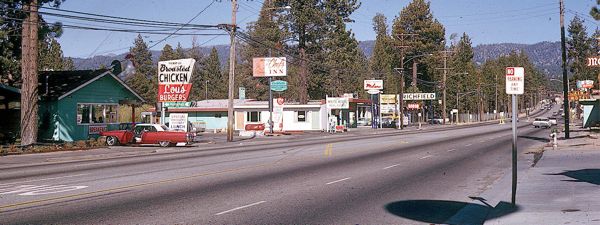
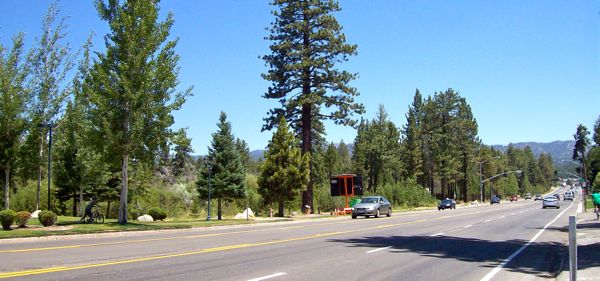


Then and now: More open space now compared to 1965

Highway 50 in 1965. Photos/Bill Kingman

McDonald's is just out of the photo on the left, with the rest of that side of the highway being Linear Park.

These pictures are of Highway 50 near Sonora Avenue in South Lake Tahoe.

People often say the South Shore  is overdeveloped today, but clearly there were more buildings in this section of the city  in the mid-1960s.

The photos are looking toward Stateline.

— Lake Tahoe News staff report


Opinion: Time to rethink keeping pretrial suspects behind bars

By Lenore Anderson

Throughout the heated debates on the future of health care, one fact was never disputed: Overcrowded emergency rooms drive up the cost of care for all of us. Moving people who don’t need emergency care to other settings for treatment allows ERs to focus on those most in need – and saves money.

Another indisputable fact is that some of California’s county jails are reaching emergency status.

Here’s why: After the U.S. Supreme Court ruled in 2011 that California must reduce its state prison population, a landmark new state law – Public Safety Realignment – shifted responsibility for managing people convicted of nonviolent, nonserious, nonsexual offenses from state prisons to local counties. The state also divides up hundreds of millions of dollars among counties for this new responsibility.

Now it’s up to local law enforcement and policymakers to ensure that the problem of state prison overcrowding isn’t solved by simply overcrowding local jails.

The good news is that there is a proven way to reduce jail populations – and taxpayer dollars – without compromising public safety. The bad news is that too few counties fully utilize this approach.

The approach targets “pre-trial detainees.” According to 2011 data, seven out of 10 people in county jails across California haven’t been convicted of a crime. They’re in jail – taking up beds and taxpayer dollars – awaiting trial, often for months at a time.

Because many of these people are accused of less serious offenses, such as low-level property and drug offenses, judges set bail so they can await trial at home, not in jail. But many of these people remain in jail because they can’t afford the bail amount.

This statewide challenge hits especially close to home: Included among the 2011 list of the 13 California counties with the highest percentage of pretrial detainees are Sacramento, 59 percent; Placer, 66 percent; Sutter, 81 percent; and Yolo, 90 percent – the highest in the state.

Since housing one person in jail costs local taxpayers $100 per day, compared to less than $15 a day for pretrial supervision, high rates of pretrial detainees were too costly for cash-strapped counties even before the law changed. Now that realignment is here, alternatives for low-risk people are a must.

A few counties are reaping the rewards of supervising pretrial detainees outside of a jail setting. Here’s how it works:

• Trained staff assess risk by asking if community supervision jeopardizes public safety or the likelihood of the accused appearing in court.

• These experts then share their assessment and recommendations with the judge as to whether the person should be released and under what conditions.

• If the judge assigns the person to pretrial supervision, staff monitor the person in the community and ensure they make all court appearances and abide by all conditions – drug testing, electronic monitoring, curfews, home detention, etc.

• Some programs also offer drug screening, substance abuse and mental health treatment, and other programs as participants await trial.

Santa Cruz County turned to this model years ago to reduce its jail overcrowding. Analysis of its program reveals 89 percent of participants appeared on their court date, and 90 jail beds were freed up each day – a 25 percent drop.

By 2011, Santa Cruz had reduced its pre-trial detention rate to 56 percent, well below the statewide average, which saved the county $857,513 in 2011 alone. The county has not requested any realignment funds to expand its jails, whereas a majority of California counties – less then one-third have robust pre-trial programs – have.

For example, Sacramento, Placer, Sutter and Yolo counties requested within the past year a combined $182 million in state funds for jail expansion. Fortunately, leaders in Yolo County have begun a pretrial supervision program, and its fellow counties across the state should follow its leadership. I recently contributed to a report by California Forward’s Partnership for Community Excellence, to be released this week, that can guide counties.

Public safety – and the cost of maintaining it – is critical to the future of our state. Pretrial assessment and supervision are the new way, and it must become the rule, not the exception.

During the health care debate, no one suggested building larger waiting rooms at hospitals. We should look beyond the Band-Aid solution of expanding jails. Safely reducing overcrowding, not coping with it, is better for public safety and taxpayers.

Lenore Anderson, formerly with the San Francisco District Attorney’s Office, is director of Californians for Safety and Justice, a campaign working to replace prison system waste with common sense solutions.