Opinion: The fallacy of redistribution

By Thomas Sowell

The recently discovered tape on which Barack Obama said back in 1998 that he believes in redistribution is not really news. He said the same thing to Joe the Plumber four years ago. But the surfacing of this tape may serve a useful purpose if it gets people to thinking about what the consequences of redistribution are.

Those who talk glibly about redistribution often act as if people are just inert objects that can be placed here and there, like pieces on a chess board, to carry out some grand design. But if human beings have their own responses to government policies, then we cannot blithely assume that government policies will have the effect intended.
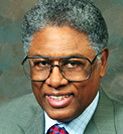
Thomas Sowell

The history of the 20th century is full of examples of countries that set out to redistribute wealth and ended up redistributing poverty.

The communist nations were a classic example, but by no means the only example. In theory, confiscating the wealth of the more successful people ought to make the rest of the society more prosperous. But when the Soviet Union confiscated the wealth of successful farmers, food became scarce. As many people died of starvation under Stalin in the 1930s as died in Hitler’s Holocaust in the 1940s.

How can that be? It is not complicated. You can only confiscate the wealth that exists at a given moment. You cannot confiscate future wealth — and that future wealth is less likely to be produced when people see that it is going to be confiscated. Farmers in the Soviet Union cut back on how much time and effort they invested in growing their crops, when they realized that the government was going to take a big part of the harvest. They slaughtered and ate young farm animals that they would normally keep tending and feeding while raising them to maturity.

People in industry are not inert objects either. Moreover, unlike farmers, industrialists are not tied to the land in a particular country. Russian aviation pioneer Igor Sikorsky could take his expertise to America and produce his planes and helicopters thousands of miles away from his native land. Financiers are even less tied down, especially today, when vast sums of money can be dispatched electronically to any part of the world.

If confiscatory policies can produce counterproductive repercussions in a dictatorship, they are even harder to carry out in a democracy. A dictatorship can suddenly swoop down and grab whatever it wants. But a democracy must first have public discussions and debates. Those who are targeted for confiscation can see the handwriting on the wall, and act accordingly.

Among the most valuable assets in any nation are the knowledge, skills and productive experience that economists call “human capital.” When successful people with much human capital leave the country, either voluntarily or because of hostile governments or hostile mobs whipped up by demagogues exploiting envy, lasting damage can be done to the economy they leave behind.

Fidel Castro’s confiscatory policies drove successful Cubans to flee to Florida, often leaving much of their physical wealth behind. But poverty-stricken refugees rose to prosperity again in Florida, while the wealth they left behind in Cuba did not prevent the people there from being poverty stricken under Castro. The lasting wealth the refugees took with them was their human capital.

We have all heard the old saying that giving a man a fish feeds him only for a day, while teaching him to fish feeds him for a lifetime. Redistributionists give him a fish and leave him dependent on the government for more fish in the future. If the redistributionists were serious, what they would want to distribute is the ability to fish, or to be productive in other ways. Knowledge is one of the few things that can be distributed to people without reducing the amount held by others.

That would better serve the interests of the poor, but it would not serve the interests of politicians who want to exercise power, and to get the votes of people who are dependent on them. Barack Obama can endlessly proclaim his slogan of “Forward,” but what he is proposing is going backwards to policies that have failed repeatedly in countries around the world.

Yet, to many people who cannot be bothered to stop and think, redistribution sounds good.

Thomas Sowell a senior fellow at the Hoover Institute and author of “The Housing Boom and Bust”.



Grief counseling can help people move forward

By Rebecca Phillipsen

Everyone needs a witness or someone to hear their story of loss and the feelings that accompany that experience. Someone who understands and can provide presence and guidance as one navigates the landscape of grief and mourning. Healing your soul and renewing your spirit occurs when using creative activities to work through your grief.

“Art conveys love in a different way than talking or writing,” South Lake Tahoe artist Eileen Brilliant said. “When working with objects and pictures that represent the deceased loved one and creating collages or memory boxes, you gain a more profound way of knowing them that begins to heal your soul and renew your spirit.”

Eileen attended the group as a participant and continues to contribute to the group as a facilitator and provides assistance with the creative expression of grief through the use of collage, memory boxes, and other forms of art.

On Oct. 3, Barton Hospice will begin a free, nine-session grief support series titled Understanding Your Grief. This group is for people who have experienced the death of a loved one. During this time we will share our stories, explore the process of grieving, use creative endeavors to express our grief and receive tools to aid in our healing, all in a safe, secure and confidential setting.

Sessions will be held from 5:30 to 7pm every other week at Barton Hospice, 2092 Lake Tahoe Blvd., Ste. 500, South Lake Tahoe.

Pre-registration is required as the group is limited to 10 people. Registration closes after the second session. For information and/or to register, call me at (530) 543.5581 or (775) 220.0342.

Rebecca Phillipsen works for Barton Home Health & Hospice as a social worker and bereavement counselor.


Douglas County shines light on Vail Resorts as example of public-private partnership

By Anne Knowles

MINDEN – Public-private partnerships, including the commercial use of public lands, dominated the discussion at the 18th annual Critical Issues Conference hosted by the Business Council of Douglas County.

Speakers from both sides of the equation talked about a federal lands bill stuck in the U.S. Senate and the bill passed last year allowing ski resorts to use public lands in the summer, as well as efforts to make Lake Tahoe a ski destination on par with Colorado and Utah.

“We need the private sector to invest and take risks. And we need the public sector to balance regulations and its public service role,” Steve Mokrohisky, Douglas County manager, said at the Sept. 27 event at the Carson Valley Inn in Minden.

Vail Resorts is making a splash at Lake Tahoe, including Northstar COO Bill Rock in 2011 opening Zephyr Lodge. Photo/LTN file

“Vail hasn’t succeeded in a vacuum. It’s partnered with other public and private entities to make progress,” he said, also citing South Shore’s other large corporate presence, Edgewood Companies, as a model of cooperation between business and government.

Bill Rock, vice president and chief operating officer of Northstar in Truckee, one of three Tahoe-area ski resorts now owned by Vail Resorts Inc., spoke about plans for Kirkwood, Heavenly and Northstar.

“Kirkwood has been a great addition for us. It’s not our typical resort. It’s smaller, authentic, has a lot of character,” Rock said.

He said the company plans to operate the resort for a year before determining how it will invest in the property. When Vail purchased Kirkwood in February, Blaise Carrig, president of the company’s Mountain Division, said Vail liked its existing master plan calling for new lifts and a restaurant at the top of Chair 2.

Investments made at its other Tahoe resorts over the years include the 16,000-square-foot Tamarack Lodge at Heavenly, the 700-seat Zephyr Lodge at Northstar and additional lifts and beefed up snowmaking capabilities. Rock said the company is also known for outspending its competitors on maintenance.

Vail said sales of season passes for the upcoming season were up 17 percent during its year-end financial results announcement on Tuesday. The company doesn’t release data on specific resorts or of its two Tahoe passes, the $439 Tahoe Local Pass and the $399 Tahoe Value Pass, which give holders access to all three resorts. Skier visits at its Tahoe resorts during the 2011-12 season were down 22 percent, and down 9 percent at its Colorado venues, due to the dry winter.

Rock also talked about the Ski Area Recreational Opportunity Enhancement Act enacted last year that lets ski resorts located on public lands operate summer commercial enterprises with U.S. Forest Service approval. Vail applied to the USFS two months ago for summer operations at its Vail Mountain resort in Colorado. The plan is called Epic Discovery and includes ziplines, rope swings, an education center, an alpine slide, hiking and mountain bike trails and a guided Segway tour on trails.

Vail is planning something similar for Heavenly including hiking trails.

Rock told Lake Tahoe News the company wants to bring more events to Heavenly like the U.S. Freestyle Championships, announced in April, and a yet-to-be announced or scheduled high-roller event that would couple card games with a snowboard competition.

All of this is part of an effort to make Lake Tahoe a ski destination to rival Colorado and Utah, said Rock. He said more work needs to be done to accomplish that, including improving transportation to and from the Reno Tahoe International Airport and inside the basin, and adding more internationally-branded lodging like the Ritz-Carlton at Northstar.

The business council event also included Sen. Dean Heller, R-Nev., via a recorded video, and Pam Robinson, Heller’s state policy director, as well as Rep. Mark Amodei, R-Reno, on a conference call.

Both Nevada officials talked about the need for more availability of public lands for commercial use, citing the so-called Yerington lands bill, which would allow for expanded copper mining in Yerington, resulting in an estimated 800 jobs. The bill passed the House, but has yet to have a hearing in the Senate.

Robinson also said the federal government, which she said creates nine new regulations a day, needs to ease up on business restrictions to help the economy. She also said the senator, who is in a heated campaign to keep his seat and who hosted the recent Lake Tahoe Environmental Summit, is encouraged by changes happening at the Tahoe Regional Planning Agency.

“One example,” said Robinson “is the unanimous vote on the Edgewood project.”


Grants available for special events on North Shore

The North Lake Tahoe Chamber/CVB/Resort Association is accepting applications for the 2012-13 Special Events Grant Program. The deadline to apply is Oct. 19 at 5pm.

Grant presentations are scheduled for Oct. 24.

The North Lake Tahoe Chamber/CVB/Resort Association has $50,000 available. The available funds are open to those with events planned for the Placer County/North Lake Tahoe region. The majority of grants awarded will be in the $500 to $2,500 range.

The Special Events Grant Program provides marketing and promotional support to special events or projects and programs that bring visitors to the region, generate local and regional business revenue, provide local and regional media exposure, and opportunities for public relations. Grants cannot be used for capital investments, salaries, operational overhead, food and beverage, entertainment and supplies.

For more information, contact Deanna Frumenti at (530) 581.8764 or deanna@puretahoenorth.com.


Chamber mixer to benefit TY&FS

Lake Tahoe South Shore Chamber of Commerce’s Oct. 17 mixer (5:30-7:30pm) at Tahoe Bowl is a fundraiser for Tahoe Youth & Family Services.

Attendees may mix and mingle at the newly remodeled Tahoe Bowl facilities for $10 for chamber members, $20 for non-member.

For an additional $5, attendees can bowl for the duration of the event, and the proceeds will be donated to Tahoe Youth & Family Services.


Broadway concert benefits LTCC music department

The Lake Tahoe Community College music department is offering a performance of the greatest hits of “Les Misérables” and “Miss Saigon” on Oct. 6 at 8pm in the Duke Theatre.

This one-night engagement is a fundraiser for a concert grand piano for the music department.

Tickets are $15 at the door.

“Les Miz Saigon” will feature music instructor Mark Williams and friends singing classics from both Broadway musicals.

The college is located off Al Tahoe Boulevard at One College Drive in South Lake Tahoe.


Young adult painkiller useage lowest in a decade

By Donna Leinwand Leger, USA Today

Prescription-drug abuse in the United States declined last year year to the lowest rate since 2002 amid federal and state crackdowns on drug-seeking patients and over-prescribing doctors.

Young adults drove the drop. The number of people 18 to 25 who regularly abuse prescription drugs fell 14 percent to 1.7 million, the National Survey on Drug Use and Health reported Monday. In 2011, 3.6 percent of young adults abused pain relievers, the lowest rate in a decade.

The survey, sponsored by the Substance Abuse and Mental Health Services Administration, collects data from interviews with 67,500 people age 12 and older.

Administrator Pamela Hyde said the decrease in abuse indicates that public health and law enforcement efforts to curb abuse of prescription drugs, such as the powerful painkillers oxycodone and hydrocodone, work.

In 2011, 6.1 million people abused narcotic pain pills, tranquilizers, stimulants and sedatives, down from 7 million people in 2010, the survey found. Pain pill abuse dropped from 2.1 percent of the population in 2009 to 1.7 percent in 2011.

Still, the number of people addicted to pain relievers grew from 936,000 in 2002 to 1.4 million in 2011. About a third of the addicts are 18 to 25, the survey found.

Most states operate prescription-drug monitoring programs, which can identify doctors who prescribe excessive doses of the drugs and patients who seek multiple prescriptions from different doctors, said Gil Kerlikowske, director of the White House Office of Drug Control Policy.

In 2011, 22.5 million Americans 12 or older, nearly 9 percent of the population, said they regularly used illicit drugs such as marijuana, cocaine, heroin, hallucinogens and inhalants or abused prescription drugs, including pain relievers, tranquilizers, stimulants and sedatives. While cocaine abuse has dropped from 2.4 million regular users in 2006 to 1.4 million last year, heroin abuse is rising, the survey found. The number of people who reported regular heroin use grew from 161,000 in 2007 to 281,000 in 2011, the survey found.

Marijuana remains the most commonly abused drug at all ages. Among youth, while drinking and smoking declined, marijuana use grew steadily since 2008, the survey found. Another study, Monitoring the Future, which surveys students in eighth and 10th grades, has also noted increasing marijuana use. That study found that 12.4% of eighth- and 10th-graders had used marijuana in the previous month, the highest rate since 2003.

“Marijuana is still bad news,” Kerlikowske said.

Just 44.8 percent of teens think smoking marijuana is risky, down from 54.6 percent in 2007, he said. Voter initiatives to legalize and regulate marijuana send a message that marijuana is medicine, Kerlikowske said.

“I think they are getting a bad message on marijuana,” he said. “I think that the message that it’s medicine and should be legalized is a bad message.

Ethan Nadelmann, executive director of the Drug Policy Alliance, which advocates legalizing marijuana and treatment over incarceration, says the U.S. should focus on public health initiatives to curb drug use, reduce overdoses and halt the spread of HIV and hepatitis.

“It’s good to see problematic use of alcohol and tobacco among young people continuing to decline — and worth noting that this good news has little to nothing to do with arrests, incarceration or mandatory drug testing,” Nadelmann said. “Contrast this with marijuana use, which has increased somewhat notwithstanding the fact that almost 800,000 people are arrested each year for marijuana possession.”


2-day festival devoted to Kokanee salmon

The Kokanee Salmon Festival is Oct. 6-7 from 10am-4pm each day at the Taylor Creek Visitor Center.

The Visitor Center is located three miles north of South Lake Tahoe on Highway 89.

Participants can learn about the natural wonders of Taylor Creek and take part in activities, including a salmon barbecue, Kokanee trail runs, children’s activities, educational and streamside programs, and more.

On that Saturday at 2pm., Wild Things Inc. will present a free wildlife program featuring live animals at the Lake of the Sky Amphitheater. The festival’s new mascots, Sandy and Rocky Salmon, will make appearances each day and there will be a special appearance by Smokey Bear.

The Kokanee Salmon Festival and Oktoberfest at Historic Camp Richardson Resort, occur the same weekend, so the parking lot at the visitor center fills quickly. Visitors are encouraged to bike, walk or take public transportation to the event. BlueGo and the Nifty Fifty trolley will provide special service for these events. Contact them at (530) 541.7149.

For more information and a complete schedule of activities, contact the Taylor Creek Visitor Center at (530) 543.2674.


Expect more Halloween revelers this season

By Tiffany Hsu, Los Angeles Times

More people than ever before will get their spooky on for Halloween this year, even though most said they’ll be watching what they spend on decorations, costumes and candy.

About 170 million Americans will celebrate the creepy holiday, according to the National Retail Federation. That’s 71.5 percent of the population, up from 68.6 percent last year, the most in the survey’s decade-long history.

Together, they’ll shell out $8 billion for things like Gangnam Style costumes, bowls of goodies, fake cobwebs and tombstones. So the average person will spend $70.82 on the holiday compared with $72.31 last year.

Of the 83.5 percent of respondents who said they’ll be spending less on Halloween, a fourth blame the state of the economy. Though more than half of respondents said they’ll decorate their home or yard, many said they’ll use last year’s decorations instead of buying new ones.

Nearly two in 10 said they’ll make their costume instead of buying it, though overall, Americans will each spend $28.65 each on costumes compared with $26.52 last year.

More than a third plan to buy less candy for roving kids. Roughly the same amount said they’ll take their children out trick-or-treating.

Another option for cutting back: Not visiting as many Halloween-themed amusement parks or haunted houses.


El Dorado County wins environmental health award

The California Conference of Directors of Environmental Health honored El Dorado County with its 2012 Excellence in Environmental Health award.

The award recognized the county’s outstanding achievements in solid waste planning.

“It is easy to take garbage for granted because it’s out of sight, out of mind,” Gerri Silva, county Environmental Management director, said in a press release. “But maintaining a successful countywide solid waste system takes careful planning and collaboration between government, industry, and the public.”

The Board of Supervisors adopted the County’s Solid Waste Management Plan in January. The plan was the culmination of nearly three years of work from county staff, consultants, local agencies, franchise waste haulers, and public volunteers. The overall goal of the plan was to bridge the current waste management program with a system that meets the future needs of the urban and rural populations of the county. The plan will also be instrumental in attaining increased mandates, such as a 75 percent landfill diversion goal, in the most cost-effective and strategic manner.

Criteria for the Excellence in Environmental Health award included innovative problem solving, productivity improvements, cost savings, and successful collaboration between interested parties.