Conner: Jobs for locals, better transit, bring in businesses

Publisher’s note: This is the fourth of five Q&A profiles of a South Lake Tahoe City Council candidate running in the Nov. 6 election.

Name: JoAnn Conner

Age: Old enough to have an AARP card; young enough to play hopscotch with my grandgirls.

How long have you lived in South Lake Tahoe?: 31 years.

JoAnn Conner

Work/volunteer experience:

Work: In South Lake Tahoe, I have worked as an educator, a temporary worker, a child care provider, a journalist, director of a learning lab, manager at a retail store, medical front office staff, catering and food service, director of the Washoe Tribe Head Start Program, director of the Washoe Heritage Information Network, and currently Regional Manager and Independent Associate with Legal Shield/Identity Theft Shield and owner of Golden Bear Events.

Volunteer: Current member of the American Legion Auxiliary, South Tahoe Cancer League, and president of the South Tahoe Chamber of Commerce. In the past, I have been president of the Lake Tahoe Historical Society (when we moved the log cabin and toll house), board member of Tahoe Douglas Rotary, president of South Lake Tahoe American Association of Pen Women, board member of American Business Women, volunteer at Christmas Cheer, Optimist Club, Neighborhood Chairperson for Sierra Nevada Girl Scouts, co-pack master for Boy Scout Pack No. 594, member of South Tahoe Bowmen, president Lake Tahoe Writer’s Club, president of Silver State Fiction Writers, and involved in youth sports.

Why are you running for City Council?: I feel I have a unique connection to a large variety of people in the community, and will bring a fresh perspective and new ideas to the council. We need fiscal responsibility; we owe it to the people to use our money wisely. We need to ensure public safety, do everything possible to bring new jobs here, and be more business friendly.

What is your vision for South Lake Tahoe, the South Shore and the entire Lake Tahoe Basin?: We live in an unusual environment that requires the entities in the basin to work closely, both to maximize public services and to attract visitors. My focus would be on South Lake Tahoe and working more closely with the Meyers community. My vision, based on conversations with business and recreation factions, would be to create more jobs by increasing access to recreation, conservation efforts with people in mind, and therefore creating more income to allow for improvements in our infrastructure and dwellings. Appeal to visitors would be enhanced. I would like to see us become more of a destination for special events, festivals, and family recreation as well.

What are the three best things about South Lake Tahoe?: The giving and caring spirit of the people, the pride in presenting beautiful, recreational surroundings to guests and locals, and having a good place to raise a family.

What three things would you like to change in South Lake Tahoe and how will you go about changing them?: We need more jobs for locals. I would actively seek out compatible business to come here, and work to give incentives for hiring and mentoring locals. I would expand on the neighborhood meeting concept and encourage buy-in from the locals, and help with the volunteer program to improve aesthetics of our neighborhoods. We need a better public transportation system; possibly partially funded by environmental groups.

What would you do to balance the budget?: The budget has improved in the past year, with less of a deficit than we have seen for a while. I would look into better investments for retirement funds and work with public employees to revamp future retirement and benefit policies. More enforcement of vacation rental fees, and possibly a business license fee for people who rent out multi-family dwellings. I think there are some changes we could make to policies that would encourage more revenue and bring efficiency to a higher level.

What would you like to see in a recreation master plan?: We need to upgrade our golf course and keep fees competitive. Be more local friendly. We need more activities at our recreation complex that would attract local youth, especially teens. Our skateboard park needs more work, our playing fields need to be expanded to accommodate more tournaments from other areas coming to Tahoe, in addition to adequate fields for our local youth and adult sports. I would like to explore the idea of “bike sharing” used in other communities to cut down on vehicle usage.

Promoting recreation was touted two years as a means to stimulate the local economy. Nothing has been done in that time. What will you do so that same sentence can’t be said two years from now?: The city manager and the JPA are looking at developing more fields. Our advertising efforts should promote hiking, biking, camping, and marathon activities more, in addition to skiing and snowboarding. Work more closely with bicycle coalitions and groups that can be resources for bringing people here. Two years in a row, the 401K Cyclists for Cancer have been through our town. Where’s our publicity? Encourage and help businesses that are working to get more events here, like the snowball baseball tournament and CUFA soccer.

What types of recreation do you enjoy in Lake Tahoe?: Hiking, walking, bike riding, snowshoeing, camping, boating, disc golf.

How will South Lake Tahoe be different in four years after the end of your term?: I am only one person, one vote, and I don’t own a magic wand, but I would hope my energy could be used to bring together a more cohesive faction of locals working together with agencies and each other to look for, and expand upon, the positive aspects we can use to build our town.

Being on the council requires working with four others. Give readers an example of how you work well others in difficult situations with differing opinions: I taught rival gang factions in the same classroom at the same time and never had a fight in my room. That took some leadership and diplomacy skills. Often just posing questions to get others to think from another point of view can be helpful in conflict resolution. Then, work on compromise. This isn’t about the five people on the council; it is about the people of South Lake Tahoe. I would hope that would be a common interest that would generate compatibility in most cases.

What are your opinions about the following issues and/or entities?:

• Loop road – Not in favor of the current configuration being proposed by the TTD. Harming or obliterating existing business and dislodging residents who rely on low cost housing for a dubious benefit to South Lake Tahoe is not a winning proposition.

• Hole at Stateline – Currently, there is another developer looking at the property. If this is a win, great. If not, we need to actively pursue a positive resolution for this dangerous eyesore.

• Tahoe Valley Plan – Hopefully, can move forward. This area of our city is in need of revamping.

• Giving money to any chamber or tourism bureau – Not in favor.

• Benefits, including pensions, for city staff – Look for better return on investment, but also restructuring to a sustainable system, targeting new hires first.

• Tahoe Regional Planning Agency – Continue to develop better communication. Seems to be a move on their part to be perceived as more amenable to people and solutions instead of enforcement.

• Lahontan Regional Water Quality Control Board – I would like to find out more information on this topic; the relationship appears to work, but could be fine-tuned to a better partnership.

• South Shore Vision Plan – I think this, in its current state, is more beneficial to Nevada than South Lake Tahoe. More local input from those who live and work in our town should be considered.

• Lake Tahoe Airport – Not an easy answer to this one. Lawsuits have plagued this site in the past, but it is my understanding we are still liable for a large debt if we close this. The closure would be problematic in regards to safety issues and, if we are to rebuild a tourist economy, this is a key component. Neighbors are not happy about the noise it would bring, but newer technology cuts down on this.

Why should voters vote for you over someone else?: I believe I have proven myself to have integrity that addresses the needs of the people, not a personal agenda. I do not have any ties to big business support, nor does my income rely on any support from the casinos, ski resorts, city, county, state, or any other special interest group. I am a “little guy” who can truly identify with the needs and feelings of most of the people in our town. Yet, my background with big business and communication with same, also allows me to see their perspective.

Is being president of a chamber of commerce a conflict of interest?: I don’t believe so; I feel it has given me three years of interaction with business owners and the public on an intense level. I have a good grasp of what the “little guy” on the street thinks and their concerns. Being president means I have been at nearly every council meeting for over a year, so also understand a lot of what the city is facing. I will not be the current president by the time of the election.

Is there a person or business you would not take a campaign contribution from?: Yes. I will not take any contribution or support from any business or individual that expects me to advance their personal agenda if I am elected. I support legitimate business with a focus on South Lake Tahoe and Meyers and I will serve the residents, doing my best for the city as a whole.

Tell readers something about yourself that they may not already know: I was so shy when I started high school I couldn’t even walk to the front of the class and say my name. By the time I got to college, I was voted best speaker in my class and delivered singing telegrams to make extra money.



Seizure of pot operations on the decline in California

By Andrew Becker, California Watch

As California’s outdoor marijuana growing season nears its end for 2012, drug officials are reporting a sharp decline in crop seizures for the second year in a row.

The latest figures show that local, state and federal law enforcement agencies are on track to eradicate an estimated 1.5 million plants from outdoor gardens – mostly on public land – down from a decade high of about 7.3 million plants in 2009. This year’s seizure total would be the lowest since 2004, when a little more than 1.1 million plants were eradicated, according to federal Drug Enforcement Administration statistics.

Some attribute the drop to a federal crackdown on medical marijuana dispensaries and illegal cultivation on public land, along with political losses in California such as the defeat in 2010 of pro-legalization Proposition 19. At the same time, fewer counter-narcotics teams hunted for California pot this year because of the elimination of a 3-decade-old state eradication program.

Others say growers have retreated to smaller plots on private land and gone back underground. They also point to a glut of marijuana that depressed wholesale prices and burst the state’s “green rush” to capitalize on relaxed attitudes toward the drug.

Tommy LaNier, director of the National Marijuana Initiative, a program funded by the White House Office of National Drug Control Policy, said law enforcement officers and agents had a hard time locating marijuana patches this season, even though they spent the same amount of flight time as in years past searching for plants.

“There’s a significant down trend in cultivation activities,” LaNier said. “There’s been a huge impact because of what we’ve been doing the last six years.”

A confluence of other factors might have contributed to fewer plants this year, including improved intelligence gathering and investigative efforts, more tips about illicit marijuana gardens from the public, and concerted efforts to prosecute growers, LaNier said.

He also highlighted the use of intelligence analysts and informants to find marijuana gardens on public land. The U.S. intelligence community has helped track money that moves across the southern border and people who are entering the United States from Mexico who are involved in cultivation, he said.

While more federal attention has turned toward California’s pot industry, the state’s 28-year-old Campaign Against Marijuana Planting did not operate this year. Funding for the program was slashed in 2011, and Gov. Jerry Brown effectively shuttered the state Department of Justice’s Bureau of Narcotic Enforcement, which oversaw the effort and eradication teams in five regions in the state.

In the absence of state funding, a consortium of federal agencies banded together to support the Cannabis Eradication and Reclamation Team, as the new program is known. State Justice Department spokeswoman Michelle Gregory said that as of last week, the program had destroyed 959,144 plants from 215 sites, more than half of which were found on national forestland.

Dale Gieringer, the California coordinator of the National Organization for the Reform of Marijuana Laws, said that other than for a brief period in the late 1980s and early 1990s, the annual eradication campaign didn’t have a huge effect on marijuana production. The same might be true of recent efforts, he said.

Growers have improved their techniques to avoid detection, with some turning to smaller patches and even using Google Earth as a tool to help improve concealment, Gieringer said.

“All I can look at are prices and availability on the ground, and I really haven’t seen any impact,” he said.

As law enforcement has squeezed growers on public land, officials have seen them migrate elsewhere, often to where they can exploit the state’s permissive medical marijuana law, officials said.

“There is other stuff that is happening,” said William Ruzzamenti, who directs the federally funded Central Valley High Intensity Drug Trafficking Area. “My honest opinion is that there was just as much growing this year as last year. But we’re just not getting it.”

Increasingly, growers are moving out of state, to places such as Nevada, southern Utah, Wisconsin and North Carolina, often growing closer to drug markets, he said.

In California, Ruzzamenti said, there’s been a transition from illicit gardens on public land in the Sierra to the valley floor in Fresno and Tulare counties and remote plots on private land in Northern California, where growers operate “under the pretenses of medical marijuana.”

For years, Trinity County, Humboldt County’s eastern neighbor, has attracted growers because of its sparse population and amenable climate. Local law enforcement says the region has seen a recent explosion in marijuana gardens on private land.

“The number of private grows we have is astronomical. It’s a huge problem,” said Chris Compton, a detective with the Trinity County Sheriff’s Department. “It’s not a secret what we have going up here.”


Public input being sought on Hwy. 28 corridor

The Tahoe Transportation District is hosting four public workshops to provide information and gather questions and opinions regarding Highway 28.

This corridor stretches from Crystal Bay to Sand Harbor to Spooner Lake – creating a ridge-to-shoreline plan that will help keep Lake Tahoe’s waters clear, improve safety and offer convenient access to outdoor recreation.

Local residents are invited to meet representatives from the Tahoe Transportation District and project partners including Nevada Department of Transportation, Nevada Division of State Parks and Nevada Highway Patrol to get information and ask questions.

Meetings are:

Oct. 2 from 10:30am-2:30pm, UNR, Joe Crowley Student Union, 1664 N. Virginia St., Reno.

Oct. 2 from 5-7:30pm, The Grove at South Creek Events Center, 95 Foothill Road, Reno.

Oct. 4 from 5-7:30pm, Carson City Community Center – Bonanza Room, 851 E. William St., Carson City.

Oct. 9 from 5-7:30pm, The Chateau at Incline Village, 955 Fairway Blvd., Incline Village.

For more info and to join the conversation go online and click on the Crowdbrite icon on the homepage through Oct. 28.


Climatologist to speak at Sierra Nevada College

Renowned climatologist Benjamin D. Santer will be speaking Oct. 16 at the Tahoe Center for Environmental Sciences in Incline Village.

Santer — who has been awarded a MacArthur Fellowship, was inducted into the National Academy of Sciences and is considered one of the world’s pre-eminient climatologists — has said he would give all his awards up if it meant he could present his research on human-induced climate change to an audience that would listen to all the facts before making judgments about the reality of a “discernible human influence” on climate.

Sierra Business Council and Capital Public Radio, in partnership with UC Davis Tahoe Environmental Research Center and Sierra Nevada College are sponsoring the event.

A no-host bar reception with Santer stars at 6:30pm. Santer will then speak for approximately 45 minutes followed by a Q&A. This event is limited to 100 people. RSVP via this link.


Air Streams becoming popular mobile offices

By Peter Savodnik, Bloomberg

The first time Ben Jenkins met Billy Gibbons, the guitarist and lead singer for the rock band ZZ Top, they sat in Jenkins’ 1958 Airstream trailer in the parking lot of the Four Seasons Hotel outside Dallas.

“The meeting was supposed to be at the hotel bar, but once he heard I had the trailer in tow, he commandeered a hotel golf cart and we went out to do the meeting at the trailer,” says Jenkins, the 39-year-old owner of the Texas design company OneFastBuffalo, whom Gibbons had hired to help launch an online store. Jenkins bought the renovated trailer four years ago. It serves as a mobile office and, occasionally, his second home.

For adventurous entrepreneurs, architects, graphic designers, engineers, and salespeople, the office is wherever they choose to park. These professionals are “location independent,” in the words of Airstream owner Sharon Pieniak, a 41-year-old designer and photographer.

Pieniak doubts she’ll ever go back to working in a regular office. “I’m a freedom junkie,” she says, “though I might decide to have a home base to return to every now and then, where I can keep things I collect from traveling.” Pieniak plans to spend the fall working with clients in Napa.

Much of the mobile office buzz stems from the weakened economy. Airstreams cost from $50,000 to $60,000; for an independent contractor on a budget with a demanding travel schedule, that makes them a tantalizing alternative to renting expensive office space by the square foot, says Wally Hofmann, co-owner of Hofmann Architecture in Santa Barbara, which specializes in the renovation of Airstream interiors. With 12 trailers in production, Hofmann says he’s operating at peak capacity and receives more than 50 calls a month.

Sales of brand-new Airstreams are up, too. Over the past 12 to 18 months, says Airstream Chief Executive Officer Bob Wheeler, “we have seen a significant increase in the amount of people who are utilizing their Airstream for both professional and recreational use.”

An artifact from the Depression era, the Airstream maintains a cult-like following for its distinctive, Deco design. The sizable interiors easily convert into modern work spaces. With Hofmann’s upgrades, such amenities as air conditioning, security, and track lighting can be controlled with an iPad. Even the color scheme has been rethought to be more office-friendly. “The original Airstream did a lot of dark brown, vinyl-covered surfaces,” Hofmann says. “That really stops your eye. Light colors tend to open it up and let the person decorate the space to their personality.”

The redesigned trailers are especially popular among women. Because 75 percent of his customers are female, says Hofmann, he’s nicknamed the Airstream the “Mom cave.” He says the trailers are ideal for a working mother running a boutique consulting shop while also juggling responsibilities at home. When not using her work space to conduct business on the road, she commutes to the driveway.


October is fire prevention month

The month of October is fire prevention and awareness month.

Throughout October,  South Lake Tahoe fire crews will be visiting all the elementary schools to provide kids with hands-on practice of what to do if their clothes catch on fire, how to escape a burning building, dialing 911 for emergencies, and an introduction to some of the department’s apparatus and equipment.

Now is a good time to review fire safety plans with your family, check for working smoke detectors in your home, and establish a meeting area for your family in case of a fire.

 — Sallie Ross-Filgo


Consumers throughout U.S. paying more for water

By Kevin McCoy, USA Today

While most Americans worry about gas and heating oil prices, water rates have surged in the past dozen years, according to a USA Today study of 100 municipalities. Prices at least doubled in more than a quarter of the locations and even tripled in a few.

Consumers could easily overlook the steady drip, drip, drip of water rate hikes, yet the cost of this necessity of life has outpaced the percentage increases of some of these other utilities, carving a larger slice of household budgets in the process.

“I don’t know how they expect people to keep paying more for water with the cost of gas and day care and everything else going up,” complains Jacquelyn Moncrief, 60, a Philadelphia homeowner who says the price hikes would force her to make food-or-water decisions. She gathered signatures on a petition opposing a proposed water rate increase in her city this year.

USA Today’s study of residential water rates over the past 12 years for large and small water agencies nationwide found that monthly costs doubled for more in 29 localities. The unique look at costs for a diverse mix of water suppliers representing every state and Washington, D.C. found that a resource long taken for granted will continue to become more costly for millions of Americans. Indeed, rates haven’t crested yet because huge costs to upgrade or repair pipes, reservoirs and treatment plants loom nationwide.

Read the whole story


Most Nevadans vote before Election Day

By Suzy Khimm, Washington Post

The first presidential debate hasn’t even happened, but voters have already started to cast their ballots this week in Iowa. Thirty-two states and the District of Columbia allow early voting in person without any excuse required, and over the course of October, polls will beginning opening in Ohio, North Carolina, Nevada, and elsewhere, according to the National Conference of State Legislatures. In addition, 27 states allow absentee voting by mail before election day without having to provide an excuse. I talked to Paul Gronke, a political scientist at Reed College and early-voting expert, to understand what we can glean from the first ballots cast.

First, Gronke stresses that it’s a misconception that most early voters will miss out on all of the debates: In Florida, for instance, early voting doesn’t start until Oct. 27, just a week before the election. So while early voting is extremely popular in certain states—in Nevada and Colorado, it accounts for more than two-thirds of the ballots cast—many of these voters will actually be waiting until late October to cast their ballots. Right now, “very few people are actually casting ballots,” Gronke says.

What’s more, there are certain voters who are more likely to vote early than others: those who are older and more highly educated, and who tend to be more set in their political beliefs, he adds. So early voters are more likely to be Republican, given the demographic make-up of the GOP’s base, regardless of who will ultimately win the election.

Read the whole story


Students adjusting to more healthy school lunches

By Sarah Handel, NPR

This fall, the more than 38 million kids who get their lunches through the National School Lunch Program are seeing big changes on their trays.

Generally, “it’s more fruits, more vegetables, more whole grains, low-fat, no-fat dairy,” Jessica Donze Black of the Pew Trust’s Kids’ Safe and Healthful Foods Project told Talk of the Nation host Neal Conan on Thursday. “The things we know kids need more of.”

Federal guidelines governing what and how much kids are served are being phased in gradually over three years, starting this year. But the new kinds of food — more salad, less 26-ingredient mystery burgers and fried spuds — coupled with the perception that costs are up and calories are down, is making for a bit of a rocky transition.

Chef Ann Cooper, also known as the Renegade Lunch Lady, is the food director for the Boulder Valley School District in Colorado. Cooper started out in food service as a “white-tablecloth sort of semi-celebrity chef,” but now she celebrates her work as a lunch lady, she tells Conan.

She was changing up school menus before the law required healthier choices. Her menus are full of “all kinds of great things …. [such as] chicken pot pie … ribs, and … chicken quesadillas,” and everything’s made from scratch.

Cooper says it wasn’t always easy to get kids excited about healthier foods. First, in Berkeley, California and then in Boulder, “I said, ‘We’re getting rid of all the trans-fats and high-fructose corn syrup and no more chocolate milk, no French fries, no tater tots, no chicken nuggets.'” There was pushback initially, she says, but eventually the kids came around.

Read the whole story


Then and now: Bay View area was not always public property

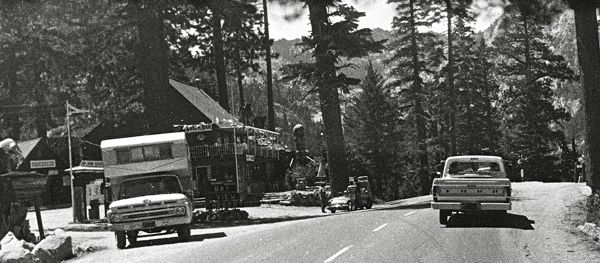
Photo/Don Lane/USFS

The privately-owned Bay View Resort was located on Highway 89 at the south side of Emerald Bay.

It offered lodging, dining, groceries, souvenirs, and gasoline. This was all very similar to the early nearby Camp Richardson, except it had no beach.

I had dinner there in 1961. This black and white photo is no later than early 1960s.

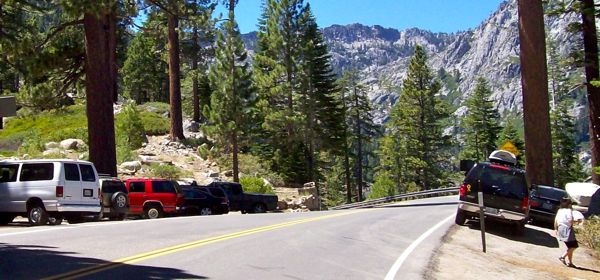
What is now a stat park, above, was once a private resort near Emerald Bay, top. Photo/Bill Kingman

When the state of California acquired Emerald Bay, it razed the Bay View Resort and now has constructed a fine scenic site park across the street.

 — Bill Kingman