Sugar Bowl taking over operations of Royal Gorge

Sugar Bowl Resort on Oct. 1 signed an agreement to operate Royal Gorge Cross Country Resort this winter.

The Truckee Donner Land Trust, the Trust for Public Land and the Northern Sierra Partnership put down a $500,000 non-refundable deposit on the property on Oct. 1, and plan to complete the $11.25 million purchase on Dec. 20.

The previous owners of Royal Gorge defaulted on their loan on the property, and Royal Gorge was taken over by the lender last summer.

Royal Gorge is America’s largest cross country ski resort. Its 200 kilometers of trails and approximately 6,000 acres of terrain stretch from the open expanse of Van Norden Meadows to the foot of Devil’s Peak. Sugar Bowl has trail leases with Donner Summit landowners, which will ensure the entire 6,000 acres of cross-country ski will be open for skiing this winter.

Sugar Bowl Resort and Royal Gorge are already connected by an “interconnect trail” that allows skiers to ski back and forth between the Donner Summit resorts, and plans are in the works to further enhance the connection with two additional beginner-friendly routes. Sugar Bowl is offering a season pass that allows holders to downhill ski at Sugar Bowl and cross country ski at Royal Gorge.

Sugar Bowl plans to invest $500,000 into Royal Gorge this season, including upgrades and renovations to Summit Station, the purchase of two grooming machines, enhanced wayfinding signs, a new website with comprehensive daily grooming report and more.


Luther Pass blaze burns half acre

Firefighters on Tuesday were able to keep a blaze on Luther Pass to about a half acre.

The cause of the fire is under investigation.

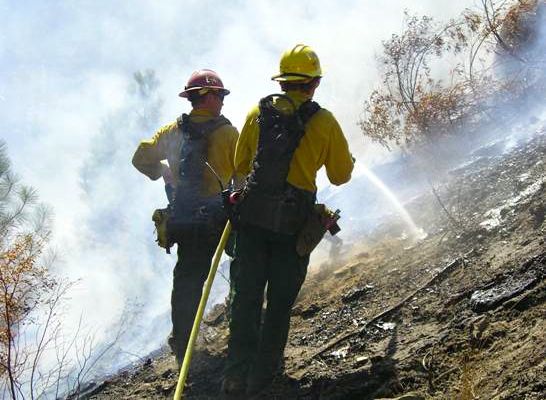
Ted King, captain of Engine 41 and firefighter Skylr Penna-Couttenye mop up the Luther Fire. Photo/Steve Burns/USFS

It started south of the Big Meadow trailhead off Highway 89.

U.S. Forest Service crews along Lake Valley Fire Protection District put out the fire.


Nevada entrepreneur Donald Bently dead at age 87

To the community,

It is with considerable sadness that we announce the passing away Oct. 1 of one of the institute’s greatest friends and benefactors, our longtime trustee Donald E. Bently. He was 87.

Don began his relationship with IWP when he visited our first headquarters a block down from our current location. At the time, he had become disillusioned with Washington politics. Our mutual friend and eventual trustee, Terry Balderson, however, encouraged Don to visit us, as he believed that Don would be inspired by our mission and what Terry ended up calling our “purity of motive.”

When Don saw that we had not equipped our headquarters with new furniture, but were making do with bare bones accoutrements, he decided not only to donate to us, but to triple the size of his originally contemplated donation.

Donald Bently

Two years later, when we lost our lease and were having difficulty finding appropriate new campus facilities, Don took the extraordinary initiative to buy the Marlatt Mansion and the two adjacent townhouses for the institute’s use. He donated the use of the mansion to us for 15 years at $1 per year, and spent several million dollars gutting and rebuilding the adjacent townhouses, which were beyond repair. I did not ask him for any of this. Thanks to Don, we have enjoyed an extraordinary physical presence just eight blocks north of the White House in one of the best locations in the city.

Subsequently, Don endowed the Donald E. Bently Chair of Political Economy at the institute, which has enabled our longtime professor, Amb. Alberto Piedra to teach moral philosophy and applied ethics to our students.

Don was one of the world’s greatest experts on rotor dynamics. He not only blazed new paths in the engineering theories surrounding rotating machinery, but he also was an inventor and entrepreneur, whose innovations have made the world a much safer place. One of Don’s inventions is a “probe” – a small device that detects vibrations in rotating axles, and therefore the possibility of impending failure in machinery. Such failure can produce meltdowns in nuclear power plants and catastrophes in oil refineries, among other things.

Don’s first company, Bently Nevada, which became the largest manufacturing company in the state of Nevada, also played a pioneering role in the diagnosis and servicing of major machinery. Don eventually sold the Minden company to General Electric.

And then when he was already in his 70s, Don established a new company, Bently Pressurized Bearing Corporation, which manufactures a bearing that can hold in place a rotating axle without actually touching the axle and thus avoiding friction. This extraordinary technology is based on injecting highly pressurized air between the bearing and the axle. In addition to his world class expertise as an engineer, Don was also involved in agriculture, ranching, the development of biofuels, and other sustainable energy concepts.

Don was a long term investor. His companies were completely privately held, and because he was able to structure the way he built his companies for the long term without having to worry about quarterly reports to stockholders, he was always able to keep on the cutting edge of his field technologically. He fended off subsidized competition from Japan; he fended off competition from U.S. government-funded entities, always offering a better product. He did business in over 50 countries around the world, and never agreed to pay a bribe. If people wouldn’t buy his product on that account, he simply refused to do business with them.

Don was a believer in a sound currency. He strongly advocated that the U.S. government guarantee the value of the currency, thereby guaranteeing bondholders that they would be paid back the full amount that they had lent the government.

Don was an American patriot who served our country as a Seabee in the Pacific theater during World War II. He was a believer in limited government, the free enterprise system, and a strong national security posture.

He looked upon his support for IWP as an investment in America that would also benefit his companies, his community, and his family for the long term.

On behalf of the entire IWP community, I would like to extend our sincerest condolences to Don’s son, Christopher, and daughter-in-law Amber Marie, as well as to his longtime assistant Carol Money, and the many other dedicated members of his staff.

Thank you for everything, Don. You have been a great blessing to our cause, and you have touched so many lives.

R.I.P.

Sincerely,

John Lenczowski, Institute of World Politics founder and president

—

Note: More on Donald Bently may be found online.


Private fish pond owners balk at more oversight by state

By Edward Ortiz, Sacramento Bee

Operators of private fish ponds and lakes around the state say a recent court ruling could saddle them with devastating costs and potentially force some out of business.

The Sept. 19 ruling by Sacramento Superior Court Judge Lloyd Connelly allows the state’s Department of Fish and Game to proceed with plans to require fish pond owners to obtain permits for their operations. The permitting requirement would apply to 4,000 lakes and 20,000 ponds in California.

Pond and lake owners would have to pay an as-yet-undetermined fee to obtain a permit. Some would also have to conduct an environmental review to show that their fish would not invade other bodies of water and cause harm to native fish or animals. Fish and Game also proposes to require them to provide a certificate stating that their fish are pathogen free.

Fish pond operators say those requirements are too onerous.

“The (court) ruling is just not prudent,” said Ken Beer, owner of the Fishery – a Galt-based fish farm that has four locations and grows sturgeon, catfish and carp. Beer supplies live fish to more than 60 Asian live markets as well as local restaurants in the Sacramento region.

He said the proposed requirement that fish be certified as disease-free would be particularly difficult to meet.

“We would have to go out and find the company to do that certification – and right now there are few labs that can do it,” he said. “It would be like going to the city of Los Angeles and certifying that everyone there is disease-free.”

The permitting is meant to safeguard a list of 89 “decision” native animal species, each of which may come under threat depending on what kind of fish a landowner decides to stock in a pond or lake.

Fish and Game proposed the new regulations after environmental groups filed lawsuits arguing that the department was not adequately evaluating the potential impact on native fish species reared in its own hatcheries. The department responded with new rules for the hatcheries – and is now proposing new scrutiny for private lakes and ponds as well.

In a court filing, the department argues that protecting native fish and animals is of the “utmost public interest.”

The department’s proposed permitting program, which still must be approved by the state Fish and Game Commission, would apply to 37 counties, most of them in the Central Valley, including Sacramento County.

Lake and pond owners in those counties currently are not required to pay any permitting fee to stock fish.

Fish pond and lake operators in the state’s remaining counties – mostly in the mountains and along the coast – already are required to obtain permits, which now cost $53. There is no environmental assessment required.

Fish pond owners in the Central Valley say they’re worried that it will be expensive to comply with the proposed permitting requirements, because they may have to pay for an environmental assessment that could cost thousands of dollars.

The permitting process will likely be required every five years.

For some, the costs could run into six figures, predicted Marko Mlikotin, spokesman for the California Association for Recreational Fishing.

To help make its case, the fishing industry group hired Pasadena-based Sapphos Environmental, a consulting firm, to gauge what such permitting would cost for four different-size lakes.

The firm concluded that conducting an environmental analysis would cost the owner of Dixon Lake, near San Diego, $181,086. Closer to home, 8-acre Knickerbocker Lake in Lincoln would incur costs of $46,515 to satisfy permitting requirements, the report said.

“This will have a devastating impact on recreational fishing and outdoor tourism, and on businesses as well as local government sales tax,” CARF’s Mlikotin said.

Fish and Game officials say the cost of permitting will not be as heavy as the industry contends, because only a portion of ponds and lakes will be required to conduct environmental reviews.

“The department disputes CARF’s estimate,” said Fish and Game spokesman Mike Taugher.

Beer, though, contends that the permitting requirement could eventually cause some fish farms to go out of business, and so reduce the amount of fresh fish available to diners in the Sacramento area.

“Most of the fish grown in private fish farms, except for trout, are sold for food – and almost all of it is sold and consumed locally,” he said.


Snippets about Lake Tahoe

• A free shuttle is available for people visiting Apple Hill on weekends in October. Click on the flyer for details.

• Lake Tahoe News will be giving away two tickets to the November wine tasting put on by Soroptimist International South Lake Tahoe. Details on how to win will be posted soon. But first you must be part of the NEWS Team. All you have to do is become a paid subscriber.

• El Dorado County Department of Child Support Services as of Oct. 1 is located at 3368 Lake Tahoe Blvd., South Lake Tahoe.

• TJ Maxx in South Lake Tahoe has changed its opening date to Nov. 11.

• There will be a free blessing of the animals event at St. Theresa Church’s parking lot in South Lake Tahoe on Oct. 4 at 4:30pm. All animals and faiths welcome.


Study: U.S. travelers looking for recreation destinations

By Scott Kauffman, World Property Channel

While the most popular U.S. states retained their tourist appeal this year (Florida, California, Hawaii, N.Y. and Alaska) among American travelers, the allure of several other domestic destinations has increased.

For example, Louisiana, Michigan, Oregon and Washington, D.C., were the beneficiaries of increased tourism, while states like Alaska, Hawaii, Arizona and Tennessee saw slight decreases in interest. At least that’s what travel experts at MMGY Global/Harrison Group learned during their newly released survey, 2012 Portrait of American Travelers.

Meanwhile, many destinations that feature outdoor recreation now enjoy a statistically significant rise in interest – namely mountain areas such as the Utah mountain resorts, Lake Tahoe, Gatlinburg (Tenn.), and Pocono Mountains (Pa.). Coastal spots like the Mississippi and Florida Gulf coasts, Atlantic City, the Outer Banks (N.C.) and South Carolina shoreline also showed rising tourism interest.

According to MMGY/Global Harrison Group, other destinations with rising popularity are those that offer unique visitor experiences such as historic Colonial Williamsburg (Va.) and St. Augustine (Fla.), wine-focused Napa Valley and Sonoma Valley and glitzy hotspot Las Vegas.

International destinations with rising interest in visitation include Africa, the Middle East and Oceania (Australia, New Zealand and Pacific Islands, etc.). However, fewer U.S. travelers are interested in international trips overall, dropping to 9 percent of all leisure travelers today compared with 11 percent last year.

In an interesting juxtaposition of interests, MMGY Global adds, more travelers enjoyed both trips focused on outdoor activities as well as city-based vacations last year, with each type of getaway reflecting a two percentage-point rise since 2011 (46 and 25 percent, respectively). And while trips focused on outdoor activities rose in popularity, less-active general sightseeing vacations declined significantly, dropping from 29 percent in 2011 to just 26 percent today.

Gambling vacations and trips to see sporting events also declined in popularity.

If you’re wondering how technology factors into today’s tourist mindset, MMGY Global/Harrison Group reports the usage of tablets has exploded during the past two years.

While less than one in 10 leisure travelers accessed the Internet through an iPad or tablet computer in 2011, this has increased nearly four-fold to 27 percent in 2012. When comparing the activities performed by leisure travelers on tablets versus smart phones, travelers now use tablets more frequently when comparing prices, making air travel, lodging reservations, or purchasing tickets to attractions and other activities.

Smartphones are more likely to be used for activities on the go, according to MMGY Global, such as finding nearby restaurants and shops, navigation, scanning QR codes, or using check-in features or apps such as Facebook Places and Foursquare.

Overall, MMGY Global/Harrison Group sees a promising tourism future. After several years of being “cost-conscious” travel consumers, Americans are starting to place greater meaning and emphasis on the value of vacations. In other words, Americans are spending more freely and their starting to travel more freely.

Consequently, leisure travelers are doing less of the things that characterized the economic hardship of recent years and are now adopting more behaviors that confirm the importance of travel in their emerging lifestyles, according to the study of 2,527 U.S. households (respondents had annual household incomes of $50,000 or more and at least one overnight trip of 75 miles during the previous 12 months).


S. Tahoe council candidates try to differentiate themselves

By Kathryn Reed

The five candidates for the two South Lake Tahoe City Council seats agree a broader approach to best management practices, instead of parcel-by-parcel, is a good idea and local jurisdictions having more say are potential positives of a yet-to-be-approved update of the Tahoe Regional Planning Agency’s Regional Plan.

While they liked the idea of changes that may come to the basin if the Regional Plan is updated, none believed this would be a cure-all, assuming it cures anything.

The five – incumbents Hal Cole and Bruce Grego, and newcomers Austin Sass, JoAnn Conner and Clinton Schue – answered a series of questions Oct. 1 in the first forum of the season.

(Lake Tahoe News, South Tahoe Association of Realtors and South Lake Tahoe Lodging Association put on this event at Inn by the Lake.)

Each started the event with an intro before the questions were asked and then were given a chance to make a closing statement.

Sass talked about the need for real leadership on the council and the understanding of multi-million dollar budgets. He added that without a vision, no one would invest in the community.

Cole spoke of his fiscal experience, that the city is in recovery mode and that recreation is key.

Grego touted his backing of Nevada Senate Bill 271 that called for corrective measures to TRPA, that land use control is the No. 1 issue, and how he has always opposed marijuana dispensaries.

Conner spoke of the need to start doing things instead of studying them, the need to promote recreation, and the need to tap the knowledge and insight of local businesspeople.

Schue doesn’t understand why Tahoe recreation has not been better marketed and he wants to bring jobs to town.

When it came to discussing the proposed loop road that would re-route Highway 50 traffic in the state line area, consensus was almost found among the five.

Schue would like to investigate pedestrian overpasses and is against the taking of private property.

Grego opposes what the Tahoe Transportation District has brought forward and wonders why a loop road is needed.

While Cole supported a loop road when the Heavenly Village project was going in, he does not want the TTD alternative.

Sass can’t figure out why so much time has gone into a project that has no money, let alone no real plan.

Conner likes the loop road that exists and believes until a return on investment can be proved to change what is in place, then it would be harmful to businesses and residents to go forward.

Blame went to previous councilmembers for the hole in the ground at the state line. The one-time convention center-hotel complex is now just bankrupt concrete and rebar that spans 19 parcels because the council never insisted on a consolidated parcel map. (Owens Financial, the largest property owner, has a proposal to build commercial along the highway and leave the rest.) All of that land is private – not city owned.

Sass said without the city having a vision for where it is going it is hard to decide what is best for that plot of land.

Cole believes the land will have more value if the state line area is revitalized and a loop road goes in.

Grego said the hole occurred because previous councils caved to special interest groups. He is not sure what was planned for the site would be appropriate today.

Conner questions the integrity of the rebar and concrete that have endured the elements for several years. She calls it a “dangerous eyesore” that needs to change – even if that is little shops.

Schue says the last thing the town needs is more retail. But he does believe a convention center is a good idea.

When it comes to appeasing those who live in the unincorporated area of El Dorado County in the Lake Tahoe Basin, it was pointed out how it is not legally possible for those residents to vote in city elections and that if the land were to be annexed, the county residents would have to initiate it.


Markleeville artists putting on studio tour

The 10th annual Markleeville Autumn Open Studios is Oct. 6-7 from 11am to 4pm you.

Artists will be working in oil, watercolor, abstract acrylic, scratchboard, fabric arts and jewelry. Pick up a guide and map at the Alpine County Chamber of Commerce.

The website has more information about the artists.


Placer County needs people to work on Election Day

Placer County Office of Elections is recruiting poll workers for the Nov. 6 election.

Listed below are the positions and pay rates. All poll workers must be able to work from 6am-9pm on Election Day.

Inspector: $100 for the day, plus training class pay.

Judge: $90 for the day, plus training class pay.

Clerks: $85 for the day, plus training pay if you attend.

For more information, contact Lora Lashly at (530-) 886.5667 or Randi Greco at (530) 886.5671.


Aggressive search of DiMatteo residence caught on video

By Kathryn Reed

Officers in full SWAT gear with assault rifles using a flash-bang to enter Gino DiMatteo’s South Lake Tahoe home was caught on video by his neighbors.

DiMatteo’s civil defense attorney, Ted Long, has released the video to Lake Tahoe News and KRNV-TV in Reno. The latter is seen here.

“We are expecting the whole thing to blow up in their face. It’s been weeks now and we have not seen a lick of evidence,” Long told Lake Tahoe News.

DiMatteo’s residence and business – Push Fitness – were searched on Aug. 31, the same day he was arrested on a variety of drug charges as well as bribery. However, Angela Swanson, the South Lake Tahoe City Council member he is accused of bribing, has yet to be charged. Instead, the El Dorado County District Attorney’s Office is letting her name be associated with a crime she has never been charged with.

She remains on the council and is actively participating on the boards she is assigned to. Swanson was not available for comment Oct. 1.

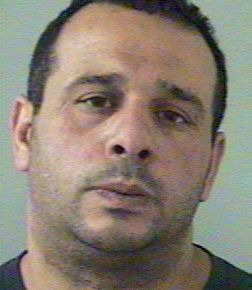
Gino DiMatteo returns to court Oct. 3 in Placerville.

Long doesn’t believe Swanson will be charged because he doesn’t believe she or DiMatteo did what the DA investigators are alleging.

It has come out that Swanson was the catalyst for a donation from DiMatteo to the Lake Tahoe Educational Foundation, of which Swanson is a board member. This cash donation of more than $1,000 came on the same day the council agreed to allow DiMatteo to move his medical marijuana dispensary. That decision was later rescinded by the majority of the council.

It is also one of the issues in which Long is representing DiMatteo. Long says his client has a letter from the city attorney that says go ahead and spend money to move. DiMatteo did – $60,000, according to Long.

Long, who is a former city councilman, said his first course of action is to go to federal court to get the city’s decision to ban DiMatteo from moving overturned. He says the odds are 50-50. At a minimum, he wants the city to pay DiMatteo so he can recoup his loses for tenant improvements that were for naught.

Long also wants the DA and El Dorado County Sheriff’s Department to pay for the more than $30,000 in damages to DiMatteo’s home when officers stormed it in August.

DiMatteo was already detained when officers ransacked the residence, Long said, so there was no need for the forceful entrance.

“What if his two teenage daughters had been there? It could have caused serious injury, if not death,” Long said of the flash-bang. “It was totally unnecessary. I could have unlocked the door.”

(Rob Wolfel – who was not available Oct. 1 – is DiMatteo’s criminal defense attorney.)

DiMatteo will be in court in Placerville on Oct. 3. He has pleaded not guilty to all charges. He also wants a speedy trial – to which he is entitled to 45 days after being arraigned.

“We want to force them to produce something and then force them to go to trial,” Long said of the prosecution. “If there was some evidence, we would have seen it.”

Long also told Lake Tahoe News that at no time has DiMatteo been in the witness protection program, as has been rumored.