‘Secret’ convention center deal may cost S. Tahoe $1.8 mil.

By Kathryn Reed

South Lake Tahoe officials have always claimed there is no city money involved in the failed convention center project. Depending on the outcome of a lawsuit in El Dorado County Superior Court, that statement could prove to be wrong to the tune of approximately $1.8 million.

This is because on March 9, 2007, then City Manager Dave Jinkens along with the city’s outside redevelopment attorney, Stacey Sheston, signed an indemnity agreement that puts the defunct Redevelopment Agency, which is now the city because it’s the successor agency to the Redevelopment Agency – on the hook for this amount. The original indemnity was for $3 million, but the difference involved two other properties that are not part of this lawsuit.

Concrete and rebar -- it's what South Lake Tahoe locals call The Hole. Photo/LTN

Jinkens was acting as executive director of the South Tahoe Redevelopment Agency at the time he signed the document. He wore two hats, as did councilmembers – they were the City Council and the board of directors for the Redevelopment Agency.

The agreement protected Placer Title Company and Stewart Title Company on loans of more than $3 million that were brokered by Z Loan & Investment and Lake Tahoe Development Company that involved three assessor’s parcels numbers.

Z Loan is considered a hard-money lender. A hard-money lender provides a “bridge loan” and is usually used when traditional financing cannot be secured. This is what Randy Lane and John Serpa, who ran Lake Tahoe Development Company, were in need of to acquire all of the property to build what was supposed to be a more than $400 million hotel-convention center project on the eastern edge of South Lake Tahoe at the state line.

Lane told Lake Tahoe News the need for this type of lender was necessary because traditional financing wasn’t possible because of what he intended to do with the property – acquire buildings and tear them down.

“A lot of [traditional loan] agreements say you won’t do anything that adversely affects their collateral,” Lane explained.

In addition to needing money to buy the properties, Lane was borrowing against the properties before he owned them.

“For the city to say that it never had any financial exposure on the project is just untrue,” attorney David Becker told Lake Tahoe News.

Bankruptcy has since left the more than 11-acre site a pile of rebar and concrete whose integrity is in question after years of exposure to the elements, with not all of the 19 parcels foreclosed on, and Owens Financial – who has the most money on the table – proposing retail along Highway 50 and nothing behind it.

According to Julie Regan at the Tahoe Regional Planning Agency, “The convention center permit has an approved construction schedule which is valid at least through October 2016.”

Pending lawsuit

The lawsuit that could saddle South Lake Tahoe with the $1.8 million bill involves Harry Segal and Janice Halpern-Segal suing Fidelity National Title Company.

“The Segal family is suing to prove that Randy Lane’s loan should not have been made against their property before the Segals actually sold their property to Mr. Lane. The lender (Z Loan) made their loan to Randy Lane six months prior to the Segals agreeing to sell their property to Mr. Lane,” David Becker, the Segals’ attorney, told Lake Tahoe News.

Becker was not their attorney at the time they were selling their property.

The Segals carried the paper for the sale to Lane. However, Lane and the title companies contend the Z Loan lien takes priority over the Segal lien, even though Lane did not own the property he pledged as security.

“The artificial title, made possible by the city’s indemnity, created a false appearance that Mr. Lane owned the title. Had the city properly publicized the back-door deals, somebody may have caught how risky it was for the Segals to sell their property to Mr. Lane,” Becker said.

This was at a time when Jenny Lane, Randy Lane’s daughter, worked for Stewart Title.

Dina Reed (no relation to this reporter) was Jenny Lane’s assistant when this was taking place. She is now manager of the Stateline branch of Stewart Title. She says there is nothing illegal or unethical about a client’s daughter working on her dad’s paperwork, and that multiple eyes would be on the documents.

Reed said indemnity agreements like this occur with any type of construction deals, even for a residential house.

Debbie Landerkin, manager of Placer Title, deferred all comments to her legal counsel.

Jody in Placer Title’s legal department wouldn’t provide her last name. She was more curious about how LTN obtained the document than answering questions.

“That document would not be something I could discuss with you because it is not a public document,” Jody said.

Landerkin’s signature is on supplemental joint escrow instructions involving the Segal property. So are Jinkens and Lane’s. That was signed two days prior to the indemnity agreement being signed. At that time Landerkin was dating Bruce Budman who was South Lake Tahoe’s finance director.

The city could have indemnified itself and had Lake Tahoe Development Company take the risk instead of potentially jeopardizing taxpayer money – as might be the case depending on the outcome of the lawsuit.

“Everything that could go wrong in the Segal-Lane transaction did go wrong. And it all started with the city’s indemnity,” Becker said.

South Lake Tahoe City Attorney Patrick Enright told Lake Tahoe News, “If there was a judgment against the agency, it would be a liability of the South Tahoe Redevelopment Successor Agency, not the city of South Lake Tahoe.”

What he failed to add is that the current City Council acts as that successor agency – so the city is liable.

Enright said he became aware of the lawsuit in August 2011.

A trial date for the Segal case is expected to be picked Oct. 29.

At this time it is not public how much money the Segals have received, if any, from Lane. They owned a business on land owned by a different party. The parcel was obtained by eminent domain, which was orchestrated through the city.

However, the Segals told Lake Tahoe News, “The money for our retirement was lost as well as the future financial security of our children.”

Who knew what

In 2004, when Marriott Corp. was contemplating being the convention center developer the hospitality company and the city agreed neither wanted to indemnify the project because they did not want to subject themselves to potential legal claims.

But things clearly changed three years later, but no one in power remembers or knew about that change.

Jinkens emailed Lake Tahoe News, “I do not recall the agreement specifically and because I retired in August 2010, I do not readily have access to city records. I speculate, but I am not certain by memory, that the agreement had something to do with the RDA’s use of eminent domain to acquire a few (2-4 properties??) of the 29 parcels needed for the convention center project and the requirement that of the title company to verify that the city has a right to acquire the property before the property was transferred to the developer. I am sure that before any documents were signed by city officers that the city’s then legal counsel approved their use.”

Lake Tahoe News asked the city for the documents and provided Jinkens with a route to obtain them to jog his memory. It has been more than a month and he has not gotten back to LTN for further comment.

Cathy DiCamillo was the city attorney at the time. She did not respond to Lake Tahoe News’ inquiries about the matter. But at that time Jinkens was using outside counsel, including special redevelopment attorneys. Jinkens and DiCamillo had such a rocky relationship that they required a “therapist” to help them work together so it’s possible DiCamillo did not know about the transaction. However, her job before working for the city was as an attorney in the same office as Lew Feldman – who was Randy Lane’s attorney throughout this process.

The City Council at the time was comprised of Bill Crawford, Jerry Birdwell, Ted Long, Kathay Lovell and Mike Weber. All responded to LTN except for Weber. The four who responded have no recollection or knowledge of any indemnity agreement entered into by Jinkens.

Current councilmembers – Claire Fortier, Tom Davis, Bruce Grego and Angela Swanson – did not respond to Lake Tahoe News’ questions so it is not known what they know and when they learned about it.

One question was: Why was an owner participation agreement used for this project and not a development agreement?

Councilman Hal Cole answered only that question. He wrote, “In response to your series of questions about the Chateau project I want to add the following. I was hoping Patrick Enright would fill in the blanks for you on all the legal questions as I could only answer what I had firsthand knowledge of. He did not address the OPA issue. My understanding of a Disposition and Development Agreement (DDA) is it is a contract between a developer and a redevelopment agency that involves the sale of agency owned land. This is what we did for the gondola project. We assembled the land, made the map changes and sold the parcels. An Owner Participation Agreement is a contract between a property owner and the redevelopment agency to allow the development of property owned by the owner/developer. It was the city’s expectation that Randy [Lane] would acquire and assemble the land (new map and all) and then use redevelopment financing for the public areas (convention center space, open space and walkways).”

Cole and then City Councilman John Upton served on the committee tasked with negotiating the agreement with Lake Tahoe Development Co. They were the only two councilmembers who ever read the market study that the city hung its hat on saying a convention center was desirable, though the study doesn’t come to that conclusion.

Enright told LTN of the 2007 council, “The city or agency is not aware of when, if ever, individual board members became aware of the agreement. There is no record that the agreement was ever discussed in closed or open session by the Redevelopment Agency board of directors.”


Sierra Club fundriaser at Aspen Hollow

The Sierra Club and Aspen Hollow Garden Party is Oct. 11 from 4:30-7pm.

This is the Tahoe Sierra Club’s fall fundraising party.

Discounts will be available on native plants, shrubs, trees, as well as Tutorials by John Fellows and Aspen Hollow staff.

The cost is $10.

For more information, click on the flyer.


Signs of recovery in South Tahoe real estate market

By Dan Spano

In Lake Tahoe real estate, each month brings better news than the month before. When comparing September to the month and year before there were more closed sales, fewer homes on the market, fewer new listings, and a new category – increasing median sales price.

Even when the real estate market was showing recovery in the number of homes sold and number of homes for sale, median sales prices weren’t recovering. That may have just turned the bend in September. In 2011, the median price of homes sold in September was $230,000. Last month that figure was $262,500 — a 14.1 percent increase.

September was the third month in a row that had median sales prices on the rise in South Lake Tahoe.

August’s median price was $236,250 and July’s was $227,500. The lowest median sales price in the last five years in the area was in February when the price was $197,500.

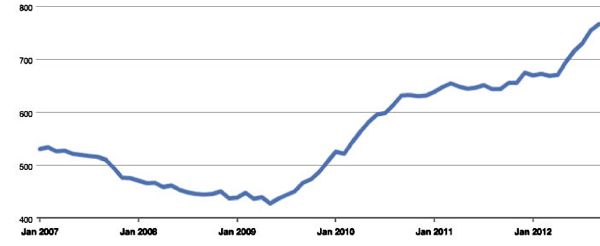
Homes sold at the highest rate in more than five years in September. The 84 homes that closed escrow brought the total for the last 12 months to 766. Comparing that to 643 during the previous 12 months it shows a 19.1 percent increase.

This graph shows closed sales of homes in Lake Tahoe from January 2007 to September 2012.

We’ve been seeing fewer homes enter the market for months now. There was a high of 203 new listings in May 2007. The low this last month was 43 new listings. To put that low figure into perspective, there were 90 new listings in August 2012 and 115 in May 2012.

In September, seven homes sold that were priced at $650,000 and above. This is a 133 percent increase over September of 2011 when there were three homes sold in that price range. There are currently 79 homes for sale in Lake Tahoe in this range, the highest asking price being $5.25 million.

We continue to see more people interested in owning a home in Lake Tahoe. Their perception is that this may be the last time they can afford to own a home in one of the most beautiful areas in the world. Interest rates may be increasing, so combine this with fewer homes for sale and increasing sales, we could see a seller’s market soon. Homes over $400,000 will still be in a buyer’s market, but those homes under this are starting to sell for at, or above, their asking price, thus creating a seller’s market.

Dan Spano is with Paradise Real Estate in Lake Tahoe.


Felon vanishes after judge said OK to be free 3 hours before going to prison

Updated: Oct. 4 3:40pm

South Shore law enforcement is looking for a man who left Barton Memorial Hospital late Thursday morning when he was supposed to be headed to prison.

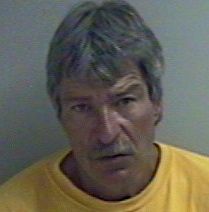
Anthony James Katello is 51, 5-feet-11, 180 pounds, and has brown hair. He was last seen wearing green shorts and no shirt.

El Dorado County sheriff’s Lt. Pete Van Arnum said a judge let Katello out for three hours so he could get his affairs in order before being sent to prison on spousal abuse charges. A church member was driving Katello around on errands. One of the stops was the hospital. Van Arnum did not why they went there.

Anthony James Katello

Lake Tahoe News has been told Katello went back inside saying he forgot something. That is the last time the volunteer saw the man.

An airplane, K9 units and officers from multiple agencies have been scouring the area. As of 3:40pm Oct. 4 the suspect was still on the loose. A warrant has been issued for his arrest.

“We have contacted the spouse. We are taking action to ensure her safety at this time,” Van Arnum told Lake Tahoe News. The woman does not live in South Lake Tahoe.

The individual is not considered dangerous, however, if anyone sees a person matching this description they should call dispatch at (530) 542.6100 or 911.


 — Lake Tahoe News staff report


History of Al Tahoe area comes to life on guided tours

The Lake Tahoe Historical Society is offering docent led walking tours of Al Tahoe.

The tours are Oct. 13, Oct. 27 and Nov. 3 at 1pm.

Meet at the museum (3058 Lake Tahoe Blvd., South Lake Tahoe).

The tours are limited to 10 people each day. Reservations may be made by emailing lthstours@sbcglobal.net.

This is an expanded tour of the individual walking tour.

A $5 donation (tax deductible) is suggested.


Free flu shots in Douglas County

On Oct. 6, Douglas County Emergency Management and Carson City Health & Human Services, along with several community partners, are hosting a free drive-through flu shot clinic at Douglas High School in Minden.

This event is open to the general public.

The flu shot and the nasal spray will be available.

The clinic is from 9am to 1pm.


Cash prizes for radon poster contest

Nevada children are invited to showcase their artistic talents to promote radon awareness by entering the 2013 Nevada Radon Poster Contest by Oct. 15.

The contest is open to children ages 9-14 who are enrolled in a public, private, territorial, tribal, Department of Defense, or home school. Children can also enter through a sponsoring club, such as an art, computer, reading, science, scouting organization, or 4-H club.

Entries are free, but are limited to one entry per child.

Posters should follow these five topics: 1) What is radon? 2) Where does radon come from? 3) How does radon get into our homes? 4) Radon can cause lung cancer, and 4) Test your home for radon.

Cash prizes for the top five Nevada entries are: $80 for first place, $60 for second, $40 for third and $20 for fourth and fifth place winners. The top three Nevada poster entries are also awarded cash prizes for their teachers, or sponsoring organization’s representative, and are entered in the national contest. National contest winners receive $1,000 for first place, $600 for second, $400 for third, and $400 for special online voting recognition.

National winners will receive recognition and the posters will be reproduced and distributed nationally to promote radon awareness.

For contest rules, requirements and information, go online.


Growing number of Chinese interested in wine

By Bruce Einhorn, Bloomberg

On the outskirts of Yinchuan, a sleepy provincial capital near the Gobi Desert, workers put the finishing touches on Château Changyu Moser XV, a vast building with white stone walls and black-tiled mansard and domed roofs. If it weren’t for the cast-metal statues of Chinese lions guarding the main gate, it could pass as a classical château found in the cradle of France’s Loire Valley.

When it opens soon, the 150-acre estate will serve as local headquarters for Changyu Pioneer Wine, a Chinese vintner that already has ersatz châteaux in other parts of China. This summer the company announced plans to spend $950 million on a “wine city” in eastern China’s Shandong province, complete with two châteaux and a European-style village.

As the country’s nouveau riche continue to spend lavishly on wine, such copycat French castles – as well as Mission-style Napa Valley knockoffs – are rising out of the countryside. In some places winemakers don’t even bother with a vineyard – they just have a castle with a cellar full of trucked-in wines.

“I almost don’t care about how good the wine is,” said Chinese architect and winemaker Qingyun Ma. “As soon as I see a fake French château, I think there’s something wrong.”

Ma is one of the growing number of Chinese oenophiles who want the wine world to look beyond hyperreal European settings and start thinking of made-in-China Cabernet Sauvignon or Pinot Noir without laughing. That’s not easy, since the country has no winemaking tradition of its own.

In China, people who wanted a drink traditionally downed shots of baijiu – fierce, clear booze made from sorghum that remains a staple at Chinese banquets. When they tried to make wine, the product was barely drinkable.

Shao Xuedong, chief winemaker at Cofco Junding Winery, a state-owned company that operates a Napa-inspired winery in Shandong, remembers when he first started in the business in the 1990s. Back then, “at least 95 percent” of Chinese wine wasn’t real, he said. “It was just some blend of water, sugar and grape juice.”

Emma Gao is the winemaker at Silver Heights, a family winery in Yinchuan that produces some of China’s most admired vintages. Gao, who studied at La Faculté d’Oenologie de Bordeaux, said many of her neighbors don’t understand what she’s trying to accomplish.

Huge potential

“Here, people think a good wine shouldn’t give you a headache the next morning,” she said.

Even so, Gao and other serious vintners see huge potential. Chinese bought 156 million cases in 2011, making the country the world’s fifth-largest wine market, and purchases should hit 250 million by 2016, according to International Wine Spirit Research.

“Before, people would just buy wine to show off, but that’s changing,” said Shaun Rein, managing director of China Market Research Group in Shanghai. “Younger Chinese are drinking it at home.”

California wines are popular, too. After retiring from the Houston Rockets, Chinese basketball star Yao Ming launched Yao Family Wines in November. The company produces a Cabernet Sauvignon in Napa Valley, with French beverage maker Pernod Ricard distributing it in China.

The emphasis may be on imports, but local wine is improving. More Chinese are going overseas to study winemaking, and critics have noticed: A Cabernet red blend by Helan Qingxue, a winery in Yinchuan, last year won the Best Red Bordeaux Varietal Over £10 International Trophy at the Decanter World Wine Awards.

China’s boutique winemakers hope the plaudits will attract more experts to China to nurture its winemaking culture. France’s Castel Group and Rémy Cointreau have both teamed up with Chinese winemakers. Perhaps the biggest name in Bordeaux, Domaines Barons de Rothschild (Lafite), has staked its flag in China, with vines planted and a winery under construction in Shandong. Working with state-owned local partner Citic, the famed French winemaker had a groundbreaking ceremony in March for the 4.3-acre winery. Overseeing the project is General Manager Gerard Colin, a Frenchman with more than 50 years of wine-producing experience who has lived in China since 1997. “I think we can make a wine with balance and complexity,” he said.

Before teaming up with the Rothschilds, Colin helped out a winery just down the road called Treaty Port. At the center of its 52 acres is an imitation 17th century Scottish castle, a stone fortress complete with a Union Jack flying on the flagpole at the top. Finished in 2009, the castle has six bedrooms and a large wood-paneled hall.

Don’t expect any European gimmicks from Lafite’s first Chinese operation, however. Colin vows no cheesy castle this time.

“We are in China,” he said. “We don’t do Versailles.”


Nevada contemplating tighter campaign disclosure regulations

By Sean Whaley, Nevada News Bureau

CARSON CITY – Increased financial disclosure, greater restrictions on contributions and gifts, and tougher penalties for campaign violations are the goals of new legislation for the 2013 Legislature detailed this week by Secretary of State Ross Miller.

The Aurora Act, named for the new campaign contribution and expense search function now available at the Secretary of State’s website, includes language that would mandate near real time reporting of large dollar campaign contributions and expenses, further define the prohibition on personal use of campaign funds and significantly restrict the ability of candidates and public officials to receive “gifts” from donors who may pose a conflict of interest.

The proposed legislation also includes provisions to allow the Secretary of State’s office to seek injunctive relief to order individuals or groups to file campaign finance reports, and substantially increased penalties for violations.

Miller said the campaign reform measures passed in the 2011 legislative session were the most comprehensive in Nevada history.

“We’ve made progress in increasing transparency and accountability in recent sessions, but we can clearly do more and do better,” he said. “I believe that we will have an initial coalition of lawmakers that can make this happen. If we want meaningful reform to occur, we need to call on all candidates and elected officials to support the ‘Aurora Act.’ We’ve all heard the lip service to this issue, but I believe that with the public’s help, we can get enough support from both sides of the aisle to bring much needed sunshine to this state.”

Initial support for Miller’s Aurora Act has been expressed by Assemblymen Marcus Conklin, D-Las Vegas, and Pat Hickey, R-Reno, and by former state Sen. Sheila Leslie who is the Democratic candidate for Senate District 15 in Reno.

Hickey earlier this year called for his own set of reforms.

Hickey said: “While there may be more or less added to Secretary Miller’s proposals, there should be widespread bi-partisan support for cleaning up campaigns and the conduct of candidates at all levels.”

Leslie said: “This is an opportunity for lawmakers to step up and give our constituents the information they need to make informed decisions, and to develop a greater level of trust between the people and their public servants.”

Leslie in 2011 proposed legislation that would have required lobbyists to report spending on lawmakers year round, and not just during legislative sessions. The bill died in an Assembly Committee. She requested the same bill for the 2013 session.

Conklin said the proposal could set an important tone for the legislature.

“We want to come away with an increased transparency, and in doing so demonstrate to Nevadans that their lawmakers can work in a bipartisan manner to effect meaningful change,” he said.

Miller’s legislation would require:

• Increased disclosure and transparency into the money being spent in Nevada’s elections by defining “electioneering communication” and “independent expenditure” to clarify who is required to disclose and when they are required to disclose money spent on Nevada candidates by third-party groups.

• Clarifying the term “personal use” to prevent campaign contributions from being used by a candidate for personal use.

• Clarifying that any expenditures made from a candidate or public official’s campaign account must always be reported.

• Requiring public officials and candidates to report their contributions on hand at the beginning of each year so the public will know how much money public officials and candidates are carrying over from year to year. Currently, only the contribution totals received within a calendar year are reported.

• Reporting within 72 hours contributions received or expenses paid in excess of $1,000 to provide the public with more “real time” reporting through an election cycle.

• Clarifying that the Secretary of State may seek injunctive relief for campaign finance violations to ensure that individuals and groups must not only pay a financial penalty but also actually disclose their activity.

• Allowing the Secretary of State to seek in penalties up to three times the amount of money at issue in a reporting violation. This change will give the office more flexibility in seeking penalties that are more in line with the amount of money involved reporting violations.

• Restricting and clarifying laws related to the acceptance of gifts by public officials by better defining “gift” and “restricted donor.” Changes will set forth from whom it is legal to accept gifts, and provide a clear list of examples of gifts that may or may not be accepted and must be disclosed on public reports.


Opinion: Important to have 2 escape routes

By Teri Mizuhara

Knowing two ways out of every room in your home may save your life during a house fire.

“It’s not just knowing two ways out of your home, typically that is easy, but do you have two ways out of every room in your home and can you safely use each exit?” asks Unit Chief Kelly Keenan of the Amador-El Dorado Unit of CalFire.

Keenan adds, “If not, then you need to create a plan, share this plan with everyone living in your home, and most importantly, practice your plan with your family during daylight hours and in the middle of the night since 50 percent of fatal home fires occur between 10pm and 6am.”

Here’s how to begin:

Sketch a floor plan of your home and indicate with arrows two ways out of every room.

Have a flashlight or headlamp next to each bed in case you need to exit your home in the dark.

Walk through the plan with everyone you live with including visitors.

Make sure you have one “meeting place” for everyone to go to after they have exited the home. Never go back inside a burning home for anything, leave that to the firefighters.

Call 911 once you are outside the burning building, calling from inside the home wastes valuable time that you need to escape.

Purchase escape ladders if you have a two- or three-story home and know how to use them safely.

Post your plan in a prominent place such as your refrigerator door.

Practice your plan during the day and again at night. Do this a minimum of twice a year.

If you have small children, disabled or elderly individuals, make sure you have a plan for their escape. Add ramps and other equipment if necessary. Several years ago an 83 year old woman died of her injuries because she could not safely escape from a house fire. She used a walker and had no ramps to the deck off her bedroom, so she was forced to walk through her home which was on fire. Firefighters found her deceased outside her home.

Keep in mind, small children often hide when they get scared, so practice the exit drill more often so that they are comfortable with the idea. Don’t forget to crawl low under smoke while exiting your home, sleep with doors closed, have a smoke detector in each bedroom, in main hallways and on each floor.

For more information please visit CalFire’s website or call (530) 644.2345 to receive free fire and life safety information.

Teri Mizuhara works for CalFire.