K’s Kitchen: Brussels sprouts, tofu and noodles

By Kathryn Reed

Rice is usually my go-to accompaniment for Asian foods. I suppose it’s because that is what I grew up with.

It wasn’t until I was an adult that I ordered dishes with noodles. But it took even longer for me to cook with them. I don’t have a good explanation for why, other than habits are hard to break.

It is important to pat the tofu dry. This will allow it to get a sear and absorb the flavors of the sauce.

Chicken would be an easy substitute for tofu. And broccoli would be a veggie that is always available, or just as an alternative since not everyone likes Brussels sprouts.

This marinade would be good for a variety of proteins and vegetables. If you add a lot more to the dish, you might want another package of noodles, too.

noodles

Noodles with Tofu and Brussels Sprouts (serves 4)

1 8 ounce package uncooked soba

2 C Brussels sprouts, cut in half

Cooking spray

1 container firm tofu, cut in cubes

2 T rice vinegar

2 T sesame oil

2 T soy sauce

1 T peanut butter

1 tsp brown sugar

¼-½ tsp crushed red pepper

2 garlic cloves, minced

3 green onions, chopped

Cook soba noodles for about 3 minutes in boiling water. Drain.

Combine vinegar, sesame oil, soy sauce, peanut butter, sugar, crushed red pepper, garlic and green onions in bowl. Mix well.

Coat pan with cooking spray. Cook tofu until slightly brown on at least two sides. Remove tofu from pan.

Add Brussels sprouts. If pan is dry, add a splash of water. Cook until tender.

Add tofu and marinade. Cook until everything is coated with mixture and heated through.


Lahontan working to curtail invasive weeds in Keys

Lahontan Regional Water Quality Control Board is looking to find ways to contain the aquatic weeds that are so prolific in the Tahoe Keys.

The state agency this week released a draft permit for public review, which aims to reduce and prevent the aquatic weed infestation in the 372-acre waterway in South Lake Tahoe.

Milfoil and curlyleaf pondweed compete with native species and present persistent navigation and swimming nuisances.

If the permit were awarded, it would allow the Tahoe Keys Property Owners Association to perform various land-based tasks to prevent nutrients and sediment from entering the waterways. Beyond outreach and education, it would include fertilizer and irrigation management, and promoting the retrofit of all properties with best management practices. The draft permit also will allow the homeowners’ association to lay bottom barriers over the invasive aquatic weeds to suffocate them.

People have until July 3 at noon comment.

For more information or questions about the proposed permit, contact Doug Smith at DFSmith@waterboards.ca.gov or 530.542.5453.

The board will discuss the issue at its July 16-17 meeting in South Lake Tahoe.


STPUD ups rates; salary increases not decided

By Lesia Witkowsky

Water and sewer bills for South Tahoe Public Utility District customers will be going up July 1.

The board on a 5-0 vote made it official June 5.

Water rates will increase 6.5 percent for each of the next four years, with the fifth year being 5 percent. The base pay for people on water meters becomes 80 percent of the bill, with 15 percent being based on use. Sewer rates will be 6 percent higher each of the next five years.

About 20 people were in the room Thursday, with a few speaking from their seats. Many spoke about water meters and their legitimacy.

Residents are concerned that a lot of people in this town are on fixed wages and it is not easy for them to start spending more money for basics like water and sewer. A few also discussed the fact that meters will cost money to implement and were concerned with the fairness of everyone having to pay more money for water even if they barely use any, for example people who own homes here, but live full time in other cities.

Eric Schafer, board president, said how in a global sense meters encourage conservation by showing water consumption and therefore there are valid reasons for using them. Because meters are state mandated, the board has no choice but to ensure they are installed. They are also the best way to reduce water consumption because flat rates are hard to leverage pressure on customers to reduce water consumption, Schafer added.

He also reminded people that the staff recommendation was for higher water and sewer rate increases.

“We carry the burden of responsibility on whether or not we do the right thing. It’s a brutal cost, but if you’re trying to make sure of maintaining the system as it is or better, and make sure we don’t have something that causes more significant increases down the road, then do the 9.5 percent,” Schafer said. “If we’re not doing enough, I think you need to relook at it and think about doing what’s right and not what the notice say. I’m going to vote for this not because I believe it, but because I want my vote to at least be what is called for. It’s not my recommended approach, but that’s what I’m going to do.”

The notice he refers to is Proposition 218, which required a 45-day protest period. If 50 percent plus one ratepayers were to have filed a protest to the proposed rate increases, the district would not have been able to go forward no matter what the board wanted to do.

Water rate received 305 protests, or 2.17 percent of customers; sewer 342, or 1.88 percent of customers; and metered rate structure 260, or 1.85 percent.

The board has been discussing the possibility of raising rates since last fall. And the five have never been on the same page as to what the district should be asking of its ratepayers.

It’s been a case of does aging infrastructure get replaced now or sooner versus can ratepayers afford to pay more when so many still have not recovered from the economic downturn.

Board member Jim Jones agreed with Schafer that not enough money is being collected, especially when it comes to long-term equipment replacement.

Member Kelly Sheehan said, “Perhaps had there been smaller consistent rate increases, we wouldn’t be faced with the thought of a 9 percent increase or a 6 percent increase.”

Randy Vogelgesang, another board member, said, “It is our duty to carry out the wishes of the ratepayers to the extent that we can and still have a functioning district. In an ideal world we’d go with constant rates forever, but that includes capital improvement.”

Besides rate increases, the board approved the 2014-15 budget that takes effect July 1.

There are no cost of living increases for employees, but raises are not out of the question.

“Negotiations are under way with our union represented employees for a new MOU, since the current two-year contract expires in July of this year,” General Manager Richard Solbrig told Lake Tahoe News.

The board discussed the latest proposal from the union in closed session at the end of the meeting, but no decision came from it. It’s likely the salary question won’t be resolved until July.

Regular step increases for employees who are not at the top of the pay scale will be given.

No changes have been made to other employee benefits.

Kathryn Reed contributed to this story.


Nissensohn sentenced to death

Joseph Nissensohn was sentenced to death June 5 for the murder of a South Lake Tahoe teenager and two others.

El Dorado County Superior Court Judge Suzanne Kingsbury upheld the December recommendation of the jury.

Nissensohn, 62, was convicted in October in the first-degree murders of Kathy Graves, 15, of South Lake Tahoe in 1989, and Seaside residents Tammy Jarschke, 13, and Tanya Jones, 14. Graves was killed in 1989 and the others in 1981.

It is more likely Nissensohn will spend the rest of his life in San Quentin. California has more than 700 inmates on Death Row. Clarence Ray Allen on Jan. 17, 2007, was the last person executed. The controversy of using lethal injection is creating the logjam.

— Lake Tahoe News staff report


Wine terroir goes under the microscope

By Becky Grunewald, Sacramento Bee

UC Davis professor of viticulture and enology, David Mills, knew that he was firing a shot across the bow when he recently presented a scientific paper addressing one of wine-making’s most beloved mysteries.

That mystery is the somewhat ineffable concept known as “terroir” – a French word with no English corollary – defined as a wine’s unique growing environment that contributes to its distinct aroma and flavor. For many wine experts, terroir is the elusive force that gives a wine its personality. It’s why a Cabernet Sauvignon from Bordeaux tastes different from one produced in the foothills.

Traditionally, the explanation of terroir’s influence primarily has focused on weather patterns, geography and cultivation techniques, and soil composition. For example, attributes such as “chalkiness” or “minerality” in wine are often attributed to soil, despite a lack of scientific evidence.

Mills, however, reported that unique colonies of yeast, fungus and bacteria on the surface of wine grapes also could be significant in determining a wine’s regional quality.

Terroir gets top billing when it comes to French wine, whether it’s a bottle from the regions of Bordeaux, Burgundy or Champagne. In the United States, wines are marketed by specific grapes.

When it comes to terroir, microbes haven’t always been part of the conversation.

Read the whole story


Snippets about Lake Tahoe

trpa• It’s now possible to get a tree removal permit from Tahoe Regional Planning Agency online. Payments can be made at the same time.

• South Tahoe High grad Sean Pawling has released “Eye for an Eiger” – more info on the album is online.

• Hannah Sullivan and Cliff Lambson, authors of “Wildflowers of Tahoe” and local hiking guides, will present a free one-hour slide show highlighting their favorite Tahoe wildflowers and hikes on June 8 at 10:30am at Tahoe Cross Country, 925 Country Club Drive, Tahoe City.

• Do you want to keep reading Lake Tahoe News? Then consider filling out the paid subscriber form.

• South Lake Tahoe Library is putting on a book making class for teens on July 10 at 2pm. Supplies will be provided. The library is at 1000 Rufus Allen Blvd.


Gap between wealthy travelers, others widens

By Christopher S. Rugaber, AP

NEW YORK — Private elevators, personal shopping assistants, six-bedroom suites with their own postal codes. Even helipads. This is what the super-rich have come to expect from hotels.

For others, vacation now means renting someone’s apartment, a spare room, maybe just a couch — anything to save on the cost of a hotel.

As the gap between the wealthiest travelers and everyone else has widened, so has the way people are experiencing vacations. The wealthy are looking for ever-more pampering. Many others are seeking new ways to economize.
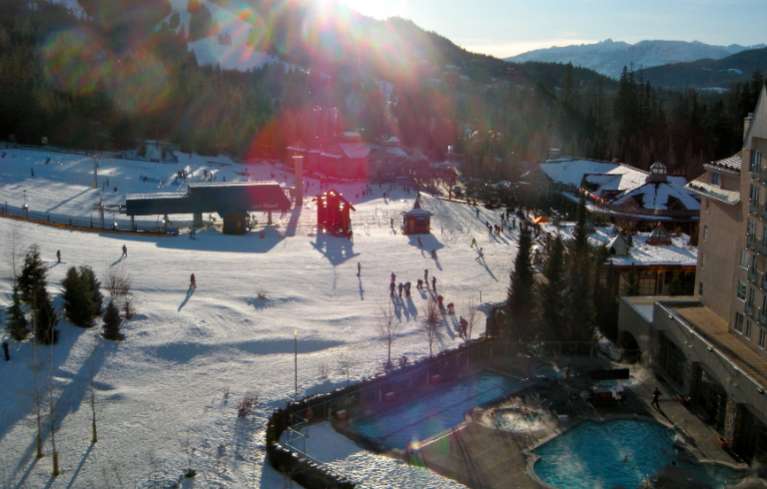
The Fairmont at Whistler is right on the slopes of the ski resort. Photo/LTN file

The Fairmont at Whistler is right on the slopes of the ski resort. Photo/LTN file

And the lodging industry is adapting — at the high and low ends — to meet the diverging needs.

Luxury hotels are catering to financial elites from Russia, China, Brazil or the Middle East who now routinely hop around the world and don’t mind dropping $20,000 a night for a glamorous accommodation.

“High-end travel in the air, on the sea and on land has never been more robust,” says Steve Carvell, an associate dean at Cornell University’s School of Hotel Administration. “There are more people with more concentrated wealth.”

Luxury hotels are arising even at iconic middle-American tourism spots such as Walt Disney World. Four Seasons will open a 444-room resort there in August with 68 suites, including a nine-bedroom royal suite sporting a 1,000 square-foot (93-square-meter) private terrace with views of the park’s nightly fireworks.

During the Great Recession, many resorts dropped “resort and spa” from their name. The idea was to appeal to corporate organizers who didn’t want trips to seem extravagant. Excess now appears back in style.

In November, Four Seasons added the phrase “and residences” to its mountain resorts in Vail, Colorado; Jackson Hole, Wyoming; and Whistler, Canada. It’s pursuing families seeking a residential experience with the pampering of a hotel staff.

The six-bedroom suite in Vail fetches $15,000 a night. You get three living rooms and a movie room. The suite includes a dedicated assistant who can arrange airport transfers, private ski lessons and after-hours shopping.

The return of extravagance reflects one characteristic of the recovery: After paring their vacations along with everyone else during the recession, the wealthy have rebounded with force. Since 2009, hotel spending by the wealthiest 20 percent of Americans has risen about 6 percent, according to inflation-adjusted data from the Bureau of Labor Statistics. The middle 20 percent are still spending nearly 3 percent less.

To stretch their discretionary dollars, middle-income vacationers are fueling one of the industry’s growth areas: “limited service” lodgings. At Marriott’s Fairfield Inn, Hyatt Place and Holiday Inn Express, you get free Wi-Fi and breakfast. But there’s no bellman, concierge or restaurants.

The idea is to draw travelers who feel priced out of full-service hotels. People can still say, “I’m staying at the Marriott,” even if it’s the Fairfield Inn, says Bjorn Hanson, dean of New York University’s hospitality school.

But many people are seeking deeper savings through increasingly popular sites such as Airbnb that arrange for people to rent rooms or apartments. The number of listed accommodations has soared since Airbnb’s founding in 2008 to 550,000 — not far below Hilton’s 685,000 rooms worldwide. Some studies suggest that Airbnb could be cutting into budget hotels’ revenue.

Robin Lynch, 34, of New York City put 14 relatives, including her in-laws, in five Airbnb facilities in Brooklyn for her wedding last year. She estimates she paid roughly $200 a night, on average, compared with the $300 she’d expected for a hotel.

“That amounts to a lot of savings over seven days,” she says.

High unemployment and flat paychecks have spurred more people not only to stay in Airbnb rooms but also to list their own homes.

Eric Worley, 30, and his girlfriend stayed at an Airbnb home in Columbus, Ohio, for $59 a night — half the lowest hotel rate they could find.

“Not only am I saving money, I’m also helping out another person … by giving them some extra money,” he says. “I’d much rather do that than have a corporation overcharge me for what is essentially the same service.”

Sometimes, the cut-rate experience goes further that visitors had expected. Ann Carman, 32, of Yellow Springs, Ohio, had always wanted to stay in an Airstream trailer. When she and her boyfriend visited Austin, Texas, in December 2013, she found one in a backyard. They weren’t alone. Sharing their accommodations were a pig named Fern, two dogs and a rooster.

“I was like, ‘They’ve got a pig in their backyard, we’ve got to stay there,'” she says.

Airbnb hosts can charge less than hotels because they typically don’t pay accommodation taxes or meet safety or disability regulations. That’s sparked grumbling from hotels — and from localities that lose out on tax revenue.

The luxury sphere is also trying to expand its base. Chains such as the Ritz-Carlton and the Mandarin Oriental are pursuing not just the uber-rich but increasingly the merely affluent.

“My father would never have stayed in a luxury hotel,” Hanson says. “He didn’t think he belonged there, even though he might have been able to afford it.”

As more modestly rich travelers have checked in, these hotels have sought to provide more for the ultra-wealthy.

With the recently opened St. Regis Abu Dhabi in the United Arab Emirates, architects considered how much privacy to provide its most sumptuous suites, says Paul James, head of Starwood Hotels and Resorts’ luxury properties.

“Part of the Abu Dhabi conversation was: ‘Where does the helicopter land?'” James says.

More of the wealthiest travelers are now booking on shorter notice — sometime less than a day. The St. Regis Mardavall in Mallorca, Spain, got a call from a 30-something German asking about the local weather. The receptionist reported 85 degrees and blue skies. The traveler booked the largest available suite and said he’d arrive in an hour.

He made the call from his private jet circling above Madrid.

The elite traveler’s experience was precisely what the Rosewood London had in mind when it opened its Grand Manor House Wing in December. The six-bedroom complex offers three living rooms, a library and a dining table for eight. It has its own street entrance and private elevator. For $42,000 a night, guests get some extra bragging rights: Their suite has its own postal code.

Mark Herron, general manager of the Four Seasons Vail, notes that his hotel recently arranged for a guest to feed elephants at a local zoo — even though the zoo was closed.

Then there was a celebrity who had a craving for Kentucky Fried Chicken. The nearest one was 28 miles way.

The hotel first tried to make it but couldn’t match the recipe. “Plus, the celebrity wanted the bucket,” Herron says.

Within an hour, the guest and his 21-person entourage had 10 buckets full of traditional and extra-crispy chicken.

Cornell’s Carvell has a theory about why anyone makes such extravagant requests.

“They’ll sometimes do it just to see if it can be done,” he says. “They don’t want to hear the word no.”



Tallac students earn Rothschild scholarship

By Lisa Huard and Wendy David

Ask any volunteer and they’ll tell you they get much more than they give. It’s one of the best jobs you could ever have. You pick your interest, the time and days you want to work, and you get to do things you’ve waited a long time to do.

Along with the work, you develop binding relationships based on a common cause. It’s better than a paycheck.

Joy Rothschild was the epitome of volunteerism. She came into this world set to accomplish things. She left this world doing the same. She loved to work with teen youth, in particular, those that have additional challenges or struggles. Her legacy continues her passion after her passing.

Darren Fisher and Cree Whitton

Darren Fisher and Cree Whitton

Recently, Soroptimist International of Tahoe Sierra awarded some of our youth with scholarships to publicly recognize their heart and hard work. Two individuals received the Joy Rothschild Memorial Scholarship from a fund Rothschild established before she lost her battle with cancer in 2012.

Rothschild, a volunteer while in this world, she continues to give back even today. Her love of kids and recognizing the inner most talents and drive of all has provided two more young people with a step up to their next adventure – college. As Mt. Tallac students, both Cree Whitton and Darren Fisher received $1,000 toward continuing their education.

LTUSD counselor Amy Jackson said, “Cree can be defined as the ‘perfect’ Mt. Tallac student; bright, articulate, and alternative. She enjoys a smaller setting with flexible teaching styles. Cree comes from a single parent home. She and her mom have worked hard as a team through the years. Cree has learned to be resilient and to love those in her life and appreciate each moment as she lost her stepdad just a month prior to graduation and she dedicates her diploma to him.”

Jackson notes that Rothschild always had a soft spot for at risk young men. Her honest, yet loving style attracted them to seek her wisdom. She gained their trust and always had their best interest in mind, and they knew it.

Rothschild would have been very proud of this young man.

Jackson said, “Darrin is a bright kid who was falling through the cracks of traditional high school. Not in trouble with the law nor a behavior problem, it was easy for him to fade into the woodwork. At Mt. Tallac he could not hide and he began to shine. Joy would have loved his free spirit and calmness. He wants to continue his education and has an interest in water quality.”

The Joy Rothschild Memorial Scholarship, designated for Mt. Tallac students, is a restricted fund, always open to receiving additional funds through Soroptimist International of Tahoe Sierra.

Contact Lisa Huard at sitahoesierra@gmail.com for more information.


Author to talk about Donner Party book

Author Mark McLaughlin will present a multimedia presentation on his newest book “The Donner Party: Weathering the Storm” on June 18 at 6pm at the South Lake Tahoe Library.

This well-illustrated book chronicles weather conditions and storm events in Northern California and the mountains during the winter of 1847.

All books will be available for purchase and autographing.

The library is at 1o00 Rufus Allen Blvd. The event is free and put on by Friends of the Library.


Carson City leads nation in warming trend

By Sandra Chereb, AP

CARSON CITY — Don Quilici has snookered a few Carson City newcomers with bets that it would snow the week of his birthday in early May.

Unsuspecting gamblers often don’t know that a sliver of the western Nevada city’s boundaries extend to Lake Tahoe and encompass Snow Valley Peak at a towering 9,214 feet.

“As an average, I’d win eight out of 10 years,” said Quilici, 80, a Carson City native.

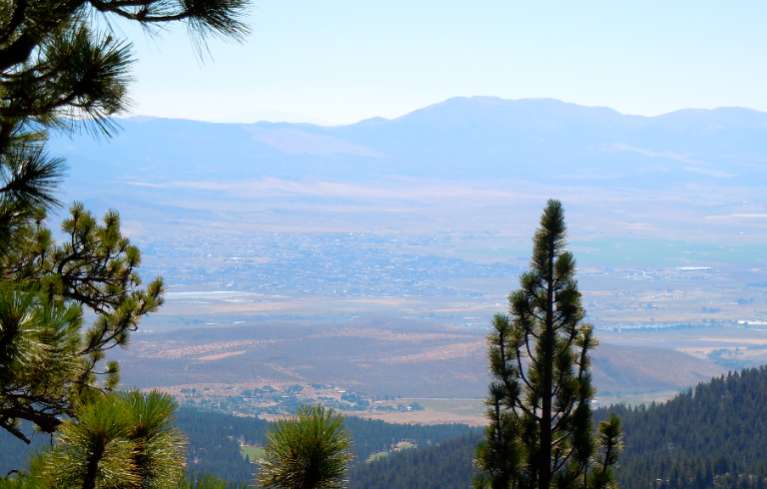
Looking down on the Carson area from Snow Valley Peak. Photo/LTN file

Looking down on the Carson area from Snow Valley Peak. Photo/LTN file

Lately, though, he hasn’t been so lucky. That’s because Nevada’s capital city is getting hotter.

An Associated Press analysis of federal temperature records shows Carson City has warmed the most than any other city in the nation in the last 30 years.

The average temperature in Carson City has risen 4.1 degrees since 1984. Boise, Idaho, came in second, posting a rise of 4 degrees. Las Vegas, known for its sweltering summers, was sixth, with an increase of 3.4 degrees.

But it’s the boost in summertime heat that really makes Carson City stand out.

The average temperature for June, July and August has soared 6.8 degrees over the last three decades, 2.2 degrees warmer than second-place Boise and 2.4 degrees higher than third-place Las Vegas.

The summertime average temperature is up from about 68 degrees to nearly 75.

Because the data on cities are based on one weather station and readings can be affected by urban heating and development, trends are not as scientifically robust as those of states or regions within states, but they do have value, said National Climatic Data Center monitoring chief Derek Arndt.

The change in Carson City is becoming noticeable in subtle ways.

Plants and trees are prone to bloom earlier, and more people are installing air conditioners. The systems were a rarity even a decade ago, when many residents didn’t want to spend the money when only a couple of weeks in August seemed insufferable.

Justin Anderson, owner of Anderson Heating & Air Conditioning, in operation for 32 years, said he “never knew that so many people didn’t have air conditioning before.”

David Ruf of Greenhouse Garden Center was surprised by the amount of warming that’s taken place but not by the warming itself.

Ruf, whose father started the business 40 years ago, keeps meticulous weather records.

“When we started here, usually there was a temperature swing between night and day of 45 degrees,” Ruf said. “Now we seem to be 35 degrees.”

He and other long-time residents note Carson City’s geography. Nestled in a valley at the base of the Carson Range, the city is ringed by hills and mountains.

And as the city has grown, more roads, asphalt, homes and commercial development have cropped up — ingredients for heat absorption and urban warming.

In 1984, about 35,000 people lived here, government data say, and today the population is 55,000. Instead of fields and meadows, there are houses and commercial complexes.

Sam Lompa, who lives on a ranch in the heart of Carson City, feels the warming effects.

“When I was a kid, we never had any air conditioners,” said Lompa, 71, who grew up on the ranch. Now he uses fans and a swamp cooler but doesn’t fret much about the temperature.

“If it’s hot, it’s hot, and if it’s cold, it’s cold,” he said.

Ruf, too, is skeptical of putting too much emphasis on temperature shifts, even though this May seemed unusually warm, with temperatures in the 80s.

“Every time I say it’s getting hotter, the next year gets colder,” Ruf said. “Mother Nature can still pack a wallop.”