Restaurants to give portion of proceeds to TACCD

In celebration of Tahoe Area Coordinating Council for the Disabled’s 31st year anniversary TACCD is being honored by five restaurants that includes an invitation to the community.

October was chosen for the annual fundraising events to highlight Disability Awareness and Employment month.

The restaurants mentioned below will donate a percentage of their income for a selected day.

The contributions and money collected will increase TACCD’s funding base to make sure important services such as develop low income housing (like Tahoe Senior Plaza, Kelly Ridge, and Sky Forest Acres), make the city more accessible (sidewalks, curb cuts), work with the city on its transition plan to become fully ADA compliant, and to continue efforts to encourage return of good and reliable transportation continue at the same high level.

Restaurant scheduling is as follows:

Oct. 10 — Jalisco Grill for lunch and dinner (2660 Lake Tahoe Blvd., Town and County Center)

Oct. 16 — Ernie’s Café for breakfast and lunch (1207 Emerald Bay Road)

Oct. 17 — Passaretti’s for lunch and dinner (1181 Emerald Bay Road)

Oct. 25 — Steamers for lunch, dinner and a City Council Candidate’s Meet & Greet from 6-8 pm (2236 Lake Tahoe Blvd.) and Taqueria Jalisco (3097 Harrison Ave.).

If there are any other businesses who are interested in participating, contact David Kelly at (530) 544.1127.

Each direct donation to TACCD in the amount of $25 will have the donor entered into a drawing for a helicopter flight for two from Lake Tahoe Airport over Emerald Bay ($140 value compliments of Reno Tahoe Helicopters). Mail donations to TACCD, 2572 Lake Tahoe Blvd., Ste. 2, South Lake Tahoe, CA 96150 or leave donation, name and phone number with the business owner when you stop by for breakfast, lunch or dinner.


S. Tahoe council candidates raising money from variety of sources

The first round of campaign finance forms for South Lake Tahoe City Council have been released.

While there are five candidates for the two positions, only three people have donations to report.

Here are the documents:

Cole form

Grego form

Sass form.


Opinion: Candidates fail to address Western issues in debate

By Karoun Demirjian, Las Vegas Sun

Though President Barack Obama and presidential candidate Mitt Romney got down deep in the weeds on taxes and health care in last week’s debate, some viewers — especially in the West — may have been left with the impression that they skipped over more than they addressed.

The only presidential debate solely focused on domestic policy featured no discussion of immigration or the courts and only passing mention of the housing crisis. Sure, they frequently mentioned education (usually preceded by the lead-in “I care about” or “I want to invest in”) but offered few details of anything resembling a plan.

In one sense, that shouldn’t matter too much, as the debates are really the election’s final home stretch, when the candidates are simply trying to drive home the messages they’ve spent the better part of the last year framing.

But as we’ve seen in the last week, sometimes the candidates can clarify or change their positions, even close to the election. And in swing states such as Nevada, new revelations on subjects that hit close to home could potentially sway undecided voters in decisive ways.

For instance, on immigration: Nevada’s electorate is 14 percent Latino. While Latino voters don’t rank immigration as a top issue, according to polls, they tend to consider a candidate’s stance on the issues as a potential dealbreaker.

Forty-eight hours before the debate, Romney revealed to the Denver Post that he would honor Obama’s pledge to undocumented youths if elected president. This summer, Obama instituted two-year deferments of deportation proceedings and authorized work permits for young people who entered the U.S. before age 16 and enrolled in college or the military.

But that topic didn’t come up in Wednesday night’s debate.

In the same interview with the Denver Post, Romney also said that he was considering capping itemized income tax deductions at $17,000, a threshold that could adversely affect certain middle class families accustomed to being exempted from taxes on employer-provided health care and their mortgage interest.

During the debate, Romney started tossing around different numbers — $25,000 and $50,000 — much higher caps that would likely only adversely affect the wealthy. But neither he nor Obama were pressed to clarify their positions on health care or mortgage interest deductions, so we still don’t know exactly where they stand on this issue — and probably won’t until one or the other is elected.

Yet that’s the kind of stuff that could affect Nevadans’ bottom line, whether they’re filling out their tax returns, or just hoping to restore the value of their home– and for the undecided voter not being swayed by the war of words over “Obamacare,” “Big Oil” or the 47 percent of Americans Romney recently suggested are self-pitying government freeloaders. Oh wait: That 47 percent thing is another late-breaking twist they forgot to mention at the debate (and the Democrats are frustrated with Obama for the omission).

It is hard to address everyone’s niche issue in the 90 minutes allowed each time these candidates face off. But there’s a reason the debates started in the West: Because with Colorado and Nevada among the small handful of swing states at the center of this contest, the West is likely where the elections are going to end.

For that reason alone, the candidates might be well served by discussing some of these other domestic issues that directly affect Nevada in the next debate.

That faceoff is Oct. 16 and focuses on domestic and foreign policy. Let’s see — that means they still have 45 minutes to do it.


Indiana Bones to take kids on journey through time

The Douglas County Public Library is having a special appearance by storyteller Indiana Bones in Genoa’s Town Hall at 10:30am on Oct. 13.

As performed by Mike McCartney, an Emmy Award-winning writer and performing artist, Indiana Bones combines archaeology, adventure, and folklore to thrill and educate audiences.

With the use of artifacts, puppets, and the crack of his whip, Indiana Bones takes you on a journey through time. His stories teach and strengthen the imagination.

The Genoa Town Hall is located on Main Street in Genoa. For information, call (775) 782.9841.


Learn to improve health through visualization

Learn how the mind-body connection can improve your health through the power of imagination.

The Creative Visualization & Health Workshop in Truckee is Oct. 11 from 6:30-8pm. The class is on the ground level of Church of The Mountains, 10079 Church St., in Truckee (across from Community Arts Center).

Handouts will be provided.

Space is limited. Cost is on a sliding scale donation.

For more info, contact Colleen Jackson at akikosongs@gmail.com or (530) 308.5053.


Error and fraud at issue as absentee voting rises

By Adam Liptak, New York Times

TALLAHASSEE — On the morning of the primary here in August, the local elections board met to decide which absentee ballots to count. It was not an easy job.

The board tossed out some ballots because they arrived without the signature required on the outside of the return envelope. It rejected one that said “see inside” where the signature should have been. And it debated what to do with ballots in which the signature on the envelope did not quite match the one in the county’s files.

“This ‘r’ is not like that ‘r,’ ” Judge Augustus D. Aikens Jr. said, suggesting that a ballot should be rejected.

Ion Sancho, the elections supervisor here, disagreed. “This ‘k’ is like that ‘k,’ ” he replied, and he persuaded his colleagues to count the vote.

Scenes like this will play out in many elections next month, because Florida and other states are swiftly moving from voting at a polling place toward voting by mail. In the last general election in Florida, in 2010, 23 percent of voters cast absentee ballots, up from 15 percent in the midterm election four years before. Nationwide, the use of absentee ballots and other forms of voting by mail has more than tripled since 1980 and now accounts for almost 20 percent of all votes.

Yet votes cast by mail are less likely to be counted, more likely to be compromised and more likely to be contested than those cast in a voting booth, statistics show. Election officials reject almost 2 percent of ballots cast by mail, double the rate for in-person voting.

“The more people you force to vote by mail,” Sancho said, “the more invalid ballots you will generate.”

Election experts say the challenges created by mailed ballots could well affect outcomes this fall and beyond. If the contests next month are close enough to be within what election lawyers call the margin of litigation, the grounds on which they will be fought will not be hanging chads but ballots cast away from the voting booth.

In 2008, 18 percent of the votes in the nine states likely to decide this year’s presidential election were cast by mail. That number will almost certainly rise this year, and voters in two-thirds of the states have already begun casting absentee ballots. In four Western states, voting by mail is the exclusive or dominant way to cast a ballot.

The trend will probably result in more uncounted votes, and it increases the potential for fraud. While fraud in voting by mail is far less common than innocent errors, it is vastly more prevalent than the in-person voting fraud that has attracted far more attention, election administrators say.

In Florida, absentee-ballot scandals seem to arrive like clockwork around election time. Before this year’s primary, for example, a woman in Hialeah was charged with forging an elderly voter’s signature, a felony, and possessing 31 completed absentee ballots, 29 more than allowed under a local law.

The flaws of absentee voting raise questions about the most elementary promises of democracy. “The right to have one’s vote counted is as important as the act of voting itself,” Justice Paul H. Anderson of the Minnesota Supreme Court wrote while considering disputed absentee ballots in the close 2008 Senate election between Al Franken and Norm Coleman.

Voting by mail is now common enough and problematic enough that election experts say there have been multiple elections in which no one can say with confidence which candidate was the deserved winner. The list includes the 2000 presidential election, in which problems with absentee ballots in Florida were a little-noticed footnote to other issues.

In the last presidential election, 35.5 million voters requested absentee ballots, but only 27.9 million absentee votes were counted, according to a study by Charles Stewart III, a political scientist at the Massachusetts Institute of Technology. He calculated that 3.9 million ballots requested by voters never reached them; that another 2.9 million ballots received by voters did not make it back to election officials; and that election officials rejected 800,000 ballots. That suggests an overall failure rate of as much as 21 percent.

Some voters presumably decided not to vote after receiving ballots, but Stewart said many others most likely tried to vote and were thwarted. “If 20 percent, or even 10 percent, of voters who stood in line on Election Day were turned away,” he wrote in the study, published in The Journal of Legislation and Public Policy, “there would be national outrage.”

The list of very close elections includes the 2008 Senate race in Minnesota, in which Franken’s victory over Coleman, the Republican incumbent, helped give Democrats the 60 votes in the Senate needed to pass President Obama’s health care bill. Franken won by 312 votes, while state officials rejected 12,000 absentee ballots. Recent primary elections in New York involving Republican state senators who had voted to allow same-sex marriage also hinged on absentee ballots.

There are, of course, significant advantages to voting by mail. It makes life easier for the harried, the disabled and the elderly. It is cheaper to administer, makes for shorter lines on election days and allows voters more time to think about ballots that list many races. By mailing ballots, those away from home can vote. Its availability may also increase turnout in local elections, though it does not seem to have had much impact on turnout in federal ones.

Still, voting in person is more reliable, particularly since election administrators made improvements to voting equipment after the 2000 presidential election.

Read the whole story



Tricks for Trainers workshop this week

Lake Tahoe South Shore Chamber of Commerce and the Sierra Human Resources Association are offering the Tricks for Trainers: How To Give It So They Get It workshop on Oct. 10 from 8:30am-12:30pm at the chamber offices located at 169 Highway 50, Stateline.

Attendees will learn how to design and deliver high impact training sessions in a low-pressure and encouraging environment. They will integrate the four styles of learning and take way accelerated learning techniques that are easy to incorporate, which will improve the structure of their next workshops.

The speaker is Laura Moriarty, founder of Tahoe Training Partners, nationally known corporate trainer and frequent presenter of SHRA workshops.

Registration is $59 for Tahoe Chamber, SHRM and SHRA members and $69 for non-members.

For more information, call Moriarty at (530) 573. 0224 or Emily Abernathy at (775) 588.5900, ext. 303.


Snippets about Lake Tahoe

• Kirkwood and Heavenly are having a joint hiring fair on Oct. 20 from 9am-2pm at Heavenly’s California Lodge. There will also be a Kirkwood only job fair Oct. 13 at Red Cliffs building from 9am-3pm.

• South Lake Tahoe City Council candidate JoAnn Conner is having a chili fundraiser Oct. 12 from 4:30-7:30pm at the American Legion Post No. 795 on Lake Tahoe Boulevard. Tickets may be purchased in advance by calling Teri at (530) 541.0986.

• Lake Tahoe Educational Foundation’s 8th annual Fall Food Fest at Harvey’s in Stateline is Oct. 27 from 6:30-10pm. Tickets are $45 at the door.

• This website has a slew of ideas about fire safety. Fire prevention week is Oct. 7-13.

• Here are the week’s roadwork schedule from Caltrans for Sierra and El Dorado-Tahoe.


Expedia’s billing changes would hit hoteliers in the bottom line

By Danny King, Travel Weekly

A recently launched Expedia program that enables travelers to pay for their hotel stays at the front desk at the end of their stays could cost hoteliers millions of dollars a year in the form of higher credit card and royalty fees, according to a recent report.

Traditionally, Expedia clients have paid in advance on the online travel agency’s website.

But Expedia’s Traveler Preference Program, which debuted this summer, lets the client pay at the end of a stay, which could result in about $20 million in collective annual profits being moved from hoteliers to Expedia, according to a report distributed last week by Providence, R.I.-based Hotel Asset Value Enhancement, which manages more than $2 billion worth of hotel assets.

In large part that is because participating hotels will have to pay the credit card fees that had previously been borne by Expedia. Additionally, branded hotels will pay higher royalty fees that will be calculated based on the gross revenue from the Expedia room sale and not on the revenue net of Expedia’s commission.

“While the change in structure will not affect what the guest pays in rate, it will have a negative impact on U.S. hotel ownership to the tune of $500 million in real estate value unless concessions by Expedia, brands and managers occur,” the report stated.

Expedia, No. 2 on Travel Weekly’s 2012 Power List, disputed the report’s findings.

The OTA asserted that the study overstated how many guests were likely to move their bookings to the hotel desk, noting that many travelers preferred the convenience and security of paying up front through Expedia.

In addition, said Adam Anderson, Expedia’s director of industry relations, many hotels already incur Expedia-booked credit card fees by opting to receive immediate payment from Expedia upon guest checkout instead of waiting for the invoice from Expedia to be paid.

“When a traveler is presented with the choice of how they would like to pay, they are notably more likely to book when compared with travelers only presented with a single option,” Anderson said. Bookings through the program “in our test markets show an increase in length of stay by approximately 5 percent,” he said.

The report reflects what has long been an uneasy relationship between hoteliers and OTAs, which will account for about 15% of the $114 billion in U.S. hotel revenue generated this year, PhoCusWright estimated in a report late last year.

Hoteliers have said OTAs are the most expensive sales channel. By some estimates, OTAs take about a 25 percent cut in the form of wholesale room discounts and/or commissions, compared with about 10 percent for travel agent bookings through GDSs.

OTAs have countered that their presence boosts overall hotel bookings and that they incur much of the marketing and advertising costs that would otherwise have been borne by hotel operators.

Either way, the issue is especially relevant because Expedia accounts for about 40 percent of the U.S. travel bookings through OTAs, more than twice the next-largest OTA in the U.S., Orbitz.

PhoCusWright director of research Carroll Rheem said that there was some validity to Expedia’s claim that some hotels would benefit from the program through additional business from travelers preferring to pay on the back end.

“Some consumers like being able to pay later and upon checkout,” Rheem said, adding that hotels benefit further because the revenue is collected sooner and the accounting for the stay is simplified.


Tahoe Tails — Adoptable Pets in South Lake Tahoe

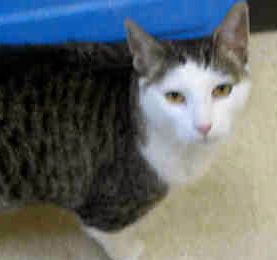
Clack is a nice cat who has been at the shelter for several months. We’d really like to find him a good new home.

He is a Manx and has a very short tail. He will chase dogs, and so should not go to a home with a dog. But that’s his only vice.

He likes other cats, and came to the shelter when his owner died. (The shelter currently has five Maine Coon cats, so if you’re looking for a large furry feline, now is the time to adopt.)

Clack is neutered, microchipped, and vaccinated. He is at the El Dorado County Animal Services shelter in Meyers, along with many other dogs and cats who are waiting for their new homes. Go online to see photos and description of all pets at the shelter.

Call (530) 573.7925 for directions, hours, and other information on adopting a pet.

For spay-neuter assistance for South Tahoe residents, go online.

— Karen Kuentz