Opinion: Vote yes on Prop. 37

To the community,

Genetically engineered foods are not safe.

The funding of ads opposing Proposition 37 is from biotech companies, like Monsanto, who simply want to make money. Their biotech crops have had no independent testing prior to being released. For example, Monsanto’s corn DNA is blasted with a toxin like Bt, which will make an insect’s stomach explode and kill it when it eats the corn. The scientists who studied this early on found it to be unsafe, and said so. They were promptly fired and discredited.

We have no reason to believe the biotech people telling us these lies. They’ve lied to us about the safety of DDT and more.

GE crops were promoted as a way to feed the world, yet they do not produce more food. They do require more and more pesticides as the weeds and bugs become resistant. Now this same company wants to use 2-4-D, also know as Agent Orange, which was used in Vietnam, with many health problems from rashes and infertility to death.

These crops are fed to our cattle, pigs and chickens. Given a choice, they won’t even eat them. When their only food is GE corn or soy, they become ill and weak. When we eat these same animals or crops we also become ill and weak. It may be less obvious in us as we get a more varied diet.

But look at our nation’s amount of illness. Chronic illness including allergies, asthma, digestive disorders, Parkinson’s, autism, birth defects, infertility, Alzheimer’s, diabetes and much more have steadily increased since the presence of GE foods in our diet. People with many of these illnesses who go to an organic diet see huge health improvements. The animals too, quickly become healthy when fed organic, or at least non-GMO diets.

Scientists have detected the inflamed stomach lining from animals eating GE foods. Our stomachs respond in the same way and go on to develop leaky gut syndrome where food particles are escaping the digestive tract too soon, and enter the bloodstream where our antibodies know they’ve never seen anything like this, and attack them. Oh! An allergic reaction!

Since GE soy’s introduction to the market, allergies to soy have increased by at least 50 percent. Diseases like chronic fatigue and fibromyalgia were unknown before their advent. All chronic illnesses have dramatically increased.

Countries all over the world require labeling of GE foods. It’s time we knew what we are buying to eat. Monsanto is quite well entrenched in the White House and FDA, but our vote can begin to kick them out. All of us eat. We can all vote and express the need to know what’s in our food.

Please vote Yes on Prop. 37!

Sincerely,

Peggy A. Cooley, South Lake Tahoe


Disability organization hosting meet and greets for candidates

TACCD is having two meet and greet opportunities for the South Lake Tahoe City Council candidates.

The first is Oct. 23 at Steamers starting at 6pm.

The second is at Taqueria Jalisco at 6pm Oct. 25 (3097 Harrison Ave. behind Rojo’s).


Not all Tahoe area schools open Monday

All schools in the Tahoe Truckee Unified School District are closed today.

Whittell High and Zephyr Cove Elementary schools will be starting an hour later than usual Oct. 22.

About a half inch of snow fell overnight on the South Shore.

The National Weather Service in Reno is calling for the brunt of the storm to arrive Monday morning, with Tuesday morning being stormy as well.

Chains or snow tires are required over most of the Sierra mountain passes.

 — Lake Tahoe News staff report


Tahoe Tails — Adoptable Pets in South Lake Tahoe

Simba is one of several beautiful, large Maine Coon cats at the shelter. He is 6-years-old and came to the shelter with his equally large friends Elmo and Princess. Their owner is too sick to look after them anymore.

Simba likes other cats and has been an indoor-outdoor cat. He is a really sweet boy who purred the whole time he was being groomed.

Simba is neutered, microchipped, and vaccinated. He is at the El Dorado County Animal Services shelter in Meyers, along with many other dogs and cats who are waiting for their new homes. Go online to see photos and description of all pets at the shelter.

Call (530) 573.7925 for directions, hours, and other information on adopting a pet. For spay-neuter assistance for South Tahoe residents, go online.

— Karen Kuentz


Snippets about Lake Tahoe

• Zephyr Lodge at Northstar has received LEED certification from the U.S. Green Building Council.

• George Alm is now president of the South Tahoe Chamber of Commerce.

• Small World’s South Lake Tahoe City Council candidates’ forum on Oct. 22 has been canceled.

• Sierra-at-Tahoe will host its annual job fair Nov. 3 from 9am–2pm in the Main Lodge.

• There is a Douglas County School District candidates’ forum Oct. 23 from 7-9pm at the Douglas High School library.


Opinion: California’s economy better than people think

By Mike Rossi

Recently it has become popular in some circles to blame California’s “business climate” when companies eliminate jobs. The inaccurate depiction of California as unfriendly toward business is a marketing narrative that was developed by other states trying to compete with our success.

Now it has been adopted by partisan media commentators who trumpet the virtues of less successful states and allow companies to avoid accountability for laying off hardworking Californians by invoking the “business climate” scapegoat.

The fact is that California is once again the national leader in job creation. In the past year, California has added 298,000 private-sector jobs – an increase of 2.1 percent, which is more than New York, New Jersey, Florida and Nevada combined.

Furthermore, the construction industry added 31,000 jobs in that same period, accounting for 6 percent job growth – that’s the largest gain since before the housing crash. Our information technology jobs have surpassed pre-recession levels, and professional services, health care, education, trade and transportation have all posted significant gains this year.

Yet, in some circles, the facts are no match for anonymous surveys of CEOs that rank California at the bottom of the list. These surveys report the same findings year after year no matter how well or poorly our economy is doing. Exactly the same “findings” were reported in 2006, when California was enjoying three straight years of record growth, with close to the lowest unemployment in our state’s history and a $6 billion surplus.

California was riding a wave of economic success and yet the CEOs who were enjoying record profits still ranked California at the bottom of the list.

Meanwhile, Texas consistently ranks toward the top with states like Nevada, South Dakota and Wyoming following close behind. What do all these states have in common besides vast uninhabited areas with no population and no requirements for infrastructure?

None of them has personal or corporate income taxes. When CEOs say they are overtaxed in states like California, New York, Illinois, Massachusetts, Michigan and New Jersey (all states at the bottom of the list) what they really mean is that given the choice, they would rather pay no taxes at all.

Another oft-cited but completely misleading statistic is the number 254.

That’s supposed to be the number of businesses that left California in 2011. But that number was generated solely by a “relocation specialist” who wants to move companies out of California.

That number – if it’s even accurate – represents less than 0.007 percent of the total number of California firms.

Yes, companies have chosen to expand elsewhere, but we have also seen companies moving and expanding in California like Samsung, Dell, Bluhomes, Altec, Zollner and Advanced Call Center Technologies. All of these companies performed nationwide searches for places to relocate or expand and ultimately chose California.

While these are great acquisitions, the Public Policy Institute of California noted most job gains are due to the expansion of existing companies.

Just this week Sutter Health announced it is opening a new facility in Roseville that will employ upward of 1,000 people, and Amazon announced the opening of a San Bernardino facility that will create 700 jobs, in addition to the 350 jobs it created in Patterson earlier this year.

And, of course, California now gets $1 of every $2 in new venture capital funding as our leading innovators and entrepreneurs choose California as the place to be.

The bottom line is our competitors built a narrative while California was enduring the most disruptive economic crisis in our state’s history. They did this to try to usurp our position as the nation’s leader. Don’t help our competitors carry out their scavengery by rehashing the same tired talking points that are not supported by facts.

No one is denying that our state has challenges that need to be addressed. But encouraging companies to leave only further erodes confidence and contributes to job losses.

There was once a time when someone took a shot at the home team and the fans would rally to defend the honor of the franchise.

It’s time for Californians to recognize the state’s positive momentum and do whatever it takes to keep it going.

Mike Rossi is Gov. Jerry Brown’s senior adviser for jobs and business development. This column originally appeared in the Sacramento Bee.


Resort executives: Market Lake Tahoe as one region

By Katherine E. Hill

KINGS BEACH – Working together to promote Tahoe as a region was the message at the annual North Lake Tahoe Chamber of Commerce member lunch.

“We need to have one message for the entire region,” said Julie Maurer, vice president of marketing for Squaw Valley and Alpine Meadows ski resorts.

Maurer was one of the speakers at last week’s lunch attended by business owners in the North Tahoe region about efforts to market the area to regional, national and international winter tourists.

Squaw Valley is putting $24 million into the resort for this season. Photo/Provided

Maurer called on everyone to work together to market Tahoe’s big mountain snow to tourists.

“We need to do this as an entire community,” she said.

The recent snow atop Heavenly Ski Resort, (before this latest storm) which was heavily publicized, was a boon to the entire Tahoe region, she said.

“It really helped, in terms of our phones ringing to book lodging,” Maurer shared.

Maurer outlined a three-point plan to recover from the 2011-12 season and to build on Tahoe’s reputation for big mountain snow – remind visitors of the region’s snow, which averages more than 400 inches annually; diversify the market to international customers; and offer past guests incentives for booking lodging and tickets early. She also said the capital investments in local resorts, despite the recession, is another marketing strategy.

“In North Tahoe, we have one of the most power messages,” Maurer said. “There is more capital being spent despite a poor winter.”

Maurer cited the $70 million, five-year Renaissance at Squaw Valley and Alpine Meadows that started during the winter of 2011-12, which saw dismal snowfall throughout the region. Despite the winter, KSL, which operates Squaw Valley and Alpine Meadows, invested $14 million in improvements at Squaw Valley on and off the mountain, and is spending another $24 million this year. Improvements for the 2012-13 season, which begins Nov. 21, include two new lifts at High Camp, expanded snowmaking, new learn-to-ski areas, remodeling the Olympic Plaza Bar, and improved terrain parks at Squaw Valley.

Maurer also said KSL would continue to offer access to Squaw Valley and Alpine Meadows on a single ticket or pass for the upcoming season with a free shuttle operating between the resorts.

That message in capital investment and regional marketing has echoed by Davy Ratchford, director of marketing for Northstar, which is operated by Vail Resorts.

Vail invested $30 million in improvements at Northstar during summer 2012, with Ratchford noting that about $1 billion has been invested at Northstar in the last 10 years from the development of the village at the base of the resort to the mid-mountain Ritz-Carlton to expanded terrain and new lifts.

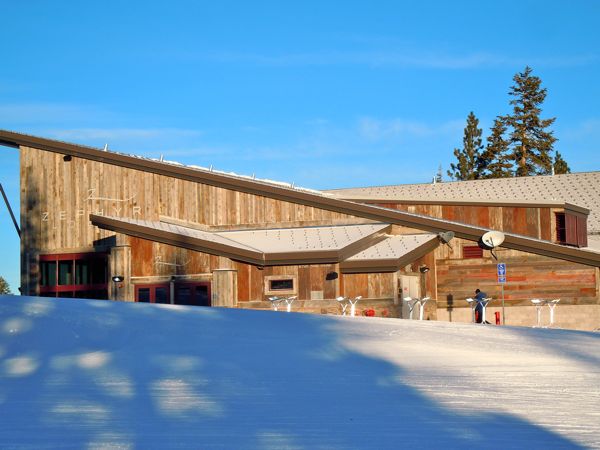
During the 2011-12 season, Northstar unveiled the Zephyr Lodge at mid-mountain, expanded terrain at Sawtooth Ridge (with cat tours coming this season), to the new Promised Land Express. For 2012-13 season, which starts Nov. 16, Ratchford says the resort will open a new concept restaurant in the village along with a location of the popular Truckee eatery Taco’s Jalisco. As well, there will be a Ripperoo’s Riglet Park for ages 3 and older and the resort is expanding its popular EpicMix Photo program with an EpicMix Racing component at all Vail Resorts. Guests may post their best times on runs and compare it to times set by Lindsey Vonn. Those with the best times at the end of the season will have the chance to race Vonn.

The resort also will celebrate its 40th anniversary with a Birthday Bash on Dec. 22 with Shawn White at Northstar for the festivities.

North Shore news:

• The TNT-TMA will unveil a pilot ski shuttle program later this season offering a one-stop shuttle access to every ski resort in the North Tahoe-Truckee region.

• Iron Man will debut its highest altitude race in North Tahoe in 2013 as part of a five-year commitment to hold the race in the region.

• A bid to host the Amgen Tour in 2013 is being considered, with a decision expected in November.


Winter storm warning for Lake Tahoe Basin

The first winter storm warning of the season has been issued for Lake Tahoe from Monday at 6am through Tuesday at 11am.

Expect 4 to 8 inches below 7,000 feet, while above that level could receive 10 to 18 inches.

Rain is likely to be the first form of moisture before snow starts falling.

Winds will also be a problem, with ridge gusts expected to hit 100 mph.

The National Weather Service in Reno is saying driving in the basin and over the passes will sketchy during the brunt of the storm.

Snow is in the forecast through Thursday.

The highs this week are not expected to reach above 45 degrees. Lows will be in the 20s.

 — Lake Tahoe News staff report


Editorial: Veerkamp for El Dorado County supervisor

Publisher’s note: This editorial is from the Oct. 21, 2012, Sacramento Bee.

El Dorado County’s 3rd District Supervisorial District covers Placerville, Camino and the Diamond Springs areas. None of the six candidates on the ballot during the June primary garnered the margin of victory required to avoid a runoff. The top two vote getters, El Dorado Hills Fire Chief Brian Veerkamp and business owner Richard Barb, face each other in the November general election.

Barb has lived in the county 17 years. He runs a small business that builds custom shutters and other window finishes for homes and businesses. If elected, he says his major goal is to reduce government regulations and bureaucracy to help stimulate economic growth in the county.

Veerkamp, a lifelong resident of El Dorado, stresses his long experience in public service, including 14 years on the Camino Union School Board and his service as El Dorado Hills fire chief. A 2011 county grand jury report criticized lavish spending at the fire district, including high pay and pensions.

But Veerkamp shouldn’t be held responsible.

After Proposition 13 passed in 1978, state law allocated a set proportion of local property taxes to the independent fire district, then a rural backwater. As urbanization increased, that set proportion of property tax soared well beyond what was reasonable, which, in turn, led to lavish pay and pensions at a number of standalone fire districts, including El Dorado Hills. State law needs to change to solve that problem.

In their discussion with voters, both candidates stress that the slumping local economy is the biggest issue facing El Dorado County.

Both say they want to scale back regulations and fees on builders and other businesses. Veerkamp supports the voter-approved county general plan and the work of the El Dorado County Economic Development Advisory Committee, which seeks, sensibly, to steer high-density development to urban centers that have the infrastructure to support it.

Veerkamp’s long service on a school board and in the fire service gives him a deeper understanding of government budgets and planning challenges in these difficult economic times. For that reason, The Bee recommends Brian Veerkamp for El Dorado County supervisor.


Pot grows threatening California’s environment

By Matt Weiser, Sacramento Bee

California’s annual medical marijuana harvest is just about done, but this year brings a new revelation sweeping the nascent industry: The feel-good herb may not, in fact, be so good for the environment.

From golden Sierra foothills to forested coastal mountains, an explosion of pseudo-legal medical marijuana farms has dramatically changed the state’s landscape over the past two years.

A rush to profit from patient demand for pot has resulted in irresponsible forest clearing, illegal stream diversions, and careless pesticide and fertilizer use that has polluted waterways and killed wildlife, state and local government officials said.

The problem has become so big and so unregulated that the California Department of Fish and Game has resorted to aerial surveys to assess its scale. It has a new high-resolution, computer-controlled camera mounted in the belly of an aircraft to help pinpoint problem marijuana areas.

In a recent flight over Nevada County, game warden Jerry Karnow was “astounded” at the increase in obvious marijuana grows visible from the air. They pop out as tightly clustered patches of vivid green plants in an otherwise sunbaked landscape, usually surrounded by tall fences.

In the course of a 90-minute flight, the visible grows numbered in the hundreds, often carved out of mixed oak and pine forests on steep, erosion-prone hillsides.

“I flew this last year and I’m seeing a whole bunch more than I did then,” said Karnow, a warden in the region for 15 years. “This year it was unbelievable.”

Medical marijuana grows fall into a different category from illegal “trespass grows,” which tend to be hidden on public land and maintained by criminal organizations. Pot grown for medicinal use is found on private land and legally permitted under state law.

But the environmental problems they create are similar, in large part because the state’s ability to regulate marijuana cultivation remains hazy. Though state law makes it legal to grow and use medical marijuana, it provides little guidance on how to regulate it.

In addition, medicinal grows remain illegal under federal law, putting state and local agencies on uncertain ground when they attempt to set limits.

“The impacts of water withdrawal, herbicide and pesticide use, unpermitted grading – all of these things in any other legal industry would be regulated. And we know how to regulate them,” said Mark Lovelace, a Humboldt County supervisor who is grappling with the dilemma.

“In this case you can’t bring them into compliance because the activity they are doing is fundamentally illegal according to the federal government.”

1996 law didn’t set limits

California voters legalized marijuana for medicinal purposes in 1996 when they approved Proposition 215. The law allowed patients with a doctor’s recommendation to possess and grow marijuana in limited quantities, but did not set clear limits.

The Legislature tried to fix that loophole with Senate Bill 420, which took effect in 2004. It allowed Proposition 215 patients to cultivate no more than six mature or 12 immature plants. But the law was challenged in the state Supreme Court, which ruled in 2010 that the limit on plant numbers was invalid.

Many growers took this as endorsement to cultivate all the marijuana they wanted. This may have triggered the explosion of medicinal grow sites across the state that is now prompting environmental concern.

“The belief is to get what you can while the growing’s good, because it won’t last forever,” said Lovelace, who supports legal use of medicinal marijuana. “There are a lot of folks out there who just don’t care about the environmental harm they are doing.”

In California, local governments have authority over land use. They issue permits to grade new roads, terrace hillsides for agriculture and build ponds. When the matter exceeds local authority, such as withdrawing water from a stream to irrigate a crop, they require a property owner to obtain permission from the appropriate state or federal agency.

But their efforts to regulate medicinal marijuana cultivation have been largely unsuccessful.

In 2008, the Mendocino County Board of Supervisors adopted an ordinance regulating marijuana cultivation. It was a groundbreaking attempt to legitimize the medical marijuana industry and address environmental concerns and nuisance complaints from neighbors.

Under the ordinance, growers paid the county $50 per marijuana plant, each of which was then marked with a unique numbered “zip-tie” tag. The fee covered county regulatory costs, including inspections to ensure compliance with environmental standards. The grower industry welcomed the move and helped draft the rules.

But in January, the county decided to gut the ordinance after the U.S. Department of Justice warned that it violated federal law by permitting growers to cultivate a federally controlled substance. The notice included a warning that local government officials might be prosecuted individually.

This put a fast chill over other local government attempts to control the environmental effects of the rapidly growing industry.

Stream illegally dammed

Many marijuana growers strive to minimize environmental harm. Among other things, they want to create a product that is safe for humans to consume, free from harmful chemicals.

Patricia Smith, a Nevada County grower, adheres to a voluntary industry program called “Clean Green Certification” which licenses marijuana that meets certain environmental standards. She also supports appropriate government regulation.

“I don’t care if you’re giving it away for free. Certain safety standards have to be met,” said Smith, who chairs the county’s chapter of Americans for Safe Access, a marijuana advocacy group. “I’ll be the first to say not every person that is growing out there is an ethical person or a steward of the environment. I’ve seen some horrific things.”

In one recent case, game warden Karnow cited a Nevada County grower for illegally damming a stream that flows into Dry Creek, a tributary of the American River that supports salmon and steelhead. The grower excavated an 8-foot-tall earthen dam across the creek so he could pump water to a giant bladder, which then fed his cultivation site.

The grower pleaded no contest on Aug. 27 to a misdemeanor charge of illegally diverting the stream.

“He didn’t realize, apparently, the havoc he was wreaking by diverting the stream. And many of them don’t,” said Nevada County District Attorney Clifford Newell, whose office prosecuted the case. “They flaunt it being a natural herb. But many times there’s nothing natural about the plants they grow.”

Part of the problem is that marijuana consumers are often blind to the methods used to grow the crop – where the pot they are smoking was grown, or whether it was treated with pesticides.

“There’s a huge population of people who eat organic food for breakfast and don’t have any awareness at all of how their cannabis was cultivated or harvested,” said Alison Sterling Nichols, a Humboldt County environmental consultant working with county leaders to reduce the environmental cost of marijuana growing.

“They don’t even think about what was put on it or what trees came down to plant it. There’s just a complete disconnect.”

Pot grown in clearcuts

The consequences of that disconnect are especially acute in Humboldt and Mendocino counties, long the hotbed of marijuana cultivation in the state.

The demand for medical marijuana has produced thousands of new clearcuts in North Coast forests. In each case, dozens of trees are cut, the land is graded for planting, and water is procured – usually from the nearest stream – to irrigate the crop.

The region is struggling to restore endangered coho salmon in its coastal creeks. Millions of dollars have been spent on restoration projects, and logging and agriculture are under strict regulation. At the same time, marijuana cultivation has exploded.

“What I’ve seen is kind of similar to how logging used to take place back in the early days, before laws were really strong,” said Scott Bauer, an environmental scientist and coho recovery coordinator at the Department of Fish and Game office in Eureka.

“It’s this gold-rush mentality right now, where everybody’s out to get their piece of the action. So you see these grows have gotten substantially bigger over the past couple of years.”

One reason is that Proposition 215 allows medical marijuana users to form “collectives” to grow marijuana. A single grower can gather the doctor certificates from many patients and grow marijuana on their behalf. Instead of one person growing six mature plants, large grows have become common with hundreds of plants cultivated on behalf of many patients.

Bauer said some growers fell trees, push them over the edge of a hillside, then bulldoze dirt on top of the trees to create flat planting areas. The bulldozed trees eventually rot, and in the next big storm, the piled soil cascades into the creek below, burying fish-spawning habitat.

Most of these grows get water from the nearest stream, Bauer said. Normally this requires a stream alteration permit from Fish and Game. But many growers either don’t know that or don’t care, and set about engineering makeshift dams and ponds.

Wildlife put at risk

Growers are tapping this water when wildlife need it most. The North Coast is known for its heavy rainfall. But that usually stops by June, and wildlife must survive through summer and fall on water that fills the streams from springs and seeps. This is also when marijuana plants demand the most water.

Often water cannot be delivered by gravity flow to a cultivation site. So growers run diesel generators to power water pumps, which in turn fill storage tanks. The pumps may only run a few hours a day, but that can be enough to do serious harm.

“During that time, there is a dewatering process that will occur for hundreds of feet below the pump site,” said Jackie Krug, a Humboldt County game warden. “You may not even realize the impacts you’ve just had, but you’ve just killed everything in that stretch of stream.”

State officials are caught in the same legal bind that precludes local governments from regulating the industry. Fish and Game, for instance, is happy to consider issuing streambed alteration permits to marijuana growers, but only under a kind of “don’t ask, don’t tell” policy.

“If somebody were to call and say, ‘I’m diverting water, I need a permit,’ we’re not going to ask what that diversion is for,” said Bauer.

Fish and Game is working to assess the industrywide water demand on the North Coast. It will start by examining a single watershed using aerial surveys to count marijuana grows. The goal is to understand how the industry is affecting the regional environment.

Others hope consumer and grower education help address the problem.

“As long as we can’t regulate it as a community, we have to rely on it being successfully self-regulated, which is rare in any industry,” said Nichols. “It’s just time to be less greedy and more responsible.”