South Shore residents talk economic revitalization

By Kathryn Reed

In 2007, the South Shore experienced what many believe was one of the worst disasters to hit the area – the Angora Fire that reduced 254 houses to ash in a matter of hours.

To rebuild – the structures, their psyche, their belongings – it took the community coming together. This included the government agencies setting aside some long-held ways of doing things. It took people giving – time, resources, money.
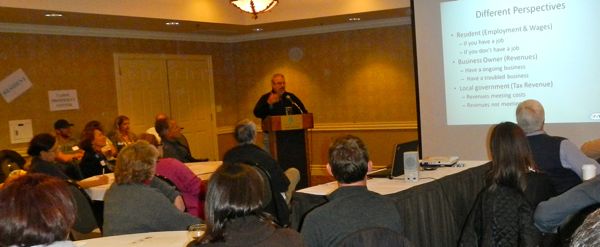
SMG President Carl Ribaudo talks economics Oct. 23 in South Lake Tahoe. Photo/LTN

It took having a common goal. That goal was to make whole the lives of those individuals who lost their homes and those who were displaced.

That type of cooperation is what Paula Lambdin suggested be done to turn the economy on the South Shore around. She should know it works. Her family rebuilt in the burn area. And Lambdin was instrumental in holding her neighborhood together after the fire.

Lambdin was one of nearly 200 people who attended an economic forum Tuesday night at Embassy Suites in South Lake Tahoe that was put on by the Lake Tahoe South Shore Chamber of Commerce, Tahoe Prosperity Center and Lake Tahoe Visitors Authority.

Casey Blann, president of the chamber board, said it is time to stop looking in the rearview mirror and start doing something.

Carl Ribaudo with Strategic Marketing Group went over the economic analysis he prepared for the South Shore Vision plus some additional information. (This is the economic analysis he presented to the South Lake Tahoe City Council earlier this month, which is similar to what he delivered Oct. 23.)

He emphasized how the South Shore has lost about a half million hotel room nights, or 30 percent, since 2001; that retail sales in the city are declining, while Truckee’s are increasing; the need to look at whether economic changes are cyclical or structural; how the bulk of hotel rooms are not in casinos, but that the casinos are hosting the majority of travelers; the abundance of rooms; and how other areas are charging more and therefore bringing more taxes to government coffers.

“The status quo does not provide the level of revenue that is sustainable for the community,” Ribaudo concluded.

He believes the type of person coming to Tahoe is the same person who shops at REI. While he doesn’t want to discount the idea of bringing families, Ribaudo said with that sector representing 30 percent of travelers, it would be foolish to forget the other 70 percent.

B Gorman, president of the chamber, spoke about the trek a group of South Shore powerbrokers took earlier this year to Livermore and Monterey and what the message was from that excursion. She also shared a video from the experience.
http://youtu.be/9dCeNVqudN0

Three questions were asked of the audience at the beginning before each table worked on its solutions. In a brief brainstorming this is what people came up with:

Q: What expectations do you have for the evening?

A: • Education • Accurate data • Inspiration • Information • Solutions • All encompassing plan • Partnership • Shared vision • Momentum • Change.

Q: What are the obstacles?

A: • Financial • Regulations • Communications • The past • Lawsuits • Assumptions • Complacency • Apathy • Status quo    • Lack of imagination • Weather • Fragmentation • Isolation • Lack of leadership • Multi-jurisdictional.

Q: What are you willing to do?

A: • Engagement • Collaborate • Invest • Compromise • Shop local • Participate • Be uncomfortable • Volunteer • Share assets/resources.

Then it was time for the eight tables comprised of residents, business people and agency types to hash how best they would revitalize the economy and the obstacles that may get in the way.

All the comments were being collected, with the goal of having a meeting after the first of the year to encourage solutions with the public and private sectors working together.

Comments included, but were not limited to:

• Stop competing with each other – in other words, work together instead of against each other;

• Identify core values;

• Perhaps the wrong visitor is being targeted;

• Change the status quo;

• Transportation is a problem;

• Communication needs to go both ways – not just one segment telling everyone else what is going to happen;

• Find out what visitors want;

• What brought locals to Tahoe will bring tourists;

• Mountains, wildlife views, fly fishing – those things and others need to be promoted, not just the lake;

• Create a collection of pedestrian zones that are linked;

• Reduce the speed limit;

• Empower locals;

• More jobs;

• Leadership;

• Need more participation – not just all the regulars.

The question people were left with was: What role are you willing to play in the economic revitalization of South Lake Tahoe? Substantive answers will be sought at the next meeting.

A similar question is the Question of the Week on Lake Tahoe News.



Fire restrictions in Lake Tahoe Basin lifted

With the arrival of cooler, wetter weather, the U.S. Forest Service Lake Tahoe Basin Management Unit has lifted fire restrictions.

Additionally, Forest Service fire chief Kit Bailey, in conjunction with local fire chiefs, has opened residential burning.

Although the Forest Service is lifting the additional fire restrictions imposed in the summer, the Lake Tahoe Basin Management Unit adopted a set of fire regulations in 2004 that restricts where campfires are allowed year-round. Most of the Lake Tahoe backcountry is stove only and a valid campfire permit is required. This same regulation applies within the Desolation Wilderness, where a “stove only” regulation has been in place for more than 10 years.

Developed campgrounds usually allow for campfires year-round in the facilities provided.

To obtain more information about backcountry fire regulations and how to obtain a campfire permit, call the Forest Supervisor’s office in South Lake Tahoe at (530) 543.2694.

To learn more about residential burning, local restrictions and permits, contact your local fire department or fire protection district.


Burger King creates pumpkin burger for Japanese eateries

By Huffington Post

In New York magazine, Felix Salmon posted last week that pumpkin was the new bacon. We disagreed — bacon is a year-round obsession whereas pumpkin just gets popular in the autumnal months. But maybe Salmon is right about one thing — the pumpkin obsession seems like it is reaching new heights this year. More proof comes in the form of Burger King Japan’s awesome new creation of a pumpkin burger.

Brand Eating reports that the burger contains two slices of kabocha (commonly known as Japanese pumpkin but yes we understand that it is technically squash), bacon, lettuce, a beef patty and a creamy nut sauce with sesame seeds, peanuts, almonds, cashews and hazelnuts. Also, the bun is meant to be shaped like a pumpkin!

The burger will be available for a limited time starting October 26 and will cost about $3.90. There’s also a “pumpkin bomb” option which offers 10 slices of pumpkin for only about $1.25 more. Or, you can just order pumpkin slices as an optional topping for any burger for about 75 cents.

While we admit that some of Burger King Japan’s offerings may not be so successful in America (we’re looking at you, black bun burger), a pumpkin burger seems downright genius. Could there be a better way to capitalize on pumpkin mania than to combine it with both bacon and ground meat? Burger King Japan, we tip our hats to you.


Tahoe National Forest lifts fire restrictions

Fire restrictions in the Tahoe National Forest have been lifted.

Recent rain and snow in the high country enabled the Forest Service to lift restrictions. Visitors can now have campfires in the backcountry with a valid campfire permit.

As fall progresses however, visitors are reminded to be fire safe as the weather can turn warm, dry and windy.

This past year in the Tahoe National Forest there were 65 lightning-caused fires and 52 human fires for a combined total of 38 acres, the largest being 2.5 acres.

For more information on fire restrictions, call(530) 587.3558.


More than a half ton of garbage plucked from Sierra’s slopes

More than 1,400 pounds of trash was brought in off the slopes at Sierra-at-Tahoe on Oct. 21, including two snowboards, a few skis, a GoPro, a digital camera, a Blackberry, and water gun.

Plastic bottles, cans, trail fencing, and signs were also collected while cleaning up the mountain.

Sierra Resort employees spend the winter and summer months cleaning up the base area and parking lots, but cleaning up the slopes is a job that takes many helping hands. More than 250 members of the community came to Sierra-at-Tahoe Resort to help clean up the mountain at the annual Keep Sierra Clean Day.

An array of items found at Sierra the weekend before the season's first snowfall. Photo/Sierra Resort

“We’re lucky to have such a loyal camaraderie of guests who care deeply enough about the environment to come up here on a Sunday and help us clean it up,” John Rice, general manager of Sierra Resort, said in a press release. “It’s important for skiers and riders to be good stewards of the environment because they depend on it for their winter fun.”


Fatal single-car accident north of Truckee

By Barbara Barte Osborn, Sacramento Bee

TRUCKEE — A 64-year-old Meadow Vista man died Saturday after his car left Highway 89 about 10 miles north of Truckee, struck a tree and burst into flames.

Passing motorists quickly put out the fire, but the driver, Steven Metzgar, sustained fatal injuries in the crash, according to the California Highway Patrol report.

The accident occurred at 1:50 p.m. north of Hobart Mills Road.

According to the report, Metzgar was driving a Lexus southbound on Highway 89 at a high rate of speed when it ran off the right side of the road and collided with a large tree.

The CHP is investigating the accident and asks that any witnesses contact Officer J.J. Varanini at (530) 582.7570.


Snippets about Lake Tahoe

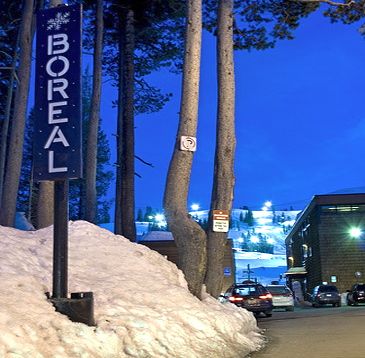
• Boreal ski resort is looking to open Oct. 26.

• Northstar fired up its snowmaking guns for the first time the night of Oct. 22.

• South Lake Tahoe planning commissioners will discuss the Harrison Avenue streetscape plans Oct. 25 at 5pm at Lake Tahoe Airport. This is a public hearing.

• Lake Tahoe Educational Foundation’s annual fall Food Fest is Oct. 27 from 6:30-10pm at Harveys Convention Center in Stateline. Advance tickets are $40 at all elementary school offices and LTUSD office on Al Tahoe Boulevard, also at the Fox gas station. Tickets at the door will be $45 each.

• Weather forecasting – science or folklore? Listen to this dialog from NPR:


Horse and buggies helped determine when Election Day is

By Selena Simmons-Duffin, NPR

It’s Tuesday — exactly two weeks out from Nov. 6, Election Day. Why is voting day for American federal elections always a Tuesday? The answer is a bit obscure and has to do with buggies.

Let me explain.

The story starts all the way back with the Founding Fathers. “The Constitutional Convention just met for a very brief time during the summer of 1787,” Senate Historian Don Ritchie says. “By the time they got finished they were exhausted and they hadn’t made up their minds on a lot of things.”

They were pooped. So they left the question of when federal elections should be held undecided. Without that laid out, states were left to set their own voting dates, which meant several decades of electoral chaos. Ritchie describes it as a “crazy quilt of elections” held at all different times, all over the country.

Finally, in 1845, Congress decided to get things under control. Ritchie says lawmakers reasoned that Monday was out because people would have to travel to the polls in their buggies on Sunday, the Sabbath (this is where the buggies come in). And in a mostly farming society, Wednesday wouldn’t work because that was often market day.

So, Tuesday was the day, and that seemed to work great for 19th century voters. “In the 1840s, elections were a big to do — there was a lot of hoopla, there were parades,” Ritchie says. “Whole families would come on wagons from the farms, people would get dressed up for the occasion.”

Though the America of buggies and markets has long since given way to minivans and grocery stores, Tuesday remains the day we vote.

“That may have made sense in 1845, but the world has moved on,” Rep. Steve Israel, a New York Democrat, says. “Democracies have moved on, and so Congress should also move on and make it easier for people to vote.”

There are, of course, other options for a lot of folks, like absentee and early voting. Still, there are voters who can’t cast ballots unless they can find a way to get to the polls on Tuesday. “In 15 states you do not have an opportunity to vote early or by an absentee ballot or by mail, which means you have to vote on Tuesday,” says Jacob Soboroff of Why Tuesday, who also is a host and producer for HuffPost Live. “It’s just ridiculous, it’s absurd. There is absolutely no good reason whatsoever to vote on the Tuesday after the first Monday in November.”

Soboroff and Congressman Israel say Tuesday voting bars access to democracy and keeps America’s voter turnout chronically low. They point to census survey data showing that 1 in 4 people says he’s too busy or his schedule doesn’t allow him to get to the polls.

Their solution? Move Election Day to the weekend. Israel has been introducing and reintroducing a bill to move voting to the weekend.

But moving poll day turns out to be no easy task. The weekend voting bill keeps dying in committee. And earlier this year, when the Government Accountability Office talked to elections officials about how weekend voting would work, they came up with a list of logistical difficulties, from keeping equipment safe overnight to recruiting poll workers to work the weekend. There’s also, of course, no guarantee that moving Election Day would change voter turnout.

Then there’s the simple fact that Americans have gotten used to voting on Tuesday. “We’re a very traditional county, and that became a tradition in a lot of ways,” says Ritchie. “That’s the way people were accustomed to doing it, people could count on it, you could set your calendars on it.”

For this election, the date is set. So — as in every presidential election since the 1840s — Tuesday is the day to vote.


Hearst Castle’s fee waivers scrutinized

By Stephanie Snyder, California Watch

While nearly 70 of California’s state parks fought to escape closure from budget cuts, the crown jewel of the park system – Hearst Castle – waived $611,000 in private event fees over the last decade for select individuals and organizations, including the politically connected.

Hearst Castle, the lavish 165-room estate on a San Simeon hill overlooking the Pacific coast and Highway 1, has been the venue of choice for 125 events since 2002, ranging from weddings to fundraisers, birthday bashes to cocktail parties.

Most of the excused events were hosted by local partnerships, but politics also played a role in deciding who had to pay full price and who didn’t, said Nick Franco, superintendent for the state Department of Parks and Recreation’s San Luis Obispo Coast District.

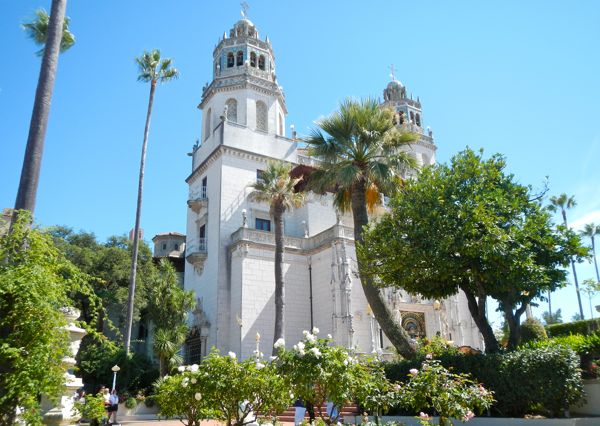
Hearst Castle waives fees for those with connections. Photos/LTN

More than a fifth of the total – $124,450 – was waived for the birthday party of former state Superintendent of Public Instruction Jack O’Connell and a charity race led by Maria Shriver while she was California’s first lady. The race benefited an international nonprofit, Best Buddies.

The waived fees stood to benefit not only Hearst Castle, but also the 11 other parks in the San Luis Obispo Coast District.

“The money stays in the district where earned and it first goes to cover the cost of the event – staffing, security, garbage, clean up, damage to facilities,” state parks department spokesman Roy Stearns said in an email. “But it is also seen as funding that can help make improvements to the parks within the district to improve maintenance, visitor services and the like.”

Two parks in the district – Limekiln State Park and Morro Strand State Beach – were set to close in July, but both received reprieves through last-minute funding from a private parks management company and the district. Budget cuts had added them to the state’s 70-park closure list, though a recent investigation revealed that the department was not suffering as much as it seemed – it had been sitting on a $54 million surplus for years.

The rate for a three-hour event at Hearst Castle is $11,100, but that nearly doubles to $22,100 if more than 50 people are expected to attend. The ultimate decision of whether to charge the event fees is left up to the district superintendent.

Franco said he always weighs two questions: “What is the benefit we’re getting, and what’s the impact on our operation?” If the impact on the facility is high, there should be a large benefit to Hearst Castle, he said; if the event is low-key, any sort of benefit is appreciated.

Less than a year after Gov. Arnold Schwarzenegger took office, his wife, Shriver, helped launch a Best Buddies charity race at Hearst Castle in October 2004. For the first five years of the annual race, Hearst Castle did not charge a dime – fees that would have brought in more than $80,000.

“There’s obviously politics that come into play with big events like that,” Franco said. “It plays into it when the first lady is one of the sponsors of the event.”

Asked why Best Buddies did not pay the state to use Hearst Castle for the first five years of the charity race, Shriver’s spokesman Matthew DiGirolamo responded in an email that he has “no knowledge of this and neither does Maria Shriver.”

The inaugural race in 2004 brought in close to $1.6 million in gross receipts, followed by a fairly steady annual increase to $2.7 million in 2008, according to tax filings for Best Buddies.

Hearst Castle started charging Best Buddies the event fee in 2009, after the maximum event rate was raised from $16,050 to $22,100. The charity race grossed nearly $3 million in 2009 and $3.2 million in 2010, according to the nonprofit’s tax filings.

Use of the Julia Morgan-designed property has been discounted for more than the politically connected. Hearst Castle employees pay a nominal $100 to host weddings, engagement parties and baby christenings, while Hearst family members pay nothing.

The state’s former schools superintendent got a significant discount, too. After leaving office in January 2011, O’Connell hosted a 60th birthday party on two nights, one in October and one in November, which typically would have cost $44,200 for the event permits alone. Hearst Castle did not require the longtime politician to pay the standard fee for two nights of bringing 55 anticipated guests to tour the facilities and swim in the famous Neptune Pool, followed by a reception, said Jim Allen, Hearst Castle’s marketing director.

“I honestly didn’t think about it that deeply,” Franco said. “If I think about it now, I certainly could have charged him that fee – whether or not he would’ve paid it, I don’t know.”

According to Franco, instead of directly paying the state park for his birthday party, O’Connell donated $10,000 to the nonprofit Friends of Hearst Castle – a cooperating association of the California Department of Parks and Recreation that supports the preservation of Hearst Castle and assists with community outreach and education. According to the nonprofit group’s tax forms, O’Connell also donated another $5,000 during the 2011 fiscal year.

O’Connell assumed he had paid full price to host the events, he said, and he wasn’t aware that his $10,000 check was considered a donation rather than a payment to the state park.

“I just sent what was requested,” O’Connell said. “I paid what was asked.”

In 2011, special event fees were waived for four other events at Hearst Castle, according to data from the parks department’s San Luis Obispo Coast District. For two of those events, donations instead were made directly to Friends of Hearst Castle, as they were in O’Connell’s case. Between 2002 and 2011, no donations appear to have been made to the Friends of Hearst Castle in lieu of event fees.

There is a greater guarantee that money will stay at Hearst Castle if it is spent on donations to Friends of Hearst Castle instead of special event fees to the state park, which can be used elsewhere in the district. Friends of Hearst Castle is contracted by the state to give all revenue above expenses back to the state park – a contribution that the nonprofit’s vice president and former treasurer called “significant.”

“We submit to the state how much money we raise as far as fundraisers, how we got that money and how much money we basically give back to art preservation,” said Vice President Kristin Rasmussen. “That’s the whole point of a cooperating association – to go back and preserve what’s there.”

Janelle Beland, who was appointed the parks department’s acting director less than three months ago after her predecessor resigned over the $54 million surplus, said she does not expect the relationship between parks and cooperating associations to end anytime soon.

“We’re spread too thin,” Beland said, adding that the benefits of such relationships are clear when park closures appear imminent. “Decisions were being made – before we found out about the surplus funds – of having to look at potentially closing parks, and these organizations and groups stepped up to help.”

One of those groups, the Coe Park Preservation Fund, recently asked for a refund of $279,000 in light of the surplus.

Beland said the parks department now is taking a “longer-term look” at how partnerships with cooperating associations and donations to nonprofits intended for state parks should be structured systemwide.

When asked if parks should be collecting donations instead of state park fees, Beland said donations should be collected “in addition to” state fees, “not instead of.”

Friends of Hearst Castle ended the 2011 fiscal year with a profit of $148,000, according to the nonprofit’s most recent tax filings. But the organization struggled in prior years, which Franco blamed on the recession.

Friends of Hearst Castle had a $77,000 deficit in fiscal year 2010, down from a deficit of $152,000 in 2009 and $211,000 in 2008. The organization fared better financially in 2011 in part because the executive director died and has not yet been replaced.

The San Francisco Chamber of Commerce donated $1,000 to Friends of Hearst Castle for an event in June 2011 that typically would cost $11,100. On a larger scale, Savor the Central Coast – an annual food and wine festival – donated $15,000 and $3,000 worth of outdoor furniture to Friends of Hearst Castle to host the September 2011 reception instead of being charged $22,100 by the state.

In the case of the festival, presented by Sunset magazine and the San Luis Obispo County Visitors and Conference Bureau, Franco said benefit fees were waived in exchange for four months of free promotion for Hearst Castle in the magazine.

This year’s Savor the Central Coast, held last month, included tapas and wine during a $125-a-head “Enchanting Evening at Hearst Castle” – and another waived $22,100 fee partly offset by an expected $20,000 donation, Franco said.


LTUSD, TTUSD closed Tuesday; other school openings delayed

Updated Oct. 23 8:55am: The trip between the South Shore and Carson City is slow going. It’s slushy, according to one commuter, on the Tahoe side. About a foot of white stuff has fallen at the summit.

Updated Oct. 23 6:55am: Several wrecks have occurred on Interstate 80 between Truckee and the Nevada state line. Expect substantial delays. Click on the state icons on Lake Tahoe News’ home page for road updates.

——

Slick roads and about a half a foot of snow in spots has canceled school in Lake Tahoe Unified School District today.

This is the second day in a row that schools in Tahoe Truckee Unified are closed.

There is a two-hour delay for Incline Village schools. The high school field trip planned for Tuesday morning has been canceled.

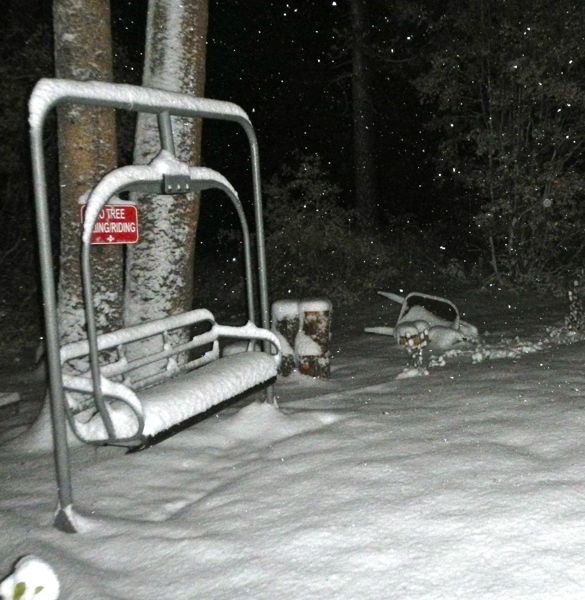
Several inches of snow fell overnight in South Lake Tahoe. Photo/LTN

Douglas County students at the lake will be picked up at the main bus stops – Tina and Ski courts on Upper Kingsbury Grade and at the Glenbrook entrance. Schools are also on a one-hour delay.

Chains or snow tires are required on all highways in the Lake Tahoe Basin and over mountain passes.

The National Weather Service in Reno is calling for the snow to taper off this morning, but picking up again Tuesday night and into Wednesday morning. The winter storm warning is in effect until 11 this morning for the basin.

Slippery roads are expected to cause traffic issues.

Fall may return Friday, when the forecast is for mostly sunny skies.

 — Lake Tahoe News staff report