Rock climbing film to be shown on North Shore

Local hero Dave Nettle will kick off Alpenglow Sports’ Winter Film Series on Nov. 14 with a fast paced and humorous assortment of stories and images that highlight six recent rock-climbing trips.

The show will take viewers on a visual road trip with destinations from the remote Adamant Range in British Columbia to the Sandstone walls of Zion, from ultra classic free lines to hidden gems. The show will even include newly established first ascent routes on Sierra granite.

The show is free and is designed to motivate, inspire, and educate.

Alpenglow Sports Winter Film Series has a new venue — Squaw Valley’s Olympic Village Lodge. Show begins at 7pm.

Call Alpenglow Sports at (530) 583.6917 with questions.


El Dorado County deputies scale back boat patrols

As boating activities slow down, the El Dorado County sheriff’s boat patrol unit will appropriately modify its schedule to meet off-season boating needs.

Lake Tahoe, Fallen Leaf Lake, and Lower Echo Lake are patrolled by deputies from the South Lake Tahoe station, while Folsom Lake, Jenkinson Lake, Union Valley Reservoir, Ice House Reservoir and the South Fork of the American River are patrolled by deputies from the Placerville office.

The department received a California Department of Boating and Waterways grant which with boat registration fees funded the boat patrol activities with no cost to the county general fund.

During the 2012 summer season deputies assisted 390 vessels and contacted 4,389 individuals. They conducted 20 searches for missing persons, 42 vessel inspections, investigated 13 boating accidents, issued 1,563 verbal warnings, 204 citations, and made six arrests for boating under the influence. During the 2012 season, there were two fatalities on El Dorado County waterways.


New generation of veterans don’t favor one political party

By David Wood, Huffington Post

WASHINGTON — Veterans and military families are no longer the dependable core of support for Republicans that they were for generations.

Seared by a decade of war and service in a military force that is more ethnically and racially diverse — and includes openly gay troops — more than two million Americans who served in Iraq and Afghanistan are powering a shift in electoral politics.

They are relatively small in numbers: less than 1 percent of qualified young Americans opt for military service. But they tend to be vocal and active, and more picky about throwing their support to one party.

As a result, the campaigns of President Obama and Republican presidential candidate Mitt Romney are fighting hard to win the votes of more than 30 million American veterans and their families. And their votes are up for grabs.

“We are not a homogeneous group,” said Alex Cornell, who fought as a Marine sergeant in Fallujah, Iraq, in 2006.

The experience of war makes veterans more skeptical, less willing to trust politicians. “We see through candidates and public officials who just make statements,” Cornell told the Huffington Post. “People are smart and realize that actions matter. How we look at specific issues — veterans care, GI bill, energy security — that trumps party affiliation.

“That’s why you see this shift, from the more homogenous, ‘Republicans are better.’ Now it’s more mixed.”

His views are backed up by polling, which has found a surprising diversity both inside the active-duty military and among veterans and families.

In an in-depth study of the American military, Lt. Col. Jason Dempsey, a West Point graduate with a doctorate in political science, found a stark difference between the small officer core — about 6 percent of the force — and the vast majority of active-duty troops who are enlisted.

“While army officers are likely to be more conservative, rank-and-file soldiers hold political views that mirror those of the American public as a whole,” he writes. “Army personnel are less partisan and politically engaged than most civilians.”

Another study, this one by Reuters/Ipsos, finds a wide variety of opinion among veterans and military families: More than half supported ending the military’s policy of “Don’t Ask, Don’t Tell” that outlawed openly serving gays; less than one-third said the war in Iraq ended successfully; a plurality (42 percent) said the U.S. military involvement in Afghanistan should not continue. Veterans and military families rejected the idea of “leading from behind” by 44 to 32 percent, in the poll.

While issues of war and terrorism tend to be hot-button issues for many voters, including those in the military, Dempsey found in his study of active-duty troops that, “on most social issues and questions of how the government should spend money, the attitudes of service members largely tracked those of the civilian population,” he wrote in a blog post for the Huffington Post.

And with neither Obama nor Romney having had combat experience — or even peacetime service in the military — the narrative of an experienced commander-in-chief has become less potent. Obama gets high marks for having managed two wars and “gotten” Osama bin Laden. But many combat veterans say time in uniform doesn’t really matter.

“Some presidents who were excellent as generals weren’t very good as presidents — Grant, for instance,” said Anne Rawley, a retired Navy captain with 26 years on active duty. “We’ve had excellent wartime presidents with no military background — Lincoln and Roosevelt.”

She said the commander-in-chief’s military experience “is not something I thought about” when she was serving as a combat trauma nurse at a hospital in Danang, Vietnam, where the “typical patient was a triple amputee with one eye gone.”

But veterans do have passion about issues specific to them: access to health care, education, housing and other benefits. Seeking to capitalize on veterans’ chronic impatience with the giant Department of Veterans Affairs (VA), the Romney campaign has been quick to criticize the Obama administration for not fixing its long-term problems.

“President Obama has failed to lead on the issues important to us veterans,” said Curt Cashour, who served for 15 months as an Army staff sergeant in Iraq, and is a Romney campaign organizer in Virginia. “President Obama has thrown a lot of money at the VA, but the problems have only gotten worse.” Romney, he added, “really wants to get into the VA and cut all the red tape.”

A senior Romney campaign adviser on veterans issues, who was allowed to speak to the Huffington Post only if promised anonymity, said Romney “can’t wait to get his hands on the VA to institute positive reforms.” He said the VA is “over-regulated,” and suggested that if veterans had trouble getting health care from the VA, they should be granted access to Tricare, the Defense Department’s health insurance plan.

“That’s nonsense,” said Ed Meagher, a forward air controller with ground troops during the Vietnam War and a retired career VA official. “It’s another way of saying, ‘Put these guys out on the economy.'”

“It infuriates me,” Meagher told HuffPost, “that some folks don’t seem to realize we have a duty, we made a commitment” to veterans. “We have just run two wars on a credit card and the tail of this, the veterans who need and deserve help, may stretch out 50 to 60 years — and now they want to save money?”

Perhaps typical of the new generation of war veterans is Michael Cogar. A military brat — his father served in the Air Force — Cogar enlisted right out of high school, deployed twice in Iraq as an Army combat engineer hunting IEDs, and was blown up eight times. “That was one of the lowest numbers in our unit,” he said. He was eventually diagnosed with Traumatic Brain Injury and released from the Army.

At loose ends, he picked the East Coast as a place to live and enrolled in Old Dominion University in Norfolk, Va., because it had the engineering courses he wanted to take. He didn’t know anyone and had no family or friends in the region.

Eventually, he joined the university’s Young Republicans club. Out of ideological conviction? Not so much, he said. “It seemed like a good way to meet new friends.”


Hotels making it easy for guests to exercise outdoors

By Nancy Trejos, USA Today

Chris McGinnis travels with just a carry-on bag, which leaves little room for running shoes.

When he wants to exercise during a trip, he takes long walks. He prefers burning calories while strolling through the Hudson River Park in New York or Runyon Canyon in Los Angeles. It’s much nicer than running on a treadmill in a windowless hotel fitness room, he says.

“It’s just good to be outdoors after spending so many hours in offices or on trade show floors full of stale air,” says McGinnis, Best Western’s business travel trends expert and a blogger at the company’s travel site Youmustbetrippin.com.

The hotel fitness center has gotten fancier in recent years. But for many road warriors, that doesn’t matter. They’d rather exercise in the great outdoors.

In a TripAdvisor survey of more than 1,400 U.S. travelers this year, 87 percent said walking is their primary exercise while traveling. Another 35 percent said they liked hiking, and 16 percent said they prefer biking.

In a bid to win those travelers, hotels are starting to give them exercise options beyond the fitness center. Many now offer walking tours and free bikes. Some have built outdoor areas for walking or running.

“There’s clearly a group of travelers who like to work out in the gym and others who like to work out outside,” says Chekitan Dev, associate professor of strategic marketing and brand management at Cornell University’s School of Hotel Administration. “Hotels are recognizing that travelers need choices.”

Dev also points out that many hotels are getting better at taking advantage of their surroundings. “It’s sort of short-sighted to think of the facilities that guests can access as being just within four walls,” he says. “Hotels realize they have a bigger landscape to choose from.”

There’s some scientific evidence to support the theory that exercising outside may be better than in a gym. A 2008 Glasgow University poll of about 2,000 people found a 50 percent improvement in mental health among those who worked out outdoors.

And studies show that frequent travelers could use a lift. In a Harris Interactive poll released this year, 75 percent of 2,000 working Americans said too much travel for work caused them more stress.

“You’re out of your normal element and surroundings, so even that can provide some level of stress,” says Cedric Bryant, chief science officer for the American Council on Exercise. “You’re not sleeping in your own bed. You’re not [following] your own routine as far as what you eat.”

Exercising outdoors, he says, can help moderate that.

“The fresh air and the changing scenery and so forth can serve as an even greater positive distraction to forget the various care and trials of the day,” he says.

Ted Mitchell, an engineer in Dallas, appreciates hotels that offer walking maps and other walking amenities. He tries to walk a couple of miles each night when he’s on the road.

“I am inside buildings in conference rooms all day,” he says. “Fresh air and being outside makes me feel like I am on vacation for a little while.”

At select Home2 Suites properties, guests can take advantage of a walking path surrounding the buildings.

“We just heard the drumbeats really loudly about customers wanting to stay healthy on the road and wanting to go out and get a breath of fresh air,” says Bill Duncan, global head of brand management for Home2 Suites and Homewood Suites by Hilton. “They want a variety of different ways to exercise.”

The Ritz-Carlton Dove Mountain north of Tucson, a Marriott property, offers a complimentary guided nature walk with one of their “rangers” every day. During the walk the rangers talk about the different types of plants and wildlife in the area and show participants ancient Indian petroglyphs. The Ritz-Carlton, Lake Tahoe provides maps for hikes that begin at the back doors of the property up to Sawmill Lake.

The Hotel Wolcott in Midtown Manhattan provides pedometers and walking maps at the front desk.

Affinia Hotels, which has properties in New York and Washington, D.C., offers guests a Walking Tour Kit that contains an iPod Shuffle or Nano loaded with Affinia Walking Tours and workout playlists, a City Walks deck of cards, a city guidebook, a map, pedometer and towel.

Some hotels are going so far as to give their guests a financial incentive to walk.

The Hotel Palomar San Diego has a “Walk this Way” package. In addition to a deluxe room, guests get a pedometer, bottled water, power bar and foot lotion. Those who walk more than 10,000 steps the day they check in get 50 percent off a room if they return to the Palomar San Diego or Palomar Los Angeles by the end of this year.

Bikes have also become more popular amenities at hotels.

At the Affinia Dumont and Affinia Shelburne in New York, guests have free use of a Republic Bike that comes with a map of popular routes and landmarks.

Kimpton’s four Chicago hotels have “Bike This Town Packages” that include, with a one-night stay in a deluxe room, two complimentary bike rentals, maps, energy bars, sun block and cyclometers to track distance. Kimpton’s Argonaut Hotel in San Francisco has a “Bike the Golden Gate Bridge Package” that includes a bike rental for two.

But travelers don’t have to rely on their hotels to find ways to exercise outside. All they have to do is get online and find out where the nearest park, hiking trail, beach, tennis court or golf course is. Or, they can search the Internet or community boards at coffeehouses for pickup basketball or volleyball games that may be happening while they’re in town.

Or, they can simply use their local park as an obstacle course, says Stacy Berman, owner and head trainer at Stacy’s Bootcamp in New York. “Use a bench for dips and box jumps, sprint up a hill and use swings to do modified pull-ups,” she says. “Be creative: Exercising outside is not just about running.”
Juvi system seeing more girls incarcerated

By Carrie Johnson, NPR

The number of boys locked up for crimes has dropped over the past decade, but the number of young women detained in jails and residential centers has moved in the other direction.

Experts say girls make up the fastest-growing segment of the juvenile justice system, with more than 300,000 arrests and criminal charges every year. A new report by the Georgetown Center on Poverty, Inequality, and Public Policy says the system isn’t doing enough to help those young girls.

Most girls who wind up tangled in the justice system have family problems, trauma or a history of abuse, says Georgetown University professor Peter Edelman, who co-authored the report, “Improving the Juvenile Justice System for Girls.”

More than half of the girls detained these days don’t commit big crimes. More often their transgressions are things like skipping school, breaking curfew or running away from home, says Edelman, who has studied justice up close since the 1970s.

“Getting them back into school and getting them back on a path without invoking the sanctions of the juvenile and criminal justice system,” Edelman says, “that is so much better in terms of not leaving those wounds and scars and preserving the possibilities for the future.”

Jabriera Handy says she is still living with some of those scars.

Four years ago, Handy was locked up in the Baltimore City Detention Center. Her 69-year-old grandmother had died of a heart attack shortly after they had a fight. Handy was charged with second degree murder in the adult system and spent 11 months in the detention center.

One day, on the way to school behind bars, the jail was put on lockdown because someone had been stabbed to death.

“I was looking, and I saw the man was just laying there with a limp body,” she says.

She says they continued on to school like nothing had happened.

“So it wasn’t like anybody came to us to talk about what [we had] just seen,” she says.

The Georgetown report says no juveniles — girls or boys — belong in adult jails and prisons. It also says prosecutors should never lock up kids on technicalities, like violating probation or other minor offenses.

That doesn’t sound right to longtime prosecutor James Backstrom.

“We’re talking about kids that are violating curfew laws, being truant from school [and] violating court orders,” Backstrom says. “Do we need the authority to pick those kids up? I think we do.”

Backstrom, the district attorney in Dakota County, Minn., says not all of those juveniles need to be in detention.

“[But] if you ignore the small issue, you might not get to the big issue before it’s too late,” he says.

Backstrom says he agrees with Edelman on a key point in the report, that it makes sense to devote resources to kids.

“I’ve long believed if we’re going to reduce crime in America in the long run, we have to start with our kids, with early intervention and prevention efforts,” he says.

Handy, who got out two years ago, says she is doing her part. She wants to become a social worker and is visiting girls at a detention center in Maryland to try to listen and help.


Former Tahoe-area camp counselor arrested in SoCal on child sex charges

By Teresa Watanabe, Los Angeles Times

A 27-year-old male teacher suspected of sexually assaulting two fifth-grade boys in an El Segundo classroom has been arrested, and authorities are looking for other possible victims.

Jeffrey Simonek, who had been placed on administrative leave from his job at Center Street School in the El Segundo Unified School District while allegations were being investigated, was scheduled to appear Friday at the Airport Courthouse.

He was arrested around 6:50 p.m. Wednesday by El Segundo police investigators, who received an anonymous report of possible sexual assault through the Los Angeles County Department of Children and Family Services, police said in a news release. Simonek was booked on suspicion of committing lewd acts with children under the age of 14. Bail was listed at $300,000, police said.

Simonek also worked as a counselor at a Lake Tahoe-area summer camp for boys ranging from age 6 to 11 from 2005 to 2011, officials said. Police said in the news release that Simonek is suspected of assaulting young boys at that camp.

Simonek has also volunteered with various youth organizations in Los Angeles and Orange counties that placed him in direct contact with young boys, police said. They said they believe Simonek sought these volunteer and counselor positions so he could interact with boys he could potentially victimize.

Anyone with information is asked to contact El Segundo police Det. Jeff Humphrey at (310) 524.2284 or jhumphrey@elsegundo.org.


South Tahoe’s police chief shares lessons from son’s death

Publisher’s note: South Lake Tahoe Police Chief Brian Uhler’s 21-year-old son, Alex, died last week. The following is a letter he wrote to his staff that he asked Lake Tahoe News to publish.

By Brian Uhler

I thought it of value to write colleagues in public safety about my son so you might recognize our important role in helping families and people with addiction problems. I do not ask for specific action, but hope you seek to make a positive difference in your own way when the opportunity comes.

Alex was the rare sort of person, having a pure and good heart who truly cared about others even more than he did about himself. Those who met Alex casually would know him as a highly regarded student at Queens University where he worked on special projects involving gene mutation and the probable pigmentation of the eyes on dinosaurs. One professor recently wrote, “I’ll remember Alex for his unending curiosity and his wonderfully dry wit.” He added that Alex “had a love of learning that was unsurpassed by his peers.”

Alex Uhler

He explained that he liked Alex for his “sharp mind, his interest in science, his interest in issues of the world, but also for his unassuming manner.”

When he was about 10 years old, I was driving past a homeless man holding a sign “hungry, please help”. Alex asked, “Daddy, can we give him some money?” To this, I explained, that giving him money would just lead to him buying beer or something. Being quick of mind, even at this young age, Alex says, “Well, can we buy him a hamburger then?” Touched by his sweet nature, I said, “Sure, son.” And we helped that homeless man with a burger.

As a Boy Scout, Alex would take special care of the younger scouts. He would never belittle or make fun and was known to help the “underdog” without second thought.

One day, about tow years ago, Alex came home beaming that he had just eaten 10 tacos at Taco Bell. When I asked, he explained that he was driving in San Francisco and he saw a man trying to push his broken-down Cadillac from the road. The man couldn’t push hard enough so Alex stopped his car and offered a helping hand. When they finished, the man unexpectedly and insisted that Alex take $20 for his kindness. Alex immediately rewarded himself with as many tacos as he could eat.

Growing up, Alex was always a great helper, ever ready to help lift something or participate in a project. I came to respect his intellectual abilities many times over. Typically, I would be struggling with a problem and Alex would glance at it, without any effort at all, and say, “maybe you can….” Sure enough, more often than not, his suggestion would be right.

When he was young, I would tend to dismiss his ideas, but as I progressed in life, I learned that I should listen to Alex.

His sharp mind and amazing ability to recall information was very clear to people who knew him well. You could ask Alex a question about some obscure fact and chances are he would recite an answer like he was reading it from a textbook. As we who were closest to Alex have come to know, his brilliant mind was often racing and restless. Even as a young child, he found it difficult to go to sleep. His mother and I would take turns lying with him, combing our fingers through his hair until he would drift off to sleep.

Many years ago, when Alex was young, he said, “Mommy, I think there’s something wrong with me.” We didn’t think much of it because every visible indication was that Alex was fine (good grades, scouting, sports, etc). Later in life, we learned that Alex struggled with anxiety that was most troubling when he was alone. As a family we helped him in many different ways. Unfortunately, each time we did things to help Alex, we unintentionally burdened him with an inner conviction and determination that he would not hurt us more.

This is what led Alex to conceal his addiction to virtually everyone. I believe with all my heart that he didn’t want to be the cause of anyone’s pain, let alone those he loved most.

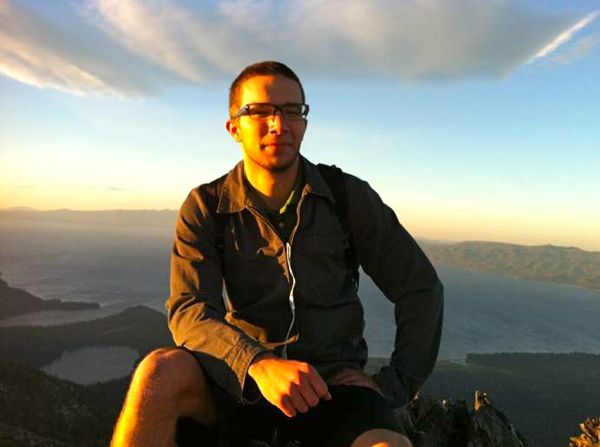
On the day the photo was taken, Alex and I started the hike at about 5pm. We took a little less than three hours to make it to the top. At first, he took the lead, boldly making progress up the mountain. Each time I’d fall a little behind, Alex would stop and wait patiently. This happened a couple times. Then he stopped and fell-in behind me. After about an hour of more hiking, I asked, “Hey, buddy, you staying back there so you don’t make your old man feel bad, right?” He said, “Yeah, dad, something like that.” Later that evening, it got cold, we got lost, and had only cell phones to light the way. At one point, he said we should find shelter and wait for daylight. Stubbornly, I refused. Now, I’d give anything to huddle with my buddy on the side of a cold mountain.

Specific information about the memorial service to be held this Sunday will be forwarded later. The family asks that no flowers be sent. Instead, a donation in Alex’s name to a Queens University scholarship fund will be appreciated. This information will be forthcoming.


Snippets about Lake Tahoe

• South Lake Tahoe Mayor Claire Fortier will give a State of the City address Nov. 20 at 9am at Lake Tahoe Airport.

• The American Legion Auxiliary Community Christmas Party is Dec. 1 from 1:30-3pm at the American Legion Post No. 795 on Lake Tahoe Boulevard in South Lake Tahoe. Santa will be there for gifts for children up to age 10. It is free and open to the public.

• The River Ranch, located at the entrance to Alpine Meadows, celebrates its 40th anniversary under current ownership on Nov. 1 from 5:30-8:30pm. The lodge and restaurant have been in existence for 100 years.

• The 24th annual Chocolate, Wine & Roses Festival will take place Nov. 3 from 7-10pm at the Hyatt Regency Lake Tahoe in Incline Village. Tickets are $85/person.

• Charles Barkley, whose antics and poor performance at the annual celebrity golf tournament in Lake Take are legendary, is making money off his lousy golf game.
http://youtu.be/Cvx5e0rfV9o


Opinion: Lake Valley fire definitely interested in working with SLTFD

To the community,

During the March 2012 meeting of the Lake Valley Fire Protection District board of directors, I made a presentation regarding an annexation proposal for the properties within the city of South Lake Tahoe. The board directed me to make the proposal to the South Lake Tahoe City Council.

Since that time a committee has been formed with representatives from the city and Lake Valley FPD to discuss the possibilities of annexation and the various benefits and challenges of such a move.

Gareth Harris

Annexation of the properties within the city limits would mean that the current fire department tax base would go to Lake Valley FPD, which would become the fire suppression and prevention agency for residents in the city. The proposal includes the hiring of all current South Lake Tahoe Fire Department employees by Lake Valley FPD.

The result would be no increase in cost to property owners in either the city or the county, but the services of a larger, more efficient fire agency. Lake Valley’s board of directors sees this as a potential win-win situation for all involved.

Recent comments made by South Lake Tahoe City Council candidates during a community forum have indicated that the administration of Lake Valley FPD does not favor the consolidation. The purpose of this letter is to assure the residents being served by both agencies that the district has not changed its stance, and looks forward to investigating a situation which would be mutually beneficial to all citizens and agency personnel.

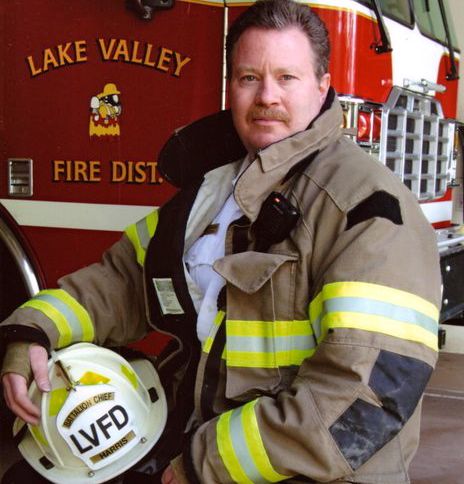
Gareth Harris, Lake Valley fire chief


Final EIS outlines future planning regs for Lake Tahoe

By Kathryn Reed

KINGS BEACH – On a blustery day where Lake Tahoe seemed to have the energy of the ocean, it set the stage for what could have been a combative, boisterous day. Instead, those who came out to discuss the final environmental documents of the TRPA Regional Plan update remained civil.

Oct. 24 was the first of two days to discuss the Tahoe Regional Planning Agency’s revisions to the documents that were first released in April. This morning the Governing Board and Advisory Planning Commission meet at Harveys in Stateline starting at 9:30.

The final environmental impact statement for the TRPA Regional Plan update is out. Photo/LTN file

Board members Mara Bresnick (California Assembly speaker appointee) and Byron Sher (California Senate Rules Committee appointee) are expected to introduce changes to the Regional Plan update at today’s meeting. Sher was not at the Wednesday meeting. It was possible for Bresnick to have brought her concerns to the table sooner, as she was asked to be part of the committee to hash out the update. She declined to do so.

Eight members of the public voiced their opinions after staff gave a brief overview of what the differences between the draft and final EIS are. Arlo Stockham, TRPA regional planning coordinator, outlined the changes. None of the changes is the law of the land until the Governing Board takes action.

One difference between the draft and final EIS is the ability to appeal decisions to TRPA. More procedural safeguards are in place when it comes to permitting area plans. Those are the plans local jurisdictions will create. They come with more flexibility and less microscopic analysis from TRPA.

The increase in height allowances to bring the Stateline casinos into compliance will be granted just for those structures and any buildings on those properties that would replace what exists today.

Increased building height for areas outside the town centers was scrapped.

With about 4,300 development rights left, a maximum of 2,600 allocations would be released in the next 20 years. And those would be doled out in four-year intervals.

The final EIS lists “resort recreation” areas as Edgewood’s property and Heavenly’s California Base Lodge. Additional recreation development may be possible in area plans. Transfer of sensitive property must be within hydrologic areas.

Property within 300 feet of Lake Tahoe would have different coverage rules than other locations. Americans with Disabilities Act exemptions would be in place in regards to coverage, too.

Businesses have five years after the building was shuttered before mitigation fees would have to be paid. Currently, it’s two years. A pilot program to see if a drive-through pharmacy impacts air quality will be allowed.

While the inadequacy of the noise threshold was brought up in the peer review of the threshold document, no substantive changes are in the works to make it more logical.

The Governing Board will be asked to come up with a list of priorities after the first of the year for things to work on after the update is finished. Noise could be on that list.

When it came to public comment, Jennifer Quashnick with the Tahoe Area Sierra Club, said she believes the document focuses more on development than thresholds.

Laurel Ames, also with the Sierra Club, raised doubts about enough being done regarding scenic issues, said pervious pavement is problematic, and soil needs to be addressed further in relation to coverage.

Bob McKay with Tahoe Beach Club believes the plan is good.

In addition to the EIS, the other updated documents released this week include the Threshold Evaluation, Regional Transportation Plan and final EIR, and Code of Ordinances.

Notes:

• TRPA’s website has the documents. TRPA staff will also have USB thumb drives available for $15 each at the Oct. 25 meeting.

• The final environmental impact statement was released Oct. 24. Because of this, more input will be taken next month to give people an opportunity to review the information. The Nov. 14-15 meetings (in Incline Village and Stateline, respectively) will be another joint meeting of the APC and Governing Board.

• A vote by the Governing Board is expected on Dec. 12.