Incline college hosting 2-day film festival

The inaugural Sustainability Film Festival is a collaborative series of films designed to generate awareness, conversation, and debate around current issues in sustainability.

The festival at Sierra Nevada College in Incline Village includes visionary documentaries that explore issues of social justice, food, environment, sustainability in business, and an afternoon of films appropriate for families and children ages 7-12. Film topics will be facilitated by local academics and community leaders who will lead discussions to present and exchange ideas on current and local trends in sustainability.

Admission is free, but donations are accepted during the Nov. 2-3 festival.

Contact Betts Markle at emarkle@sierranevada.edu or (775) 881.7511 for more information and the full schedule of events.


Musical event dedicated to veterans

Lake Tahoe Unified School District Performing Arts Department presents A Veterans’ Musical Tribute at South Tahoe Middle School’s multipurpose room.

This free concert on Nov. 8 from 7-8pm features South Tahoe High and Middle school bands, orchestras and choirs.


Placer County supes allocate funds for Tahoe-area issues

Placer County, behind Caltrans, is responsible for snow clearing operations on the second highest number of roads miles in the state.

This requires the county to regularly maintain and upgrade its snow removal equipment. At last week’s Board of Supervisors meeting, the electeds authorized the purchase of two self-propelled snowblowers. The $1.1 million for the two apparatuses is funded by the county’s Road Fund with no net county cost.

Also at the meeting, which was conducted at a snowy Sugar Bowl ski resort, the board agreed to a funding agreement for acquiring property in the Royal Gorge Cross Country Ski Resort and replacement of county regulations for liquid petroleum gas used above 5,000-feet elevation.

The board approved a $300,000 contribution in Park Dedication Fees from the Serene Lakes Recreation Area fund to help purchase Royal Gorge. Working in partnership with the Truckee Donner Land Trust, the Trust for Public Lands and the Northern Sierra Partnership, the acquisition of the 2,891 acre-site will permanently protect the property’s natural resources and create opportunities for public recreation in an area that has been closed to the general public for 50 years. With the funds being taken from park dedication fees, there is no cost to the county.

The new petroleum regulations approved by the board arose from problems with substandard propane systems. These problems became readily apparent two winters ago when heavy snowfall caused dozens of propane systems to fail and leak. One home in the Donner Summit area was destroyed when leaking propane filled the home and then exploded. No one was injured in the incident.


Letter: Stracener should not continue as judge

To the community,

Judge Warren Stracener is mailing literature that uses smear tactics to hurt his opponent.

This win-at-all-costs approach is what we expect from sleazy politicians, not judicial candidates.

Is this the kind of person we want for our judge?

Eddie Keller, retired El Dorado County Superior Court judge, Shingle Springs


Casinos face lawsuit from Prestige Travel

By Steve Green, Las Vegas Sun

Bankrupt firm Prestige Travel Inc. of Las Vegas has now filed 33 lawsuits against hotels and casino companies as it tries to hold on to its cash.

Saying the slow economy and the trend of resorts booking their own rooms online has hurt its results, the company filed for Chapter 11 bankruptcy reorganization and protection on Tuesday as it shuttered its online component, a business called TripRes.com. About 90 employees were laid off, leaving about 80 workers mostly involved with Prestige’s traditional bricks and mortar travel agency.

To preserve its cash, the company is suing casinos and hotels in bankruptcy court to demand limits on draws against letters of credit and to require them to honor customer reservations booked by TripRes.

The court intervention is needed in the coming weeks, Prestige says, because after Tuesday’s bankruptcy filing, several of Prestige’s “various hotel and show partners indicated that they would not honor future hotel and show bookings previously reserved” by Prestige.

Prestige customers typically book packages with an average value of $324, the company says.

This amounts to an average of $49,000 per day in Prestige-booked business for Nevada hotels and show operators, most of them in Las Vegas.

During a hearing Friday, U.S. Bankruptcy Judge Bruce Markell approved plans for the company to continue operating in the short term with existing financial resources while attorneys for Prestige gear up to litigate what appear to be serious financial disputes with creditors including City National Bank and MGM Resorts International.

Court papers show that when Prestige Travel fell behind on financial obligations to its largest creditor MGM Resorts International, Prestige began negotiations with MGM Resorts but Prestige “felt it was unable to work out a mutually agreeable solution without significantly impacting the feasibility” of Prestige’s operations.

That led to the bankruptcy filing and a Prestige lawsuit against MGM Resorts demanding restrictions on MGM Resorts’ ability to draw against a $2.5 million letter of credit.

Samuel Schwartz, one of the Prestige attorneys, told Markell on Friday that because of Prestige Travel’s financial troubles, one of the MGM Resorts properties, the Luxor, declined earlier in the day to honor the terms of a reservation booked through Prestige for a family of seven from Australia. After the hearing, Schwartz and Prestige officials said they didn’t know whether the family ended up obtaining accommodations.

Gordon Absher, vice president of public affairs at MGM Resorts International, said the company is working to assist travelers “falling victim to this unfortunate situation.”

“TripRes booked reservations for travelers, but after filing for bankruptcy cannot provide information or assurance of payment for those reservations,” Absher said. ”No guests are being turned away from any of our hotels. Reservations are not being cancelled.”

”We are holding rooms for TripRes reservations, but are asking travelers for payment by credit card while TripRes works through this matter,” he said. ”To further assist these travelers, we are honoring reservations at the rate they were booked.”

Besides suing City National Bank and MGM Resorts International, Prestige has sued 32 more hotel and casino companies: Caesars Entertainment Corp., Treasure Island, the Stratosphere and its sister properties the two Arizona Charlie’s and the Aquarius in Laughlin; the Silver Legacy in Reno, the Venetian, Wynn Las Vegas, Trump Tower, the South Point, the M Resort, the Tropicana, the Golden Nugget, the Four Queens, the Gold Coast and its sister properties the Orleans, the California and the Fremont; the Hard Rock, the LVH, the Palms, Palms Place, Hooters, Circus Circus Reno, the Grand Sierra in Reno, the Riviera, the D, Don Laughlin’s Riverside Resort, the Tropicana Express in Laughlin, the Tuscany and the Sands Regent in Reno.


Ex-Carson City doc out of jail until trial begins

By AP

CONWAY, Ark. — A former Carson City emergency room doctor charged in a double murder will be allowed to leave jail — and the state — pending his trial in Arkansas after a judge agreed Friday that prosecutors failed to quickly take the case to trial.

Richard Conte, 62, will have to wear an electronic monitor and remain under house arrest at his mother’s home in Wisconsin, according to a ruling from Judge Charles E. Clawson Jr.

Conte’s attorney, Jack Lassiter, had argued that the former emergency room doctor should be released pending his January trial because the law requires that defendants be freed if they are not tried within nine months of being charged. The judge agreed and granted Lassiter’s request.

Conte was charged in 2011 for the shooting deaths of businessman Carter Elliott, 49, and his associate Timothy Wayne Robertson, 25, in Conway, Ark.

The charges were filed shortly before Conte was released from prison in Carson City where he was serving a sentence for kidnapping his ex-wife, Lark Gathright-Elliott, who was once married to Elliott. Conte held her captive in his Douglas County home.

Conte has pleaded not guilty to the murder charges. His trial is scheduled to begin Jan. 8.

Prosecutor Cody Hiland, who is not seeking the death penalty in the case, said he doesn’t plan to challenge the judge’s decision. He noted that Conte is in a wheelchair and not in good health.

“We’re completely comfortable with his decision, that it’s within the law,” Hiland said.


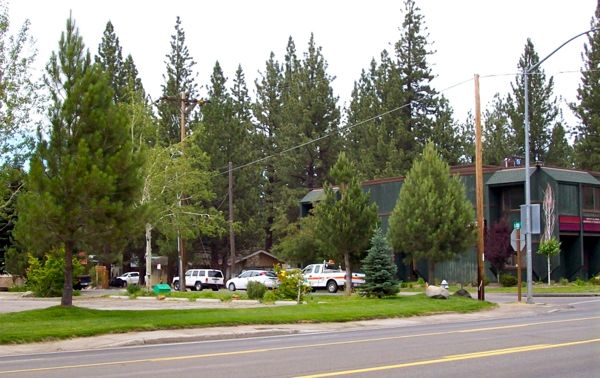
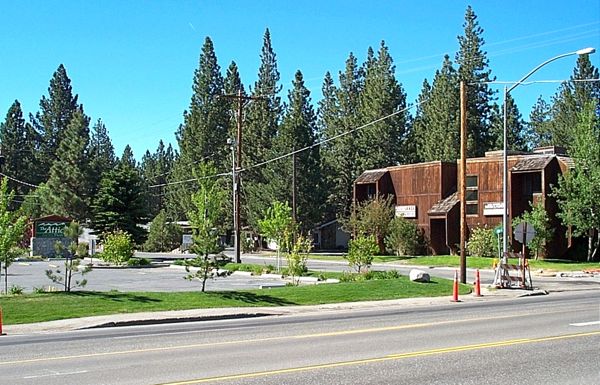
Then and now: Gas stations disappear through the years

Highway 50 and Lodi Avenue in 1965.

This is what the intersection looked like in 2002.

The intersection in 2012. Photos/Bill Kingman

Remember the “50 South Shore gas stations”?

The intersection of Highway 50 and Lodi Avenue had three of them.

The Union 76 station was replaced by today’s parking for Magic Carpet mini-golf, and the Standard station was replaced by an office building.

A third station still operates.

— Bill Kingman


Things business owners should know before buying property

By Chris Hurn

It’s not a question of if, but when most business owners should think about owning commercial property.

Owning your workplace is a path toward long-term wealth – one that doesn’t rely on constantly bringing in new income.

Once they’ve established their business, usually after about three to six years of operation, they should look into property ownership – owning their store, office, or other workspace.

The smartest way to do that is through the SBA 504 – a little-known loan program administered by the Small Business Administration. It offers long-term financing at below-market fixed rates, which businesses generally can’t get through banks.

Whether or not business owners qualify for the SBA 504, they will benefit by knowing the “five Cs” lenders look at when considering loans.

• Collateral: Lenders – usually banks – will want to know that the property in question is worth the loan. The property to be purchased is the lender’s collateral, so it must have the potential to cover the loan if for some reason owners can’t. Lenders will consider the age of a property and other factors, including whatever equipment may be involved.

• Cash flow (or capacity): The lender will look to see how much cash the business generates along with the amount of existing and proposed debt. In other words, they’ll want to know the cash available to service the total debt. A lender will also consider current rental payments, plus noncash expenses such as depreciation, amortization and interest costs.

• Credit analysis: This reveals the business owner’s history of making good on debts and other obligations. The higher the credit scores, the better. Lenders generally shy away from credit scores lower than 650, however, they will often listen to credible explanations on lower scores.

• Character: Numerous late payments, for example, suggest that owners do not manage debts responsibly, which will likely be indicated in a credit score. Factors that determine character judgment are largely subjective. An applicant can supply evidence in his or her favor.

• Conditions: What are the conditions in the industry and the economy? The better those conditions, the more likely lenders are to give applicants a plus in this bracket. Conditions are often out of a borrower’s control, which makes a positive showing of the other four factors that much more important.

Chris Hurn is CEO and co-founder of Mercantile Capital Corp. based in Orlando.


Funding fight on if Prop. 30 fails

By Kevin Yamamura, Sacramento Bee

Long before political ads dominated the airwaves and arguments erupted over which Nov. 6 tax initiative best serves schools, Gov. Jerry Brown sought crucial support from county officials in a cramped conference room one block from the Capitol.

County leaders in January had one priority – to ensure the state would continue sending them several billion dollars to assume former state responsibilities such as housing lower-level inmates and watching parolees.

Some wanted to pursue their own initiative without the tax hike because they represent conservative voters or thought the governor’s initiative didn’t stand a chance.

But ultimately the California State Association of Counties threw in its lot with Brown’s measure and hoped for the best.

Proposition 30 guarantees in the California Constitution that counties will receive just over a penny on the dollar in existing sales taxes to fund the new duties they assumed from the state. For now, counties have only that promise in state law, which the Legislature can change at any time.

If Proposition 30 fails, Yolo County Supervisor Mike McGowan said, “it’s a great unknown how counties will be treated by the state in the future. It’s not a bet I’m willing to make, that the state will fully fund counties for services.”

“They’ll make a shift,” McGowan added, “and we’ll get the shaft.”

Nearly all of the focus on Brown’s initiative has focused on its tax hike on wealthy earners and sales, as well as its impact on education funding. But when Brown mentions funding for “public safety,” he’s referring to the county money.

Counties took plenty of convincing in 2011 when Brown proposed to send new prisoners to local jails, have probation officers watch parolees and transfer a host of social service responsibilities. The governor said the plan served multiple goals – solving the state’s prison overcrowding problem and empowering counties to tailor their programs to suit local needs.

A year after the state began diverting lower-level inmates to counties, the prison population has dropped nearly 17 percent, from 144,456 to 119,938, a level closer to the 110,000 federal judges have demanded.

Republican critics say that has come at a safety cost because they believe local jails are ill equipped to house felons and change their behavior while they serve long-term sentences.

“You’re putting unrehabilitated inmates and parolees in our communities in masses,” said Assemblyman Jim Nielsen, R-Gerber. “Tens of thousands of them, without increasing rehabilitation opportunities.”

Nielsen said Proposition 30 would “fund what’s broken” by locking county revenues into the state constitution. He suggested that lawmakers reconsider the shift of prisoners and parolees, and direct funding to counties as needed.

But McGowan, president of the California State Association of Counties, believes keeping inmates local will reduce the rate at which they reoffend. State officials say as many as 70 percent of inmates now return to the system.

“In general, government works better at the local level than it does at the state and federal levels,” McGowan said.

He suggested that if voters reject Proposition 30, county funding would be subject to the whims of future lawmakers, many of whom will be new and never vowed to protect realignment funds. He also said counties would face cuts in social service programs they deliver on the state’s behalf.

“You can go down the list – there will be less cops on the street, beds in the jail, mental health programs we provide,” McGowan said. “I don’t think the public wants that to happen.”

State leaders also used their realignment program to trim last year’s deficit, which once stood at $25 billion. In a controversial read of the constitution, Brown and lawmakers said they could pay $2.1 billion less to K-12 schools and community colleges because they redirected state tax dollars to counties.

In the contraption that is California’s budget, where every piece is linked together, Proposition 30 is the means through which Brown and lawmakers ensured harmony between counties and education groups who might otherwise fight over the same dollars. Because the initiative raises $6 billion more, each constituency remains satisfied.

Brown won counties’ support by promising to protect their realignment money. He told the Bee‘s editorial board that he intends to do that even if Proposition 30 fails, but warned that courts may demand otherwise.

That’s because groups representing school boards and administrators could resume their legal fight to recoup $2.1 billion from last year and ensure schools continue receiving like amounts.

“If a multibillion-dollar deficit lingers, you can’t exactly promise everybody and everything that there isn’t going to be more cuts,” said Senate President Pro Tem Darrell Steinberg, D-Sacramento. “That’s just reality, just the numbers.”

The California School Boards Association, a plaintiff in the $2.1 billion suit, says it will drop its claim if voters approve Proposition 30. If not, the case will proceed. School groups lost the first round in June when a trial judge said Brown and lawmakers did not violate the state constitution by diverting education funds to counties.

“If (Prop. 30) fails, we will continue to do everything in our power to ensure that … schools get the money they’re entitled to,” said CSBA executive director Vernon Billy.

McGowan knows that counties could be at odds with education.

“It puts local jurisdictions in the untenable position of then having to compete aggressively with another local government partner: our schools,” McGowan said. “We don’t want to be there.”

It’s a significant reason why Steinberg, Brown and others are desperate for Proposition 30 to pass. If it fails, groups will scramble in the Capitol to protect their budget dollars, now and in the future.

“Stakeholders get divided and go into their corners pretty quickly, and that’s not what we want,” Steinberg said. “We want to start next year with the state’s fiscal health restored and want to begin a new era in this state.”



3 waterfalls tumble through scenic river canyon

By Kathryn Reed

MCCLOUD – It’s October in a dry water year and we’re in search of waterfalls.

Wow!

The amount of water descending last weekend from the three falls along the McCloud River was thundering. I can’t even imagine what they would be like in the spring – especially in a normal snow-rain year.

The McCloud River offers three distinct waterfalls. This is Middle Falls. Photos/Kathryn Reed

According to the U.S. Forest Service, “The Upper McCloud River is spring-fed, not dammed, and flows steadily all year through a basalt canyon lined with forest of Douglas-fir, white fir, Pacific yew, ponderosa pine and incense-cedar.”

If it weren’t for the abundance of fall colors, just looking at and listening to the water it would have seemed like this were a different season. Each waterfall is spectacular in itself.

For a 3.8-mile round-trip hike, this is one of the best for scenery in such a short distance. Where else are three waterfalls in such close proximity?

Black oak, vine maple and Pacific dogwood brighten the forest with their yellow, pink and orange. While the color is not as vibrant as Tahoe has been this fall, the variety of foliage was a welcome change.

Sometimes the trail is like walking through a dense forest, while other times there’s an airiness with blue sky as the canopy.

Lava rock is in abundance.

This is a rather easy hike in the Shasta-Trinity National Forest that ascends 300 feet to a maximum elevation of 3,600 feet.

Heading back we get a glimpse of Mount Shasta.

Plenty of fly fishermen (and women) are casting lines in hopes of snagging a trout. Most are releasing their catches. It’s such a popular fishing hole that two vehicles from an Oregon outfitter are in the parking lot.

With temps routinely hitting the 90s in the summer, the swimming holes welcome those who want to cool off. People are also known to use the cliffs as an entry point into the river.

Even though overnight temps were freezing and this area got snow when Tahoe did last week, some of the campground spots were taken by RVs and tents.

The Forest Service acquired this land in 1932 from the McCloud River Lumber Company. Originally, it was the seasonal home of the Wintu Indians. The campground gets its name from T.B. Fowler who homesteaded in the late 1800s. He eventually built a hotel along the river that burned to the ground in the early 1900s.

Getting there:

McCloud is about an hour north of Redding.

From South Lake Tahoe, get onto Interstate 5. Then go toward McCloud on Highway 89 for 15 miles. Turn right at the Fowlers Campground sign. Park in the day parking and start walking.

It’s also possible to drive to each of the falls and walk just a short ways.

ngg_shortcode_0_placeholder (Click on photos to enlarge.)