Did you fall back an hour?
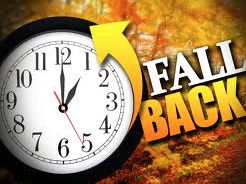 Did you set your clock back? If not, go back to bed. It’s OK to sleep another hour.
Clocks were supposed to be turned back an hour at 2am for those locations going to standard time.
Did you set your clock back? If not, go back to bed. It’s OK to sleep another hour.
Clocks were supposed to be turned back an hour at 2am for those locations going to standard time.
By Kathryn Reed
INCLINE VILLAGE – While it may seem like meteorites fall out of the sky all the time, what with two descending on Northern California this year, the reality is these occurrences are rare.
Looking like an ordinary rock, a sample of what dropped at Sutter’s Mill on April 22 was passed around Thursday night to a crowd of more than 50 at Sierra Nevada College. No one was able to touch it because it was in an enclosed case.
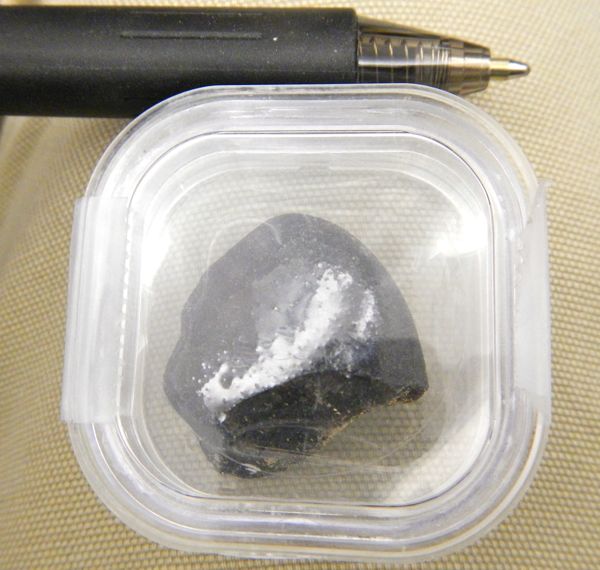
A piece of the meteorite, next to a pen for size perspective, that was found in the Sutter Mill area in April. Photo/LTN
And no one has every touched it with bare hands because it would essentially contaminate this extraterrestrial organism.
While the rock that was on exhibit was not large, the meteorite was the size of a minivan before it broke up over the Sierra. That Sunday morning a loud boom was heard throughout Lake Tahoe, with first reports that it could have been part of the Lyrid meteor showers.
Quing-Zhu Yin, a geology professor at UC Davis, spoke Nov. 1 about the importance of this particular particle. But his talk was scheduled before the Oct. 17 meteorite landing in Novato, so he had two astronomy events to talk about.
He said the two occurrences were very different. The one in the Bay Area came in at a very low speed and had larger pieces than the Sutter Mill meteorite. The Novato one had one piece weighing 100 grams.
NASA video cameras were able to track the trajectory of each rock landing on Earth so scientists then knew where to look for the pieces.
Yin described the Sutter Mill meteorite as “special” because it is the most centric of meteorites known to humans, with its origin likely to be Jupiter.
It was one of the rarest types of meteorites to fall to Earth — a carbonaceous chondrite, the earliest solid material to form in this solar system more than 4½ billion years ago, before the planets, including the Earth, formed.
This meteor had the highest entry speed ever recorded of a meteor, according to Yin, at 29 kilometers per second. This compares to a bullet that travels at 0.07 kilometers per second.
Yin said the Sutter Mill event is the most significant collection of space rocks since the 1960s when Apollo 11 astronauts brought back lunar rocks and meteorites fell in Mexico and Australia. He said scientists are still learning from those events.
What those particles taught scientists include:
• The age of the solar system
• Condensation consequences of chemical elements and minerals
• Discovery of presolar grains
• Supernova triggers
• Discovery of left-handed amino acids and right-handed sugars.
What this latest outer space matter will teach scientists remains to be seen.
By David Trifunov, Global Post
Saying it’s written clearly in the rules – and clearly not understanding the spirit of the request – skiing’s international governing body on Saturday denied Lindsey Vonn’s request to compete against the men.
The American World Cup champion had asked FIS to let her compete in the men’s World Cup downhill skiing race later this month at Lake Louise in Alberta, Canada.
“The council respected Lindsey Vonn’s proposal to participate in men’s World Cup races and confirmed that one gender is not entitled to participate in races of the other and exceptions will not be made to the FIS rules,” an official statement said, according to AFP.
FIS, somehow, has been caught unprepared.
Golf has experimented with allowing women – Michelle Wie and Annika Sorenstam – lineup alongside the men. Danica Patrick continues to challenge men on the racetracks of NASCAR after a successful Indy Car career.
Countless others have already broken that stereotype – Billie Jean King in tennis and golf’s Babe Zaharias being the most famous. Heck, even ice hockey allowed men to blast frozen pucks at Manon Rheaume’s head in an NHL exhibition game.
Skiing should have seen this coming, you’d think. We’re moving past the 24-hours news cycle into an age where social media and smart phones make exchanging views and news instantaneous.
FIS said it considered the request and, not slighting Vonn’s skills or accomplishments, flatly denied it.
They could’ve said tried to say men’s racecourses are too dangerous for women (ignoring Vonn’s two Olympic medals and 53 World Cup wins) but FIS instead tried to say it’s just not in the rules.
Wait, isn’t racing against 40-odd other cars at 200 mph on a concrete oval more dangerous?
Sure, she’s looking for a new challenge after dominating the women’s World Cup races these last few years. Vonn won the women’s downhill championship from 2008 through 2010 and again last season, and has won the 2010 Winter Olympic downhill in Vancouver.
But this is more about, “Why not? What are we waiting for?”
Organizers of the Lake Louise race said they’d happily welcome Vonn. There’s little danger for her there, anyway. She’s won nine of her 26 World Cup downhill races on the resort’s slopes.
“I saw it as a great opportunity to raise the profile of the sport by attracting interest from people who do not normally follow ski racing, particularly in North America,” Alpine Canada president Max Gartner said.
“It would have been interesting to see how she stacked up against the best male racers in the world. Lake Louise is the perfect venue to have that comparison because Lindsey has as much experience on the mountain as many of the men have had.
What makes the whole situation worse, though, is that FIS invited Vonn to apply for a “forerunner” position.
Forerunners test the racecourse before the athletes compete for real.
Suggesting Vonn become a forerunner would be like Yahoo telling Marissa Mayer, “thanks, but our CEO position has been filled by a man, but maybe you want to work in our marketing department?”
Face it FIS, this is going to happen sooner rather than later.
Change your rules now, because the world is changing quickly around you.
By Greg Jaffe, Washington Post
There’s one foreign policy fact that President Obama and Mitt Romney dare not mention this election season. No American general will speak of it. Nor will it displace the usual hot topics at Washington’s myriad foreign policy think tanks.
Measured by most relevant statistics, the United States — and the world — have never been safer.
Obama says terrorist networks remain the greatest threat to the United States. “We have to remain vigilant,” he warned recently. But global terrorism has barely touched most Americans in the decade since Sept. 11, 2001, with 238 U.S. citizens killed in terrorist attacks, mostly in war zones, according to the National Counterterrorism Center’s annual reports. By comparison, the Consumer Product Safety Commission found that 293Americans were crushed during the same stretch by falling furniture or televisions.
Beyond the United States, global statistics point undeniably toward progress in achieving greater peace and stability. There are fewer wars now than at any time in decades. The number of people killed as a result of armed violence worldwide is plunging as well — down to about 526,000 in 2011 from about 740,000 in 2008, according to the United Nations.
The candidates’ rhetoric, however, suggests that the globe is ablaze. “The world is dangerous, destructive, chaotic,” Romney said this summer in a speech to the Veterans of Foreign Wars convention in Nevada. Obama, though less apocalyptic than his Republican challenger, routinely talks about the critical need for “tested and proven” leadership in a “world of new threats and new challenges.”
When it comes to foreign policy, the incentives on the campaign trail run toward ruin: Aspirants to public office praise the troops and preach the possibility of global doom.
That makes sense in the looking-glass world of campaigning. A candidate who talks about the declining threat to Americans can quickly appear foolish, weak or out of touch if there is an attack on the homeland or an unexpected setback abroad. In his speech at the Democratic National Convention, Obama proudly declared that “al-Qaeda is on the path to defeat.” Five days later, on the anniversary of 9/11, an attack on the U.S. diplomatic mission in Benghazi left four Americans dead, including the ambassador to Libya, Chris Stevens.
Stevens’s death at the hands of a possible al-Qaeda affiliate forced the president to temper predictions of the group’s demise. More recently, he has even accused Romney of underestimating the threat posed by the terrorist group. “I’m glad that you recognize that al-Qaeda’s a threat because a few months ago, when you were asked what’s the biggest geopolitical threat facing America, you said Russia — not al-Qaeda,” Obama chided Romney at the last presidential debate.
In recent weeks, Romney has shifted his focus to the Iranian nuclear program. “Iran is the greatest national security threat we face,” he said during the final debate.
The news media, meanwhile, almost never take candidates to task for incorrect predictions of disaster. “The political penalty for being wrong about the threat or underestimating it is much more severe than the penalty for overstating it,” notes Peter Feaver, who was a senior official on the National Security Council under President George W. Bush.
Presidential candidates, eager to prove they have what it takes to be the leader of the free world, talk about threats so they can cast themselves as potential saviors in an increasingly dangerous world. “It does not further anyone’s career to say we are safer,” said Micah Zenko, a fellow at the Council on Foreign Relations who uncovered the fatality statistics about terrorism and falling furniture.
Touting global peace may also be “distinctly un-American,” asserts Steven Pinker, a Harvard psychology professor and the author of “The Better Angels of Our Nature: Why Violence Has Declined.”
Pinker offers this theory: Americans want leaders who embrace the country’s role as the sole superpower and confront all adversaries. “A historical peculiarity of the U.S., compared to Europe, is a ‘culture of honor,’ in which a man has to defend himself against threats and insults,” Pinker said.
If he is correct, perhaps it makes sense for Romney to accuse Obama of conducting an “apology tour” of the Middle East that showed weakness and emboldened Iran, China, Russia and other U.S. rivals. Obama has scoffed at Romney’s characterization of his trip, but the challenger has persisted in trying to portray the president as uncomfortable with America’s military might.
The incentives to play down safety also extend to America’s military and intelligence officials, who must live on high alert, scanning the horizon for potential threats to American power. Because these officials know they will be blamed in the event of an unexpected attack, they are more prone to sound the alarm.
“My job as a war planner was to look for all the bad stuff,” said Janine Davidson, who until recently served as a senior civilian planner in the Pentagon. “Scanning for threats is what we get paid to do.”
Most top Pentagon officials say the statistics showing that the world is safer are irrelevant and don’t reflect the magnitude of the risks. The result is what Gen. Martin Dempsey, the chairman of the Joint Chiefs of Staff, has dubbed a “security paradox.” The world may seem safer, Dempsey says, but the potential for global catastrophe has grown as the planet has become more interconnected and potential enemies have greater access to more powerful weapons and technology. Individuals with simple laptop computers can launch cyberattacks capable of crippling major corporations. Small countries and terrorist groups, such as Hezbollah, can buy precision-guided bombs that were previously the province of superpowers.
Not everyone buys Dempsey’s paradox. The Europeans, who have slashed their defense budgets over the past two decades, don’t seem especially worried about these threats. Some academic researchers also question Dempsey’s logic.
“Should we really predict that the combined expertise and efforts of the American government, universities [and] corporations will be outsmarted for extended periods of time by some unemployed young men in Bulgaria?” asks Pinker, the Harvard professor.
What’s missing is any serious effort to study whether the decline in state-on-state war, violence and terrorism around the world means that the United States can scale back its spending on defense. Each year the Rand Corp., a government-funded think tank, publishes dozens of reports on potential threats to the United States. Recent papers have focused on the Iranian nuclear challenge, the North Korean missile threat, the security of sea lanes in Asia and the rise of new military powers such as India and Brazil. The think tank has never explored the implications of a statistically safer world.
“Why can Smokey’s fire-danger index go down but the nation’s threat level not?” said Gregory Treverton, the director of Rand’s Center for Global Risk and Security. “It’s a good question.”
There are tangible benefits to overspending on security: The United States is more prepared for a broader array of catastrophes than any other nation on Earth. It’s also possible that the government’s massive investment in defense — which exceeds the combined outlays of the nations with the next 10 largest defense budgets — is responsible for the current era of stability and the decline in deaths. This is the essence of President Ronald Reagan’s promise, reiterated in recent weeks by Romney, of “peace through strength.”
But the heavy investment also carries a cost. U.S. defense spending, adjusted for inflation, is at the highest level since World War II and is unlikely to decline substantially. Potential adversaries, such as China, could view the trillions that the United States is spending as a threat in itself, triggering an arms race — and a less-safe world.
For now, though, no one is rushing to discuss the implications of a world that has grown safer.
By Katy Steinmetz, Time
One recent morning in Richmond, Va., in a half-vacant strip mall, a mob began to form in front of a modest variety store. You might assume that Upscale Flea Market owner Forondo Holmes would feel a twinge of panic, or at least puzzlement, about this highly unusual event: like many other businesses these days, his bazaar has struggled. But he was all smiles. Happily for Holmes, his shop was about to be hit by a cash mob.
The cash mob is gathering steam across the nation as a bona fide social phenomenon. But unlike its forebear, the flash mob–a pointless bit of performance art popularized in the 2000s, in which groups convened in public places and danced to “U Can’t Touch This” or engaged in large-scale pillow fights — cash mobs have a quantifiable purpose. That purpose is simple: support a local business by using Facebook, Twitter and other forums to gather a throng of shoppers at the same independently owned business on the same designated day.
Since a systems engineer organized the first cash mob in Buffalo, N.Y., last year, they’ve gone viral. Hundreds of cash mobs have sprung up across the U.S. — in all 50 states — as well as in large European cities such as London and Milan. Mobbers may be asked to spend $10 or $20, to show up at one time or throughout the day, but the basics are always the same: local business, cash, en masse.
The idea is a perfectly timed tonic for a sour economic moment. “I’m happier to give it to them instead of a big business,” says Ashley Massey, the mother of 5-year-old Olivia, who arrived at Upscale Flea Market excited to spend her birthday money on dress-up clothes. The local shop gets a cash infusion, and the shoppers can benefit from a sense of solidarity. “People are struggling all over the country,” says Knox County Mayor Tim Burchett, who’s been organizing cash mobs for the past year in Tennessee. “This is an opportunity for everybody to join hands.”
Studies have shown that spending money at local businesses has a bigger impact on the local economy than shopping at big chains. Even the most spendthrift cash mob can’t make a business in a single day, but many mobbed owners say their real payout came over time, through repeat customers and increased name recognition. “We depend on word of mouth,” says Scott Duennes, whose natural-food store, Nature’s Bin, was mobbed last spring. The siege raised the store’s profile and turned first-time shoppers into second-timers, he says. “A lot of those folks never knew Nature’s Bin existed before.”
So who’s behind this whole thing? There are at least two variations on that story. In July 2011, Chris Smith, the systems engineer in Buffalo, read articles online about the negative effect that Groupon-type schemes can have on small businesses. Many lose money on the drastic discount and never recoup it with repeat customers. “I thought there had to be a better way to do that,” Smith says, “and the semantics of [cash mob] worked for me.” He sent a tweet about his flash/cash revelation: get people to flood a local business all at once, but make sure the business charges full price so customers don’t get accustomed to unsustainable deals.
Buffalo responded. Weeks later, Smith and about 100 fellow citizens each spent around $10 at a wine shop, with local media in tow. He’s been hosting cash mobs ever since.
The second person to suggest the idea was Andrew Samtoy, an attorney from Cleveland. He says he was independently struck by the same notion a couple months after Smith (who says he finds that plausible). When the wordplay hit, Samtoy says he had a friend’s boutique in mind. He imagined a mob of people each spending $20 there. “It wouldn’t be much per person,” he recalls thinking, “but it would have a big impact on her bottom line.”
Rather than send a tweet, Samtoy and his friends quickly snagged the “Cashmobs” Twitter handle, Gmail address and WordPress account. Samtoy also landed an NPR interview for his first mob and inspired friends across the U.S. to host their own. Venture capitalists were soon flying him to San Francisco to hobnob with the social-media elite. When Samtoy came home this spring, he filed for the trademark Cash Mobs and incorporated as Cash Mobs Inc.
So Smith uttered the words first; Samtoy shouted them through a megaphone. And while Smith sees cash mobs as an open-source idea that “nobody owns,” Samtoy feels more proprietary about it. He also says he’s against making money from the businesses or mobbers. However, should his website become a hub for cash mobs–where people list them, share their stories and learn how to use social media–would he be against revenue from ads or games? “It’s still in the early stages,” he says. “We’re open.”
Samtoy has crafted cash-mob rules: chosen stores should offer affordable products for men and women, religious-charity stores are off-limits and so on. But it’s near impossible to regulate viral social phenomena. Since Smith’s inaugural gathering, local unions have used cash mobs to demonstrate their collective buying power, and chambers of commerce have organized them to highlight member stores. Mayor Burchett instituted them as a do-it-yourself economic-stimulus package. “The beautiful part is that wherever there’s a cash mob, they kind of think it’s their own idea,” Smith says. “They all do it their own way that suits their local character.”
In Virginia, Upscale Flea Market was chosen through a pay-it-forward system: after a business is mobbed, the owner selects the next local store that could use a boost. Holmes’ shop was chosen by the owner of Richmond’s Red Skirt consignment boutique. “We go to church together,” Holmes explains. “If you can’t take care of your own, nobody else will.”
By Eli Segall, Las Vegas Sun
NV Energy had a strong jump in third-quarter profits as it spent less on fuel and power but had a bump in sales.
The Las Vegas-based electric company said Friday it earned $223.2 million of net income, or 94 cents per share, for the three months ending Sept. 30. That compares to $173.5 million of profit, or 73 cents per share, in the same period last year.
The company lowered its operating expenses by 7 percent last quarter to $615 million. It spent $171 million on fuel for power generation, down from $217 million a year ago, and paid $206 million for purchased power, compared to $223 million last year.
NV Energy also had 9.5 million megawatt-hours of electric sales last quarter, up 3 percent from a year earlier, though its volume of gas sales slipped by 1.5 percent.
Altogether, operating revenue rose to $1.026 billion from $1.018 billion.
NV Energy serves 2.4 million Nevada residents, or about 90 percent of the state’s population.
Josh Welch, a Meyers chiropractor, is working for food. Safe Haven Chiropractic is conducting a food drive from now through Nov. 17 to help the community for the holiday season.
Welch is exchanging chiropractic care for five non-perishable food items for local charity. Current, new or reactivating patients and families will receive a chiropractic adjustment for their donation.
This support is near and dear to Welch because during his time in college, living off school loans and supporting a wife and three kids, this type of community support helped them tremendously during the holiday season.
Welch may be reached at (530) 577.5433.
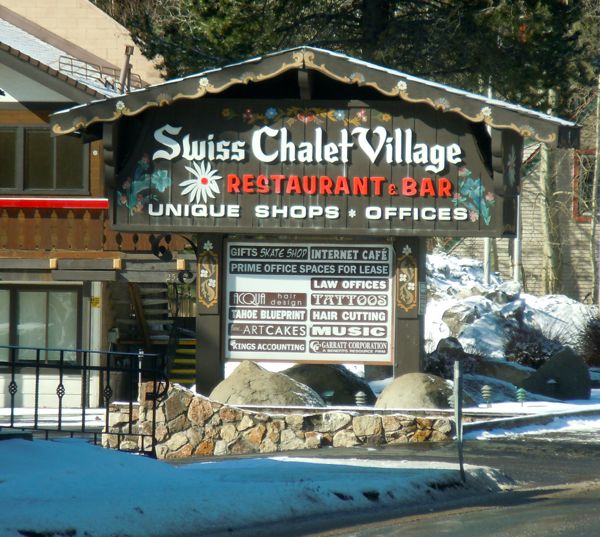 • Swiss Chalet restaurant in South Lake Tahoe is not closing permanently, but just for the fall. According to owner Peter Baumann, it should be open for winter business starting Dec. 12.
• The Lake Tahoe Historical Society is operating the museum in South Lake Tahoe on winter hours. It is open Saturdays from 11am-3pm. It will be closed in January to update exhibits.
• Sierra Nevada College’s holiday party is Dec. 7 at 5:30pm at the Hyatt Regency Lake Tahoe in Incline Village. Cost is $125 for the seated dinner. For info or tickets, contact adabrowska@sierranevada.edu or (775) 881.7589.
• Voting help is available for people with disabilities. Call 888.569.7955 in Northern California for help with getting to a poll, if you have a problem or need to file a complaint.
• Tahoe City PUD is having a budget workshop Nov. 5 at 4pm at 221 Fairway Drive, Tahoe City.
Tahoe Fund is launching its Plates for Powder promotion to drive sales of Lake Tahoe license plates.
From now until April 15, anyone who purchases a new Lake Tahoe license plate in California or Nevada is eligible to receive two free ski tickets to one of 11 Tahoe area resorts participating in the program.
More than 96 percent of the funds raised through the plate sales go directly to California Tahoe Conservancy and Nevada Division of State Lands to fund hiking and biking trails and watershed restoration projects.
The Tahoe Fund is a bi-state nonprofit dedicated to raising money for environmental improvement projects that support lake clarity, recreation and stewardship in the Tahoe Basin, is organizing the program on behalf of the public agencies.
The resorts participating in the promotion include Alpine Meadows, Heavenly Mountain Resort, Homewood, Kirkwood Mountain Resort, Mt. Rose, Northstar, Royal Gorge Cross Country, Sierra-at-Tahoe, Squaw Valley, Sugar Bowl, and Tahoe Cross Country.
Information on how to purchase a plate and redeem free tickets is available online.
By Steve Green, Las Vegas Sun
Caesars Entertainment Corp. of Las Vegas said it lost a hefty $505.5 million in the third quarter, a loss wider than the $164 million lost the same period last year. Much of the casino operator’s loss was on paper. Its expenses in the quarter included one-time charges totaling $419 million to write down the value of certain assets as required by accounting rules.
These write-downs, on paper, included $247 million related to goodwill and $127 million for trademarks. If a company determines assets like these will produce less income in the future than previously believed, their value has to be written down and the amount written down is an operating expense.
The results were also affected by increased interest expenses and certain tax provisions.
With net revenue increasing 0.4 percent to $2.198 billion, the loss per share amounted to $4.03 vs. the $1.31 per share lost in the year-ago quarter.
Despite the large loss, Caesars indicated operating results improved companywide as EBITDA at the property level grew 3 percent to $512.2 million. EBITDA, a common financial metric for gaming companies, means earnings before interest, taxes, depreciation and amortization.
The company’s Las Vegas resorts, including Caesars Palace, Planet Hollywood and the Flamingo, produced net revenue of $735.1 million, up 0.3 percent.
Caesars said that in Las Vegas, casino revenue increased but food and beverage revenue fell. Visitation levels in Las Vegas were flat, falling 0.4 percent, but spending per trip was up 7.8 percent, thanks to strength in the international high-end segment.
Caesars said hotel revenue in Las Vegas was “relatively flat” compared with 2011. The local Caesars hotels, as a group, saw an overall decrease in average daily room rates from $89 in 2011 to $87 in 2012.
At the company’s Harrah’s properties in Laughlin, Lake Tahoe and Reno and at Harveys Lake Tahoe, net revenue was off 4.8 percent to $134.1 million.
In Atlantic City, which has been hit hard by new competition in the East, Caesars said its properties saw net revenue decline 4.1 percent to $477.3 million.
CEO Gary Loveman said the company’s Atlantic City properties did not suffer extensive damage during Hurricane Sandy and should be reopening in the coming days.
While analysts have been concerned about Caesars’ ability to service its $19.96 billion in debt, Loveman said in a statement that the company made significant progress in the quarter “on a strategy designed to position our company for future growth.”
This included refinancing debt, extending debt maturities and the planned sale of the Harrah’s St. Louis casino for $610 million.
The company plans to plow money into various expansions and renovations, including the Nobu Hotel at Caesars Palace, rebranding the Imperial Palace as the Quad, the $550 million Project Linq, renovating and repositioning Bill’s Gamblin’ Hall & Saloon for $185 million and adding a $140 million convention center in Atlantic City.
At the same time, it’s been expanding or looking to expand in online gaming and in physical places like Ohio, Maryland and Massachusetts.
“Thanks primarily to growth in our interactive operations and a continued emphasis on expense reductions, we achieved about the same net revenues and adjusted EBITDA as in the third quarter of 2011, despite more competitive markets and the challenges posed by the continuing weakness of the U.S. economy,” Loveman said.