Ski report: Resorts eager to open

The countdown is on for skiing in the Lake Tahoe area to begin in earnest.
Time is running out to get your equipment waxed and gear ready if you are going to hit all the opening days.

Here is the Nov. 13 ski report.

— Curtis Fong


Raley’s says deal on the table to end strike

By Dale Kasler, Sacramento Bee

Raley’s said today it has struck a deal to end its strike.

There was no immediate confirmation from the United Food and Commercial Workers. Ellen Anreder, a spokeswoman for UFCW Local 8 in Roseville, said there wasn’t a signed agreement yet.

The announcement from Raley’s came after a marathon negotiating session in San Francisco that went all night and into the morning. Bargaining resumed over the weekend.

Raley’s didn’t provide any details of the agreement but said an announcement was expected later this morning.

The UFCW went on strike a week ago Sunday over the grocer’s demands for wage and benefit concessions. In particular, the workers rebelled against Raley’s proposals to restructure their health care plan and eliminate coverage for Medicare-eligible retirees.

The company said that while sales were affected by the walkout, revenue was steadily improving in recent days. Raley’s also said well more than half the UFCW members crossed their own picket line to return to work.

But Raley’s may have suffered a setback last Thursday, when rival Safeway signed a tentative labor agreement with the union. The deal preserved the union-preferred health plan and left Raley’s as the only unionized grocery chain in the region without a contract. Save Mart Supermarkets made a deal with the union in September.


After work beer a disappearing tradition in U.S.

By Brendan O’Brien, Reuters

A tattooed man with a goatee shakes five dice in a black cup, slams it down on the bar and watches as they come to rest among half-full beer bottles and empty shot glasses.

“Nothin,” he says in disgust as he quickly slaps down a $20 bill to buy another round of drinks, in a U.S. ritual of beer drinking after work that is undergoing a gradual decline.

“I used to get the third-shift Allen Bradley guys in the morning, but they have cut and cut jobs,” said Terry Zadra, owner of the 177-year-old Zad’s Roadhouse on the south side of Milwaukee.

The bar is just blocks from an industrial plant owned by Rockwell Automation, which bought Allen Bradley, a factory equipment company, in 1985.

One result of the 2008-09 recession that reduced manufacturing jobs in places such as Milwaukee has been slower traffic at some bars, and sluggish beer sales nationwide over the past four years, according to industry analysts.

“Contrary to the myth that people go out and drown their sorrows, the truth is that beer drinkers are pretty responsible people and when they have to cut back, they’re cutting back on their pleasures,” said Chris Thorne, vice president of communications at the Beer Institute, a Washington-based trade group.

According to the institute, beer drinkers last year in the United States drank 203.4 million barrels, about 5 percent less than in 2008.

More concern about healthy living, stiffer drunk-driving laws and measures that ban smoking in places such as taverns have hit beer sales during the last couple of decades in Milwaukee and throughout the country.

“There has been a definite shift from the on-premise to the off-premise consumption,” said Pete Madland, executive director of the Tavern League of Wisconsin. “The smoker, for instance, is going to the liquor store, buying a 12-pack of beer and going home.”

Over the past few decades, it has become much less acceptable in the business community to have a drink during lunch or tip a few after work with colleagues.

“Society looks at that person that has a glass of beer with his burger like he has a drinking problem,” Madland said.

A glimmer of hope for the industry is the high-end craft beer segment, which has seen sales increase by 14 percent during the first half of 2012 compared with the same period last year, according to the Beer Institute.

These regional and local brews are more expensive and tend to be more recession-proof than mass-consumption brands like Miller Lite and Bud Light.

“Those occupations that weathered the storm of the Great Recession and then a very weak recovery … they were always able to afford a high-end beer,” Thorne said. “We would still like to see that American pilsner part of the brewing market get back its share.”

Despite the cultural and economic pressures, beer remains synonymous with Milwaukee, where brewers such as Fred Miller, Joseph Schlitz, Val Blatz and Frederick Pabst built their empires more than a century ago.

Even after heavy manufacturing of farm equipment, marine diesels and cranes became the dominant force in Milwaukee’s economy, MillerCoors remains an institution, brewing about 10 million barrels of beer each year on the city’s west side.

The love affair the city has for beer remains strong, evident in its Major League baseball team – the Milwaukee Brewers – paying homage to the city’s beer makers while playing in Miller Park, sponsored by MillerCoors.

While beer consumption nationwide may be down, in Wisconsin it has increased a bit. In the first eight months of 2012, about 2 percent more beer was sold than the same period of 2011, the state revenue department said.

Milwaukee also remains a blue-collar town with a fair number of neighborhood taverns such as Zad’s Roadhouse still serving a shot and a beer to the working class from early morning until late into the night, according to Milwaukee historian John Gurda.

“The scene is far from gone. I’m talking about saloons and bars being the communal living rooms of Milwaukee, and in many neighborhoods, that’s still very much the case,” Gurda said.


CalStar pilot taking his skills to Africa to help others

By Gene Hall

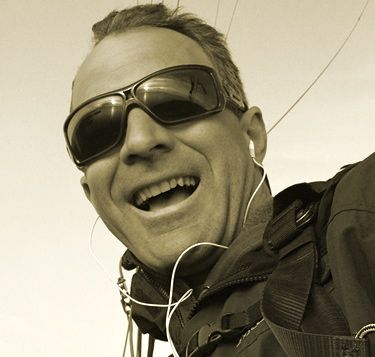
Veteran CalStar flight nurse Mark Haase, who works in South Lake Tahoe, is about to embark on the adventure of a lifetime, and in so doing will help the poverty-stricken nation of Tanzania.

Haase, who has been with CalStarfor 12 years, will be one of a select group of 200 paragliders from around the globe who in early February will come together for a world record-breaking event organized by Wings of Kilimanjaro. The group will climb and then fly by paraglider from the “Roof of Africa” – Mount Kilimanjaro, the highest freestanding mountain on the planet. The mountain at its highest elevation is 19,341 feet.

Mark Haase

Haase, 43, will travel to the African nation on Jan. 28. Weather depending, he and the other volunteer pilots will then set off for the summit. What makes this event particularly significant is that for more than 20 years the government of Tanzania has strictly enforced a ban on the use of paragliders, hang gliders and mountain bikes in the Kilimanjaro National Park. The ban was lifted for this event so the Tanzanian people can receive badly needed help.

Each participant is required to raise money for a variety of needs in Tanzania. They do this by asking for public support for their efforts. Haase is asking interested individuals to go online. For those making a donation of $100 or more, Haase has offered to take him/her on a 45-minute one-hour tandem paraglide over Lake Tahoe.

All money raised will support the One Foundation and Plant with Purpose. Both organizations have a strong presence in Africa, and both focus their efforts on community, environmental and humanitarian aid. Wings of Kilimanjaro hopes to raise $1 million through the event.

Haase notes that he is paying his own air fare to Africa (about $2,000), as well as wages for a porter and cook (approximately $3,500). Gear for the trip costs $7,000 but fortunately, he already owns the necessary equipment.

Citizens of Tanzania, according to Haase, struggle with basics of life that most Westerners take for granted. “Fresh water is not the norm in Tanzania,” he said. “Rather, most citizens find water in small trenches of essentially dirty water that must be transported in measurements of kilometers. Also, forests have been decimated through lack of education, thus increasing the plight of vegetation, erosion control and so on.”

In addition to completing the record-breaking climb and flight, Haase plans to spend time educating Tanzanians about basic healthcare.

“I’m talking about hygienic care such as hand washing, as well as proper storage and food handling,” he said. “Water treatment, storage and overall healthcare are a high priority as well.”

Haase will arrive well prepared for his endeavor in Africa. He has been involved with EMS efforts of one kind or another since 1986. He has served as a firefighter, ski patrolman, and search and rescue team member. He has been climbing for more than 25 years and has made many trips to the tops of El Capitan and Half Dome in Yosemite, as well as summits in North Africa and Western Europe. A paraglider for six years, Haase

has earned a number of certifications, including one as a professional tandem pilot.

Gene Hall works for CalStar.


LTUSD needs volunteers for bond committee

Lake Tahoe Unified School District will have seven vacancies on the Citizens’ Bond Oversight Committee on Jan. 31.

The following reps are needed:

· A person active in a senior citizens’ organization.

· A person active in a bona fide taxpayers’ association.

· A person active in the South Tahoe Association of Realtors.

· An at-large member of the community.

· A parent or guardian of a child enrolled in the district.

· A parent or guardian of a child enrolled in the district and active in a parent-teacher organization or school site council.

· A person active in the construction industry in South Lake Tahoe.

Candidates must be at least 18 and reside within the district’s boundaries. Employees, officials, vendors, contractors, or consultants of the district are ineligible.

Applications are due by 4:30pm Nov. 30 to 1021 Al Tahoe Blvd. A decision is expected at the Dec. 11 board meeting. Here is a copy of the application.


Northstar creates growth plan for the next decade

By Kathryn Reed

What would Northstar be like if skiers were whisked to the village via a gondola from the lower parking lot, if 300 acres of terrain were added, and those runs were accessed by an additional seven lifts?

Skiers and snowboarders will get to know the answers firsthand in the next decade or so if Vail Resorts has its way.

The Northstar Mountain Master Plan is on the street for people to comment on, and Placer County officials to review before the environmental documents are created. It is all about the mountain and does not include a real estate component.

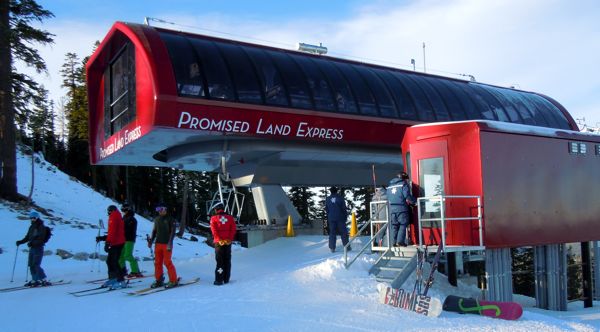
Vail Resorts has spent more than $30 million to upgrade Northstar, including the Promised Land lift that opened last season. More money is on its way. Photo/LTN file

Even though Northstar is on private property and the resort would not normally have to go to the level of detail that it is, the Martis Valley settlement required a bit more depth to planning.

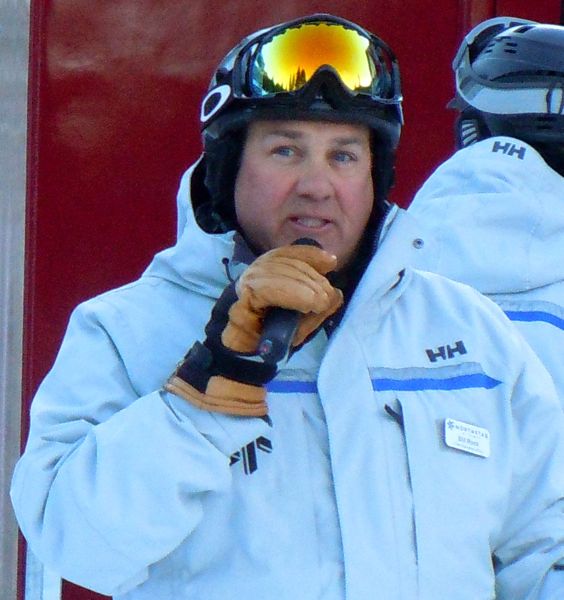
“This plan is based on the overall Habitat Management Plan,” Northstar COO Bill Rock told Lake Tahoe News. That plan was developed in conjunction with Sierra Watch and other conservation groups. Those entities, according to Rock, have also been privy to the details of the master plan as Northstar was formulating the document.

“This plan really is designed to be a real benefit to the people who are already here. No additional parking is proposed in this plan. That is what limits access to resort,” Rock said.

Parking has long been one of the biggest complaints about the ski resort. Lodging wiped out where people used to be able to park within walking distance to the village and slopes. Now people are bused from close to the entrance off Highway 267.

Rock says the gondola that is proposed to take people to the village from the parking area will get buses off the road and “provided a better experience for guests.”

Other lifts are designed with the idea of getting people dispersed throughout the mountain faster and more efficiently. A lift would start in the village to take riders to the top of Lookout Mountain.

“This outlines our vision for the next 15 years – what we might do at the resort.” — Bill Rock, Northstar COO

“We have a great plan to go out onto Sawtooth Ridge. It will absolutely enhance the skier experience,” Rock said.

To help Mother Nature, more snowmaking apparatuses would be put in the ground. Snowmaking helped save last season at so many Tahoe-area resorts.

“Well-engineered, thoughtful snowmaking is a critical piece of any resort no matter where it’s located,” Rock said.

He said Northstar has enough access to water on the mountain so its reservoir storage will not need to be expanded. Rock added that snowmaking is good because it replenishes the groundwater supply.

Things that are included in the master plan that are likely to get built right away include expanding the Summit Deck and Grill (which is near the top of Comstock and Backside lifts), possibly putting in a warming hut on the backside of it, adding other bathrooms and warming huts on the mountain, and minor food and beverage options.

In this PDF of Northstar’s plans, it shows skier service areas in yellow as well as where other changes could occur. For now, those are areas where resort officials believe they want to do something, but don’t have the specifics of what could go there.

“This outlines our vision for the next 15 years – what we might do at the resort,” Rock said.

Besides needing Placer County’s stamp of approval, the Vail Resorts board of directors must weigh in as to when the checks would be written for the expansion and what gets done first.

What build-out of the components in the proposed master plan would cost are not being discussed because a time line to build them has not been established. Plus, this document is mostly about the big picture, and not specific details of individual projects.

While this is a winter master plan, Rock said Northstar would like to enhance its summer offerings at some point, too. A separate plan would be submitted to the county for those ideas. Things being talked about include a mountain coaster that is a toboggan-like device that would go through the forest on rails, family-friendly bike trails, and a zipline and canopy tours.

Notes:

• More information may be found online.

• Written comments will be accepted until Dec. 5 at 5pm. Send them to Maywan Krach, Environmental Coordination Services, Community Development Resource Agency, 3091 County Center Drive, Ste. 190, Auburn, CA 95603 or cdraecs@placer.ca.gov.

• A meeting to receive comments on the scope of the environmental impact report will be Nov. 28 at 10am at the Lakeview Suite, North Tahoe Event Center, 8318 North Lake Blvd., Kings Beach.


Santa schedules early stop in Tahoe City

The 2nd annual Breakfast with Santa & Craft Bazaar at Rideout Community Center in Tahoe City is Dec. 1 from 8:30am-12:30pm.

This family event is co-sponsored by the Tahoe City Rotary Club.

The pancake breakfast will be served from 8:30-10:30am, with the Craft Bazaar running until 12:30pm.

Along with the various arts and craft vendors, there will be photo opportunities, letters to Santa, craft projects, and of course, Santa with a sack full of gifts for the kids.

Price is $3 if you register in advance and $5 at the door.

For more information, call (530) 583.3440.


Carson City to test emergency preparedness at Capitol

On Nov. 14 from 8am to approximately 11am, the Department of Public Safety-Capitol Police Division will be conducting a full scale exercise of its emergency preparedness at Nevada’s Capitol.

The exercise will involve all employees assigned to the Nevada State Capitol. The Capitol will be closed to the general public during this exercise.

During the exercise, a safety perimeter will be maintained by the Nevada Highway Patrol and Carson City sheriff’s deputies. There will be a presence of emergency vehicles from the Carson City area directly related and involved with the exercise.


Weather gods smiling on Tahoe — resorts opening this week

Mother Nature and a bit of snowmaking means ski resorts in the Lake Tahoe area are bumping up their opening dates.

Heavenly Mountain Resort and Northstar are opening Wednesday with a combined seven lifts and eight trails, totaling 51 acres.

“No need to bring your ‘rock skis’ to our resorts,” Pete Sonntag, Heavenly’s general manager, said in a statement.

Heavenly’s gondola will run Nov. 14 — opening day of the 2012-13 season. Photo/LTN file

The other Vail Resorts-owned property in the Tahoe area, Kirkwood Mountain Resort, is set to open Friday.

Squaw Valley is also opening Nov. 16. It could be a powder day for Kirkwood and Squaw’s opening days.

Just announced Nov. 12 is Gold and Silver Tahoe Super Passes will include Squaw, Alpine Meadows and Sierra-at-Tahoe.

For Sierra season passholders, they can ride Squaw and Alpine Meadows from opening day until Dec. 21, as well as from April 15, 2013, until closing day for free. In between early and late season, Sierra passholders may ski or ride Squaw or Alpine at the friends and family rate of $75 weekends and $50 midweek.

“We will commence operations on Friday with Searchlight, Red Dog, Squaw Creek and FirstVentures lifts, and you will be seeing even more terrain opening before Thanksgiving,” Andy Wirth of Squaw said in a statement. “I’ve asked our mountain operations teams to prepare the upper sections of the mountain including Gold Coast, Mountain Run, and with every effort possible, potentially down into the Shirley Lake area. Our snowmakers and snow guns have been absolutely going gangbusters and conditions continue to look great. We will also open Alpine Meadows earlier than our original planned date of Dec. 7.”

— Lake Tahoe News staff report


Number of student loan defaults continues to climb

By Phillip Reese and Melody Gutierrez, Sacramento Bee

Going to college has always been a gamble for students taking loans. They bet on a college degree conferring higher earnings that will let them settle up after graduation.

For most, the gamble pays off: The unemployment rate for college graduates is half the rate for those with only a high school diploma.

But a growing number of local college graduates are falling short and quickly defaulting on their loans. And the trend is not just happening at private, for-profit schools.

Public college students in the Sacramento region borrow almost twice as much as their peers did six years ago – and default on their loans twice as often after graduation, new federal data show.

Current students borrow more because student fees continue to rise at UC Davis, Sacramento State and the region’s two largest community college districts. Recent graduates default more because the job market, while improving, is not back to full strength, leaving thousands underemployed in jobs that don’t require a degree.

“It’s like the housing market – all the debt,” said Sacramento State senior Daniel Eastman, referring to the housing bubble. He’s borrowed about $7,000 a year since transferring from community college. “People aren’t going to be able to pay it all off.”

Eastman wants to avoid the fate of roughly 1,000 local public college graduates who defaulted within just two years of starting loan payments in 2010. Four years prior, 400 local students defaulted in that short time, U.S. Department of Education figures show.

Local public college students and parents borrowed $315 million from the U.S. government last school year, up from $170 million during the 2006 school year.

Much of the new debt comes from a surprising quarter: community colleges.

While most community college students don’t take loans, a growing number now borrow to cover living expenses. Almost 3,000 left local community colleges with debt in 2010; after graduation, these students defaulted at more than triple the rate of students at four-year public colleges.

“I think it’s psychotic,” Sierra College financial aid program manager Linda Williams said, adding that the federal government, not the college, decides whether to issue a loan. “I can’t deny them, unless it is something glaring.”

Statewide, public college students at all levels borrowed $3 billion last school year, almost double the amount from six years prior. Quick loan defaults also have almost doubled.

California nonprofit private school students drew down another $3 billion in debt last year, and students at for-profit, private schools borrowed $2 billion.

The consequences of defaulting on a loan are severe – and tough to escape. Unlike other types of debt, student loans usually can’t be discharged through bankruptcy.

“You’ve got to be dead to get out of these loans,” said Ed Emerson, chief of federal policy and programs at the California Student Aid Commission. “The feds don’t give up. They can garnish your wages. They can seize your property.”

Higher fees, fewer classes

Eastman, a biology major, is optimistic that he won’t ever face that crisis, but he’s not certain.

As Sacramento State continues to cut class offerings, Eastman said he struggles to get the courses he needs to graduate. Spending more time in school leads to more debt.

He also worries about rising tuition. CSU officials announced last week that they want more fees from students taking too long to graduate and repeating classes.

Already, about 315 Sacramento State students who began paying off loans in 2010 defaulted within two years, triple the number from five years prior. Only one public college in the state, California State University, Northridge, saw more recent graduates default almost immediately.

Desiree McSherry, 22, a senior in nutrition science at Sacramento State, doesn’t owe the government any money, but has had trouble getting experience in her field because most internships don’t pay, and she needs to keep her part-time job – or start taking out loans.

“You can’t really build bridges when you have to work” a job unrelated to your field, she said.

Anita Kermes, the financial aid director at Sacramento State, said the college “does a lot of proactive things” including loan counseling and career fairs to deter defaults. But, she said, “double-digit unemployment has had a big impact.”

At UC Davis, about 125 students who started paying off their loans in 2010 defaulted less than two years later, more than double the number from five years prior.

Still, that represents less than 3 percent of UC Davis 2010 graduates, giving UC Davis the lowest default rate, by far, in the region.

“Our default rate is not that high, but it’s going up every year,” said Katy Maloney, financial aid director at UC Davis.

Defaults can hurt schools

At the region’s two largest community college districts, Los Rios and Sierra, students and their parents borrowed $51 million last school year, quadruple the $13 million their peers borrowed six years earlier.

Juan Vasquez, a part-time student at both Sierra College and Sacramento State, owes about $20,000 and has 18 months before he graduates. Vasquez said his loans pay for food and transportation.

“The way the economy is right now, you will try to do something,” said Vasquez, a communications major who lives in Orangevale. “So people go to school.”

If Vasquez graduates, he’ll have a good shot at finding a job and starting payments on his loans.

But no one is guaranteed work, and hundreds of students drop out of local colleges each year, hauling big, unpaid loans behind them. Roughly 15 percent of former local community college students who started paying loans in 2010 defaulted less than two years later.

“If it’s hard to get a job, people can’t pay it back,” Vasquez said.

The total annual cost of attending Sierra College while living with parents last year was $7,500, up 25 percent from 2006, after adjusting for inflation, federal data show. That figure includes books, food and transportation.

Far less than 10 percent of students at Sierra and Los Rios colleges take loans, but, as the number grows, college officials often discourage students from seeking loans.

“We do strong counseling,” Los Rios spokeswoman Susie Williams said.

The stakes are high. Some community colleges worry that they will face federal sanctions if they don’t keep loan defaults in check.

Schools with high default rates can lose their eligibility for federal financial aid, such as Pell Grants, beginning in 2014. That prospect has led some California community colleges to stop participating in federal loan programs, though many wouldn’t face sanctions anyway because of the relatively small number of students taking loans.

Students counter that they often have no choice but to take loans.

Samantha Ledbetter, 19, is studying to become a nurse. She’s taking close to a full class load at Sierra College, working to pay bills, living with her parents, and receiving a tuition fee waiver, but still needs loans, she said, “for gas, food and stuff like that.”

After two years at Sierra College, Ledbetter said she will have about $13,000 in student loans by next semester’s end.

Feds work with students

Student loan defaults will continue to rise, several experts said, so long as student fees keep increasing and the economy remains weak.

While none expected college costs to fall anytime soon, several pointed to positive signs that the economy is improving, making loan payments easier for graduates.

“We had a record number of employers participating in our most recent career fair,” said Kermes, the financial aid director at Sacramento State.

Federal government officials have taken steps to reduce loan defaults. Some students unable to repay can put off payments, a process called forbearance. Officials have made consolidating several student loans into one loan easier, a process that can often reduce interest rates.

Graduates who default can also work out a payment plan with the federal government, though that may result in extra fees.

Emerson, the California Student Aid Commission official, said the federal government may soon tighten restrictions on who can receive aid – and which schools can take it. The new guiding principle may be, “Don’t give money to people with no hope of paying it back, and don’t give money to students at diploma mills,” he said.

The change might take a while, though. Williams, the Sierra College official, still sees many students borrowing against a low-paying vocational career while attending college part time.

“The loan system needs reworking, and I think the Department of Education understands that,” she said. “I think they are seeing what we are seeing in the field.”