With strike over, Raley’s turns its attention to customers

By Dale Kasler, Sacramento Bee

Raley’s has settled its strike in time for Thanksgiving, restoring labor peace to Northern California’s turbulent supermarket industry.

But as picket lines disappeared and strikers returned to work Tuesday morning, Raley’s faced a competitive landscape overrun by low-cost, nonunion companies – and must immediately try to regain favor with shoppers.

“How long is it going to take to get our customers back?” wondered Michael Bates, a veteran employee at the Freeport Boulevard store in Sacramento, shortly before he dropped his picket sign.

The 10-day strike concluded with Raley’s able to boast that it won cost savings from the United Food and Commercial Workers. Details of the new contract weren’t released, and it’s unclear if the West Sacramento grocer lowered its costs enough to better compete with low-price competitors such as Wal-Mart and Target.

Raley’s gave ground to the union on a key issue. The United Food and Commercial Workers rebuffed the company’s demands to redo its health plan and eliminate coverage for Medicare-eligible retirees.

Preserving the health plan “is an extraordinary accomplishment for our members and our retirees,” said Jacques Loveall, president of Roseville’s UFCW Local 8, in a video message to members.

Although the contract must still be ratified by members of Local 8 and San Jose’s Local 5, and a vote is not yet scheduled, union leaders ordered picket lines removed right away from Raley’s and Nob Hill Foods stores. Raley’s said the 500 replacement workers hired in the past week would be dismissed.

Even though they didn’t strike, Bel Air workers are covered under the new contract.

The walkout leaves bruises. Raley’s must repair its image and lure back customers following the first strike in the family-owned company’s 77-year history. In the days before the strike, union officials described Raley’s as a fine institution that had lost its way.

With Thanksgiving just over a week away, Raley’s has likely lost some crucial holiday business as some shoppers have already ordered their turkeys, said retail consultant Burt Flickinger III.

“Raley’s may be competing for Christmas, Hanukkah and New Year’s more than Thanksgiving,” said Flickinger, managing director of Strategic Resource Group in New York.

Raley’s will announce a host of new promotions to get customers back, said spokesman John Segale.

Beyond the holidays, Raley’s must find its way in an increasingly crowded market. Chief Executive Michael Teel said before the strike that Raley’s was losing millions of dollars a year.

In a statement announcing the deal, he said the contract “provides us with the cost savings we need to fund our vision and the initiatives to make us more competitive.”

The savings weren’t disclosed. But it’s likely, based on the deal the UFCW made with Save Mart Supermarkets in September, that workers will surrender at least some of the premium pay they earn working Sundays and night shifts. Base pay for the most senior employees is $21 an hour, although most earn less than that.

Even with lower costs, Raley’s isn’t in the clear. Flickinger said the companies hurting Raley’s – and fellow union chains Safeway and Save Mart – aren’t going away.

“The competitive pressures are unprecedented, particularly with Wal-Mart, Tesco (Fresh & Easy), WinCo, Costco,” he said.

One thing in Raley’s favor is the quick end to the strike. “It’s a good thing for the company and the workers,” said Bob Reynolds, a grocery consultant in Moraga. “It’s much better than a long, bitter, acrimonious, brick-through-windshields kind of thing.”

Both sides were showing signs of vulnerability. Segale said nearly two-thirds of Raley’s workers – and nearly a third of Nob Hill employees – crossed the picket lines.

The union succeeded in persuading droves of customers to shop elsewhere. Segale said business was generally stronger in the Central Valley than the Bay Area.

“It wasn’t without impact to our business,” Teel said in a letter sent to the Bee‘s editorial page after the strike ended.

The UFCW likely strengthened its hand last Thursday by signing a new contract with Safeway. The deal, like the one Save Mart signed in September, preserves the union’s health plan.

Segale said the Safeway deal didn’t affect Raley’s strategy. But Raley’s felt one week was enough and called the union. Talks resumed over the weekend in San Francisco and concluded with a marathon session that ended sometime before 8am Tuesday.

“Both sides felt the need to wrap this up before the holidays,” Segale said.



Ski report: Heavenly, Northstar open

It’s opening day at Heavenly and Northstar.

Not all the runs are open, but those that are have a mix of natural and man-made white stuff.

Here is the Nov. 14 ski report.

— Curtis Fong


Opinion: Regional Plan update is just the beginning

By Joanne Marchetta

After years of scientific study and public involvement, the Regional Plan update is headed to the Governing Board of the Tahoe Regional Planning Agency for a final vote in December. Depending on the final decision of the board on Dec. 12, a new framework for the environmental protection and restoration of Lake Tahoe could come online in the new year.

The board’s vote to approve policy updates that have been vetted over many years is the springboard for Lake Tahoe community members to play the most important part in what you want your unique community to be.

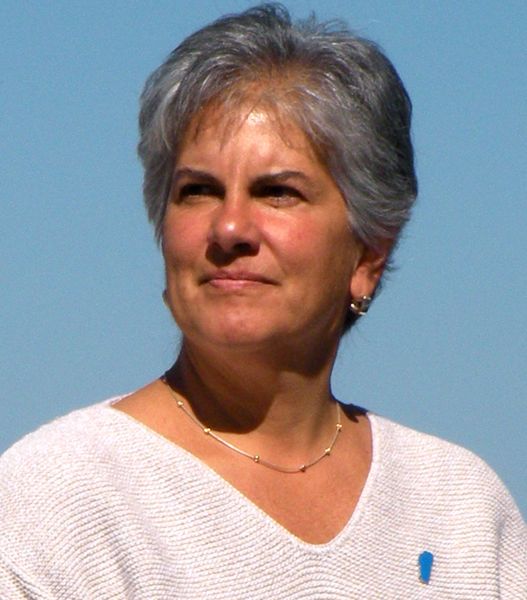
Joanne Marchetta

Like any plan, it is only a path to a promising future, but it is the essential foundation for the next environmental leap forward. That leap will come from tailoring local area plans to the needs of each community around the lake. Because we need to remake what we have in order to protect the lake and its environment, we have now the best opportunity in half a century to rethink the form and function of our town centers.

TRPA has put forward a plan that advances restoration of the lake’s clarity and other environmental improvements in part by refocusing our Agency to the regional level. In doing so, TRPA proposes to transition to an area plan framework that reduces inefficient regulations and improves permit processes by integrating regional environmental threshold attainment with the plans of local governments and other land management agencies.

By now you may have heard about many of the policy updates that TRPA is proposing. The final draft plan includes innovations to make updating our homes and communities more feasible – modest amendments to land coverage accounting for decks on homes with BMPs, along with coverage exemptions for public bike trails and disabled access facilities. TRPA has used every means at our disposal to widely publicize and educate both those within and outside the Basin about the major tenets of the plan. The full draft plan, summaries and fact sheets are all available online and have been since April, along with volumes of public comments that have been responded to and incorporated into the documents that are up for consideration. Use this information to get involved in the final decision because without the plan as a foundation, the next positive steps for Tahoe remain elusive.

Only with the updated plan can communities take the next step to put forth their vision for town centers and get to the important business of place making. The plan creates a framework, but inside the bounds it’s not one size fits all — communities don’t have to be like one another. We did this in recognition that Kings Beach is not Tahoe City and Incline Village will never be South Shore. Within regional sideboards of environmental improvement and protection, area plans hold the promise to put local planning, local communities, and local destiny into your hands. Now is the time for communities to act collaboratively to fix our environmental, economic, and social problems. Seizing this opportunity is key – with the decision this December, the Tahoe region could have its launch pad for the next quantum leap forward in environmental protection and overall sustainability for a national treasure.

The level of improvement to Lake Tahoe that is expected from the plan’s emphasis on environmental redevelopment also cannot be understated, but like area planning, it is just the beginning of an adaptive management cycle every four years that will safeguard the natural environment by ensuring that unintended consequences do not go unchecked. While support for the Regional Plan update has been broad, we have also taken the concerns we have heard very seriously. Following the advice of conservation groups and state leaders, we have strengthened other safeguards in the plan. Environmental groups such as the League to Save Lake Tahoe and the Nevada Conservation League have been important stakeholders who have worked collaboratively on the plan along with the community advocates, business groups, and partner agencies who have been at the table since the update process began.

Whether you are familiar with the update or are still waiting for your opportunity to get involved, the last few meetings of the year on the Regional Plan are meaningful opportunities for you to be part of Lake Tahoe’s future. Thank you for shaping the plan into what we believe will deliver a restored Lake Tahoe and revitalized communities that are more walkable and bikeable.

Joanne Marchetta is executive director of the Tahoe Regional Planning Agency.


Snippets about Lake Tahoe

• Misty Young, who has run the Squeeze In restaurants for the last nine years, is now handing the reigns over to her daughter Shila Morris. The restaurants are in Truckee, Sparks and Reno.

• Gov. Jerry Brown has appointed Elaine Howle of El Dorado Hills state auditor for the California state Auditor’s Office.

• Powder magazine is having a Ski Town Throwdown. Just vote online.

• The Bicycle Advisory Committee of the South Lake Tahoe Recreation Facilities Joint Powers Authority will meet Nov. 16 from 9-11am at Lake Tahoe Airport.

• Lake Tahoe Golf Course is making news nationally. Click here to find out how.


What are you thankful for?


Lake Tahoe orthopedic surgeon recalls the days before medicine became mired in bureaucracy

By Kathryn Reed

Working 10-, 12-hour days, sometimes seven days a week. Unable to leave until every patient was treated because there was no on-call doctor to call. But all the while forming a bond with patients that doesn’t happen today.

Oh, and then there were the cattle drives along Highway 50.

Things have changed tremendously in South Lake Tahoe and in the field of medicine since Paul Fry first began practicing here in the 1960s.

Fry will be the recipient of the Spirit of Philanthropy award Dec. 1 at the Barton Foundation’s 21st annual Gala, which is part of the four-day Festival of Trees and Lights.

Paul Fry will be honored Dec. 1 at the Barton Foundation Gala. Photo/Provided

When Fry opened Tahoe Fracture Clinic in 1964 the office was in the complex where Tahoe Pharmacy is. Looking out his window he could see the twice-yearly cattle drives. Ranchers took their herds either over Echo Summit to Placerville or over Kingsbury Grade to the Carson Valley for the winter, then brought them back to graze in the basin in the summer.

Fry remembers one year a rancher with a knee issue refused to get out of the saddle for surgery because straggler cows needed to be rounded up so they wouldn’t be lost to the cold and snow. Work came first, no matter the pain.

In those days, private medical insurance was a rarity. Ranchers walked around with wads of cash.

“It was all done in cash and a handshake,” Fry recalls.

Fry took out the rancher’s knee cartilage and the rancher took out a stack of bills to pay the doctor.

“I think the most satisfying part of the profession is dealing with people – trying to help them regardless if you get paid or not,” Fry told Lake Tahoe News.

When the town was cut off from the rest of the world for days at a time because of snow, people would gather at the few places that were open year-round. Everyone knew each other. Most of the town shut down between October and May. Heavenly and the casinos were the big draws in the winter.

“I compare what Tahoe was say 25 years ago to what it is now. We were one of the first and foremost vacation areas, at least on the West Coast. We’ve lost our charm,” Fry said. “I look at it now like we are not the head of the dog, we are the tail of the dog. Aesthetically, we need to clean up Highway 50.”

He recalls after the 1960 Olympics at Squaw Valley, the South Shore was hopping well into the 1970s.

Treating ski injuries

Fry with Bob Oden of Aspen were the two doctors who created formal medical care for the U.S. Ski Team. It’s a tradition Barton doctors have had a role in to this day with Richard Steadman taking over for Fry, and current Barton docs Steve Bannar and Terry Orr being part of the Olympic medical team more recently.

When Fry and Oden were involved, it was a volunteer position – flying all over the world, providing medical care to racers. Fry said he got burned out and turned it over to Steadman, who had joined his practice five years after it opened.

Locally, it was Heavenly Valley Ski Resort and Sierra Ski Ranch where skiers made turns. It wasn’t until 1972 that Kirkwood opened, and early on snowboarding wasn’t a sport.

Fry remembers one Washington birthday weekend when in a 48-hour period he treated 30 broken legs. He attributes the number of injures to bindings not releasing. Plus, helicopter service did not exist so Fry handled all the orthopedic injuries.

“Every doctor, all 11 of us, were expected to take emergency room calls. There were no paramedics, no anesthesiologists, no emergency room physicians,” the 81-year-old said.

He was one of the few specialists around. Even so, he still had to do a bit of everything – including delivering a few babies over the course of his career.

When Fry first started treating patients at Barton Memorial Hospital if someone broke their femur, there was no device to put in a rod or plate. Instead, the patients came back in the spring for six to eight weeks of traction. He said there could be between 10 and 15 people in traction any given March.

On sunny days the patients would be wheeled out to the patio to get some sun. And that is when the contraband marijuana would come out.

“Nurses would report it to administration. Administration called the police. The police would give them a lecture. They couldn’t arrest them because they were in the hospital,” Fry recalls with a chuckle. “After a while we gave up.”

Today, a broken femur would be operated on immediately or the next day, with the patient able to go home in less than a week.

Changes in medicine

While Fry praises technology, especially diagnostics, he emphatically liked practicing medicine earlier in his career than he does today.

“The biggest problem I see is the bureaucracy that has crept into the medical profession,” Fry said.

He also longs for the days when doctors had a better connection and better communication with their patients – something like the old country doctor. He attributes all the specialization to creating a disconnect between patient and doctor.

Today, the orthopedic surgeon assists his son, Mike Fry, with surgeries once a week; provides pro bono services to the Barton Community Clinic; and sits on the board of directors for Barton Health and Carson Valley Medical Center.

As for the award that will be bestowed upon him next month, Fry said, “The honor doesn’t really belong to me as much as it does to the people who have supported me along the way to be in the position to get the honorarium.”

—-

4th annual Barton Foundation Festival of Trees & Lights – Nov. 29-Dec. 2

• Nov. 29: Senior Stroll and entertainment: 10-11am (Free for seniors 55-plus)

Designer tree public viewing and entertainment: 10am-2pm

• Nov. 30: Designer tree public viewing entertainment: 10am-2pm

Family Night: 5-9pm

• Dec. 1: Teddy Bear Breakfast: 8:30-9:30am

Designer tree public viewing entertainment: 10am-2pm

The Gala: 5:30pm-midnight

• Dec. 2: Designer tree public viewing and entertainment: 10am-2pm

Family movie showing, “The Polar Express”: 3pm

Public viewing ($5 for adults; $3 for senior citizens (55-plus); $3 for children (ages 3-12); children 2 and under are free) and Family Night tickets ($35 for a family of six). Available at South Lake Tahoe Raley’s.

Event is at MontBleu casino in Stateline.

All proceeds benefit Barton Memorial Hospital’s emergency department Level III trauma center designation.


Medical companies play growing role in Douglas County

By Roger Diez, Northern Nevada Business Weekly

Motorists traveling south on Highway 395 to Minden and Gardnerville can’t help but notice the impressive eastern slope of the Sierra Nevada and ranchlands stretching out on both sides of the highway. What they often don’t see, however, is the small but growing presence of medical-related industry that is a part of Douglas County’s efforts to bring business and industry to the area.

As Douglas County’s Economic Vitality Manager Lisa Granahan says, “We want to create a business community to match the scenery.”

Granahan is working closely with the Northern Nevada Development Authority to recruit biomedical companies to the area. Biomedical is just one of a number of “cluster” industries that make up NNDA’s regional nine-county strategy.

NNDA Deputy Director Maurice Washington said that NNDA is working on a biomedical center incorporating Douglas County and Carson City.

“We are working with Carson-Tahoe Regional Healthcare on the medical side of things,” said Washington. Elements of the NNDA plan include vitamin and pharmaceutical manufacturing, adult stem cell research, medical device manufacturing, holistic health initiatives and medical tourism. “We are talking to the folks at Edgewood on the medical tourism piece. Europe is light years ahead of us in this field, and we’d like to recapture some of those dollars that are going offshore for medical treatments,” Washington said.

Although the biomedical segment is still small in Douglas County, it is already very diverse. Here’s a snapshot of some of the companies currently in operation in Douglas County.

Comfort Care dentistry management

Formed in November 2011 and operational since February, Comfort Care is a dental management company that helps dentists focus on dentistry by assuming the administrative functions of the dental office.

According to Deputy General Counsel Ashley Cox, the company’s staff takes care of human resources, payroll, accounting, insurance, legal and contract issues through their Patient Relations Management Center.

The company also operates its own dental offices in Walmart stores in California and Arizona, partnering with the giant retailer and Colgate-Palmolive to educate patients and to bring affordable dentistry within easy reach of people who might not otherwise afford it. Plans include a dental lab in Gardnerville to provide laboratory services to their company-owned and client dental offices.

Currently at 10 employees locally, plans are to grow the PRM business as needed to support the field dental offices, with additional employment when the lab opens. The company was recently recognized by NNDA at the Bubbles and Barbecue awards dinner.

Injectimed, which does business as Frontline Medical Products A recent transplant from Ojai, Calif., President and Chief Executive Officer Tom Kuracina is already a big booster of Douglas County. He cites the scenery, the frontier spirit, and the warmth and goodness of the people as the best things about moving to the area, along with the business-friendly climate and tax benefits.

The company is a developer of medical products with an impressive patent portfolio. They currently are bringing to market a device that will go into medical kits for procedures such as inserting stents and pacemakers. It can also be used for cardiac catheters, anesthesia, oncology, emergency room procedures, and field use by EMTs for tracheotomies. Kuracina also has a series of safe hypodermic needle designs that prevent medical providers from accidental punctures. There are currently only three employees in the company, but he is planning to open a fulfillment center to distribute product. Manufacturing will be done by a U.S.-based contract manufacturer. Kuracina has high praise for NNDA, Western Nevada College, UNR and Casey, Neilon & Associates, all of which were instrumental in his move to northern Nevada.

Life Enhancement Products

Recent arrival Life Enhancement Products moved from Sonoma County to Minden in July. Already at 23 employees, the company runs two manufacturing shifts.

President and CEO Will Block cited Nevada’s business-friendly atmosphere and tax structure, as well as the transportation infrastructure and high quality of employees as reasons for relocating. The company publishes a monthly magazine rooted in the most current literature on nutritional science, and staff members are continually testing and developing new products.

Block says that 65 percent of his readers and buyers are women ranging in age from low 40s to mid 60s, who are primarily interested in anti-aging and memory-enhancing products.

He recently returned from Poland, and plans to add that country to the nearly 100 countries where he distributes his products. As far as assistance from local agencies, Block said that NNDA’s Rob Hooper has been very welcoming and has offered to help with training and hiring grants.

The company also got assistance from the Small Business Administration to get a loan to purchase their building in Minden.

Bio-Pure Products

Much smaller, but no less enthusiastic about the area, Bio-Pure Products makes and distributes a bacteria/enzyme waste management product. Victoria Alexander-Cushman and her husband run the company with the help of two part-time employees.

The product was originally developed by a doctoral-level researcher in microbiology to maintain pure water in fish farms in third world countries. Bio-Pure obtained a license and adapted the product for use in cleaning vacuum systems in dental offices. It has been so successful that manufacturers of those systems now specify Bio-Pure as the cleaning agent required to maintain warranties. Alexander-Cushman says they are also investigating the use of their product in surgical applications. They relocated from California in 2009, and cite the better business climate and quality of life as prime factors. They have not sought any assistance from local agencies, but may do so as they expand.

HCI Sciences

This small, four-employee firm is poised to revolutionize anatomical pathology. Chief Medical officer Jerry Fredenburgh has developed a more reliable and environmentally friendly dye that is used to stain tissue sections. He teamed with healthcare sales expert Peggy Lyon to market the product to pathology labs. They chose this area because Nevada’s regulatory climate is more conducive to development of medical manufacturing than California’s.

With FDA certification of the 5,000 square foot lab and production facility in progress, the company plans to add employees in the first quarter of 2013. NNDA has provided assistance in the company’s move to Minden.


USFS to conduct 2-day burn on South and North Shores

U.S. Forest Service fuels management crews will continue prescribed fire operations in the Cold Creek area near South Lake Tahoe on Nov. 14.

Crews will be working near Sutter Trail and Sierra House Trail. Crews expect to burn one-half to 1 acre per day, conditions permitting. Operations are scheduled to last through Thursday.

They will also be burning in the Bunker Road area near Tahoe City those two days. One acre is expected to be burned each day.

Residents and visitors can expect to see smoke from this prescribed fire project area. The Forest Service strives to minimize the impacts of smoke on local communities. Smoke-sensitive residents should consider staying indoors and keeping doors, windows and outside vents closed. To directly receive prescribed fire updates, send an email to pa_ltbmu@fs.fed.us.

Forest Service staff will post road signs around areas affected by prescribed fire, and update the local fire information line at (530) 543-2600, No. 6.


2-day ski swap benefits Heavenly Foundation

The Heavenly Ski and Snowboard Foundation will host the 24th annual Ski and Snowboard Swap at MontBleu on Nov. 16-17.

Proceeds will benefit the foundation, a nonprofit organization that provides skiing and snowboarding programs and events for regional youth and local middle school and high school students.

The Swap opens with Moonlight Madness on Nov. 16 from 6-11pm. Admission for adults is $5, children 12 and under are free.

The savings continue on Nov. 17 from 10am to 5pm; admission is free.

Public merchandise registration will take place at the Heavenly Ski and Snowboard Foundation building, located in the Heavenly California Lodge parking lot at the base of World Cup lift across from the Heavenly Tram, on Nov. 14 from 3 to 6pm. Each registered item is $1 cash donation; no equipment over 5 years old. For additional information, call (530) 541.7354.


Training helps dogs ski with their people

By Grayson Schaffer, Outside

All you need to know about going wild with man’s best friend.

Of all the hazards out there in the woods—mountain bikes, porcupines, thin ice, your trigger-happy hunting buddies—none are as dangerous as skiing with your dog. You’ve got four long, sharp metal edges that move at high speed; he’s got four soft paws and, most likely, a strong drive to chase and be near you. If you ski with your dog, chances are you’ve cut him. If you’re lucky, you didn’t sever a tendon or muscle. Of the half-dozen editors’ dogs who ski with us on a regular basis, including my dog Danger, I can’t name one that hasn’t either been cut or, worse, run over by a snowmobile.

The fix is investing the time and discipline into proper obedience. Your dog should wait patiently while you ski down, stop, and call him to join you. On cat tracks, he should heel beside you without nipping at your skis. Do it right and your dog gets to run around in the mountains all day. Avoid it and your dog is stuck at home. The only commands you need are heel, here, and sit. To ski with your dog, though, you’ll need these commands ingrained over time as behaviors.

Teaching him to wait


Start all new training drills in the home, where obedience is likely to be better than outside. Most dogs will master new skills better if they initially learn them without the distraction of unfamiliar places.

1. Have your dog sit. He should remain sitting until you either call him to you or ask him to heel. Practice by walking circles around your sitting dog. He should follow you with his eyes but not get up.

2. Now walk away from him. If he breaks and runs to you, correct him immediately and return him to his sitting position. Make him wait. Then call him to you and have him sit again. This is the way skiing should work: You move away from him and then call him to you. In some cases, you’ll want him to wait for you to stop, in others, like powder, you’ll get a head start on him and then let him follow.

3. Now take it to the field. Once you’re getting consistent results inside, build up your pup’s patience outside, where there are distracting smells. If he won’t do it while you’re in street clothes, he definitely won’t when you’re on skis.

4. If he’s consistent on land, then you’re ready for snow. Many local ski areas allow up-hill skinning and dogs on the slopes before the lifts open. Pick a mellow beginner slope, preferably groomed, where you can slide away from your dog backwards. Have him sit. Move only a few feet away, make him wait, then call him to you. Build up the distance slowly. You want him to succeed every single time. Once he’s solid on groomers, take him into the backcountry.

Read the whole story