Nevada continues to grant online gaming licenses

By Steve Green, Las Vegas Sun

The Nevada Gaming Commission last week issued licenses for three more companies to compete in the state’s new intrastate online poker industry.

The Commission, meeting in Las Vegas, approved licenses for MGM Resorts International and lesser-known companies Z4Poker LLC of Las Vegas and CAMS LLC of Los Angeles.

The applications had received initial recommendations Nov. 1 from the State Gaming Control Board.

The poker approved is not video poker, but players competing against each other like they do in physical casino poker rooms.

MGM Resorts plans to put up a play-for-fun site in the coming months. This would be in addition to the myVEGAS social media site it’s using in partnership with myVEGAS developer Playstudios.

Both MGM Resorts and Boyd Gaming are partnering for real-money poker with bwin.party digital entertainment plc, which may be considered for licensure in Nevada next year. If bwin is approved, MGM Resorts and Boyd could choose to go live with real-money play.

Gaming commissioners commented today that they still need to consider the bwin application and that their approvals for MGM Resorts and earlier for Boyd are independent of the upcoming examination of bwin, a big offshore poker operator known for the PartyPoker, PartyCasino, World Poker Tour and other brands.

Z4Poker is developing a poker system while also working on potential bingo and keno systems that might be offered around the country should online gaming be approved in various states.

CAMS has systems to manage online player accounts and verify the age, location and identity of players, while also preventing problems like money laundering and problem gambling.

CAMS hopes to serve the poker and lottery industries.

“Your business is important to us. The issues you deal with are important to [gaming] providers and to us,” Commissioner Randolph Townsend told CAMS officials during a discussion on maintaining the integrity of online gaming by preventing cheating and other problems.

“This is where the wise guys are going to cause the hiccup,” added Commissioner Tony Alamo.

With testing of poker systems still under way, Nevada poker applicants approved earlier this year were Boyd, Station Casinos LLC and the founding Fertitta family’s Ultimate Gaming-Ultimate Poker brand, the Golden Nugget with casinos in Las Vegas and Laughlin, South Point Poker, Global Cash Access Holdings and Bally Technologies.

Also approved were SHFL entertainment (formerly Shuffle Master), American Casino and Entertainment Properties, PokerTrip Enterprises, NetEffect Networks, International Game Technology, Monarch Interactive and WMS Industries.


Thieves steal ancient petroglyphs in Eastern Sierra

By Louis Sahagun, Los Angeles Times

BISHOP — Ancient hunters and gatherers etched vivid petroglyphs on cliffs in the Eastern Sierra that withstood winds, flash floods and earthquakes for more than 3,500 years. Thieves needed only a few hours to cut them down and haul them away.

Federal authorities say at least four petroglyphs have been taken from the site. A fifth was defaced with deep saw cuts on three sides. A sixth had been removed and broken during the theft, then propped against a boulder near a visitor parking lot.

Dozens of other petroglyphs were scarred by hammer strikes and saw cuts.

“The individuals who did this were not surgeons, they were smashing and grabbing,” U.S. Bureau of Land Management archaeologist Greg Haverstock said last week as he examined the damage. “This was the worst act of vandalism ever seen” on the 750,000 acres of public land managed by the BLM field office in Bishop.

The theft required extraordinary effort: Ladders, electric generators and power saws had to be driven into the remote and arid high desert site near Bishop. Thieves gouged holes in the rock and sheared off slabs that were up to 15 feet above ground and 2 feet high and wide.

Visitors discovered the theft and reported it to the BLM on Oct. 31. BLM field office manager Bernadette Lovato delivered the bad news to Paiute-Shoshone tribal leaders in Bishop.

“It was the toughest telephone call I ever had to make,” Lovato said. “Their culture and spiritual beliefs had been horribly violated. We will do everything in our power to bring those pieces back.”

The region is known as Volcanic Tableland. It is held sacred by Native Americans whose ancestors adorned hundreds of lava boulders with spiritual renderings: concentric circles, deer, rattlesnakes, bighorn sheep, and hunters with bows and arrows.

For generations, Paiute-Shoshone tribal members and whites have lived side by side but not together in Bishop. But desecration of the site, which Native Americans still use in spiritual ceremonies, has forced reservation officials and U.S. authorities to come together and ask a tough question: Can further vandalism be prevented?

“How do we manage fragile resources that have survived as much as 10,000 years but can be destroyed in an instant?” asked archaeologist David Whitley, who in 2000 wrote the nomination that succeeded in getting the site listed on the National Register of Historic Places. “Do we keep them secret in hopes that no one vandalizes them? Or, do we open them to the public so that visitors can serve as stewards of the resources?”

The easy answer is to police the site and others listed under the Archaeological Resources Protection Act. But that’s not possible given the condition of cash-strapped federal lands agencies, authorities said.

Authorities said the petroglyphs aren’t worth a great deal on the illicit market, probably $500 to $1,500 each. But they are priceless to Native Americans, who regard the massive tableaux as a window into the souls of their ancestors.

The site is one of dozens of such locations managed by the BLM office in Bishop. A small army of volunteers has stepped up surveillance of the area.

For archaeologists, the images carved into a half-mile-long volcanic escarpment depict the culture and spiritual notions of the ancient tribes that once populated the sage flats and river valleys of the Eastern Sierra.

Paiute tribal historic preservation officer Raymond Andrews observed sacred law by quietly chanting a traditional prayer when he approached the site earlier this month.

Standing beneath a panel of geometric renderings believed to have been carved by shamans, Andrews took a slow, deep breath and said, “We still use this sacred place as a kind of church to educate tribal members and children about our historical and spiritual connections. So, our tribal elders are appalled by what happened here.”

Federal authorities and Native American leaders plan to mark each defaced petroglyph with a small sign pointing out that, as archaeologist Haverstock put it, “this damage was done by malicious, selfish individuals.”

The BLM is offering a $1,000 reward for information leading to the arrest and conviction of the thieves. Damaging or removing the petroglyphs is a felony. First-time offenders can be imprisoned for up to one year and fined as much as $20,000, authorities said. Second-time offenders can be fined up to $100,000 and imprisoned up to five years.


Prop. 30 not creating an exodus of super rich from California

By Jim Christie and Peter Henderson, Reuters

SAN FRANCISCO — Warnings that a new millionaires’ tax would send California’s wealthy stampeding for the state line began before the results were final. But the super-rich may well stand their ground.

“Anyone know a good realtor in Incline Village?” Aaron McLear, the spokesman for California’s anti-tax campaign, tweeted early the morning of Nov. 7 as the votes against his cause streamed in.

California’s vote raised its top rate by 3 percentage points to 13.3 percent, easily the highest in the nation, drawing howls of protests from critics who doubt the taxes will be well spent and who fear a Democratic supermajority will wreak further havoc. “At least Californians can still escape to Nevada or Idaho,” a Wall Street Journal editorial concluded.

It’s too early to look for signs of an exodus. But if history in California and New Jersey, another state with high taxes and its share of multi-millionaires, is any guide their won’t be a run for the exits.

At high-end Incline Village real estate broker Chase International, a short hop from San Francisco into Nevada, the phones have not been ringing off the hooks, said Realtor Shari Chase.

Some wealthy retirees and mobile professionals called before the election, she noted, and nearby business owners in California expressed interest in a move. But Silicon Valley executives will not be trying to telecommute from her side of Lake Tahoe, she said.

“We do have billionaires here,” said Chase. “But I’m not sure the 3 percent (state tax increase) is going to make as big a difference for them.”

Gov. Jerry Brown’s seven-year income tax hike, known as Proposition 30, looked poised for failure before Election Day, but it sailed through by a vote of 54.5 to 45.5 percent.

Brown promoted it as a temporary fix to the state’s big fiscal gap, which gave California time to make bigger changes and save schools and universities from $6 billion in cuts.

Business groups from the Beverly Hills Chamber of Commerce to the tech industry policy group TechNet backed the tax, and the state Chamber of Commerce took no position.

A few defections are likely, said Jim Wunderman, president of the Bay Area Council business group, but many can’t and won’t. “California offers too much to too many,” he said.

Using tax funds for education scored with the wealthy. The state’s higher education system “is a large reason why we are the world’s technology leader,” venture capitalist and former state controller Steve Westly, a Democrat, wrote in an email.

“No. I don’t think high-income earners will leave the state,” he added.

Business has been good in Silicon Valley, and venture capital investment is pouring in, something even tax opponents could appreciate, said TechNet Senior Vice President Jim Hawley.

“I don’t think Prop. 30 itself was going to push anybody over the edge,” he said. “People look at the business climate in total.”

Low-tax Texas beckons

“We’ve decided to put the pedal to the metal and get out of California as soon as possible,” one Southern California businessman told Reuters.

He has not told his clients yet, and declined to be named. He and his wife decided after the election to sell their house at a loss, sell his advertising business and head to Texas.

The Lone Star State does not have an income tax and has clinched the No. 1 spot on Chief Executive magazine’s list of best states for business for eight consecutive years.

California politician Chuck DeVore abandoned California for Texas after he lost the Republican primary for the U.S. Senate. Entrepreneurs frustrated by business conditions – California perennially ranks dead last in polls of business friendliness – are sure to respond to the tax, he said.

“They may see this as the last straw,” DeVore said.

A September 2012 Stanford Center on Poverty and Inequality which looked at state tax records found the contrary.

In fact, more millionaires came to the state than left after California’s so-called Millionaire’s Tax was introduced in 2005 – adding 1 percentage point of tax to incomes over $1 million. A 1996 cut to taxes for those earning $110,000 and up did not spur migration into the state, either.

The number of millionaires has risen or fallen by about 10,000 a year, but that change has been almost entirely due to the state economy, not wealthy people coming into or leaving the state. Such migration accounted for about 47 people, net, on average.

The very richest, who were likely to have houses and properties in many parts of the world with creative means to finesse their taxes, were the least likely to move after the tax hike, but even those at the bottom end of the millionaires scale did not pick up and leave, according to the September study.

The Stanford researchers found New Jersey millionaires also stayed put, despite plenty of nearby, relatively inexpensive alternatives, after the state hiked its top rate by 2.6 percentage points. There was a modest increase in migration among millionaires past retirement age and living mostly on investment income, they found.

A Manhattan Institute study published in September in the buildup to the tax vote, warned California’s golden age of domestic migration was over, as jobs proved harder to come by, crowding increased and government cut services while increasing taxes. Immigration from abroad wasn’t considered.

But former New York state chief demographer Robert Scardamalia, one of the co-authors of the Manhattan Institute report, pointed out that the U.S. census and Internal Revenue Service data he used did not get at the “why” for migration.

“Bottom line is that I think they find what many would expect – there are a lot of other reasons driving the migration decision other than taxes,” he concluded in an email to Reuters.

If you go, sever ties

Many find it hard to leave the good weather and vibrant cities of California, which offer an especially pleasant life for those of means. Tax authorities make it even harder.

Back in Incline Village, Chase has some advice for folks considering switching residency: don’t fool around.

“You can’t live in a $10 million house in California and come up to Nevada and buy a million dollar house and call that a residence,” she said.

California tax men and women go to great lengths to nail “former” residents who have not really left. So the rich who leave California should not plan on coming back any time soon, said Scott Kauffman, a tax lawyer in Irvine.

“They’re extremely thorough,” he said. “They’re going to check your bank accounts, where you’re charging purchases and your cell phone records,” he added.

“What I tell people is to prepare to leave for two years,” said Kauffman. “You’ve got to sever all your California connections.”


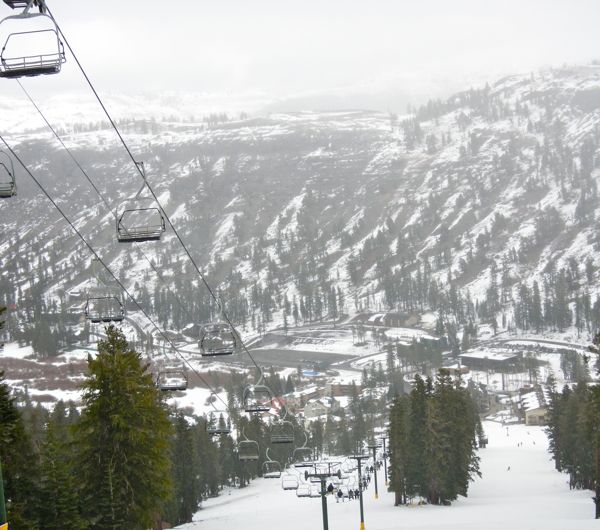
Ski report: Clouds will hang around

This weekend’s storm added to the snowpack at all resorts. Thanksgiving is looking good.

Expect clouds today and temps in the 40s.

Here is the Nov. 19 ski report.

— Curtis Fong


Tahoe Tails — Adoptable Pets in South Lake Tahoe

Sidney is a nice hound mix. All of her breeds are a bit of a mystery.

She is 3-years-old and very sweet, about 45 pounds, and she will lean up against you for pets. She is house trained and has good manners. She likes to play with other friendly dogs and would like to meet yours before going home. She has lived with small children.

Sidney is spayed, microchipped, and vaccinated. She is at the El Dorado County Animal Services shelter in Meyers, along with many other dogs and cats who are waiting for their new homes.

Go online to see photos and description of all pets at the shelter.

Call (530) 573.7925 for directions, hours, and other information on adopting a pet.

For spay-neuter assistance for South Tahoe residents, go online.

— Karen Kuentz


Snippets about Lake Tahoe

• More ski resorts have set opening dates: Tahoe Cross Country Ski Resort, Nov. 24; Alpine Meadows and Tahoe Donner, Dec. 7; Homewood, Dec. 14.

• Dennis Chez, medical director of Gateway Urgent Care in Truckee, has recently become certified in aesthetic medicine for primary care physicians.

• Effective Nov. 19, El Dorado County Child Support Services and Revenue Recovery will be located at 3883 Ponderosa Road in Shingle Springs. All employee and public telephone numbers will remain the same.

• Resort at Squaw Creek’s Magical Memories Gingerbread Village Unveiling and Grand Tree Lighting Ceremony is Nov. 23 from 5-8pm. Santa and Mrs. Claus, along with Olympian Jonny Moseley will be there.

• National Geographic is airing a 10-part documentary that captures the trials and triumphs of keeping Interstate 80 open through the winter of 2010-11. “Hell on the Highway” airs Wednesdays at 10pm.


Letter: Thankful for a caring community

To the community,

I would like to thank all the people who helped make the fundraiser at Ernie’s so successful: Paul and Judy Bruso, the Ernie’s staff, the volunteers and to all the wonderful people in our community for their generous support.

Thank you to Gia Richards for organizing everything and to all who donated auction and raffle items. I was overwhelmed by the amazing turnout.

Also, thank you to Jim at Primo’s and Dan at Passaretti’s for their contributions.

To my family, friends, customers, coworkers and many supporters: I can’t thank you enough for your kindness and being there for me. I am blessed to live in such a great place.

Chris Alper, South Lake Tahoe


Officials using public input to prioritize how to improve Lake Tahoe Nevada State Park

By Anne Knowles

CARSON CITY – Officials are considering a whole menu of changes in Lake Tahoe Nevada State Park and will prioritize them based, in part, on public input.

The Nevada Division of State Parks received input on Sand Harbor, Cave Rock and Spooner Lake backcountry at its second public meeting on the Lake Tahoe Nevada State Park general management plan update.

About a dozen people showed up here last week to discuss ideas for improving the park, including redesigning the boat launch at Cave Rock, creating additional access for kayakers at Sand Harbor and the future of recreation at Spooner Lake now that the concession for cross-country skiing and mountain bikes has closed.

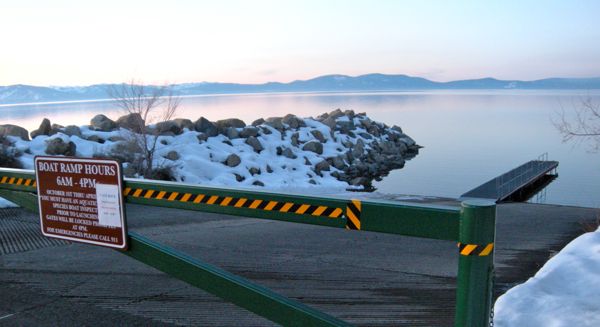
At Cave Rock, for example, the department is looking at reducing congestion at the boat ramp by possibly adding slips to expedite launching; building a ramada for picnic tables and barbecues; redrawing the parking lot to lengthen spaces; and adding acceleration and deceleration lanes for vehicles at the entrance.

It’s possible that slips would be added at Cave Rock. Photo/LTN file

At Sand Harbor, the parks division’s suggestions include making the south beach area more accessible for kayakers; relieving congestion at the boat ramp; adding picnic seating for groups; and making the whole area easier to navigate for visitors with disabilities.

“That place is loved to death,” said Steve Noll, principal at Design Workshop, discussing the challenges at Sand Harbor. His firm is working with Ascent Environmental, the main engineering consultant on the park’s general management plan.

A visitor center may be built at Spooner Summit, Noll said. The division is considering three locations: off Highway 50 where 50 meets Highway 28; and two spots on Highway 28, one at the junction of 50 and 28, on the opposite side of 28, and another farther down 28, on the lake side of the highway. Each location has its pros and cons, said Noll.

Jay Howard, parks supervisor, said the division is working on getting another concession in Spooner. But for now, he said, the division plans to plow the parking lot and may use skimobiles to clear some trails for skiers. Previously, Max Jones cleared the trails as part of his work as the concession operator.

“We’ll do our darnedest to keep it open,” Howard said.

Jones said, “I’ve had the concession for 27 years, but it’s hard to rely on it in the winter. I’m tired of stepping up to the winter roulette table.”

Jones said the concession was long a struggle because of unpredictable snowfall, but he finally decided to give up the business when the parks division said it was raising his fees.

“Last year we were open 30 days in the winter,” Jones said. “I can’t make a go of it.”

Jones now operates the Tunnel Creek Café in Incline Village and plans to open a 1,000-square-foot mountain bike shop on a parcel behind the restaurant. He said he’d continue to run a shuttle busing runners, bikers and hikers between Incline and Spooner, and to work with the parks division, on a volunteer basis, to develop bike trails.

“I’m here about the continued winter use of Spooner,” said Jennifer Roman, a Minden resident attending the meeting, who said she skis at Spooner and kayaks out of Sand Harbor. “And the boat launch area (at Sand Harbor) gets pretty packed sometimes.”

Dave Morrow, administrator for the state parks division, said he and Howard sit on a committee overseeing the plan to improve the Highway 28 corridor from Crystal Bay to Spooner Lake, and are working to coordinate the park’s plan with the highway proposal.

The Highway 28 plan involves a dozen state and federal agencies with the goal of making the recreational areas along the East Shore of the lake safer and more accessible for visitors.

Funding is an issue, though, and both plans are long-term roadmaps, not immediate checklists of changes, Morrow said.

“We want people to know that we will use this as guidance,” Morrow said. “Trouble is people make comments and think something is going to be done right away. Where we go with this in the future depends on funding.”

The division is accepting public comment on the update until Nov. 30. Maps and details are available at the division’s website, and comments can be emailed to Dana Dapolito, conservation staff specialist, at ddapolito@parks.nv.gov.

At its first meeting in March, the division said it planned to produce a draft plan by year-end. But a draft is now likely in March or April next year, with time for further public comment then.


Time to help kids have memorable holiday

The El Dorado County Library, Live Violence Free and CASA El Dorado have partnered to offer the eighth annual Giving Tree.

The tree is up in the South Lake Tahoe branch library decorated with the holiday wish list ornaments of children who are part of the court system, perhaps in foster care, or living in a shelter as a result of domestic violence in their family.

Here is how to help with the Giving Tree:

• Pick an ornament from the tree.

• Take the ornament(s) and buy what you would like from the list.

• Return the unwrapped gifts to the library no later than 1pm on Dec. 12 so Santa has time for wrapping and delivering to kids.

• To return, put gifts in a bag and secure the ornament tag on the outside of the bag.

For more information on the Giving Tree, contact Amanda at (530) 573.3072 or amanda@casaeldorado.org.


Placer County officials to discuss plans for Tahoe

Placer County is having a meeting about the Tahoe Basin Community Plan on Nov. 28 at Granlibakken in Tahoe City from 4-8pm.

Placer County has consolidated its nine plans into a single policy document with four planning areas. A team composed of community members is working on issues germane to each area. Each planning area will have its own distinct zoning ordinance and community-specific design guidelines.

The four planning areas are:

North Tahoe East, which covers Kings Beach and the Stateline community;

Greater Tahoe City, which includes Tahoe City, Tahoe City Gateway, Lake Forest, and Dollar Hill;

North Tahoe West, which includes Carnelian Bay and Tahoe Vista; and

The West Shore, which includes Sunnyside, Homewood and Tahoma.

Attending the November meeting will be the community design consultants Dyett & Bahtia who will work with each team. The consultant has put together draft zoning district standards for each team. These standards are reflective of the work that the teams have done to date.