‘Fiscal cliff’ less of a concern in Nevada than other states

By Sean Whaley, Nevada News Bureau

CARSON CITY – The impacts of the so-called “fiscal cliff” on Nevada’s state budget would likely be less significant than for many other states because of its lower dependence on federal spending, according to an analysis by the Pew Center on the States.

The impact on state tax revenues do not apply because Nevada does not have a personal or corporate income tax, according to the report The Impact of the Fiscal Cliff on the States. The report examines the potential effects on each of the states.

On the federal spending cut side of the equation, Nevada’s share of federal grants subject to sequester, looked at as a percentage of state revenue, is slightly higher at 6.7 percent than the national average of 6.6 percent, and so could mean financial impacts.

But Nevada ranks well below the national average for federal spending on procurement, salaries and wages as a percentage of the state’s gross domestic product at 3 percent compared to the national average of 5.3 percent.

Nevada is also below the federal average for federal defense spending on procurement, salaries and wages as a percentage of the state GDP at 1.8 percent compared to the national average of 3.5 percent.

Federal non-defense spending on procurement, salaries and wages as a percentage of state GDP is 1.2 percent in Nevada compared to 1.8 percent nationally.

These numbers cited in the Pew report are all based on 2010 information.

And federal non-defense workforce as a percentage of total employment in the state is 0.9 percent in Nevada compared to 1 percent nationally, based on 2012 data.

But the Pew analysis notes: “The general economic slowdown that could result if the full fiscal cliff were allowed to take effect would likely overwhelm any of the separate impacts.”

The report, released Nov. 15, comes as Nevada Gov. Brian Sandoval is finalizing his 2013-15 state spending plan, which will take effect on July 1, 2013.

The impact of the federal fiscal cliff is just one more variable that could affect Nevada’s general fund budget. Another is expanding Medicaid to a new group of eligible state residents. Sandoval has not yet announced his decision on whether to support the expansion, which would be paid for nearly entirely with federal funds in the first few years.

“The Budget Division is currently evaluating the impacts of sequestration on federal funding to the state of Nevada,” said Director Jeff Mohlenkamp in a statement. “Specifically, we are researching reductions that would have direct impact on services to citizens. Some federal reductions may eliminate the resources to provide services but not eliminate requirements to maintain service levels. The potential for this type of unfunded mandate is of particular interest to the Budget Division as we prepare the budget for FY 2013–2015.

“There is a great deal of uncertainty surrounding other elements of the ‘fiscal cliff,’” he added. “We understand the possible implications on the larger economy. At this point, we cannot speculate further as most of the critical decisions have not been made.”

The Pew report on the fiscal cliff says that federal grants to the states constitute about one-third of total state revenues, and federal spending affects states’ economic activity and thus their amount of tax revenues.

Roughly 18 percent of federal grant dollars flowing to the states would be subject to the fiscal year 2013 across-the-board cuts under the sequester, according to the Federal Funds Information for States, including funding for education programs, nutrition for low-income women and children, public housing, and other programs.

Because states differ in the type and amount of federal grants they receive, their exposure to the grant cuts would vary. In all, the federal grants subject to sequester make up more than 10 percent of South Dakota’s revenue, compared with less than 5 percent of Delaware’s revenue.

Federal spending on defense accounts for more than 3.5 percent of the total gross domestic product (GDP) of the states, but there is wide variation across the states. Federal defense spending makes up almost 15 percent of Hawaii’s GDP, compared with just 1 percent of state GDP in Oregon.

The fiscal cliff, a series of expiring federal tax provisions and scheduled spending cuts, are set to take effect in January unless Congress reaches agreement on a deficit-reduction plan.

Scheduled tax changes account for roughly four-fifths – or $393 billion – of the total amount of the fiscal cliff. The scheduled spending cuts account for $98 billion – or about one-fifth – of the federal budget impact of the fiscal cliff. Over half of this amount is due to sequestration required under the Budget Control Act of 2011.

“To understand the full cost and benefits of proposals to address the fiscal cliff, policy makers need to know how federal and state policies are linked,” said Pew Project Director Anne Stauffer. “The implications for states should be part of the discussion so that problems are not simply shifted from one level of government to another.”

If the full force of the fiscal cliff is realized, the federal deficit would be reduced by $491 billion, the Pew Center analysis says. However, the Congressional Budget Office has projected that the entirety of the fiscal cliff would be a major driver of a general economic slowdown in 2013. Such an outcome would likely negate the more specific, separate impacts described in the analysis.

“Given the uncertainty about whether any or all of the policies in the fiscal cliff will be addressed temporarily or permanently, it is important to understand that the effects of the different components will vary across states,” Stauffer said.


Editorial: Thanksgiving — a day to remember not everyone has a bounty to be thankful for

“The Pilgrims made seven times more graves than huts. No Americans have been more impoverished than these who, nevertheless, set aside a day of thanksgiving.”

— H.U. Westermayer

Most people will gather this Thanksgiving Day with family and friends to celebrate this iconic American holiday. We will do so with tables full of food that becomes refrigerators overflowing with leftovers.

And as we do so, plenty of our neighbors are struggling to find something to be thankful for – either because they are alone on this holiday that screams to be with others or because the bounty before them is anything but that.

With South Lake Tahoe’s unemployment rate of 12.3 percent being higher than California’s (10.1 percent), higher than Nevada’s (11.5 percent) and higher than the national average (7.9 percent), we are a community overflowing with have nots. And while South Tahoe once had an unemployment rate at nearly 18 percent, the decline of more than five percentage points does mean full employment. It means some have left the area, some have stopped looking for work, some are working multiple jobs, and so many are underemployed.

Many don’t know where the rent or mortgage payment will come from in a week.

While we live in an extremely pretty place, the beauty of the mountains and the lake don’t pay the bills. They are good for providing solace in times of struggle, but not much else.

Maybe there is something we can learn from the pilgrims who in 1621 celebrated what is considered the first Thanksgiving. They did so with the Wampanoag Indians. It was a time to be grateful for the fall harvest – for what the land had provided.

Perhaps locally, we should be thankful for our harvest this time of year – the snow. While the white stuff itself does not provide nourishment to be shared at a table, it provides work for so many who call Lake Tahoe home. And work provides the money to buy the fixings for every meal.

We don’t all work in the field of tourism, but we all ride the roller coaster of economic good and bad times because tourism is the thread that binds us.

The fabric of this community is thread barren. Instead of picking at the loose ends and watching them unravel into an abyss, perhaps it’s time we started to stitch the pieces back together.

The anger, the hate, the divisiveness in the world permeate our little town, our shores, the region. We need to stop beating each other up and start lifting each other up. It is time to be thankful that we have the ability to help and thankful for the help that is offered.

Thanksgiving – it’s really two words – thanks and giving.


Gratitude meditation after Thanksgiving

In keeping with the Thanksgiving season, there will be having a gratitude meditation this month at the Tahoe Community Wellness Center.

It will be Nov. 26 from 6-7pm

No charge, but donations are accepted.

The center is in the Bijou Center in South Lake Tahoe.

The class is taught by Rosemary Manning.


Special weekend to teach newbies to ski, snowboard

North Lake Tahoe ski resorts shorten the learning curve with those new to skiing and snowboarding by offering a special savings weekend to get you cruising down the slopes in no time.

The 13th annual Learn to Ski and Board Weekend is Dec. 8-9. The event is geared for beginners, costs only $30 and includes an all-day beginner lift ticket, group lesson and gear rental.

First-timers have their choice of six resorts to learn at: Alpine Meadows, Boreal Mountain Resort, Granlibakken Resort, Homewood Mountain Resort, Squaw Valley and Sugar Bowl Ski Resort.

Several resorts will also offer guests a bounce back offer with savings good on a return visit.

Reservations are not required, but participants should arrive early. Lesson packages can be purchased at each individual resort the day of lessons. Students should contact resorts directly for resort-specific information.

Some restrictions apply.

For more information about the Learn to Ski and Board Weekend, go online.


DiMatteo indicted on federal charges; S. Tahoe never did background check on pot club owner

By Kathryn Reed

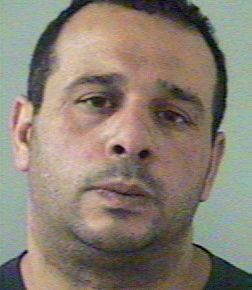
Gino DiMatteo has been indicted by a federal grand jury on three drug charges.

The grand jury had been looking into DiMatteo for longer than the city of South Lake Tahoe has allowed medical marijuana dispensaries to operate within its borders. The federal investigation was between June 1, 2009, and Sept. 5, 2012, with the indictment being handed down Nov. 21.

DiMatteo operated City of Angels II collective until this summer when he had to close shop because his landlord wanted him out and the City Council would not allow him to move his operation. Since then he bought Push Fitness.

Gino DiMatteo

Right now he is sitting in a Sacramento jail awaiting a bail hearing set for Nov. 26.

The indictment reveals DiMatteo was convicted in January 2002 in New York of conspiracy to distribute marijuana.

No one with a felony conviction was supposed to receive a permit by South Lake Tahoe officials to operate a medical marijuana collective.

When DiMatteo was arrested in August on state charges the documents included reference to a felony weapons charge from 1999 in New Jersey. At that time city officials believed the reason that charge did not turn up in their search was that DiMatteo also goes by Sergio Franco Ottomanelli.

Names can change, but fingerprints don’t; so that logic was suspect.

Lake Tahoe News has since learned that the city does not have DiMatteo’s prints.

“We did have a checklist. We did not have checked off the criminal history review,” Police Chief Brian Uhler told Lake Tahoe News. “We dropped the ball. I don’t have any other way of putting it.”

DiMatteo did go in to have his prints run. But he outsmarted officials by having the number at the top of the paperwork go to some obscure firm instead of back to the city, Uhler said.

Ultimately it is the city manager who issues pot club permits. That would have been Tony O’Rourke in this case.

“I was told those applicants were screened,” O’Rourke told Lake Tahoe News. “Yes, I was ultimately responsible. When I signed off it was based on everything being reviewed and consistent with requirements.”

Clearly, that was not the case. And clearly O’Rourke did not review the checklist and instead went with what he was told, not with the facts.

What is not known is why the city attorney would allow the city manager to sign the permit without everything being in order. City Attorney Patrick Enright did not return a phone call.

While it’s possible DiMatteo would still be in trouble with the feds because they were looking at him before he set up shop in South Lake Tahoe, had the city done its due diligence and all the players done their jobs accurately, the resulting chaos involving Councilwoman Angela Swanson would not likely have been an issue. This is because DiMatteo would not have had a business from which to make a donation to a nonprofit she is affiliated with.

Swanson got caught up in the DiMatteo matter in August when the El Dorado County District Attorney’s Office charged DiMatteo with bribing a public official – Swanson. While the charges against DiMatteo have been dropped, the DA says he is still investigating city officials and keeps Swanson on a yo-yo in what appears to be a game of politics.

The three counts leveled against DiMatteo in the indictment are conspiracy to manufacture and possess with intent to distribute marijuana; possession with intent to distribute marijuana; and manufacture marijuana.

If DiMatteo were convicted of at least one of the offenses, he would have to give up all his property deemed to have been associated with or bought by money from drug transactions.

If convicted on three counts, DiMatteo could face 60 years to life in prison and fines of more than $30 million.

Rob Woelfel, DiMatteo’s attorney, was not available for comment.


Nevada Fire Safe Council files for bankruptcy

By Kathryn Reed

The beleaguered Nevada Fire Safe Council has filed for bankruptcy.

Lake Tahoe News in July 2011 first reported about the agency’s financial difficulties.

Documents filed this week with the bankruptcy court in Reno show the agency has liabilities up to $10 million.

A Dec. 27 meeting has been set in Reno for creditors to meet with the bankruptcy judge.

Creditors range from individual homeowners who were supposed to be refunded money for tree removal work via a Nevada Fire Safe Council grant, to private tree service companies, to fire departments, to the U.S. Forest Service. And most live and or do business in the Lake Tahoe Basin.

Earlier this year in a report the U.S. Department of Agriculture’s Office of Inspector General found that NVFSC violated several federal regulations, including commingling federal grant money with other funds, allowing one person to be in charge of all aspects of managing the grant money and not conducting annual audits.

The council stopped doing business in the spring.


Youngsters turn out to compete in Turkey Trot

Nearly 100 people participated in the 2012 Turkey Trot Fun Run last weekend.

The free event for children ages 3-13 was put on by South Lake Tahoe.

A total of 94 participants turned out for the Turkey Trot Fun Run and racers ages 3-4 and 5-6 competed in the 25-yard dash, ages 7-8 raced 50 yards, ages 9-10 ran 100 yards, and ages 11-12 competed in the 200-yard dash.

Results:

Ages 3-4 Females Place Ages 3-4 Males Place
Kaia Burby 1st Rowan Gower 1st
Sophia Nielson 2nd Ralston Pierce 2nd
Teagan Bailey 3rd Cruz Hernandez 3rd
Ages 5-6 Females Place Ages 5-6 Males Place
Allana Hernandez 1st Marcus Vidaurri 1st
Lexie Allison 2nd Spencer Jones 2nd
Sydned Irwin 3rd Noah Lyons 3rd
Ages 7-8 Females Place   Ages 7-8 Males Place
Leilani Camepanis 1st William Dawes 1st
Sofia Wagner 2nd Matteus Sokulsky 2nd
Mackenzie Nealis 3rd Nico Wagner 3rd
Ages 9-10 Females Place Ages 9-10 Males Place
Sydney McLeod 1st Josh Bull 1st
Nina Seeman 2nd Oscar Marzocco 2nd
Jamie Johnson 3rd Derek Robbins 3rd
 
Ages 11-12 Females Place Ages 11-12 Males Place
Samantha Vidaurri 1st Ethan Nelson 1st
Caleb Caramazza 2nd
Aaron Johnson 3rd


Study: Teens taking steroids to turn fat into muscle

By Nancy Shute, NPR

Six percent of teenagers say they’ve used steroid drugs in the past year, according to a study in the journal Pediatrics.

Many teens aspire to have lean bodies and big muscles, like the professional athletes they so admire. But they don’t always want (or know how) to sweat to get them. A new study finds a surprisingly high number of teens have used steroids to try to slim down and bulk up.

Six percent of teenagers say they’ve used steroid drugs in the past year, which is a lot higher than the 1.1 percent reported in a 2011 survey.

And it’s not just boys who are trying to bulk up. Girls say they are using steroids, too, although they’re using the illegal drugs less often than boys, according to researchers at the University of Minnesota and Columbia University.

They surveyed 2,793 middle and high schoolers in the Minneapolis area in 2009 and 2010. Their results appear this week in the journal Pediatrics.

The students were most likely to have used steroids if they were on a sports team, particularly if it involved a weight-conscious sport like gymnastics or ballet.

But perhaps the biggest surprise is that a lot of the kids trying to bulk up weren’t necessarily jocks – they were overweight or obese. And they were’t just trying steroids. About one-third of the teenagers said they’ve tried protein powders and shakes, perhaps thinking (incorrectly) the products alone can transform fat into muscle. Overweight girls were especially likely to try that.

It’s an interesting finding, especially given how many teens have weight issues these days: The number of overweight kids and adolescents in the U.S. has almost tripled since the 1980s.

Teens of Asian ancestry were also more likely to turn to steroids than Caucasians. The study authors said their 6 percent number might be higher because about 20 percent of the study participants were Asian.

Steroids pose a big health risk for teenagers, because they can permanently stunt growth. They also cause health problems like severe acne and jaundice.

The good news is most of the teenagers did also try the two proven, and healthy, ways to build muscle. They exercised more, and changed their eating habits.

Both parents and pediatricians need to be aware that teenagers may consider steroids a legitimate way to gain muscle. Encouraging them to be active would be great, the authors conclude, but only if they “focus on skill development, fitness, and general health rather than development of a muscular appearance.”


Ski report: Wind a problem at resorts

Blustery doesn’t even begin to describe what it’s like outside.

Heavenly will start the day on wind hold.

Squaw Valley has Red Dog and Squaw Creek on wind hold.

Mt. Rose has Lakeview Lift and NW Magnum 6 on wind hold.

Here is the Nov. 21 ski report.

— Curtis Fong


Opinion: It’s time Tahoe moved beyond ‘arrested decay’

By Steven Frisch

On Dec. 12 the Tahoe Regional Planning Agency will vote on adoption of a new 2012 Regional Plan. The outcome will send a powerful signal to community, local, state and federal partners and private capital about whether stewards of Lake Tahoe will take control of their future and the resource that draws us together, or whether we will accept another decade of divided vision and environmental conflict.

The choice is between “arrested decay” – stalemate in the state of the lake – or advancing real restoration.

Sierra Business Council believes the best strategy to ensure the future of Lake Tahoe is to adopt the 2012 Regional Plan and leverage the power of private investment to partner on restoration of the lake.

Through the fog of debate about policies and thresholds is the light of an underlying truth: what we’re doing now isn’t enough, isn’t working, and needs to change. With the effort of thousands of residents, numerous agencies, and more than $1.6 billion of public investment in environmental improvement, Lake Tahoe is in a state of arrested decay. We have stabilized but not truly restored the resource.

Restoring Lake Tahoe and protecting it for posterity will require replacement of old infrastructure, fundamental redesign of urban centers, new transportation solutions, housing for working families, jobs to build the constituency for restoration, and treating almost every drop of water reaching the lake.

The reason we haven’t restored the lake is that environmental resources don’t exist in isolation – people are involved – resources exist in a social and economic context. Restoring the environment without connecting the dots between nature, people and dollars is magical thinking – a resource doesn’t get restored unless people support it and capital gets directed to it. Permanently restoring the lake must harness the power of all three to succeed.

To achieve real restoration will also require real money. To implement the environmental improvement program – and go beyond it to meet new challenges like invasive species, changing climate, and increasing uses – will cost hundreds of millions of dollars. Traditional funders, local, state and federal government, are unlikely to have the financial resources to fully support restoration over the next decade.

This is where harnessing the power of the private sector comes in.

Twentieth century environmentalism focuses its attention on slowing the encroaching impact of the industrial revolution – stopping bad things from happening – in the belief that environmental exploitation is an inherent part of capitalism. Traditional planning approaches, like the previous Regional Plan, rest on this premise and adopt a strategy of regulate, block and mitigate.

A whole new generation of environmentalists think capitalism is here to stay; that we have already begun to adjust our systems, providing prosperity in ecologically sustainable ways through use of new technologies and improved design. The adoption of new community planning techniques, smart transportation, green building, applied erosion control, renewable energy, and by engaging a larger population in the solution, we can restore resources and promote prosperity at the same time. The proposed 2012 TRPA Regional Plan adopts this more modern and pragmatic approach.

We’re not saying that a regulatory structure is not necessary; without the good work of the Sierra Club and the League to Save Lake Tahoe to watchdog regulation we could not have arrested decay. The future requires a layered approach, with appropriate regulation, while harnessing the power of the private sector to assist in the restoration of the lake. We can’t afford to have private capital sit on the sidelines. We must adopt a strategy of “stop bad things from happening” while actively encouraging good things to happen. We need the private sector to be a powerful force for good and invite in the capital that shares this ethic.

The risk of adopting this strategy is substantially less than the risk of signaling stalemate. The TRPA has designed a process to monitor and adaptively manage implementation of the 2012 Region Plan on a regular four-year cycle; we can measure performance and make changes when necessary.

We’re all environmentalists when it comes to Lake Tahoe. The question is do we adopt a new environmentalism harnessing all of our resources to reach for real restoration or do we settled for old environmentalism and risk arrested decay.

Sierra Business Council believes that new environmentalism, harnessing all of our resources, and adaptively managing outcomes, is the more rational course.

Steven Frisch is CEO of the Sierra Business Council.