Property owners file lawsuit to stop KGID from expanding pump station along Tahoe’s shores

By Kathryn Reed

A lawsuit was filed this week to stop Kingsbury General Improvement District from making more than $6 million in improvements to its water pumping plant at the shore of Lake Tahoe.

Tahoe Shores, which owns the land where the KGID facility is located in Stateline, has the authority per prior agreements to prevent further expansion. Tahoe Shores is the one who owns the land. But KGID is not abiding by those agreements.

This property is where a mobile home park sits and the future Tahoe Beach Club will go.

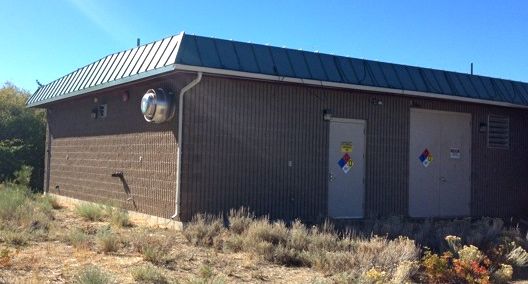
KGID and the property owners disagree on who has final say regarding future improvements to the Stateline facility. Photo/Provided.

In October, the KGID board voted for a rate increase to cover the costs of switching to meters. Some question if the fee is really to pay for the upgrades to the intake facility that are mandated by federal water guidelines.

KGID General Manager Cameron McKay told Lake Tahoe News he could not comment on anything regarding the lawsuit until he spoke with legal counsel, which was not expected to be until at least next week.

“We want to put them on notice they are violating the state and federal Constitutions by taking land. And if they want to, they must pay for it,” attorney Lew Feldman, who is representing Tahoe Shores, told Lake Tahoe News. “This would be government taking if they do it.”

A non-exclusive easement exists, which allows Tahoe Shores and KGID to have rights to the land where the water pump house is. Among other things, it means KGID is not supposed to have locked gates, like it does, to prevent Tahoe Shores from accessing that area.

The agreement states, “KGID is not permitted to add on, modify, increase or relocate the ‘improvements’ without the prior written consent of Tahoe Shores, which may be withheld in its sole and absolute discretion.”

The two sides have been exchanging letters this fall, but not to a resolution that satisfies the owners of Tahoe Shores.

Tahoe Shores has offered a parcel at the other end of the project area where KGID could build the improved facility. This would be inland and not on the shore. It is also being offered for free.

According to Feldman, KGID has turned down that offer.

It would be an obvious boon to the Tahoe Beach Club project because it would mean getting rid of the structure that is a bit of an eyesore.

As a government agency, KGID does have the power of eminent domain and therefore could take the land after paying fair market value for it.

But as long as Tahoe Shores owns the land KGID will have a hard time getting a permit from the Tahoe Regional Planning Agency because the property owner has to be involved in that process.

Unless a resolution is found outside of the courthouse, it will be up to a judge in the District Court of Douglas County to resolve the dispute.


League having social gathering at Apres Wine

The League to Save Lake Tahoe’s third Step into the Blue event will be Nov. 28 from 5-9pm at Apres Wine on Ski Run Boulevard in South Lake Tahoe.

Socialize, sip wine and have fun with like-minded people who want to Keep Tahoe Blue.

RSVP on the Keep Tahoe Blue Facebook page.

Step into the Blue is a social event series created by the League to Save Lake Tahoe that engages Tahoe enthusiasts and increases awareness about the footprint people leave behind while living and playing at Lake Tahoe.

For more information, call (530) 541.5388.


Egg farmers want state law changing hen space to be tossed

By Stacy Finz

California’s egg farmers filed a lawsuit against the state late last week, arguing yet again that new standards for confining egg-laying hens under Proposition 2 are too vague to be enforced. They’re asking that the law, which goes into effect in January 2015, be abolished.

The lawsuit marks the third legal challenge to Prop. 2 since its passage in 2008. The two previous suits failed.

The latest lawsuit, filed in Fresno Superior Court by the Association of California Egg Farmers, claims the organization has “exhausted all available avenues for seeking clarification” on the state initiative.

Farmers say that before they spend an estimated $400 million on the larger cages required by the law, they’d like to know what size to make them. Nowhere in the statute does it give those dimensions, according to the suit.

The legislation requires farmers to provide hens enough room to stand up, turn around and spread their wings. Currently, each egg-laying bird is caged in about 67 square inches of space. California is the fifth largest egg-producing state in the nation- about a $1 billion-a-year business.

“The farmers support the idea of giving the hens more space,” said Dale Stern, one of the attorneys representing the trade organization. “But the state has never said what that should be. The farmers just need some help.”

The Humane Society of the United States, which supported the bill, and two judges – one state and one federal – have said the law is clear.

“Just like consumers shop around for the best eggs, these guys are shopping around for the best judge,” said Jonathan Lovvorn, chief lawyer for the Humane Society. “If animal activists did this they’d be sanctioned by the court. Enough is enough.”

The state attorney general’s office had not yet been served with the suit, but spokeswoman Lynda Gledhill said, “We will continue to defend the law.”

Federal Judge John Walter out of the Central District, who dismissed the second lawsuit, said there was nothing abstract about the statute.

“Prop. 2 provides a person of ordinary intelligence more than a reasonable opportunity to know what is prohibited and provides explicit and objective standards to prevent discriminatory enforcement,” Walter ruled.

“Although the Court could answer this question if it had the opportunity to measure the wing span of an average egg-laying hen, the answer to this question is certainly not a mystery and is capable of easy determination by egg farmers, who have been in this business for decades,” Walter said.

Lovvorn said the Humane Society estimates that it’s probably about 200 square inches per bird. “But the law doesn’t mandate a size, it mandates performance,” he said.

Arnie Riebli, a Sonoma egg farmer and president of the Association of California Egg Farmers, said the Humane Society has been all over the map on that number.

“If you’re going to charge me with a crime, at least tell me what the crime is,” he said.

In the meantime, a federal law is in the works that would enforce national standards for egg farmers.

That proposal calls for 116 square inches of space per bird and would pre-empt Prop. 2. The country’s egg farmers would have until 2029 to expand cages to that size. Stern said the federal plan, currently working its way through Congress, further creates a quandary for farmers.

“If they would take a consistent position, it would help,” he said.


More time to apply for LTUSD bond committee

The deadline to apply to be on the Lake Tahoe Unified School District Citizens’ Bond Oversight Committee has been extended to Dec. 28

There will be seven vacancies as of Jan. 31.

The following reps are needed:

· A person active in a senior citizens’ organization.

· A person active in a bona fide taxpayers’ association.

· A person active in the South Tahoe Association of Realtors.

· An at-large member of the community.

· A parent or guardian of a child enrolled in the district.

· A parent or guardian of a child enrolled in the district and active in a parent-teacher organization or school site council.

· A person active in the construction industry in South Lake Tahoe.

Candidates must be at least 18 and reside within the district’s boundaries. Employees, officials, vendors, contractors, or consultants of the district are ineligible.

Applications are due Dec. 28. Here is a copy of the application.


No changes for now to fishing campground at Webber Lake

By Bill Lindelof, Sacramento Bee

A land trust will continue to lease a fishing campground at Webber Lake for four more years, even though the public will be able to access nearby Lacey Meadows.

It was announced last week that the Truckee Donner Land Trust and the Trust for Public Land paid $8 million for property that will protect Webber Lake and Lacey Meadows at the headwaters of the Little Truckee River.

The Truckee Donner Land Trust will own and manage the land. At the request of the family that sold the land, the trust will continue to lease the fishing campground to the current caretakers for four more years, after which the lake will be open to the public.


Letter: Time to leave South Lake Tahoe

To the community,

Cannabis is legal in two states. The seeds of legalization, planted and cultivated all these years has finally born fruit. My work is done. Effective immediately I am retiring from marijuana politics, heading for Whistler Blackcomb and taking over as CEO of a publicly traded company.

It has been my honor and pleasure to serve the medical marijuana community over the past two decades. During that time, I have been profoundly moved by the courage, intelligence and integrity shown by my fellow cannabis warriors. Together we have made history, saved lives and established new civil rights for sick, disabled and dying patients.

Steve Kubby

Looking back on all those years, I find myself overwhelmed with gratitude for everything that cannabis activists have done for me and for our cause. When I was fighting for my life in the Placer County jail, pissing blood, puking my brains out and shivering violently from solitary confinement in a freezing cold cell, they saved my bacon. Sick and disabled patients joined dedicated activists who showed up at my trials, held vigils while I was being tortured by my captors, gave me money and protected me in so many ways. Ultimately, I was cleared of any wrongdoing and my record expunged. Together we defeated these public serpents and their evil plan to felonize, discredit and destroy me and the medical marijuana movement.

Like so many other cannabis activists, I’ve paid some very painful dues in this brutal drug war. For me, the absolute most painful punishment was the loss of my courageous and inspiring wife, Michele. We lived together in loving bliss for ten years without a single argument, disagreement or even a hard word between us. Michele was everything to me. I loved her with all my heart and soul.

All that changed when I was arrested and Michele was threatened by Child Protective Services with the removal of our two young daughters. It was then that the one and only true love of my life was forced to choose between me and our precious children. Michele did what any good mom would do under such terrifying circumstances and acted to protect our kids from being abducted by CPS — she filed for a divorce. Heartbroken, I had no choice but to accept her decision. Despite the divorce, we’ve remained good friends. We’ve accepted what has happened and she has her own life now. Best of all, my kids and I have remained close, sharing many wonderful adventures on the slopes of Heavenly, Squaw and the ‘Wood.

Thus far, I’ve kept my personal feelings hidden, but now that I am preparing to leave the United States, I believe it is appropriate for me to finally disclose publicly what was done to our family by those who used CPS to punish me for my role in the legalization of medical marijuana. Even now, six years after our split, not a day goes by that I don’t think about Michele or how much I still love and miss her.

The last time I held Michele in my arms was when I departed from Vancouver and flew to SFO in January 2006. After the plane landed, it inexplicably stopped in the middle of the runway and we were suddenly surrounded by cop cars with flashing lights. Next came the announcement, “Passenger Steve Kubby please come forward.” My attorney, Bill McPike was with me and went up to the front to explain that he had arranged for me to turn myself in at Placer County and this was only an alleged violation of probation. McPike was ordered by an air marshal to shut up and return to his seat. I was ordered to come forward immediately.

Once outside the aircraft, I was forcibly slammed against the fuselage and handcuffed. I struggled desperately to catch my breath, while I was frogmarched down the stairs and past an army of heavily armed soldiers from the DEA, ICE, FBI, U.S. Customs, Homeland Security and several other agencies. As I was paraded like a trophy past a formidable army of hostile law enforcement, I tried to understand how I had become such a dangerous international criminal. I’ve never harmed anyone, there were never any victims and my only accusers were all government agents. Incredibly, my medicinal use and cultivation of a natural healing herb had become so dangerous and so threatening that all these tentacles of the federal government were now on full alert, determined to destroy me and everything I represented.

We arrived at a waiting cop car and I complained that the cuffs were too tight and my wrists were bleeding. I was told to “shut the f— up and get in the f—ing car.” Without any warning, a big man inside the cop car ordered the officer to remove the cuffs and re-cuff my hands in front of me and make sure I was comfortable.

“You’re famous!” exclaimed the burly sheriff’s deputy as we pulled away in his cruiser. We made eye contact in his rearview mirror. I held up my bleeding wrists next to my eyes, so he could see them and replied, “lucky me.”

“No, you don’t understand,” he pleaded, “All the media and a big crowd of people were there at the airport waiting to greet you. That’s why they arrested you, before you could get in front of Fox and CNN.”

About this time, to my utter astonishment, the officer became very emotional and actually got teary eyed. Then he told me the rest of the story.

“All of us thought this medical marijuana thing was a fraud. A total scam. Then my dad got cancer and we went out and got the marijuana for him. He got better and lived for another two years. We got to spend time together, fishing and talking about all the stuff we’ve shared. We had time to say goodbye and it made all the difference in the world. If it were up to me, I’d take you home right now as a hero to my entire family, but I have to take you in instead.”

Then it hit me, like an angry tidal wave, that we are all suffering from this insane drug war, even the police.

Looking forward, I am embarking upon an extraordinary new opportunity in Whistler Blackcomb, doing something I’ve been dreaming about for years. I can’t tell you what I am up to just yet, but it is what I came here to do and I am thrilled to finally be working with elected officials in BC, on a project that is truly breathtaking in scope and impact. A public announcement about this new project will be forthcoming.

Steve Kubby, South Lake Tahoe


Do-nothing employees consume good deal of boss’ time

By Los Angeles Times

Slacker employees don’t pull their weight. But they do a great job attaching it to their bosses.

Managers spend nearly 17 percent of their working hours dealing with poor performers, according to a report from staffing firm Robert Half International. That’s basically a full day a week that could have been spent being productive.

And sucking up supervisors’ time isn’t the only downside to subpar workers, according to the report. Of the more than 1,400 chief financial officers interviewed by Robert Half, 95 percent said laggards can bring down office spirits.

“Bad hires are costly, not just for the drain they place on the budget but also in terms of lost morale, productivity and time,” Max Messmer, chief executive of Robert Half, said in a statement.

They’re like the human embodiment of a holiday or March Madness, except not nearly as enjoyable. During such periods, productivity slumps as workers become more distracted and take more time off, according to consulting firm Challenger Gray & Christmas.

So how best to avoid bringing aboard Peter Gibbons, the disgruntled programmer made famous from the movie “Office Space”?

First, managers shouldn’t try to lone-wolf the hiring process, according to Robert Half. Instead of relying solely on their own instincts, they should ask employees what they’re looking for in a teammate.

And supervisors should extend an offer immediately after making a hiring decision to avoid losing promising workers to competitors, according to the report.

Finally, lowball salaries won’t get a good worker, according to the study, which reasons that if a company pays employees what they deserve, they’re more likely to want to work harder.


Ski report: Be thankful there’s so much terrain to ski on

It should be an awesome day on the slopes.

More lifts and terrain are opening at resorts.

Happy Thanksgiving!

Here is the Nov. 22 ski report.

— Curtis Fong


Snippets about Lake Tahoe

• El Dorado County sheriff’s Deputies Damian Frisby and Bryan Brown were recognized as the Mother Lode Lions Club 2012 Officers of the Year.

• Sierra-at-Tahoe is opening Thanksgiving Day.

• Truckee Community Christmas has a new website.

• Conde Nast Traveler readers picked their top 20 ski resorts. Squaw came in at No. 16. Readers also picked the top 50 hotels. Ritz-Carlton Lake Tahoe is No. 14 and Resort at Squaw Creek No. 31.

• Cary Marshall won the three-day World Series of Poker Circuit Main Event at Harveys Lake Tahoe this week. He takes home $139,260, the gold ring, and gets a seat in the National Championship next year.


Historic railway captures holiday spirit

By Anne Knowles, Northern Nevada Business Weekly

Candy canes have proven to be a sweet dessert for the V&T.

With its main tourism season over, the Virginia & Truckee Railroad Co. moves into holiday events such as its Christmas-themed ride starting this week as well group trips for businesses, nonprofits and families.

“Our main business to keep the doors open is our summertime excursion trains,” says Tom Gray, who with his 91-year-old father Robert, owns the historic steam engine line.

But a secondary revenue stream, especially during the colder months, is provided by specialty routes such as the Candy Cane Express, where elves serve hot chocolate and deliver letters to Santa. Another popular trip is the Polar Express, based on the children’s movie, in which parents and kids board one of three evening trains in their pajamas for an hour-long ride from Carson City to the North Pole. “This is our second season and it’s sold out,” says Gray. Group rentals for fundraisers, wine tasting, tourism promotion, weddings and other corporate or personal events make up a third stream of revenue. The rail line is often used by the Nevada Commission on Tourism, which has found Virginia City’s old west authenticity to be a major draw to visitors.

“We had Chinese travel writers who wanted to see the West, specifically Las Vegas and the Grand Canyon,” says Gray, who served a Chinese meal on the train and stopped for photos with gunfighters and wild horses. “This was six years ago and it was then hard to tell what the Chinese knew about the United States, but they loved the gunfighters, the west. They did exit surveys of the Chinese visitors and Virginia City ranked as high as the Grand Canyon.”

The V&T, for example, has hosted events for AAA to help its managers better recommend the area to customers, NV Energy is showing appreciation to employees who volunteered with the United Way and as a prize auctioned off for PBS fund raiser, says Gray. A few of the railroad’s seven passenger cars have been used as backdrops for calendars produced by motorcycle makers Harley Davidson and Yamaha as well for movies including “Water for Elephants.”

The Candy Cane Express runs Nov. 23 and 24, Dec. 1-2 and 8-9, at the F Street Station in Virginia City at noon and 2pm.