Snippets about Lake Tahoe

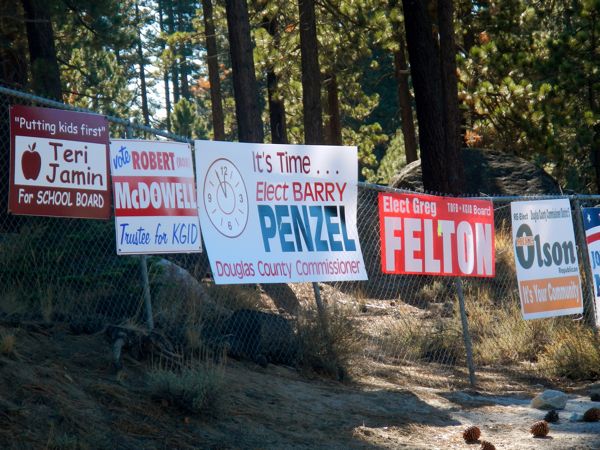
• Nevada Department of Transportation is reminding political candidates and property owners that all political signs posted near state roads need to be removed by Dec. 6.

• Carson City’s annual Silver and Snowflake Festival of Lights is now two days — Dec. 7 from 5:30-6:30pm and Dec. 8 from 10am-4pm. For more info, call (775) 887.1294.

• South Lake Tahoe author Suzanne Robert’s latest poetry book “Plotting Temporality” has been released. More info is online.

• Here is the Caltrans roadwork schedule for El Dorado-Tahoe.

• El Dorado County Historical Museum is auctioning some vintage farm and mining supplies, rustic furniture, and memorabilia on Dec. 14 at 11am. Proceeds benefit the museum. For more info, click on flyer.


Tahoe tourism industry on economic rebound

By Kathryn Reed

People are coming to Lake Tahoe and they are spending money. And projections for 2013 are that more of the same is going to happen.

“We are going to have our best year sales-wise. It’s a combination of people staying closer to home and fabulous weather,” Tom Turner, owner of the 14-year-old Riva Grill in South Lake Tahoe, said.

Turner told Lake Tahoe News that Caliente in Kings Beach and Gar Woods in Carnelian Bay are also having a spectacular year revenue-wise. Bar of America in Truckee was added to his restaurant portfolio in April.

Ski resort officials had plenty to be thankful for during the long Thanksgiving weekend. People flocked to the resorts to enjoy the mix of natural and man-made snow.

Indications are people want to travel again and Lake Tahoe is one place they want to visit. Photo/LTN file

“We had a remarkable Thanksgiving – Thursday through Sunday,” Andy Wirth, CEO of Squaw Valley and Alpine Meadows, told Lake Tahoe News. “Skier visits and traffic were near an all-time high (at Squaw) largely because we opened a great deal of terrain on the upper mountain.”

The U.S. Commerce Department reports that numbers to date show the travel and tourism industry is likely going to set another record in 2012 in terms of trips and revenue.

Lakeside Inn in Stateline doesn’t spend money marketing its hotel and still it has numbers that prove there is demand to come to Tahoe. Compared to 2011 at this time Lakeside has 2,000 more reservations lined up.

“Given the volume on the books for next year we are doing better than the last three years,” Stacy Noyes with Lakeside told Lake Tahoe News.

She said the bookings started before summer and before the ski resorts opened.

“Last year people were planning their vacations eight days in advance. This year they are planning 21 days in advance,” Noyes said.

Smith Travel Research said U.S. hotels posted a record 8.3 percent increase in room revenue for the third quarter compared to 2011. Occupancy rose 2.7 percentage points to 69 percent, while room rates rose 5.6 percent to an average of $91.08 a night. Revpar, which is the combination of room rates and occupancy, is up 8.3 percent to $62.83.

When the Lake Tahoe Visitors Authority was putting together its 2012-13 budget, which took effect July 1, the staff and board did so with the assumption hotel occupancy would be on a gradual incline. Most of LTVA’s money comes from hotel taxes collected at the lake on the Nevada side. But a substantial chunk of change also comes from California hoteliers via the Tourism Improvement District.

“Our budget this year is built on the assumption that the world is a brighter, happier place that involves more travel,” Carol Chaplin, LTVA executive director, said. But the numbers, she said, are conservative.

Still, this year’s budget is $1 million more than it was in 2008. Much of that has to with Douglas County increasing the lodging license fee and the TID upping its contribution.

The uptick has also allowed the LTVA to incrementally add staff to bring the number of workers back to what it was a few years ago. Tony Lyle came on board this fall as director of tourism.

“He is big into social media and he is tech savvy,” Chaplin told Lake Tahoe News. “We really thought the position added a new dimension that will help all of us do a better job at what we do and maybe do new things as well.”

Lyle will be tasked with providing the agency with analysis and a plan for connecting with visitors when they are in town and before they reach the South Shore. This includes at the visitors centers, via the phone, email and through social media.

LTVA knows it needs to be where the traveler is – which is on a mobile device and often on social media.

(Marketing chief Andy Chapman at the North Lake Tahoe Resort Association did not respond to an email inquiry, so what the North Shore is doing is unknown.)

“We’re going to see mobile this year represent 35 percent of all searches. Next year, it will be about 45 percent,” Tran Hang, head of Google’s travel industry, told Hotel News Now. “These are outstanding growth rates we can’t ignore.”

On the flip side is Travis Katz, CEO of Gogobot – a travel-related social network. He cautions that people easily get information overload and that they want to be treated as though their vacation is special and unique.

His statements in Hotel News Now give credence to the trend that travel agents are seeing resurgence in business because people want that authentic, specialized trip. But that’s not to say agents aren’t using Google and the like for their customers.

Chaplin said with current staffing there is a greater likelihood the LTVA will attend more events that are designed to reach would-be vacationers – especially those outside the country.

After all, the U.S. Department of Commerce says international visitors this year could infuse $169 billion into the economy.

Below are some stats about Lake Tahoe travel:
FlipKey Travel Trends: Lake Tahoe Infographic

FlipKey Travel Trends: Lake Tahoe by vacation rentals site FlipKey.com


Death cap mushrooms taste good, but have fatal consequences

By Cynthia Hubert, Sacramento Bee

It is a killer disguised in a luscious package.

Amanita phalloides, the mushroom suspected of fatally poisoning four elderly people at a Loomis care home, is commonly called the death cap.

The death cap draws in mushroom hunters with its sturdy stem and smooth, bald top, ranging in color from bronze to greenish yellow, and then kills – it is almost singularly responsible for fatal mushroom poisonings worldwide.

“These mushrooms are very, very sexy,” said Todd Mitchell, a Santa Cruz physician who is leading a national study of an antidote to toxic mushroom poisoning. “They look very attractive in the field. They grow virtually side by side to chanterelles, and they look very robust. They smell quite sweet, and by all accounts are quite delicious.”

In Northern California, they grow abundantly during the fall and early winter, typically sprouting beneath live oak trees. The fungi, which contains a toxic protein that can cause permanent liver and kidney damage, sicken hundreds of people a year in California. On average, a half-dozen people suffer serious poisonings from the mushrooms annually and one or two die, said Dr. Kent Olson, executive medical director of the California Poison Control System.

Death caps are the primary suspects in the illnesses last month of six people at the Gold Age Villa in Loomis, four of whom have died.

Lilia Tirdea, a caregiver who cooked meals for residents of Gold Age Villa, picked wild mushrooms on the grounds of the care home, then cooked and served them in a gravy for dinner on Tuesday evening, Nov. 6.

By Thursday, nearly everyone who lived at the care home was terribly ill.

At first the home’s owner, Raisa Oselsky, who was not home when Tirdea served the mushrooms, suspected a rampant case of the flu. But after speaking with Tirdea, she realized that of the home’s six residents, only one had not eaten the mushroom dish. That person was fine.

Everyone else, including Tirdea, ended up in area emergency rooms.

Barbara Marie Lopes, 87, a spirited woman who raised three daughters on her own and worked for decades as an aircraft mechanic at the former McClellan Air Force Base, died Nov. 9. So did Teresa Jania Olesniewicz, 73, who was a physician in her native Poland before she came to the United States in the 1970s.

A week after the two women’s deaths, officials announced a third fatality tied to the mushroom gravy: Frank Warren Blodgett, 90. On Thursday, Dorothy Mary Hart, 92, was the fourth to die.

Tirdea and one other person were recovering from the poisonings as of late last week, officials said.

Appeared to be the flu

In the quaint confines of Gold Age Villa, Lopes, whose memory was fading but otherwise was fairly healthy, enjoyed watching TV, playing cards and keeping company with other residents and staffers, said her daughter Annette St. Urbain.

“They were all friends,” St. Urbain said. “Raisa and the rest of the staff were wonderful to my mother. We have no animosity toward them at all.”

Lopes, who stood just 5 feet tall, was raised on a farm in South Dakota, her daughter said. After moving to California, she took a job at McClellan inspecting aircraft.

“She was our own little Rosie the Riveter, small enough to fit into the nose cones” of planes to check for debris, said St. Urbain. “She was very proud of her work.”

Besides her children, her daughter said, Lopes’ great loves included big-band music, dancing and solving jigsaw puzzles. Lopes had a strong faith in God and “above all, taught me forgiveness,” St. Urbain said.

Lopes had developed a tricky left knee, nerve pain from a bout with shingles and memory problems. She moved into Gold Age Villa nearly two years ago and was happy there, her daughter said.

On the Thursday evening after Lopes ate the poison mushrooms, St. Urbain got a call from Oselsky, telling her that Lopes was ill with what appeared to be the flu. Early the next morning, she heard from an emergency room doctor at Sutter Roseville hospital who said Lopes was near death from wild mushroom poisoning.

“I thought, ‘Mushroom poisoning? What?'” St. Urbain recalled. She contacted other relatives and headed to the hospital.

Lopes was conscious when they arrived, even joking, St. Urbain said. But within hours, she was dead.

“It was just a sad mistake. A lapse in judgment,” St. Urbain said of the circumstances of her mother’s death. “I feel terrible for everyone.”

A fatal accident

Oselsky declined to talk to a reporter when approached at the care home last week. “We are having a hard time here,” she said, and referred all questions to her attorney.

“She is very, very distraught about the whole situation, very concerned for everyone affected and their families,” said the lawyer, James Hazen.

The California Department of Social Services has determined that the poisonings were accidental. Even so, Tirdea no longer is allowed to work in care facilities licensed by the state.

Regulators have deemed Tirdea a “threat to the health and safety” of clients, according to a report issued last week. But she will not face criminal charges. A police investigation concluded that “this was an accident,” said Placer County Sheriff’s Lt. Mark Reed.

Reed was among those who interviewed Tirdea and others at the care home about the poisonings.

“At first you hear about something like this and you think, ‘Well, all of the sudden all of these people were sick from food that someone gave them. Was there some sort of sinister motive or foul play?'” said Reed.

“Then we found out the caregiver herself picked the mushrooms and thought they were good to eat. She served them up, and she also got sick. We determined that there was no criminal intent. It’s just a tragedy all the way around.”

Gold Age Villa, which is perched on a hill amid equestrian property along Horseshoe Bar Road, continues to be licensed to care for up to six people ages 60 and older. Residents of such residential care facilities usually require less intensive care than those in nursing homes, although caretakers are available around the clock, said social services department spokesman Michael Weston.

Oselsky has held a license to operate the home since 2007, and the facility has an unremarkable record with state regulators. Following an inspection earlier this year Gold Age Villa received one citation, for “excessive water temperature” in its faucets.

The type and scope of the tragedy at Gold Age Villa, Weston said, “is like nothing that I can recall. We have had cases of where a fire killed a number of people, but something like this is highly unusual.”

The culprit

The apparent culprit, the death cap mushroom, is one of several toxic fungi that grow in California.

In the north state, the death cap generally grows under live oak trees, but recently has been found alongside pine trees in Marin County, among other places.

“They look pretty good, almost identical to an edible variety,” Olson said. But they contain deadly amatoxins, a protein that the body has trouble eliminating. Amatoxins cannot be killed by heating, Olson said.

Initial symptoms of mushroom poisoning include abdominal pain, vomiting and severe diarrhea. Symptoms may not surface for six to 12 hours.

Once consumed, the mushroom’s toxin attacks the lining of the gut, causing fluids to “pour out of the system” and leading to life-threatening dehydration, Olson said. The amatoxins then get absorbed by the liver, damaging it and other vital organs. At that point, patients often need a liver transplant to survive.

The earlier the treatment, the better the prospects for recovery.

Typically, patients receive intravenous fluids to replace those they have lost, along with high doses of penicillin to prevent the poison from being absorbed by liver cells, said Olson. Doctors may also give them activated charcoal as an antidote.

People who consume a “mild to moderate” amount of toxic mushrooms and get treatment before they become severely dehydrated stand an 80 percent to 90 percent chance of survival, experts said.

A new treatment may lead to even better recovery rates, said Mitchell.

Since 2009, he and colleagues have been leading a national study of a drug derived from milk thistle that is showing promise, he said.

More than 60 patients have received the intravenous drug, called Legalon SIL, including one of the six people sickened in Loomis, Mitchell said. That person survived, he said.

Lopes and Olesniewicz had already died by the time the surviving patient received the investigational drug, he said. The fourth person whose death officials attributed to mushroom poisoning, Dorothy Mary Hart, did not receive the Legalon treatment, nor did Blodgett.

Their stories, said Olson, should serve as a warning to Northern Californians who stumble across enticing patches of mushrooms while hiking, exploring or mowing the backyard.

“The lesson I would take from all of this is to never eat a mushroom that has not been properly identified by an expert,” said Olson.


Holiday in History at South Lake Tahoe museum

Lake Tahoe Museum’s Holiday in History is Dec. 7-9.

Calls can be made to the North Pole all three days from the South Lake Tahoe museum.

That Saturday local author Todd Bord will be signing his books from noon-2pm. The books are sold at the museum.

The museum is open that Friday from noon-8pm, on the weekend from 11am-3pm.


1-day lead paint class for contractors

South Lake Tahoe and Lake Tahoe Community College Connect Community Education are sponsoring the Renovator, Repair, Painter course for local construction workers.

The Lead Safe Worker eight-hour training for Renovators, Repair and Painters is being offered at LTCC on Dec. 8 from 8am-5pm.

The cost to attend the training is $50. Up to two workers from each local company are welcome to participate.

This one-day class explains how to comply with the Environmental Protection Agency’s RRP rule. Subjects covered include: health effects, regulations, lead safe work practices, containment, cleaning and record keeping. After passing an end-of-class exam, students will receive their RRP certificate.

A Spanish-language class is scheduled for Jan. 19.

To register, contact Janine Green at (530) 542.6196 or jgreen@cityofslt.us.


Threat of flooding along Truckee River subsides

Updated Dec. 2 5pm: NV Energy is reporting 300 customers in Round Hill and 50 along the Mt. Rose Highway are without power. Crews are on scene trying to fix the problems.

—

Latest outage update: 300 customers in Round Hill/South Shore; 50 along Mt Rose Highway; 200 in Hawthorne; 20 in Wadsworth. Crews on site.

The National Weather Service in Reno is calling off the threat of significant flooding along the Truckee River in Truckee and Sparks.

At 2:30pm Sunday the Weather Service lifted the flood warning in Carson City and western Douglas County.

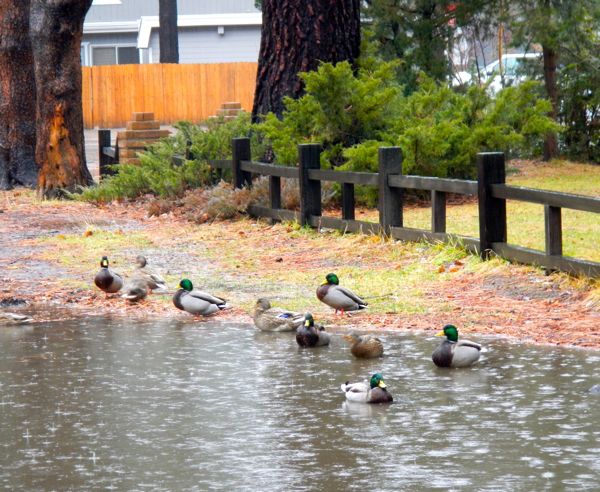
When the rain turned to snow earlier in the day that helped reduce the chance of the river causing damage. However, all rivers and creeks in the Tahoe-Truckee-Reno area are flowing faster than usual for this time of year.

Ponding on Jeffery Street in South Lake Tahoe has neighbors calling it Lake Jeffery. Photo/LTN

Several surface streets have substantial standing water, so motorists are urged to use caution.

Those living where the water table is high have been running their sump pumps – something that usually doesn’t happen until the spring runoff.

There is a 40 percent chance for rain and snow Sunday night in the Lake Tahoe and Truckee area.

 — Lake Tahoe News staff report


Mancuso finishes second to Vonn in super G

By USSA

In a day full of superlatives, Lindsey Vonn took an Audi FIS Alpine World Cup record seventh straight win in Lake Louise with U.S. Ski Team teammate Julia Mancuso second to complete a one-two U.S. women’s sweep of the weekend.

Vail’s Vonn came down 21st in a snowy, foggy super G to knock Mancuso out of the lead. Leanne Smith (Conway, N.H.) was the early leader and finished eighth. Five U.S. women cracked the top 30. Vonn’s 56th career win put her alone in second on the all time victory list behind Austrian Annemarie Moser-Proell’s 62. She also became only the fourth woman to score 100 podiums.

“I’m just happy. It was a good run and I’m excited to start the season off with a podium. I had confidence from skiing well here in the past,” Squaw Valley’s Mancuso said. “The downhill went pretty well for me so it was just a matter of getting going.”


Lake Valley holiday truck to tour Meyers area neighborhoods

Lake Valley Fire Department’s Christmas engine is about drive through neighborhoods.

Here is the schedule:

Dec. 11 – Echo View Estates, Tahoe Mountain Road, Mule Deer Circle

Dec. 12 – Lake Tahoe Boulevard from Boulder Mountain Drive to Grizzly Mountain Drive

Dec. 13 – West side of North Upper Truckee from Zuni Street to Highway 50, Chiapa Drive

Dec. 14 – East side of North Upper Truckee from Grizzly Mountain to West San Bernardino Avenue

Dec. 15 – Christmas Valley from Highway 50 to Grass Lake Road

Dec. 16 – North side of Highway 50 in Meyers (lower Apache, Magnet School), behind Station 7, (Cornelian Drive, Navahoe Drive, Cheyenne Drive)

Dec. 17 – North of Pioneer Trail from Highway 50 to Elks Club (Southern Pines Drive, Tionontati Street, Meadow Vale Drive), Player Drive

Dec. 18 – Upper Apache Drive and Mandan Street

Dec. 19 – Pioneer Trail from Busch Way to Washoan Boulevard (Glen Eagles Drive, Hekpa Drive)

Dec. 20 – Pioneer Trail from Washoan Boulevard to Jicarilla Drive (Apalachee Drive, Nadowa Street, Susquehana Drive)

Dec. 21 – Kokanee Estates (Marshall Trail, High Meadow Trail)

Dec. 22 – Golden Bear Trail, Meadow View Estates (Plateau Circle, Cattleman’s Trail)

Dec. 23 – Cold Creek Trail, Del Norte Street, Black Bart from Pioneer Trail to Meadow Crest Drive.


Fake online marketing a growing trend

By Marsha Friedman

What’s the fastest-growing marketing trend on the Internet?

I’m sad to say it’s the “fakeosphere.” Yes, fake blogs (called “flogs”), fake web news sites and fake testimonials. They look like the real thing, right down to comments posted by “bloggers” and their supposed readers. Those comments appear to be written by people discussing the pros and cons of a particular product or service, and they even include some naysayers.

“But in the end, the bloggers and their readers always win over the skeptics and persuade them to buy the product from a convenient nearby link,” writes Bob Sullivan in his blog on msnbc.com.

He cites Internet marketing analyst Jay Weintraub, who believes the fakeosphere has become a $500 million-a-year industry.

These fake sites and phony conversations are often more than simply misleading – OK, fraudulent – marketing. For consumers, they can be downright dangerous.

“The end game for most of these sites – no matter what they sell – is to persuade a consumer to sign up for a ‘free’ trial of a product, then make it incredibly difficult to cancel before the trial period ends,” Sullivan writes. “A similar technique … is to offer a free product and charge a web user a token shipping and handling fee, just to get the consumers’ bank account information. Larger charges soon follow.”

Consumers are – and should be – increasingly wary. They’re scrutinizing websites more closely, especially if they’re considering making a purchase there. They’re avoiding social media interactions with anything that smells less than genuine, and they’re more careful about who they share information with online.

What would they say about your online presence? Do you look like the real deal, or a potential cyber threat?

Here are some ways to ensure you pass the reality test — and some missteps that will ensure you don’t.

On social media:

• Real people have real friends and family among their connections. They can’t resist sharing photos of their vacation, the newest baby in the family and their genius dog (not necessarily in that order). They have interests that may have nothing to do with what they’re trying to market, and they comment about them (“I shot a hole in one today!”) or share a photo (“Here I am buying everyone drinks after my hole in one today. That was the most expensive golf shot ever!”) They also respond to all comments, even if it’s just to say, “Thank you.”

• Fake people generate mostly sales copy – “Buy my product! It’s great!” They don’t engage in conversation, they don’t appear to have a personality – or friends or loved ones or hobbies, for that matter.

On your website:

• Real people have text that informs and entertains users while offering them helpful information. The copy is professionally written and provides answers to anticipated questions. It’s easy to learn more about you or your business and to find your contact information. Testimonials are from real people whose existence can be verified through a simple Internet search. They write blogs that are updated regularly and/or post articles with helpful information.

• Fake people have websites with lots of pop-up advertising banners and text urging users to “Buy my product!” Testimonials are from untraceable people with vague titles or credentials. The site may be hard to navigate; contact information may be missing or difficult to find; and there’s no link to media about the person or company.

In your newsletter:

• Real people share valuable information in their newsletters (which can be as minimal as a “tip of the week” email). Their newsletter (or tip) includes no overpowering sales pitch or self-promotion – or, at least, includes that only occasionally. It conveys a personality, whether warm and friendly, authoritative, or humorous.

• Fake people blast newsletters and promotional emails that may identify a problem but offer as the only solution hiring them or buying their product. They may seem unprofessionally written (errors, etc.) and lack personality. They offer nothing of value to the reader.

All of these things will help you create an online personality that conveys your authenticity. But the No. 1 thing you can do – what I value above everything else – is to be, actually … genuine.

In my book, “Celebritize Yourself,” I write about identifying the passion that led you to start your business, create your product or write your book. Maybe you became a financial adviser because you found it gratifying to solve people’s money problems. Or you developed a product that you know will benefit others. Or you have expertise that can help people live longer, happier, or more productive lives.

Whatever it is that got you going, that’s what makes you genuine. Identify it and make it a part of your message, and no one will ever call you a fake.

Marsha Friedman is a 22-year veteran of the public relations industry. She is the CEO of EMSI Public Relations, a national firm that provides PR strategy and publicity services to corporations, entertainers, authors and professional firms.


El Dorado County woman loses cash in scam started on Craigslist

By Bill Lindelof, Sacramento Bee

A scam that started on Craigslist has left an El Dorado County woman out $3,500.

Roseville police report that the woman recently listed her car for sale on the website. A man who said he was from San Francisco told her he wanted to deposit money into her bank account to reserve the vehicle.

The seller provided the man her bank account information over the phone. The buyer deposited a check into the seller’s account. The check apparently never cleared before the man called again.

He demanded his money back because he said his daughter had obtained a loan for the car. The seller withdrew $3,500 in cash from her account and gave the money to a woman who claimed to be the man’s daughter in a Roseville parking lot. The bank later told the seller the deposited check was fraudulent.

Police said a banking source told them it takes two to seven days for a check to officially clear, even if the balance on the bank account appears to increase.