USFS looking for someone to operate Round Hill Pines

The U.S. Forest Service Lake Tahoe Basin Management Unit is soliciting proposals to reconstruct, operate and maintain Round Hill Pines Resort.

Round Hill Pines is a family-oriented lakeside resort in Douglas County.

This business opportunity includes a popular day-use area and beach, as well as the potential for redevelopment of current facilities. Bidders can also propose to expand services, including offering short-term public overnight accommodations and winter recreation activities.

The LTBMU will issue the successful bidder a special use permit under the Granger-Thye Act for up to a 30-year term. Under a Granger-Thye permit, fees to the government may be offset through reinvestment in the property.

All applications must be received by May 20 at 4:30pm at the Lake Tahoe Basin Management Unit, Forest Supervisor’s Office, 35 College Drive, South Lake Tahoe, CA 96150.

The prospectus is available online.


El Dorado County adding detective specializing in elder crimes

El Dorado County Sheriff’s Department is adding a detective to investigate elder abuse and financial crimes.

The county’s population is 31.62 percent over the state’s average for citizens over the age of 65.

Recent national statistics show, more than a half million reports of abuse against the elderly are reported every year, while millions more go unreported.

In El Dorado County, reported crimes of elder abuse has increased 9 percent since 2011.

The elder abuse investigator will work closely with the District Attorney’s Office, as well as the county’s Adult Protective Services.


Ski report: Brief break between storms

Stop reading and get out on the slopes. Enjoy the blue sky today in between storms.

Here is the Dec. 19 ski report.

— Curtis Fong


Snippets about Lake Tahoe

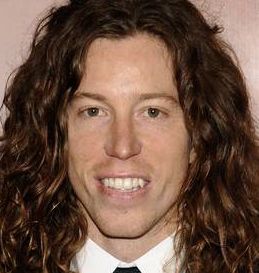
• Snowboarder Shaun White, who trains at Northstar, had his locks cut off Dec. 18 for a good cause.

• More than 3,100 volunteers are needed for Ironman Lake Tahoe on Sept. 22. To register for a volunteer position, go online.

• Shelly Aldean will be chairwoman of the Tahoe Regional Planning Agency Governing Board in 2013, with Casey Beyer the vice chairman.

• Nevada News Bureau is shutting down its operations at the end of the year.

• Diamond Peak is opening Dec. 20, and Tahoe Donner Ski Resort and Tahoe Donner Cross Country open Dec. 21.


What is the worst or funniest gift you’ve ever received?


LTCC looking for ‘Around the World in 80 Days’ cast

Auditions of Lake Tahoe Community College’s “Around the World in 80 Days” are Jan. 8.

It’s dubbed as Monty Python meets the Three Stooges. Adventurer Phileas Fogg has agreed to an outrageous wager that puts his fortune and his life at risk. With his resourceful servant, Passepartout, Fogg sets out to circle the globe in an unheard-of 80 days, putting his fortune and his very life at risk. But, his every step is dogged by a detective who thinks he’s a robber on the run.

Danger, romance, and comic surprises abound in this whirlwind of a show as a handful of actors portraying 39 characters traverse seven continents in this new adaptation of one of the great adventures of all time.

Auditions are at 7pm in the LTCC Duke Theatre.

Performances are March 15, 16, 21, 22, 23 at 7:30pm; and March 17 and 24 at 2pm.

Scripts are available on reserve at the LTCC library.

Audition scenes will be available at the theater department call board. Backstage opportunities are also available.

Casting:

Phileas Fogg — male, late 30s-40s, English, cool, calm, intelligent, stalwart, a true gentleman, unflappable and precise, he rarely cracks a smile or expresses frustration in the face of typhoons, wild Indians, or love. British dialect.

Passepartout – 30s, Fogg’s comedic idealistic and enthusiastic manservant/sidekick, comic charm of Inspector Clouseau, French dialect; gymnastic ability or physical comedy ability highly desired.

Princess Aouda: female, mid-20s to mid-30s, Indian princess, docile and endearing damsel in distress, but with strength of character.

Detective Fix – 30s-50s, a comic and inept Sherlock Holmes type, British dialect.

Ensemble – Men and women of various ages to play more than 30 characters, comic ability, a variety of dialects required, able to change from one distinct character to another in seconds, with little-to-no help from costumes or make-up.


Squaw creating Last Chair Music Fest

Last Chair Music Festival will be the first two weekends of January at Squaw Valley.

Live music will be performed Friday and Saturday nights.

“Part of our Renaissance is bringing world-class music to the slopes of Squaw Valley,” said Andy Wirth, president and CEO of Squaw Valley, said in a press release. “As we work to improve every facet of the resort experience, music and entertainment are a huge part of our initiative. We hope people will join us for these four great shows.”

Tickets for each day of the festival will be available packaged with a daily lift ticket for $99. The lift ticket purchased as part of the concert package will be valid for the day of or the day after the concert – meaning, a lift ticket packaged with a Friday show can be used on either Friday or Saturday, and a lift ticket packaged with a Saturday show can be used on either Saturday or Sunday.

More information is online.


Opinion: What we might learn from Newtown

By Scott A. Lukas

Like many people I know, I was deeply disturbed by the events that occurred in Newtown, Conn. Like others, I had emotional reactions to the mass murders. As a social scientist, I am interested in looking at these types of events and placing them in larger social contexts.

After watching some of the coverage and reflecting on the tragedy, I wrote down a series of issues that I believe resonate with the tragedy and other mass shootings. These are intended as initial thoughts on the events in Newtown.

Scott A. Lukas

1. A Culture of Violence: We live in an incredibly violent society and we are unwilling to consider violence at the systemic levels needed to abate it. More dialogue about the scope and context of violence in our society is needed.

2. A Constitutive Crisis: We are unable to look at violence (including gun violence) as a constitutive issue. That is, we are unwilling to look at the deep, fundamental ways that our society (and all of us) are at least indirectly responsible for the violence we saw in Newtown.

3. A Culture of Dysfunctional Masculinity: Strangely absent from news analyses of Newtown is that the tragedy was an outcome of a dysfunctional masculinity (that we also saw in Columbine, Virginia Tech, École Polytechnique, and many other shootings).

4. An Epic Crisis of Mental Health: As a society, we do not take mental health seriously. We grossly underfund programs that deal with the mental health of young people and we underpay those (like social workers) who are on the front lines of this crisis.

5. An Out-of-Control Gun Culture: Gun lobbies, and some gun owners, have promoted a culture of fear that has resulted in the proliferation of small arms and wonton violence in schools, homes, and public culture. Any critique of the culture is viewed as a form of treason and an attack on the Second Amendment and many individuals are unwilling to look at the statistics that indicate that guns often kill those we know rather than strangers who invade our homes.

6. A Misappropriation of Political Consciousness: Many gun owners have had their political consciousness co-opted by gun lobbies that have convinced them that being a gun owner is a minority political status. It fact, gun ownership is the norm as is the wide public opinion (at least prior to Newtown) that gun control is undesirable. True political consciousness would move beyond the limited rhetoric of Second Amendment defense and focus on the immanent crises before us — the environment, the decline of civics, the encroachment of capitalism, etc.

7. A Capitalist Mentality: For the individuals who have argued for the right to buy assault rifles, they are simply reflecting the norms of capitalism that say, “You may buy as you like, do as you like, without consequence.” Assault rifles are the equivalent of the countless other bric–a–brac produced under capitalism that also produces its own forms of violence. Pro-guns advocate Philip Van Cleave was quoted on Sunday saying that “Guns are fun, and some of them are much more cool than others. It’s just like we have television sets that look cool, and others are much more boxy.” (Washington Post) There are countless others who, like Van Cleave, view ownership of an assault rifle as both a right and a consumer choice.

8. A Society Lacking Ethics: The social Darwinism of capitalists, the rhetoric of gun owners who will “protect their homes” at any costs, and the individualism promoted by the media and consumerism has resulted in a society that forgets that ethics are the most important foundation of a society. The total lack of care demonstrated by psychopathic gun-wielding killers is mirrored by tens of thousands of “normal” people who are disinterested in the future of society and whose apathy is the latest pandemic. As President Obama stated recently, there needs to be new dialogue and new direction in terms of civics if the United States has any hope of preventing future heinous acts like those in Newtown.

9. A Non-Research Culture: In the face of studies, evidence, and policy suggestions offered by social scientists and others, we are unwilling to allow research (especially applied forms) to enter the discussion of this and other crises. Even though evidence suggests that guns do not make us safer, that the simulated forms of violence in video games and popular culture desensitizes us from real violence, and that cultures with violence at their core cannot survive, we are unwilling to act on this research and change the course of our culture. Perhaps we could.

Scott A. Lukas teaches anthropology and sociology at Lake Tahoe Community College and is editor of “Recent Developments in Criminological Theory” (with Stuart Henry) and wrote “Behind the Barrel: Reading the Cultural History of the Gun in Video Games” for “Joystick Soldiers: The Military/War Video Games Reader”. He was a graduate student at the University of Iowa during the campus shootings of 1991 that killed five and left one paralyzed.


LTWC submits expansion plans to TRPA for wild animal rehabilitation facility in Meyers area

By Kathryn Reed

Before Lake Tahoe Wildlife Care backers begin an all-out fund-raising campaign to get the dollars together to buy a 16-acre parcel in Meyers and transform it into a state-of-the-art rehabilitation-education center, they want to make sure TRPA is OK with their plans.

This is why even though LTWC doesn’t own the property, plans were submitted last week and assigned to a planner on Monday who will review the documents.

The Tahoe Regional Planning Agency has 30 days from Dec. 10 – the date the plans were submitted – to determine if all the documents are in order. Then it could be 120 days before a decision is made.

LTWC is still in need of whole fish to keep feeding the raptors and bears it is caring for. Photo/Provided

However, Kristi Boosman, spokeswoman for the bi-state regulatory agency, said a hearing officer is expected to make a ruling in February. LTWC would need a special use permit for a public services facility. The use is allowed under either Regional Plan.

Boosman added that TRPA supports what LTWC wants to do.

“We are looking at a three-phase project. The first would be to move the rehab center from the current site to the new location,” Tom Millham told Lake Tahoe News.

Millham and his wife, Cheryl, have been running LTWC for more than 30 years. One of the main problems is they have been doing so in their back yard on three-quarters of an acre.

They are limited in the numbers of animals and types they can take in. LTWC has 10 bear cubs – the most in its history. Capacity meant the state Department of Fish & Game had to find another facility for two cubs that were injured and in need of help.

The three bear cages LTWC uses are all approved by the state.

In all, the center has nine cages. It’s anticipated that would increase to 14 at the new location. Plus, they would be larger.

The Millhams have devised a makeshift area for waterfowl. That’s something that would change at the larger location – having a dedicated site for those birds.

Plus, the plan is to have three areas for raptors. This would eliminate the need to seasonally take the netting up and down.

Right now LTWC volunteers are nursing a bald eagle and peregrine falcon. Both should be released back into the wild.

If TRPA approves the plans, then Lake Tahoe Wildlife Care supporters will begin in earnest raising the $10 million to $12 million that is needed to acquire the property and transform it into the animal rehab-education center.

What the education center – the second phase – would look like is also in the plans. The downstairs would be a teaching room, amphitheater, café and shop, while upstairs would be offices.

A large vacation rental is on the property now. The footprint would not change – just what the inside looks like and the use.

The property also has an active TRPA permit, so what LTWC is doing is amending it a bit.

“We submitted the plans with elevations, where cages would be placed on the property, all the water and electrical,” Millham said.

The third phase of the new facility would be to create a park for non-releasable animals. Only native animals to the Sierra would be housed there.


Nevada judge: Mental illness at the root of mass killings

By Sean Whaley, Nevada News Bureau

CARSON CITY –- Nevada Supreme Court Justice James Hardesty said Monday that the country will not have success in reducing the tragic type of shooting incident that occurred Friday in Connecticut without providing more mental health support.

Hardesty, interviewed on the “Nevada NewsMakers” television program, said “we’re going backward” on mental health treatment needs nationally and in Nevada.

“It’s high time the country does something about these matters,” he said. “And from the perspective of a judge who has worked hard to, and the judiciary as a whole, worked hard to promote mental health court as an example, we cannot achieve any success in any of these areas if we do not recognize the importance of being proactive in dealing with mental health issues in this country and in this state.

“And yet we’re going backward,” Hardesty said. “And I hope that these very sad incidents demonstrate the need to revisit these subjects.”

The National Alliance on Mental Illness, in a report released in November 2011, said there is a national crisis in helping people with serious mental illness due to deep cuts in state spending for mental health services.

“States such as California, Illinois, Nevada and South Carolina, which made devastating cuts to mental health services previously, have made further cuts for fiscal year 2012, putting tens of thousands of citizens at great risk,” the report said.

The NAMI report said states have cut more than $1.6 billion in general funds from their state mental health agency budgets since 2009 while at the same time demand increased significantly.

The state Division of Mental Health and Developmental Services has more than $7 million in general funding spending requests in the state budget “wish list” document released to the public on Friday. Many of the $419 million in total state agency general fund requests included on the list are not expected to see funding due to a lack of tax revenue.

One of the mental health requests is for nearly $200,000 for a clinical program manager and training for a new program to provide a continuum of care for clients reentering the community when being released from jails, prisons and forensic hospitals.

In his “NewsMakers” comments, Hardesty said the Second Amendment and gun control debate is a separate issue.

But the perpetrators of many of these terrible incidents are afflicted with serious mental health issues that require a proactive society, he said. Families who struggle with family members who suffer from such illnesses need help and support, Hardesty said.

Nevadans don’t have to look to Connecticut to see the problem, he said, citing the Carson City incident in September 2011 where a man armed with an AK-47 assault rifle shot five uniformed National Guard members eating breakfast at a restaurant, killing three and another person before shooting himself.

The shooter, Eduardo Sencion of Carson City, suffered from mental health issues and was on medication. He left no note or explanation for the shootings.

“So I hope that it causes us, as a society, to look at what will help be proactive and achieve some significant changes in those areas,” Hardesty said.

On a positive note, he pointed to the successes of the state’s mental health courts, where the focus is on diverting non-violent offenders with mental illness into treatment programs. The goal is to reduce or eliminate offender recidivism by treating their mental illness.

“And the more we can do to be proactive to support programs like that, the more we’ll do to reduce the risks to our society caused by the Sandy Hook Elementary event,” Hardesty said.