Tahoe Tails — Adoptable Pets in South Lake Tahoe

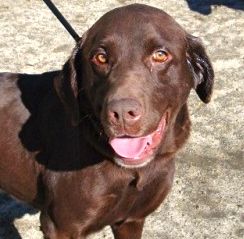
Chaco is one of two young purebred Labradors at the shelter right now. He is a great chocolate Lab who is about 10 months old. He is a little shy at first, but with a bit of attention and training his confidence will grow quickly.

He likes other dogs and didn’t chase the cats that he met at the shelter. Chaco was found as a stray, and will make a great pet for just about any family.

Chaco is neutered, microchipped, and vaccinated. He is at the El Dorado County Animal Services shelter in Meyers, along with many other dogs and cats who are waiting for their new homes. Go online to see photos and description of all pets at the shelter.

Call (530) 573.7925 for directions, hours, and other information on adopting a pet.

For spay-neuter assistance for South Tahoe residents, go online.

— Karen Kuentz


Santa Claus — it’s not just a seasonal nickname

By Linda Conaboy

Maybe you’re among the millions who no longer believe in Santa Claus. But think about those vivid memories of all those years your parents persuaded you to be nice instead of naughty, ensuring a visit from the man in red at Christmastime – and you, being good little girls and boys, did your very best to comply.

When did you finally lose faith in Santa Claus, officially becoming one of the knowing, big kids?

Well, listen up non-believers. There is a Santa Claus. Really. He’s the real deal. He’s alive and well and he lives at the North Shore of Lake Tahoe. His hair is genuine and so is his ample girth, although he says he’s been trying to lose a few pounds to show kids that obesity isn’t such a good lifestyle.

Santa gets an earful from all ages at Heavenly Village in South Lake Tahoe. Photo/Nina Miller–focusphotoTahoe

Who is this person who calls himself Santa? He’s the very Irish Mr. Thomas Patrick O’Connor, now 65, who became Santa Claus on the eve of St. Patrick’s Day in 2005 when he legally changed his name to Mr. Claus. Why? Because he decided he could do the greatest good for the greatest number of children with an official name change.

Santa said he rarely entertains children at Christmastime anymore, but ideally spends most of the year advocating for millions of kids.

“Often, I try to convince legislators to support legislation that will benefit children,’’ he said.

In real life, Santa is a Christian monk who believes that the greatest gift one can give is love.

“I aim to help restore America’s heart and soul, primarily by reminding legislators, parents, caregivers and educators that a country’s morality can be measured by how it treats its most vulnerable, especially children,” Santa said.

With this in mind, he no longer spends much time dressed in his red suit. However, he says, when he began his Santa role, he served more than 30 nonprofits in that capacity; however, as time went on, he said his philosophy altered.

“I’d like to change children’s perception of Santa Claus,” he said. “For example, I believe that Christmas is the celebration of the birth of Christ, not the crass, commercial, secular spectacle it has become in many places. I believe that the greatest gift one can give is love, not presents.”

Santa said he rarely gets paid for his now rare Santa gigs, but when he does occasionally receive remuneration, the funds support his child advocacy and ministry work.

“I don’t think children or anyone else should have to pay to see or spend time with Santa – any Santa,” he told Lake Tahoe News. “When I appear, I never charge children or parents; however, they are welcome to pay a photographer to take their photo or use their own camera or cell phone for free.”

For his appearance at Heavenly Village in the giant snowglobe through Dec. 31, he will be paid by the village as will the photographer.

His beard, he said, is authentic, growing at least an inch each month.

“I trim it about every three months. If I had let it grow, without cutting it, since 2005, it would be longer than I am tall,” Santa, who stands 5-feet-10, said.

Because he serves as a child and peace activist most of the year, he said his apparel of choice now is blue jeans and a red shirt along with his snowy white beard. Red, white and blue, he said — very American.

In keeping with his activism, this year he ran for president of the United States. His platform was to restore American’s heart and soul.

“My candidacy was recognized by the Federal Election Commission and 15 states,” Santa said.

In addition, he writes eBooks, his latest being “The Santa Diet”, a complete regimen for physical, emotional and spiritual health.

Surprisingly, before he became Santa Claus, when he was still just plain Tom O’Connor, Santa served as a law enforcement and public safety administer in New York City. Specifically, he was the special assistant to the deputy police commissioner in New York City as well as the chief of safety and security for the U.S. Virgin Islands Port Authority.

His best Santa story, he said, is that of a young girl who visited him with her mother in a church setting, about Christmastime.

“When she wondered why I hadn’t asked her what she wanted for Christmas, I told her I was more interested in what she planned to give someone else. She replied that she didn’t have any money to buy anything,” Santa said. “So, I assured her that the greatest gift she could give was love. She thought about that for a moment and asked me if I could help her mother stop smoking so they could enjoy a long life together. I smiled and called her mother over and related her daughter’s wish, asking the mother if she would at least try.

“She nodded, and they left. The following year, they both visited again and were pleased to let me know that the mother had stopped smoking altogether. She loved her mother enough that she didn’t want to lose her; and her mother loved her enough to overcome a destructive habit and create a better environment for both of them. So, there was an example of the gift of love they shared with each other. Simple, but profound.”

—-

Note: Santa will be in the Heavenly Village every day through Dec. 31 from 2-7pm.


Nevada tightens rules governing ads involving attorneys

By Geoff Dornan, Northern Nevada Business Weekly

Broadcasters in Nevada, who found a lifeline with advertising by attorneys during the recession, aren’t worried about new rules that tighten the standards on commercials from law firms.

“I don’t think there is much angst,” said Bob Fisher, president of the Nevada Association of Broadcasters, who said broadcasters believe the new rules ultimately will help the viewing public make good decisions.

The Nevada Supreme Court last month signed off on revisions to the rules governing lawyer advertising.

State Bar President Frank Flaherty said the revisions come after what he termed “an extended shake-down cruise” testing the rules originally put in place in 2007.

“There were major revisions to the rules in 2007,” he said. “The rules at that time were attempting to regulate taste. That becomes subjective and you can have First Amendment issues.”

The rules were originally written because of numerous complaints by the public as well as other lawyers.

The 2007 rules, he said, “got rid of the taste requirements.”

“That allowed us to focus on false and deceptive ads and not get bogged down in 1st Amendment battles with lawyers with big checkbooks,” he said. “Now it’s whether it’s false, deceptive or misleading.”

One place where the rules were tightened, he said, is the use of actors. Now actors have to be clearly identified as such. In the past, disclosure was only required when it could be confusing to the public.

The ad must also give the name of the lawyer or partners who will actually provide the services touted by the ad.

He said a number of ads say such things as the client only has to pay the lawyer if they win.

“Sometimes when you lose, you have to pay the other guy’s costs,” he said. The new rules require that be disclosed.

He said lawyers can continue to cite their record and results.

“But you can only cite the results if you were lead counsel in the matter or key in the result,” he said.

And from now on, the dollar amount must be the amount actually received by the client. If a gross amount received is stated, attorney’s fees, litigation expenses and other amounts withheld from what the client received must be stated as well.

Ads listing a specific fee or range of fees must list how long those fees are in effect and any other limiting conditions on the fees.

On disclaimers, he said if the ad is run in Spanish or any other language, any disclaimers must also be in that language.

“And for print ads, disclaimers must be big enough to see,” Flaherty said pointing out that some current disclaimers are in print so small it’s nearly impossible to read.

Likewise, the rules say any disclaimers in a TV ad must not only be readable but remain on screen long enough to be read.

For the past five years, all lawyer advertising has been required to be submitted to review committees. Because of First Amendment issues — prior restraint — Flaherty said the bar can’t require they be submitted before publication. Instead, they must be submitted within 15 days of publication or broadcast. If a review committee of volunteers finds any ad deceptive or misleading, it must be taken down or stopped.

“But lawyers have to submit all their ads,” he said.

Fisher said the state’s broadcasters followed the proposed changes in advertising rules carefully because commercials placed by law firms were a critically important source of revenue until election ads this year soaked up large amounts of available air time.

“Attorney advertising is good, especially if it delivers a positive message,” Fisher said.


Snippets about Lake Tahoe

• The Office of Public School Construction named South Tahoe High the school of the month for December.

• Unity at the Lake’s New Year’s Eve Meditation is from 7-8pm, 1195 Rufus Allen Blvd., South Lake Tahoe. For more info, call (530) 544. 2266.

• Four companies seeking permits to harvest crayfish from Lake Tahoe were given them this month.

• Artist Charles Muench has published “Markleeville Memories: Paintings of a Sierra Town.”

• The Jack London Commemorative Sierra Sled Dog Derby will be March 2-3 at Royal Gorge Cross Country Ski Resort.


Avalanche at Squaw injuries 2 on KT-22

By Kathy Escobar, News-10

An avalanche was triggered Sunday morning at Squaw Valley.

Amelia Richmond a spokesperson for Squaw Valley said an inbounds, post-control avalanche was triggered by three snowboarders on a portion of the KT-22 peak at 9:50am.

Several witnesses, including a ski patroller riding the lift line reported the avalanche.

Richmond said ski patrollers were on the scene of the avalanche within a minute, responding to two skiers, neither of whom were burried in snow.

One skier, a 39-year-old woman, was transported and released from a medical clinic. A second skier, a 16-year-old boy, was treated for a shoulder injury and transported to Tahoe Forest Hospital in Truckee for further observation, Richmond said.

Although witnesses reported not seeing anyone else caught in the slide, the resort initiated a full search to confirm no other people were involved.

The search was concluded at 11:50am after all guests and staff who had ridden the KT-22 ski lift were accounted for.

Richmond said the KT-22 chairlift closed after the incident and remained closed Dec. 23.


Californians act like pot is legal

By Adam Nagourney, New York Times

LOS ANGELES — Let Colorado and Washington be the marijuana trailblazers. Let them struggle with the messy details of what it means to actually legalize the drug. Marijuana is, as a practical matter, already legal in much of California.

No matter that its recreational use remains technically against the law. Marijuana has, in many parts of this state, become the equivalent of a beer in a paper bag on the streets of Greenwich Village. It is losing whatever stigma it ever had and still has in many parts of the country, including New York City, where the kind of open marijuana use that is common here would attract the attention of any passing law officer.

“It’s shocking, from my perspective, the number of people that we all know who are recreational marijuana users,” said Gavin Newsom, the lieutenant governor. “These are incredibly upstanding citizens: Leaders in our community, and exceptional people. Increasingly, people are willing to share how they use it and not be ashamed of it.”

Marijuana can be smelled in suburban backyards in neighborhoods from Hollywood to Topanga Canyon as dusk falls — what in other places is known as the cocktail hour — often wafting in from three sides. In some homes in Beverly Hills and San Francisco, it is offered at the start of a dinner party with the customary ease of a host offering a chilled Bombay Sapphire martini.

Lighting up a cigarette (the tobacco kind) can get you booted from many venues in this rigorously antitobacco state. But no one seemed to mind as marijuana smoke filled the air at an outdoor concert at the Hollywood Bowl in September or even in the much more intimate, enclosed atmosphere of the Troubadour in West Hollywood during a Mountain Goats concert last week.

Arnold Schwarzenegger, the former Republican governor, ticked off the acceptance of open marijuana smoking in a list of reasons he thought Venice was such a wonderful place for his morning bicycle rides. With so many people smoking in so many places, he said in an interview this year, there was no reason to light up one’s own joint.

“You just inhale, and you live off everyone else,” said Schwarzenegger, who as governor signed a law decriminalizing possession of small amounts of marijuana.

Some Californians react disdainfully to anyone from out of state who still harbors illicit associations with the drug. Bill Maher, the television host, was speaking about the prevalence of marijuana smoking at dinner parties hosted by Sue Mengers, a retired Hollywood agent famous for her high-powered gatherings of actors and journalists, in an interview after her death last year. “I used to bring her pot,” he said. “And I wasn’t the only one.”

When a reporter sought to ascertain whether this was an on-the-record conversation, Maher responded tartly: “Where do you think you are? This is California in the year 2011.”

John Burton, the state Democratic chairman, said he recalled an era when the drug was stigmatized under tough antidrug laws. He called the changes in thinking toward marijuana one of the two most striking shifts in public attitude he had seen in 40 years here (the other was gay rights).

“I can remember when your second conviction of having a single marijuana cigarette would get you two to 20 in San Quentin,” he said.

In a Field Poll of California voters conducted in October 2010, 47 percent of respondents said they had smoked marijuana at least once, and 50 percent said it should be legalized. The poll was taken shortly before Californians voted down, by a narrow margin, an initiative to decriminalize marijuana.

“In a Republican year, the legalization came within two points,” said Chris Lehane, a Democratic consultant who worked on the campaign in favor of the initiative. He said that was evidence of the “fact that the public has evolved on the issue and is ahead of the pols.”

A study by the California Office of Traffic Safety last month found that motorists were more likely to be driving under the influence of marijuana than under the influence of alcohol.

Still, there are limits. No matter how much attitudes in California may have changed, it remains illegal in most of the country — as Californians have been reminded by a series of crackdowns by the Justice Department on medical marijuana here. People who use the drug recreationally, who said they would think nothing of offering a visitor a joint upon walking through the door, declined to be quoted by name, citing the risks to career and professional concerns.

That was the case even as they talked about marijuana becoming commonly consumed by professionals and not just, as one person put it, activists and aging hippies. Descriptions of marijuana being offered to arriving guests at parties, as an alternative to a beer, are common.

In places like Venice and Berkeley, marijuana has been a cultural presence, albeit an underground one, since the 1960s. It began moving from the edges after voters approved the legalization of medical marijuana in 1996.

That has clearly been a major contributor to the mainstreaming of marijuana. There is no longer any need for distasteful and legally compromising entanglements with old-fashioned drug dealers, several marijuana users said, because it is now possible to buy from a medical marijuana shop or a friend, or a friend of a friend growing it for ostensibly medical purposes.

That has also meant, several users said,¸that the quality of marijuana is more reliable and varied, and there are fewer concerns about subsidizing a criminal network. It also means, it seems, prices here are lower than they are in many parts of the country.

Newsom — who said he did not smoke marijuana himself — said that the ubiquity of the drug had led him to believe that laws against it were counterproductive and archaic. He supports its legalization, a notable position for a Democrat widely considered one of the leading contenders to be the next governor.

“These laws just don’t make sense anymore,” he said. “It’s time for politicians to come out of the closet on this.”


South Tahoe snow removal routes available online

South Lake Tahoe’s “live” snow removal route interactive map is online. This tells people where snow removal operators are clearing the roadways.

Updates to the snow removal route map are provided as streets are plowed every eight, 16, and 24 hours.

The street superintendent is reminding residents to park all vehicles out of the city rights-of-way when snow conditions exist. Place mailboxes and trash cans as far back off the roadway as possible.


‘Reply all’ can be infuriating and embarrassing

By Mike Rosenwald, Bloomberg Businessweek

In 2008, Gustavo Reveles, a Navy veteran deep into his two-decade career at the U.S. Border Patrol, got an email from a colleague. He shot off a reply that happened to contain the words “kiss” and “ass”- in that order. He was soon fired for sending an “offensive and against agency policy” email.

When Reveles filed a lawsuit against Homeland Security Secretary Janet Napolitano this year, citing discrimination, his attorney laid out an unusual part of his defense, and one that corporate workers everywhere will sympathize with: “Plaintiff inadvertently hit the ‘reply all’ icon.”

Stories like Reveles’ are commonplace – office dwellers obliviously blasting out crude or embarrassing messages to colleagues across entire email systems. Perhaps no single office staple has stoked such employee fear, posed such a danger to intellectual property, and created such potential for workplace humiliation.

At least 15 percent of a typical office worker’s day is spent on email, and 5 percent of emails received are replies to all, according to data from VoloMetrix, a Seattle startup that tracks, minute by minute, how its clients’ employees use technology at work.

While that might sound like a small number, spread those stats over a 10,000-employee company and “you rapidly get to a pretty big number in terms of dollar cost – in the tens of millions of dollars” per year, says VoloMetrix founder Ryan Fuller. For worker productivity, he says, “it’s death by a thousand cuts.”

When Gene Sellers, the head of a sales division at Wells Fargo, couldn’t get the reply-all button removed for his 20 employees, he imposed a “gentlemen’s agreement” on his team to abstain from using it.

“‘Reply all’ is a swear word around here,” says Nathan Bray, a senior vice president who works on Sellers’ team. “My friends (at other companies always say), ‘We hate getting all those “thanks” and “appreciateds” emails,’ ” not to mention the constant responses to companywide emails concerning cafeteria menu changes or spare concert tickets.

According to Carson Tate, a workplace consultant and founder of Working Simply, a North Carolina firm that advised Sellers’ team, “They were really frustrated and really ticked. Their job in the field is to sort through clients and prospects – not who is going to the Madonna concert Thursday.” Now the only time anyone hits ‘reply all’ is to celebrate something “really important.”

At long last, says Sellers, “We’ve cut down on the sheer number of emails hitting our in-boxes.”

Makers of email programs have heeded the calls of distress. Microsoft introduced a plug-in option on its Outlook program called NoReplyAll, which allows senders to prevent recipients from Replying All to their messages. Programs such as Reply to All Monitor, developed by Sperry Software, attack users with alerts anytime they click the reply-all button: “Are you sure you want to reply to everyone?”

Sperry Software owner Mike Sperry got the idea when a colleague at a previous job embarrassed himself with a companywide email. He’s found that the vast majority of his customers are law firms and banks that fear something less personal: sensitive client information ending up in the wrong hands.

“It’s a cheap form of insurance,” says Sperry, who says that he’s sold “hundreds of thousands of the program,” which costs $14.95.

A company that’s come close to abolishing “reply all” is the global information and measurement firm Nielsen. On its screens, the button is visible but inactive, covered with a fuzzy gray. It can be reactivated with an override function on the keyboard. Chief Information Officer Andrew Cawood explained in a memo to 35,000 employees the reason behind Nielsen’s decision: eliminating “bureaucracy and inefficiency.”

For his part, Wells Fargo’s Bray finds it hard to imagine working in a place that tolerates waves of pointless email. When he tells friends and family about his reply-all-free workplace, he says, “They all have the same reaction, which is: ‘I hate those emails,’ ” he says. “But nobody does anything about it. We’ve done something about it. I have to say, it’s really been nice.”


Skier who died at Squaw identified

By Jeffrey Weidel, Examiner

Theodore Stanley Sorensen of Auburn died while doing what he loved – skiing.

Sorensen, who was reportedly an expert skier, died on Friday when he hit a tree at Squaw Valley ski resort.

According to a report from Squaw, the fatal incident occurred at 11am on the West Face of KT-22 involving the 71-year-old skier. He was wearing a helmet.

According to an online website post, Sorensen had taught many members of his family how to ski. One post said his favorite run at Squaw was KT-22.

“He was an amazing skier and a wonderful man with a loving family. Skiing was his passion,” wrote a friend on an online post.

The first death associated with a Lake Tahoe ski resort took place Nov. 10 at Alpine Meadows.

Annalise Kjolhede, 24, was a member of the Alpine Meadows Kids Ski School at Alpine Meadows. She suffered a serious accident while freeskiing at Alpine Meadows. The resort was closed at the time of the accident.

According to an Alpine spokesperson, Kjolhede sustained a head injury when she fell and collided with a rock outcropping at the bottom of Wolverine Bowl. She was wearing a helmet, but she sustained injures to an unprotected part of her head.


It’s the memories about a meal that matter more

By Sarah Zielinski, NPR

It’s no surprise that how much a person eats determines how full they feel right after a meal. But it’s the memory of that meal, and not the meal itself, that matters a couple of hours later. So does this mean you trick yourself into thinness? Probably not. But it does tell us something about the role that manipulating memory may play in calorie intake.

We’ve known for a while that people who are distracted while eating — such as by watching TV or typing — are not really thinking about what they’re eating. They’re not making memories of the food, and may be setting themselves up for later hunger.

This area of research is helping scientists to better understand “how our memory for food comes to influence the decisions we make and the amount of food we eat,” says Jeffrey Brunstrom, an experimental psychologist at the University of Bristol in the U.K.

In a study published in the journal PLOS One, Brunstrom and his colleagues took a group of 100 people and, just before lunch, showed them a picture of a bowl of supermarket-brand creamed tomato soup. Half saw a bowl with 300 ml of soup, and half saw a bowl with 500 ml of soup. (This is about the difference between a cup and a bowl of soup.)

Each participant was then led into a cubicle where they ate some tomato soup — either the cup or bowl amount. But they couldn’t tell exactly how much soup they were eating because the scientists had employed a special system that could covertly add or remove soup from the bowl. The participants were just told to eat soup until they reached a special line on their bowl.

After lunch, people who ate more soup felt more satiated than those who ate less. But two and three hours later, it was the picture of the soup they saw earlier that mattered more. Those who had seen the bigger bowl of soup felt less hungry, whether or not they had eaten more soup.

At that point, Brunstrom says, “the memory was dominating hunger,” not the actual number of calories consumed.

What’s going on inside the brain and body isn’t completely clear at this point, but there are a lot of changes and feedbacks that take place when we eat food. “Memory for a recently consumed meal might give further refinement to those signals,” Brunstrom says.

Further evidence that memory matters for satiation comes from amnesiacs who suffer from a condition called hyperphagia, in which they cannot remember what they’ve eaten. In those patients, Brunstrom says, “if they eat lots of meals, they tend to feel just bloated, but they don’t necessarily feel full. We think that they can’t actually attribute [the signals from their bodies] to what has taken place.”

This research may not yet provide any radical new strategies for weight loss, but, Brunstrom says, “one logical conclusion from this is that anything that we can do to promote the memory of a recent meal is a good thing.”

Last year, we brought you an intriguing example: Washington, D.C., chef Bryon Brown’s creative efforts to help people remember his meals by reinforcing the ingredients and flavors through acting, singing and music.

Brunstrom’s advice? Stop eating in front of the computer screen.