Study: Teens who drink alcohol impact their brain tissue

By Kathleen Miles, Huffington Post

A teen who consumes alcohol is likely to have reduced brain tissue health, but a teen who uses marijuana is not, according to a study.

Researchers scanned the brains of 92 adolescents, ages 16 to 20, before and after an 18-month period. During that year and a half, half of the teens — who already had extensive alcohol and marijuana-use histories — continued to use marijuana and alcohol in varying amounts. The other half abstained or kept consumption minimal, as they had throughout adolescence.

The before-and-after brain scans of the teens consuming typically five or more drinks at least twice a week showed reduced white matter brain tissue health, study co-author Susan Tapert, neuroscientist at UC San Diego, told HuffPost. This may mean declines in memory, attention, and decision-making into later adolescence and adulthood, she said.

However, the level of marijuana use — up to nine times a week during the 18 months — was not linked to a change in brain tissue health. The researchers did not test performance; they only looked at brain scans.

The study was conducted by researchers at UC San Diego and is scheduled to be published in the April issue of the journal Alcoholism: Clinical & Experimental Research.

The damage occurs because white matter brain tissue develops throughout adolescence and into a person’s 20s, Joanna Jacobus, postdoctoral fellow at the UC San Diego, and co-author of the study, told HuffPost.

Part of that still-developing brain tissue is where decision-making ability comes from, which can exacerbate substance use. “It becomes a cycle. If teens decrease their tissue health and cognitive ability to inhibit themselves, they might become more likely to engage in risky behavior like excessive substance use,” Jacobus said.

While studies showing the deleterious effect of alcohol on adolescents and adults have been more consistent, studies of the effect of marijuana have not, Tapert said. “One reason is that marijuana can really vary. Different strains contain different levels of THC and other marijuana components. For example, some studies have suggested one component, cannabidiol, may actually have neuroprotective effects,” she said.

The researchers are not sure why alcohol had an effect and marijuana did not. They said the study results cannot be considered definitive without more research. They also said they do not know if the reduced brain tissue health is permanent.

Still, Duncan Clark, a medical doctor who was not involved in the study and who studies teen substance abuse, said the study is valuable because similar research has only conducted a one-time test instead of tests before and after a period of substance use.

Clark, associate professor of psychiatry at the University of Pittsburgh Medical Center, said that because white matter brain tissue development may be the basis for greater self-control, researchers hope to be able to eventually use brain scans like those in this study to predict young individuals’ likelihood of substance abuse.

Because the researchers followed the subjects for 18 months, they were able to at least partially monitor preexisting differences in the two groups. But Jacobus conceded that eliminating other factors — such as genetics, home environment, and even minimal use of other drugs — is very difficult.

Each teen in the study received brain imaging, a detailed substance-use assessment, and toxicology screening at the beginning of the study and at the end of the study — as well as substance-use interviews every six months.

Tapert led another study published in 2009 that looked at people ages 12 to 14 before and after they started to drink. Tapert’s team found poorer performance on tests of thinking and memory in the teens who had begun to drink. The researchers reported that alcohol particularly compromised boys’ attention span, and girls’ comprehension and interpretation of visual information.

While this latest study examines marijuana’s effect on physical brain tissue, a Duke University study earlier this year examined the drug’s effect on intelligence and performance. That study found that teens who routinely smoke marijuana before turning 18 risk a long-term drop in their IQ.

Teen use of marijuana continues to be high, while teens’ perception of the drug’s harmfulness is down, according to a University of Michigan study published Wednesday. Nearly 23 percent of high school seniors polled in the study said they had smoked marijuana in the month prior.

“It is clear that more research is needed into the long-term effects of marijuana on the brain,” Tapert said. “Especially because use is up.”


Ski report: Flurries in the air

More light snow flurries expected today. Layer up.

Here is the Dec. 30 ski report.

— Curtis Fong


Then and now: More than the buildings change at Stateline casinos

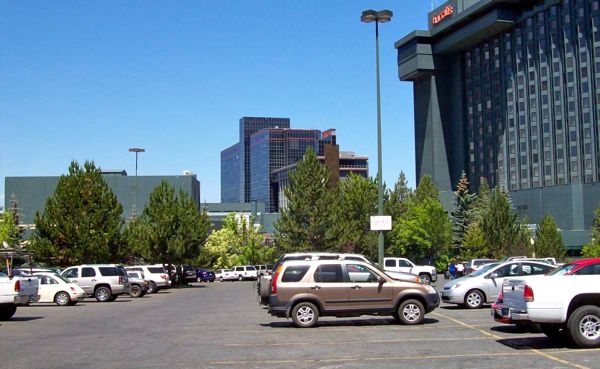
Both photos, 1965 and 2012, I snapped from the same vantage point in Harrah’s parking lot, evidenced by the distinctive profile of the Harrah’s South Shore Room theater rectangular fly-loft at left.

Among other things, notice the 1965 predominance of American cars, and that today’s parking lot has rotated 90 degrees, apparently affording more spaces. 1965 was decades before today’s multilevel garages now on-site.

In the 1965 photo, those three round bulbous objects on the roof of Harrah’s showroom loft were carbon-arc searchlights which crisscrossed and scanned our Tahoe skies at night, much like the opening of a 20th Century Fox movie, or as seen at car lot or grand opening promotions. Thus, as visitors arrived over Echo Summit at night, Stateline was very obvious.

Those searchlights were discontinued about 1969, perhaps bowing out as “visual pollution” per the new TRPA, I’m told.

Harvey’s Wagon Wheel Hotel and Casino in the 1965 photo was Tahoe’s first high-rise at 11 stories. Harvey Gross’ historic cow-skull with wagon wheel logo, dating from the 1940s is seen on the roof and again fronting Highway 50. Directly under the roof sign, the glass elevator with twinkling white lights traversed the outdoor southeast corner of the hotel up-and-down from the casino floor up to the elegant “Top of the Wheel” restaurant, cocktail lounge and live music dance floor, the locals’ favorite. Gas-fired tiki torches adorned the motif. The outdoor elevator still operates on scheduled evenings today.

After an extortionist’s bomb in August 1980 gutted the lower six floors, Harvey’s rebuilt that original hotel and soon attached a modern 19-story expansion, becoming what is still the largest hotel at Lake Tahoe.

Today, Harveys and Harrah’s are commonly-owned by Caesars Entertainment.

— Bill Kingman


Body of missing El Dorado County man found

By Bill Lindelof, Sacramento Bee

The body of a man missing for more than a month has been found in El Dorado County.

When David Clement, 30, of Camino was thought to have gone for a jog on the morning of Nov. 6 and never returned, his father worried that he might have been attacked by a mountain lion.

Searchers looked many times for the Army veteran, but had no luck.

Then, on Dec. 19, his father and other searchers tried again and found Clement’s remains in the Snows Road area of Camino.

The body was found by his father and searchers Shelli LaMadrid of El Dorado County Search and Rescue and Jody Finne-Frock. The young man’s body was located in an area searched earlier.

“I found him,” said David Clement. “But I could not go look at him close enough. It’s hard for a dad to do that. Shelli and Jody came over and identified him and we called 911. He did shoot himself.”

The body was off the side of the road in an area of low-growing shrubs.

John Clement said his son spent two years in the Army and was discharged in 2001. He pursued acting for a time, serving as an extra in movies, before taking an information technology job with the California Highway Patrol – a position he left two years ago.

David Clement had been depressed for a time as he struggled to pay bills while developing a computer game, “but he had worked through that,” his father said in November.

When he was unable to reach his son by phone last month, John Clement went to the house. His son’s motorcycle was there, but the weather was bad so his father figured he had gone somewhere with friends.

A couple of days later, John Clement again went to the Camino house David shared with a roommate. The roommate hadn’t seen David either, but assumed they had just been missing one another.

David Clement’s new running shoes and a jacket were gone, along with a pistol he usually carried as protection against mountain lions when he ran in the woods. His cellphone and wallet were still at the house.

Clement wanted to thank searchers and others in the community who helped the family.

“We had huge support from friends,” said John Clement.

A fund has been set up to assist the Clement family with burial expenses.

Donations may be sent to the David Clement Memorial Fund at El Dorado Savings Bank or John Clement, P.O. Box 2161, Shingle Springs, CA 95682.


Letter: Bread & Broth thanks real estate team

To the community,

The South Tahoe Board of Realtors generously donated money and their time to sponsor Bread & Broth’s evening dinner on Dec. 3. Their donation covered the costs involved in providing a hot, well-balanced meal to over 80 guests at their Adopt A Day of Nourishment dinner.

Representing the South Tahoe Board of Realtors at the dinner were Joe Filipko, Jennifer Fortune and Mark Treiber. The sponsor’s volunteer crew worked side by side with B&B volunteers to bag give-away food items, distribute the bags and serve the dinner and beverages to the attending dinner guests.

They were an awesome crew and all of the B&B volunteers enjoyed working with them.

Bread & Broth is very thankful to South Tahoe Board of Realtors for their support of the program’s efforts to provide a weekly evening meal to the needy members of the South Lake Tahoe community. Due to donor and volunteer generosity, B&B has been providing sustenance and a central gathering place every Monday evening at St. Theresa Church’s parish hall for over 23 years.

For more information on Bread & Broth donation or volunteering opportunities, please contact me at (530) 542.2876 or carolsgerard@aol.com.

Carol Gerard, Bread & Broth


Human factors of avalanche safety topic of forum

Tahoe Backcountry Women’s mission is to come together to share stories, experiences, and education about backcountry skiing and boarding. Women of all ages and abilities are welcome.

On Jan. 9 from 6:30-8:30pm is a class called Avalanche Safety — The Human Factors.

It will be at Alpenglow Sports in Tahoe City.

Megan Michelson will share her firsthand experiences from last year’s Steven’s Pass avalanche. Michelson wrote about this tragedy in Outside magazine.

After sharing her experiences on Steven’s Pass, Michelson will lead a discussion about the human factors of avalanche safety, an ever-growing field of study. What is human nature when traveling in groups? How does group mentality contribute to, or hinder safety? Does gender play a role?

For more info, email whitney@alpenglowsports.com or call (530) 583.6917.


California sales tax rate increases Jan. 1

DETAILED DESCRIPTION OF THE SALES & USE TAX RATE

Rate Jurisdiction Purpose

3.6875%

State State General Fund

0.25%

State State General Fund

0.25%

State State’s Fiscal Recovery Fund (2004 Economic Recovery Bonds)

0.50%

State Local Public Safety Fund (1993)

0.50%

State Local Revenue Fund (Health and Social Services)

1.0625%

State Local Revenue Fund 2011 (Public Safety)

0.25%

State Initiative Constitutional Amendment (Proposition 30)

0.25%

Local 0.25% County Transportation Funds

0.75%

Local City or County Operations

7.50%

State/Local Total Statewide Base Sales and Use Tax Rate on January 1, 2013

California’s sales tax on Jan. 1 goes from 7.25 percent to 7.5 percent.

The passage of Proposition 30 on Nov. 6 is why it is going up. This increase is set to expire Dec. 31, 2016.

Sales tax in some locations will be 10 percent because voters in cities and counties can choose to levy a higher local rate.

In South Lake Tahoe, the rate will be 8 percent. The 0.5 percent additional tax has been in place since 2004. It goes to the city’s general fund.

— Lake Tahoe News staff report


SnowGlobe opens with less techno than a year ago

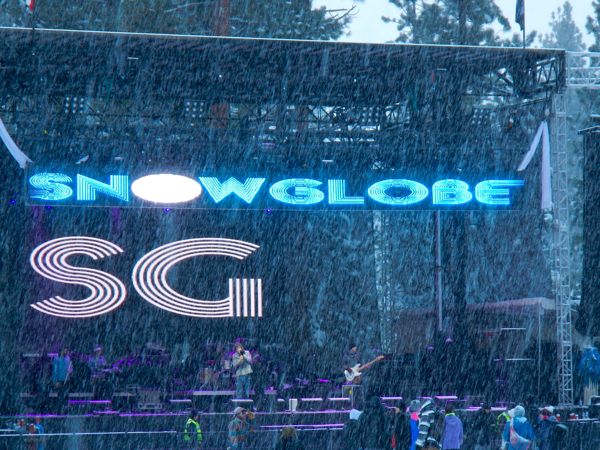
SnowGlobe is under way in South Lake Tahoe. The gates opened at 3pm.

The music is slated to go to 10 tonight.

Snow falls at the start of SnowGlobe on Dec. 29. Photo/Kathryn Reed

This is the first of three days of the music festival on the ball fields next to Lake Tahoe Community College.

Traffic is backed up on Al Tahoe Boulevard, so those not needing to be on that street might want to find an alternative route. Also, there are groups walking in the street — wearing dark clothing.

— Lake Tahoe News staff report


Free ranger-led snowshoe at Spooner Lake

The Nevada Division of State Parks is participating in the First Day Hike.

This free event at Spooner Lake on Jan. 1 from 10am-noon is sponsored by the National Association of State Park Directors. Park entrance fees are waived for participants in the snowshoe.

Children are welcome, but dogs are not permitted. Dress warm, bring a snack and water. This will be most likely a snowshoe hike, given the time of year, but may be a hike if there is no snow.

Spooner Lake one-half mile north on Highway 28 from the intersection of highways 28 and 50.

For more info, contact Bill Champion at (775) 831.0494, ext. 224, or rangerbillattahoe@gmail.com.


Vail Resorts adds air bags to patrollers’ bucket of tools

By Colin Bane, ESPN.com

Ski patrollers and avalanche control technicians at Vail Resorts properties in Colorado, including Vail, Beaver Creek, and Keystone, and at California’s Kirkwood Mountain Resort, will now be equipped with airbag backpacks, which are designed to help keep wearers afloat and reduce the risk of trauma in the case of an avalanche.

“The safety of our employees and our guests are paramount at Vail Resorts and we are constantly looking at ways to help provide them with as-safe-as-possible environment at our resorts,” says Blaise Carrig, president of the Mountain Division at Vail Resorts, regarding the recent purchase. “The BCA airbags are currently being evaluated by our resorts’ ski patrol for snow control work and broader uses at our resorts.”

The Vail patrollers will be outfitted with Backcountry Access Float 30 packs.

“Vail Resorts isn’t the first, but it’s certainly symbolic for other ski areas to see the biggest resort company in North America purchasing airbags for its ski patrols,” said Bruce Edgerly, co-owner of Backcountry Access (BCA), a Colorado-based manufacturer of avalanche airbag pack devices and other safety equipment. “It’s a standard best practice in the ski industry to equip your workers with the top safety equipment, and that increasingly includes avalanche airbag systems designed to help skiers caught in avalanches.”

As of this season, fleets of airbag systems from manufacturers including BCA, Mammut, Snowpulse, and ABS Avalanche Airbag Systems are also in place for ski patrollers at U.S. ski areas including Aspen, Jackson Hole, Loveland, Mission Ridge, Mount Baker, Telluride, Snowbird, and Wolf Creek, among others. Several heli-skiing operations — including Alaska’s Chugach Powder Guides and British Columbia’s Eagle Pass Heli-Skiing, Selkirk Tangiers Heli-Skiing, and Northern Escape Heli-Skiing — also now equip their guides with airbags and provide them to clients.

This week, two in-bounds avalanche fatalities occurred, the first of the 2012-13 season. On Monday, veteran ski patroller Bill Foster, 53, died while doing planned avalanche mitigation work at Alpine Meadows ski area following heavy snows in the area, and snowboarder Steven Mark Anderson, 49, was buried under 2 to 3 feet of snow at Donner Ski Ranch. Neither were wearing airbag packs, according to initial reports.

Edgerly says that while there’s no one panacea answer to the avalanche problem, there’s a growing body of raw data and anecdotal evidence supporting claims that airbags can help in worst-case situations like Monday’s slides.

Skier Daron Rahlves deployed an airbag in a backcountry slide in Alaska’s Northern Chugach Range last season while filming with Teton Gravity Research and said, “It definitely saved my life.”

Snowboarder Meesh Hytner was filmed floating to safety with a BCA pack in January after getting caught in a backcountry slab slide near Montezuma, Colo. And pro skier Elyse Saugstad, a survivor of the much-publicized avalanche that claimed three lives on Stevens Pass in Washington last February, credits her survival to the pack made by German manufacturer ABS.

Sales of airbag devices spiked after the Stevens Pass slide and have remained steady ever since, Edgerly says.

“Airbags are certainly no substitute for good mountain sense and education, and we would never suggest that you can get away with anything more with an airbag than you would without,” Edgerly cautions. “The first step, to be sure, is getting educated. If you’re a ski patroller doing any kind of avalanche control work or working around avalanche-prone terrain, I think it’s a no-brainer to add an airbag bag to your toolkit.”