Snippets about Lake Tahoe

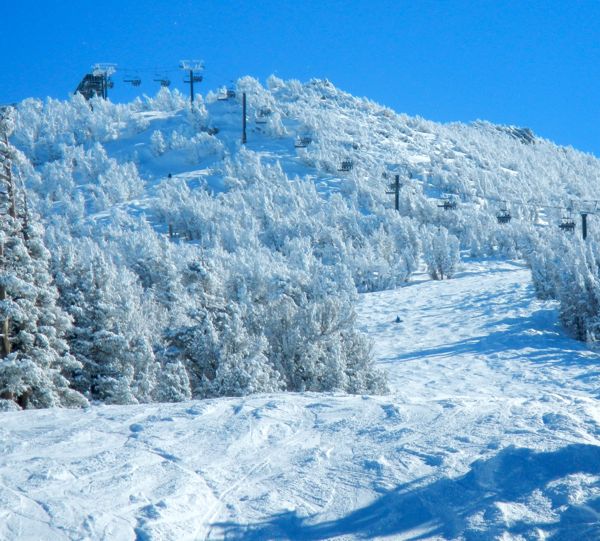
• Lake Tahoe is currently ranked as the snowiest region in the country.

• Here is an application for the South Lake Tahoe City Council vacancy.

• On Dec. 28, Squaw Valley celebrated the grand opening of the resort’s newest chairlift, Big Blue Express, with a $5,000 contribution to the Tahoe Fund.

• Three members of the North Tahoe Public Utility District board of directors began new four-year terms in December. Phil Thompson replaced Frank Mooney who had chosen not to run after 25 years of service. Incumbent John Bergmann and Tim Ferrell retained their seats. S. Lane Lewis is president of the board, with Bergmann as VP and Sue Daniels secretary.

• Mt. Rose ski resort is having a Bavarian Fest on Jan. 5 from 10:30am to 2pm at the Winters Creek Lodge.


Physical activity is good for the brain, too

By Cynthia H. Craft, Sacramento Bee

If you leapt out of bed Jan. 1 bubbling with resolve to greet the new year with a rigorous fitness routine, get ready for a bonus.

Research has long established what exercise can do for heart and muscle development. Now, according to an expanding body of research, it could also be growing your brain.

The results of several new studies indicate that physical activity may make you better at learning and memory tasks. And in a hopeful sign for America’s aging population, it is thought to be a factor in warding off dementia.

“What we now know pretty well is that animals who exercise have greater levels of chemicals in the brain that promote brain growth,” said Owen Carmichael, associate professor in the neurology department at UC Davis Medical Center. “These neuro-growth factors are what tell the brain to grow new cells.”

In particular, Carmichael points to research on rats showing that of two groups – one kept from exercising and the other exercised vigorously – the “active rats were gunning to go,” mentally. The inactive rats showed an “inhibited ability to form new neurons; they didn’t remember as well” as the active rats.

Fast-forward from rodent research to anthropology and you come across a set of human evolution studies that suggest the human brain grew because of robust physical activity.

David A. Raichlen, an anthropologist at the University of Arizona, is the primary author of at least two new papers exploring the thesis. Collaborating with colleagues in 2011, Raichlen published online his examination called “Relationships Between Exercise Capacity and Brain Size in Mammals.”

This and other research say that aerobic exercise stimulates myriad brain-growth factors, including blood and an insulin-like substance “which appear to lead to exercise-induced neurogenesis in the rodent and human hippocampus.”

This may be how human brains developed, proportionately, to three times the size of those in other mammals, experts say.

“Being sedentary was not really an option in the days when you had to chase your dinner,” Carmichael said.

In addition, a 2011 paper in the EPMA Journal, a European science publication, offers hope to those recovering from brain injuries or concerned about dementia. Citing animal studies, the paper’s authors said exercise may help in the creation of growth cells that surround injured brain tissue, and in the hippocampus.

The brain’s hippocampus is ground zero for memory tasks, and atrophy as a result of advanced aging is a risk factor in Alzheimer’s.

But according to the paper, “data indicate that exercise may alleviate disease progression in Alzheimer’s disease, as well as in other neurodegenerative conditions like Parkinson’s disease.”

The European paper recommends further human study using tools such as magnetic resonance imaging and PET scans to measure brain size after activity.

Ted Smith is co-owner with his wife, Chaz Smith, of the Hangtown Fencing Club in Placerville, and has been fencing for 22 years. At 60, he has twice been the U.S. national champion in the 40-and-up divisions and regularly places in the nation’s top four fencers in his age group.

Smith doesn’t need studies to reinforce what he has observed among colleagues in the highly competitive international fencing field.

“People I know who compete in my age division are very athletic,” Smith said. “A lot of these guys are amazingly energized at 60 and older. They are constantly mentally adjusting to the changes their opponents make every second. They are adjusting their own strategies instantly.”

Besides providing challenging brain work, physical activity also trains the brain so that “your balance improves and your flexibility improves,” said Smith, who coaches about 20 young fencers. “Your chances of slipping and falling are far less.”

In a recent Public Broadcasting Service discussion of a book he co-authored called “Super Brain,” Harvard professor of neurology Rudy Tanzi captivates television audience members with tales of the human brain’s prowess.

Then, without explanation, he asks the studio audience to rise and run in place for several seconds. They do so, looking bemused and befuddled. When Tanzi stops them, he explains the purpose of the drill: They’ve just fed their brains.

Researchers say even the smallest amount of aerobic activity helps. But benefits to the brain are greater if you run rather than jog, jog rather than walk, walk briskly rather than stroll. This is because the more rigorous the activity, the greater the blood supply and insulin-like flow to the brain.

Evette Tsang, 43, of Sacramento is a four-year breast cancer survivor who embraces exercise as a means of living healthy. Tsang was not aware of the latest research but already was leading an effort of several wellness groups to make joint New Year’s resolutions in 2013 to step up aerobic physical activity.

“Definitely, when I exercise, it clears the mind and makes me feel better,” Tsang said.

Or, in the lexicon of science, as expressed in a Trends in Neuroscience abstract in 2007: “Human and other animal studies demonstrate that exercise targets many aspects of brain function and has broad effects on overall brain health.”


SnowGlobe a success — music to officials’ ears

By Kathryn Reed

“It’s up to the council and community, but my recommendation will be to encourage this to become an annual event.”

That is what South Lake Tahoe City Manager Nancy Kerry told Lake Tahoe News less than 24 hours after the three-day music festival SnowGlobe came to a close.

“I think this event is a great example of what a group of community and city leaders can do when they put their efforts toward a common goal. Our common goal was not to bring the event back, but instead was to determine whether or not we could find acceptable solutions to the organizers, the community, those most upset or impacted by the event,” Kerry said. “That goal remained the focus this past year. A huge thanks goes to the community members who decided to more than say they didn’t like something, those who got involved said they would invest of their own time to work with the city and organizers to determine if an acceptable solution could be found. They got involved and focused not on what they didn’t agree with or didn’t like but instead invested their energies in helping to find solutions.”

Chromeo rings in the New Year at SnowGlobe in S. Tahoe. Photos/Bron Fong

A year ago the complaints were practically nonstop during the event because the bass from the techno acts had residents unable to enjoy their own homes – walls shook, turning up the TV didn’t solve the problem and angst stayed with those most affected for the last year.

While the music could be heard on occasion outside the event boundaries during the Dec. 29-31 event, it was not constant.

The city set up a phone line just for SnowGlobe related issues. It barely rang.

“I have had a lot of good feedback, no complaints and just a few minor issues have arisen. In the scheme of things it has been pretty successful,” LTCC President Kindred Murillo told Lake Tahoe News.

Like last year, the event was on the community ball fields next to Lake Tahoe Community College.

This year the college strived to capitalize on the thousands of music fans on campus – hoping to show them that while South Lake Tahoe can be fun, it also can be a place to get a higher education.

The college set up a Facebook page specifically for SnowGlobe, handed out postcards with info, and had booths inside and outside the venue.

Fireworks light up the dark, icy night New Year’s Eve.

Murillo spent her New Year’s Eve with the more than 12,000 attendees.

Chad Donnelly, who put on SnowGlobe, did not return a call so the exact number of tickets sold is not known.

The city says about 9,000 attended Saturday night, Sunday was a sell-out crowd of 13,000 and as of 8pm New Year’s Eve, 12,000 had gone through the gates.

When people entered they were frisked and offered the chance to dump any contraband in the amnesty bins. Police Chief Brian Uhler said less was collected this year compared to last year, but as of Tuesday night officers had not gone through it.

There was one arrest Saturday and one Monday – one for alleged theft, the other for allegedly possessing a controlled substance. (South Tahoe police arrested three people on charges of being drunk in public at the Stateline area on New Year’s Eve; where city officials said the crowd was much smaller than years past.)

While uniformed officers were at SnowGlobe, including a K9 unit, undercover officers, event security and undercover Alcohol Beverage Control inspectors were walking the area.

SnowGlobe security kicked a few people out, but why and how many has not been released.

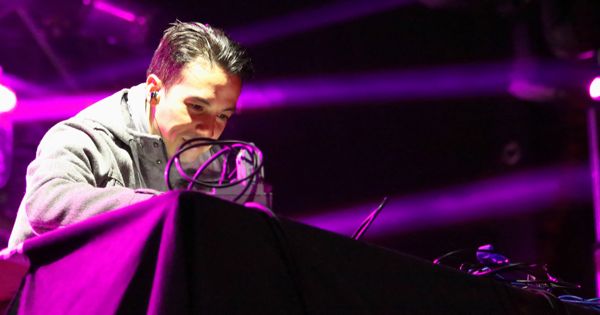
Laidback Luke entertains thousands Dec. 31 at SnowGlobe.

Transportation was the biggest complaint – especially the first day. Event organizers contracted with a private bus company to bring people to the campus and deliver them back to the casino area. BlueGo was paid by SnowGlobe to run more buses, too.

“The long-term impacts of having 15,000 or so attendees come and experience South Lake Tahoe at a festival and doing so annually will likely result in tremendous marketing of the community and encouraging many of these attendees to either move here to go to college, move here later, or return to visit here year after year,” Kerry said.

By Monday, or sooner, the goal is to have LTCC not look like such a mega-event ever took place. That’s when winter quarter starts.

The main stage started to be broken down New Year’s morning after the fireworks put an exclamation point to the end of the three-day event.

In the coming days and weeks Kerry will speak with city employees, college officials and organizers for a bit of a debriefing. Meeting with those involved took place throughout the event to make sure everyone was on the same page.

While a $50,000 deposit had been secured by the city from organizers, it’s too soon to know if it will be fully refunded.

“This time, we all kept a focus on the big idea of bringing events to the community that will generate revenue for local businesses, promote the natural environment and encourage long-term connections to South Lake Tahoe,” Kerry said.


What was the biggest story in 2012 in the Lake Tahoe Basin?


Snowmaking guarantees there will be a ski season in Tahoe

By Hugo Martin, Los Angeles Times

Mother Nature has been a fickle manager of snowfall lately, sending an avalanche of powder to ski resorts across the country two years ago, followed by the least amount of snowfall in decades last winter.

Even with the major snows of recent weeks in the Sierra, it’s too early to tell if this season will be a snowy success or another dry disappointment.

But ski resort managers are losing less sleep over erratic weather conditions after making a flurry of investments in the past few years in ultra-efficient, computerized snow-making equipment.

Once powered by diesel air compressors and monitored by workers on snowmobiles, today’s snow-making systems rely on computers, fiber-optic cables and low-energy fans that can be controlled by smartphone or programmed to automatically make snow when conditions are prime.

The good news for powder hounds is that the frozen spray generated by modern snow-making equipment is so close to real snow that even veteran skiers can’t tell the difference.

“If I’m going down a run, I can’t tell you if I just skied on natural or man-made snow,” said Bruce Lee, a Redondo Beach resident who has been skiing for 30 years in Vermont, Pennsylvania, Utah, Colorado and California. “I’ll bet no one can tell the difference.”

Investments in snowmaking have been especially crucial in California, where snowfall has always been particularly unreliable. The state is home to 29 resorts that generate an estimated $1.3 billion in spending a year.

Last year’s ultra-dry season only reinforced the value of artificial snow-making systems. The 2011-12 season marked the lowest national average snowfall in 20 years, forcing half of the nation’s resorts to either open late or close early.

The National Resources Defense Council estimates that ski resorts lost $1 billion in revenue because of meager snowfall in the past decade.

Resort operators that had already invested heavily in snowmaking equipment said man-made snow helped them avoid a complete bust.

“For us, the reaction to last year was, ‘Thank God we’ve done what we did in the past,'” said Pete Sonntag, general manager at Heavenly Mountain Resort, where 155 snow-making machines can cover 65 percent of the resort’s skiable terrain.

Heavenly’s snow-making system – the largest on the West Coast – can be controlled from a desktop computer at a pump house on the mountain or a smartphone carried by Barrett Burghard, the resort’s senior manager for snow surfaces.

“I’m not going to lie and say we can make snow as good as Mother Nature,” Burghard said as he glanced at a computer screen to check the water levels in the resort’s storage tanks. “But it’s close.”

The best man-made snow, he said, is light and can be pressed into a snowball without oozing water.

He has another, very unscientific method for testing his machine-spewed snow: He tosses it against his arm to see how it bounces off his sleeve. “There’s an art to making snow,” Burghard said.

In the past, snowmaking was a labor-intensive task that involved teams of workers taking temperature and humidity readings throughout the night.

If the conditions were right for snowmaking, workers would ride snowmobiles up the mountains to switch on snow guns, which were often powered by diesel air compressors and connected to high-pressure air and water hoses bordering ski runs.

But temperatures at different spots on a mountain can vary by several degrees, making it difficult for resort operators to gauge when and where to activate the snow guns.

Modern snowmaking guns use less energy than older systems, relying on a combination of portable compressors and energy-efficient fans.

They also have built-in computers that take on-site temperature and humidity readings, which are sent to a central computer via radio waves or fiber optics. That enables them to be controlled remotely, allowing resort operators to begin making snow as soon as conditions are right. They can also program the guns to switch on automatically even when no one is monitoring the system.

These high-tech snow guns are expensive, up to $50,000 each. But the payoff is better snow.

“The snow is more consistent with the new machines,” said Jim Larmore, director of mountain operations at Northstar, which added nearly 100 snow guns last summer. “The product is so much better. When you ski on it, the snow is soft, and when you push your edge into it, it carves.”

In the mountains above Lake Tahoe, the owners of Squaw Valley and Alpine Meadows spent $4 million on snow-making equipment last summer. The two resorts can now cover almost 30 percent of their skiable terrain with man-made snow.

“Every chance we have to make snow, we are making it,” said Andy Wirth, president and chief executive at Squaw Valley. “It’s pedal down.”

In the San Bernardino Mountains, the managers of the Snow Summit and Bear Mountain resorts have invested about $12 million in new snow-making equipment over the last eight years, enough to coat every run on both resorts with a layer of snow.

“We are ahead of many mountains in the West because we have 100 percent of our runs covered,” said Chris Riddle, a spokesman for the resorts.

Even in Colorado, where natural snow is more abundant, some resort owners have invested in new snow-making equipment as a hedge against future dry seasons. Over the last three years, for example, the Breckenridge Ski Resort in Colorado added more than 150 energy-efficient snow guns.

Some ski resorts that are blessed with heavy annual snowfall have not made big investments in snow-making equipment.

“We look to Mother Nature to provide for us,” said Stephen Hemphill, spokesman for Sierra-at-Tahoe. The 2,000-acre resort gets an average of 480 inches of natural snow a year.

Whether it’s man-made or natural snow, skiers who endured last year’s dry snow season say they are grateful to have anything that lets them fly down the mountain.

“The more snow the better,” said Jane Ferry, membership director of the Santa Barbara Ski and Sports Club and a skier who has visited mountains throughout the West. “I don’t care where it comes from.”


14 New Year’s Eve revelers arrested in Stateline

Fourteen people celebrating New Year’s Eve in the Stateline casino area were arrested by Douglas County sheriff’s deputies.

Charges included assault, domestic battery, disorderly conduct, minor consuming alcohol and civil protective custody. One person was issued a citation and released.

The Nevada side of Highway 50 was closed from 11pm to 1am so people could meander. The sheriff’s department has not released the number of people in the area, but had been expecting 60,000.

The various law enforcement and support agencies included Nevada Highway Patrol, South Lake Tahoe Police Department, El Dorado County Sheriff’s Office, California Highway Patrol, FBI, Douglas County Communications Center, Nevada Department of Transportation and Caltrans.

 — Lake Tahoe News staff report


Letter: Heavenly continues to help less fortunate

To the community,

On Dec. 10, Heavenly Mountain Resort once again funded and provided an Adopt A Day sponsor crew.

“It feels good to give to the community during the holidays,” said Jennifer Van Gilder, Heavenly’s senior regional group sales manager.

Van Gilder was joined by Adriann Kremer, catering and sales manager; Ashley Rojas, regional group sales manager; Shannon Proper, group sales coordinator; and Arnaud Robin, corporate lodging sales manager in assisting the regular Bread & Broth volunteers. Typically sponsor crew members help distribute food bags and serve dinner, drinks and desserts and experience first hand the good that is being done for the those who are in need of help.

Bread & Broth is a nonprofit, non-denominational, all volunteer organization which is dependent upon the generosity of individuals, churches, clubs/organizations and business in the South Lake Tahoe community. The $250 donated by an evening’s sponsor provides a nutritious meal and covers all the supplies and utilities needed for the meals preparation.

Thanks to Heavenly Mountain Resort and all our generous donors, Bread & Broth has been serving meals to all who attend every Monday evening at St. Theresa Church’s parish hall for over 23 years.

For more information on Bread & Broth donation and volunteering opportunities, please contact me at (530) 542-2876 or carolsgerard@aol.com.

Carol Gerard, Bread & Broth


Douglas County couple caught voting in two states

By Mary Jo Pitzl, Arizona Republic

PHOENIX — “Vote early and vote often” is a laugh line politicians often invoke as they make a pitch for people’s support.

But it’s no laughing matter to a half-dozen former Arizonans, who have been prosecuted for voting twice in past elections.

Thanks to a data-sharing agreement among 20 states, Arizona can cross-reference its voter data with other states and ferret out people who vote more than once in the same election cycle.

In 2008, the Interstate Voter Registration Crosscheck Program snared four cases involving six people who voted for president in both Arizona and in another state. Earlier this year, Arizona Secretary of State Ken Bennett said the program had found 10 people who appeared to have voted twice in the 2010 election. Those cases are still under investigation, and the voters face possible prosecution. Work has not begun on cross-referencing voting information from the 2012 elections.

Records from the 2008 cases show the offending parties entered plea deals that left them with misdemeanor charges on their records.

Under the crosscheck program, started in Kansas, states agree to share voter information, including name, address, birth date, whether the individual voted in a given year and the voter’s identification number, Bennett said. The data is sent to a secure server located in Arkansas. The Kansas secretary of state then runs a program to cross-reference the information, identifies any duplicate voting, and, if appropriate, shares that with the states where the multiple voting occurred.

So far, the program has resulted in few prosecutions compared with the millions of votes cast. Kansas reported three cases in 2008 referred to prosecution; four others were successfully prosecuted in Arizona.

In 2010, the program produced 11 instances of possible double voting involving Kansas and another state; in Arizona, the Secretary of State’s Office said there are nine cases under way involving possible double voting in 2010.

Bennett himself has called such cases “rare” and said the penalties that state attorneys win can serve as a deterrent to anyone who thinks they might slip under the electoral radar.

Rodney Paul Jones was stunned when he was accused of a felony for attempting to vote illegally, said his attorney, Clark Derrick.

Jones was shuttling between the Phoenix-area and Colorado Springs, Colo., where he was doing work for the U.S. Air Force Academy. Court records show between December 2005 and August 2008, he registered to vote in Maricopa County, Ariz., and El Paso County, Colo., where the academy is located.

He got a mail-in ballot from Maricopa County and cast it in the November 2008 presidential election. He also cast a ballot in November 2008 in Colorado. Court records list Jones as a resident of Monument, Colo.

Jones initially pleaded not guilty, citing his heavy travel between Colorado and Arizona, and the confusion of the appearance of an early ballot at the Arizona home his wife maintained. But he changed his plea to guilty of a misdemeanor.

A Maricopa County Superior Court judge last year sentenced him to 50 hours of community service, levied a $4,600 fine and put him on one month unsupervised probation.

Derrick said the charge was out of character for Jones, whom he called a responsible person who worried the charge would imperil his employment. (It didn’t.)

In another case, Peter Canova III voted by mail in Arizona’s Republican presidential primary in January 2008, records filed in Maricopa County Superior Court show. He then voted in the fall general election, casting a ballot in Maricopa County and also in Douglas County, Nev.

Like her husband, Gina Thi Canova voted in Arizona’s January 2008 presidential-preference election, as well as voting in November 2008 in Arizona and Nevada. She then continued to vote in other Arizona elections, including Arizona’s August 2010 primary election. She also voted in Nevada’s June 2010 primary election, records show.

The Canovas’ original felony charges were reduced to misdemeanor charges of attempted illegal voting. Peter was sentenced to 200 hours of community service, fined $9,200 (payable to Arizona) and put on two years of unsupervised probation. Gina has a stiffer penalty, given her more robust voting history: 300 hours of community service and a $13,800 fine.

Records show the Canovas now live in Nevada. They could not be reached.


National Winter Trails Day explores Mt. Rose area

The Tahoe Rim Trail Association’s sixth annual National Winter Trails Day extravaganza is Jan. 12 from 10am-3pm.

Participants may register for a snowshoe hike, learn about snow core sampling, receive helpful winter safety information, demo gear, craft their own snow shelter and be a potential raffle prize winner.

The festivities will be in Tahoe Meadows just off Mount Rose Highway.

To participate, contact Hayley at (775) 298.0238 or programs@tahoerimtrail.org.

Free guided snowshoe hikes from Tahoe Meadows to the Tahoe Meadows Overlook and surrounding areas will take place throughout the day. Each hike has its own theme and guest interpreter.


NHP stops 275 motorists in 10-hour period

More than 275 traffic stops were made by Nevada Highway Patrol troopers on Northern Nevada highways from 7pm New Year’s Eve until 5 this morning.

Seven motorists, or roughly 3 percent, were arrested on charges of driving under the influence of alcohol or drugs.

Other calls for service during that same time involved assisting 14 motorists whose vehicles had broken down along the highway and five automobile crashes. Three of those crashes involved minor injuries and were in the Reno-Sparks area while two others happened in the Carson-Tahoe-Minden areas and were property damage only.

Part of our highway safety efforts this holiday focused on crosswalk violations during several shifts over the past three days.Troopers were watchful for pedestrians who were jaywalking as well as for motorists who would not yield to those on foot attempting to cross the roadway at many intersections in the Reno-Sparks, Carson City and Lake Tahoe areas. The results of this directed enforcement activity will be available later this week.

— Lake Tahoe News staff report