California gun sales rise, injuries decrease

By Phillip Reese and Cynthia Hubert, Sacramento Bee

California has millions more guns than it did 10 years ago. It also has thousands fewer gun injuries and deaths each year.

Those are two simple facts that, depending on whom you ask, have everything or nothing to do with each other.

Last month’s horrific Connecticut school shooting has reignited the debate over gun control in California, a state with some of the nation’s strictest gun laws. State legislators will likely take up additional gun law proposals later this year, ranging from further limits on ammunition purchases to requiring regular background checks for gun owners.

If recent trends hold, that debate will take place as gun sales boom and gun injuries fall.

From one perspective, those figures suggest more guns mean less violence – a view embraced by many gun rights advocates. They say criminals are less inclined to draw their weapons out of fear their targets will also be packing heat.

“Criminals don’t know who has a gun,” said Sam Paredes, executive director of Folsom-based Gun Owners of California. So they ask themselves, “why go into a dangerous situation?”

Others who study crime in California and America say the trends are more nuanced. Most gun-related hospitalizations and deaths are due to assaults. And the drop in firearm-related injuries in California coincides with a well-documented, nationwide drop in violent crime that began in the early 1990s.

Researchers said that drop has little to do with gun sales, which peaked in California around 1993 as gun crime also hit a high point. For much of the 1990s, guns sales fell while gun injuries also declined.

Instead they say changing demographics, improved law enforcement techniques, stronger laws dictating who can legally buy guns, increasing incarceration rates, and falling gang violence, among other factors, have driven down gun injuries and deaths.

“People who are passionate about guns see things through a single-subject lens,” said Frank Zimring, a UC Berkeley law professor and author of “The Great American Crime Decline,” a book on nationwide crime trends.

Not in dispute is the fact that guns are flying off California shelves.

Dealers sold 600,000 guns in California during 2011, up from 350,000 in 2002, according to records of sales tallied by the California attorney general’s office.

Those figures track sales, not ownership, and don’t include guns taken across state lines.

At the same time, the number of hospitalizations in the state due to gun injuries dropped roughly 28 percent, from about 4,000 in 2002 to 2,900 in 2011, according to records newly collected by the Office of Statewide Health Planning and Development.

Gun-related deaths in California fell 13 percent over roughly the same period, from about 3,200 to about 2,800, according to the California Department of Public Health.

Even with the declines, California, which would be the world’s ninth largest economy if it was a separate nation, has a higher rate of gun-related homicides than almost any industrialized country, United Nations figures show.”

The decadelong surge in gun sales is driven partially by a widespread fear of more gun control, several gun dealers said.

Ten years ago, roughly 5 million Californians, or 20 percent of the state’s adults, had at least one gun in their home, according to the UCLA Center for Health Policy Research.

Since then, California gun dealers have sold another 4 million guns.

The uptick in sales started in 2004, but exploded around 2008, when Barack Obama was elected president.

“When the president or senators threaten to take people’s gun rights away, that’s when we see things really pick up,” said Bryan Schaff, owner of Hoffmeyer’s Firearms & Sporting Goods in Grass Valley.

This phenomenon happened again last month during calls for new gun control measures in the wake of the Sandy Hook Elementary shootings. “Since the school shooting there is nothing left out on the market at all,” said Dan Hendrix, of Dan’s Discount Guns & Ammo in Oakdale.

Some researchers said the notion that more legal gun sales would immediately lead to more gun injuries ignores a basic truth: Guns were everywhere in California a decade ago; and they are everywhere today.

“My guess is that we are way beyond that,” said Mark Kleiman, a UCLA public policy professor who has written on guns and crime, when asked if California has reached a saturation point for guns.

More important than the increase in gun sales, several researchers said, is who is buying guns. Young men are the most likely demographic group to be injured or killed with a gun, state health records show.

“If you have a population entirely comprised of little old ladies, you can increase the number of guns and nothing is going to happen,” said Will Vizzard, a California State University, Sacramento, criminal justice professor who has written extensively about guns and crime.

Vizzard noted that many crimes are committed using stolen guns – gang members killing one another, for instance – or by people who legally own a gun who get caught in the heat of the moment.

About 40 percent of guns used by felons nationwide before their admission to state or federal prison were stolen or bought on the street, according to a survey released in 2002 by the U.S. Bureau of Justice Statistics.

Another 40 percent were obtained from friends or family, leaving about 15 percent purchased in stores and 5 percent acquired in other ways.

Vizzard cited last week’s Old Sacramento shooting, in which Gabriel Cordova, 35, and Daniel Ferrier, 36, were killed and two others were wounded when Carlito Montoya allegedly opened fire in a bar.

Police say Montoya, 22, was involved in an argument with Cordova and his wife over a spilled drink, and pulled out a gun – allegedly stolen – when things got heated.

“You have a bunch of people together and somebody bothers somebody else. And the guy shoots the wrong people,” Vizzard said.

State officials do not release demographic information on gun owners, so it’s not clear just who has been buying firearms in California. Gun dealers and gun rights advocates argue that all types of people – hunters, target shooters, moms, elderly couples – are buying guns.

“It’s a lot of first-time buyers,” said Bill Sharff, co-owner of STS Guns in Folsom. “Half of the folks coming in here have never owned a gun.”

Customers at area gun shops include older people and couples who enjoy testing their skills at shooting ranges, hunting game, firing at clay targets and participating in recreational gun clubs, dealers said.

It is not unusual, they said, for people who shoot for sport to have several guns of different types. Collectors may own a dozen or more weapons.

“I was raised up with guns,” said Hendrix, whose father taught him to shoot as a boy. “I have always been comfortable with them.” He now takes his own children hunting and target shooting.

Schaff, of Hoffmeyer’s Firearms, said he carries a legal, concealed weapon on occasion when he travels to cities, keeps a gun at home for protection and enjoys recreational shooting and hunting. He also teaches classes on gun safety.

“We recommend that every new owner take a class before they even buy their gun,” he said. At least half of his customers do so.

“I don’t think stricter gun laws will help reduce violence at all,” he said. “All it would do is penalize law-abiding citizens.”

Daniel Webster, director of the Center for Gun Policy and Research at Johns Hopkins University, said he believes that most firearms sold recently in California were bought by people who already had guns, so the actual number of people who own firearms may not have risen much or at all.

Webster said the spike in gun sales has likely occurred among older men and women whose incomes have been less impacted by the recession. “The behavior of these groups don’t typically drive crime trends,” he said.

Zimring, the UC Berkeley researcher, noted that gun ownership in California is much higher in rural, inland areas than in urban hubs like Los Angeles. Yet much of the decrease in crime over the last decade in California happened in Los Angeles County.

Rural areas tend to have more hunters and more political conservatives who support unfettered gun rights than urban areas such as San Francisco, which had the lowest rate of gun sales in 2011.

“Most of the places where people buy and own guns are outside the places with the most residents,” Zimring said. “You have to be specific,” when looking at gun injury and sales data, he added. “A state with 50 million people is not the right unit of analysis.”

There is one broad point of agreement between both sides of the gun debate: Whether the buyers are seasoned hunters or first-time owners, most guns purchased legally in California are sold to law-abiding, responsible citizens.

“The guns that are being recorded are legally purchased, and I really don’t think that these guns are being used in criminal conduct,” said former Sacramento County Sheriff John McGinness.

An important consideration, then, when talking about the relationship between legal gun sales and gun injuries, McGinness and others said, isn’t how many guns are sold or crime trends in a particular area; it’s the personal decision made by millions of Californians each day to keep their guns secure.

The number of guns stolen nationwide, along with other types of theft, has dropped sharply over the last 15 years, according to the U.S. Bureau of Justice Statistics.

“I hope that people who make the decision to purchase a gun store it safely,” McGinness said. “And make it damned difficult for someone to steal it.”
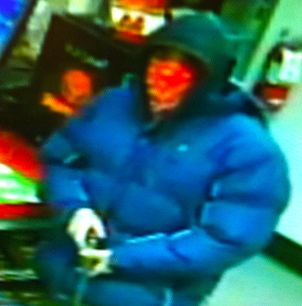



Armed man robs Incline gas station

Washoe County sheriff’s detectives are looking for man who robbed an Incline Village Chevron station at gunpoint.

The incident occurred Jan. 2 at 8:45pm.

A masked man flashed a silver colored long barrel revolver at the clerk, according to deputies. The gunman fled with an undisclosed amount of money.

Deputies are searching for this man. Photo/Provided

The suspect was last seen wearing a heavy blue jacket, blue pants and a red bandana over his face.

Anyone with information is asked to call (775) 328.3336 or Secret Witness at (775) 322.4900.


Last call to participate in ‘Vagina Monologues’

VDAY Tahoe still has parts to fill for actresses, as well as volunteers (female or male).

Anyone interested in being involved in the 2013 South Lake Tahoe Production of Eve Ensler’s award winning play “The Vagina Monologues” should attend the Jan. 7 6:30pm first informational meeting and reading for the “Vagina Monologues” at Unity of the Lake, 1195 Rufus Allen Blvd., South Lake Tahoe.

Rehearsals will be Monday evenings and the performances are Feb. 22-23at the Blue Angel Cafe.

For more info, call Vickie at (530) 577.6222 or email theclarkesr@hotmail.com.


Ski report: Crowd-free skiing

Time for locals to take back the mountains today.

Enjoy mid-winter conditions without the crowds.

Here is the Jan. 7 ski report.

— Curtis Fong


Clearing gas meters of snow keeps homes safe

As we have seen in recent years, large amounts of snow can be potentially dangerous if we do not take certain precautions.

The fire department would like to encourage all South Lake Tahoe residents to clear snow away from natural gas meters and propane regulators in the event they become buried.

You can avoid a deadly catastrophe by clearly marking all gas meters and regulators and maintaining their access during periods of large snow accumulations.

Thanks for helping keep our community fire safe.

— Sallie Ross-Filgo, South Lake Tahoe Fire Department


Tahoe Tails — Adoptable Pets in South Lake Tahoe

Pluto is a very sweet little Schnauzer mix, about 12 pounds and 2 years old.

He has wiry fur and he loves to be held. He also loves to play with other small dogs.

Pluto is neutered, microchipped, and vaccinated. He is at the El Dorado County Animal Services shelter in Meyers, along with many other dogs and cats who are waiting for their new homes.

Go online to see photos and description of all pets at the shelter.

Call (530) 573.7925 for directions, hours, and other information on adopting a pet.

For spay-neuter assistance for South Tahoe residents, go online.

— Karen Kuentz


Editorial: New Congress must act on judicial appointments

Publisher’s note: This editorial is from the Jan. 4, 2013, Sacramento Bee.

You could call them casualties of the “fiscal cliff” talks that consumed far too much time and energy. Before ending its term Wednesday, the U.S. Senate failed to act on 11 judicial nominees awaiting floor votes, including two for federal courts in Northern California.

Those stranded nominees have to start from scratch with the new Senate sworn in Thursday. Meanwhile, Californians will continue waiting, and waiting, to have their cases heard before these federal district courts, both “judicial emergencies” because of numerous vacancies and severe backlogs.

Troy L. Nunley was nominated in June by President Obama in the Eastern District of California, which has courts in Sacramento, Fresno, Redding and South Lake Tahoe. Nunley, a former prosecutor who has been a Sacramento Superior Court judge since 2002, had his confirmation hearing in September. The Senate Judiciary Committee didn’t sign off on his nomination until Dec. 6.

William H. Orrick III was also nominated in June, he in the Northern District of California, centered in the Bay Area. Orrick, a corporate lawyer in San Francisco for 25 years, was most recently a deputy assistant attorney general for civil rights in Washington, D.C., who worked on the Justice Department’s challenge of the Arizona immigration law. He has been waiting even longer; he had his hearing in July and was endorsed by the committee on Aug. 2.

On Thursday, Obama quickly renominated Nunley and Orrick, along with Los Angeles Superior Court Judge Beverly Reid O’Connell in the Central District of California and 30 other nominees around the nation whom the previous Senate failed to confirm. As one liberal advocacy group noted, 25 of the 33 are women or minorities – part of the president’s important effort to diversify the judiciary.

Now, it’s up to the new Judiciary Committee whether the nominees have to go through another confirmation hearing. They definitely have to win committee approval again to get to the Senate floor.

Obama said that his list included “many who could have and should have been confirmed before the Senate adjourned.” “I urge the Senate to consider and confirm these nominees without delay, so all Americans can have equal and timely access to justice,” he said in a statement.

Unfortunately, judicial nominations have, even more than usual, become collateral damage in the partisan wars in Congress. There are more vacancies than at the end of George W. Bush’s first term; the delay between committee approval and a vote on the Senate floor has grown dramatically on Obama’s watch.

For nearly all the stranded nominees, there’s little question that they’re qualified. Many have bipartisan support. Supreme Court Chief Justice John Roberts, in his annual report on the judiciary, pleaded with the president and lawmakers Monday to fill vacancies that he said are handicapping federal courts.

This is another black mark against the 112th Congress, one of the least productive in recent history. By confirming these judges quickly, the new Senate can start making amends.


Barton Memorial Hospital’s 50-year evolution a testament to tenacity of South Shore residents

By Susan Wood

The day after President John F. Kennedy was shot and killed in Dallas, South Lake Tahoe made a major move to heal its community, decrease fatalities and provide well-rounded care to its local citizenry and visitors.

Barton Memorial Hospital opened about a half century ago on Nov. 23, 1963, with 38 licensed beds, 18 physicians, five dentists and about 20 employees on a 6-acre plot valued at $200,000 that dairy farmers Alva Barton and Fay Ledbetter donated. The landmark opening came after a long-fought effort to raise more than $400,000 in funds because lives were at risk and a tight-knit group of pioneering families that reads like a “who’s who” list of South Shore history demanded more and cared much about their community’s health care.

The hospital commemorates the last 50 years in 2013 with a historical book available to those who have donated their time to Barton. Others may access an online version starting Jan. 17.

The case for a local hospital goes far and deep for those who lived alongside the health care community in the 1950s and early 1960s. Deep snow, substandard transportation, many life-threatening injuries and illnesses as well as a baby boom and limited number of independent doctors made a local health care facility a necessity.

Alva Barton and Fay Ledbetter helped bring the South Lake Tahoe community together in the 1960s to build a hospital. Barton Memorial Hospital is named after their parents, Bill and Ouida Barton. Photo/Provided

According to patient records from 1959, 1,500 emergency room visits to Carson Hospital were from South Lake Tahoe residents – nearly one-third of the hospital’s emergency room usage. In one year, the Carson-area hospital’s admissions from here totaled 467 in May 1959.

Barton and Ledbetter’s parents, Bill and Ouida Barton, even had their share of medical emergencies when both fell off a horse. Despite the danger and no local access to care for serious injuries, the late Alva Barton at age 96 told this reporter years ago that she “wouldn’t live anywhere else but Tahoe.”

In 1958, one call marked a watershed moment for building South Lake’s own hospital when a man shot himself and didn’t make it to Carson City in time to save his life, local stakeholders recounted.

Estimates showed the proposed “Lake Tahoe Community Hospital” would cost about $1 million. Federal and state grants totaled $598,010, but the community would need to reach $422,011 in donations by Feb. 8, 1962, or the funding would not be available for another decade.

Taking the bull by the horns

A citizens group was formed and spawned the Barton Memorial Hospital Association. If a business, organization or individual donated $200 or more, either would get a vote on who would serve on the hospital board of directors. Heavenly Valley Ski Resort, Safeway, Soroptimist International, South Lake Tahoe Kiwanis, St. Theresa Parish and many more stepped up to the plate.

“It’s been a labor of love in the community for a lot of people,” said Patty Olson, whose husband Walter Neal Olson served as the initial special gifts division chairman. Years later, a children’s playroom was dedicated in his honor. All of their children had to be born at St. Mary’s Hospital in Reno because Barton Hospital did not exist at the time.

“The vast majority went to Nevada (to give birth),” said Del Laine, who ended up serving as a Barton Foundation trustee. She recalled how her daughter, Brooke, was one of the first babies born at Barton in 1964. The subject is near and dear to the Laine family.

Before the hospital was built, it was the medical emergencies that got the stark attention when the fund-raising teams were spawned. Campaign slogans declared: “The life you save may be your own” and “In an emergency, will death wait?”

The necessity was loud and clear.

Leading the way to better medical care

“If someone was really hurt, we’d have to take the Old Grade (over Spooner Summit) to Reno – without four-wheel-drive,” Karen Pavlakis told Lake Tahoe News.

She reflected on the challenges that faced her father, Jim Whitely, when it came to caring for the local community. The physician responded to accidents with his own vehicle loaded with emergency supplies. Public safety units provided escorts. When people were injured in Desolation Wilderness, he was flown in to the injured party via helicopter.

Whitely, along with Dr. Peter Irving – Barton’s first general surgeon – and Dr. Ken Smith, represented the primary physicians in town handling a multitude of calls during snowstorms and limited support services.

Some involved celebrities who starred at the Stateline casinos. While Irving cared for “some Judy” – as his wife Shirley Irving described a call from the late singer Judy Garland for Barton’s 40th anniversary, Whitely had his hands full with the likes of the Andrew Sisters, Pavlakis and her sister Jane Callahan recalled.

This was nothing new. The two women said their father had developed a reputation for being a doctor of entertainers, and that legacy stuck. Rock legend Elvis Presley donated money to Barton in 1973 for an intensive care unit that opened two years later. It was named after his mother, Gladys, whom orthopedist Dr. Paul Fry cared for. Presley needed care when he contracted the flu and was forced to cancel his remaining concerts at the Sahara Tahoe (now the Horizon) after one sold-out show.

When superstar singer, actress Bette Midler filmed “Jinxed” in 1981, she donated $10,000 to the Barton Hospital Auxiliary – which in turn funded a new birthing suite. Ed Asner, Duke Ellington – the list goes on and on of celebrity connections.

“When we were young, we’d go down to Harrah’s (to see a show) for our birthdays, and he’d always get called,” Callahan said of her father. The beeper would go off and Whitely would need to spring into action, the sisters remembered of their late father during their childhoods. Callahan’s eyes welled up when she reminisced about her kind-hearted, hard-working father, who died in 1989 of brain cancer.

Callahan said she’s been dreaming about her father lately.

“I’d look at my husband and tell him I can smell dad’s medical bag,” she said.

Unbeknownst to Callahan, her sister brought the iconic symbol of their father’s work to the interview. The duo took out tools and reflected on times when the bag came out – sometimes to their detriment if it meant they were getting a shot.

“I remember the noise it made when it opened. All us girls would run out and try to carry it,” Pavlakis said, while demonstrating the fold-out design. She pulled out an otoscope. “God knows how old this is.”

More than the noise, Callahan said she remembers the smell – a “septic, pilly” scent of the bag. Whitely shared stories of his day around the dinner table and “always made us laugh,” the sisters recounted of doctor visits from Whitely’s office. It was located where the Lake Tahoe Art League building now sits next to the Lake Tahoe Museum.

Back in the early 1960s, some people bartered for medical care. The sisters recalled their father bringing home dresses and allowing a contractor to fix their roof.

“Sometimes he didn’t charge people,” Pavlakis said.

When it was time for their own family medical care, the girls hid under the Jeep to no avail.

Children may have shied away from seeking care, but the two sisters recalled how smokers would go to Whitely because, if anything, he was not judgmental because he smoked.

“He’d say to them: ‘Just cut back’,” Pavlakis said.

However, the attitude changed when a boy on a motorcycle tried to pick up Callahan on a date. He let the boy borrow the family car, and that was the last date with him.

“He never allowed us to ride a motorcycle,” Pavlakis said. “He saw too many accidents. He’d say: ‘The motorcycle never wins.’”

Still, the sisters reflected on quality time with their father and believe his time lives on in the legacy left in helping the hospital get off the ground.

“Mom used to say: ‘Jim could diagnose anything’,” Callahan said.

Just after he retired a year before he died, Pavlakis asked her father what medical discipline the family practitioner would have gone into.

“He said: ‘I’d be a cardiologist because matters of the heart are so interesting’,” she said.

The comment proved prophetic.

Callahan developed a blood clot recently.

“I was scared. But my dad’s hospital saved my life,” she said.

And, it added another to the local community. Callahan’s granddaughter, Cienna Marie Griffin, was born there within this last year.

From accidents and babies to the birth of advanced medical technology and orthopedics

Barton Memorial Hospital has come a long way since the hospital represented a glimmer in the eye of the community.

One could even argue it’s not even the same hospital as the one that opened its doors a half century ago. Now it has a larger footprint, rooms are cozier, equipment is more computerized and specialties are more pronounced. There is even evidence of decades of personality in its skilled nursing facility.

Within one year of its opening, the 23,000-square-foot hospital built in the shape of a snowflake operated in the black – a notable feat.

In the mid-1960s, the South Lake Tahoe community grew to 7,500 year-round residents – up from the 400 of 15 years earlier when unrelenting snowstorms buried the South Shore in the winter of 1951-52.

In the 1970s, new hospital wings were added and the ICU opened.

Another decade later, the ambulatory wing came on the scene and was joined by a pharmacy and birthing room. The radiology department was expanded.

In the 1990s, Barton, as a health care enterprise, built the Carson Valley Medical Center to extend its reach. Other practices such as Stateline Medical Center came on board. Mammography, laser technology, nuclear medicine, X-ray and CAT-scanning divisions were upgraded.

In addition, another 60,000 square feet expanded the hospital space that opened up the emergency and surgical departments. A nearby community clinic would add a new, much-needed realm of health care for the neediest of the community.

For our aging population in need of extra help, the Barton Skilled Nursing Facility opened with 48 beds – where a “healing garden” at the entrance marks the contributions of the Ledbetter family led by sister and brother Jessica and Kirk. They are descendants of Fay Ledbetter.

In 1991, the Barton Foundation was formed with 21 volunteer board of trustees.

After the century turned, medical imaging dominated health care. Seismic upgrades were made. Physician partnerships spread across the land. Employees topped 1,000. Medical ski clinics at Heavenly, Sierra and Kirkwood were built to stabilize those participating in Tahoe’s primary choice of recreation.

Orthopedists associated with Barton have made a name for themselves – from the early beginnings with Fry to U.S. Ski Team Dr. Terry Orr. Plus, a comprehensive physical therapy division and occupational health department round out the offerings for skiers and boarders trying to keep their limbs and joints intact and healthy.

“In recent years, the focus on improving quality and state-of-the-art technology has benefitted patients and allowed our small town hospital to offer services on par with larger cities,” foundation board Chairwoman Julie Regan said. Regan is convinced that with aging baby boomers from the Bay Area continuing to visit Tahoe, the orthopedics program will become increasingly more important.

The wave of the future for Barton leading into the next 50 years and beyond also includes private patient suites, electronic ICU technology and retail health care kiosks.

“What (has) really impressed me most about the history of Barton was the way the community rallied together to fund raise for the creation of the hospital and to help it expand. It wasn’t by happenstance that the hospital was formed. It took a lot of collaboration, vision and a ton of hard work by everyone in our community,” Barton spokeswoman Monica Sciuto said. “I have great pride in what we have been able to accomplish over the last 50 years. It is amazing to think that we started with just a small 38-bed hospital and have grown to what we are today.”

ngg_shortcode_0_placeholder (Click on photos to enlarge.)


Snippets about Lake Tahoe

• South Lake Tahoe Rec Center is offering Zumba classes.

• Peter Bostic is Lake Tahoe Community College’s director of College Advancement and Community Engagement.

• If you haven’t seen enough SnowGlobe photos, check out this Facebook page. Ben Fong, who was shooting for Lake Tahoe News, has lots more than what was posted on the news site.

• Carson Valley Inn’s 27th Annual Clay Shooting Outing is Feb. 21-25.

• Placer County Water Agency employees will be receiving a 1.5 percent wage bonus. Officials say it won’t affect water rates.

• Vail Resorts CEO Rob Katz will ring the opening bell on the New York Stock Exchange on Jan. 7  remotely from the base of Vail ski resort.


Probe: State Parks officials knowingly hid money

By Matt Weiser and Jon Ortiz, Sacramento Bee

Former California state parks leaders engaged in a “conscious and deliberate” effort to hide millions of dollars for as long as 13 years, according to an investigation by the state attorney general’s office released Friday.

The long-awaited probe was ordered by Gov. Jerry Brown after revelations, first reported by the Bee in July, that headquarters officials at the California Department of Parks and Recreation kept a stash of “hidden funds.”

At the time, the total was reported as $54 million, held in two special revenue accounts.

The attorney general’s investigation concludes, however, that only $20.5 million held in the State Parks and Recreation Fund was truly concealed. The remaining $33 million, held in the Off Highway Vehicle Fund, was not intentionally hidden but simply obscured by long-term complexities in managing that fund.

The $20.5 million piled up because the department had a practice of reporting one fund total to the state Controller’s Office and a smaller amount to the Department of Finance, the agency with final authority for compiling the overall state budget. This violated state budgeting rules.

The accumulation of money, however, was “unintended,” according to the investigation, and did not accrue from any misconduct.

Active efforts to keep the money hidden, however, raise questions about whether any employees committed crimes. The attorney general’s office, known as an aggressive law-enforcement agency in other arenas, did not probe this crucial question.

The investigators also were unable to fully explain how the money piled up, despite interviewing 40 key employees in more than 2,000 pages of testimony.

It likely began, according to the investigation, in 1995 when the department was “engaged in a performance-based budgeting project, which reportedly entailed the added complexity of operating dual financial tracking and budgeting programs.”

The disparity was first noticed by former budget officer Becky Brown in 1998. When she informed superiors, they made the decision not to inform the Department of Finance, perhaps as early as 1999.

“The primary reason consistently given for not doing so was fear that the department would see its already-reduced general funding cut further if the extra monies … were revealed,” the investigation states.

This extended as high up as the No. 2 employee at state parks, Michael Harris, who was chief deputy director until being fired July 19 just as the scandal was revealed.

“I obviously didn’t think it was terribly important because I didn’t do anything to change it,” Harris said in his testimony. “I would say that I never saw correcting this as being of any benefit to parks.”

Harris and other officials told investigators they treated the money as a “rainy day fund.” Noting that massive storms in 1997 closed many parks and curtailed visitor spending, officials said they hoped the surplus would cover department costs in the next disaster.

In fact, this was their plan to rectify the surplus someday, according to the report: spend it on park operations in a future calamity.

The attorney general’s office found no evidence the money was used for any “surreptitious expenditure” – or spent for any purpose at all.

It also found no evidence that former parks director Ruth Coleman knew about the money.

Coleman refused to be interviewed by the investigators, citing advice from her attorney. She offered to answer questions in writing, but the attorney general declined.

Coleman resigned July 19, the night before news broke about the hidden money, saying she didn’t know about the money but felt obligated to take responsibility. In his testimony, Harris said Coleman was asked to resign.

The investigation also found that Manuel Lopez, the former deputy director of administrative services, was not responsible for accumulating the surplus.

The money began accruing long before Lopez joined the department in 2005. In his testimony, Lopez said he learned about the money soon after joining state parks, and promptly told Harris. From that point on, however, Lopez adhered to the department culture of keeping the surplus secret, according to the investigation.

Lopez is the central figure in a related scandal involving an illegal vacation buyout program offered to 59 employees at parks headquarters, which cost the department at least $285,000. He admitted authorizing the buyouts, and resigned just as state officials were moving to fire him.

All of this unfolded as the department was moving to close 70 state parks to achieve $22 million in budget cuts ordered by the governor and Legislature. Money from the separate scandals would have been sufficient to avoid those closures, had it been revealed.

Yet for reasons that baffle park advocates across California, state parks officials continued to keep the “rainy day” money a closely held secret.

“I feel like this was the rainy day. What were you waiting for?” said Alden Olmstead, who started a nonprofit to collect pocket change from customers at retail counters across the state to help keep parks open.

Also still unanswered is whether any laws were broken by employees who kept the money hidden. The attorney general’s office did not even analyze what the relevant laws might be in that regard.

Linda Gledhill, a spokeswoman for the attorney general, said it will be up to local law enforcement to decide whether crimes were committed – likely Sacramento County District Attorney Jan Scully.

“We were asked to do a civil investigation, which we did, and then turn the facts over,” Gledhill said.

Officials at the state Natural Resources Agency, which oversees the parks department, will analyze the findings to determine whether to involve local law enforcement, said spokesman Richard Stapler.

Mike Genest, former Gov. Arnold Schwarzenegger’s finance director, said he found it “odd” that the attorney general’s office would leave it up to the department’s parent agency to determine whether anyone committed a crime.

“Usually that decision goes the other way,” Genest said.

Since state investigators have determined the hidden money wasn’t spent or embezzled, there may be no crime to prosecute.

That leaves the state with an option it has already exercised: disciplining or firing employees who engaged in the cover-up. It has done so with nearly a dozen state parks employees. The entire leadership at the department is now composed of new people, and numerous accounting and budgeting practices are being reformed.

The long-awaited probe was ordered after revelations, first reported by The Bee, that headquarters officials at the California Department of Parks and Recreation kept a stash of “hidden funds.”