El Dorado County schools chief stepping down

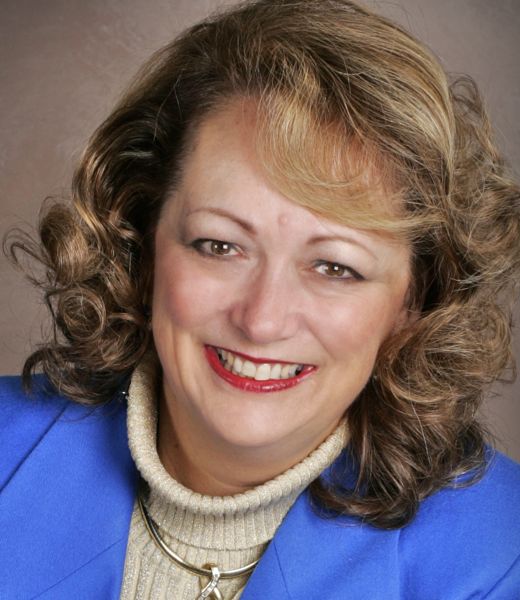
El Dorado County Superintendent of Schools Vicki Barber plans to retire effective June 30.

Barber, who was first elected county superintendent of schools in 1994, was re-elected for four additional terms. She started with the El Dorado County Office of Education in July 1983 as the director of Special Education, was promoted to assistant superintendent in 1984 and became deputy superintendent in 1990.

Vicki Barber

“We are extremely fortunate to have such exceptional schools that deliver quality education throughout the county. I am so appreciative of the support that public education has received in this county and have deep gratitude for the dedicated and passionate educators who deliver such outstanding service to our students and families every day,” Barber said in a statement.

The county board of education has appointed Deputy Superintendent Jeremy Meyers to fill the remainder of the term that expires in 2014. There will be primary election in June 2014 and, if needed, a run off the following November.


South Tahoe mayor controls board appointments

By Kathryn Reed

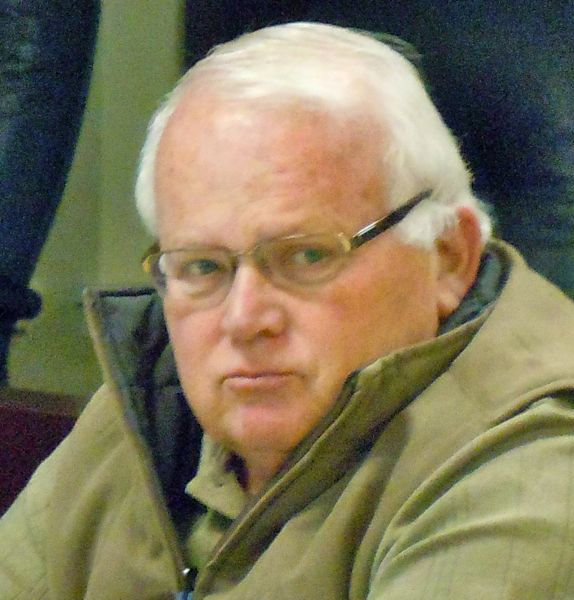
In a bit of gamesmanship, South Lake Tahoe Mayor Tom Davis bumped colleague Angela Swanson from the California Tahoe Conservancy board and got himself appointed to it.

Davis filled out the council assignments for the various boards and then the council voted on his recommendations. While this process has been done in the past, the norm in recent years has been for the council to volunteer to be on a board in open session and then the council votes.

Tom Davis

“I think it’s more efficient,” Davis told Lake Tahoe News of how he did things this year.

He said during the Jan. 8 discussion, “Sometimes I just think change is good.” But he didn’t take himself off his pet boards – the Lake Tahoe South Shore Chamber of Commerce and Lake Tahoe Visitors Authority – to embrace change.

Davis gave no reason for initially recommending Councilman Hal Cole be on the CTC board. Swanson made is well known she wanted to retain the seat and asked if the council was not satisfied with the work she was doing. No one responded.

Instead, Cole nominated Davis for the CTC board. That was approved with a 3-1 vote, with Swanson the dissenter.

It is possible when the fifth council member is seated that the assignments could be changed. As of the morning of Jan. 8 only Kathay Lovell had applied. She was on the CTC board when she was previously on the council.

At Tuesday’s council meeting the four decided to interview the candidates on Jan. 29 at 9am. This way if they cannot find consensus, they could call for an election in June. The deadline to make that decision is Jan. 30.

People have until Jan. 25 to apply for the seat vacated by Claire Fortier.

Other key board appointments:

• Tahoe Regional Planning Agency – Cole

• Tahoe Transportation District – Swanson

• Cal-Tahoe JPA – Swanson, JoAnn Conner

• Recreation JPA – Conner

• South Tahoe Chamber of Commerce – Davis.

• Waste Management JPA – Conner.


Tax dollars being used to lure violent game creator to Nevada

By Anjeanette Damon, Las Vegas Sun

Last month, the Nevada Economic Development Board signed off on a plan to invest $600,000 in tax dollars in a video game development company looking to relocate to Las Vegas.

The decision to approve the money for Take-Two Interactive garnered little notice at the time and won unanimous support from the board. In fact, the decision dovetailed perfectly with Gov. Brian Sandoval’s economic development plan of attracting more high-tech firms — and specifically entertainment technology firms — to Nevada.

But within the roster of video games developed by Take-Two Interactive is “Grand Theft Auto” and its sequels — games that have become poster children for the violent video games at the center of a debate in the wake of the mass shooting at Sandy Hook Elementary School in Newtown, Conn.

In an ugly irony, the board approved the money for the game developer the same day the shooting took place — a fact that most board members weren’t even aware of during the meeting or that was mentioned in the discussion.

The full details of the horror at Sandy Hook were just emerging as the board considered the tax incentive for Take-Two Interactive.

“I personally didn’t hear about it until after we adjourned and my chief of staff said to me, ‘My God, did you see what happened?’” said board member and Secretary of State Ross Miller.

“Grand Theft Auto” is a critically acclaimed video game upon which Take-Two Interactive depends heavily for its revenue. It’s also decried by many who believe video game violence is at the root of societal violence today.

National Rifle Association Executive Vice President Wayne LaPierre mentioned the game specifically while arguing that curtailing violent video games is more important than gun control.

In “Grand Theft Auto,” players steal cars — often violently. They can also participate in all manner of virtual mayhem, including rape and clubbing to death a prostitute to avoid paying for sex. (Some critics dispute that what is depicted in the video game is actually rape.)

“It’s disgusting. It’s repugnant,” former state Sen. Sheila Leslie said.

“I’m troubled by much of what we’re doing here,” Leslie said, referring generally to the use of tax dollars to draw private companies to the state. “But I didn’t know we could stoop to this level. It is unbelievable to me that we would invest in a business like this.”

A spokesman for Take-Two Interactive said the company has not become involved in the recent debate over video game violence and directed questions to the industry’s trade association. Calls to the Entertainment Software Association were not returned.

The decision to invest tax dollars in Take-Two raises the question of whether social issues should be part of deciding which companies should earn tax incentives.

In addition to fitting into Nevada’s economic development plan, Take-Two will become a business tenant in redeveloping downtown Las Vegas, bringing with it 150 quality-assurance jobs paying an average of $18 an hour.

“We’re happy that Take-Two chose Nevada and is bringing 150 really good jobs. We are happy to have them here,” said Sandoval’s economic development director Steve Hill.

He added it’s unfair to draw a nexus between the types of games Take-Two creates and violence such as occurred in Newtown.

“It’s unfair to imply a correlation between such a horrible tragedy without any evidence there is a correlation,” he said.

Studies into the effect of video game violence are mixed. The video game industry holds no correlation exists between societal violence and video games. The American Psychological Association, however, finds violent video games can lead to an increase in aggression and hostility in some youth.

Many legislative leaders said the fact the company has violent video games in a library that includes sports games and others for a younger audience shouldn’t necessarily be a deal breaker.

Miller said he doesn’t believe violent video games play a role in atrocities such as the Sandy Hook mass shooting and would have voted to approve the money even if he had known what was taking place.

Democratic Sens. Debbie Smith and Mo Denis said a decency test would be difficult to administer in economic development.

“I personally have concerns about violent games, having raised three children, but on the economic development side, it’s a bit of a slippery slope once you start making judgments on companies based on whether or not you approve of the product,” Smith said.

Assembly Minority Leader Pat Hickey, R-Reno, admitted he’s troubled by violent video games. But he sees another potential upside to bringing Take-Two to Nevada.

“The Legislature may want to invite their CEO to be a part of any discussion we have regarding the influences of video game violence on the young. Who knows, instead of “Grand Theft Auto,” we might influence them to do an interactive version of ‘Little House on the Prairie.’”

It’s perhaps a silly question to ask in Las Vegas, where the economy is driven by vice.

“Nevada is too moral?” Hickey scoffed. “I mean, please, with all of our institutionalized vices, I don’t think we are in position to make that call.”


Ski report: Time to carve

Shaping up to be a great day to carve some turns.

Here is the Jan. 8 ski report.

— Curtis Fong


Swiss Chalet restaurant staying closed for now

The iconic Swiss Chalet restaurant will remain closed for several more months.

When reached last fall, owner Peter Baumann told Lake Tahoe News the South Lake Tahoe restaurant would reopen Dec. 12. That didn’t happen. On Jan. 7, he told LTN it will open in the summer.

He said personal reasons are keeping the restaurant closed.

While there is a for sale sign on the property, Baumann said it is for the center. Asked if the restaurant is for sale, he said, “I can’t disclose that right now.”

The center has been on the market since last spring.

— Lake Tahoe News staff report


Ski resort clinics keep people out of hospital ER

By Kathryn Reed

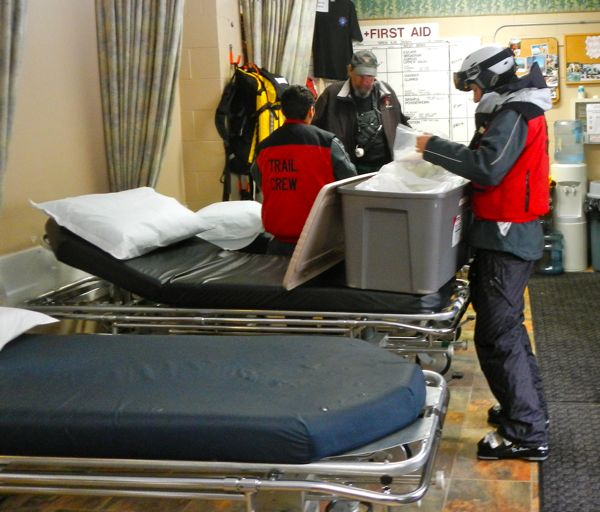
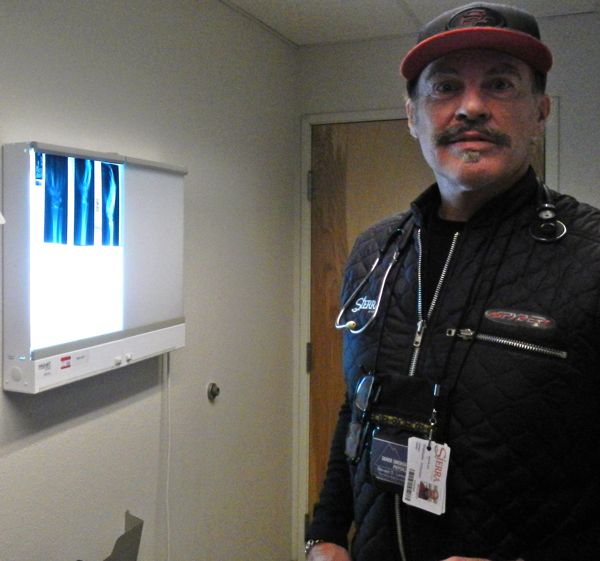
TWIN BRIDGES – An X-ray of a wrist is on the light board. The patient is being seen in one of the three exam rooms. Out front all of his vitals are inserted into a computer.

But this is no ordinary emergency room. This is where injured skiers and snowboarders come to be treated at Sierra-at-Tahoe.

It is one of three clinics Barton Health medical personnel operate. The others are at Heavenly and Kirkwood mountain resorts. They are staffed with an emergency room doctor, registered nurse, technician and radiologic technician.

Dr. Steve Leman considers Sierra the model ski clinic based on how it is set up and operates. Barton’s team works closely with Sierra’s ski patrol. Patrollers assist people with less serious injuries in the front area. They do more first aid work as trained emergency medical technicians.

Steve Leman is the doctor on duty Jan. 6 at Sierra-at-Tahoe’s medical clinic. Photos/Kathryn Reed

The three exam rooms Barton uses once were the ski patrol locker rooms. Dispatch is still there so everybody is hearing the same calls.

However, it is a patroller who decides when CalStar is called in to airlift someone off the mountain. Pilots have three locations they may land at Sierra. On Sunday a chopper is called to take someone out who has a head injury.

But Leman and his crew also treat head injuries.

“If we can stabilize them, they can go by private car to the hospital for a CAT scan,” Leman explained during a tour of the clinic Jan. 6.

He said there used to be so many head injuries with all of them taken by ambulance to Barton Memorial Hospital. This would present a problem for the rest of the community because the ambulances were tied up going to ski resorts – sometimes stuck in long holiday or weekend traffic – and unable to respond to other calls.

Leman said the medical clinics at the ski resorts mean fewer people going to the hospital’s emergency room.

With the 10 to 20 patients each clinic sees a day on peak weekends and Barton’s ER full at those times, “we would be in disaster mode,” Leman told Lake Tahoe News, if the skiers ended up at the hospital. That is why it’s imperative to have the clinics at the resorts, he added.

Barton staff was at Sierra all through the holiday period, while normally they are at the clinic just on weekends.

Sierra ski patrol operate the first aid clinic adjacent to Barton’s operation.

Even though skier visits are up 900 percent compared to a year ago at this time for Sierra, the number of injuries has not increased anywhere near that percentage. The soft snow is the big contributing factor to keeping people out of the clinic.

But their info is easily accessible. All of their data is entered into a computer that is part of Barton’s system, so it’s all centralized.

Plus, people can leave with their X-rays to take to their physician.

Leman, who used to be on the ski patrol at Sierra in the 1970s, said there was a time when someone would come up via bus, hurt themselves, be hospitalized and then need their parents or someone to drive to Tahoe to get them. With the clinic, pain meds are available to make the ride back tolerable, docs can stabilize many injuries, and they have the X-rays to know if someone needs more immediate care. This can mean the person travels back with their buddies instead of needing someone to come get them.

“They like me. I’m the lady with narcotics,” Sandy Wirth, registered nurse, says. She shakes her head though; wishing snowboarders would wear wrist guards.

CalStar flies into Sierra on Jan. 6.

Wrists and shoulders are what snowboarders injure most, while it’s knees for skiers. And the harder the snow, the more injuries there are. However, fresh, deep powder can increase knee injuries.

It’s cheaper if people go to one of the clinics at a ski resort because the charges are nowhere near the hospital’s ER costs. Plus, it’s faster.

“We are able to serve most patients at the resort and in most cases deliver definitive care, which saves them a long, painful drive to the hospital,” Warren Wither, medical director of emergency service at Barton Memorial Hospital, said. “The cost is lower for patients than at the hospital.”

It’s not just skier injuries the Barton crew treats.

“They help us with seeing employees with colds or flu,” John Rice, Sierra’s general manager tells Lake Tahoe News. “A lot of kids are away from home. They can come in and get a script.”

Wirth says she’s seen skiers who have had an allergic reaction, needed sutures and have let their sugar levels get too low if they are diabetic. While it’s considered a clinic for skiers and snowboarders, it is a medical clinic for anyone who needs it.


Cellist to accompany TOCCATA in February

TOCCATA – Tahoe Symphony Orchestra and Chorus continues its winter season with a series that features guest cellist Jeffrey Lastrapes in works by J.S. Bach, Vivaldi, Teleman, and Buxtehude.

Performances are Feb. 9 at 3pm at St. Patrick’s Church in Incline Village; Feb. 10 at 3pm at St. Theresa Church in South Lake Tahoe; and Feb. 11 at 7pm at Trinity Church in Reno.

Tickets are available at the door or online. Contact TOCCATA at toccatatahoe@gmail.com or (775) 313.9697.


Kings Beach attempted robbery may be connected to Incline incident

By Barbara Barte Osborn, Sacramento Bee

Placer County sheriff’s deputies are seeking the public’s help in apprehending a suspect who attempted one, and possibly two, recent armed robberies in North Lake Tahoe.

The suspect is male, approximately 6-feet tall and about 180 pounds. He was wearing dark clothing and wielding a handgun, possibly a revolver, in an attempted Dec. 30 robbery in Kings Beach.

He also might have been involved in a similar Jan. 2 robbery in Incline Village.

At 9:09pm on Dec. 30, a person entered the Kings Beach Liquor Store at 8645 N. Lake Blvd. in an apparent attempt to rob the store, but did not complete the robbery and fled on foot.

Because of the similar incident later in Incline Village, the Washoe County Sheriff’s Office is conducting a joint investigation with the Placer County department.

Anyone with information regarding the incidents or the identity of the suspect is asked to call Placer County Detective John Riella, (530) 581.6325.

To remain anonymous and be eligible for a reward of up to $1,000, callers may contact Placer County Crime Stoppers, 800.923.8191.


Official: Byrne’s footprints point to hypothermia or intoxication

By Mary Callahan, Santa Rosa Press Democrat

A 19-year-old Petaluma woman found dead in the snow near South Lake Tahoe appeared to have taken a wrong turn on New Year’s Eve and wandered through the snow a short distance before shedding her winter jacket and coming to rest behind a snow bank, authorities said Monday.

Alyssa Byrne was found dead three days later, her boot prints the only ones in the vicinity. The pattern of the footprints suggested disorientation that may have been caused by alcohol consumption, hypothermia, or both, an El Dorado County sheriff’s official said.

“I don’t want to speculate,” sheriff’s Lt. Pete Van Arnum said, though he confirmed authorities have received reports that Byrne had been drinking while in town with friends for an outdoor music festival.

He also noted that advanced hypothermia causes confusion and deteriorating cognition. Victims can become disoriented and lose judgment.

“It was subzero that night and, depending on how long she was out in the cold, that could have affected her,” Van Arnum said.

Experts say it’s common for those with fatal hypothermia to remove clothing shortly before death because of physiological changes that cause a spreading sense of warmth.

Byrne was attending the three-day SnowGlobe Music Festival at Lake Tahoe Community College when she died late New Year’s Eve or early the next morning.

She had driven to Lake Tahoe the previous Saturday with three friends and was sharing a room with them at the Horizon hotel-casino Stateline.

But on New Year’s Eve she got ahead of her friends in a concert crowd and suddenly disappeared about 11pm, telling a friend by cell phone 30 minutes later that she was taking a shuttle bus back to the hotel. They never saw her again, despite earlier reports of saying they had.

On Friday morning, a South Tahoe Public Utility District worker perched atop an elevated truck peered over a 4-foot snow bank and spotted her lifeless body about a half-mile from the college campus.

Byrne was lying about 10 feet off Pioneer Trail, between Al Tahoe Boulevard, which leads to the college campus, and Black Bart Trail, the opposite direction of the hotel.

Authorities said long shuttle bus lines may have caused her to join others who elected to walk back to Stateline — an approximately 4-mile route that would have followed Al Tahoe Boulevard and then turned left along Pioneer Trail, headed northeast. It also is possible she walked through the campus instead of taking a paved path used by others, Van Arnum said.

But her final location indicated she turned right on Pioneer Trail, rather then left, crossed the road, and walked along the road a ways before climbing over a 4-foot berm of frozen snow pushed off the roadway, Van Arnum said.

Her boot prints were visible coming over the berm and heading southwest for about 100 yards along the back side of the snowbank, he said.

“It looked like she was kind of disoriented from the footprints. They kind of wandered a bit,” he said.

She was fully clothed when she died except for her white ski jacket, which was found a short distance away, he said.

Investigators hope a forensic autopsy scheduled Tuesday in Sacramento will shed some light on what happened.

A full toxicology panel would automatically be included, but will be an important investigative tool in Byrne’s case. The toxicology tests will be run through an independent lab and could take a full month, Van Arnum said.


Nevada one day may not be only place for sports betting

By Richard N. Velotta, Las Vegas Sun

Lawmakers from across the country are contemplating whether it’s worthwhile to move into a domain that’s been almost exclusively Nevada’s since 1949 — legalized sports wagering.

But a top Las Vegas race and sports book director says that even if other states cleared the numerous legal and legislative hurdles to offer betting on sports in their states, it probably wouldn’t have a big effect on Nevada.

The issue of legalizing sports wagering was a topic of a panel discussion Saturday at the three-day meeting of the National Council of Legislators from Gaming States. The organization’s winter meeting at the Rio in Las Vegas is being attended by about 100 lawmakers and regulators from 21 states, a Canadian province and Washington, D.C. Representatives of several American Indian tribes that operate casinos also are attending.

New Jersey is the state most likely to move in on Nevada’s territory after the state’s voters overwhelmingly approved a constitutional question that would enable gamblers to place sports bets at New Jersey’s horse tracks and in Atlantic City casinos.

New Jersey voters approved the measure in 2011, and Gov. Chris Christie signed a constitutional amendment in January 2012 to pave the way for sports betting this month. The state decided not to challenge a federal law enacted in 1992 that makes it illegal for people to bet on professional and amateur athletics.

The Professional Amateur Sports Protection Act gives Nevada, Oregon, Montana and Delaware exemptions from the law. Although Nevada is the only state with legal sports books, the three others were grandfathered in because they had laws on their books to allow football betting in conjunction with lotteries and contests.

Christie said New Jersey would continue to move toward licensing sports books, and the NCAA and the four major professional sports leagues filed a suit in federal court to block New Jersey’s plans.

Most of the panelists in the session of the National Council of Legislators from Gaming States supported state efforts to get into the sports book game.

Donn Mitchell, chief administrative officer of St. Louis-based Isle of Capri, said sports wagering offers another “hook” to get customers to come to a casino.

“Why does the federal government say you can’t have it anywhere except Nevada?” Mitchell asked. “New Jersey is asking that question and rightfully so. It needs to be challenged.”

Alan Koslow, a lawyer with the Fort Lauderdale, Fla.-based Becker & Poliakoff law firm, said while sports books don’t generate a high percentage of revenue for a casino’s bottom line, it does generate gross revenue in hotel rooms, food, beverages, shows and shopping.

“I talked with an executive at Wynn (Resorts) who said the biggest weekend by far at the Wynn Las Vegas properties is the Super Bowl weekend,” Koslow said. “They’re coming here to have a good time, and they’re having a good time.”

Art Manteris, who oversees the sports books at 17 Station Casinos properties in Las Vegas, said the ban on sports wagering in most states diverts money to illegal offshore Internet casinos. Manteris, who lives in Boulder City, said he has a hard time reconciling that what he does for a living is illegal just across the Colorado River in Arizona.

He said the horse racing industry shot itself in the foot years ago when it didn’t attempt to get sports wagering legalized at tracks. Today, the horse-racing industry is dying, and it lost an opportunity to bring a new generation of young gamblers to the track.

Manteris thinks that if sports wagering were legalized in other states, it wouldn’t hurt Nevada’s industry. He said that like the perceived threats of riverboat gaming and tribal casinos to Las Vegas in the past, legalized sports wagering elsewhere would broaden the market and attract more people to the city.

“On Super Bowl weekend, where would you rather go: Las Vegas or some other place that may have a casino that has sports betting?” Manteris said.

In 2011, Nevada’s 216 sports books took $2.9 billion in wagers, but about 95 percent of that was returned to gamblers who won. The state wins about $10 billion in gaming a year, but of that, only about $150 million comes from sports wagering.

Only one panelist took an opposing viewpoint on encouraging states to legalize sports betting.

Former U.S. District Attorney Michael Fagan, now of the St. Louis-based Center for Advanced Prosecution, said states should be wary of the hidden costs of any form of gambling.

“If you think it’s something that can be regulated, you have to devote resources to it,” Fagan said. “You’ll need to be able to investigate corruption and fraud and allegations that inevitably occur with sports wagering.”

Fagan said he has seen studies show that jurisdictions that allow sports wagering spend $3 for every dollar they make from gamblers on investigations and the social costs of problem gambling associated with sports betting.