Liberty hands out nearly $4,000 in scholarships

Liberty Utilities has awarded several scholarships to students living within the utility’s service territory.

Recipients are:

South Tahoe High School – Sara Ortega

Loyalton High School – Cory Peterman

Douglas High School – Keaton Peters

Coleville High School – Nestor Gutierrez

North Tahoe High School – Stein Arntson

Portola High School – Trevor Ohle

Lake Tahoe Community College – Nemesis Ramirez.

Each high school senior received a $500 award, and the community college student received $750.


Remote Nev. trail has rugged political path

By Benjamin Spillman, AP

RENO — Hot, dry and dusty.

That’s how someone who buzzed across Nevada on Interstate 80 or Highway 50 might describe the scenery.

But crossing the state on foot via the American Discovery Trail is a completely different experience.

The national, coast-to-coast trail stretches 496 miles through Nevada from Baker to Incline Village, goes over 10,000 and 12,000 foot mountain summits, through thick stands of aspen, crosses paths of elk herds and mountain lions and along the shore of Lake Tahoe.

“It’s paradise, man,” said Brian Stark, who in 2011 ran the Nevada section of the trail in 11 days, seven hours and 28 minutes. “It was a world of difference between running the highway and running actual trail across the state of Nevada.”

Stark, 42, has run across 31 states and made the trip in part to highlight the significance of the American Discovery Trail, which goes between Cape Henlopen State Park in Delaware and Point Reyes National Seashore in California.

Although sections of the trail have been in existence before the United States was a country, the American Discovery Trail hasn’t yet been recognized by Congress. Recognition, according to Stark and others, would make it possible to post trail markers for runners, cyclists and equestrians and help elevate the visibility of the route.

For Nevada, it would mean exposing some of the nation’s best backcountry to a wider audience of potential visitors, extreme athletes and adventurers.

“When I got to those woods and bearing down on Lake Tahoe, the alpine forest, the pine needles, the blue lakes … it was just a really, really great thing to see,” Stark told the Reno Gazette-Journal, describing the experience. “The thought of Nevada from people who don’t live there is flat and brown but that is not the case.”

While the trail is an opportunity to see parts of Nevada, and the country, most people never see, the politics of getting the designation from Congress is all too familiar.

From about 1998, Congress has seen several proposals to designate the American Discovery Trail, but the job remains undone.

Backers say they have a difficult time identifying specific problems they could address because it’s not getting derailed out in the open. It’s merely languishing without action while supporters try to assuage vague concerns about the trail representing an increase in federal control of the land.

Peter Schoettle of the American Discovery Trail Society said westerners in particular have a tendency to view any sort of federal designation as an expansion of the federal government.

“Everybody east of the Mississippi laughs at that and thinks it is loony,” Schoettle said. “I think there is a real split in the country.”

Backers merely want Congress to add the American Discovery Trail to the National Trails System, which was created in 1968 as a system of scenic, historic and recreational trails. There are now eight National Scenic Trails, 15 National Historic Trails and more than 1,000 National Recreational Trails.

The American Discovery would be unique because of its length and fact it goes east-to-west, unlike the Pacific Crest, Appalachian and Continental Divide trails, which go north and south. It would also be a new category of trail that would link urban and rural communities in addition to backcountry.

The bill doesn’t call for any spending, nor would it include restrictions on building, energy development, mining or grazing.

“This is not a wilderness trail. We are not trying to protect any wilderness areas,” Schoettle said. “If somebody wants to build something right next to the trail that’s fine.”

The most recent effort is a Senate bill introduced in May by Sen. Chris Coons, D-Del., and Sen. Mark Kirk, R-Ill. There’s also a companion bill in the House.

Ted Oxborrow of Carson City, who, along with his son, Trevor, supported Stark’s run, has been trying to gain support from Nevada’s representatives. He said it’s been difficult even getting staff members to take the time to listen to the proposal, even though Nevada’s backcountry is a highlight of the entire trail.

Rep. Mark Amodei, R-Nev., whose district includes part of the trail, wouldn’t take a stance for or against the idea.

“Rep. Amodei is not opposed, but as is his practice, he will need to talk with local stakeholders before throwing his full support behind it,” spokesman Brian Baluta said.

Sen. Dean Heller, R-Nev., wouldn’t even go that far.

“Senator Heller is continuing to review this legislation,” spokeswoman Chandler Smith wrote in response to the proposal.

Rep. Steven Horsford, R-Nev., was also noncommittal.

“At this point, Congressman Horsford will further review the bill to determine what it means for Nevada,” spokesman Tim Hogan said.

Senate Majority Leader Harry Reid, D-Nev., is in favor of the bill, said spokeswoman Kristen Orthman.

Although the bill appears non-controversial, it doesn’t make it a slam dunk, according to Orthman.

“It has been tough to move any land bills, frankly,” she said.

Earlier this year a bill with bipartisan, Nevada support to create the Tule Springs Fossil Bed National Monument got derailed in the House after Rep. Rob Bishop, R-Utah, a leader on the Natural Resources Committee, sponsored a change that would have directed proceeds of public land auctions in Nevada back to Washington, D.C.

Oxborrow, 72, who has done the Nevada section of the trail about a dozen times, has no plans to back off lobbying in favor of the designation. He’s already got signs to post as soon as he can get approval from the Bureau of Land Management, which needs Congress to act first.

“People question why I do this,” Oxborrow said. “The answer is because I have a history here.”

His great-grandparents, Mary and Joseph Oxborrow, helped found the small town of Lund in the late 19th century. Oxborrow, of Carson City, acknowledges his style of persuasion could be grating to lawmakers and their representatives.

“I’m older and I tend to be less patient with bureaucracy,” he said. “I tend to say ‘let’s cut the crap and get to the heart of it’.”

Study: Massage benefits athletes

By Amanda MacMillan, Outdoor

If you’re looking for an excuse to hit the massage table more frequently (or to justify the expense if you’re already doing it), you’re in luck. A recent study from the University of Illinois at Chicago backs up what we’ve long suspected: Massage therapy appears to eases muscle soreness after a hard workout.

Strenuous exercise causes a buildup of cell-damaging free radicals in the body, explains study author Nina Cherie Franklin. So she and her colleagues — supported by research grants from the Massage Therapy Foundation and the National Heart, Lung and Blood Institute— measured blood flow and perceived muscle pain of 25 study volunteers after they used a leg-press machine “to soreness” and half of them received lower-body Swedish-style massages.

All participants felt sore immediately after working out, but by about the 90-minute mark, the massage group reported no lingering effects. The non-massage group, on the other hand, still felt lasting soreness 24 hours later. The first group also showed improved blood flow throughout the body for up to three days post-massage, while the second group showed reduced circulation for about the same amount of time.

Read the whole story


Wii tournament at Douglas County library

There will be a Nintendo Wii tournament on June 20 from 5-8pm at the Minden library.

This free program includes pizza and drinks. Signup by June 19 — 775.782.9841.

Teen Game Night is sponsored by the Friends of Douglas County Public Library and the library’s Teen Advisory Board.

The Minden Library is located at 1625 Library Lane.


Wildland firefighting takes funds from other programs

By Jodi Peterson, High Country News

A federal report this week shows how dollars meant for forest restoration and wildfire preparedness often get diverted to fighting wildfires. It’s been that way for years, and as fires get bigger and more expensive to fight, the problem only gets worse.

As we reported last summer: “Just a few days before (the Rim Fire scorched Yosemite), U.S. Department of Agriculture Chief Tom Tidwell had ordered an immediate Forest Service spending freeze for restoration programs, employee travel, and other personnel costs to help funnel an additional $600 million into the agency’s suppression account, which had been bled down to a mere $50 million, about half of what’s typically needed to cover a single week at Level 5, reports E&E News. Such borrowing has happened six other times in the last decade, totaling $2.7 billion. Of that Congress eventually restored $2.3 billion, ‘but not without disruptions to important agency programs’ – many of them the kind that could help lessen fire risks in the future. The FLAME Act of 2009 was supposed to help head off that dynamic by creating a reserve fund for firefighting, but it doesn’t appear to be working, perhaps because of fluctuating appropriations.”

The Forest Service now spends 40 percent of its budget on firefighting, compared to 15 percent in the early 1990s.

This year, it expects to spend about $1.5 billion on suppression, and will probably overrun the fire budget by close to $500 million, according to a May report from Interior.

To keep up, the agency transfers funding from other forest management programs – which means that all kinds of important projects, including those meant to reduce fire danger, go begging.

Read the whole story


Sierra Business Council putting on fall conference

Sustainable business leaders, entrepreneurs, residents, writers and science gurus will gather for Sierra Business Council’s 20th anniversary conference Peak Innovation – The Next 20 Years in Tahoe City from Oct. 8-10.

The conference opens with naturalist and writer Terry Tempest Williams who will be interviewed about “The Power of Place.”

New York Times best selling author Van Jones, a globally recognized innovator of the clean energy economy as well as a renowned human rights activist, will also be speaking. Jones is president and co-founder of Rebuild the Dream as well as co-host of CNN’s Crossfire reboot.

Conference information and registration is available at online.


Hwy. 28 rain gardens to be installed

Several rain gardens are going to be constructed along Highway 28 in Incline Village.

The stormwater treatment project is a collaboration between Nevada Tahoe Conservation District and Nevada Department of Transportation as part of the Incline Village Green Streets Project.

The goal of the project is to treat stormwater runoff using low-cost, roadside rain gardens. The project is expected to result in reduced stormwater volume and pollutant loading to Lake Tahoe.

It will be built in September through the state highway fund, a Nevada Division of State Lands License Plate grant and a Nevada Division of Environmental Protection grant. Incline Village Rotary Club is providing revegetation and maintenance assistance.

Rain gardens are shallow depressions that accept rainwater and snowmelt from the road. They allow runoff to soak into the ground, filtering out pollutants which otherwise could degrade Lake Tahoe’s clarity.

NTCD is asking adjacent homeowners to assist the project in the form of reimbursed irrigation water access.

For more info, call 775.586.1610, ext. 25.


Luggage can put heavy hit on wallet

By Tom Parsons, Los Angeles Times

Lots of people still carry on their bags, but a heavy, big bag more than likely will need to go down below.

And that’s going to cost you.

The overweight and oversize fees are in addition to your checked-bag fees. If your bag is overweight and oversize, you could pay as much as $325 for one checked bag, by the time you add up a checked-bag fee and maximum charges for overweight and oversize bags.

The overweight fee, in many cases, is now $100 for a bag weighing 51 to 70 pounds on American, US Airways, Delta and United. You pay that rate whether the bag is 55 pounds or 69 pounds, so if you have a bag that’s only slightly heavier, unpack a few heavy items, such as shoes, or bring a second bag because it can be cheaper to check two bags within the limits than one overweight bag.

Oversize luggage can also be expensive. If your bag is over 62 linear inches (length, plus width, plus depth), you will have to pay $200 on American, Delta, United and US Airways. On most airlines, the maximum size of bag you can check is 80 linear inches.

Read the whole story


Wooden boat show coming to Tahoe Keys Marina

The South Tahoe Wooden Boat Classic celebrates the history and stories behind the pre-war and post-war runabouts of the 1940s. World II brought among the most significant changes in runabout boats from material, color, design and construction techniques.

The show is July 25-26 at the Tahoe Keys Marina in South Lake Tahoe.

Tickets are available online.


Then and now: From residence to library to coffeehouse

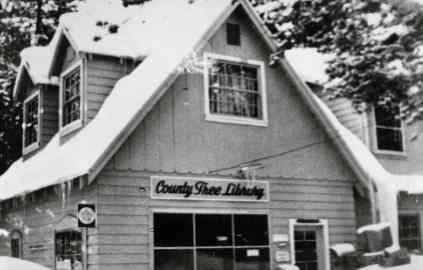
Alpina Cafe was once a library in South Lake Tahoe. Photo/Lake Tahoe Historical Society

Alpina Cafe was once a library in South Lake Tahoe. Photo/Lake Tahoe Historical Society

In 1946, Bob Wakeman bought an 18 foot x 20 foot cabin at what is now 822 Emerald Bay Road near the Y in South Lake Tahoe. He paid $600 for the land and cabin.

He enlarged it to house his growing family, and then in 1948 he opened the front room to become the first library on the South Shore while his family still resided there. Neighbor and friend Pat Amundsen’s house was the other library part: children’s books. In the 1950s, the library migrated to various larger locations including the Clarke Building (recently vacated by the Mattress Outlet), to upstairs at the American Legion Hall, and to other locations. In 1959, the local community erected a new block building in Al Tahoe which housed the library for 24 years.

Alpina Cafe today. Photo/Bill Kingman

Alpina Cafe today.
Photo/Bill Kingman

Over the years, that original Wakeman residence on Highway 89 has housed numerous endeavors. Today, it is Alpina Coffee Cafe. The slightly-elevated kitchen, cash register and serving counter area in the Alpina Cafe was the original 1940s cabin.

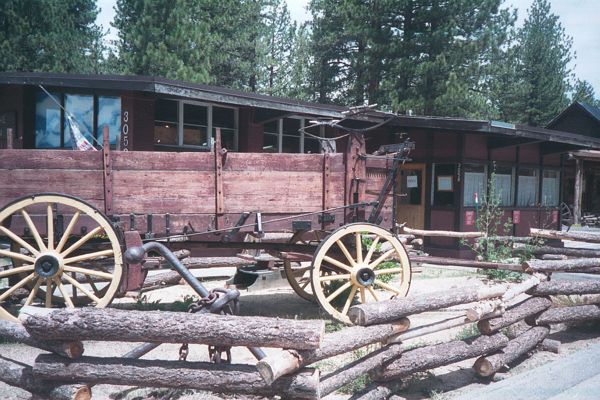
The local community built a new library in the 1950s which now is the Lake Tahoe Historical Society Museum on Highway 50 in Al Tahoe.

The museum was originally a library. Photo/Lake Tahoe Historical Society

The museum was originally a library. Photo/Lake Tahoe Historical Society

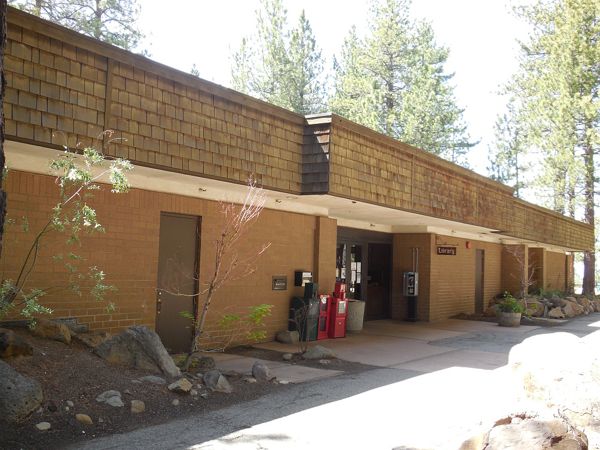
Today the county library is at 1000 Rufus Allen Blvd.

El Dorado County library in South Lake Tahoe today. Photo/Bill Kingman

El Dorado County library in South Lake Tahoe today. Photo/Bill Kingman

— Bill Kingman