Banks allowing small bills to be dispensed at ATMs

By Blake Ellis, CNN.Money

Hundreds of new ATMs capable of dispensing as little as $1 are popping up across the country.

Chase and PNC have been launching ATMs that churn out exact change to the dollar, allowing customers to withdraw denominations as low as $1 and $5.

Chase has rolled out between 350 and 400 such ATMs over the past 18 months, and the count is expected to double by the end of the year. Customers can type in the withdrawal amount, opt for “custom denominations” and select how many bills they want in denominations ranging from $1 to $100.

The new machines, located within branches or drive-throughs, even have the capability of dispensing coins, a service that will be piloted soon and eventually rolled out nationwide.

The move is part of Chase’s push to create what are essentially virtual tellers that don’t require additional staffing and increase efficiency for customers, said Bill Sheley, head of branch innovation. He calls the machines “next generation ATMs or new teller platforms.” Other services the ATMs provide include paying credit card bills and loading Chase prepaid cards with cash.

Meanwhile, PNC has upgraded more than half of its 7,200 ATMs to dispense $1 and $5 bills over the past year, and the rest are expected to be upgraded by the end of the summer. A PNC spokesman said the bank is adding this feature to make its ATMs more convenient for its customers.

The option to get exact change will be a plus for customers — including those with low account balances who want to take out less than $20 or who need $25 but don’t want to take out $40, for example, said Greg McBride, senior financial analyst at Bankrate.com.

“Particularly in difficult financial times when peoples’ account balances have been lower, not having to withdraw more money than you really need is helpful,” said McBride.

The new ATMs are free for customers. But the same $3 out-of-network fees apply to non-customers as they do for any of the banks’ ATMs. A customer’s own bank also typically charges a fee of about $1.60 when they use an out-of-network ATM.

In many cases, these out-of-network fees overshadow the convenience of getting exact change. But for some non-customers, it may be worth it, McBride said.

For someone who needs $45 but would overdraw their bank account if they took out $60, for example, it might make sense to pay a $4 fee to get the precise $45 from a PNC or Chase ATM.

Since it costs banks to add denominations to their ATMs, this new capability will need to prove worth it — either in fee revenue or customer retention — before other banks follow suit, said McBride.

Wells Fargo and Citi said they don’t have any ATMs that dispense $1 and $5 bills at this time. TD Bank has a small number of ATMs inside businesses that dispense $5 bills, but most of its machines dispense only $20 bills and it doesn’t have plans to introduce lower denominations. A Bank of America spokeswoman declined to comment on future plans but said its ATMs currently dispense $10 bills and that the bank “always looks at ways to make banking at our ATMs more convenient.”


Legislators receive gas money, but won’t say where they’ve been

By Torey Van Oot and Jim Sanders, Sacramento Bee

State legislators billed taxpayers more than $450,000 for on-the-job driving in the last legislative year, but officials won’t say where the lawmakers went.

The Senate and the Assembly this week denied records requests from the Bee to review mileage logbooks legislators submitted when seeking 53-cents-a-mile reimbursements for car travel related to their work.

Without the logbooks, it is impossible to track where lawmakers went on the public’s dime in the last legislative year, when they drove more than 849,000 miles on legislative business.

The decision, which comes little more than a year after the Bee and other newspapers successfully sued the Assembly for withholding office budgets under the Legislative Open Records Act, was met with criticism by advocates of greater transparency in government.

Phillip Ung, who works for California Common Cause, said legislative leaders continue to use the act in a way that makes it “the least transparency-promoting law in the state of California.”

“I think if legislators are going to be asking the public to reimburse them for their gas, the public has the right to know where these members are driving,” he said.

Officials in both houses said in written responses that they withheld the logbooks because the request “impacts upon concerns regarding privacy, security and legislative privilege,” pointing to a 1991 state Supreme Court ruling protecting certain information contained in a governor’s calendars from release.

Assembly Administrator Jon Waldie said the lower house is most concerned about safety of the members, since many list specific addresses in their logbooks. He compared the reasoning to both houses’ decisions to withhold legislators’ calendars from public disclosure in recent years.

“You’re going to get patterns, and then once you have the patterns you can easily discern where members are going to be and when they’re going to be there,” he said.

Secretary of the Senate Greg Schmidt echoed Waldie, saying he sees “legitimate security concerns” in releasing the documents.

“Logbooks indicate where people travel, and potentially provide information regarding recurrent travel patterns,” he wrote in an email.

Peter Scheer, executive director of the First Amendment Coalition, said legitimate security issues can exist in releasing records related to public officials’ transportation plans.

But disclosing information about “legislators who are not exactly household names and where they drive in a car is really not going to reveal anything of particularly sensitive nature.” He noted that some lawmakers have elected to use license plates that broadcast their status as a member of the Legislature.

“It reflects an exaggerated if not paranoid sense of their own vulnerability to say that all that information, that information if released could put them in some kind of physical jeopardy,” he said of the rationale.

Scheer also questioned how much travel records could reveal about the deliberative processes of the Legislature, another reason it cited for denying access to the records.

“Merely knowing where they drive within their district or outside of it and perhaps being able to infer from that one or two pieces of information about institutions they may be visiting or even people that they talk to, that does not even come close to breaching the deliberative process privilege,” he said. “That kind of information is … out there in public for anyone to see any time.”

As to what kind of activities on the road could fall under the privacy exemption, Scheer offered that the documents would have to reveal “an act of an X-rated nature in the vehicle which they were getting reimbursed for” to meet that standard.

Releasing the records, he said, could help the public judge “whether their legislators were submitting accurate and fair reimbursement requests or … instead abusing the reimbursement privilege to pass on to taxpayers what should be a personal expense.”

The Legislature began reimbursing members for work-related travel in their personal cars, including trips from their home to the Capitol, in December 2011, after a program providing state-leased cars to members was cut by the Citizens Compensation Commission. The change saved taxpayers nearly $240,000 in its first year, a Bee analysis of reimbursements issued between December 2011 and mid-December 2012 found.

While the change cut overall costs for the Legislature by about a third, individual mileage reimbursements varied significantly by member.

Some legislators declined to seek reimbursement, while others received large sums for driving thousands of miles on legislative business.

Some of the members logging the most miles represent vast, rural districts within driving distance of the Capitol, but others from geographically compact districts also racked up thousands of dollars in reimbursement costs. Sen. Rod Wright, D-Inglewood, for example, sought at least $4,700 in mileage reimbursements last year.

Wright, whose Los Angeles district covers about 108 square miles, has declined to say where he went.


Ski report: What is your dream?

Great conditions. Enjoy Martin Luther King Jr. Day  on the slopes.

Here is the Jan. 21 ski report.

— Curtis Fong


Snippets about Lake Tahoe

• The Placer County Board of Supervisors will meet in Kings Beach on Jan. 22 at 10am. The Kings Beach Benefit Assessment District and Squaw Valley Specific Plan Phase 1 are on the agenda.

• Temple Bat Yam in South Lake Tahoe celebrates its 30th anniversary this year.

• The California Conservation Corps is looking for veterans aged 18-28 to apply for jobs in Lake Tahoe that combine hands-on work experience and skills training in partnership with the U.S. Forest Service. For more info, email CaliforniaCC@vetvoicefoundation.org.

• Boogie Nights, the 1970s and ’80s dance party, is coming to MontBleu in Stateline to launch the reopening of Blu Nightclub beginning Jan. 26.

• Heavenly Mountain Resort on Jan. 19 opened its halfpipe after a five-year hiatus. It can be accessed off Canyon Express chairlift inside High Roller Terrain Park.


Meyers publisher releases ‘Get Out of My Crotch’

By Kathryn Reed

“Get Out of My Crotch.”

This book title is exactly what many women want to tell lawmakers. With a cover of the Statue of Liberty holding a sheet of paper covering her crotch, there is little doubt about what this compilation of 21 essays is about.

It will be released Jan. 22 – on the 40th anniversary of Roe v. Wade, the landmark U.S. Supreme Court decision legalizing abortion.

It’s not a book about abortion. It’s about women, politics, freedom – or the lack of, bodies, and today’s culture.

“Get Out of My Crotch” is rooted in anger.

“I got really mad last spring about hearing about legislation based on menstrual cycles. Every day I would come to work and hear a story about a bill being proposed talking about personhood, or transvaginal ultrasounds, or redefining rape and I could not believe people were not storming the streets,” editor-publisher Kim Wyatt told Lake Tahoe News. “People were talking about this like it was acceptable. I felt like I had to do something.”

The Meyers book publisher created Cherry Bomb Books – an imprint of Bona Fide Books – to be the home of “Get Out of My Crotch”.

“There is great writing in here. There are writers people should know in here … writers people should be reading,” Wyatt said.

The works and writers are:

• “The Alienable Rights of Women” – Roxane Gay

• “Before Roe v. Wade” – Betty MacDonald

• “Remember Savita Halappanavar” – Katha Pollitt

• “Ask an Abortion Provider” – Dolores P.

• “Confessions of a Good Girl” – Sari Botton

• “Three Heresies” – Addy Robinson McCulloch

• “Ripple Effect” – Tara Murtha

• “Lucky Breaks and Little Miracles” – Sarah Mirk

• “A Mile in Their Shoes” – Kari O’Driscoll

• “Knocked Over: On Biology, Magical Thinking, and Choice” – Martha Bayne

• “Endo” – Janet Frishberg

• “Un-Bearing” – Mira Ptacin

• “Grown-Woman Swagger” – J. Victoria Sanders

• “ Justice for All” – s.e. smith

• “The Great Leap Backward” – Camille Hayes

• “Birdsong and Gunshot” – Rebecca K. O’Connor

• “Explicit Violence” – Lidia Yuknavitch

• “Caffeine-Free Rape” – Elissa Bassist

• “I Know Who You Raped Last Summer” – Kevin Sampsell

• “Don’t Know Much About Biology” – Kate Sheppard

• “Binders Full of Women, Episode 1: The Story of Mary and Bill” – Rebecca Cohen.

Botton is the co-editor with Wyatt. She was working on a book about Roe v. Wade when Wyatt came up with her book idea.

While there is a clear audience for the book, Wyatt hopes it will reach younger readers. She wants young women to understand the freedoms they may take for granted are incrementally being taken away at the state level.

“I have lot of young women working here. We talk a lot about politics,” Wyatt said. “Last year they were completely checked out from politics because they didn’t like the BS partisanship. They weren’t paying attention because they were tired of all the chatter.”

She believes this book is for them.

A discussion guide as been created in case educators – more likely college level – would incorporate “Get Out of My Crotch” into their curriculum.

Go online to order a copy of the book.

Events:

• Jan. 22, 7pm: Book launch in Portland on the 40th anniversary of Roe v. Wade at Crush, 1412 SE Morrison St. Readers include “Get Out” Portland contributors Sarah Mirk, Kevin Sampsell and Lidia Yukanvitch. A portion of the proceeds will go to Planned Parenthood Advocates of Oregon.

• Jan. 25, 7pm: Lake Tahoe Community College Writers’ Series hosts a reading of “Get Out of My Crotch” in the library. Short reading and discussion with contributors Janet Frishberg and Camille Hayes, as well as publisher and co-editor Kim Wyatt. Books will be available for purchase.

• March 4, 7-9pm: Bluestockings Bookstore, Cafe, and Activist Center, 172 Allen St., New York. Join editor and contributor Sari Botton and contributors Elissa Bassist, Betty MacDonald, and Mira Ptacin. Books will be available for purchase. A portion of the proceeds goes to Planned Parenthood.


Tahoe Tails — Adoptable Pets in South Lake Tahoe

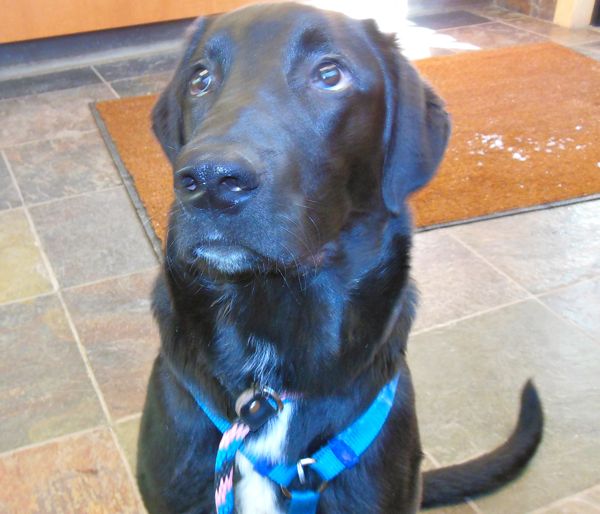
Strider is a very sweet black Lab-German shepherd mix who is house trained and very quiet in the kennel.

He likes to play with other dogs, and seems OK with cats. He was found as a stray and his people never looked for him.

As a puppy, he would benefit from training classes. He will probably get quite a bit larger. He’s about 60 pounds now, will probably get to 80, but he is quite mellow and would probably fit into just about any home.

Strider is neutered, microchipped, and vaccinated. He is at the El Dorado County Animal Services shelter in Meyers, along with many other dogs and cats who are waiting for their new homes. Go online to see photos and description of all pets at the shelter.

Call (530) 573.7925 for directions, hours, and other information on adopting a pet.

For spay-neuter assistance for South Tahoe residents, go online.

— Karen Kuentz


Letter: Kiwanis give back via Bread & Broth

To the community,

The Kiwanis Club of Tahoe Sierra, an annual Adopt A Day of Nourishment sponsor, hosted the Jan. 14 Bread & Broth Mexican theme dinner at St. Theresa Church hall.

“Kiwanis is about helping people and we are happy to be able to serve. It is unfortunate that these meals are needed but since they are, Bread & Broth is always here to help people who are in need.”

In kind, Bread & Broth every year has always been able to count on the Kiwanis Club of Tahoe Sierra to make a $250 monetary sponsor donation and send a crew of community service minded club members to assist the B&B volunteers.

The Kiwanis Club of Tahoe Sierra was represented by Richard and Susan Dart, Mike and Marie Foster, Eric Schafer and Pat Frega. The hard working Kiwanis volunteer sponsor crew bagged and handed out baked goods, vegetables and desserts donated by local grocery and retail stores, served dinner and stayed to help with cleanup.

Bread & Broth and the community of South Lake Tahoe is very fortunate to have organizations like the Kiwanis Club of Tahoe Sierra who see a need and act to improve the lives of those in need. B&B is very grateful for the generous and continuous support of the Kiwanis Club in providing Monday evening meals. In addition, B&B all serves soup and pasta dinners on Friday at the Lake Tahoe Community Presbyterian Church.

If you or your organization is interested in volunteering or donating to the Bread & Broth program, please contact me at (530) 542.2876 or carolsgerard@aol.com.

Carol Gerard, Bread & Broth


Ohio town shows the divided country Obama will lead

By Eli Saslow, Washington Post

FREMONT, Ohio — On the same day, in the same county of northern Ohio, two new grandparents prepared to drive to the same factory for work. They had started their careers at Arm & Hammer the same year, and for more than two decades, they had stood together on a concrete floor and watched baking soda roll down an 80-foot production line. But, on this morning, what they saw looked nothing alike.

Bill Herr, 61, left a house that had declined in value by 20 percent, in a neighborhood blemished by foreclosures, in a town where he believed the economy for the middle class was “falling apart.” He said goodbye to a wife who was recovering from open-heart surgery, which she blamed in small part on the stress and disappointment of the presidential election. He grabbed a coat purchased for $6 at Goodwill and walked out a front door where he had recently hung a sign created by a local Christian motorcycle group: “AMERICA NEEDS GOD’S HELP! PRAYER OUR ONLY HOPE.”

Cathy Morris, 53, left a home she had bought with the help of a middle-class tax break and then drove by the mailbox where she sent regular $25 checks to President Obama. She passed through a town that she believed was “almost back” and pulled into an Arm & Hammer factory where orders had increased by 5 percent and management was once again hiring. “Obama,” she said. “Thank goodness.”

This is the America that Obama will govern in his second term: A place divided not only by ideology, race and class but also by the very perception of reality. Four years since Obama first took office, is the country better or worse off? Safer or more at risk? Principled or desperately lost?

Here in Fremont, as in much of America, it all depends on whom you ask. In this rural, Rust Belt county where Obama won exactly 50 percent of the vote, located in a state where he won 50 percent, residents expect Obama to either ruin the country or rescue it. The president who spoke ambitiously at his first inauguration about uniting America instead arrives at his second with the country further divided. Fourteen percent of Republicans think he’s doing a good job, compared with 88 percent of Democrats. The goal is no longer to effect sweeping conciliation so much as to find fractional compromise in a diminishing common ground.

Inside an Arm & Hammer factory that billows smoke across the farmlands of Ohio, 180 employees now self-segregate into what Morris calls “ideological islands.” Co-workers who were once moderate Democrats or Republicans shifted fully to their sides over the past four years, intensifying the disconnect.

There are free copies of a National Rifle Association monthly magazine in one break room and, as of late last year, a life-size cardboard cutout of Obama in the other. There are workers who share copies of Obama’s biography, “Dreams From My Father,” and others who distribute the movie-version parody, “Dreams From My Real Father: A Story of Reds and Deception.”

And then there are Morris and Herr, two longtime employees working side by side, each anticipating Obama’s second inauguration as a seminal moment.

For one, it is confirmation that life has gotten better.

For the other, it is proof that life has gotten worse.

‘Obama’s America’

Bill and Sally Herr built their farmhouse on the outskirts of Fremont in the months after Sept. 11, 2001, and they agreed to decorate it in homage to the country they served and loved. They placed two American flags on the lawn, five flag magnets on the fridge, a flag-themed coloring book in the grandkids’ room and a flag throw blanket on the living room couch. They framed another flag just inside the entryway, displaying it under three words that summarized their philosophy: “God Bless America.”

But lately, when they talked about the state of the country, the phrase Bill preferred was something different, something much less reassuring.

“Obama’s America,” he said.

Obama’s America: It was the wood pellets burning downstairs in their latest attempt to lower the energy bill; the constant threats of downsizing at the print shop where Sally has worked for 30 years; the 25 percent drop in tithing at their church; the date nights paid for with gift certificates to Arby’s or Casa Fiesta; the 37-year-old son with a doctorate who had been forced to move back in with them for six months after losing his job as a counselor in Toledo.

What bothered Bill most of all was the way he thought Obama had slighted the military, removing troops from combat zones too quickly and once disregarding Iraq as a “stupid war.” Stupid or not, Bill had been there to fight it when the Army sent orders to a 52-year-old whose military experience consisted mostly of humanitarian missions in South America with the Army Reserve. This time, the orders were to deploy on five days notice for a 12-month tour with a unit out of Chicago. So off he had gone into the desert with men less than half his age, once unloading 190 rounds in a single firefight, ducking behind a tank as his chin strap filled with sweat. “So that was stupid?” he wondered.

Bill and Sally were lifelong Republicans who had been wary of Obama from the start, but it was the frustrations of the past four years that had welcomed Fox News as a constant presence into their living room and tea party members to their annual backyard Fourth of July bash. They wanted friends with whom to share their frustrations. Now they forwarded along e-mails from those new friends suggesting murky details in Obama’s family history and traveled to Glenn Beck rallies across the state.

They had sought out a community of others who thought like them, and immersing in that community had changed what they thought.

“The first time he won, I really just considered him inexperienced and misguided,” Sally said. “This time, I think he is purposely taking us to a place we don’t recognize.”

Obama had said he wanted to raise the federal debt limit; Sally and Bill, meanwhile, were teaching Financial Peace University at their church, where they talked about borrowing $21,000 to buy their first house and then staying there 30 years until the mortgage was paid off.

“The most important lesson is you pay off what you owe before you borrow more,” Bill had told the congregants.

Obama wanted to cover rising costs for food stamps and unemployment insurance; Bill had found a factory job that paid $21 an hour and stuck with it through aching feet, back pain and boredom. He had selected a new Arm & Hammer trinket out of the company catalog to mark every five years of employment and displayed those gifts proudly around his house. He had continued to fill the vats of glue and load cartons of baking soda boxes onto the line, watching 270 of them get filled every minute, eight hours a day, for 23 years.

On the other side

Cathy Morris, an Arm & Hammer quality supervisor, had worked alongside Bill for every one of those years without ever speaking to him about politics. She had overheard enough of his conversations to know: “He’s way over on the other side,” she said — and she preferred to associate only with her own side whenever possible.

She picked out an elliptical machine at the gym farthest from the TVs, because they were always tuned to Fox News. She deleted conservative friends from her Facebook page. She went on Snopes.com to investigate rumors about Obama and then shared her findings mostly with other liberals — the mechanic at work whom she spotted at a rally for Vice President Biden, her union Democrat father or her two daughters who had graduated from liberal arts colleges. In what increasingly felt like a fight over basic American principles, she decided her role was to reinforce the stakes with liberals already on her side.

“Why waste my breath talking about the president to somebody who is always going to hate him?” Morris said. “If they can’t understand what he’s accomplished, it is already a lost cause.”

How, she wondered, could anyone not see the proof? The local unemployment rate had dropped from 13 percent to just more than 6 percent. The nearby National Machinery Plant, which had nearly closed its doors a few years earlier, now had trucks lining up at the loading docks like floats awaiting the start of a victory parade. The two colleges in town had become more diverse, and Arm & Hammer had begun offering benefits to same-sex domestic partners. Because of health-care reform, Morris’s youngest daughter, 22, has been able to stay on her mother’s health insurance plan. Morris decided to repay the president by doing something she had never done: making regular donations to Obama’s reelection campaign.

In this county of 50-50, she had decided there was no more room for ambivalence. “You are all in for him or against him, and you have to commit,” Morris said.

Local membership had risen for both the tea party and the Democratic Women’s Club, and one disagreement on election night had resulted in an assault charge. Even the area’s once-tranquil town hall meetings had devolved into a shouting match, with one woman suggesting that liberals in Washington should be “shot in the head,” prompting local Democrats to demand a police investigation. Ever since, local politics had all but come to a standstill.

But the line at Arm & Hammer had to keep moving, 270 cartons a minute, so employees had decided to guard the peace by talking sparingly about Obama or his second inauguration.

“I only confide in people who think like I think,” Herr said.

“Smile and stick to your side,” Morris said.

So they stood together in polite silence and watched baking soda roll down the manufacturing line and onto the trucks, where it would be delivered into an economy that was improving or combusting, in a country where life was getting better or worse.


Mancuso’s 7th tops for U.S. women in super G

By USSA

CORTINA, Italy — Julia Mancuso (Squaw Valley) blasted through heavy snow Sunday to finish fifth and lead three U.S. Ski Team women into the top seven as Germany’s Viktoria Rebensburg picked up the win.

Leanne Smith (N. Conway, N.H.) was sixth and Lindsey Vonn (Vail) seventh.

Vonn remains second in the Audi FIS Alpine World Cup super G standings with Mancuso third. It was the final speed event before next month’s FIS Alpine Ski World Championships in Schladming.

Vonn and Mancuso remained second and third in the Audi FIS World Cup super G standings.

Mancuso survived a scare coming out of the start where she lost her pole and almost went out. She mastered challenging weather conditions with heavy, wet snow falling throughout the race.

“It was really tough to be fast today with it snowing so hard. It was OK until the bottom and I had to wipe my goggles coming around the corner, but I don’t think it cost me much time,” Mancuso said.


Arkansas jury finds ex-Douglas County man guilty of murder

By AP

CONWAY, Ark. — A jury in Faulkner County has found a doctor guilty of killing two men at a Conway home in 2002.

The panel deliberated about an hour on Friday before convicting Richard Conte, 63, of two counts of capital murder. Conte was accused in the shooting deaths of 49-year-old Carter Elliott and 25-year-old Timothy Wayne Robertson.

Little Rock television station KTHV reports prosecutor Cody Hiland did not seek the death penalty. That leaves the only sentencing option of life in prison without parole.

Prosecutors charged Conte in 2011 as he was being released from prison in Nevada, where he was serving time for kidnapping his ex-wife, Lark Gathright-Elliott — who was once married to Carter Elliott.

Prosecutors used a fast food receipt to tie Conte to the scene.

Both Conte and Elliott had been married to Lark Gathright-Elliott. Conte’s marriage to her in 2001 lasted three months.

A month after the pair were slain in Arkansas, Conte kidnapped Gathright-Elliott from Utah and took her to his Clear Creek Canyon subdivision home in Douglas County. A contract physician with Carson-Tahoe Hospital, he drugged her. Sheriff’s deputies rescued her.