Search and rescue looking for Tahoe team members

The South Lake Tahoe arm of the El Dorado County Search and Rescue team is looking for volunteers.

Applicants must be 18 years or older.

While the primary focus is backcountry response, no special skills are necessary to join.

Candidate training academy prepares volunteers to safely execute a wide variety of missions. The academy includes search theory, lost person behavior, helicopter operations, man tracking, GPS/land navigation, wilderness survival and downed aircraft/emergency locator transmitters.

After initial training, volunteers have the opportunity to participate in specialized teams including technical rope rescue, alpine mountaineering, Nordic rescue, snowmobile/off highway vehicle team, swift/still water rescue and incident command.

South Lake Tahoe teams respond to an average of 65 calls annually. In 2012, the team provided emergency response to approximately 140 victims.

Volunteers are also needed in non-fielding roles, with a focus on planning, operations, logistics and administrative support.

For more information, contact El Dorado County sheriff’s Deputy Greg Almos at (530) 573.3058.


U.S. men dominate Sprint Grand Prix

By USSA

PARK CITY — Olympic champion Shaun White, who rides for Northstar, led a U.S. sweep in the Sprint U.S. Grand Prix at Park City on Friday.

Olympic bronze medalist Scotty Lago (Seabrook, N.H.) was second and Luke Mitrani (Mammoth Lakes) third in the FIS World Cup.

Chinese rider Jiayu Liu took the women’s title over FIS World Champion Arielle Gold (Steamboat Springs, Colo.) with Kaitlyn Farrington (Sun Valley, Idaho) third.

The finishes for Mitrani and Gold were enough to clinch the Sprint U.S. Grand Prix season title, along with the U.S. Championship crown – plus a payday of $20,000 for the series win.

White left the door open, falling near the bottom of his first run. Lago and Mitrani both rode at an extremely high level, putting the pressure on White for his final run.

Favorite Kelly Clark (W. Dover, Vt.) struggled in her two runs, crashing both times. Gold, who recently won the FIS Snowboard World Championship halfpipe, rode strong and picked up the Sprint U.S. Grand Prix series title and $20,000.


El Dorado County death row inmate dies in prison

By Sam Stanton, Sacramento Bee

James Leslie Karis Jr., a convicted killer whose court case became so tangled in death penalty politics that he was sentenced to death twice, died early Thursday at San Quentin’s death row.

Karis, 61, was found unresponsive inside the cell where he was housed alone and later pronounced dead at 6:40am, the state Department of Corrections and Rehabilitation said.

The cause of death is not known, and an autopsy will be performed.

What is known is that he did not die from a state-ordered execution. California has not executed an inmate since January 2006 because of legal fights over the death penalty.

Karis was sent to death row Sept. 20, 1982, after his conviction in the rape and murder of 34-year-old Peggy Pennington. He abducted Pennington and another woman in July 1981 as they took their daily walk around their workplace at the El Dorado County Welfare Department.

He took them at gunpoint to a remote area near Placerville and forced both to remove their clothes.

Karis raped one of them, then let them get dressed, marched them to another spot and shot both of them.

Pennington died, but the other victim, a 27-year-old woman, survived and later testified at trial.

Karis was sent to death row, but a federal judge overturned his sentence in 1998 after finding that evidence of Karis’ tormented and abusive childhood had not been presented as evidence during the penalty phase.

Karis faced a second trial in 2007 in Sacramento and refused to allow his lawyers to offer evidence of his childhood abuse or anything else that might win him a life sentence.

He was returned to death row and, until Thursday, was one of 729 inmates awaiting execution.

Karis’ public defender in his original trial, Stephen Tapson, recalled his client as a “big, gruff guy.”

During the death penalty phase, the judge did not allow the abuse evidence to be used and ordered Karis sent to death row, said Tapson, now one of El Dorado County’s most prominent defense attorneys.

Appellate lawyers later returned to court to try to present the childhood abuse evidence, but Karis refused to allow it, taking over the case himself and telling the judge that the evidence didn’t “amount to a hill of beans.”

“They spent hours digging up all these terrible things about his childhood to present to a jury in hopes they would not send him to death and he basically said ‘(Screw) you,'” Tapson recalled. “So he chose his own death penalty.”

A federal judge in Sacramento overturned the death penalty in 1998 because evidence of his childhood trauma had not been presented, and Karis faced another penalty phase trial in which jurors again concluded he should die.

Tapson said the millions of dollars spent and years of legal wrangling “is a classic example of the need to abolish the death penalty because they just die there, so you don’t have to worry about it.”

“It’s much cheaper if they die in prison rather than trying to kill them,” he added.

California voters so far have not agreed with that stance. They rejected a ballot measure in November that would have eliminated the death penalty, and victims’ groups have launched efforts to overturn impediments to restarting executions in California, among them an effort to switch to using one drug instead of three to execute inmates.

“It’s a shame that a monster like Karis was permitted to die of natural causes,” El Dorado County District Attorney Vern Pierson said. “Obstructionist tactics and weak representatives in Sacramento allowed this to happen.

“It’s time for the governor to enact real reforms to the death penalty system.”


Snippets about Lake Tahoe

• Bears have been seen out and about in the basin. They don’t sleep through the winter because they go through a state of torpor instead of true hibernation. When winter weather comes back they will likely go back to their den.

• Tahoe Mountain Milers running club raised $2,300 during the 2012 Kokanee Salmon Run to be used for projects at Taylor Creek Visitor Center and educational materials for this year’s Kokanee Salmon Festival.

• MontBleu’s Ciera Steak + Chop House in Stateline is the lone Northern Nevada restaurant to earn the Four Diamond designation from AAA.

• South Lake Tahoe Rotary’s 2nd annual Off the Wall fine art auction is Feb. 9 at 6:30pm. The event is at Inn by the Lake. The $15 fee includes hors d’oeuvres and Champagne.

• Ritz-Carlton, Lake Tahoe is on U.S. News & World Report’s gold list of Best Hotels.


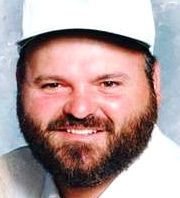
Bert Joseph Lucido — 1952-2013

A celebration of life for longtime Lake Tahoe Unified School District bus driver Bert Joseph Lucido will be Feb. 2 at 1pm at St. Theresa Catholic Church in South Lake Tahoe.

Mr. Lucido died Jan. 25 from injuries related to a fall. He was 60.

Bert Lucido

He was born Oct. 8. 1952. Mr. Lucido spent most of his life in South Lake Tahoe, having moved to the city in 1958.

Mr. Lucido always had a smile on his face as he drove the yellow bus and was always waving to people. The South Tahoe High grad had also worked for South Tahoe Public Utility District.

He liked all kinds of sports, but it was the San Francisco Giants and 49ers that he rooted for most often.

Mr. Lucido is survived by his wife Del, daughter Dani, mother Frances, sister Francine, brothers John and David, nephews Greg and Tommy, and niece Alexa.

In lieu of flowers, an account has been established at Wells Fargo Bank to provide for the continuation of his daughter’s college education. Donations may also be sent to any charity for the blind in honor of his nephew, Tommy.


Nevada casinos post annual net loss

By Cy Ryan, Las Vegas Sun

CARSON CITY — For the fourth consecutive year, Nevada’s major casinos posted a net loss — $1.2 billion in fiscal 2012 — but business is looking up, state gaming officials said. The state Gaming Control Board issued its annual “Gaming Abstract” today showing the 2012 loss down from $3.9 billion in fiscal 2011. The loss was $3.4 billion in 2010 and $6.7 billion in 2009.

“It’s getting better,” said Michael Lawton, senior research analyst for the board.

Total revenue collected by the 265 Nevada casinos that grossed $1 million or more reached $22.9 billion, up from $22 billion in 2011. A total of 44 percent of revenue came from gaming, down from 46 percent in 2011, Lawton said.

Lawton noted that many states have casinos, and many people come to Nevada for other attractions. “The customer’s wallet has been divided in different ways and spread in other ways,” he said.

Revenue from rooms was up 8.7 percent; food increased 6.3 percent; and beverages grew 8.7 percent. The average daily room rate on the Las Vegas Strip was $131, compared to $128 in 2011, with an occupancy rate of 90.4 percent.

The net loss in 2012 for casinos on the Las Vegas Strip was $1.7 billion, down from $2.2 billion in fiscal 2011. It was the fourth year of losses.

Downtown Las Vegas casinos had a net loss of $46.1 million, down from a $56.1 million loss he previous year.


Ethics arise with reprinting books with false facts

By Leslie Kaufman, New York Times

Journalism is meant to be the first draft of history, and newspaper articles fit that mold nicely, fading into the archives. But books are not so neat.

The digitization of books has facilitated the rerelease of a spate of nonfiction works years or decades after their initial publication, and in some cases the common interpretation of their subject matter has evolved or changed significantly.

Melville House confronted this situation with its decision to reissue in December a 1964 book by A. M. Rosenthal, “Thirty-Eight Witnesses: The Kitty Genovese Case.” The book was originally released just months after the murder in March 1964 of 28-year-old Catherine Genovese, known as Kitty, who at around 3 a.m. was returning from her job at a tavern to her apartment in Kew Gardens, Queens, when she was assaulted, stabbed to death and then raped by a psychotic killer.

It was a gruesome story that made perfect tabloid fodder, but soon it became much more. Rosenthal, a Pulitzer Prize-winning reporter who would go on to become the executive editor of the New York Times, was then a new and ambitious metropolitan editor for the paper who happened to be having lunch with the police commissioner 10 days after the crime. The commissioner mentioned that 38 people had witnessed the murder, and yet no one had come to Genovese’s aid or called the police.

Rosenthal quickly mapped out a series of articles centered around a tale of community callousness, and then followed in June with his quick-turnaround book, published by McGraw-Hill. National and international interest in the issue spiked, and soon the Kitty Genovese case became a sociological phenomenon studied intensely for clues to behavioral indifference.

In the years since, however, as court records have been examined and witnesses reinterviewed, some facts of both the coverage and the book have been challenged on many fronts, including the element at the center of the indictment: 38 silent witnesses. Yet none of the weighty counter-evidence was acknowledged when Rosenthal’s book was reissued in digital form by Melville — raising questions of what, if any, obligation a publisher has to account for updated versions of events featured in nonfiction titles. Dennis Johnson, the publisher of Melville House, said he knew about the controversy but decided to stand behind Rosenthal’s account. “There are, notably, works of fraud where revising or withdrawing the book is possible or even recommended, but this is not one of those cases,” he said. “This is a matter of historical record. This is a reprint of reporting done for the New York Times by one the great journalists of the 20th century. We understand there are people taking issue with it, but this is not something we think needs to be corrected.”

But others say there was a way to tip at the controversy without correcting the book. “If you are taking a piece of iconic journalism and reissuing it, it is probably in the interest of the reader of today to place it into a context that makes sense,” said Peter Osnos, the founder and editor at large of PublicAffairs Books, which handles numerous works by journalists. “That doesn’t change the value of the literature.”

In this electronic era publishers are increasingly reaching into their backlists to exploit popular nonfiction from the past. In this case Johnson said that reissuing works in digital form was a mostly automatic effort. For the most part people in the industry agree that there is not a high burden on a publisher to update books based on new evidence about old events, or even to acknowledge that new facts or interpretations exist.

“It would never enter a publisher’s mind that they were obliged to add material,” said Jane Friedman, a co-founder and chief executive of Open Road Media, which specializes in digitizing and marketing backlist books. “The information may have changed, but we are not journalists or academics. The book is the book.”

Still, she said, it could be a smart marketing opportunity. “I like new material because I like to make something fresh if I can. It would have been so interesting to bring up the controversy and start a debate.”

Some publishers and authors do make an attempt to stay current. In his biography on Joe Paterno, Joe Posnanski quickly added material dealing with a shocking new development — the sexual abuse scandal at Pennsylvania State University, where Paterno coached. Still, the book has been criticized for presenting a generally favorable portrayal of a figure whose reputation had since been greatly tarnished.

The fear at the time of the Kitty Genovese case was that urban areas were becoming much more dangerous, and her death amid unconcerned neighbors was a definitive tipping point. Rosenthal’s book played a significant role in building up the incident’s notoriety. The book, which went in and out of print over the decades, also kept the case alive for generations of students studying “Genovese Syndrome,” a description of why onlookers turn away from bad events and the diffusion of responsibility.

But over time the basic facts were called into question. As early as 1984 the Daily News published an article pointing to flaws in the reporting. In 2004 the Times did its own summation of the critical research, showing that since Genovese crawled around to the back of the building after she was stabbed the first time (her assailant fled and returned) very few people would have seen anything.

The article quoted among others Charles E. Skoller, the former Queens assistant district attorney who helped prosecute the case and who also has written a book on it. “I don’t think 38 people witnessed it,” said Skoller, who had retired by the time of the interview. “I don’t know where that came from, the 38. I didn’t count 38. We only found half a dozen that saw what was going on, that we could use.” There were other mitigating factors as well; it was a cold night, and most people had their windows closed.

“Maybe only five people were in the position to hear her calls, if even that,” said Kevin Cook, an author who is currently researching the case for a book of his own and trying to determine exactly who knew what.

Rosenthal’s book was digitized in large part because of a campaign by Andrew Blauner, a literary agent whose clients included Rosenthal and who has long had an interest in the Genovese case.

Blauner would not address the criticism of the book’s assertions but said he thought that, details aside, Rosenthal’s work was about humanity and thus more relevant than ever.

“I don’t think that there’s any question that the story of Kitty Genovese is iconic and important, timely and timeless and transcendent, on so many levels,” he said. “There is, in my view, great intrinsic value and virtue in Abe’s book being made available to as many people as possible, in as many formats as possible.”

Blauner argued that when Melville first brought the book back into print in 2008, it contained a new preface by Samuel G. Freedman, a journalism professor who also writes a religion column for the Times. The preface, Blauner said, acknowledged that “myths” had built up around the book. But that introduction talks only about myths about Rosenthal’s role in the story, not the story itself.

Freedman said that Rosenthal was a mentor and that he had been honored to asked to write the introduction. “The post-facto controversy about Abe’s book is certainly available with a few simply online searches to anyone who wants to find it,” he said. “But I chose not to disparage the book in an introduction to it, and I live serenely with that decision.”

Anyway, it is doubtful that Rosenthal, who died in 2006, would have wanted any addendum attached that acknowledges the challenges to his conclusions. When the journalist reporting the 2004 Times article approached him with the skeptics’ claims, he was resolute.

“In a story that gets a lot of attention, there’s always somebody who’s saying, ‘Well, that’s not really what it’s supposed to be,’” Rosenthal is quoted as saying. “There may have been 38, there may have been 39, but the whole picture, as I saw it, was very affecting.”



Ski report: Protect your skin

Don’t forget to use sunscreen and lip protection. And stay hydrated.

Here is the Feb. 1 ski report.

— Curtis Fong


Stories, crafts for kids at Zephyr Cove library

The Lake Tahoe branch of the Douglas County Public Library is presenting Saturday Stories and Crafts on Feb. 9 at 3pm.

Children ages 3 and up are invited to celebrate Valentine’s Day and Chinese New Year at the library.

There will be stories, treats, and a craft. All supplies will be provided.

Younger children should be accompanied by an adult.

Register by Feb. 7 at (775) 588.6411.


S. Shore chamber turning its attention to politics

By Kathryn Reed

Lake Tahoe South Shore Chamber of Commerce is about to become a lot more political.

That was one of the proclamations by CEO B Gorman at Thursday’s annual breakfast meeting.

“The board made a courageous and progressive decision at their retreat. They have decided to create a Government Affairs Committee,” Gorman told the group assembled at Tep’s restaurant on Jan. 31.

Criteria for what issues or political races are worth taking a stand on are still being developed. The framework is expected to be completed in April.

The chamber is also going to start tracking elected officials’ votes primarily as they relate to decisions that affect businesses. Gorman said the chamber would then be able to share with the 643 members how politicians have voted – basically if they are business friendly or not.

In many ways the chamber is already political. In 2006 it put together a Regional Plan initiative to help direct how the TRPA’s final document would look.

“We provided TRPA policymakers with information about how they impact you as a home owner, business owner and employee,” Gorman said. “We were responsible for 150 people showing up at TRPA meetings.”

The TahoeFuture.org website that the chamber set up to provide people information as the bi-state planning agency went through the process to update its Regional Plan will remain active as the document begins to be implemented.

This year, the chamber is going to focus on economics and relationships.

Following up on the October economic forum will be a workshop (March 5, 5-8pm, Embassy Suites) to look at what happens next. People will talk about what they are working on – from the city’s recreation master plan, to Tahoe Regional Planning Agency area plans, to Vail Resorts, to Lake Tahoe Community College. The public will help identify the gaps – what isn’t being done.

Implementing the plans, ideas, goals – that’s the next step.

With the wayfinding signs installed on the California side of the South Shore, the chamber is going to try to do the same in Nevada.

Another goal for 2013 is to up the 84.3 percent membership retention rate to 86 percent.

Today the chamber’s new website is expected to launch.