Use of California fire fees questioned

By Kevin Yamamura, Sacramento Bee

Gov. Jerry Brown’s administration for two years has devoted a share of new fire fees to a special unit that chases fire starters, a funding arrangement the Legislature’s attorney considers illegal.

State leaders indicated in 2011 that they would use annual fire fees for preventive measures such as inspecting forest homes and creating new fire maps. But Brown’s Department of Finance said Monday that the state also has used the fees for wildfire investigations, which the state Office of Legislative Counsel deems unconstitutional, according to the nonpartisan Legislative Analyst’s Office.

It is another questionable fiscal practice related to the CalFire’s wildfire cost-recovery program after the department hid settlement funds for several years in a nonprofit account.

In the face of multibillion-dollar deficits since 2008, state leaders have pursued cash in aggressive ways. That includes imposing new fees and seeking compensation from individuals and businesses alleged to have sparked wildfires.

In 2011, Brown and Democratic lawmakers approved an annual fire fee on owners of roughly 825,000 rural properties, later set at $150 per year. Because lawmakers passed the fee on a majority vote, rather than two-thirds, revenues must be spent in a way that directly benefits property owners. The state is expected to collect $90.8 million in such fees next fiscal year.

The original legislation, Assembly Bill 1X 29, spelled out how the money would be spent, on such things as defensible-space inspections and education efforts for rural residents. It did not specifically mention funding wildfire investigation and pursuing costs from fighting fires.

“Legislative counsel doesn’t think this fits into the definitions of what the fees can be used for,” said Lia Moore, a resources specialist with the Legislative Analyst’s Office, which received a verbal opinion late last week from attorneys who serve the Legislature.

Department of Finance spokesman H.D. Palmer said the last two state budgets have used a share of fire fees to pay for Cal Fire’s 24-person Civil Cost Recovery Program, including retroactively for 2011-12 because property owners didn’t start paying until late 2012.

State leaders consider the $3.7 million program a revenue driver for the state, recouping $25.9 million in 2011-12.

Palmer said collecting wildfire damages – which can range from tens of thousands of dollars for individuals to millions of dollars for deep-pocketed companies – serves as a deterrent. As such, he said it is a fire-prevention program because it protects rural homeowners from future fires.

“If you’re looking at a fine in the tens of thousands, if not hundreds of thousands, you’re going to think twice about letting that chain drag from that truck,” Palmer said.

The Office of Legislative Counsel found at least three legal problems with this approach, Moore said: AB 1X 29 specified other ways in which the state would spend fire fee money; the deterrence effect is not a direct benefit to fee payers; and collecting money from alleged fire starters benefits the overall state rather than fee payers alone, as the constitution requires.

In his January budget proposal, Brown asked lawmakers to permanently add 10 staff positions to the Civil Cost Recovery Program and fund them with fire fee revenues. That drew criticism from Republicans.

What they did not know is that Brown had already funded the cost-recovery program the last two years with fire fees.

The Legislative Analyst’s Office also was unaware of that funding arrangement.

When asked Monday about Brown’s proposal to broaden the use of fire fees, Palmer said the state had done so in two prior years.

He said the administration can determine what falls within the bounds of fire prevention under AB 1X 29.

State Sen. Jim Nielsen, R-Gerber, who represents vast sections of forests in Northern California, called the administration’s deterrence argument “baloney.”

“The whole purpose of this tax, and it is a tax, is simply to get more money for government,” Nielsen said.

The Howard Jarvis Taxpayers Association filed suit in October challenging the fee as an illegal tax. The group’s president, Jon Coupal, said he was unaware the state was using the fees for wildfire investigations.

“Wow,” he said. “If anything, I think they’ve just made our case easier for us if that’s where they spend the money.”


Powder days in the forecast

Kiss the blue skies goodbye because winter is returning.

Wind, snow and cold are in the forecast beginning Thursday and continuing through Friday.

The cold front will bring winds gusts of 40 mph in the Lake Tahoe Basin and 75 mph on the ridges.

“Temperatures will plummet Friday into the weekend with highs around 10-15 degrees below normal,” the National Weather Service in Reno is forecasting.

Expect 3 to 6 inches of snow, with the most amount accumulating above 7,000 feet.

 — Lake Tahoe News staff report


Upper Truckee Marsh comment period opens

The 60-day comment period for the Upper Truckee Marsh project opens Feb. 7.

The California Tahoe Conservancy is putting forward four alternatives for the South Shore property, with a fifth being sticking with the status quo. No preferred alternative has been designated.

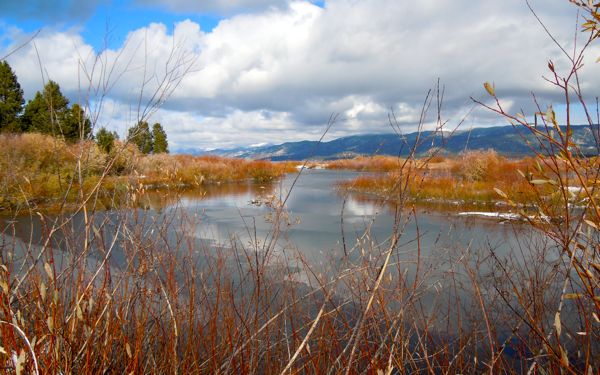
Upper Truckee River from the Cove East side. Photo/LTN file

(More about the project may be found in this Oct. 26, 2012, Lake Tahoe News article.)

The draft environmental documents are on the CTC’s website. People have until April 8 to direct comments to Scott Carroll — scott.carroll@tahoe.ca.gov.

There will be two workshops about the project on Feb. 27 – 1:30pm and 6pm – at Inn by the Lake in South Lake Tahoe, along with another March 28 at 6pm in the Aspen Room at Lake Tahoe Community College.

The Advisory Planning Commission of the Tahoe Regional Planning Agency is scheduled to discuss the project on March 13, with the Governing Board taking it up March 27.

No date is being projected as to when the final EIR/EIS would be released. The soonest any work would begin is 2015.

 — Lake Tahoe News staff report


Teaching kids how to cope with exam stress improves grades

By Annie Murphy Paul, Time

The sophomore sat paralyzed as the minutes ticked by. One hour later, time was up for the exam in a statistics class at the University of Nevada, Las Vegas, and he turned in his work: it was completely blank, save for his name.

As any parent or teacher knows, tests can create crippling anxiety in students, and anxious kids can perform below their true abilities. But new research in cognitive science and psychology is giving us a clearer understanding of the link between stress and performance and allowing experts to develop specific strategies for helping kids manage their fears.

These potential solutions are reasonably simple, inexpensive and, as recent studies show, effective. Some of them work for a broad range of students, while others target specific groups. Yet they’re mostly unfamiliar to many teachers and parents who remain unaware that test anxiety can be so easily relieved. The Laurel School, an all-girls private school in Shaker Heights, Ohio, is mounting an all-out campaign against the fears that tests induce. Lisa Damour, a consulting psychologist at Laurel and the director of its Center for Research on Girls, runs student workshops on test anxiety, counsels students about their worries and even hands out pencils with motivational messages on big exam days. “Our efforts to help students manage their test anxiety have definitely made a difference,” she says. “The girls–and their teachers–tell me they perform better on tests when they use the techniques we’ve taught them.”

Such interventions may be needed more than ever. In the 12 years since the passage of the No Child Left Behind Act, frequent high-stakes exams have become the norm at every public school in every state in the country. Standardized testing programs cost states a total of $1.7 billion yearly, according to a recent report from the Brookings Institution. Poor performances on these exams can have severe consequences: students with low scores can be held back, teachers whose students do poorly can be fired, and schools with below-average overall results can be closed entirely. “Schools and teachers are under a lot of pressure to meet standards, and that pressure gets passed on to students,” says Nathaniel von der Embse, a psychologist at East Carolina University who studies tests and their stresses. “The prevalence of test anxiety has definitely risen along with the use of test-based accountability.”

What’s worse, this anxiety can expand over time into any situation in which a student is conscious of being evaluated–from a class presentation to a college-admissions exam like the SAT–and can lead to diminished self-esteem, reduced motivation and disengagement from school. It affects students of all ages and ability levels, according to Mark Ashcraft, chair of the psychology department at UNLV, who taught the student who turned in the blank statistics exam. “Test anxiety can have very long-term effects, affecting an individual’s entire life,” Ashcraft notes. “People who feel anxious about math tests, for example, may avoid taking math and science classes in high school and college and cut off promising career paths as a result.”

How do you ease those concerns? Much of what researchers have found to work has to do with helping students get out of their own way. Most students with test anxiety manage to get something down on paper, but their capacity to think clearly and solve problems accurately is reduced by their nervousness, says Sian Beilock, a cognitive scientist at the University of Chicago and the author of Choke: What the Secrets of the Brain Reveal About Getting It Right When You Have To. Students taking an exam must draw on their working memory, the mental holding space where we manipulate facts and ideas. “When students are anxious, their worries use up some of their working memory, leaving fewer cognitive resources to devote to the test,” Beilock explains.

One method that proved successful in a recent trial is to have students spend 10 minutes writing about their thoughts and feelings immediately before taking a test. The practice, called expressive writing, is used by psychologists to reduce negative thoughts in people with depression. Beilock and her colleague Gerardo Ramirez tried this intervention both in Beilock’s lab, on college students placed in a testing situation, and in a Chicago school, where ninth-graders did the exercise before their first high school final. In both cases, students’ test scores “significantly improved,” according to an article Beilock and Ramirez published last year in the journal Science.

While one might imagine that writing about a looming exam would only heighten anxiety, Beilock says the opposite was the case. “Writing about their worries had the effect of offloading them onto the page so that the students had more cognitive horsepower available to apply to solving problems on the test,” she explains. For both groups, Beilock and Ramirez reported in Science, “one short writing intervention that brings testing pressures to the forefront enhances the likelihood of excelling, rather than failing, under pressure.”

Apprehension about tests can be especially common among minority and female students. That’s because the prospect of evaluation poses for them what psychologists call stereotype threat–the possibility that a poor performance will confirm negative assumptions about the group to which they belong. (Among the specious, anxiety-inducing tropes: girls can’t excel in math and science, and blacks and Latinos aren’t college material.) This additional layer of anxiety can lead such students to perform below their capabilities. “Girls and black and Latino students are often dealing with a double dose of test anxiety,” says Stanford University psychologist Gregory Walton. “The nervousness everyone feels when they’re being evaluated, plus the worry–conscious or not–that a poor performance will prove that the negative assumption about their group is correct.”

One of Walton’s colleagues at Stanford, psychology professor Geoffrey Cohen, devised an intervention aimed at reducing stereotype threat. Like Beilock and Ramirez’s exercise, it asks students to write briefly, but in this case participants are instructed to choose something they value and describe why it matters to them. “Music is important to me because it gives me a way to express myself when I’m mad, happy, or sad,” one participant wrote. One study showed that this values-affirmation exercise shrank the performance gap between white and black students by 40%. In another, it erased the gender gap in test scores in a challenging college physics course, raising the women’s average grade from a C to a B–higher than the average male student’s grade.

Embracing a positive stereotype can also help, a phenomenon psychologists call stereotype lift. Kaitlin Pethtel, a 17-year-old senior at the Laurel School in Ohio, often gets nervous before tests. But she tells herself that there are plenty of reasons for her to feel confident, with the help of a special test-day pencil handed out by her school. Wrapped around the pencil is a small piece of paper that lists some encouraging facts: “Girls get higher grades than boys,” for example, and “Girls from single-sex schools outperform boys and girls from coed schools on standardized tests.” “Reading over those statements is reassuring,” Kaitlin says, “because it reminds me that if I’ve studied hard for the test, there’s no reason I can’t do well.”

These measures may not be enough for everyone. Students who have taken steps to psychologically prepare for tests but still suffer severe anxiety at the prospect of them should consult a mental-health professional.

One step all students can take to improve their performance on tests is to change how they study for them. “Many students have every reason to be nervous before an exam, because they haven’t prepared adequately and don’t know how to do so,” notes Damour, the psychologist at Laurel. “Then they sit down to take the test, and they freak out because they’ve never practiced doing what the test is asking them to do.” Reviewing class notes and textbooks can familiarize students with the material on a test, but it doesn’t help them take the exam. Damour suggests viewing a test more like a play, with the preparation as a dress rehearsal that replicates the format and time limit of the exam. “You would never just read over your lines and then show up on the opening night of the school play, right?” she says. “It’s the same thing with a test. To be ready for it, practice doing what you’ll have to do in the test-taking situation.”

Even little kids aren’t immune to test anxiety. Researchers have seen evidence of it in students as young as first- and second-graders. Their worries tend to manifest in nonverbal signs that adults may miss, says psychologist Heidi Larson: stomachaches, difficulty sleeping and a persistent urge to leave the classroom to go to the bathroom. “I had one mother tell me that her son had no problem with tests,” recalls Larson, a professor of counseling and student development at Eastern Illinois University. “Then a week later she came back and said that her son had burst into tears the night before the big end-of-year exam, saying that he was afraid he wouldn’t be promoted to the next grade.”

Larson designed an intervention especially for younger students involving breathing and relaxation exercises and examined its effectiveness on a group of third-graders. “We had students lie on mats on the floor of their classrooms. They closed their eyes, and we asked them to focus on their breathing, then on tensing and relaxing groups of muscles in their legs, arms, stomachs and so on,” Larson recounts. “Some of the kids became so relaxed they fell asleep!” A control group of students at another school received no such training. A study published in the Journal of School Counseling in 2010 reported that the relaxation intervention had “a significant effect in reducing test anxiety.”

“We all stress out about tests,” says Zach Bennett, a seventh-grader at Charleston Middle School in Illinois who took part in the study. That was three years ago, but when Zach starts to get anxious about a test these days, he still remembers to focus on his breathing the way Larson taught him. “It helps make the nervousness go away,” he says, “and it helps me to realize that the test is really no big deal.”



Grant will add 12 firefighters to Tahoe Douglas staff

The Tahoe Douglas Fire Protection District Board of Trustees voted unanimously to accept a $2.7 million grant to restaff Engine 24 in Zephyr Cove by hiring 12 firefighters.

Engine 24 has not been staffed because of reduced funding and the loss of personnel due to attrition.

The engine is expected to be back in service by May.

The intent of the Staffing for Adequate Fire and Emergency Response grant is to improve and restore local fire departments’ staffing and deployment capabilities so they may more effectively respond to emergencies.


Saturday mail delivery to be discontinued

By CBS-DC

WASHINGTON — The U.S. Postal Service is discontinuing delivery of first class mail on Saturdays by Aug. 1. Priority mail and packages will still be delivered six days a week.

The move is expected to save the financially struggling agency roughly $2 billion annually.

While delivery of traditional mail has declined steadily, the shipment of packages has risen by 14 percent since 2010, the Associate Press reports.

Under the plan, which will be formally announced later today, Saturday delivery to post office boxes will continue. In addition, those post offices currently offering Saturday hours will continue to operate on a six-day schedule.

The Postal Service has long eyed five-day mail delivery, but has been unsuccessful in changing operations until this point. It is not immediately clear how the agency will cease Saturday deliveries without congressional approval.

Nearly 7 in 10 Americans are in favor of the move as a cost-cutting measure according to an AP report.


Ski report: It’s getting colder

Expect mostly sunny skies today, though the temperature is dropping.

Here is the Feb. 6 ski report.

— Curtis Fong


Lake Tahoe News — read it and wear it

Do you have your Lake Tahoe News T-shirt?

Fill out the this paid subscriber form, return it with at least $10 and we’ll send you a shirt. Be sure to tell us what size shirt you want. (Limited quantities in some sizes — but for now we have S to 2X.)

And keep reading LTN — big changes are coming soon.


Error by ex-South Lake Tahoe employee may lead to designated open space being built on

By Kathryn Reed

A July 1981 agreement to keep a South Lake Tahoe parcel designated open space may go by the wayside to get the city out of a lawsuit that resulted from a former employee wrongly granting a building permit for the site.

While Deputy City Attorney Nira Feeley pleaded her opinion to the council on Tuesday, the electeds weren’t so sure her idea was the best one.

On the request of newly sworn-in Councilwoman Brooke Laine, the five agreed to delay their decision. A special meeting has been called for Feb. 11 at 9am to discuss just this matter. If the agreement is not signed by Feb. 20, either party may pull out of the deal. The plaintiff has until March 5 to dismiss the suit against the city.

If the council doesn’t agree to the deal, the case goes back to court.

To date all the legal fees have been in house. City Attorney Patrick Enright didn’t have an accounting of how many hours have been spent on it, but quite a few, he said. It has been an ongoing legal matter since the current property owners sued the city in 2009.

Thang D. Vu and Jennifer Khuu bought the 1348 Wildwood Ave. property in 2002 from Chris and Kathleen Muller.

It was the Mullers who in 1981 entered into an agreement with the city granting “an open space easement on, upon, over, across, above, and under the subject property and relinquishes to the public in perpetuity the right to construct improvements thereon.”

There were three ways the city could renege on the deal as outlined in the contract if it had written consent from the California Tahoe Regional Planning Agency (CTRPA) or its successor agency:

• That no public purpose described in subdivision (b) of Section 51084 of the Government Code will be served any longer by keeping the subject property as open space and that finding is concurred in by the CTRPA or any successor agency.

• That the property is to be purchased in fee by governmental agency or its agent.

• That the CTRPA regulation authorizing this dedication is declared invalid or unenforceable by a court of competent jurisdiction.

Feeley in her report Feb. 5 to the council cited the first bullet point in her arguments – that the settlement is in the best interest of the city as a whole.

Joel Jacobs, deputy attorney general representing the state, told the council his office supports the settlement agreement.

The settlement proposal has Vu and Khuu being able to build a single family structure and then having to buy another parcel somewhere in the Lake Tahoe Basin and have it retired.

(Neither spoke at the council meeting nor did anyone representing them.)

In September 2007, then city building official Ron Ticknor issued a building permit. Vu started building. In February 2008, Ticknor told Vu the permit was suspended. In April 2008, Ticknor asked the California Natural Resources Agency to abandon the open space easement. The state agency denied the request. In August 2008, Ticknor revoked Vu’s permit.

The Vu’s sued. The city prevailed in a demurrer. In 2010, Vu appealed. The appellate court reversed part of the trial court’s ruling and sent the case back to the lower court. The case is in trial court and will stay there unless the settlement agreement is signed.

Neighbors are irate the couple might be allowed to build on the property. Jerry Goodman told the council Vu knew all along he could not build. He is upset someone with money is presumably able to buy their way around the law.

“Ethically and morally you don’t have a choice on this,” Goodman told the council.

Goodman’s attorney, Jeff Rahbeck, cited California law as to why the property should remain open space.

Letters from seven other people who are against allowing the building to continue were entered into the record and two other people spoke against the staff’s recommendation.

The city staff report has the property info.

In other council action:

• On a 4-1 vote, with Mayor Tom Davis dissenting, the council agreed to designate areas in the city as paid parking zones.

• On a 3-2 vote, with Davis and Councilman Hal Cole saying no, money has been allocated to purchase the parking kiosks.

• On a 4-1 vote, with Davis in the minority, Peckham and McKenney has been hired for a fee of $45,000 to bring forward city attorney, public works director and administrative service director candidates.

• Deferred amending the contract with the ice rink operators for four months. This is the length of Tahoe Sports Entertainment’s temporary alcohol permit.

• A special meeting is set for March 12 at 6pm to discuss the loop road.


Any thoughts about the Oscars?