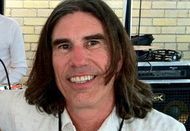
Musician-artist Walter Alan Salas-Humara coming to S. Tahoe

Deerfield Lodge in South Lake Tahoe is hosting an apres ski opening party for musician-artist Walter Alan Salas-Humara on Feb. 16 from 6-9pm.

His work will be at the lodge on Ski Run Boulevard Feb. 16-March 16.

Walter Alan Salas-Humara

In 1987, Salas-Humara’s rock band, The Silos, was voted Best New American Band in the Rolling Stone Critics Poll. During the past 25 years they have recorded 12 albums.

Salas-Humara began painting as a teen. His works are featured in the Universal Pictures release “Get Him To The Greek”. Salas-Humara founded the WaltersDogs Company in 2005.

The Deerfield Lodge is at 1200 Ski Run Blvd., South Lake Tahoe. For more information, email ropels@hotmail.com.


Clock ticking on South Shore loop road time line

By Kathryn Reed

STATELINE – In two months the Tahoe Transportation District board expects to know which alternatives for the loop road will be studied in the environmental documents, what businesses in the affected area think about the economic analysis, and it hopes to have finally appeased the South Lake Tahoe City Council with a nighttime airing of the issue.

Much of Friday’s TTD board meeting centered on what the newly created U.S. 50 South Shore Community Revitalization Project Business Review Committee should actually do.

This group has been tasked with reviewing the economic analysis that has been prepared. While it was stated they would perform a “peer review” of the financial document, that phrase was loosely used with acknowledgement it has many meanings.

They will determine the pros and cons of the economic analysis.

Their exact tasks will be outlined in a letter still to be written.
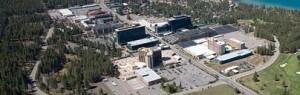
The area that would be impacted by the loop road. Photo/TTD

The following people will be on the committee, with those with an asterisk having until Feb. 15 to complete their form. Next to their name is the business or property they represent and classification/criteria they meet, according to TTD. Parenthetical information is from LTN.

• 986 Park Hotel, Chris Minnes, small local owned tourist accommodation. (Minnes manages the property. The owners are from Southern California.)

• Heavenly Mountain Resort, Pete Sonntag, large corporate recreation provider.

• Lake Tahoe South Shore Chamber of Commerce, B Gorman, local collective business representative.

• Tahoe Prosperity Center-Carson City rep, Lee Plemel, regional collective business representative. (TTD employee Alfred Knotts called the TPC a neutral party.)

• Sidestreet Boutique, Barbara Parina or Tara Parina, local small retail.

• Edgewood Companies, Mitchell Mize, local recreation provider-large commercial property owner.

• Tahoe Beach Club, Bob Mecay, large tourist accommodation. (Their project is undeveloped at the end of Kahle Drive in Stateline where the trailer park is.)

• Naked Fish landlord, Mike McKeen, small commercial property owner.

• Village Center landlord, Terry Hackett, large commercial property owner.* (TTD calls it Crescent V Center.)

• Dog Dog Cat, George Richter, local small retail owner.*

• Duck Tours, Shawn Kerney, small local recreation provider.*

• Holiday Inn Express, Pete MacRoberts, large corporate tourist accommodation.

• Raley’s, TBD, large corporate retail.*

• Stateline Brewery, Debbie Brown, local restaurant-dining.*

• Pacific Crest Gallery, Rosemary Wool, local small retail.

• Basecamp Pizza, Ted Kennedy/Ray Villaman, regional-local restaurant dining.*

• MontBleu, Jack Fisher, large corporate tourist accommodation.

• 7-Eleven-Subway landlord, Glyn Burge, small commercial property owner.

The board agreed to see if someone from the commercial real estate industry wants to be on the committee.

McKeen suggested Kathay Lovell, who owns the Bottle Shop, and Dave Jinkens, a consultant to opponents of the loop road, be added.

The economic analysis, according to TTD Executive Director Carl Hasty, will also undergo independent review by HDR consulting, which he said has expertise in resort finance.

While the TTD board will consider the committee’s recommendations, they are only that. Nothing that group suggests is binding. The committee is expected to meet Feb. 27, March 6 and March 20. Meetings will be open to the public. The facilitator has yet to be named.

Mark Rayback with Wood Rodgers, the firm hired by TTD to do work on the loop road project, will be the project engineer going forward.

The loop road is a proposal to make Highway 50 near Heavenly Village and then beyond the Stateline casinos into a city street and turn the city street behind Harrah’s-MontBleu into a state highway.

There will be a meeting in a month before the South Lake Tahoe City Council to discuss all things loop road. The expectation is a bit of history will be told, why the loop road is being considered and the alternatives still being considered.

Norma Santiago, El Dorado County’s TTD board member, wants the public to understand “no decision has been made.”

“This is just the kickoff for land use and economic vitality choices for that area,” Angela Swanson, who is the city’s rep to the TTD board, said. The city will begin working on its Stateline area plan in March, too.

Dates to know:

• March 12, 6pm South Lake Tahoe City Council meeting to discuss loop road; Lake Tahoe Airport.

• March 22, 9:30am Tahoe Transportation District meeting to receive progress report from Business Review Committee; Market Street office in Stateline.

• April 12, Tahoe Transportation District meeting to hear final report from Business Review Committee. (Time, location forthcoming.) Board likely to decide what should be studied in environmental documents.


Opinion: Time to create family disaster plan

By Tracy Franklin

As part of the city’s initiative to increase communications, we will be offering a 12-part monthly series during 2013 highlighting emergency preparedness. Use these tools to prepare yourself for an emergency. More information is available in the city’s website.

Create a Family Disaster Plan

Your family needs a plan that tells everyone where to meet if you have to evacuate; who you’ve identified as an out-of-state family contact; how to get emergency information in your community; and how to take care of your family pets.

When preparing for an emergency, plan on having enough supplies to get you and your family through at least the first 72 hours. After a major emergency, there’s a good chance that traditional emergency response teams will be too busy to take care of you and your family. You need to prepare your home and neighborhood.

• Stock up on at least a three-day supply of food, water, clothes, medical supplies and other necessary equipment for everyone in your family.

• Make sure everyone knows where to find them.

• Decide where and when to reunite your family should you are apart when a disaster strikes.

• Choose a person outside the immediate area to contact if family members are separated. Long distance phone service will probably be restored sooner than local service. Do not use the phone immediately after a major emergency.

• Know the policies of the school or daycare center your children attend. Make plans to have someone pick them up if you are unable to get to them.

• If you have a family member who does not speak English, prepare an emergency card written in English indicating that person’s identification, address and any special needs such as medication or allergies. Tell that person to keep the card with him/her at all times.

• Conduct Earthquake: Duck, Cover and Hold drills every six months with your family.

• Practice Stop, Drop and Roll drills for fire, as well as emergency exit drills in the house regularly.

• Know the safest place in each room because it will be difficult to move from one room to another during an earthquake or explosion.

• Locate the shutoff valves for water, gas and electricity. Learn how to shut off the valves before an emergency. If you have any questions, call your utility company. Remember not to shut off utility valves unless directed to do so by your utility company.

• Make copies of vital records and keep them in a safe deposit box in another city or state. Make sure your originals are stored safely.

• Before a major emergency occurs, call your local Red Cross chapter and Office of Emergency Services to find out about their plans for emergency shelters and temporary medical centers in case of a disaster.

• Establish all the possible ways to exit your house. Keep those areas clear.

• Know the locations of the nearest fire and police stations.

• Take photos and/or videos of your valuables. Make copies and keep them with a friend or relative in another city or state.

• Include your babysitter and other household help in your plans.

• Keep an extra pair of eyeglasses and house and car keys on hand.

• Keep extra cash and change. If electricity is out, you will not be able to use an ATM.

Important numbers

American Red Cross (South Lake Tahoe) (916) 933.7070

El Dorado County Sherriff’s Department (530) 573.3000

Barton Memorial Hospital (530) 541.3420

El Dorado County Snow Removal (530) 573.3180

California Department of Insurance 800.927.HELP

Lake Tahoe Wildlife Care (530) 577.2273

California Highway Patrol (530) 577.1001

Lake Valley Fire Department (530) 577.3737

South Lake Tahoe Snow Removal (530) 542.6030

Road Conditions California 800.427.ROAD

Douglas County Sherriff’s Department (775) 782.9900

Road Conditions Nevada 877.687.6237

El Dorado County Animal Control (530) 577.1766

Social Security Office (Placerville) (530) 626.8421

El Dorado County Health Department (530) 573.3155

South Lake Tahoe Fire Department (530) 542.6160

El Dorado County Jail (530) 573.3031

South Lake Tahoe Police Department (530) 542.6100.

Tracy Franklin is the public information officer for South Lake Tahoe.


Fat Tuesday party benefits League to Save Lake Tahoe

The League to Save Lake Tahoe’s second annual Fat Tuesday Masquerade Ball fundraiser is Feb. 12.

Doors open at 9pm, with music starting at 10pm at the American Legion Hall, 2748 Lake Tahoe Blvd. Last dance is at 1:30am.

Admission is $10, however anyone arriving wearing a Mardi Gras mask will be admitted for $5. Ten percent of the proceeds benefit the League to Save Lake Tahoe.

For more information, contact leslie@keeptahoeblue.org or (530) 541.5388.


Survey: All but one Nevadan in Congress own guns

By Erin Kelly, Gannett News Service

WASHINGTON — All but one member of Nevada’s congressional delegation own guns, bucking a trend in Congress in which Republicans are much better armed than their Democratic counterparts.

A USA Today survey of lawmakers released this week showed that 119 Republicans and 46 democrats identified themselves as gun owners.

But gun ownership in the Nevada delegation is more of a bipartisan affair.

Senate Majority Leader Harry Reid, a Democrat, and Sen. Dean Heller, a Republican, both said they own guns.

Rep. Mark Amodei, R-Carson City, who represents the Reno area, owns several guns, according to his spokesman, Brian Baluta.

“Mark owns several guns, including hunting rifles, shotguns and handguns,” Baluta said. “He purchased one pump action shotgun and one handgun. The rest he inherited from his father and grandfather.”

Rep. Dina Titus, D-Nev., also owns a gun she inherited: a 32-caliber revolver passed down to her from her grandfather. Rep. Joe Heck, R-Nev., also owns a gun, although his office did not say what kind.

The only lawmaker from the six-member congressional delegation who does not own a gun is Rep. Steven Horsford, a Las Vegas Democrat and the first African-American to serve in the Nevada delegation.

There is no public record of gun ownership by members of Congress and it is not part of the information lawmakers are required to reveal in their annual financial disclosure forms. So USA Today and the Gannett Washington Bureau contacted every congressional office to ask: Does the lawmaker own a gun?

The results show a highly partisan — and regional — divide. Only 10 percent of Republicans who responded said they do not own a gun, while 66 percent of Democrats said they are not gun owners.

Plotted on a map, the survey results speak to the cultural chasm between those districts where guns are a talisman of individualism, and those where they’re viewed more as a criminal tool.

Only 12 lawmakers from the Northeast, including Pennsylvania, said they own firearms, while 77 Southerners said they do.

Congress’s gun gap suggests that cultural factors are at least as important as the influence of the gun lobby in determining where members stand on President Barack Obama’s package of gun control proposals.

Gun ownership is clearly correlated with members’ voting records.

Over the past two years, the National Rifle Association’s political action committee gave 10 times more campaign contributions to House members who own guns than to those who don’t, according to an analysis of campaign finance reports filed last week.


Meyers community gathering to discuss the future

A Meyers community meeting is set for Feb. 13 at 6:30pm at the new California Conservation Corps Dining Hall at 1949 Apache Ave. in Meyers.

At the meeting there will be an interactive community exercise about what neighborhoods to include in the greater Meyers residential area, a presentation on the Meyers Community Plan and a review of the visionary maps for recreation, transportation and more.

For more information, contact El Dorado County Supervisor Norma Santiago at bosfive@edcgov.us or (530) 621.6577.


Gardnerville pilot identified as plane crash victim

Douglas County officials have confirmed that the man who died in a plane crash in the Pinenut Mountains was pilot Keith Jorgenson of Gardnerville.

The wreckage was discovered Feb. 7.

It was a Cessna 172 that crashed.

Jorgenson had left the Minden Airport on Wednesday and was expected back that night.

The cause of the accident is unknown at this time. It is being investigated by the Federal Aviation Administration and National Transportation Safety Board.

— Lake Tahoe News staff report


Sandoval wants immediate action on online poker

By Cy Ryan, Las Vegas Sun

CARSON CITY — Gov. Brian Sandoval has asked the state Legislature to act within 30 days on an Assembly bill to allow Nevada to join with other states to offer online poker games.

The bill would permit the governor to enter into agreements with other states to allow online poker and would repeal an existing law barring interstate gaming until a federal law is passed.

In his message to the Legislature, the governor said, “Nevada has always been the gold standard of both gaming regulation and agreements, and I intend to see to it that our state will lead the world into this new frontier.”

About 20 licenses have been issued to casinos and companies to conduct online poker within Nevada, but none of the computer systems to run the games have been approved by the state.

A.G. Burnett, chairman of the Nevada Gaming Control Board, said the systems are still being tested to ensure they comply with technical requirements.


Caltrans apparatus clears more snow at one time

By Barbara Barte Osborn and Bill Lindelof, Sacramento Bee

A new snowplow that can remove snow from two lanes at once should speed up the clearing of Interstate 80 over Donner Summit for skiers and other travelers.

Caltrans began using the new plow Thursday on I-80 from Kingvale to Truckee, said Rochelle Jenkins, Caltrans public information officer, in a news release.

The tow plow allows more snow to be removed at once. Photo/Provided

State Department of Transportation snow-removal employees demonstrated the new $80,000 “tow-plow” Wednesday at Caltrans’ Kingvale Maintenance Station near the summit.

“The tow-plow is snow removal equipment never seen in California,” Jenkins said in the release.

The new equipment will plow 28 feet of roadway at a time, whereas regular plows have a removal width of 10 feet to 12 feet, according to the release. Pulled by a vehicle designed for the purpose, the tow-plow can be activated to maneuver to the right of the vehicle, allowing for two lanes to be plowed at once.


California dairy industry gives N.Y. a sour taste

By Kristen V. Brown, Times Union

A few months ago, a new product appeared in the aisles of Price Chopper supermarkets. The store’s plainly-packaged private-label butter now also bore a seal heralding its primary ingredient, “Real California Milk.”

This new item – California-made butter in a Northeast supermarket chain – is only a more visible expression of a longstanding issue for New York dairy farmers: Even on home turf, California’s super-sized dairy industry presents some hearty competition.

“It’s so hard for us to compete,” said Jeff Wysocki, 50, a dairy farmer in Hoosick Falls.

California has long been the nation’s largest producer of milk. But with a milk pricing system that offers up California milk cheaper than many other states and an aggressive national advertising campaign spending millions annually to promote the value of “real” California dairy, some New York farmers like Wysocki worry that California’s competitive edge may one day shut New York dairies out of more than deals for private-label butter.

“Competition from California has traditionally been a problem for New York farmers,” said Laura Ten Eyck, senior manager of New York projects and outreach for the American Farmland Trust. “Dairy is a particular issue as the western states have recently gotten into it in a very big way.”

Wysocki owns Wysocki Farm, a small, 70-cow dairy farm that has been in the family since the 1930s. In the back of his mind, Wysocki said he stresses constantly that California dairy’s strong presence in the Northeast will make it hard for New York state dairy farms to stay in business in the future – especially small family farms like his own.

“We just won’t be competitive,” Wysocki said, referring to California’s ability to produce dairy products more cheaply. “We’ll be out of business.”

A large part of California’s dairy edge stems from its milk pricing system, which is set by the state, rather than using the federal milk pricing system that most states utilize, including New York. Dairy farmers in California are often paid up to several dollars less per hundred pounds — about 12 gallons — of milk than farmers in New York. In December, preliminary average milk prices paid to farmers were $18.80 per hundred pounds of milk in California, according to the USDA’s National Agricultural Statistics Service. Farmers in New York received $22.20 per hundred pounds of milk in the same month.

Those milk prices often result in California-made dairy products that are sold at a lower cost than dairy produced in other states, giving California a competitive advantage nationally.

At Schenectady-based Price Chopper, spokeswoman Mona Golub said “quality comes first, cost comes second” in considering bids from suppliers for private-label products. Recently, Price Chopper advertised a pound of its private-label butter as retailing for $1.99; coupons from the California Milk Advisory Board (CMAB) were available on the Web to slash an additional 55 or 35 cents off any products carrying the “Real California” seal.

“We always feel a push from California,” said Doug DiMento, spokesperson for Agri-Mark, the New England dairy cooperative which makes Cabot brand dairy products. DiMento said that Price Chopper’s California-made private-label butter is “a blow to Northeast dairy farmers.”

Agri-Mark declined to bid on the Price Chopper butter contract, though DiMento said it does supply other supermarket private labels in the Northeast.

“Expanding markets for our California products is part of our charge,” said Jennifer Giambroni, spokeswoman for the CMAB, which began using the “Real Califonia” seal in 2007 as a way to increasing awareness of California dairy.

“The Northeast is a big area for us,” she said. “That’s really happened over the past few years.”

According to the CMAB, Northeast supermarkets that carry the Real California product seal include Price Chopper, Big Y, Market Basket and Giant Eagle. While New York has a good hold on the local fluid milk market and the national yogurt market, nationally California far surpasses New York in production of products such as butter and cheese.

Eric Sheffer, of Sheffer Grassland Dairy in Hoosick Falls, said California dairy’s ability to market its products vigorously is one of the biggest threats to dairies in the Northeast.

“When it comes down to it, their marketing is out-competing ours,” he said. “We can make quality products.”

The CMAB’s award-winning advertising campaigns have included the original Got Milk? slogan, developed in 1993, as well as the now ubiquitous “Happy Cows” ads first aired in 2002. The CMAB’s national advertising budget is about $20 million annually.

Rick Naczi, CEO at the American Dairy Association and Dairy Council in Syracuse, said Northeast dairy promotions instead tend to focus on marketing products in supermarkets and at schools rather than advertising them, partially due to lack of funding.

ADADC performs similar functions to the CMAB for New York, New Jersey and Pennsylvania. Though the organization does market and promote generic dairy products, like the CMAB, it does “almost no” advertising, Naczi said.

National ad campaigns for milk do run in New York, such as the Milk Processor Education Program’s 30-second spot planned to air on CBS during Sunday’s Super Bowl and the national Got Milk? campaigns featuring celebrities with milk mustaches (the slogan is licensed from CMAB).

“California is an anomaly,” said Naczi. “Most states don’t do that kind of state advertising.”

Northeast dairy operations, said DiMento, of Agri-Mark, are left with one option going forward.

“We just have to step up and continue,” he said.