History: Cartographers struggle to place Lake Tahoe

Publisher’s note: This is reprinted with permission from the May 1990 Lake Tahoe Historical Society newsletter.
Lake Tahoe first appears as a small opening in the mountains labeled “mountain lake” on the Fremont-Preuss map in the expedition of 1844, only 146 years ago. It took thirty more years for mapmakers to place it accurately in California and Nevada and to show its size and shape correctly. Admittedly, Tahoe was not easy to explore in the 19th century and those who found it were sometimes engaged in activities that made the gathering of exact data difficult.

Exploration of the area was undertaken mainly to answer questions on the proper location of the boundary between California and Nevada or to lay out roads to facilitate the movement of traffic across these most difficult mountains. John “Cockeye” Johnson explored the area very early, laid out a route but did not produce a map. Asa Hawley circumnavigated the lake in 1857 with James Green and “Snowshoe Thompson”, none of them trained in mapmaking. Their knowledge did not find its way onto any map.

When it did appear on Bartlett’s map in 1854, Lake Tahoe was one hundred miles north of its proper location. George Goddard finally put it in the right place in 1857 as a result of his survey of the boundary line, but his Tahoe is the wrong shape. Henry de Groot created a map in 1860 that was closer to reality and George Bancroft’s 1863 map placed the lake in the proper place, but its shape was still fanciful. It took ten more years to show its shape properly on maps, a surprising figure considering the number of people who lived and visited in the basin or repeatedly traveled through it by 1870.

There was uncertainty about the name too, though most called it “Tahoe”, adapted from the Washo. Four different names appeared on maps and consideration was given to several others. Some were rejected because they were already in use like Sierra and Truckee. Some were fanciful, like Tula Tulia, or staid like Lake Union. People laughed at Lago Beergler, an Italianized form of Bigler, not believing that is was a serious suggestion.

It was called Lake Bigler on official documents in spite of esthetic and political opposition. The Department of the Interior listed it as Lake Tahoe beginning in 1862, recognizing the name used by residents, visitors, and local writers. By the last quarter of the 19th century, both its location and its shape were known. Mapmakers called it Lake Tahoe though politicians and journalists argued over the official name. Lake Bigler disappeared in 1945, and Lake Tahoe was finally in the right place with the right name.



Outdoors provides author solace from abuse

By Kathryn Reed

Tracy Ross reads from “The Source of All Things” at LTCC on Feb. 7. Photo/Kathryn Reed

With raw honesty, Tracy Ross has confronted her demons in a poetic, thoughtful manner that makes listeners want more and yet has them feeling a bit voyeuristic because of that desire.

Ross was at Lake Tahoe Community College on Feb. 7 as part of the Writers’ Series. She was reading from “The Source of All Things”, which came out in 2011 and in paperback last year.

The accomplished magazine writer left her comfort zone of being a journalist to write this memoir. While the story is new to readers, it has been Ross’ reality since 1978. That’s when the abuse began. She was 8.

It was in 1985 that she first wrote a poem about what was going on. She continued writing in college.

Then Backpacker magazine paid for her to return to the Sawtooth Mountains of her youth. It was time to ask her father four questions. It was 2007 and Ross was 35 years old.

(During the talk she didn’t reveal the questions or answers, just that it took another meeting to get her dad to answer the fourth question.)

Not knowing if she wanted her story in print, her editor encouraged her to write the essay and they’d evaluate it and decide from there. It was published in Backpacker in December 2007. It won the National Magazine Award in 2009 – the highest award for a magazine writer.

And then she flushed it out to make it the book that people were lining up to buy Thursday night.

At LTCC she read three passages – interrupting each to add more detail for the more than 50 people listening.

With her forte being outdoor writing, Ross weaves in the splendor of nature in the book.

It’s a complicated tale. And she says to this day her relationship with her parents is complicated. They remained together through the strife. She still calls him dad. (Her biological dad died of an aneurysm while hiking in the Sierra. Ross was an infant at the time. Her mom remarried when Ross was 4.)

Ross says her relationship with her mom is the hardest.

“She was weak. She was so unprotective,” Ross said. “She has tried to apologize.”

Ross tried telling her mom, friends, others about the abuse and no one listened. Finally, a friend’s mom called the police. But this was the 1980s and in Idaho they didn’t know what to do with such a case. Her dad confessed to touching her once. (The abuse started when she was 8 and ended at age 14.) He had to stay away from her for a year and then the family was put back together.

Ross left. She found a boarding school in Michigan. There she reconnected with the outdoors. And finally, after college, she spent time in Alaska. That, she said, is where she was able to come to terms with what happened as a child.

But she also told the Lake Tahoe audience that hers is an evolving story. She’s married with children. And one day Ross knows her kids will read the book and that their relationship with their grandfather is bound to change.


Snippets about Lake Tahoe

• Shell has returned to the South Shore with the gas station next to Scusa in South Lake Tahoe becoming a Shell. The company had left after the MTBE debacle.

•A survey by the U.S. Travel Association has found that 72 percent of respondents believe traveling inspires romance.

•Kirkwood Mountain Resort hosts the Swatch Freeride World Tour, which combines the Freeskiing World Tour and North Face Masters of Snowboarding to create one unified global championship series, Feb. 27-March 3. Sierra-at-Tahoe hosts a USASA halfpipe competition March 3. Heavenly Mountain Resort hosts the U.S. Freestyle Championships March 29-31.

•Scott Vandover, Justin Reddig, Kyle Fine and Paul Apple have joined the Tahoe Douglas Fire Protection


Lake Tahoe News about to launch redesign

Lake Tahoe News has gone through a redesign that will be launched Sunday.

This means you won’t be seeing any new content here for about 12 hours. Technological upgrades can also bring some hiccups, so please bear with us. Based on all that needs to be to transitioned from today’s LTN to tomorrow’s LTN, the exact amount of time needed can’t be precisely calculated. And once the new design is live, there are bound to be tweaks to the news site. Worst case scenario is there is some glitch and we’ll just keep plugging along with the current design for a few more days.

We ask for your patience and understanding for the next few days.

Comments posted between now and the launch may disappear into some black hole, so you might want to save your thoughts for a few hours. And, yes, comments will be part of the new site. In fact, we’ve built-in a 20-minute period where you can edit your own comments.

We hope you like the redesign. The goal is to make the news site more fresh, bright and active — but still be full of news, easy to navigate and provide readers with a forum to voice their opinions.

Thank you for being such loyal readers.

— Lake Tahoe News staff


‘Get Out of My Crotch’ has a new reader

Linda Mendizabal of South Lake Tahoe will soon have a copy of “Get Out of My Crotch” because she is the winner of Lake Tahoe News‘ contest.

“Get Out of My Crotch” is a collection of essays from 21 writers about issues pertaining to women.

The book was published by Cherry Bomb Books, an imprint of Bona Fide Books in Meyers.

For those wanting to buy a copy, you may do so online.


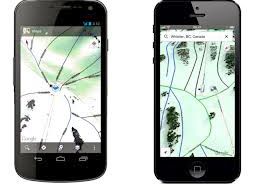
Google Maps adds ski resorts

Seven California ski resorts are now part of Google Maps.

The traditional green-blue-black to designate the difficulty of the run are used, with a red dotted line signifying the actual lift.

In all, 38 resorts in the U.S. and Canada are mapped out.

The California resorts are: Alpine Meadows, Heavenly Mountain Resort, Mammoth Mountain, Mount Shasta, Sierra-at-Tahoe Resort, Squaw Valley, and Sugar Bowl Resort.

The maps are available on Android and iPhone.


Tahoe Ritz-Carlton part of hotel initiative to save water

By Deidre Wenge, Hotel Magazine

The facts are staggering. According to water.org, 780 million people around the world do not have access to clean and safe water; every 20 seconds a child dies from a water-related illness; and water, sanitation, and hygiene-related problems kill more than 3.4 million people each year.

But Karena Albers and Jennifer Willig, founders of Whole World Water, believe the hospitality and tourism industry can play a big role in solving the worldwide crisis.

Whole World Water is a campaign that asks hotels, resorts, spas, and restaurants to begin filtering, bottling, and selling their own water and donating 10 percent of the proceeds to the Whole World Water fund. The funds will be invested in approved clean and safe water projects around the world.

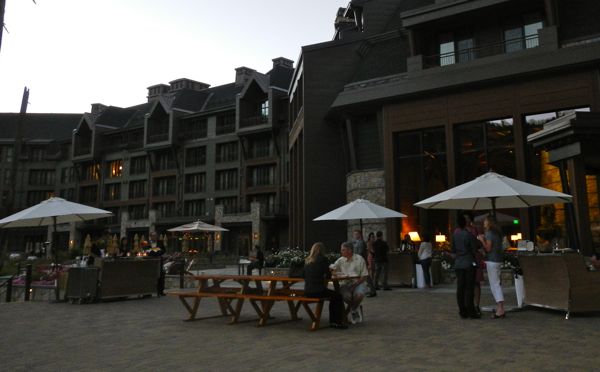
The Ritz-Carlton, Lake Tahoe is part of a project to conserve water. Photo/LTN file

Willig, who previously helmed RED, the organization founded by Bono and Bobby Shriver to fight AIDS in Africa, believes that the hospitality industry can come together to make a serious change.

“Hospitality and tourism is a multi-trillion dollar industry,” she says. “And if we can align, we could actually see this issue eradicated in our lifetime. It is the first time that a single industry has the potential to be united on a non-competitive platform and take action against this major global issue.”

Albers, a documentary filmmaker, explains that the idea was inspired when Sonu Shivdasani, chairman of Soneva Resorts, invited her to a symposium at Soneva Fushi in the Maldives. The focus of the symposium was to discuss how the hospitality and tourism industry could develop more sustainable business practices.

Soneva Resorts decided to ban imported bottled water from its properties a few years ago, and began to donate the proceeds from its own filtered, bottled water program to charities in 2009. Since then, Soneva Resorts has helped more than 600,000 people in 52 countries get access to either clean drinking water or basic sanitation services.

Albers explains that Whole World Water is based off of Shivdasani’s success and hopes to attract the industry at large to be a part of the campaign.

So far, Whole World Water has several hotel and resort partners including Oberoi Hotels & Resorts, Banyan Tree Hotels and Resorts, Six Senses Resorts and Spas, and Virgin Hotels. The Ritz-Carlton is also piloting the program at its Charlotte, N.C. and Lake Tahoe locations.

Willig says that the campaign is also designed to offer participating partners financial benefits and a sustainable business plan. If hotels choose to partner with Whole World Water, they can reduce carbon emissions from shipping costs associated with commercially bottled water and can cut down on waste through reusable glass bottles instead of plastic bottles. And the sale of filtered, bottled water can offer hotels a new source of revenue.

“First and foremost, this is a business-building initiative,” says Willig. “We’re estimating that serving filtered, bottled water instead of commercially bottled water can potentially build bottom lines by up to 25 percent.”

Participating hotels will need to pay a yearly licensing fee of $1,000 per property in order to help fund a multi-media marketing campaign that includes a social media platform, celebrity endorsements, global events and symposiums, and a feature-length documentary film. The fee will also allow members to access all campaign branding and materials for their own marketing and public relations efforts.

To make the implementation and transition to the campaign seamless and efficient, Whole World Water has partnered with Vivreau, a manufacturer of purified drinking water systems, to give hoteliers access to an easy turn-key filtration solution. Willig does stress that Whole World Water is not requiring hotels to use the Vivreau system, especially if they already have a filtration system in place.

The campaign will officially kick off March 22, World Water Day, and Albers says she expects it to be a big hit with not only with their hospitality partners, but with guests and consumers as well.

“The program has been very well received so far,” she says. “When a consumer understands that a percentage of the proceeds are going to address a global issue, they want to be part of that engagement.”


LTCC Nordic Center sets opening date

Lake Tahoe Community College’s Nordic Center plans to open March 1.

The goal is to offer the best quality skiing experience.

Season pass sales will be available Feb. 8. The 2013 season pass prices are: $49 family passes, $39 couples pass, $29 individual pass, $5 day use fee, $10 LTCC or LTUSD enrolled student pass, and $100 business pass.

Passes will be sold at the Connect Education office at the college.


Ski report: Wear multiple layers

Dress warm because it’s going to be a cold one today.

Here is the Feb. 9 ski report.

— Curtis Fong


TRPA board without California’s 2 appointees

California is missing its two representatives on the Tahoe Regional Planning Agency Governing Board.

Mara Bresnick, who was the California Assembly Speaker appointee, gave notice just before the January meeting. Byron Sher, California Senate Rules Committee appointee, left just after the Regional Plan was adopted in December.

Mara Bresnick

Those two were the most vocal against the updated Regional Plan.

“Loose predictions are that it would be two or three months out, but it could take longer,” a TRPA official told Lake Tahoe News of when the seats may be filled.

— Lake Tahoe News staff report