Co-workers rally around sick toddler

Meek’s Lumber is having a fundraiser March 1 for two coworkers’ whose 3-year-old daughter was recently diagnosed with acute lymphoblastic leukemia.

Misty and Tim Eckman learned last month that their daughter, McKenzie, has this cancer.

The 6pm event will be at the American Legion Hall in South Lake Tahoe. The bands Red Neck Quartet and Deep Fried Mojo will perform, along with McKenzie’s dance class from Ms. Marcia’s.

There will be appetizers, door prizes, and a silent auction. The cost is $5 and includes a ticket for one of the many door prizes.

To contribute a prize or cash, call Brian Jeffery at (530) 307.8503 or Tuesday-Saturday at (530) 544.6335.


Young professionals to mix it up at Hard Rock

Tahoe Regional Young Professionals’ next gathering is Feb. 13 at Hard Rock Café inside Harveys in Stateline from 7–10pm.

The February mixer will include $5 vodka drink specials and appetizer platters.

Admission is free for TRYP members and $5 for non-members. Annual TRYP memberships cost $40.

Key membership benefits and resources include: professional development opportunities; networking/mingling with more than 250 young professionals from across the region through Mixers and “FUN”draisers; leadership experience and opportunities to give back to an array of charities.

Sign up at the next event or email TahoeTRYP@gmail.com for additional membership information.


Sierra snow surveying techniques more than 100 years old

By Norimitsu Onishi, New York Times

PHILLIPS — Along Highway 50, elevation 6,820 feet, a California winter ritual unfolded here on a recent morning. In the snow-blanketed meadow of a local homeowner’s backyard, reporters representing news organizations from across the state followed a man on skis who kept plunging an aluminum tube into the snow.

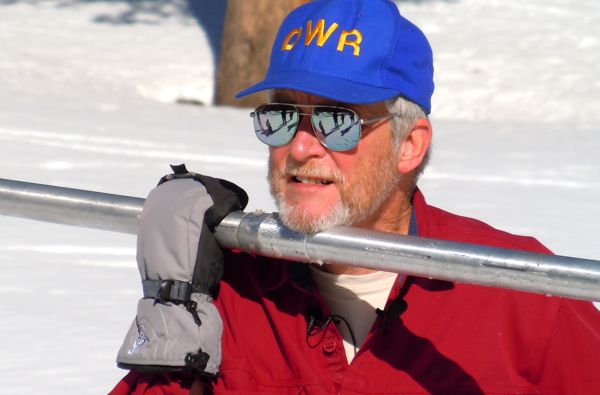
Leading the pack was Frank Gehrke, California’s chief snow surveyor, the man responsible for measuring the Sierra Nevada’s snowpack, the source of a third of this state’s water supply. Part groundhog, whose appearances signal the shift of the seasons, and part Federal Reserve chairman whose utterances on the state of the snowpack can move California’s multibillion-dollar agricultural industry, Gehrke has led the Department of Water Resources’ snowpack surveys for a quarter-century.
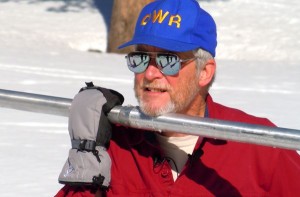
Frank Gehrke is the face of snow surveys in the Sierra. Photo/LTN file

In the state that is home to Silicon Valley, Gehrke and his team use the stick-the-tube-into-the-snow method developed by a local classics professor more than a century ago.

“There’ve been only incremental changes,” Gehrke said, interspersing this winter’s second monthly survey with a veteran’s calm observations of the snowfall and hints of the possible coming drama that is California’s annual snowmelt. “This course is very uniform, which is normal, because the snowpack during accumulation is kind of uniform. But once you start getting into the melt, it starts to go crazy.”

His assessment of this month’s survey — after a strong start, the snowpack’s water content fell to 93 percent of average for this time of the year because of a “midwinter lull” — was covered by the media throughout the state.

In California’s water system, one of the world’s most sophisticated and complex, the snowpack plays a leading role by supplying water to more than 25 million people and almost one million acres of farmland. Snow that accumulates on the Sierra Nevada’s 400-mile range starts to melt in the spring, draining into rivers that feed reservoirs below.

As Gehrke and his team gauge the depth and water content of the snowpack, other department officials begin forecasting how much water the snowpack will be able to deliver this year.

Those who depend on the snowpack for water adjust their plans accordingly. Water districts may start looking for water elsewhere or carry out conservation measures. Farmers consider the forecasts in deciding what crops to plant or whether to take bank loans to buy more seed and equipment for the year.

Ryan Jacobsen, who is executive director of the Fresno County Farm Bureau and also sits on the board of the Fresno Irrigation District, said that the snow surveys are the “bible for what decisions irrigation districts are going to make for the rest of the year.”

“Fresno County is the No. 1 agricultural county in the nation, but we also happen to be situated climatically in the middle of a desert,” he said. “It really is the Sierra Nevada snowpack that makes this desert bloom.”

It was in 1908 that James E. Church, a classics professor at UNR developed the existing method of forecasting water runoff from the depth and water content of snow. To settle a dispute over water rights in nearby Lake Tahoe, he was able to predict the water from the snowpack on Mount Rose by using a hollow tube that he called the Mount Rose snow sampler. Government agencies adopted his technique and, in 1929, California passed a law mandating that state officials measure the Sierra Nevada snowpack and issue forecasts of the water supply.

“You can almost say it made the development of the West possible,” Gehrke said. “Prior to that, they really didn’t even have tools to use to hope to predict how much runoff they would have.”

A civil engineer, Gehrke, 65, grew up in Missouri, where snow was considered more of “a nuisance” than anything else. “We would get occasional snowstorms, and our big hope was that the schools would close, though they rarely did,” he recalled.

He joined the Department of Water Resources in 1987, which coincided with the start of a six-year drought. The drought brought more resources and public attention to the snow surveys. The monthly surveys, which run from January through April, became media events starring Gehrke.

“He’s sort of iconic,” said John Laird, secretary for the state’s Natural Resources Agency, who had come to participate in the snow survey. “He’s the face of snow measurement.”

The water resources department issues forecasts after studying the data collected by Gehrke as well as 40 cooperative agencies at about 250 locations. His team includes 10 snow surveyors, some of whom travel with their measuring tubes to remote spots by hiking, snowmobile or even helicopter. Sensors located throughout the Sierra Nevada provide real-time data but are not considered as accurate as the manual surveys.

A new project by NASA’s Jet Propulsion Laboratory in Pasadena could soon enrich the snow surveys’ findings. As part of what the laboratory calls the Airborne Snow Observatory, scientists will begin flying over the Sierra Nevada next month aboard a plane equipped with an imaging spectrometer and a laser system known as lidar. The findings, which will be used for water management as well as the study of the impact of climate change on snowpacks, are expected to yield a broader view of the snowpack and more precise predictions of the snowmelt, said Thomas H. Painter, a research scientist heading the observatory.

Gehrke, who is working with the laboratory, has flown on some preliminary flights.

“Frank is the bridge across the legacy of water management and snow observation in the Western U.S. to this technology,” Painter said.

Perhaps no one was better than Gehrke at finding the drama in California’s snow cycle. Would the midwinter lull be followed by steady accumulation in February? If February turned out to be dry, would there be what he calls a “March Miracle” before the final, comprehensive survey in early April?

Gehrke started skiing back to Highway 50, catching up with the reporters who were already packing up their gear. Fewer reporters would show up next month, he said, but April’s snow survey would draw the biggest crowd.

“March is sort of the shoulder season for snow surveys,” he said. “Everybody’s looking forward to April.”



Abundance of snow can be turned into food

By Sarah Zielinski, NPR

Two feet of snow can be a major inconvenience. We feel for you, friends in the Northeast. To help you work through that serious snow surplus, we shuffled through our virtual recipe box for snow cuisine.

It’s like being given lemons and making lemonade, though you definitely don’t want to be doing anything with lemon-colored snow you find outside.

Cultures around the world have created dishes made with shaved ice, for which snow is an easy substitute. There’s the classic snow cone, Hawaiian shave ice, Guatemalan granizada covered in condensed milk and fruit, or Thai Nam Kang Sai, which has the ice on top, to name a few.

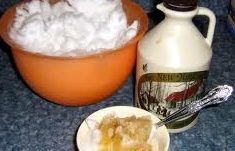
Sugar on snow is a Vermont favorite.

For a “Cooking With Snow” class that Willie Shubert taught through Knowledge Commons DC in January, he picked one snowy dish he remembered from his time living in China: baobing. “You get this huge amount of ice and cover it with whatever you want,” he says, such as syrup, red beans, tapioca pearls or fruit. “It’s an erupted volcano of sweetness.”

Snow can also be used in recipes where it becomes invisible, a secret surprise. There’s the simple snow cream, and snow pancakes made with a handful of the white stuff. In his class, Shubert also made a Korean cold soba soup, with chicken and beef broth, black rice vinegar, Asian pears and cucumbers. Cold soup is probably more of a summertime dish, though.

“Cooking is really about transforming flavor and texture, color and shape,” Schubert says. “You can do a lot of the same transformation with cold.”

In the Knowledge Commons DC class, participants made candies by playing with flavored syrups on dry ice. Enlarge image

Inspired by a New England maple syrup classic, sugar on snow, he brought to class several syrups of various flavors — sweet maple, sour cherry, spicy mango — as well as vodka and hot sauce. He then set up a trough of supercold dry ice and carved depressions with a wood burner to hold his concoctions.

“When you pour [the syrups] onto dry ice, they start to transform,” Shubert says. A short stay on the ice creates something with the texture of caramel; longer, it’s like hard candy.

Shubert, a self-professed “salad evangelist,” usually teaches classes on salad-making, using the form to experiment with flavors and mixtures. The hardened syrups and alcoholic lollipops made in his snow class were “an extension of that flavor alchemy,” he says.

In places where there is no snow, like this winter in Washington, D.C., or if you just need a good party trick, Shubert suggests substituting this setup: dry ice sitting atop a bed of shaved ice. It’s easy to make if you’ve still got your Snoopy Sno-Cone Machine.

But we have to admit, there’s nothing quite like real snow.


Open house set for Kings Beach project

Placer County Department of Public Works is hosting an open house on Feb. 19 at 5:30pm at the North Tahoe Event Center in Kings Beach to provide an update on the Kings Beach Commercial Core Improvement project. The presentation begins at 6pm.

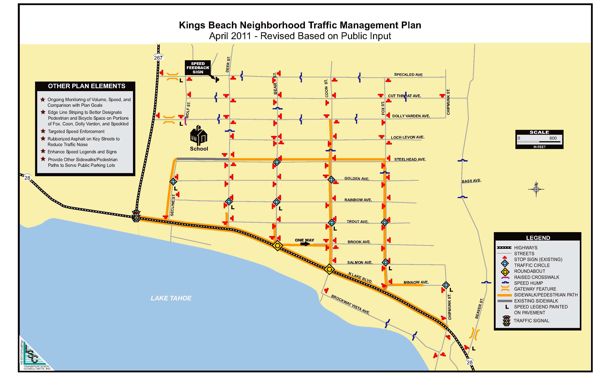
The project’s final design, right-of-way acquisition process, parking replacement plan, traffic management plan, project funding and construction schedule will be presented followed by a question and answer session.

Translation services will be provided.

For more info, go online.


Mancuso barely misses podium in downhill

By USSA

SCHLADMING, Austria — The U.S. narrowly missed the medals Sunday in the women’s downhill at the FIS Alpine Ski World Championships. Julia Mancuso (Squaw Valley) was 0.15 out of the prizes in fifth, with Stacey Cook (Mammoth Mountain) sixth.

In an aggressive race that saw higher speeds than training, the twisty, turny Schladming S turn midway down the course took its toll on U.S. racers as France’s Marion Rolland took the surprise gold.

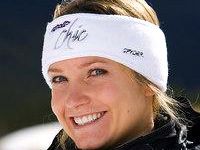
Julia Mancuso

Mancuso and Cook were dominating their runs up to the midway point where a series of turns through the Schladming S slowed them down.

“I don’t know where I lost it – I’m a little frustrated right now. I want to talk to my coaches to find out where all that time went,” Cook said.

Leanne Smith (N. Conway, N.H.) was 12th with Alice McKennis (Glenwood Springs, Colo.) 17th.


Ski report: Get out and carve

It’s shaping up to be a great day on the mountain.

Here is the Feb. 10 ski report.

— Curtis Fong


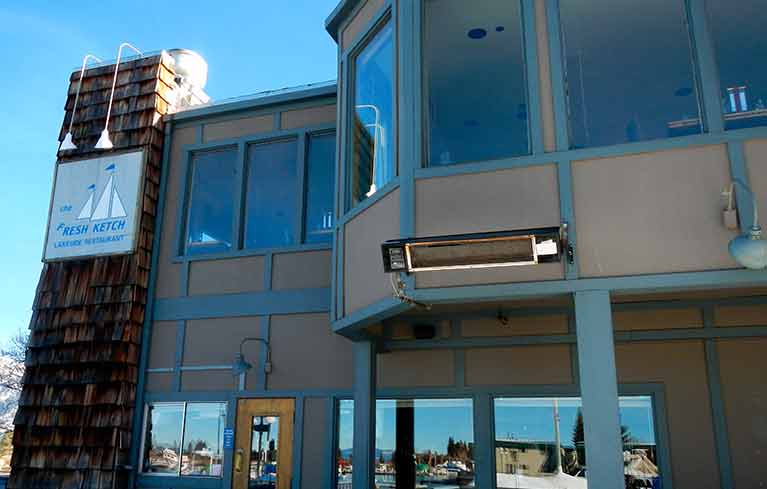
Fresh Ketch under new ownership

The Fresh Ketch in South Lake Tahoe has new owners. Photo/LTN

The Fresh Ketch in South Lake Tahoe has new owners.

Longtime owner Bob Hassett has sold the restaurant to the majority owners of the Tahoe Keys Marina – Donna and Robert Krilich of Illinois.

Details of the transaction that closed in January have not been disclosed. Neither Hassett nor Donna Krilich returned calls. This means it is not known if there will be changes coming to the waterfront eatery.

The El Dorado Count Assessor’s Office lists the value of the property and business at $1,224,913.

The Krilichs bought the Tahoe Keys Marina in early 2009 for more than $20 million. South Shore real estate agent Jean Merkelbach has a minority interest in the marina, but is not part of the restaurant deal.

Robert Krilich has an extensive criminal history.

According to court documents, “(Robert Krilich) has been convicted of racketeering and other offenses related to a scheme that included bribery of public officials in order to obtain assistance in the approval and financing of construction projects.”

He was also convicted of drunken driving in South Lake Tahoe in 2009.

— Lake Tahoe News staff report


Factory Stores at the Y going under

This South Lake Tahoe center used to be bustling.

By Kathryn Reed

One by one businesses at the Factory Stores at the Y have been closing. Now the whole center is on the auction block.

While the notice of default was filed in June 2012, the trustee sale is scheduled for Feb. 27 in Placerville.

Sisters Shannon Casteel and Nancy Irmer, who own the center at the corner of highways 89 and 50 in South Lake Tahoe, use the business name Two Sisters LP. They are based in Genoa. Neither could be reached for comment. Their property manager, Chad Coons, did not return a call.

The sisters bought the center from their brother Gary Casteel in 2004. He still operates the Heavenly Village.

The sisters owe more than $8 million, according to documents.

At one time Casteel also operated Blue Willow Lingerie in the center with her daughter-in-law Lori McKinney.

The last anchor tenant, Adidas, left in December 2011.

Much of the 51,811-square-feet of leasable space has sat empty for years.

Another business is leaving – Fragrance Outlet. Doors will probably be locked for good in April.

Gary Campbell who has operated the store for the last 18 years told Lake Tahoe News he just couldn’t make it anymore. He has significantly slashed prices to get rid of the inventory before he closes shop and moves out of South Lake Tahoe.

“It was pretty obvious when the mall was emptying out that they were in trouble. But they never told us they were in trouble. But when 70 percent of the stores are vacant, they had to be,” Campbell said.

There was a time when it was difficult to find a parking spot at the outlet stores. Locals and tourists would shop there. After the Outdoorsman closed, the factory stores offered one of the few places in town to be able to buy reasonably priced clothes, gifts and other goods.

Campbell said the decline at the factory stores has been combination of things – “Indian casinos, poor economy and poor management for the mall.”

He added, “I just think the whole town is struggling.”


Opinion: Winter recreationists must safely play together

By Lisa Herron

The U.S. Forest Service Lake Tahoe Basin Management Unit reminds snowmobilers, skiers, and snowshoers to show courtesy when enjoying the outdoors in the winter. Snowmobilers, skiers and snowshoers often share the same areas. The key to sharing them amicably is to be respectful when encountering each other.

The LTBMU permits snowmobiling on many acres of National Forest lands around the Lake Tahoe Basin. Designated wilderness areas are closed to

snowmobiles. Riding there is against federal law and punishable by a fine of $5,000 for an individual, $10,000 for an organization, and/or imprisonment of six months.

In order to ensure safe and enjoyable outings for everyone, snowmobile operators should reduce speed and lower rpm when in high-use areas or when encountering skiers or snowshoers until they are well beyond those on foot. Slowing down reduces noise and helps skiers and snowshoers maintain a serene experience.

Skiers and snowshoers should consider that snowmobilers may not be able to hear or see them and take appropriate precautions. Make an effort to be visible to the rider and move a safe distance off the trail until the snowmobile passes. When skiers and snowmobilers are

using the same trail, especially in high-use areas, be mindful that extra caution is required: Slow down, look around and respect the environment.

In residential areas, snowmobilers should keep “warm-up” time brief, avoid excessive engine revving, refrain from riding too close to homes, ride during reasonable hours, avoiding early morning and late night rides, and be aware of private land and homeowner boundaries.

California and Nevada now require registration of snowmobiles. In Nevada, as of July 1, 2012, new Over the Snow Vehicles (OSVs) must be registered and by July 1, 2013, all OSVs must be registered.

Snowmobiles can be registered online in California.

The 2012-13 LTBMU Snowmobile Guide is available free to the public. The guide includes a map that shows where snowmobiling is permitted, where you can find groomed trails, and other tips for safe and responsible snowmobiling. Copies are available at North and South Shore Forest Service offices.

Lisa Herron is the public affairs specialist for the Lake Tahoe Basin Management Unit.