Storm pipes subject of two League meetings

The League to Save Lake Tahoe will be giving a presentation on the evenings of March 13 and 14 about Pipe Keepers, a new volunteer monitoring program.

Stormwater pipes flow into Lake Tahoe. Photo/LTN file

Stormwater pipes flow into Lake Tahoe. Photo/LTN file

Pipe Keepers is a volunteer-based monitoring program that examines turbidity (clarity) of water that enters Lake Tahoe and its tributaries through storm drains. The group was created last fall in response to concerns about a neighborhood storm pipe discharging dirty looking water directly into Lake Tahoe. Since the program launched, nine volunteers have collected more than 200 samples from neighborhood storm pipes. The program will expand this spring to include additional volunteers and pipes.

The presentation and discussion will focus on storm drain pipes in Tahoe, information learned during this pilot season, and opportunities to become involved.

The March 13 presentation will be at Lake Tahoe Community College board room at 6pm and the March 14 presentation will be at Incline Village General Improvement District Public Works meeting room at 6pm.

For more information, contact Nicole Gergans at (530) 541.5388 or Nicole@keeptahoeblue.org.


Decreasing snowfall a chilling reality for winter sports

While winter storms have blasted parts of the Midwest and Northeast, a lack of steady and deep snow — less accumulation and faster melt — has had serious effects for the ski industry. Hari Sreenivasan reports on how winter sports businesses are navigating the season as part of the Coping with Climate Change series.

— PBS News Hour


Concord’s Tahoe camp expected to be repaired before summer

By David DeBolt, Contra Costa Times

The Concord City Council voted unanimously Tuesday to support emergency repairs at Camp Concord, avoiding a possible delay in the opening of the city-operated camp.

The 5-0 vote declared an emergency at the Lake Tahoe facility and allowed interim City Manager Valerie Barone to execute a no-bid construction contract to speed up repairs.

The camp opens in May each year and runs until September, but copper thefts threatened to delay the opening.

During a security check Dec. 20, a camp seasonal employee found that all the copper pipe plumping had been removed from the family camp bathhouse, and that more copper was stolen from a maintenance shed, according to a city staff report.

A subsequent visit on Jan. 15 revealed that copper piping had been stripped from six additional buildings.

The camp is closed during the winter months, and is patrolled by security checks. The thefts are now under investigation by the El Dorado County Sheriff’s Department.

In a city report, interim City Engineer Jon Crawford said the usual bidding process, which can take up to three months, could mean a delay in opening the spring and summer programs at the camp. Any delay, he told the council Tuesday, could result in the loss of customers, and, in turn, revenue.

The city has already rented out the site to two groups in May, and some 60 families have registered to attend during the family camp season, according to the report.

City officials initially estimated the total damage at $70,000 to $80,000.

The city has leased the 29-acre site in the Lake Tahoe Basin from the federal government since 1967. Concord’s permit to run the camp expires in 2025.

The camp faced closure during the 2012 city budget talks, but was saved by overwhelming community support.

Earlier in Tuesday’s meeting, Public Works Director Justin Ezell said more than $1 million has been spent since 2007 to replace stolen copper wiring on city properties.


2 multimillion dollar lakefront houses sell at Lake Tahoe

By Sarah Tilton, Wall Street Journal

Venture capitalist Steven Stull and his wife, Claire, have paid $11.875 million for a waterfront home in Incline Village, according to public records.

The roughly 10,000-square-foot home sits on 0.82 acre with 100 feet of shoreline. The house has five bedrooms, five bathrooms, two half-bathrooms, an elevator, a wine cellar, four fireplaces and a laundry room with a pet shower.

The seller was Chuck Bluth, the former owner of the Cal Neva Resort, who built the home in 1997.

“It was a helluva buy,” says Bluth of the recent deal. Bluth has moved to a 20,000-square-foot home on 4 acres on the East Shore of Lake Tahoe. “I like land and I like my privacy,” says Bluth, a real-estate developer and entrepreneur.

Bluth had raised the asking price of the home to $15.5 million last month, up from a previous asking price of $13.998 million in September. It was first listed in 2007 for $15.998 million.

Lexi Cerretti of Sierra Sotheby’s International Realty represented the buyers. Jean Merkelbach of Sierra Sotheby’s International Realty represented the seller.

Also in Incline Village, rancher and real-estate developer Les Busick recently paid $10.5 million for a lakefront property that includes a 2,500-square-foot house, a white-sand beach, a pier and a boat house. The house had been listed for $13.9 million.

Tim Lampe of Lakeshore Realty represented the buyer and the seller. The seller was the Coleman Family Trust, according to public records.


Breast cancer among young women increasing

By Monte Morin, Los Angeles Times

Rebecca Johnson was 27 years old and had just graduated from medical school when she got the diagnosis: breast cancer. She thought she was a rare case, but then a few of her friends got it too. So did some friends of friends.

Was it all just a coincidence, or was breast cancer becoming more common in younger women?

think pink“I really wondered,” said Johnson, now 44 and the director of the Adolescent and Young Adult Oncology program at Seattle Children’s Hospital. So she examined decades’ worth of data from the National Cancer Institute and made a disturbing find: Cases of younger women with advanced breast cancer have increased about 2 percent each year since the mid-1970s and show no signs of abating.

The results, published in Wednesday’s edition of the Journal of the American Medical Assn., confirmed the suspicions of many oncologists who had noticed an uptick in patients younger than 40 with cancer that had spread to the bones, brain or lungs.

In 1976, 1.53 out of every 100,000 American women 25 to 39 years old was diagnosed with advanced breast cancer, the study found. By 2009, the rate had almost doubled to 2.9 per 100,000 women in that age group — a difference too large to be a chance result.

“Most studies have failed to show an absolute increase,” said Dr. Benjamin Paz, a City of Hope Cancer Center surgeon who was not involved in the study. “Now, looking at a longer period of time, this study shows there’s clearly been an increase. It’s the first to do so.”

The trend, which has yet to be explained, has raised real concerns about future efforts to treat the disease. Survival rates for young women with metastatic breast cancer are much lower than they are for older women, because the cancer tends to behave more aggressively in the young.

The data from the U.S. Surveillance, Epidemiology and End Results, or SEER, database detected a significant increase among black and white women in both urban and non-urban areas, suggesting that the root cause or causes were widespread.

“An increasing number of young women in the United States will present with metastatic breast cancer in an age group that already has the worst prognosis, no recommended routine screening practice, the least health insurance, and the most potential years of life,” Johnson and her coauthors wrote.

To be sure, it remains uncommon for a young woman to be diagnosed with breast cancer. About 7 percent of all breast cancers diagnosed in the United States involve women younger than 40, and on average, 1 in 173 women in this age group risks developing some type of breast cancer.

Johnson and her coauthors said they hoped that other Western nations would corroborate their findings using their own data. If a trend is established, research should investigate the reason for the increase, they added.

They hypothesized that the trend was due to a variety of lifestyle changes that have occurred during the study period. Diet, exercise, obesity, earlier onset of menstruation, use of birth control, delayed pregnancy and other factors all might play a role.

A few smaller studies have examined risk factors such as obesity, sedentary lifestyle and high caloric intake and concluded that when combined, they do predispose to young adult breast cancer.

However, it is still unknown exactly why cancers can behave so much more aggressively in younger patients, and why estrogen — or the blocking of it — has a very different effect on cancer cells in younger and older women.

“There’s something different about breast cancers in young adults than in older people,” Johnson said. “Researchers that are focusing on cancer in young adults are trying to tease out what those biological differences are.”

In the meantime, she said she hoped the study would alert young women to the risks of breast cancer.

“There’s no evidence that 29-year-olds should go out and get mammograms or anything like that,” Johnson said. “But if there’s a take-home message, I would say that it would be awareness of the fact that breast cancer can happen even in young women and that it’s important for both young women and their doctors to be aware of this.”


Students protest McClintock’s office

Student activists organized by California Fair Share gathered at Rep. Tom McClintock’s district office in Granite Bay on Feb. 28 to call on him to stop the sequester by closing corporate tax loopholes.

The students unfurled and gave the Republican congressman the 100-foot banner constructed from more than 600 petition signatures.

banner

Sierra College students protest Feb. 28 outside Rep. Tom McClintock’s office. Photo/Provided

“Hundreds of citizens and dozens of student leaders have come together in the past few weeks to make one thing clear: we should close corporate tax loopholes, not make cuts that will lay-off teachers, police and firefighters,” said Patrick Stelmach, an organizer with California Fair Share, said in a statement. “With California schools already overcrowded and underfunded, we cannot afford to slash education funding with reckless abandon. It is time to make corporations pay their fair share. Rep. McClintock should stand up for our kids’ future, not corporate profits.”

The group met with McClintock’s staff Thursday afternoon.

“McClintock wants the sequester cuts to go through. His position on corporate tax loopholes is he favors eliminating them but only if the overall rate was lowered. While we applaud his intention to close loopholes, we are opposed to the drastic budget cuts and giving corporations more tax breaks,” Stelmach said.


Truckee snowboarder redefines extreme

By Max Klinger, New York Times

TRUCKEE — The snowboarder Jeremy Jones arrived at the Atomfjella Mountains on Svalbard, an island above the Arctic Circle, after 30 hours of tundra crossing on a rattling snowmobile convoy in April 2011. He had invited Terje Haakonsen, known in the snowboarding world for his ability to ride almost anything, any style, to attempt the summit and first descent of a set of precipitously icy couloirs.

Jones, 38, spends years scouting locations and assessing risks. “He walks away from stuff all the time,” his brother Steve said. “He’s incredibly patient.”
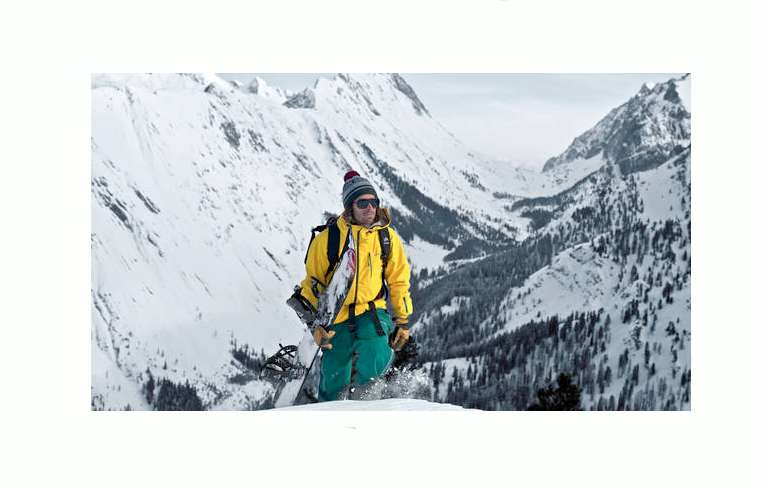
Jeremy Jones making snowboard history. Photo/New York Times

Jeremy Jones of Truckee is making snowboard history. Photo/New York Times

As the men arrived at midnight to get their first look at the steep chutes they would be climbing, the skies were still filled with endless sunlight, and something occurred to Jones that he had not anticipated, despite years of diligent planning.

“Man, I hope Terje’s even up for this,” he thought, signaling just how daring his snowboarding exploits had become.

Haakonsen grew up a three-hour flight from Svalbard but never knew it held mountains as impressive as the Atomfjella. “My first reaction was ‘Wow,’” he said.

He eventually accepted the challenge, riding his lines with his usual brio, but said that hiking up those sheer walls had gripped him more than he could remember.

The same might be said about many of the partners Jones invites on his backcountry adventures, because for the past few years, he has committed himself to summits and descents around the world that are groundbreaking in size, scope and degree of vertical exposure.

“He’s pushing technical snowboarding, meaning very critical turns on really steep terrain, and executing like no one else,” said Lucas Debari, another expedition partner and a freeriding standout from the state of Washington. “Other guys are going bigger off cliffs, or going faster, but no one is pushing technical snowboarding on lines of consequence like he is.”

The precedence of these feats is largely the product of Jones’s unconventional methods, which incorporate splitboarding, mountaineering techniques and multiweek approaches, and have allowed him to access mountain ranges and massifs that were previously considered untouchable, if charted at all.

At a local restaurant here in his hometown, Jones does not look like one of the world’s most radical snowboarders. A 38-year-old father of two, he is soft-spoken and friendly, an outlier in a sport known more for brazenness than modesty. But for more than two decades, as snowboarders have started trends and realized Olympic ambitions, Jones has pursued a singular dream: riding some of the biggest, significant mountains in the world.

Over a veggie burger stacked with bacon, he traced his evolution from an Alpine racer from Cape Cod, Mass., to an elder statesman of snowboarding in Lake Tahoe. Jones followed his two older brothers to Jackson, Wyo., when he was 16. Soon after, he took his first trip to Alaska, where, he said, he lived in his car for months.

Jones met his wife, Tiffany, a former competitive snowboarder, in Lake Tahoe. She knows the risks and long absences associated with the profession.

“I watch all his movies,” she said in a telephone interview, “and if he does something unnecessarily dangerous, I’ll call him on it. But he’s a very calm person, not ego-driven, and he always has a thought process for every decision, and he can always walk me through it.”

Jones’s position on snowboarding’s hierarchy is hard to calibrate if only because he nearly predates the sport. In the 1990s, he began pushing big-mountain freeriding and exploring Alaska’s varied and challenging terrain by helicopter. This year, he was voted Snowboarder magazine’s big-mountain rider of the year for the 10th time.

Jim Zellers, a snowboarding pioneer in Alaska in the 1980s, recalled the first time he met Jones, in Squaw Valley, in the mid-1990s.

“I was following him down this really steep, technical line, and I remember thinking, ‘This guy is special,’” Zellers said. “To this day, there’s no one who looks at the landform, the geomorphology, like him and thinks about what would be the most interesting part of the mountain to be involved in.”

But at a certain point, Jones felt limited by the helicopter exploration as it became as popular and predictable as resort riding.

“It’d be the best day of the year,” he said, “and I’m standing on top of the best line in the best heli zone in the world, and I realize that I’m riding it for the third time and it’s already been in multiple movies and magazines. Where’s the progression or adventure in that?”

He added: “You eventually discover that with a heli and snowmobile, you can only access about 5 percent of the mountain range. To keep the adventure alive, we had to turn to something else.”

He turned to the splitboard, a snowboard that separates into two touring skis, which allowed him a new way to get around the backcountry and ascend mountains. The splitboard had been around since the 1980s in Europe, but the crude initial designs never caught on. As Jones began approaching these mountains from the bottom, he also began borrowing equipment from traditional Alpinism like ice axes, crampons and climbing ropes.

Conrad Anker, a leading mountaineer, climber and skier from Montana, compared Jones’s feats to the rock climber Alex Honnold’s free climbing.

“It’s really high stakes, the hardest level of technicality and difficulty,” Anker said. “You take that human-power element and the solid mountaineering, and you see why he’s so well-respected in the mountaineering community.”

In many cases, this self-ascent ethos has allowed Jones to outperform helicopters in traveling deeper into mountain ranges, waiting out bad weather and finding steeper lines to ride. As he approached these mountains from below, his knowledge of snow and avalanche conditions grew, and his understanding of a mountain’s features expanded the types of lines he was willing to attempt.

After failing to persuade his longtime sponsor, Rossignol, and several other companies to produce a splitboard for him, he started making his own. Then in 2010, Teton Gravity Research, his brothers’ production company, released the first of a planned trilogy of backcountry snowboarding movies, “Deeper,” which in Jones’s words “threw a bunch of gas on the backcountry fire that had been developing for years.”

Despite a decline in overall sales of snowboards, splitboarding has become the fastest-growing segment in the sport, rising about 32 percent so far this season compared with the same period last season. (Three companies that refused to make Jones a splitboard are now producing them.) One effect has been to move snowboarding from the resorts to the off piste, where the sport was conceived.

But with freedom comes risk. In the winter of 2010-11, 16 skiers or snowboarders died as a result of backcountry avalanches in the United States, according to the American Avalanche Association. During 2011-12, the number of deaths climbed to 20, as advancements in equipment made backcountry riding more accessible.

“You look at Europe and what the standard is for a technical mountaineering background for their winter athletes; it far surpasses the United States,” Anker said. “I see it all the time: seasoned skiers who get themselves into these avalanche situations, making preventable and sometimes fatal mistakes.”

Even Jones’s expeditions have had close calls. During the filming of “Further,” released in September as the second part in the trilogy, the snowboarder Forrest Shearer was knocked off balance by a batch of slough — a small surface-level slide — near the top of a steep, narrow chute in Japan and fell 1,200 feet before he recovered. In Austria, the husband-and-wife team Mitch Tölderer and Bibi Pekarek were feet from the summit of a giant peak when a slab they were standing on broke and slid. In each case, the riders were largely unscathed.

Jones tries to avoid these pitfalls with methodical research and planning.

“A lot of climbing has to do with ethics, and the style and manner in which you do things, in which you make decisions,” said Debari, the standout freerider. “He definitely brings that mind-set into snowboarding.”

Jones spends years scouting locations, gathering data on weather and snow, and talking to local guides before he selects a destination. On the mountain, the talk revolves around “slough management” and limiting “secondary exposure,” meaning avoiding areas that put his fall line above dangerous obstacles like cliffs, rocks, trees or gullies.

“He walks away from stuff all the time,” said Steve Jones, Jeremy’s oldest brother and longtime expedition partner, and a principal in Teton Gravity Research. “He’s incredibly patient, and that’s a big part of the unspoken trust that our family puts into what he does.”

Jones has learned to look for ranges where the predominant weather has a heavy maritime influence, generally meaning heavier snow that is less likely to form layers that can fracture and slide. He also searches for mountains that rise out of large, flat glaciers and ice fields, creating shallow avalanche run-outs instead of deep, obstacle-filled terrain traps.

In perhaps his most risky expedition, Jones traveled to the Wrangell-St. Elias Mountains in southeast Alaska. They sit in America’s largest and least explored national park, a mountainous zone larger than Switzerland. These ranges have achieved a high profile among climbers, skiers and snowboarders who consider them the tallest in the world, not in altitude, but in the sheer vertical relief with which they rise from flat ground.

In an email, the veteran Alaskan bush pilot Paul Claus wrote, “The St. Elias also have probably the hardest conditions found anywhere: the coldest temps, very bad weather, unfathomable amounts of snow and extreme remoteness.”

Jones had avoided the Wrangells after a friend, Aaron Martin, disappeared in 2002 while skiing down a mountain there. After years of tracking the Wrangells’ weather, he thought it was time to go last April.

Jones planned to fly to Bagley Ice Field and set up camp for a month to get to know the weather, the snowpack and the best lines. He invited his longtime riding partner Ryland Bell and Debari.

They discovered some of the most complex and technical walls, spines and couloirs they had ever seen. But at the base of most of the walls were bergschrunds — gaping, 40-foot-deep crevasses. Everything they were going to ride had extreme secondary exposure, so one slip could be fatal.

“We’re talking about things that most people wouldn’t even consider being on,” Claus said. “Even if you were actually climbing the mountain with the goal of getting to the summit, you would not go where he went.”

Nonetheless, Jones, Bell and Debari tackled five major first descents, with names like the Tooth and West Wall, in 30 days. After pushing his partners to their limits, Jones said he had one final goal: a “cherry line” in the middle of a “no man’s land” peak. He named it Space Needle, and hiked there alone at 7pm, carving a gutsy 1,400-foot line on one of the trip’s nonpareil descents.

“The pitch of what he was riding — that was incomprehensible,”Debari said. “Not just steep and technical, but mentally so challenging. You have to be the most calculated snowboarder in the world to do what he does over and over again and survive.”

Even at 38, Jones says he has no plans to slow down.

“It’s funny,” he said. “With splitboarding, I have less pain than I’ve ever had. I spend more of my day hiking and getting a good full-body workout, and less time on high-impact descents.”

When asked about his next movie and his plans to top his previous feats, he turned philosophical, saying, “In 12 hours, we go out and experience nearly every emotion in the human range: physical strain, frustration, pain, anxiety, fear, calculation, the joy of making it to the top, the beauty of your surroundings, camaraderie, then the 60 seconds of adrenaline-filled activity.”

He added: “If it was all about the adrenaline and the descent, you wouldn’t last doing the style of riding I do. It’s about a much wider experience. But, yes, we’ve got some pretty amazing stuff planned.”




Mancuso in hunt for super G title

By USSA

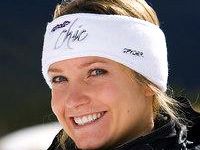
GARMISCH-PARTENKIRCHEN, Germany — World Championship super G bronze medalist Julia Mancuso (Squaw Valley) solidified herself as a contender for the 2013 Audi FIS Alpine World Cup super G title after tying for second Friday with overall leader Tina Maze of Slovenia.

Mancuso sits 65 points behind Maze in the title chase with two super G races remaining on the calendar, including a second on Sunday in Garmisch where Mancuso will be going for her fourth straight super G podium at the German resort.

Julia Mancuso

Julia Mancuso

“I want to win races so I’m going to fight for that first. I feel like in order to get a super G title you should win a race so that’s my first goal. And if I hit that goal, then I should have a good chance at staying in there for the chase,” Mancuso said.

Tina Weirather won to become only the second woman from Lichtenstein to claim a World Cup victory since her mother won Hanni Wenzel in 1984.

With 14 career super G podiums, Mancuso is tied for 10th on the women’s all-time super G podium list with Austrian Anita Wachter.

Laurenne Ross (Bend, Ore.) posted a solid ninth. Leanne Smith (N. Conway, N.H.) finished 12th and Stacey Cook (Mammoth Mountain) 30th.


Ski report: New month, same weather — sun

ski report logoIf  you don’t see Lake Tahoe News‘ ski reporter Curtis Fong on the ski slopes today, check him out at tonight’s Dancing with Your Stars at 7 at MontBleu in Stateline.

Here is Fong’s March 1 ski report.


Always yield to emergency vehicles

When you see an emergency vehicle either coming from behind or toward you with its red lights and siren sounding, please give the right-of-way to that ambulance, fire truck, or police car by pulling over to the right side of the road and stopping.

Even if you are in the center turn lane, it’s the law that you yield to the right side of the street without blocking the intersection.

Once the vehicles have passed, it is then safe to resume your normal travel path.

— Sallie Ross-Filgo, South Lake Tahoe Fire Department