Opinion: Time to improve community participation

By Scott Valentine

I recently wrote an article that highlighted a need for greater community involvement in city issues and I specifically cited the younger generation as being too busy and apathetic to get involved, and the older generation for not appreciating the value of new ideas and welcoming change. I applaud all of you who are doing your part to create positive improvements for our community regardless of age or qualifications. Of course everyone realizes I oversimplified my comments for effect. I’m not age-ist. I am trying to illustrate that change on all sides, and on all accounts is necessary.

Scott Valentine

Scott Valentine

I openly welcome praise and criticism of my last article (or even this one). My intent is to incite action from those who feel they are underrepresented, be it our youth, members of our Latino community, or even those in our progressive older population who are tired of being lumped in with the people who are fine leaving our town the way it is. The barrage of emails and phones calls I received all had a common theme: People said, “You’re right, I recognize we have a problem, what next, and how do I get more involved?” Excellent. Where do we begin?

I’m not claiming to have all the answers, but here are just a few suggestions:

Move City Council meetings to nights. If Sacramento can conduct all of their council business from 6 to 9pm, why can’t we? This would hopefully accomplish three things: 1) it would force city staff and council to be more efficient with their time (yes, we could all benefit from that), 2) it would allow a vastly different demographic to run for City Council at the next election, and 3) it would allow people the opportunity to participate in city issues after work, thereby increasing the likelihood of public involvement and community guided decision-making. Of course I understand that we live in a town where a lot of people work at night and we wouldn’t be satisfying all groups. We also run the risk of people not showing up anyways, no matter what time it is … it’s Tahoe, people are recreating and working three jobs and will most likely be too tired to care at the end of the day … but it might be worth a shot.

Paid positions. If you want even a more radical approach, maybe we should think about paying our council. We are a small town with a small budget and this might not be feasible, but if this was someone’s full-time job instead of a volunteer position we might be able to get a lot of work done in a short amount of time. It would also open the doors for a different pool of applicants when election time rolls around. Someone who is trying to raise a family while holding down multiple jobs might see this as a way to live their Tahoe lifestyle and make positive contributions to the community at the same time. Could it also lead to abuse of taxpayer funds … maybe … you’d have to weigh the options.

Get informed. If we seriously want to create community improvements that are based upon public involvement and input, information dissemination is probably the most important part of the equation. We need a “one-stop-shop” for all of our favorite Tahoe issues. Posting on the city website or on Lake Tahoe News is not enough. There needs to be a site where you can instantly see a community calendar of events and important meetings that are happening regionwide. Ideally, it would be a place where you could log in, select the issues that are most important to you, and be instantly emailed/Tweeted/Facebooked about upcoming events. It would be great if the information came to you and was catered to your interests. TahoeFuture.org can help keep you informed. It was initially created to provide information on the TRPA Regional Plan Update and it has since been adapted to serve community needs and provide information on Tahoe issues. Hopefully, we will soon see some survey based functions so that our decision-makers can use the same site to see how the public feels about particular issues, thereby guiding them on how they should vote and create policy. Get informed. Get involved. Visit TahoeFuture.org.

Contact your representatives. I was recently appointed to the Parks and Recreation Commission and I hope to get your input so that we can guide the development of the Parks and Recreation Master Plan. Help improve our quality of life, increase connectivity, and build a greater sense of community through our recreation facilities and events. Guide this master plan so that it reflects your future desires. I look forward to hearing from you so that we can better serve the needs of our residents and our visitors. valentine@ltcc.edu

Contact the city. If you have other great ideas on how to inspire or improve community participation (or you would like to get involved yourself), you can always contact our City Council or the city manager directly. They actually listen. We live in a small town. A lot is possible if you put forth the effort.

Change is a product of your involvement. Well focused complaints are OK, positive action is even better. Show you are proud of where you live and you are ready to do something about it. Shovel the sidewalk in front of your business, go to a public meeting, write an informed letter to Council, pick up the trash or the dog poop on your favorite trail, fix your dilapidated sign, tell a tourist where the best restaurants are, volunteer with TAMBA to build some mountain bike jumps, or show Chris Brackett that you are ready to take him on in the next Christmas light competition. Don’t ever let anyone tell you that you are unqualified or inexperienced. You are capable of effecting positive change on a variety of levels. Our town is waiting.

Scott Valentine is the head of the Earth Science Department at Lake Tahoe Community College.



What to do when ‘clean your plate’ fails

By Patti Neighmond, NPR

If you’re a parent, you’ve probably heard remarks like this during dinner: “I don’t like milk! My toast is burnt! I hate vegetables! I took a bite already! What’s for dessert?” It can be daunting trying to ensure a healthy diet for our children. So it’s no wonder parents often resort to dinner time rules.

In NPR’s new poll, with the Robert Wood Johnson Foundation and the Harvard School of Public Health, 25 percent of families tell their children to eat everything on their plate, and 45 percent report setting restrictions on the types of foods eaten. Increasingly common are rules like “clean your plate,” as well as newer strictures such as “no second helpings of potatoes,” “no dessert until you eat your vegetables” and “sodas and chips only on special occasions.”

Trying new foods at any age can be a good -- as Veronica Wong introduces her grandmother, Cleo Reed, to street food in China. Photo/LTN file

Trying new foods at any age can be a good thing. Veronica Wong introduces her grandmother, Cleo Reed, to street food in China. Photo/LTN file

This is all well-meant advice. But does it work? Kelly Brownell, who directs the Rudd Center for Food Policy & Obesity at Yale University, says, “No.”

“By demanding that children eat things like vegetables before they have a dessert, it makes it seem like there’s something wrong with eating vegetables, and that you have to swallow medicine before you get to the good part,” Brownell says.

Not only that, but rules like this can backfire, according to Kristi King, a registered dietitian at Texas Children’s Hospital and a spokesperson with the Academy of Nutrition and Dietetics. “Some of the studies have shown us that when they were put in a situation where somebody is saying ‘finish this’ or ‘finish that,’ the kids actually had more negative responses and actually consumed less of the food than the kids who didn’t have that reinforcement of ‘you need to finish.'”

The better option, King says, is creative negotiation. Take, for example, what she calls “Try It Tuesdays.” On a “Try It Tuesday,” parents, along with their children, pick out a new food to sample. It helps to involve the kids in preparing the dish as well, she says. This investment in the new food increases the likelihood that the child will try it and even enjoy it.

If they still say no, King suggests “no-thank-you bites” — something her friends made up for their 3-year-old daughter. It goes like this: The child just has to take a bite, and if she doesn’t like it, she can say “no thank you,” and that’s that. But typically in this family, the “no thank you” turns into a “thank you,” as the 3-year-old watches her parents eating and enjoying the food.

“You see her little hand reach across to the fork, and it kind of goes over into the vegetable,” King says. “The next thing you know, you turn around and she’s eaten the entire vegetable.”

And, it turns out — as with most other behaviors — your kids are watching you, King says. “I had a parent who came into clinic not too long ago, and I said, ‘OK, what’s our goal for being here today?’ And he looked at me and said, ‘Make him eat vegetables!’ And, my question back was, ‘Well, do you eat vegetables?’ And his answer was, ‘No, I don’t like them.'”

Dad mentioned he loved grilling, so King suggested he try that with vegetables. By their next visit, he’d become an avid veggie griller.

“Zucchini and squash and carrots and eggplants and onions and tomatoes — you name it, he was grilling it,” says King. “[It’s] a dietitian’s dream — getting an entire family involved in eating more healthy foods.”

As for dessert, Yale University’s Brownell says there’s nothing wrong with an occasional treat. “That doesn’t mean that the only options are things high in sugar or fat or salt. There can be wonderful combinations of things like sorbet, sherbet, fruits — things like that can make outstanding desserts and be really good for people.”

Some parents worry that having only healthy foods at home will lead kids to overdo it with junk food when they head off to college. But Brownell says there’s no evidence to support this worry. And, in fact, the reverse is probably true.

Even if the young adults indulge in unhealthy foods at first, they’re far more likely to return to the healthy foods they grew up with. “Having only good foods around the house makes all the sense in the world, and research supports this,” he says.

So, Brownell says, fill your kitchen with healthy food, don’t buy junk food, and watch what you eat. Your kids will follow your lead.


Sequester likely to impact air travel

By Bruce Leshan, WUSA-9

WASHINGTON — The U.S. Travel Association has launched a texting campaign urging Congress to fix the sequester and warning that starting this week, travelers could be looking at big delays.

Nearly two-thirds of U.S. residents already think flying is too much of a hassle and many Americans do what they can to avoid it. The Travel Association says the sequester is likely to smack people with even more headaches.

Flying could be more frustrating with fewer federal dollars. Photo/LTN file

Flying could be more frustrating with fewer federal dollars. Photo/LTN file

Travel experts say with the sequester people are likely to see a sea of red on airport message boards. Delayed, delayed, delayed. Waits of an hour at TSA checkpoints. Two to three hours if you have to go through customs.

Transportation Secretary Ray LaHood says $689 million in FAA cuts will force him to furlough employees, including air traffic controllers and safety inspectors, for 11 days over the next few months.

TSA workers will face seven days of furloughs.

The Travel Association wants travelers to text their member of Congress while they’re waiting in line.

“They can text ‘delayed’ to 877 877 and let their member of Congress know how they feel about the process,” Geoff Freeman, chief operating officer and executive vice president said.

Some Republicans complain the White House is exaggerating the impact.

“There are easy ways to cut this money that the American people will never feel,” said Sen. Tom Coburn, R-Oklahoma. “What you hear is outrage because no one wants to cut spending.”

But the Airline Pilot’s Association says travelers will feel it.

“Make no mistake, we will maintain our current level of safety,” said association vice president Sean Cassidy. “And the only way we can maintain that level of safety … is if we turn down the level of air traffic.”


Snow, cold temps to descend on Lake Tahoe

Cold and wet – that’s the Lake Tahoe Basin forecast for most of the week.

A storm system will move into Northern California late Tuesday and drop into western Nevada and the Sierra by early Wednesday.

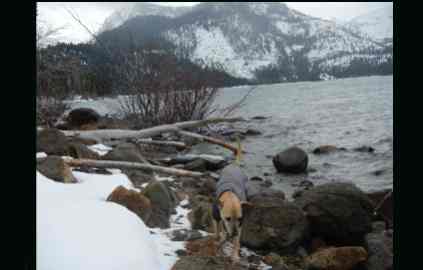
AJ will need her jacket this week if she goes out for a walk. Photo/LTN

AJ will need her jacket this week if she goes out for a walk. Photo/LTN

Expect the wind to arrive first. Gusts up to 50 mph could be blowing through Tuesday night. Snow will be close to lake level that night and down into the Carson Valley on Wednesday.

The National Weather Service in Reno says to expect 6-12 inches at lake level from Tuesday night through Thursday, and a foot or more along the Sierra crest.

A chance of snow is in the forecast for Friday too, with mostly sunny skies returning Saturday.

Starting Wednesday the high in the basin will be in the mid-30s, which will last for a few days.

 — Lake Tahoe News staff report


Medi-Cal expansion will test capacity

By Emily Bazar

In less than one year, the Affordable Care Act’s promise to bring health care to perhaps 1 million more California residents will be tested. On Jan. 1, 2014, Medi-Cal, the publicly funded health program for low-income and disabled residents, launches a huge statewide expansion.

But making a promise is one thing, and delivering is another.

In some places, it’s already difficult for many poor California residents to find a doctor who is able – or willing – to see them. Many medical providers who see these patients say they are overwhelmed, a situation that could worsen when those newly covered by Medi-Cal arrive for care.

“We’re not even talking about 2014. Good luck finding a doctor who takes Medi-Cal now,” said Carmen Burgos of the nonprofit Greater Bakersfield Legal Assistance program. Burgos helps low-income Kern County residents find health care and dental services.

More than 7 million Californians are covered under Medi-Cal, and expanding the program is a major piece of President Obama’s signature health law.

Between 2014 and 2019, another 1 million to 1.4 million Californians will enroll in Medi-Cal, according to UCLA and UC Berkeley estimates.

The Medi-Cal expansion will allow applicants with higher incomes and those who were previously ineligible, such as childless adults, to get coverage. State officials say there’s sufficient access to Medi-Cal services and they are constantly monitoring to ensure recipients can get care.

“We do believe that the Medi-Cal provider network provides adequate access in California now,” said Norman Williams, spokesman for the state Department of Health Care Services, which administers Medi-Cal. The state also is “adequately preparing for 2014 and the expansion.”

But doctors and health care experts disagree.

“We’re experiencing provider shortages right now,” said Alex Briscoe, director of the Health Care Services Agency in Alameda County. “Patients often wait months to get access to care,” he said.

Medi-Cal is California’s version of the federal Medicaid program, and the Golden State ranks poorly in doctor participation compared with other states.

Two studies, including one published in the journal Health Affairs in August, show that 57 percent of California doctors accept new Medi-Cal patients. That’s the second-lowest rate in the nation after New Jersey.

California’s neighbors, Nevada and Oregon, accept 75 percent and 80 percent, respectively. The primary reason doctors don’t participate is financial, doctors say.

Here, too, California scores badly, with one of the nation’s lowest reimbursement rates, ranking 47th of 50.

Eye surgeon and ophthalmologist Andrew Calman is an associate clinical professor at UCSF. He also has a practice in San Francisco’s Mission District, and about 10 percent of his patients are on Medi-Cal, he said.

Calman said he wants to help as many patients as possible, but because he loses money on Medi-Cal patients, he must limit the number he accepts. Calman said Medi-Cal pays him $22 for a regular visit; Medicare and private insurance reimburses between $60 and $100.

“We’re performing an important service, but there is a limit to how much of that we can do and still have a viable practice. We have to pay our rent, we have to pay our salaries to our staff. We have to pay insurance. If it costs me on average $60 to see a patient, there are only so many I can see at $20 before I close my doors.”

In theory, Calman said, the Affordable Care Act is supposed to improve access by covering those who have been previously uninsured. In practice, however, he said it will be hard for many of the newly insured to find doctors willing to see them.

Low Medi-Cal payments are being addressed – temporarily at least – by the Affordable Care Act.

Starting this past January and lasting through 2014, reimbursement rates for many primary care services in Medi-Cal are rising to Medicare levels, funded by the federal government.

In California, the change is dramatic. On average, payments will increase by 136 percent, according to the Kaiser Commission on Medicaid and the Uninsured.

“The payment increase is a significant incentive that we anticipate will help attract new primary care physicians to the Medi-Cal provider network,” said Williams of the Department of Health Care Services.

But improving access to care will involve more than convincing more doctors to participate, said Linette Scott, the department’s chief medical information officer.

It will be about changing the way care is delivered, she said. As the state moves more Medi-Cal recipients into managed care, she said, models of treatment will rely more on teams of health professionals to care for patients, not just individual doctors.

Plus, health plans must ensure there are enough doctors and other medical providers in their networks to provide that care, Williams said.

In some communities, many Medi-Cal patients have no other choice than clinics, said Debbie Wood, coordinator of school health for the Bakersfield City School District, where nearly 90 percent of students live at or below the poverty level.

“They go to the clinics and they sit there for six, seven, eight hours. They may have an appointment at 8am and not be seen until 4 in the afternoon,” she said. While patients ultimately receive care at the clinics, they pay for the crowded conditions in other ways, Wood said. “Many of our families are in agricultural work,” she said. “If they miss a day they don’t get paid. So they go to the emergency room.”

Louise McCarthy, president of the Community Clinic Association of Los Angeles County, said clinics are working double-time to hire more doctors and increase capacity, but no one is sure whether their efforts will be enough.

“At a certain point, the clinics are going to need to say, ‘I need to cap enrollment or cap my patient load,’ ” she said. “It’s critical we take on new patients in a sustainable manner.”

Emily Bazar is with the Center for Health Reporting, an independent news organization based at USC’s Annenberg School for Communication and Journalism and funded by the nonprofit California HealthCare Foundation.


Embassy Suites South Lake Tahoe being rebranded

By Kathryn Reed

The days are numbered for Embassy Suites South Lake Tahoe – the largest hotel in the city limits.

In a statement to Lake Tahoe News from Hilton Corp., the parent company of Embassy, it says the owners of the hotel “decided to terminate its management agreement with Hilton Worldwide.”

It goes on to say, “The resort will continue its day to day operations without disruption of service under the terms of the management agreement with Hilton Worldwide until March 31 or a date to be determined by the owner.”

Embassy Suites South Lake Tahoe will soon have a new name. Photo/LTN file

Embassy Suites South Lake Tahoe will soon have a new name. Photo/LTN file

It will be called Lake Tahoe Resort Hotel. All 220 employees will keep their job. PHR Management Inc., an affiliate of Ken Corp., will be operating the hotel.

The hotel has been an Embassy Suites since it opened in December 1991. And it has been in and out of financial trouble for those 21 years.

Bill Cottrill, director of sales and marketing for the local Embassy Suites, did not return multiple phones. Dominic Acolino has been replaced by former General Manager John Steinbach to operate the nearly 400-room hotel.

When calling March 4 to inquire about booking a room in April, the reservation’s employee knew nothing about the change in hotel management. He also said the signature breakfast and manager’s cocktail receptions would be available. Whether this is true next month and beyond remains to be seen.

Hilton PR deferred comments to Masaru Saito with Roppongi-Tahoe Lp. Saito never picked up his phone and voicemail was not available. Max Saito with Ken Corp. did not return multiple calls.

Roppongi-Tahoe Lp, a subsidiary of Ken Corp., has owned the property since 2000. Ken Corp. bought the property in a bankruptcy deal. KOAR-Tahoe Partners was unable to keep up with it payments to Mitsui Trust & Banking Co. The firm had a $53 million seven-year construction loan because it was trying to convert 188 of the rooms to time-shares.

Ken Corp. in February 2012 defaulted on a bond payment and later in the year faced foreclosure. How the finances have been restructured for this ownership group to retain the hotel is not known. Nor is it known where the $5 million to $7 million in upgrades that are expected to start this summer will come from. In December 2006, the hotel underwent $3 million in renovations and has often been recognized for its environmental innovation.

While the owners struggle under debt, the hotel itself has been profitable. Embassy Suites generates the largest percentage of hotel tax on an annual basis of all South Shore properties.


Arts scene in Tahoe thriving

By Robert Schimmel

I’ve been involved with and in the arts for too many years to put up with the complaints regarding “there’s nothing to do in Tahoe”.

Sure, this isn’t New York, San Francisco, Chicago, Santa Fe, Jackson Hole or even Vegas, which may just be why you are here. This is beautifully and uniquely Tahoe, small and spectacular in myriad ways. And trust me, in case you haven’t been to the other places, they don’t have Big Blue, snowcapped skiable peaks, hiking, camping, boating, fishing, stage shows, five-star dining, etc., all at their fingertips. Nope, they have to drive for hours to find views that can’t even match our repetitiously scenic shots or to breathe air they can’t see.

Robert Schimmel

Robert Schimmel

So when someone moans about his or her boredom or lack of stimulating cultural activity, do us all a favor and encourage a return ticket, a Google search class at Lake Tahoe Community College, or getting involved with solutions rather than complaints. Then mention this sampling of events to see if there’s any real heart behind the whining as Tahoe’s vibrant community of amazing artists and organizations step up to make this as unique and fulfilling a place to live as any traffic congested or glamour saturated, billboard lined boulevard in this country.

Sure, Tahoe has challenges regarding sustaining and growing the arts like any city, and I fully intend to keep you as aware of them as I can and to offer solutions or involvement opportunities. Meanwhile, let’s get a grip and appreciate this sliver of great offerings.

January began with Lake Tahoe Community College’s opening of three stimulating and distinct exhibits. This art department holds a candle to no one and seeks the finest nationally known or academically accomplished artists to take part in its Haldan Gallery shows. The “Cadre Show” — Laboratory for new Media at San Jose State University — shook the usual parameters of simple viewing. I loved it once the artists explained their interactive concepts. In The Foyer Gallery, Suzanne Roberts presents her “The World of Streets” photo exhibit that opens ones eyes to just that. And in The Commons Gallery the South Tahoe High School Student Exhibition amazes and encourages anyone regarding creativity in our young people.

All exhibits are up through mid-March.

Shifting to classical music and choral performance, Tahoe Symphony Orchestra and Chorus (TOCCATA) had its eighth winter MusicFest Jan. 19-20 with nationally known violinist Elizabeth Pitcairn performing Prokofiev’s Concerto in D major on the legendary red Stradivarius violin in South Lake Tahoe and Incline Village. Trust me, again, this was fabulous and a must-hear when she returns in September.

A similar and equally elegant performance I missed came Jan. 31 — W’intermezzo at Edgewood in Stateline presented by Soroptimist International of South Lake Tahoe. It featured the internationally acclaimed classical duo of American pianist Deborah Dewey and Icelandic violinist Elfa Run Kristinsdottir performing a selection of works by Telemann, Schubert and others.

And for the second straight year, Rotary’s classy and intimate Off the Wall fine art auction on Feb. 9 at Inn by the Lake in the South Lake Tahoe was a resounding success. Notable artists and guests partook in the social benefit and excitement of the live auction, tasty hors d’oeuvres and Champagne. This small, but warm venue seems to fit perfectly, but I hope over the next few years we will see a larger scale fine art affair developing with the community’s support for scholarships made possible by Rotary.

Oh, whispers have it that just maybe LTCC, who partnered a bit this year, will continue and even increase its support. Some of us recall the elegant Art from the Heart events years ago.

Bert’s Café owner Bueno Ketelsen and Casey Bartlemay perform the Paso Doble dance March 1. Photo/Kathryn Reed

Bueno Ketelsen, Bert’s Cafe owner, and Casey Bartlemay perform the Paso Doble dance March 1. Photo/Kathryn Reed

On March 1 a full house resulted at Dancing with the Stars, presented by Tahoe Arts Project at MontBleu casino, with more buzz and excitement than I’ve seen in quite awhile for an informal, non-auction, no freebies event. In this case, the visiting artists were the Utah Ballroom Dance Company that makes their shows unique with an adaptation of the popular TV series “Dancing with the Stars” format in their week-ending public performance. The kids, parents, and entire audience loved the experience, and this particular formula, to me, is a grand slam as it also brought divergent elements of the community into the mix and expanded appreciation for the arts all the more. Thank you, TAP and UBDC. Are we thinking annual event?

The full list of happenings is lengthy and may or may not fit ones taste or daily needs, but Tahoe’s “got game” and don’t let anyone tell you differently unless they can buy your ticket, too.

Robert Schimmel is a professional artist and teacher in South Lake Tahoe as well as host of “Lake Tahoe Art Scene” on KTHO radio on Thursdays at 5:15pm.


Mosquitoes learning to bite through Deet

By Rebecca Morelle, BBC

The widely used insect repellent Deet appears to be losing its effectiveness against mosquitoes, scientists say.

Researchers from the London School of Hygiene and Tropical Medicine say mosquitoes are first deterred by the substance, but then later ignore it.

They say more research is needed to find alternatives to Deet, which was first developed by the U.S. military.

The research was carried out on Aedes aegypti, a species of mosquito that spreads dengue and yellow fever.

The findings are published in the journal Plos One.

Dr. James Logan from the London School of Hygiene and Tropical Medicine, said: “The more we can understand about how repellents work and how mosquitoes detect them, the better we can work out ways to get around the problem when they do become resistant to repellents.”

Deet – or N,N-diethyl-meta-toluamide – is one of the most widely used active ingredients in insect repellents. It was developed by the US military, following its experience of jungle warfare during World War II.

For many years, it was not clear exactly how the chemical worked, but recent research suggests that insects simply do not like the smell.

However, there are concerns that some mosquitoes are growing resistant to it.

To find out more, researchers from the London School of Hygiene and Tropical Medicine took some A. aegypti mosquitoes in the laboratory, and tempted them with a human arm covered in Deet.

As expected, the repellent put the insects off their potential meal.

However, a few hours later when the same mosquitoes were offered a chance to dine again, the researchers found that the Deet was less effective.

To investigate why this might be happening, the researchers attached electrodes to the insects’ antenna.

Logan explained: “We were able to record the response of the receptors on the antenna to Deet, and what we found was the mosquitoes were no longer as sensitive to the chemical, so they weren’t picking it up as well.

“There is something about being exposed to the chemical that first time that changes their olfactory system – changes their sense of smell – and their ability to smell Deet, which makes it less effective.”

Earlier research by the same team found that genetic changes to the same species of mosquito can make them immune to Deet, although it was not clear if there were any mosquitoes like this in the wild.

Logan said it was vital to understand both these permanent genetic and temporary olfactory changes that were taking place.

He said: “Mosquitoes are very good at evolving very very quickly.”

He stressed that the findings should not stop people from using Deet in high risk areas, but that they would help scientists who are trying to find new versions that could be effective.

To follow up on the study, the researchers now plan to find out how long the effect lasts after the initial exposure to the chemical.

The team would also like to study the effect in other mosquitoes, including the species that transmit malaria.


Ski report: Snow at the resorts

ski report logoFresh snow on Tahoe’s slopes and more coming this week.

Here is the March 4 ski report.

— Curtis Fong


Snippets about Lake Tahoe

lakeview commons• South Lake Tahoe received an Award of Excellence from the California Park & Recreation Society for Lakeview Commons at El Dorado Beach in the category of Park Planning.

• Here is the Caltrans roadwork schedule for this week in the El Dorado-Tahoe area.

• Bell Helmets is offering $100,000 split between three trail projects in categories of Pump Tracks or Bike Parks, Downhill Trails, and Flow Trails. TAMBA wants Corral to be one of those winning projects. Voting starts March 5 on the Bell Helmets Facebook page.

• El Dorado County Board of Supervisors approved Lake Tahoe Unified School District and Lake Tahoe Community College’s request to move elections from odd years to even years. This means no election until 2014.

• Tahoe Production House in South Lake Tahoe has been honored with an international AVA Digital gold award for its educational piece targeted to South Lake Tahoe vacation rental homeowners. Here is the video: