U.S. relaxes air travel carry-on prohibitions

By Jad Mouawad, New York Times

The Transportation Security Administration said on Tuesday that it would allow airplane passengers to bring pocketknives, golf clubs and other sports items aboard in carry-on bags, loosening some of the restrictions created after the Sept. 11 terror attacks.

The agency said the new rules, which align with international standards, would allow its security agents to “better focus their efforts on finding higher-threat items such as explosives.” Box cutters and razor blades are still prohibited in carry-on bags.

Passengers will be permitted to carry pocketknives with blades shorter than 2.36 inches long and 0.5 inches wide. Knives with a locking or fixed blade, or those with a molded grip, will still be prohibited.

The new rules will also allow passengers to bring on board previously banned sports equipment like lacrosse and hockey sticks, pool cues and ski poles, as well as no more than two golf clubs. Novelty and toy baseball bats measuring less than 24 inches, or weighing less than 24 ounces, will be permitted as well.

The new policy was announced by John S. Pistole, the agency’s administrator, at an international aviation safety conference held in Brooklyn. Pistole has sought to move the T.S.A. from a one-size-fits-all model to a more tailored approach that focuses on threats and risks. The agency introduced new programs, for instance, that allow some frequent fliers to go through special safety lines at designated airports if they have been cleared in advance.

The changes, however, attracted sharp criticism from flight attendant unions. The Flight Attendants Union Coalition, which represents five labor groups and 90,000 people, said the decision was “poor and shortsighted.”

Stacy K. Martin, president of the Southwest Airlines flight attendants’ union, Transport Workers Union Local 556, said that while a small knife posed little threat to pilots locked in the cockpit, the new policy created unnecessary risks for cabin crew. “This policy was designed to make the lives of T.S.A. staff easier, but not make flights safer,” she said in a statement.

The new rules take effect April 25.


Disabled people no longer left off the slopes

By Carrie Jung, NPR

March means spring break is just around the corner, and for New Mexico it means mild temperatures and fresh snow — perfect conditions for visiting area ski resorts.

A growing number of resorts are now offering programs that cater to vacationers with disabilities, and resort owners say it has proved to be a boost for business.

At a Taos Ski Valley chairlift, Barbara and Philip Logan prepare their son, Tilghman, for his first day of ski lessons.

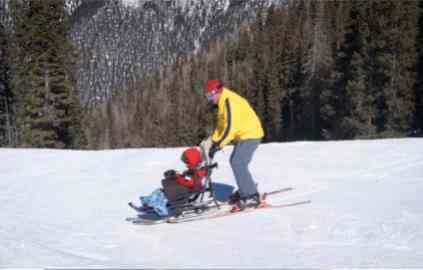
 Enlarge image Tilghman Logan and his instructor, Craig Stagg, do some practice turns using sit skis. Some ski resorts have created opportunities for people with disabilities to participate in snow sports. Photo/NPR

Tilghman Logan and instructor Craig Stagg practice turns using sit skis. Photo/NPR

The Logans traveled from New York City to Taos, N.M., for a winter vacation, and Tilghman can’t wait to begin his ski lesson.

Tilghman has a severe form of cerebral palsy that limits much of his physical movement and some of his eyesight. But that’s not stopping him and his father from experiencing the snow. With some careful planning and specialized equipment, the duo hopes to be tearing up the slopes together in no time.

Ski instructor Craig Stagg takes the group up the lift to demonstrate a few sit ski basics. A sit ski is a specially made sled developed for people with limited use of their lower limbs, allowing them to slide down a mountain much like an able-bodied skier.

“They really are a lot of fun once you get the hang of them,” Stagg says.

Peter Donahue, the resort’s ski school director, says the snow can be a great equalizer for people with disabilities. “It gives them a great sense of freedom and accomplishment,” he says.

“Snow sports is a venue where a child or an individual with a disability can actually stand up and glide and move over the surface of the ground in a way that only able-bodied people can,” Donahue says.

The resort must offer adaptive ski lessons under the Americans with Disabilities Act because it sits on Forest Service land. The resort takes the program very seriously because it helps serve the needs of all guests, which, Donahue says, is just good business.

“The ability for families to come and the money that they bring to the community and to the resort certainly helps us to continue to provide those services,” he says. “It’s a benefit for everyone.”

Eric Lipp, executive director of the Open Doors Organization, an advocacy group helping people with disabilities get access to travel and other consumer opportunities, says people with disabilities are extremely vocal, and they’re a large group with significant buying power.

A recent market study shows that the disabled community now spends more than $13 billion each year on travel. As the general population continues to age, Lipp says, that number is only expected to grow.

“The likelihood of having a disability the older that you get increases greatly, and it doesn’t stop people from going out and wanting to go on vacation,” he says.

When it comes to adventure tourism, this demographic should be considered a viable and competitive market, he adds.

Back at Taos Ski Valley, Philip and Tilghman head over to the lodge to discuss their first day on the slopes.

“I think after today it’s just a question of maybe getting the right equipment, running it and getting nice conditions. And if Tilghman’s up for it, you want to do some skiing next year?” Philip asks his son.

Tilghman responds with a “yeah.”

And with a trip to the resort, some training and appropriate ski equipment, two new ski enthusiasts have been made.


Incline garden group looking for grant applicants

Lake of the Sky Garden Club in Incline Village is looking to give away money for community-related garden projects in the North Lake Tahoe area.

The club’s goals are to promote an interest in gardening, with particular emphasis on the problems at high altitude, to support charitable, educational, and scientific works, as well as to initiate and participate in beautification and developmental gardening projects in the North Lake Tahoe region.

Money for grants comes from the club’s annual garden tour. This year is the 25th annual event. It is July 27 from 10am-4pm. Tickets for this year’s garden tour will be available at Truckee-Tahoe nurseries after June 15.

For an application, contact Emily Hatch at (530) 582.8487 or jimxem@sbcglobal.net. The deadline to apply is April 1.


Nevada employees slow to find cost-savings

By Andrew Doughman, Las Vegas Sun

CARSON CITY — While it’s easy to quip that state government should be more efficient, actually finding the savings is another matter.

An annual report shows state employees found a little less than $10,000 in savings under a program launched last year that rewards employees for cost-saving ideas. Of the six ideas submitted, only one was implemented, according to the report obtained by the Sun.

The Department of Motor Vehicles approved one request to use the U.S. Postal Service free technology in place of the department’s current practice of sending a return receipt for certified mail envelopes.

Assemblyman Paul Anderson, R-Las Vegas, said that’s likely because few employees know about the program through which they can submit cost-saving measures and receive a cash reward for their ideas.

Anderson plans to introduce a bill this year to encourage state agencies to spread the word about the cost savings program.

“We can at least pass the message to the agencies to pay more attention to this,” he said. “We need to empower those on the frontlines.”

Former Sen. Dean Rhoads, R-Tuscarora, led the way in overhauling the state’s merit reward program during the 2011 legislative session with the idea that state employees would come forward with ideas if they had a personal financial incentive to do so.

The state’s “Good Government, Great Employees” award gives an employee or a group of employees up to 10 percent of any savings that result from their idea. The new law also requires reporting of what ideas employees submitted, why agencies adopted or rejected those ideas, and the savings accrued.

The bill wasn’t controversial. In 2011, nobody testified against the bill, which had bi-partisan sponsorship. It passed unanimously.

Everybody liked the idea of reducing waste in government, but actually finding savings through the program has so far proven difficult.

“We can do more,” said Sen. Debbie Smith, D-Sparks, one of the 2011 sponsors. “Our employees are the ones who know best where and how we can save money.”

She testified to a legislative committee in 2011 that she hoped employees would come forward with proposals that save “hundreds of thousands or millions of dollars.”

The estimated savings so far: $9,453.

Smith said part of the reason why those savings haven’t materialized is marketing. Employees might not even know about the program.

But employees also may not want to attach their name to a savings proposal that could potentially embarrass their boss.

“We have to have an environment where employees are entirely comfortable putting their findings or ideas in writing,” Smith said.

A similar program in North Dakota has saved the state at least $540,000 since the program’s inception in 1994, according to a report obtained by Anderson.

Like Nevada, the program had minimal savings during its first year, but the savings grew each year as more employees submitted ideas. Many were small ideas that saved on administrative costs, including buying paper in bulk, using computer systems to save on paper, renegotiating contracts and bringing services in-house.

Those first year savings drive down future year costs, allowing departments to request fewer dollars for their budgets or put dollars to better use, Anderson said.

“It’s very basic stuff, but they can spread it across agencies,” he said.

Anderson adopted the idea for his bill from the North Dakota program.


Ski report: Winter is back

ski report logoDress for winter conditions.

It is bound to take you longer to get to your resort of choice based on the snow still coming down, wind blowing and roads full of white stuff.

Some lifts are starting the day on wind hold.

Here is the March 6 ski report.

— Curtis Fong


Snow affecting school operations in Tahoe area

Whittell High and Zephyr Cove Elementary schools will open one hour later than usual because of the snow. That means the buses will arrive one hour later, too, to pick up kids.

In the Tahoe Truckee Unified School District it is a snow day for Donner Trail Elementary and all Donner Summit students. All other schools in the district are open.

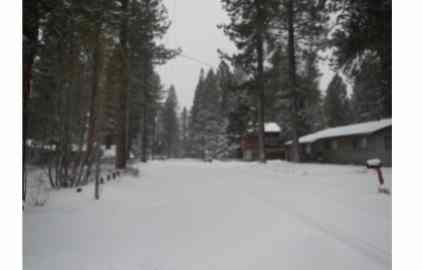
Snow is covering the streets of Lake Tahoe on Feb. 6. About 4 inches fell in South Lake Tahoe. Photo/LTN

Snow is covering the streets of Lake Tahoe on Feb. 6. About 4 inches fell in South Lake Tahoe. Photo/LTN

Lake Tahoe Unified is open.

Highway 89 around Emerald Bay is closed for avalanche control. Most other roads in the basin and leading in or out of it require chains or four-wheel drive.

The wind is gusting at lake level, causing whiteout conditions. It will be worse as one drives over the mountain passes.

While it will be a powder day at the ski resorts with more than 6 inches falling on some slopes, wind is likely to cause problems for chairlifts reaching higher terrain at the more exposed resorts.

For those hitting the backcountry today, the Sierra Avalanche Center is saying conditions are considerable.

A winter weather advisory is in effect for the Lake Tahoe Basin through 10 tonight, so expect snow all day. The National Weather Service in Reno is calling for a 50 percent chance of snow on Thursday and 30 percent on Friday. Sun will be S word to use on the weekend.

— Lake Tahoe News staff report


Author, professor to talk about Middle East culture

Professor Tom Meyer, who has climbed the pyramids in Egypt, explored Petra, walked around the Sea of Galilee and explored the entire Holy Land, will be giving a talk March 10 at at 11am at First Baptist Church (1053 Wildwood Ave., South Lake Tahoe).

Meyer has written about the culture and religion of the Middle East. He will speak from the book of Genesis on Hebrew thought and practice with an emphasis on the culture, mannerisms, and geography of the Holy Land. Educated in Jerusalem, Meyer will deliver comments on his recent four-year stint in the Middle East.

Everyone is invited to the free event.


South Shore trying to unchain itself from economic blight

By Kathryn Reed

For years, people on the South Shore have gathered to give voice to what they want their community to evolve into. Tuesday night was another opportunity to do more of the same.

But it was also a chance to hear from a diverse group about how some of those ideas are now projects in the ground – like Lakeview Commons and Van Sickle Bi-State Park.

Shawn Butler with the California Tahoe Conservancy talks about the bike trails his agency is working on, as well as how Van Sickle Bi-State Park provides easy access to the outdoors to the main bed base on the South Shore. Photo/LTN

Shawn Butler with the California Tahoe Conservancy talks about the bike trails his agency is working on, as well as how Van Sickle Bi-State Park provides easy access to the outdoors to the main bed base on the South Shore. Photo/LTN

A slew of speakers on March 5 updated the nearly 200 people gathered at Embassy Suites South Lake Tahoe about the completed projects, those that are about to begin, what is in the planning stages and what is in the visioning stage. They included:

• B Gorman – Lake Tahoe South Shore Chamber of Commerce

• Joanne Marchetta – Tahoe Regional Planning Agency

• Nancy Kerry – South Lake Tahoe

• Kim Kerr – El Dorado County

• Brandy McMahon – Douglas County

• Russ Pecoraro – Vail Resorts

• Shawn Butler – California Tahoe Conservancy

• Patrick Rhamey – Edgewood Companies

• Lew Feldman – Feldman McLaughlin Thiel (law firm)

• Christian Strobel – Basecamp Hotel

• Chris Proctor – Barton Health (physical therapist)

• Bob Sullivan – South Tahoe High School

• Karen Borges – Lake Tahoe Community College

• Carl Hasty – Tahoe Transportation District

• David Zehnder – Economic & Planning Systems (Sacramento consultant who did loop road financial study).

Their topics ranged from the South Lake Tahoe-El Dorado County recreation plan that is in its infancy, to the two area plans for the South Shore on the respective state line that are on the fast track, to Heavenly ski resort turning the mountain into a year-round playground, to retail being built at the hole this summer with a design that will complement Heavenly Village, to Barton Health eyeing property in Douglas County for a center for orthopedics, to South Tahoe High and Lake Tahoe Community College elevating K-14 education to a level not seen here before.

The overwhelming message was that the South Shore needs to embrace that it is one community and one economy with a focus on recreation.

Collaboration – public and private – was stressed. What that looks like and how much compromise will be necessary in the name of the greater good is a discussion for another night.

The underlying theme is the South Shore is failing – economically and environmentally – and something (or several things) need to change to make the area vibrant.

With the fall being beautiful and snow coming early, people have been coming to Tahoe in greater numbers than they did a year ago. South Lake Tahoe’s transient occupancy tax is up 25 percent from October 2012 through January 2013 compared to the same four months a year ago. And the number of room nights rented in January was up nearly 40 percent compared to 2012.

But as was noted at the October forum, the South Shore is losing market share to other entities.

When it was time for each of the 18 tables full of residents, business owners and interested South Shore-ites to talk among themselves they were tasked with coming up with an idea or concept of utmost importance, explain why and how it will have an economic impact on the region.

They ranged from:

• All parties need to be accountable

• More than one project every 10 years must to be completed

• Establish an outdoor music festival that isn’t in a parking lot

• Increase transportation beyond Stateline to the Y

• Create year-round employment for college educated people

• Bridge the divide between the various areas of the South Shore

• Find money for projects

• Increase community pride

• Get more people involved

• More trails and make them useable year-round

• Connect to the outside world – nationally and internationally – to get people here

• Become an arts and culture center

• Create a dynamic draw based on what Tahoe already has to bring people here.

This was the second economic forum in five months. Organizers – the Tahoe Prosperity Center, Lake Tahoe Chamber of Commerce and South Lake Tahoe – plan to have more in the near future.


Backcountry of Chile feature of film on North Shore

Alpenglow Sports presents the fifth and final installment of the 2012-13 Winter Film Series featuring Donny Roth on March 14 at Olympic Valley Lodge.

Roth has spent nine years searching remote corners of Chile looking for the perfect Southern Hemisphere backcountry skiing location. 2012 brought below average snowfall that created a last-second change of plans with two friends. Pulling together some unusual resources, the three friends head into the Cordillera, where few people have traveled in the winter. For a week, the team explores unique terrain, is blown away by incredible sunsets and condors flying overhead, all while making first descents on a daily basis.

As amazing as the trip was, the story has just begun. Is this the future of backcountry skiing in South America?

The Winter Film Series is free. It is designed to motivate, inspire, and educate. The show begins at 7pm.

Call Alpenglow Sports at (530) 583.6917 with questions.


South Shore Economic Forum

South Lake Tahoe City Manager Nancy Kerry talks March 5 about what is going on in the city during the Shore Shore Economic Forum at Embassy Suites.