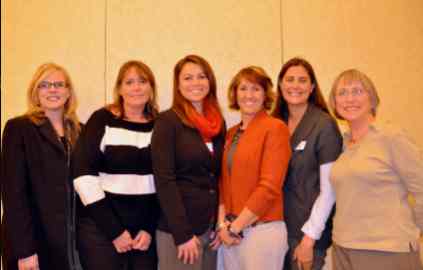
Soroptimist gives out $30,000

Kimberly Templeton, Board Member Diane Imbach, Board President Erica Eng, Grat Coordinator Alissa Nourse, Executive Director Heather Avila, Girls Project Coordinator and Cindy Archer, SISLT Community Grants Committee Co-Chair

From left: TY&FS reps Kimberly Templeton, from left, Diane Imbach, Erica Eng, Alissa Nourse,
Heather Avila, and Cindy Archer, SISLT Community Grants Committee co-chair. Photo/Provided

By Sharon Sterling

Soroptimist International of South Lake Tahoe has selected the recipients for its 2012-13 grants for community groups.

Sierra House Elementary will receive $25,000 for its Garden Dome Project. Students will erect and manage the first geodesic garden dome on the South Shore. The four-season growing structure, with passive solar heating, will be used to teach students and the greater community about nutritional awareness, food production, principles of sustainability and environmental stewardship.

The Soroptimist grant will cover the entire cost of one Garden Dome Kit. The eventual goal of the project is to erect garden domes at all schools within the district. This is the largest single grant ever awarded through SISLT’s Community Grants process.

Tahoe Youth & Family Services will receive a $5,000 grant for its existing Girls Project. The innovative program, now in its fifth year, aims to reduce bullying and teen violence among girls by pairing groups of female students from local elementary school with middle schools and high school age female mentors. The program includes weekly group meetings aimed at building self-esteem, encouraging healthy lifestyle choices and the development of supportive friendships among its participants. The Soroptimist grant will be used to expand the program, to provide transportation to program activities and teen mentoring training.

Sharon Sterling is a member of Soroptimist International South Lake Tahoe.


Big 5 lease may save Y Factory Stores

By Kathryn Reed

With the Factory Stores at the Y signing a multi-year lease agreement with Big 5 Sporting Goods, the South Lake Tahoe center may be able to find solid financial ground.

“I’m still in negotiations with the bank and trying to get a loan modification. Certainly the Big 5 lease helps me. But nothing has been settled yet,” Shannon Casteel told Lake Tahoe News.

big 5Casteel and her sister Nancy Irmer bought the center in 2004 from their brother Gary Casteel. Since Irmer’s death her family and Shannon Casteel have operated the center.

As reported last month by Lake Tahoe News, the center that is located on one of the four corners of the Y, was about to be auctioned off. That did not happen. Casteel is trying to save her business.

Casteel said she has been talking to Big 5 for five years about moving in. All the hurdles were cleared and the retailer already has keys to the building. They will be taking over the old Adidas spot.

“They are hoping to open before Memorial Day,” Casteel said.

Calls to Big 5 headquarters in El Segundo were not returned. Other Big 5 stores in the area are in Minden, Carson City, Placerville, Reno and Sparks.

City Manager Nancy Kerry told Lake Tahoe News she got word March 6 that Big 5 is coming to town.

“It is very exciting news. I understand they will have a job fair in the next couple weeks,” she said.

How many employees will be hired is not known.

While the Adidas store was not one of the top 25 sales tax generators in South Lake Tahoe, Kerry anticipates Big 5 being able to bring in the kind of numbers that would put it in the company of Grocery Outlet, DIY, Ross and Fresh Ketch. Those are some of the top 25 sales tax producers.

Sales, property and hotel taxes are the three main revenue sources for the city.

Kerry said when she got wind Big 5 was looking seriously at South Lake Tahoe she reached out to the company to see how the city could help.

“We are definitely doing everything we can to encourage retail. We don’t want to be a roadblock to them,” Kerry said.

On the April 2 City Council agenda will be an item to waive special use permit fees. Right now a prospective business may have to pay thousands of dollars to determine if the location they want to operate at falls within the parameters of the city’s rulebook. Even if it doesn’t, the fee, per today’s policy, must be paid.

Casteel is also in negotiations with other potential renters.

“I can’t say who because we have not signed the lease,” Casteel said. “I have another major tenant that I am negotiating with right now. They would take the area from (the Big 5) store toward where Great Outdoors was.”

She also said people are interested in renting the storefront on the corner closest to Emerald Bay Road.

The Big 5 lease is for five years, with an option for 20.


Ski report: Big flakes falling

ski report logoGet the fat skis out.

Here is the March 7 ski report.

— Curtis Fong


Snippets about Lake Tahoe

pinnacle• Pinnacle Real Estate Group of Lake Tahoe earned the Quality Certification Award for its website at the Leading Real Estate Companies of the World’s Conference.

• The 2013 Nature Valley U.S. Alpine Championships come to Squaw Valley March 20-24. The event is an opportunity for Squaw’s Olympic gold medalist Julia Mancuso, Olympian Marco Sullivan and Olympic hopeful Travis Ganong to compete on home turf.

• Lake Tahoe Golf Course has retained its designation as a Certified Audubon Cooperative Sanctuary. This group is not affiliated with the Audubon Society.

• Space Science for Schools program Club Cosmos will offer free astronomical-grade telescope and binocular viewing at Sand Harbor Nevada State Park at the Boat Ramp Parking area on March 13, 6:30-7:30pm.

• The Friends of Squaw Creek are putting on a free forum about the biology of Squaw Creek on March 28 at 6pm at the Squaw Valley Public Services District meeting room, 305 Squaw Valley Road.


Squaw-Alpine boss goes undercover at both resorts

By Kathryn Reed

New trainees throughout the season are par for the course at a ski resort. So when the “older” ski dude with what he describes as a blonde mullet and matching Fu Manchu beard showed up, it wasn’t any big deal. At least not at that moment.

The new kid, though, was actually their boss.

Andy Wirth, CEO and president of Squaw Valley and Alpine Meadows ski resorts, changed his look and job title in January unbeknownst all but a few key members of his executive team. And it was being filmed.

On March 8 at 8pm, Wirth will be the subject of the CBS show “Undercover Boss”. The show is all about a chief executive officer going undercover to see how his or her company is really functioning, to talk to the people doing the real work, to figure out what needs improving and what is working. The underlying theme of the show, which is in its fourth season, is bosses find out how their decisions affect others.

Andy Wirth, CEO of Squaw and Alpine, goes undercover to give a snowboarding lesson. Photo/Provided

Andy Wirth, CEO of Squaw and Alpine, goes undercover to give a snowboarding lesson. Photo/Provided

(Wirth has not seen the final cut of the show.)

“Probably the most single compelling aspect that still resonates with me today is the depth of character, passion and how much people care about their jobs,” Wirth told Lake Tahoe News. “On the one hand I’m proud to say I didn’t find anything surprising. I always knew we had a hard working, dedicated staff.”

He was approached to do the show through business associates in the Midwest. At first he was hesitant, but then the producers had answers to all of his concerns.

With 2,300 employees between both resorts during peak season, it’s hard for any boss to know everything that is going on. Wirth recommends this type of undercover operation for any CEO.

He was already one of those bosses who would get in the trenches. He’s worked lift maintenance, climbing to the top of lift towers.

But the show took it to a new level.

“I will look like a dork, but I am OK with that,” Wirth said.

Andy Wirth -- what he really looks like. Photo/LTN file

Andy Wirth — what he really looks like. Photo/LTN file

At Alpine he worked in the terrain park and as a snowboard instructor; at Squaw he was on the ski patrol.

“I haven’t done a beacon search in a long, long time. That was a bit of a challenge,” Wirth said.

He took over Squaw in 2010 when KSL Capital Partners bought the resort, and added the job duties at Alpine when the resorts merged in 2011.

“The reason I’m CEO and president of a ski company is because I love this business. It includes the operations,” Wirth said. “To stand at the top of Squaw Peak and see the sunrise over Lake Tahoe in 30, 40 mph winds … I love that environment. It is home for me.”


Letter: TAP thanks community for its support

To the community,

Thank you so much to everyone who participated in Tahoe Arts Project’s Dancing with your Stars.

The Utah Ballroom Dance Company spent a week in the schools teaching students about different styles of ballroom dance. In the evening they rehearsed with our local “stars” who performed at MontBleu for more than 500 people.

Peggy Thompson

Peggy Thompson

A huge thank you to our dancers, Carol Chaplin, Joel Dameral, Wendy David, Curtis Fong, Deb Howard and Bueno Ketelsen. You all did a wonderful job and you looked fabulous on the big stage.

Our judges, Paul Middlebrook, Pat Ronan and Marcia Sarosik, added to the fun with their quick wit and humor. Thank you to Dreu Murin for hosting the event.

This was a true community event and I thank the more than 500 adults and children for attending. Thank you so much to MontBleu for providing us with the theater.

Peggy Thompson, executive director Tahoe Arts Project


Vail Resorts earnings soar; making plans to increase summer activities

By Jason Blevins, Denver Post

Vail Resorts on Wednesday announced visitation was climbing at its stable of nine ski areas, with net income jumping 30 percent during its second fiscal quarter, which ended Jan. 31.

Profits rose to $60.6 million as resort revenue reached $408.3 million, up 12.1 percent from the same quarter last year. Lift-ticket revenue climbed 14.3 percent to $175.7 million for the quarter. Spending on ski lessons, dining and retail-rental also rose for the quarter.

Lodging revenue was up 2.8 percent, and with increasing room rates, the company’s lodging earnings grew 43.4 percent for the quarter.

Heavenly plans to upgrade its summer climbing wall to resemble Mt. Tallac. Photo/LTN file

Heavenly plans to upgrade its summer climbing wall to resemble Mt. Tallac. Photo/LTN file

The company’s three California ski areas — Heavenly, Northstar and Kirkwood — saw visitation climb 56.1 percent over the same period last year, which was marred with record low snowfall. The company did not release specific skier visit information, saying only that visitation through January improved from its mid-January report showing visitation up a mere 2 percent over the same period last season.

Vail Resorts chief Rob Katz said the second-quarter results represent a strong rebound from the slow start, which saw the company warn analysts of potentially less-than-expected income for the fiscal year. But when the snow arrived in time for Christmas, the company enjoyed a boost.

Also Wednesday, the company announced the largest capital spending in Vail Resorts’ history, with $130 million to $140 million in resort expenditures for fiscal 2013, including $47 million to $52 million in maintenance spending.

Vail Resorts will spend $25 million on the first phase of its Epic Discovery summer plan, which, pending federal approval, will see ziplines, ropes courses, climbing walls, alpine coasters, expanded hiking and biking trails and education centers at all four of its Colorado ski areas, and Heavenly and Northstar areas in California.

Vail will spend $10 million on improvements at its recently acquired Afton Alps ski area in Minnesota and Mt. Brighton outside Detroit. Those improvements include snowmaking upgrades and terrain parks.

Construction on the Peak 6 expansion at Breckenridge will begin this summer after five years of federal review. Vail is building a new 500-seat restaurant at Beaver Creek in preparation of the mountain’s hosting of the 2015 World Alpine Ski Championships. Vail ski area will replace its four-pack Mountain Top Express chairlift with a six-person chair, increasing capacity by 33 percent.


USFS to burn near Cold Creek Trail

U.S. Forest Service fuels management crews will continue prescribed fire operations near South Lake Tahoe on March 7.

Operations will take place off of Cold Creek Trail. Crews expect to burn approximately 5 acres, weather permitting. Operations may continue through the end of the week as conditions allow.

Residents and visitors can expect to see smoke from this prescribed fire project area. The Forest Service strives to minimize the impacts of smoke on local communities. Smoke-sensitive residents should consider staying indoors and keeping doors, windows and outside vents closed.

To directly receive prescribed fire updates, send an email to pa_ltbmu@fs.fed.us.

Forest Service staff will post road signs around areas affected by prescribed fire, and update the local fire information line at (530) 543-2600, No. 6.


Steven Robinson — 1946-2013

By Jane Braxton Little, Sacramento Bee

WESTWOOD – Steven Earl Robinson grew up in San Diego, but he lost his heart to the mountains and meadows of Lassen County’s Westwood on his very first visit.

An avid surfer from the time he could pick up a long board, Mr. Robinson pursued the sport until he entered the Air Force during the Vietnam War. He served most of his time working at a communications center in the Philippines, finishing his tour in Washington, D.C.

His life was changed by a visit to a friend in the tiny town of Westwood. He returned to Westwood in a week with all his possessions “and never looked back,” said his wife, Judy.

Mr. Robinson, who worked as a carpenter, loved the outdoors, especially fishing, she said.

But his true passion was Mountain Meadows Conservancy, the organization he founded in 2000 and served as a volunteer executive director until his death Feb. 17 after a lengthy illness. He was 66.

Mr. Robinson focused on halting a four-season resort planned for 7,000 acres of undeveloped land on Dyer Mountain – the biggest development proposal in the northern Sierra.

He was unpolished, plain-spoken and easily dismissed by would-be developers, who “seemed to mistakenly take him for a hermit,” said Tom Mooers, executive director of Sierra Watch, a Truckee-based conservation organization. “What they couldn’t see was Steve’s quiet, effective role as a leader,” he said. “The development has not been built and the mountain is still there.”

Mr. Robinson’s conservation work took him beyond Westwood to the entire Sierra Nevada range, where he developed relationships with other environmental groups and gradually built support for Mountain Meadows.

Mr. Robinson served six years on the board of the Sierra Nevada Alliance and was honored in 2010 with the Bedrock Award, given for commitment and leadership that benefits conservation of the entire 400-mile range.

He is survived by his wife, Judy of Westwood; son, Sparke Robinson of Grass Valley; daughters, Jackie Oswald of Otis, Ore., and Jennifer Roberts of Westwood; and nine grandchildren.

Services will be later this year.

In lieu of flowers, the family suggests a donation in Mr. Robinson’s name to the Mountain Meadows Conservancy, P.O. Box 40, Westwood, CA 96137.


Californians flock to Nevada to buy guns

By Cynthia Hubert and Phillip Reese, Sacramento Bee

RENO – They stood in the crisp morning air clutching Red Bulls and bearing arms: Bushmaster rifles poking from backpacks, HK pistols nestled in cases, Colt semi-automatics propped on shoulders.

Thousands of people, many from California and some toting unloaded guns for sale, waited in line for nearly two hours across from Reno’s glitzy Atlantis Hotel on a recent Saturday for the chance to buy and sell weapons. It is a right, they insisted, that never has been in greater jeopardy in America.

The crowd was the largest in memory for the Crossroads of the West gun show in Reno, organizers said, and the reason was hardly a mystery. Gun advocates are nervous amid talk of proposed laws that could restrict their ability to buy and sell weapons and ammunition. Already, several noted, gun shops across the country are reporting shortages.

guns“Why are there so many people here today?” asked Ellis Davis of Susanville, just west of the Nevada border, marveling at a line that stretched a quarter of a mile around the convention center. “Because they want to take away our gun rights.”

The push for federal gun legislation is designed in part to deal with disparities among states with stricter gun laws and those that allow for purchase of a wider array of weapons with far less scrutiny.

Disparate gun laws make it easier for residents of California, for example, to travel to Nevada to buy just about any weapon they choose without undergoing background checks. The issue is a topic of discussion in Congress and among state lawmakers across the country.

California’s laws are among the most stringent in the country. Only seven states, including California, ban the sale of large-capacity magazines. Eleven states, California included, require waiting periods of up to two weeks between the purchase of a gun and the transfer of the gun. The other 39 have no waiting periods.

President Obama and the Congressional Gun Violence Prevention Task Force are calling for, among other things, requiring background checks for every gun sale. Today, many people buying firearms do not undergo such checks because federal law requires them only when someone buys a gun from a licensed dealer.

Obama’s team also is calling for legislation that would crack down on illegal gun trafficking and “straw purchasing,” in which a man or woman with no criminal history buys guns for someone who is barred from owning them. Lawmakers have yet to lay out specifically what type of legislation might be effective in stopping the practice.

And they are pressing to reinstate and strengthen a federal ban on assault weapons that can fire many shots in a short time. That ban expired in 2004, and efforts to revive it have failed repeatedly.

Leading the charge on Obama’s behalf is Rep. Mike Thompson, a St. Helena Democrat and gun owner who is a former co-chair of the Congressional Sportsman Caucus.

Thompson, a hunter and combat veteran who carried an assault rifle in Vietnam, argues that tough restrictions in individual states are not enough to prevent criminals from getting guns. Californians flock to gun shows in Nevada, he said, where in private sales background checks are not required. He contends some of those guns turn up at crime scenes.

Statistics from the Bureau of Alcohol, Tobacco, Firearms and Explosives back him up. The federal agency traced the source of 50,000 weapons used in California during crimes from 2009 to 2011 and found that roughly a fourth of those guns came from outside the state. Nevada and Arizona were, by far, the leading suppliers, accounting for roughly a third of out-of-state weapons used in crimes.

National background checks and other federal restrictions, Thompson said, would “make it real tough” for criminals, people with documented mental problems or anyone else to procure weapons outside their home states.

But not everyone is supportive. Historically, Nevada residents and their leaders, particularly those outside of Las Vegas, have resisted gun control efforts.

In response to fears that Obama will unilaterally dictate who can own a gun, Jim Wheeler, a Republican Nevada assemblyman from Gardnerville, has introduced a bill that says the state attorney general must defend anyone arrested as a result of a presidential executive order that violates the Second Amendment.

“To me, about any law is too many laws,” Wheeler said.

Stockton killings spurred action

Before Sandy Hook Elementary in Connecticut there was Cleveland Elementary in Stockton.

In 1989, a drifter who had attended school in South Lake Tahoe armed himself with an AK-47 rifle and peppered Cleveland Elementary with bullets that killed five children and wounded 30 others. A year later, California passed its ban on possession of semi-automatic assault weapons. Since then, state lawmakers have tightened restrictions in a range of areas, from who can buy guns to how and where they can be purchased.

In California, gun buyers must obtain their weapons from a licensed dealer and wait 10 days to get them. That “cooling off” period helps prevent gun violence committed in the heat of emotion, advocates argue.

In addition, names of gun buyers in California are checked against the National Instant Criminal Background Check System database. Federal law bars various people, including felons and those with documented mental illness, from buying weapons.

Serial numbers of guns purchased in California are registered with the Department of Justice, which allows police to trace them if they are used in crimes.

On the heels of the Sandy Hook shootings late last year, some state legislators want to get even tougher on gun owners.

Sen. Leland Yee, D-San Francisco, is carrying a bill that would make it harder to alter military-style weapons to be loaded with high-capacity magazines.

Other proposed measures include a tax on ammunition sales, an expansion of the definition of banned assault weapons, and a requirement that residents obtain a permit before buying ammunition.

The permit proposal, which police argue could help lead them to illegal weapons, is among the most controversial. Currently, only Sacramento and Los Angeles have ordinances barring ammunition sales to people with criminal records.

Yee cited studies showing that states with the toughest gun laws, including California, have the lowest per-capita rates of gun-related deaths.

“It’s a fact that gun laws work and weak laws result in the loss of innocent lives,” he said. “Clearly, there is a direct correlation between common-sense gun laws and fewer gun-related homicides.”

A different mind-set has set the standard for gun ownership in California’s neighbor to the east, where Nevada residents are governed by some of the most liberal weapons laws in the nation.

There, private citizens can go to gun shows and yard sales and legally buy and sell weapons to other state residents. No background checks are required, nor are guns registered with the state, with the exception of Clark County, which includes Las Vegas.

And unlike California, Nevadans can buy and sell machine guns capable of firing a large number of shots in rapid succession.

As in California, the loss of 20 young children in the Sandy Hook shooting has prompted some Nevada lawmakers to call for stricter regulations. The proposals making their way through the state Legislature include requirements for statewide gun registration and an excise tax on guns and ammunition that would fund mental health treatment.

But in Nevada, such measures are anything but slam dunks.

Wheeler, the Gardnerville assemblyman, said he doubts stricter gun laws will pass in Nevada anytime soon, noting that a law streamlining who can carry a concealed weapon just cleared a state Senate committee.

“The culture is different,” he said, describing an independent streak that drives Nevadans to find their own way. Most gun control efforts, he noted, originate in urban areas.

“I grew up in L.A. In California, you have a lot of huge cities. We don’t. We have one huge city, one medium-sized city and the rest are small.”

Californians flock to Reno show

Outside the Reno Convention Center, where dozens of gun and ammunition dealers hawked their wares at the Crossroads of the West gun show last month, the buzz also was about laws.

Waiting for the doors to open, Ellis Davis, the Susanville resident, sported a baseball cap with the words, “Keep Guns In The Right Hands: YOURS.” He opined that the nation has more laws than it needs, especially with regard to guns.

“It’s not me shooting and robbing people,” said Davis, a retired corrections officer. “It’s the criminals. We’ve got a right to protect our homes and our families.”

Based on attendance at the Reno show, many Californians share his view. At least a third of the cars parked around the convention center carried California plates.

Californians can buy weapons from dealers at such events, but by law are supposed to have them shipped across state lines, where the guns are processed through registered dealers. In private transactions, Nevada sellers by law cannot knowingly sell guns to Californians.

But many at the Reno event acknowledged that, especially in private transactions, both parties sometimes look the other way.

“There’s no law that tells me I can’t sell to someone from California,” said one Nevada resident hoping to pick up some cash for a semi-automatic weapon he carried in his backpack. “It’s not on me if they drive over to the communist side with this thing. It’s on them.” He declined to give his name.

By noon on the first Saturday of the Reno gun show, about 5,000 people had purchased tickets – more patrons than typically show up over the entire two-day event, said organizer Todd Johns.

“This is about the busiest show we’ve ever had,” Johns said. At other shows in the Western United States, “attendance has doubled and even tripled” in recent months, he said.

Despite the large crowds, the scene was calm as patrons filed into the convention hall. Those carrying guns turned them over to security personnel, who checked to see they were unloaded and disabled the triggers with plastic attachments.

Once inside, many gun owners bolted for the ammunition lines, while others perused dozens of tables featuring new and used guns, antique knives and gun-themed T-shirts and jewelry. Cowboy hats, camouflage wear and NRA caps were in abundance, along with $7 beers sold just outside the room.

Private sellers huddled, trading information about weapons and exchanging cash, while more than two dozen licensed dealers did a brisk business selling shotguns, handguns and semi-automatic rifles. Routinely, the licensed dealers asked for proof of Nevada residency.

Nevada resident Joe Potseaga was among those trying to cut a private deal. Like others, he worked the room with a semi-automatic rifle slung around his back and a cardboard sign advertising it for sale.

Potseaga, who said he takes part in sanctioned shooting competitions, sold a pistol to a fellow Nevadan. He said he respects the law when conducting private sales, and believes most others do the same.

“I wouldn’t just hand it over for cash to someone from California,” even if the price were right, he said.

Potseaga said his pistol buyer produced identification and “compelling proof that he is not a criminal and could lawfully own a weapon.” The compelling proof? “His word,” Potseaga said.

Prosecutions can be challenge

Graham Barlowe has spent a career enforcing California’s gun laws as an agent for the federal Bureau of Alcohol, Tobacco, Firearms and Explosives. He contends the controls break down if California residents can drive a few hours and flout the state’s gun laws.

“Different states have different standards,” said Barlowe, Sacramento’s agent in charge for the ATF. “It’s impossible for the states with more restrictive standards to maintain them if someone can get around them by going to another jurisdiction.”

Some California residents use creative methods to buy guns and avoid processing delays, including procuring fraudulent Nevada driver’s licenses, he said.

In one pending federal case, a San Bernardino County resident is accused of buying 22 handguns at pawn shops in Las Vegas over a year using a fraudulent Nevada identification card. The man was caught after he listed his California address when registering the gun.

In another case, a woman working for a Carson City brothel bought four identical handguns in Nevada then drove to Sacramento, where she reported them stolen.

“The guns started turning up in the hands of gang members,” Barlowe said.

Prosecuting illegal gun cases can be a challenge, said Barlowe, because of limited resources in district attorneys’ offices and the conservative bent of juries in states where gun laws are more lenient.

“The jury of their peers is in Nevada,” where the sales take place, he said, and most likely would have differing views about guns than Californians.

“It’s very hard. You are just not going to see a large number of prosecutions.”

Benjamin Wagner, U.S. attorney for the Eastern District of California, said his office has recently prosecuted cases involving “straw buyers” purchasing guns for criminals.

“We are very much aware that there are firearms that flow from Nevada to California in violation of federal law,” Wagner said. But his office mostly focuses on major gun traffickers.

In recent weeks, Thompson has been busy selling his package of gun measures to constituents and news media in California and colleagues in Washington. He said he believes Americans are ready for tightening laws that curb gun violence while “protecting the Second Amendment right to own firearms.”

“I am working to make sure Congress acts, and I am confident we will act,” he said.

Yet he knows the proposals will be a tough sell to many around the country.

“If you do a lot of background checks, a lot of this stuff will take care of itself,” Thompson said. But, he added, “I’m not going to give up my guns, and I’m not expecting anyone else to give up theirs.”

Joe Potseaga and his cousin Andrew aren’t buying it.

Like many at the Reno show, they said they resent politicians who want to intrude into matters they feel are already addressed by the Constitution.

“We love our country dearly,” said Andrew Potseaga. “But it’s none of the federal government’s business knowing what kinds of guns people have.”