Zephyr Cove library celebrating Easter

The Douglas County Public Library, Lake Tahoe branch presents Saturday Stories and Crafts on March 23 at 1pm.

Miss Carol will read Easter stories and provide a craft. This is for ages 3-12. Young children should be accompanied by an adult.

Sign-up by March 21.

The Lake Tahoe branch of the Douglas County Public Library is located at 233 Warrior Way in Zephyr Cove.

For more info, call (775) 588.6411.


Nutrition, exercise key to being healthy after 50

By Kathryn Reed

Eat well and exercise. That was the message delivered by Barton Health dietician Lynn Norton for people who are 50 and older who want to live longer.

She spoke to about 50 people on March 6 at Lake Tahoe Community College about nutrition and aging. And while much of the information delivered that night was routine, it was a reminder to get moving and watch what you consume.

With 20 percent of the population expected to be 65 and older by 2040, aging and nutrition will likely be a growing topic.

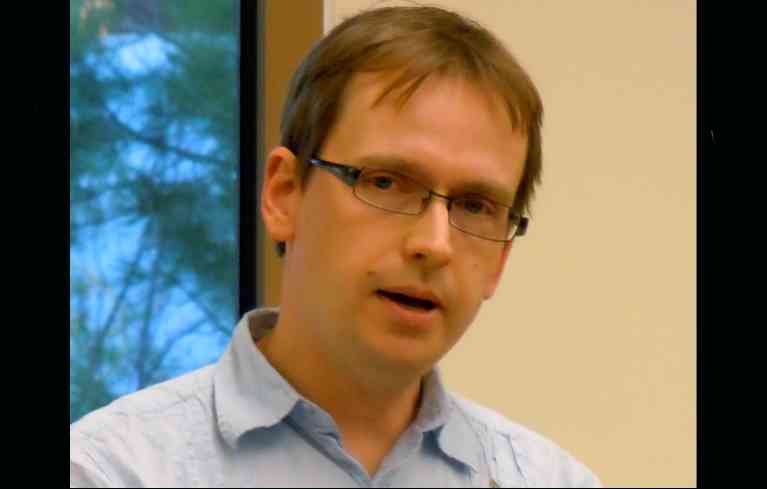
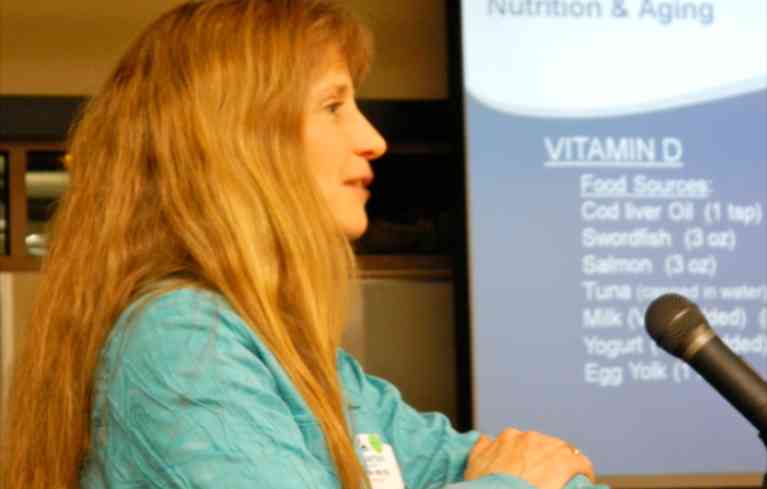
Lynn Norton talks March 6 about nutrition and aging. Photo/LTN

Lynn Norton talks March 6 about nutrition and aging. Photo/LTN

Norton said energy levels on average decrease 2 to 5 percent each decade as people get older. She said the way to stem that decline is to do aerobic and muscle strengthening exercises multiple times a week.

With exercise burning calories, the odds are people will then be at their ideal weight, too.

She mentioned how people who are overweight also tend to have more issues with high blood sugar levels and high blood pressure.

As people get older, they have changes to their digestion and nutrient absorption. B12, zinc and calcium absorption declines.

“To counter this, eat nutrient dense foods,” Norton said.

While she said supplements can fill in the gaps, she offered more warnings about supplements than recommendations.

Constipation can be an issue for older people. Proper fluid and fiber intake can help with that condition, Norton said. She suggested adding wheat bran to foods.

Paying attention to bone mass is also critical.

“Fifty percent of women older than 50 will break a bone due to osteoporosis, 25 percent of men,” Norton said.

She recommends getting a bone density test and vitamin D test so if a deficiency turns up, the correct treatment can begin.

When it comes to having a good immune system, Norton recommends eating oily fish, nuts, seeds, fresh fruit, vegetable, wholegrain, cereals and lean meats.

These were the same foods she promoted throughout much of her talk.

While she said studies have shown limited alcohol has benefits, she said much more could have effects on dementia.

Norton said, “We have a high alcohol population in ICU and ER. We move them from ICU with dementia to long-term care. It really is a long-term problem.”

She said proper diet and physical activity are how people will be healthy as they age.


Opinion: S. Tahoe housing numbers show up trend

By Robert Stiles

Congratulations, South Lake Tahoe. After reviewing February’s numbers, I’d say our real estate market is in a definite up trend.

Robert Stiles

Robert Stiles

Six straight months of upward trending has our median sales price now at $254,500. A figure we have not seen since the end of 2011.

Although some our neighborhoods are still in a pricing down trend, I do see more positive than negative numbers. When compared to this time last year, Tahoe Keys median values are up 7 percent, parts of the Bijou area are up 12.8 percent, Meyers is up 9.2 percent and Tahoe Island Park is up 5.9 percent.

Area neighborhoods still in a downtrend include Montgomery Estates (-11.9 percent), Heavenly Valley (-10.9 percent), Al Tahoe (-7.6 percent) and the Elk’s Club area (-7.4 percent).

Keep in mind due to our low sales volume, median price changes for an area neighborhood can exhibit unusual price fluctuation. The good news, though, is when all of our neighborhood data is combined; we have the overall upward trend as noted previously.

Robert Stiles is with Tahoe Real Estate Services.


St. Paddy’s Day fundraiser benefits Rotary

The Tahoe-Douglas Rotary St. Patrick’s Day Celebration is March 15 from 6-10pm at Harrah’s Lake Tahoe.

The annual event features a traditional Irish buffet, wine tasting, and one of the region’s biggest silent actions to help raise more than $30,000 each year for charitable organizations through grants, projects and donations, mostly supporting the South Shore community.

Tickets are $60 each. Tables of 10 may be purchased for $500. Each ticket also includes one entry for the raffle for a week of lodging in Hawaii with $1,000 travel allowance. Call 800.576.8372 or email spdc@tdrotary.com for info or tickets.


LTCC to celebrate National Poetry Month

Lake Tahoe Community College Writers’ Series will celebrate National Poetry Month on April 12 at 7pm in the college library.

Three award-winning poets — Kelle Groom, Lexa Hillyer, and Krista Lukas — will read from their works, engage the audience with a Q&A, and sign books.

The event is free and open to the community. Books will be available for purchase.

The LTCC Writers’ Series is committed to providing a cultural outlet for its students and the community by offering free readings, discussions, craft talks, and workshops with nationally-known award-winning authors, as well as poetry slams, open mic nights, and student readings.

For more information, contact Suzanne Roberts at robertss@ltcc.edu.


Sahara dust contributing to Sierra snow

By Alicia Chang, AP

LOS ANGELES — One of the driest spots on Earth – the Sahara Desert – is increasingly responsible for snow and rain half a world away in the western U.S., a study released last week found.

It’s no secret that winds carrying dust, soot and even germs make transcontinental journeys through the upper atmosphere that can affect the weather thousands of miles away. Yet little is known about the impact of foreign pollutants on the West Coast, which relies on mountain snowmelt for its water needs.

Previous studies hinted these jet-setting particles may retard rainfall in the Sierra Nevada of Northern California by reducing the size of water droplets in clouds. But scientists who flew through storm clouds in an aircraft, measured rain and snow and analyzed satellite imagery found the opposite: Far-flung dust and germs can help stimulate precipitation.

During the 2011 winter, a team from UC San Diego and the National Oceanic and Atmospheric Administration traced particles suspended in clouds over the Sierra to distant origins – from the skies over the arid Sahara, to mingling with other pollutants in China and Mongolia, then crossing the Pacific.

The days with the most particles in the clouds were also “days when we see the most snow on the ground,” said study leader Kimberly Prather, an atmospheric chemistry professor at UC San Diego, whose study was published in the journal Science.

Scientists believe wafting dust, grit and microbes – including bacteria and viruses – can spur the formation of ice crystals in clouds that in turn can influence how much rain or snow falls.

For years, governments and utilities in California and other Western states have used cloud seeding, in which a chemical vapor is sprayed into clouds, in a bid to increase rainfall.

The new study shows how “Mother Nature has figured out how to give us more precipitation” and that may lead to changes in cloud-seeding efforts, which can be hit or miss, Prather said.

David J. Smith at the NASA Kennedy Space Center said it was refreshing to see measurements from the ground, air and orbit to tackle how airborne particles affected Northern California snowfall.

“Such a comprehensive approach is the only way to thoroughly examine global transport” of particles, Smith, who had no role in the research, said in an email.


Drainage issue a problem on Hwy. 50

Because of safety concerns, the new westbound carpool lane on Highway 50 from Cameron Park Drive to Bass Lake Road in El Dorado County remains closed.

A drainage issue was discovered on one section of the new lane. The fix will require repaving, and temperatures are not expected to be warm enough to repave until sometime in May.

An updated advisory by Caltrans will be released when the lane is open to traffic.


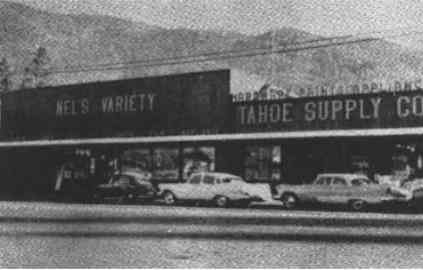
Then and now: Nel’s endures moves around town

Nel's, circa 1964

Nel’s, circa 1964

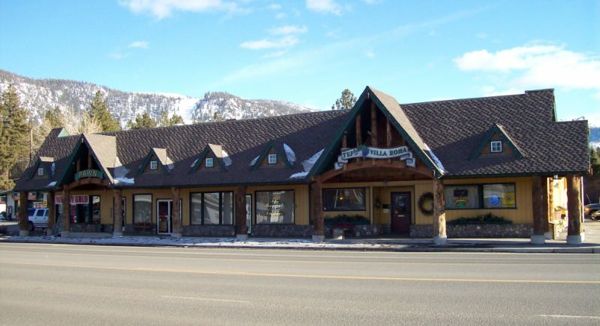
Nel’s has been around for decades, just not where it is today.

“Nels” Nelson relocated his hardware, appliance and supply store a couple of times, including occupying what had been the dining room in Connolly’s two-story beachfront lodge across Highway 50. (It was replaced by Timbercove Lodge in 1973.)

I believe Nel’s moved into what is now the Fremont Mall (where Freshies is) after Safeway vacated. (Safeway’s present building is the third time Safeway has built a new store here.)

Finally, Nel’s settled at its current Fremont Avenue address near Tahoe Bowl after the South Lake Tahoe Police Department nels-2moved over to its present Johnson Boulevard facilities.

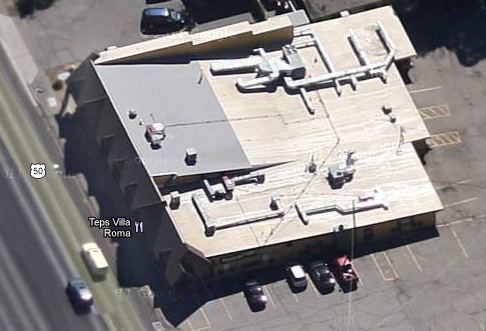
Meanwhile, the original outline of this historic building with its partial sloping roof is still evident in this recent Google aerial photo.

— Bill Kingmannels aerial


Opinion: The gender of leadership

By Scott A. Lukas

When I was asked to write my reflections on leadership to commemorate Women’s History Month, I had thought, at first, of the many creative and innovative women leaders who have made a difference in South Lake Tahoe.

Lake Tahoe Community College has Kindred Murillo, who has helped steer the college in some exciting new directions in what are challenging economic times. Norma Santiago was elected and then ran unopposed as District 5 supervisor for El Dorado Country. She has brought much attention to issues of social justice within our region. Nancy Kerry, South Lake Tahoe city manager; Patty Kouyoumdjian, executive director of the Lahontan Regional Water Quality Control Board; Nancy Gibson, U.S. Forest Service supervisor; Darcie Goodman Collins, executive director of the League to Save Lake Tahoe; Sandy Evans Hall, executive director of the North Lake Tahoe Resort Association; Carol Chaplin, executive director of Lake Tahoe Visitors Authority; Lisa Noonan, Douglas County School District superintendent; Angela Swanson, JoAnn Connor and Brooke Laine, all councilmembers for South Lake Tahoe (and many others) have all, in their own unique ways, illustrated the value that women bring to local and regional leadership.
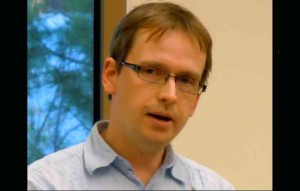
Scott Lukas

Scott Lukas

But for all of their important and unique contributions, there is perhaps more that we can learn from their leadership lessons. This is the gender of leadership.

Some years back I participated in a planning session in the region. One of the guest speakers was asked to comment on the issue of leadership in South Lake Tahoe or, more specifically, the topic of how to move the city in new directions in challenging, if not turbulent, economic and social times. The speaker’s response was quite puzzling. Here, paraphrasing, “Back in the day, we had more ‘men in the mountains.’ What we need now is more ‘phallic thrust’ in Tahoe.” The phrase “phallic thrust” was, not surprisingly, greeted with some shock by the many attendees at the event.

During one of the coffee breaks, I overheard a number of them comment on how offensive the speaker was, yet no one challenged the speaker on any of these points. Presumably, the person was making a claim that Tahoe had gone somewhat downhill due to a lack of “macho” or masculinist leadership and the solution was to return to the days of old.

We might use the cases of national leadership to reflect on the problems with this line of thinking. Consider how the “phallic thrust” exhibited by the George W. Bush administration impacted the United States — including its role in the world, its perception among other nations, and its ability to deal with the imminent crises of economy, terrorism, and political instability.

These two spheres of leadership are quite different, but it might behoove us to consider the ways in which masculinist leadership has impacted people and culture in negative ways and then ask some serious questions about what sort of leadership we envision for the future of South Lake Tahoe. Surely, it will not be a form dominated by the “phallic thrust” philosophy mentioned by this speaker and, at the same time, it may not completely benefit from female leadership. We would be mistaken to assume that women leaders are immune from the “phallic thrust” syndrome. In fact, theorists of gender would remind us of the many examples in which women have enacted the gendered ills more common to masculinity and patriarchy. Consider the complicity of Lynndie England in the Abu Ghraib prison-torture scandal as one example. The point may be to focus on the gender of leadership and not the fact of whether the leader is a man or a woman.

My colleague Scott Valentine, geology professor at Lake Tahoe Community College, recently raised a number of important issues about what he perceives to be a lack of effective local leadership. Valentine was unsuccessful in his bid to secure a seat on the City Council. In a number of columns that he has written, he has spoken of the many problems faced by South Lake Tahoe’s residents — a lack of stable economic base, a lack of concern with sustainability, an “old economy” mentality, few opportunities for younger people, and a general “old boys” philosophy when it comes to planning and strategic decision-making. Valentine’s call for new leadership and new vision for South Lake Tahoe reminds us that men and women have important roles to play in questioning our local leaders and the decisions they make.

We should certainly celebrate the many women who have brought positive change to our local culture and we should tell the story of local men who have taken a stand against the “old boys”/ “phallic thrust” philosophy of leadership that is rarely positive for anyone (except the old boys). But the important lesson here is to emphasize the gender of leadership. Generally, this requires that we look critically at the decisions made by local leaders and that we hold them accountable for their actions. We often forget that leaders should not be understood as being the final authorities in any matter — what George W. Bush touted as his “decider” role — but “leaders” in the etymological sense imply the “meaning to begin a discussion or debate.”

More specifically this meaning of leadership might encourage us to:

• Create coalitions of people who are willing to work on new visions and directions for the community — especially ones that challenge the “old boys” mentality of the community.

• Open up new forms of dialogue with members of the community who have rarely been invited to the “old boys” events — these include members of ethnic and gender minorities.

• Foster greater awareness of the ways in which political, economic, and social forms of special interest continue to damage our decision-making processes.

• Develop new plans and strategies that effectively envision community outreach and involvement and that avoid the elitist and often cynical assumption that the “leaders know best” for the community.

• Effectively balance economic interests with social justice concerns.

• Participate, vote, and co-create change.

Scott A. Lukas is a cultural anthropologist who has written widely on the subject of gender, including contributions to The Routledge International Encyclopedia of Men and Masculinities, Gendered Perspectives on Community Colleges, and Handbook for Achieving Gender Equity through Education. He is the founder of the Gender Ads Project, former gender adviser of Dads & Daughters, and been interviewed on his perspectives on gender for the Czech feminist magazine FEMA and Huffington Post UK. He is an instructor at Lake Tahoe Community College.


3-day photo workshop for professionals

Professional photographer Bret Cole has organized the Lake Tahoe Photographers Fellowship 2013 workshop for May 2-5 in Tahoe City.

This gathering is designed to bring together wedding and event photographers to network, refine techniques and learn from the best in the business.

Featured guest speakers include Stephanie Anderson of One Fine Day Events and the Tahoe Unveiled blog, Don Weinstein of Photo Impact Imaging Lab, Alexandra Tremaine of Alexandra Tremaine Photography, and Scott Corridan, a nationally recognized event planner and interior designer who resides in the Tahoe area.

The workshop will be comprised of portfolio reviews, forums and presentations about finding and creating unique niches, branding, and how to make your career your passion.

The cost of the full three-day workshop is $2,300 and includes two nights lodging at the Cedar Lodge in Tahoe City, breakfast all three days and dinners Friday and Saturday evenings. A one-day workshop, with meals, is available for $875. The fee to attend just photo shoots and lectures is $800.

The deadline to register for the workshop is April 2. For more information or to register, go online.