El Dorado County has weatherization funds

El Dorado County residents can keep their homes cooler this summer and warmer next winter by taking advantage of free weatherization services through the El Dorado County Community Services Weatherization Program.

The average household saves $400 each year on their energy bills after weatherization.

Qualified low-income property owners and renters can receive an average of $3,055 in home improvements through the program. Weatherization technicians check the home to see where improvements can be made; services are customized for each home and designed for maximum cost savings.

The Weatherization Program also has an emergency fund to help eligible households with emergency repair, replacement and installation of heating/cooling appliances and water heating appliances.

The Weatherization Program is available countywide. Households must meet eligibility guidelines and income requirements.

For information about the program, call (530) 573.3490 in South Lake Tahoe or (530) 621.6150 on the West Slope.


Narcotics officers do their part to reach kids early

Publisher’s note: This is one of a few articles about the Drug Store Project. This marks the 10-year anniversary of the program. This year’s event will be April 2 at Lake Tahoe Community College. For more info about volunteering, donating or if you have questions, email Lisa Huard at lhuard@ymail.com.

By Jeff Catchings

For more than six years I have been involved with South Lake Tahoe’s Drug Store Project, a reality based presentation targeting our community’s sixth-grade students. The project was originally presented 10 years ago as an awareness campaign targeting our youth and educating them on the debilitating effects drugs have on our society.

This campaign has, over time, become much more than that. By reaching out to an impressionable target group, law enforcement and local educators are bringing the message of “choices” to young students. The choices you make through middle school and high school can shape what you will become as a young adult.

slednetThe Drug Store Project is a daylong, simple depiction for the students of “Make bad choices and you or others will have negative consequences.” “Good ones will benefit you.”

I believe most child advocates agree a sixth-grade child stands on the doorstep of making independent choices on who they will associate with, what type of group they may socialize with and what choices will best suit their blossoming lifestyles. These students, believe it or not, also stand on the frontline of experimenting with drugs or alcohol. Friends, siblings, social groups and families will weigh heavily on these pending decisions.

The Drug Store Project points the students’ attention toward these choices front and center with a reality-based platform depicting the consequences of drug and alcohol abuse.

As the commander of the South Lake El Dorado Narcotic Enforcement Team, I lead a group of law enforcement personnel on the opening presentation for the Drug Store Project. Our presentation deals with recognition of certain drugs, their effects on the body as well as the social consequences of drug use. Every year we see a different group of sixth-grade students who all have the same look on their faces when they walk into our presentation. The look of, “Cool! Were out of class and on a field trip!” In 15 minutes of speaking I change that to “My mouth is shut, my eyes are wide-open and you have my full attention”.

It’s actually quite easy to do when you experience 24 years of dealing with “not societies finest”. The stories that go along with the experience somehow get everyone’s attention.

It’s this attention that will help the students focus on the remainder of the presentations in the Drug Store Project. My message to the students during our presentation is something they can use as a tool to push back against peer pressure, “That’s not me” or “That’s not who I am”. The words are simple but firm. It’s a statement that allows students to remind their friends of who they are, someone who does not use drugs or alcohol.

Helping them understand the effects of drug use and how to respond to someone who encourages it is our cornerstone for the daylong event. The presentation opens the gateway to a realistic encounter for the student and introduces them to the judicial and familial consequences through role-playing with the presenters. It is accomplished by placing the students in a hands-on environment with first responders, judicial personnel, narcotic agents, educators and the National Guard all of whom carry a message of “Choices — What are yours?”

In addition to the presentations, the California National Guard and first responders present a static display of equipment and are available for one-on-one time with the students. Most students may know some of the Drug Store Project facilitators and ask questions they would not ask in any other forum. Most of the facilitators are members of this community who are not recognized outside of their jobs or vice, versa. Seeing them in uniform always brings a positive feeling to the students who know them.

Numerous students following the presentation have approached me off duty. The comments are always positive and all agree it was “pretty cool.” Then I get the “I didn’t know you were a cop.” Then “That’s not me!” The short time spent bonding with these students during this unique day is resounding in a way that’s hard to describe.

Hearing “That’s not me” shouted across a baseball field on Saturdays and seeing a middle school student giving me the “what’s up” nod shows we got in their heads for good.

By no means is the Drug Store Project an end all answer for drug prevention. It is, however, an incredibly successful tool that allows us to convey the message of “choice.” Participants in the Drug Store Project receive a message of support from the facilitators and hear firsthand from their own community on the effects of drug and alcohol abuse. Failing to teach the consequences of drug and alcohol abuse rest on the shoulders of those who refuse to advocate against it.

The news of its debilitating effects seems to have grown heavy on those who have heard it for so long. Our society in general seems to embrace the use of narcotics and alcohol as a recreational vice now more than ever. It is the impression of which we as parents will and rightfully should teach against for children who are standing at the gateway of its use.

As a resident of South Lake Tahoe and one who is involved in youth sports programs, it is the community aspect that I most admire about the Drug Store Project. How people will convene to present a voice against a debilitating vice targeted at our youth. Others admire it as well. So much so that other communities in Placer County have adapted or are starting their own community based model.

Awareness is a powerful tool when targeted at the impressionable. It is something that we should include in the curriculum of growth and knowledge.

I will always be an advocate for this program and would encourage or even challenge others in our own community to take one step further. We should never fail at something so simple to teach.

Jeff Catchings is the task force commander for South Lake El Dorado Narcotics Enforcement Team.


Editorial: Professional athletes ripping off California

Publisher’s note: This editorial is from the March 3, 2013, Sacramento Bee.

Workers who are hurt on the job deserve to be compensated quickly and fairly, even if those workers are pro football, baseball, basketball, hockey or soccer players.

That’s the fundamental point of the workers’ compensation system on which all workers depend. But fair cuts both ways, and professional athletes claiming cumulative injuries incurred during the course of their careers have been abusing the California workers’ compensation system.

In an article last month, Los Angeles Times reporter Marc Lifsher described how retired athletes tap into California’s generous workers’ compensation system to collect six-figure settlements for cumulative trauma, even though they played only a fraction of their games in California, or may never have played here.

Many of them are big-name players who earned huge dollars. Others attained neither fame nor fortune.

Just as some players cheat the game by taking performance- enhancing drugs, others are threatening the integrity of the workers’ comp system, to the detriment of California businesses and ultimately California workers. The Legislature is confronting the issue, as it should. Billionaire owners and millionaire players have hired blue-chip lobby firms and consultants.

The California Insurance Guarantee Association is the entity that pays workers’ compensation claims when workers’ comp insurance companies become insolvent. California employers – not just professional sports teams – pay into the California Insurance Guarantee Association.

In a letter to Assemblyman Henry T. Perea, D-Fresno, the association in December said that California residents account for only 373 of its 1,873 claims from professional athletes.

The number of claims from retired athletes is growing at an alarming rate – 34 per month, as of December. The association had to add four claims adjusters to handle the influx of athletes’ claims.

The letter cited several issues that should alarm lawmakers, employers and workers. Athletes who played only one day in California, or suited up but sat on the bench, can receive compensation from California’s workers’ comp system. Athletes can file claims whether or not they were injured on a California field or court.

The letter notes that players file claims in their home states and receive compensation. Because of the laxity of California’s law, California judges can award full benefits to out-of-state players.

Adding to the complexity, the letter noted, “an athlete who last played 20 or 30 years ago is not barred from filing a claim today.”

California cannot afford to be the bank for out-of-state athletes and their lawyers. The guarantee association’s deficit hovers at $2 billion.

California employers – not just sports teams – paid $78 million toward reducing that deficit last year.

Since 2002, the state guarantee fund has paid $42 million in claims to professional athletes. The cost of processing the claims was $1 million a year. The largest number of claims come from Texas and Florida, states favored by wealthy athletes because, unlike California, they impose no state income tax.

One reason is attorney Dave Levine and his business, Pro Athlete Consulting, based in Florida. On his website, Levine all but promises retired athletes that he can get money from California, no matter where they live or played their games.

Perea has proposed Assembly Bill 1309, which would deny California benefits to pro baseball, basketball, football, hockey and soccer players whose teams are not based in California and who came here only occasionally for games.

The fix seems simple – though in the Capitol, nothing ever is easy.

California’s system should take care of injured athletes who played the bulk of their time California, quickly and fairly. But if they played for teams in Texas, Florida, or any other state, those states need to take responsibility.




Letter: Loop road would help businesses

To the community,

I arrived at Lake Tahoe in 1965 and purchased the then-existing Cecil’s Market at the corner of Park Avenue and Lake Tahoe Boulevard.

Since 1965, there have been many lofty attempts at revitalizing portions of the city, especially along the Highway 50 corridor. Thanks to the persistence of forward thinkers in our community, the keystone project of these efforts resulted in the completion of the Heavenly Village-Marriott complex. This went a long way toward promoting the back bone of our economy: tourism.

These projects are only the beginning in enhancing our area, and addressing the traffic problems with the Loop Road is a must. The stalled convention center project will be finished one day, with others to come.

Please keep in mind that a sound and inviting infrastructure always attracts new businesses and positive tourist experiences. Lake Tahoe deserves no less.

Sincerely yours,

John P. Jovicich, Cecil’s Fountain Plaza


Rahlves’ injury ensures new winner of Banzai

Kyle Coxon won the Super Final at the Rahlves Banzai Tour and John Bochenek took both the overall skier title and Sugar Bowl stop win on the final race of the tour March 10 at Sugar Bowl Resort.

Chelone Miller, brother of Olympic and World Cup skier Bode Miller, stood on top of the men’s snowboard podium, after winning both the Sugar Bowl stop and the overall men’s snowboard tour title. Shannon Rahlves took the women’s ski win and the overall women’s ski tour title. Kiana Putman won the women’s snowboard event, and Casey Lucas was crowned overall women’s snowboard tour champion.

Banzai's finish line at Sugar Bowl is visible from the Lincoln chair. Photo/LTN

Banzai’s finish line at Sugar Bowl is visible from Lincoln chair. Photo/LTN

The Rahlves’ Banzai was held under sunny skies and soft snow conditions left over from a mid-week storm that dropped nearly 2 feet of new snow on the mountain. The Sugar Bowl stop was the fourth and final stop of the two-month race tour that had already run races at Kirkwood, Squaw Valley and Alpine Meadows.

At Sugar Bowl Resort racers rocketed through the rock-lined, spectator-friendly Silver Belt Gully course, made famous during the original Silver Belt races of the 1940s. A mix of natural jumps, tight corners, and moguls made for spectacular crashes, tight passes and big airs during the finals and super final on Sunday.

Rahlves’s Banzai Tour organizer, Sugar Bowl Resort ski ambassador and skiing legend Daron Rahlves was unable to defend his Super Final crown because of a minor injury he suffered at the Squaw Valley stop of the tour. The Super Final field instead included Kyle Coxon, John Bochenek, Jesse Maddex, and John Lange. Coxon was awarded $5,000 for the win.

In all, $30,000 of prize money was handed out at the awards ceremony at Sugar Bowl Resort’s Judah Lodge.

Overall tour top finishers included:

• Men’s Ski Overall- John Bochenek, first; Kyle Coxon, second; John Lange, third

• Men’s Snowboard Overall- Chelone Miller, first; Lucas Dehmlow, second; Adam DeVargas, third

• Women’s Ski Overall- Shannon Rahlves, first; Shelly Robertson, second; Hannah Jermstad, third

• Women’s Snowboard Overall- Casey Lucas, first; Macy Price, second; Anna Weber, third.

Sugar Bowl Banzai top finishers included:

• Men’s ski- John Bochenek, first; Kyle Coxon, second; John Lange, third

• Men’s Snowboard- Chelone Miller, first; Sylvain Duclos, second; Lucas Dehmlow third

• Women’s Ski- Shannon Rahlves, first; Shelly Robertson, second; Hannah Jermstad, third

• Women’s Snowboard- Kiana Putman, first; Macy Price, second; Carrie Hall, third.


Tahoe Tails — Adoptable Pets in South Lake Tahoe

dogLooking for an athletic, good-natured companion? Bella is a 2-year-old pit bull who is very quiet in her kennel, but she perks up when the leash comes out.

She walks nicely on her leash, takes treats very gently, and is affectionate toward people and friendly with other dogs.

Bella is spayed, microchipped, and vaccinated. She is at the El Dorado County Animal Services shelter in Meyers, along with many other dogs and cats who are waiting for their new homes. Go online to see photos and description of all pets at the shelter.

Right now there is also a guinea pig.

Call (530) 573.7925 for directions, hours, and other information on adopting a pet.

For spay-neuter assistance for South Tahoe residents, go online.

— Karen Kuentz


USFS looking for concessionaire at Round Hill Pines

The U.S. Forest Service Lake Tahoe Basin Management Unit extended the deadline for proposals to reconstruct, operate and maintain Round Hill Pines Resort. Applications must be received by June 21 at 4:30pm.

This business opportunity includes a popular day-use area and beach, as well as the potential for redevelopment of current facilities. Bidders can also propose to expand services, including offering short-term public overnight accommodations and winter recreation activities. The Forest Service is seeking a bidder who can provide high quality public service in operating and maintaining government-owned recreation facilities.

The prospectus and related documents are available online. For information, contact Jonathan Cook-Fisher, (530) 543.2741 or jcfisher@fs.fed.us.


Safe Place locations scattered throughout South Shore

Project Safe Place is a communitywide effort to provide youth in the South Lake Tahoe area with safe haven and crisis intervention services.

All the fire departments in our community are Safe Place locations. This means that kids are able to walk into any fire station, ask for a Safe Place and be connected with an on-call counselor from Tahoe Youth & Family Services.

Safe Place locations are marked by a yellow and black diamond reading Safe Place.

For more information on services or to become a Safe Place location please call Tahoe Youth & Family Services at (530) 541.2445.

— Sallie Ross-Filgo, South Lake Tahoe Fire Department


No STPUD rate increases —- for now

By Kathryn Reed

Water and sewer rates will not be going up this year for South Tahoe Public Utility District customers. But that won’t be the case in future years if the district sticks to its 10-year capital improvement plan.

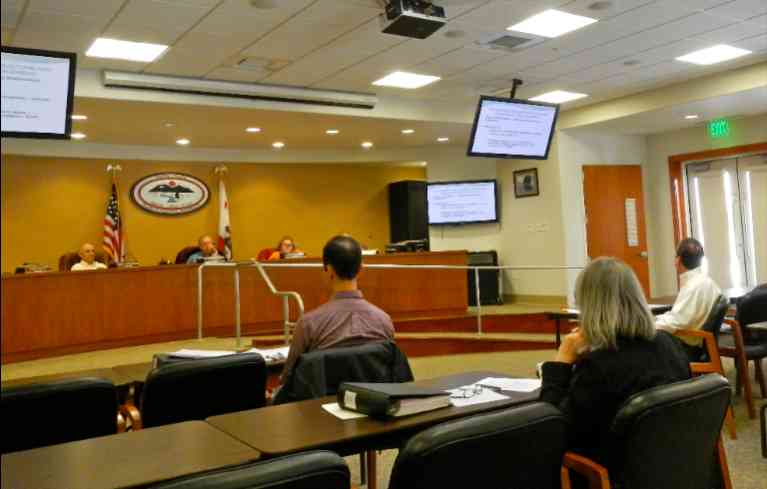
The board had a workshop with staff last week to go over the proposed 2013-14 budget and the CIP. No one from the public attended.

At the May 2 board meeting there will be a public hearing on the budget, with the board slated to take a vote May 16.

South Tahoe PUD staff, foreground, discuss the budget March 6 with the board. Photo/LTN

South Tahoe PUD staff members, foreground, discuss the budget March 6 with the board. Photo/LTN

In the fall the board expects to have workshops about rates and meters.

“We have work to do. By the fall we have to have concrete ideas about how to deal with this situation,” board President Eric Schafer said at the March 6 meeting.

Per California law all district customers must be on water meters by 2025. That could require borrowing money if grants are not available.

The continued decline in property values in the district’s boundaries, which are similar to those of Lake Tahoe Unified’s, means less money in the bank. The current budget assumed there would be 1 percent drop, when in reality it has been 1. 9 percent. This comes to a difference of $60,000. But with the district always forecasting 10 years out, cumulatively it equates to a potential $600,000 hit.

Paul Hughes, the district’s chief financial officer, presented a graphic that showed the revenue for water and sewer in 2008 and what is proposed in the coming fiscal year. 2008 was the peak revenue year for STPUD when service charges represented 59 percent of collections. That has grown to 69 percent for 2013-14. Revenue has decreased 4.7 percent in six years.

Connection fees have dramatically dropped as a budget line because people aren’t building. However, the situation was not as dismal as the district had forecast in the 2012-13 budget. It was assumed there would be no commercial connections and 15 residential. Through February, Bob Dogs was the one commercial connection and there has been the equivalent of 31 residential connections.

Hughes said he’d like the board to entertain the possibility of putting out a multiyear announcement so rate increases could take effect back-to-back years. “This would allow for continuity and planning on the engineering said in the CIP,” Hughes said.

As it is now, each year the district proposes a rate increase on either the sewer or water side Proposition 18 kicks in which requires all customers to be notified and given the chance to protest the increase.

Schafer told his colleagues that they better take a hard look at the 10-year capital improvement plan.

“We have been scaling back and we need to decide if that’s right,” he said.

And without continued rate increases, that 10-year plan will just collect dust and never be a reality. The 10-year sewer needs would cost $64.1 million, while the water needs are $57.8 million.

For now, replacing small water lines is the district’s focus so fire suppression will be improved. There are $3.6 million water engineering projects on the books for 2013-14, with bulk — $2.5 million – being spent on the state street waterline.

A sign the local economy is improving is that the number of people seeking a low-income discount has declined. It peaked in 2011 with 325 enrolled, dropped to 307 in 2012 and to 297 for 2013. What isn’t known is if these people are doing better or don’t live in the district any more.


Editorial: Time to expand public WiFi

Publisher’s note: This editorial is from the Feb. 16, 2013, Sacramento Bee.

From garage door openers to smartphones to tablets, many of us take for granted access to wireless networks through public airwaves. But access is not universal, especially in rural areas, and it is more expensive than it need be.

That’s why the current battle over how to allocate public airwaves is important.

Should bands be allocated through bidding for exclusive licenses – as with TV channels and cellular phone service – that transmit sound, data and video in a particular geographic area? Or should bands remain unlicensed for shared use among many players?

To meet the goals of accessibility, affordability and continued innovation, it is time to free up more spectrum for unlicensed use.

The President’s Council of Advisors on Science and Technology in a 2012 report highly recommends this major change: “the norm for spectrum use should be sharing, not exclusivity.”

The Federal Communications Commission first authorized the use of devices on unlicensed frequency bands in 1938. But the real revolution began in 1985 when the FCC opened up new spectrum for unlicensed use. That jump-started an era of innovation, encouraging manufacturers to create new products that could access those bands.

From that came such things as WiFi devices (“Internet without wires”) and Bluetooth headsets. Today, we can access the Internet using multiple WiFi devices in coffee shops, airports and our homes. We have applications, such as Skype, that can make calls without using cellular networks.

This is great for consumers – and more unlicensed spectrum would generate even more innovation.

The problem is that to date most new bands for unlicensed use have been limited to communications over short distances and have limited penetration of obstacles. The big prize is high-quality frequencies over long distances that can go through walls and over hills.

So that’s the new frontier – how to tap unused bands of high-quality spectrum in between television channels or on bands not currently being used by government agencies and other band users. The FCC has proposed rules and is gathering public comment.

By allowing devices, such as smartphones, to search for and use “white spaces” not currently in use, we can expand coverage, including in remote rural areas.

Some exciting trials are happening. The Yurok Reservation along the Klamath-Trinity River in Del Norte and Humboldt counties, with rugged, remote terrain, is working with Carlson Wireless to use TV white-space bands to get the community connected.

Plumas-Sierra Rural Electric Cooperative & Telecommunication, partnering with Google and Spectrum Bridge, has gotten stimulus funds to help build an open access wireless backbone so the utility can manage power remotely and residents, businesses, schools and governments in Plumas, Lassen and Sierra counties can get high-speed, cost-effective wireless service in an area with mountains and big trees.

They see this as a “blue-chip, once-in-a-lifetime chance to span the digital divide.”

We need more unlicensed space to spur the wireless connections of the future.