Truckee working on airport master plan

Truckee Tahoe Airport District is seeking public input on the draft 2014 Master Plan.

The purpose of the document is to create a blueprint for facility and infrastructure planning for the next 10 to 15 years. The ultimate goal of the updated plan is to recommend development options and policies that best fit the needs of the airport and community while protecting those living nearby.

The primary focus areas of the plan are:

  • Maintaining a high quality aviation facility
  • Exploring options to enhance annoyance mitigation programs
  • Managing and planning for growth of aviation facilities and resources
  • Enhancing community-related benefits and functions.

The public comment period ends July 14. To view the draft plan, go online.


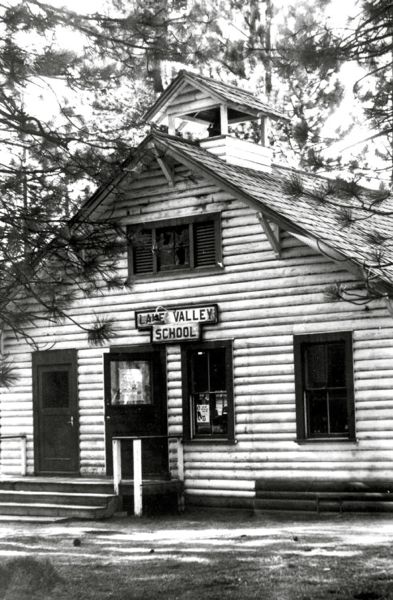
Then and now: Old school building still being used

The original Lake Valley schoolhouse. Photo/Lake Tahoe Historical Society

The original Lake Valley schoolhouse. Photo/Lake Tahoe Historical Society

The Lake Valley schoolhouse was at the Y in South Lake Tahoe until the 1950s when Safeway opened a new supermarket on that site in the building now occupied by TJ Maxx.

Today the building is used by the carpenters union. Photo/Bill Kingman

Today the building is used by the carpenters union. Photo/Bill Kingman

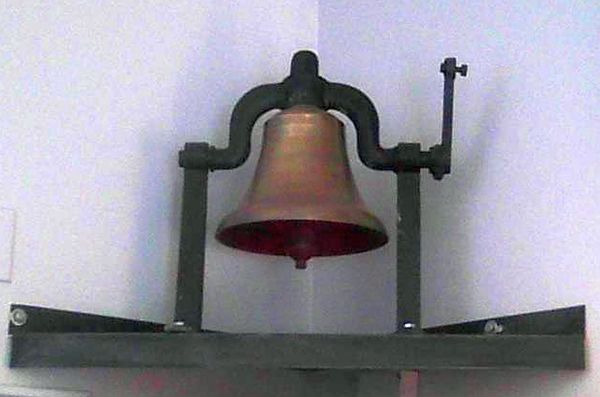
The old bell is at Tahoe Valley Elementary. Photo/Bill Kingman

The old bell is at Tahoe Valley Elementary. Photo/Bill Kingman

The schoolhouse building was picked up and moved to the corner of Young Street and William Avenue behind Ahern Rentals and Chapel of the Bells. It has served as the Carpenters Local 1789 Hall for decades.

The original bell from the Lake Valley schoolhouse belfry is on display in the hallway at Tahoe Valley Elementary School.

— Bill Kingman


Plenty of hot water to enjoy around Lake Tahoe

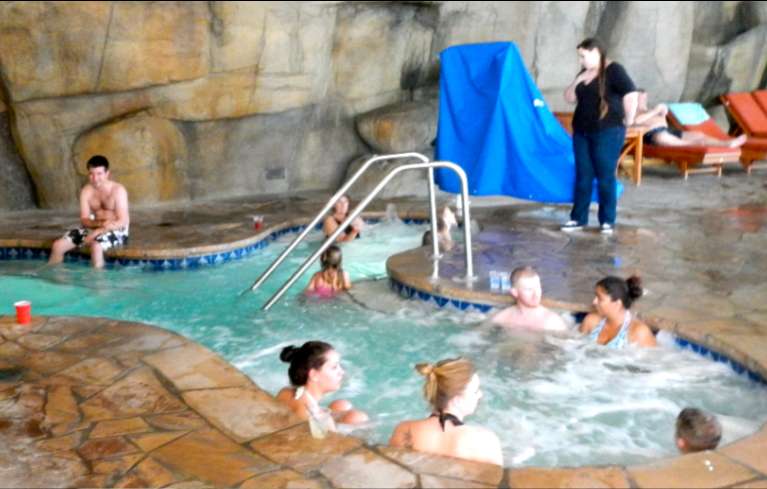
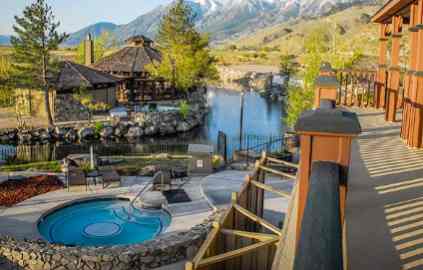
MontBleu's spa is open to the public -- for a fee. Photo/Kathryn Reed

MontBleu’s spa is open to the public — for a fee. Photo/Kathryn Reed

By Kathryn Reed

Soaking in hot water has a history dating to the 4th century BC. There’s been quite an evolution from hot stones being placed in water to today’s fiberglass tubs found in so many Lake Tahoe back yards.

It was in the 1940s that hot tubs started to become popular in the United States.

Nearly every hotel in the Lake Tahoe Basin has a hot tub. Plus, there are a few natural springs in the area that people may enjoy.

The following is a sampling of tubs in the region and beyond.

With a hot tub somewhat shaped like a three-leaf clover, people are able to spread out at MontBleu in Stateline. And this is good because there were loud, splashing children in one section.

It’s one of the more chlorinated tubs. Sue’s eyes began to sting when she lifted her hands to her face. The depth is a bit much for someone of her stature. She had to crouch and couldn’t sit comfortably.

But the temp is ideal. The jets had a ton of pressure, which I would think some people would not like. I thought it was wonderful.

There is also a tub in each of the dressing rooms if people want to stay more secluded. The women’s tub was the perfect temp and the depth good for shorter people. The dim lighting makes it even more relaxing. The jets put out just the right amount of oomph.

Hotel guests may use the pool and adjacent hot tub for free, guests must pay $10 to use the indoor tub and locker room facilities, and it’s $20 for non-hotel guests to use everything.

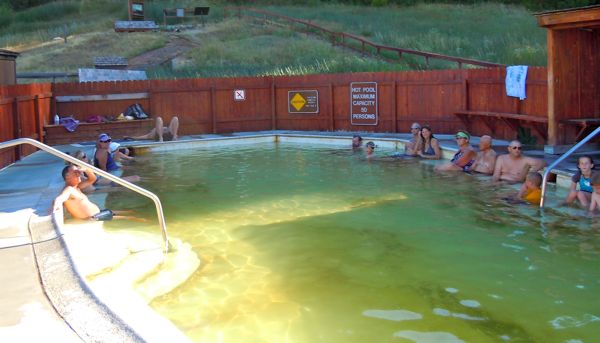
Grover Hots Springs in Markleeville is popular with locals and tourists. Photo/LTN

Grover Hots Springs in Markleeville is popular with locals and tourists. Photo/LTN

Tahoe Keys has two outdoor hot tubs that are accessed via the indoor pool. People must live in this South Lake Tahoe neighborhood or have access to guest passes to be allowed in.

The secluded feeling is great. The 103-degree temp is perfect, especially when the outside temp is below freezing. The depth is ideal. The jets could use a little more force.

No one younger than 6 is allowed in them. And one does not allow anyone younger than 14 so it’s a quasi-adult tub.

Lots of signs warn people no alcohol is allowed and if people are caught with any, they could lose their privileges to use the facilities. There is also 24-hour recorded surveillance.

Several hours one Saturday afternoon in early January were spent in the pools at David Walley’s Hot Springs Resort in Genoa. We were happy to have two gift certificates because we’re not sure it’s worth the $30. A lot of this has to do with having our own hot tub and not making a whole day of it. The value really depends on how much time one spends at Walley’s. We’ve been there in the spring when it’s cold at the lake and warm in the valley. It’s a great spot to start working on your tan.

The scenery is wonderful – even though the mountains should have had way more snow.

The five tubs are supposed to range in temperature from 100 to 104 degrees. The larger pool is about 85 degrees. An employee is regularly checking the temps.

Two of the older hot tubs have been taken out since the ownership changed in the past couple years. An employee said there is talk of adding more tubs.

Be careful about wearing jewelry into the waters. My toe ring is now a different color because of the sulfur.

The other natural spring that is nearby is Grover Hot Springs, which is part of a state park by the same name in Markleeville. Cost is $7. Hours change in the summer, but it’s open seven days a week.

It’s one big pool that is fed by water that is percolating from the hillside. The surroundings are spectacular. This is definitely more rustic than Walley’s, but that is part of its charm. It’s definitely a social place, but that can be a drawback because it can get crowded.

At Nepheles in South Lake Tahoe hot tubs may be rented by the hour. They are available from 2pm to 2am at $20/hour for two people. The more people, the more it costs. Towels are provided.

It had been years since Sue and I had been there. They are private, though there is no ceiling. This is perfect – being outdoors, but secluded. Amazingly, we had no trouble staying there for an hour. The temperature was ideal.

Hooks and benches are provided to put stuff on. But if were snowing and there were several people, clothing might get wet.

One of the perks at Nepheles is that there is an intercom to the bar. We tried it repeatedly and no one ever responded. While not the end of the world, it was disappointing.

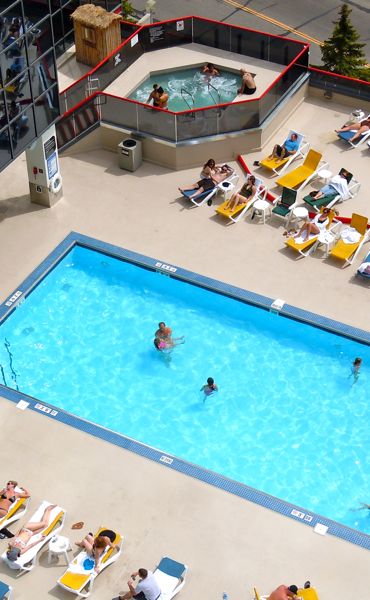
The hot tub at Harveys is elevated away from the pool. Photo/LTN

The hot tub at Harveys is elevated away from the pool. Photo/LTN

Harveys hot tub is outside, but on the fourth floor. The outer railing for the entire area gives it a secluded feeling. It’s not until getting to the far side can one look down on all the rebar and concrete for what might be the completed Chateau project.

The tub is small considering how many hotel rooms there are. But on a weekend in May there is ample room for everyone. The biggest disappoint is that for what otherwise is a 24-hour facility, the pool-hot club closes at 9pm.

The temperature was perfect. But the depth of the bench to sit on to the top of the tub is so high that I can’t put my arms out as a way to cool off. It reminded me in some ways of being in an old redwood tub. Not the most comfortable seating.

Tubs outside the area

It almost seems like the hot tub at the Hyatt House in Rancho Cordova was an afterthought based on how tiny it is. I don’t know how much use it gets when the outside temp is in triple digits, but in February plenty of people wanted to use it, including members of a Zephyr Cove tennis team and a Sonora high school wrestling team who were all in town to compete. Not everyone could fit.

Also disappointing was how rapidly the temperature decreased when the bubbles were on. And the jets were a bit spastic. There also ought to be rules about young kids in hot tubs – like not allowing them or having an adults only hot tub.

A trip to Reno in December found us at the Atlantis. The only problem was getting to the hot tub because we were barefoot and there was ice melt on the walk. We couldn’t go in before bed because access closes at 10pm, so we popped in first thing in the morning.

The temp was ideal on this frosty morning. With the bubbles going, there were no distracting sounds. The tall hotel towers make the tub seem secluded.

The Residence Inn by Marriott in Folsom couldn’t seem to get the temp right on the hot tub when the two of us were there in March. When it’s so hot that after less than five minutes you want to sit on the edge, there is too much heat. The next day the water was so tepid I got out quickly and opted for the shower to relax me.

Walley's has multiple tubs to choose from. Photo/Provided

Walley’s has multiple tubs to choose from. Photo/Provided

The other problem was how muggy the room was. The hot tub and pool are inside.

Not knowing what we would find next, we chose to go next door to the Courtyard by Marriott. The water was the perfect temperature. I liked that some of the jets were more powerful than others.

And the setting is better than its sister hotel because of all the windows by the tub look out onto a courtyard where people could be sun bathing.

If relaxation is what you want, then skip the tub at the Marriott Marquis in San Francisco. Sounds of screaming children in the nearby pool reverberate off the walls. Plus, it’s another one of those instances where kids fill up the hot tub, too. But the size and temperature are good.

It was hard to know we were in the middle of Sonoma while soaking at the Sonoma Valley Inn tub. This Best Western is just off the Sonoma square. The tub and nearby pool are in a courtyard with mature landscaping. It’s almost like a park setting. The hot tub is covered by a gazebo, which would act as nice protection from the sun on hot days. The bubbles were a bit spastic – causing water to fly into our wine glasses. But the temp and depth were ideal.


Opinion: EDC’s No. 2 person has terrible track record

By Larry Weitzman

“She left the city in rubble,” said Lloyd Oneto, an Ione city councilman speaking of former Ione City Manager Kim Kerr. “When she was hired in 2007 the city had $8 million in the Local Agency investment Fund (the city’s main bank account). When she left in 2011 it had a negative balance of $800,000. “When I ran for city council in 2010, I ran on fiscal responsibility,” continued Oneto.

Kerr is now assistant chief administrative officer of El Dorado County.

Oneto went on to say Kerr has been a nightmare for Ione, a city of less than 8,000 people, more than half of whom the city is not responsible for as they are involuntary guests of Mule Creek State Prison whose walls are located within the 5 square miles of the city limits.

Kim Kerr is assistant CAO is El Dorado County.

Kim Kerr is assistant CAO is El Dorado County.

With roots going back to the Gold Rush, Ione was incorporated in 1953. It has a small staff that includes a city manager, a couple of finance people including a finance manager, a front counter person, a few city maintenance people, a now part-time city building inspector and part-time city clerk. It also has a small police department and a fire department. It’s a small city.

In my investigation I interviewed at least three city employees, a city councilman, Amador County officials, other city managers within Amador County and people in El Dorado County involved with the hiring process of Kim Kerr as assistant CAO. I also examined the Ione independent CPA’s auditor reports during Kerr’s tenure and several Amador County Grand Jury reports relating to Kerr as the Ione city manager. It paints a very ugly picture of incompetence and more.

The grand jury report of 2012 made its No. 1 finding relating to the city of Ione the most damning when it stated, “1. The Grand Jury finds that the City Manager for the fiscal period 2007-2011 (Kim Kerr’s tenure) did not demonstrate she possessed the proper qualifications and expertise to perform the duties required for that position.” There were other findings, most relating to Kerr’s incompetence, like No. 3: “On many occasions the City Manager provided insufficient or misleading information making it difficult or impossible for the City Council to cast intelligent votes.” You can interpret “misleading” as not telling the truth or lying. The City Council also pointed the finger at Kerr, saying, the “Former City Manager Kim Kerr budget documents were difficult to decipher, were inaccurate and contained errors.”

Perhaps even worse, “The Grand Jury found … the City Manager and City Council disregarded the findings and recommendations of the 2010-2011 Grand Jury report.”

There are many more scathing findings regarding her spending and mismanagement of funds, such as the finding that the city manager had not done a bank reconciliation for two years, wasting millions of dollars on a wastewater plant or that the CPA audit reports for the years 2006-09 had such significant financial shortcomings that the CPA, Larry Bain, could not render an opinion. In his letter to the City Council he wrote, “Since the city did not have the supporting documentation to support cash and investments, capital assets, compensated absences, accounts receivable, deferred revenue and deposit liabilities as noted above we were unable to apply other auditing procedures to satisfy ourselves as to the scope limitations, the scope of our work was not sufficient to enable us to express an opinion….” but there are other issues that should be revealed.

Kerr loved spending millions of dollars on consultants and engineers. It’s not her money; it’s other people’s money (OPM). One small example was a 100-square-foot restroom at a park. The building inspector related the story of what should have been at best a $50,000 project that ballooned into a $200,000 monstrosity. Instead of using local people and volunteers, she contracted for a pre-engineered concrete structure manufactured in Oregon which took two trucks to ship to Ione. Although it was already engineered to California codes, Kerr hired an engineer to re-engineer the structure for tens of thousands of dollars.

In this park of nearly 90 acres, Kerr wanted to place it on a surface of dumped grindings, a surface that was clearly not suitable for such a building. She was advised by the city building inspector to put it anywhere but there because of soil problems. What did Kerr do? She hired more people and consultants at a cost of tens of thousands of dollars to put the structure where she wanted it. What should have cost tens of thousands of dollars in total and built by local contractors ended up costing hundreds of thousands with much of that directed to Oregon.

Kerr spent more than $2 million on engineers and consultants for an unneeded wastewater system that was never built. Almost $2.5 million down the toilet.

Near the end of her tenure, Kerr took the job of record keeping from the finance manager and kept most of the records, if you could call them that, on her personal computer, which she would not surrender to the grand jury.

According to Oneto, Kerr made deposits and credited two accounts to make it look like the city had double the money. Ione also was mistakenly sent county sales tax revenue. The state directly deposits these checks, but anyone in Ione finance would have seen the mistake because of the large size of the deposit. Kerr, who was keeping all the financial records, should have seen the mistake, but it wasn’t discovered by the state until September 2011. By then Kerr was long gone. Now the cash-strapped city is stuck paying it back. If Kerr was reconciling the bank accounts or reviewing the deposit records, such an error would have been obvious.

According to Ione city records, Kerr was making $140,000 annually, with a “me too clause” that pegged her pay to any increases given union employees. When she was hired she also brought with her from Humboldt County two friends, a new police chief named Johnson for $110,000 a year and a police sergeant. When Kerr left in 2011 a few months later the Police Chief Michael Johnson took up residence in Anderson or someplace close as the police chief and shortly thereafter the sergeant was invited up to serve as a policeman or sergeant as well.

We are just warming up here, there is much more.

So how did Kerr get rewarded? She got a job got as the assistant CAO in El Dorado County, which has a population of 181,000 people and 1,788 square miles at a salary of about $165,000 with a raise of about $10,000 due next year. Since effectively bankrupting Ione, Kerr has taken about $500,000 in taxpayer money as salary from the citizens of El Dorado County.

From the grand jury reports, the outside audits and through interviews of Ione employees, Kerr should not be employable in a high level municipal or other government position, yet here Kerr is making a cool $165,000 a year in a position that is over two of the lowest employee satisfaction ratings in the entire county, the Community Development agency and the IT Department, respectively sitting at 22 percent and 41 percent worker satisfaction. See the Van Dermyden Maddux report.

Every employee I interviewed in the city of Ione said the happiest day of Kerr’s tenure was the day she left. One employee said he never met anyone in his life like Kerr and hopes he never will again. “It was the worst four years of my life. She was full of vengeance and evil.” All the employees interviewed still work for Ione (some part-time now) saying they all weathered the storm Kerr created in her fiscal destruction of the city.

In an interview with Terri Daly to learn how Kerr was hired she said there was a “committee.” Daly, who is the CAO of El Dorado County, denies recommending her to the Board of Supervisors, adding that the selection of Kerr was their doing. Daly said that she was not privy to the issues Kerr had with the Ione. Three or four candidates were interviewed. Daly only admits to inviting Kerr to apply for the job of assistant CAO.

Daly also said she was not aware of the problems the Amador County Grand Jury had with Kerr, saying those reports happened long after Kerr was hired. Daly said she was unaware of Kerr’s problems with Ione.

Daly also said in the telephone interview that she would hire Kerr knowing what she knows now about Kerr.

I doubt anyone else would.

From the facts, it appears Daly steered Kerr’s application to completion. Daly asked Bernard Carlson of the EDC Taxpayers Association to “investigate” Kerr. In my interview with Carlson, he said he went to Ione and talked to two people, the manager of Castle Oaks Golf Course and a person on the street. They knew little, if anything, about Kerr. They did not talk to anyone connected to the city, no employees and no one from the City Council. Carlson admitted it was a cursory investigation and he was unaware of the grand jury reports.

Daly’s next objective was to put Kerr’s best foot forward to the BOS so she had Supervisor John Knight interview her. It was again a cursory interview as Knight knew nothing of Kerr’s background. Knight said he trusted Daly’s judgment and if Daly wanted Kerr for the assistant CAO position, so be it. Knight further said he interviewed Kerr out of respect for Daly and he did no investigation.

Daly said in my telephone interview that the BOS hired Kerr, not her and that she did not recommend her to the BOS. That’s not what former Supervisor Jack Sweeney said. Sweeney flat out said Kerr was recommended to the BOS by Daly and on the surface Kerr looked OK. Knight concurred with Sweeney’s assessment. Kerr’s hiring was carefully crafted, orchestrated and arranged by Daly. It appears from Section 802 of the county Personnel Management Resolution that Daly’s hiring of Kerr was solely Daly’s decision anyway. It was Daly who hired Kerr, not the BOS. Daly is left holding this bag.

But wait, there is more. Daly has known Kerr well since 2007. According to Amador County Auditor Joe Lowe and confirmed by the city manager of Jackson, Michael Daly (no relation), Terri Daly as Amador County CAO had monthly meetings with all the Amador County city managers and then a luncheon (surely on the taxpayer’s dime). At these meetings the city managers discussed problems with their respective jurisdictions and financial matters. These meetings were monthly, meaning that Daly met with Kerr at least 36 times. If Daly were above room temperature and considering her Stanford degree in psychology, she should have known of Kerr’s problems.

EDC faces a real problem and dilemma here. Kerr is clearly not qualified to do her job, especially at $165,000 to $175,000 a year. But after learning about the subterfuge of the CAO in getting Kerr hired, the BOS should show their vote of no confidence by showing her the door as well. At that point the alleged culture of fear in the county might just disappear and the county can save hundreds of thousands of dollars in studies.

More to come.

Larry Weitzman is a resident of Rescue.


Ehrman Mansion to host living history event

Pine Lodge, also known as the Ehrman Mansion, at Sugar Pine Point State Park is having a living history day July 26 from 11am-4pm.

It will include tours, a children’s activity zone, antique car show, the Eagle Wing Dancers, live music and historic wooden boat display. Refreshments will be available for purchase. All events are free, though there is a $10 parking fee.

Volunteers are needed to serve as greeters, parking attendants, facilities assistants, boathouse docents, crafters and raffle assistants. There is a mandatory volunteer orientation July 21 at 5:30pm at the Sugar Pine Point State Park Nature Center. Call 530.583.9911 or email volunteer@sierrastateparks.org for additional information.


TCPUD considering rate increases

Tahoe City Public Utility District’s board is having public workshop July 1 about water and sewer rates.

TCPUD is preparing an update to its 2008-09 Water and Sewer Rate Analysis. HDR Engineering will be doing the analysis.

TCPUD will be considering its rate structure for 2015-20.

“We believe that due to the significant rate increases we undertook during the last five years, the next five year plan should be very reasonable,” officials said in a statement.

The meeting will be at 4pm at the district office.


Snippets about Lake Tahoe

ltcc• On June 24, the Lake Tahoe Community College board of trustees is expected to vote on a new mascot; it has been the kokanee and is proposed to be a coyote. The colors of green and white may be expanded to include blue.

• Roots & Wings Preschool at Kahle Community Center in Stateline has been recognized as the highest rated preschool in Nevada with a five-star rating.

• Throughout June and July, adults and children with Medi-Cal will be able to see a dentist in South Lake Tahoe. Tooth Travelers, a mobile dental clinic, is available by appointment Monday-Friday, 8am-4pm behind the Barton Community Health Center at 2201 South Ave. For questions or to make an appointment, call 530.626.8626.

• Lake Tahoe is on the cover of the July-August issue of Via magazine; with the story about the Nevada side.

• Douglas County Public Library in Zephyr Cove will be closed July 4. It will reopen July 5 at 9am.


Petition seeks return of grizzly to Calif.

By Susan Montoya Bryan, AP

ALBUQUERQUE, N.M. — An environmental group called on federal wildlife managers Wednesday to update a decades-old recovery plan for grizzly bears to ensure the animal’s return to the Grand Canyon and other areas of the West.

The Center for Biological Diversity, in a petition filed with the U.S. Fish and Wildlife Service, accused the agency of using a fragmented approach as it tries to recover the threatened species. Efforts are currently focused on a fraction of the bear’s historic range, but the petition identifies 110,000 square miles around the West that could provide suitable habitat.

Those areas include a forested region straddling the Arizona-New Mexico border, the Grand Canyon, the Sierra Nevada in California, and parts of Utah and Colorado.

The recovery plan for grizzlies dates back to 1993. The Center for Biological Diversity says the plan needs to consider recent research that questions the long-term viability of the current grizzly population.

“The science is clear that, if we’re serious about recovering grizzly bears, we need more populations around the West and more connections between them so they don’t fall prey to inbreeding and so they have a chance of adapting to a warming world,” said Noah Greenwald, director of the center’s endangered species program.

A spokesman with the Fish and Wildlife Service said Wednesday the agency had not yet received the petition. He did not comment on whether the agency had any existing plans to update the grizzly’s recovery plan.

The agency did state as part of a review of the bear’s status done in 2011 that the recovery plan was outdated and it needed to consider other areas as potential habitat.

According to the agency, an estimated 50,000 grizzlies roamed between the Pacific Ocean and Great Plains during the early 1800s. Their numbers were drastically reduced as more pioneers headed west. By 1975, when the bears were listed, only six of the 37 separate populations that were present just 50 years earlier remained.

There are five areas where grizzlies are found today, including the Yellowstone region and along the northern Continental Divide.

Federal wildlife managers have had mixed success in trying to reintroduce larger species, such as the gray wolf.

Greenwald acknowledged there would be some opposition to the grizzly, but he said there seemed to be more reverence surrounding the bear.

“The grizzly is the mascot of the University of Montana, and you drive around Montana and it’s grizzly this and grizzly that. And in California, they’re on the state flag. They’re just such an iconic animal,” he said.


Drought is bad news for honey bees

By Melissa Breyer, Mother Nature Network

Honeybees have been having a rough go of it lately; between tragic insecticide mishaps, truck crashes and especially colony collapse disorder, the poor things can’t get a break.

And now to add to their troubles, honeybees in California are suffering from the drought, which is leaving them with very little natural forage to make honey with. Bees need flower nectar to make honey; less water means less nectar and ultimately, a honey shortage.

Typically, the Golden State is a gold mine for honeybees. Its abundant agriculture and variety of wildflowers provide an enticing array of nectars for the bees — and with that comes honey. In addition to the popular crops, with sufficient rain the state produces exotic (and sought after) honeys, like sage, buckwheat, blue curl, tarweed and Manzanita.

“In years when California receives adequate rainfall and especially in years when California receives above-normal rainfall, like the El Nino years, California is the number one honey-producing state in the nation,” Gene Brandi, vice president of the American Beekeeping Federation told NPR. “We’ve done that many times in the past.”

But in a year with little rain, honey production can cut in half; this year Brandi says it might be even worse.

Read the whole story


Bike trail overhaul to begin in S. Tahoe

The bridge flooring will be replaced this summer. Photo/LTN file

The bridge flooring on trails crossing Trout Creek and Upper Truckee River will be replaced this summer. Photo/LTN file

Two bridges and 2.6 miles of bike trail will be rehabbed in South Lake Tahoe starting July 7.

It should take about one month to finish the project.

The project including reconstructing the trail that was installed more than 20 years ago. It runs parallel to Highway 50 from Los Angeles Avenue to Motel 6 and the Upper Truckee River; one segment on Highway 50 from Helen Avenue to the Y to include the following areas: Harrison Avenue (Los Angeles to Tulare), Rubicon to Tulare, Eloise to Ponderosa, Silver Dollar to Rubicon, and Helen Avenue to South Avenue and Linear Park.

The project includes pulverization of the existing bike trail and installation of new pavement and striping on top of the recycled trail.

Construction of two new bridge decks and new signage are also included.

Funding is from Measure R — $250,000 — and $475,452 from the Caltrans Bicycle Transportation Authority.