Jitloff wins men’s GS at Squaw

By USSA

OLYMPIC VALLEY — It was locals day at Squaw Valley as Tim Jitloff (Reno) boosted his U.S. title count to four with a victory in the men’s giant slalom to close a sun soaked Day 1 of competition at the Nature Valley U.S. Alpine Championships.

Tim Jitloff

Tim Jitloff

Jitloff is the 2008 and 2009 U.S. giant slalom champion and also owns the 2009 combined crown.

Defending champ Robby Kelley (Starksboro, Vt.) landed second and Seppi Stiegler (Jackson Hole, Wyo.) in third on Thursday.

Top junior honors went to Kieffer Christianson (Anchorage), who finished fourth in the race.

World Cup and World Champion Ted Ligety (Park City, UT) did not race, but will be in Squaw Valley for the Championships.

The race was staged a day later than planned as more than a foot of snow blanketed the Olympic race hill on Wednesday.


Heavenly’s Sho Kashima

Sho Kashima began skiing when he was 4 when his dad was hired at Heavenly Mountain Resort. Growing up, Kashima idolized 1998 Olympic moguls champion Jonny Moseley, and it was Moseley’s gold in Nagano that inspired him to compete in the Olympics. He also looked up to U.S. moguls skiers Travis Cabral (ninth in at the 2006 Torino Games), Travis Ramos and Chris Hernandez, all of whom have roots in Lake Tahoe. Kashima was 12 when he first started skiing moguls with the Heavenly Team, and continued skiing with them till the age of 19 when he qualified for, and joined, the U.S. Ski Team. He’ll be competing at Heavenly in the U.S. Freestyle Championships March 29-31.


Mancuso nails win on home turf

By USSA

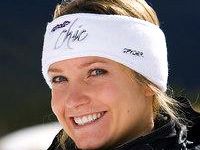
OLYMPIC VALLEY — Olympic gold medalist Julia Mancuso (Squaw Valley) on Thursday took full advantage of home snow to win the Nature Valley U.S. Alpine Championships giant slalom for a record 16th U.S. title.

The Olympic gold medalist finished 0.88 in front of a red-hot Mikaela Shiffrin (Eagle-Vail, Colo.), 18, who had just locked the Audi FIS Alpine World Cup slalom title in Switzerland.

Julia Mancuso

Julia Mancuso

The race opened the four-day culmination of the alpine ski racing year with more than 500 young athletes from across the country converging at the 1960 Olympic mountain to hunt for U.S. titles.

2013 NorAm overall champion Megan McJames (Park City, Utah) finished third to round out the women’s podium.

U.S. downhill champion Jackie Wiles (Aurora, Ore.) was sixth and Foreste Peterson (Berkeley) seventh to finish 2-3 among junior women.

The race was shortened from the planned start due to inconsistent snow after heavy snowfall on Wednesday. A packed crowd was on site for the opening race under Squaw Valley’s bluebird skies.

The Nature Valley U.S. Alpine Championships continue Friday with men’s and women’s super G.


Editorial: CalPERS charges long overdue

Publisher’s note: This editorial is from the March 20, 2013, Sacramento Bee.

If you read the full text of the federal indictment charging the former chief executive officer of the California Public Employees’ Retirement System with fraud and conspiracy, it would appear he did nothing more serious than crudely cut and paste the CalPERS logo on his business card to create some phony letterhead.

But, according to prosecutors, the letterhead former CalPERS CEO Fred Buenrostro allegedly forged – and then signed and backdated – allowed his friend and benefactor Alfred Villalobos to collect $14 million in fees from a CalPERS investment partner, Apollo Global Management. The letterhead was used to create fraudulent “investor disclosure” letters that Villalobos needed to collect those fees.

Alfred Villalobos

Alfred Villalobos

CalPERS’ chief legal counsel and officials from its investment office had repeatedly refused to sign the letters, without which Villalobos could not be paid.

Just weeks after he signed the forged documents, the indictment says, Buenrostro retired from CalPERS and went to work for Villalobos, who lives in Stateline.

Prosecutors have charged Buenrostro and Villalobos with conspiracy, mail fraud and wire fraud. In addition, Buenrostro is charged with lying to investigators and obstruction of justice. The charges could send them to prison for more than 30 years. Neither man has entered a plea, but lawyers for both told the Bee‘s Dale Kasler that their clients were not guilty.

Still, the forged documents provide a smoking gun – strong evidence of a conspiracy that is simple and easy to prove in a court of law. Were the documents forged? Were they sent through the mail? Did one of the defendants lie to prosecutors about them?

But it’s the conduct underlying those documents that goes to the heart of the corruption that has engulfed the highest levels of leadership at the state’s $248 billion pension fund. Civil suit allegations filed earlier by the state and the federal governments against Villalobos and Buenrostro previously disclosed lavish round-the-world trips taken by Buenrostro and former CalPERS board member Chuck Valdes that Villalobos paid for.

Villalobos allegedly paid for Buenrostro’s 2004 wedding at his Lake Tahoe mansion, treated him to stays at casinos in Lake Tahoe and China and even financed a Lake Tahoe condo.

Buenrostro and Villalobos are entitled to a presumption of innocence. But if they are convicted – and the evidence against them appears very strong – it shows dangerous rot at the very top levels of the state pension fund.

Even if not charged with bribery, a conviction would demonstrate that at least one CalPERS official was bribed over several years to steer billions of dollars of investment funds to Villalobos’ clients.

Although CalPERS board President Rob Feckner said it “was a good day” when the indictments were announced, he was on the board when Villalobos and Buenrostro are alleged to have committed crimes. He and other sitting board members from that time bear at least some responsibility for the rot that infested the top ranks of this pension system.


Ad campaign helps fill N. Lake Tahoe hotels

By Renée Frojo, San Francisco Business Times

“Your life called. It wants its balance back.”

That’s one of the lines from North Lake Tahoe’s newest advertising campaign that’s trying to take some of the credit for the destination’s surprising boost in hotel bookings.

Despite the severe lack of snow, hotel bookings in Tahoe are reportedly up by more than 30 percent weekly over the first three months of 2012. While that also could be attributed to an improvement in the economy, other than anecdotal evidence, heads in beds is one of the few things advertisers can use to measure success of a campaign.

This is one of the ads created for North Lake Tahoe by School of Thought.

This is one of the ads created for North Lake Tahoe by School of Thought.

To give them credit, it has been eye-catching.

If you haven’t noticed the billboards or stencil street power washings which is running in San Francisco and Los Angeles, the focus is on living your life to the fullest and pitching a winter escape to North Lake Tahoe as inner restoration.

Unlike previous campaigns, they’re not telling you what to do, exactly, just giving a glimpse of what you’re missing — reminders about the joys of life away from a desk or computer. Of a dozen different headlines, only one is specifically ski related.

“Every year the ads for Tahoe tend to portray some sort of badass skiers, and North Tahoe in particular is distinctive, so we felt campaign needed to reflect that,” said Joe Newfeld, co-founder and creative director of San Francisco-based advertising agency School of Thought, which is spearheading the campaign for the North Lake Tahoe Marketing Cooperative.

Some of the campaign’s headlines include, “When your kid asks about the stars, do better than an app,” and “Somewhere not far away, people are sipping hot chocolate and making snow angels.” Or one of my favorites, “A sick day is a terrible thing to waste.”

The $330,000 campaign also did some creative marketing by slashing broadcast radio from its budget to add more Internet radio, TV, blogger outreach and even street stencils — all with a 15 percent cheaper budget than the year before.

“We don’t take credit for all of it, but the numbers are up and that’s good for the clients and the economy up there,” said Newfeld.

Hopefully the continued lack of snow won’t put a damper on things.


Non-athletes subsidizing college sports

By Sean Gregory, Time

What ticks off many college students even more than an 8am class? Finding out how much they pay for sports.

B. David Ridpath, a professor of sports administration at Ohio University and a former president of the Drake Group, a college-sports watchdog organization, just finished polling about 4,000 students attending schools in the Mid-American Conference (MAC), a group of a dozen public institutions mostly in Ohio and Michigan. He asked if they knew that a significant chunk of their annual student fees — payments on top of tuition that fund various student services — helped finance their school’s intercollegiate athletic department. For example, at Miami University, in Oxford, Ohio, $950 of a student’s $1,796 annual fee, or half the payment, funds athletic scholarships, coaches’ salaries and other sports-related spending.

Some 40 percent of respondents said they were totally unaware that their fees funded sports. And even those who knew about the payments were in the dark about exactly how much of the fee went to athletics.

“Ridiculous,” wrote one MAC student in the comments section of the survey. It was a familiar refrain: “I pay a ridiculous amount for events I don’t attend.” “I’m here to learn, not to watch sports.” “My feelings with this news stretch no shorter than outrage.”

When the men’s 68-team NCAA Division I basketball championship, aka March Madness, tips off today, the nonstop television coverage, full of ecstatic crowds and handsomely compensated coaches roaming the sidelines, might create the impression that sports programs shower their schools in cash. But in the vast majority of cases, the opposite is true.

Money from students — and taxpayers — subsidizes sports. According to USA Today, of 227 public institutions playing Division 1 sports, just 22 have self-sufficient athletic departments. (These include the revenue-generating machines at the University of Texas, Ohio State and Florida.)

What’s more, even in the face of ever tighter budgets and ever escalating costs for students, the subsidies keep soaring. According to a January report from the American Institutes for Research, athletic subsidies per athlete at public schools with top-tier football teams spiked 61 percent from 2005 to 2010. Meanwhile, per-student academic spending rose just 23 percent.

President Obama has promised to tackle rising college costs.

“Let me put colleges and universities on notice,” he said in January. “If you can’t stop tuition from going up, the funding you get from taxpayers will go down.”

College-sports reformers acknowledge that steps like reining in coaching salaries, offering fewer football scholarships and streamlining athletic administration won’t solve the affordability crisis.

Still, “it’s a logical starting point,” Ridpath says. “These levels of spending are not sustainable.”

Sports budgets in the MAC average $23.2 million and rose 29 percent from 2006 to 2011, according to USA Today; they are 75 percent funded through subsidies. Notwithstanding the president’s warning, don’t bet on immediate changes.

“There’s tremendous student engagement through participation in athletics, through support of athletics,” says George Ross, president of Central Michigan University.

And sports can raise a school’s profile. Kent State, whose baseball team reached the College World Series in June, projects a 51 percent increase in applications from 2010 to 2013. Is there empirical proof that sports drove this growth?

“We haven’t done a study here,” says Kent State athletic director Joel Nielsen. “But with our visibility in baseball and football and basketball, just common sense would tell you it did.”

Luis Proenza, president of the University of Akron, whose men’s basketball team enjoyed a 19-game winning streak this season, offers a final word on college-sports spending.

“I would say to most people, Don’t get too worried about it, and enjoy what it does bring to our campuses, our society. It’s a tremendous learning opportunity for student athletes. For many of them, it’s a ticket to a higher education. And understand that this is just one of many social, human institutions that–because they are human–are not perfect.”

Who pays for that imperfection? You.


Tahoe teens on freeskiing junior worlds team

By USSA

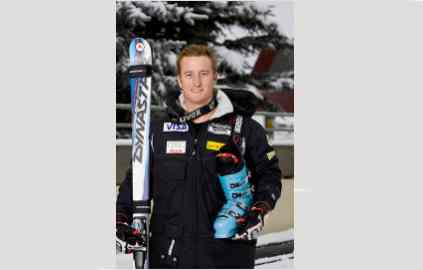
PARK CITY – Tahoe athletes are among the 35 skiers and snowboarders who will be competing at the 2013 FIS Freestyle Junior World Championships March 26-31 at Valmalenco, Italy. The event includes moguls, aerials, skicross, halfpipe and slopestyle.

Headlining the team are U.S. Team members Mac Bohonnon (Madison, Conn.) in aerials, Ali Kariotis (Tiburon and Olympic Valley Freeride and Freestyle club) in moguls, Alexi Micinski (Meridian, Idaho) and Jess Breda (Marshfield, Mass.) in slopestyle. Kariotis is the 2012-13 moguls NorAm Grand Prix champion.

On the men’s slopestyle team is Brent Whipple of Stateline with the Waterville Valley BBTS.

He recently took first in slopestyle Junior Nationals and will be looking to continue his solid skiing.

Nicolo Monforte of Olympic Valley, who is on the Squaw Valley Ski Team, will compete in the men’s skicross.

Women’s skicross has Whitney Garners of Stateline, who is with the Heavenly Ski & Snowboard Foundation.


Ski report: First chair gets powder

ski report logoSpring brings fresh snow to Tahoe’s slopes.

Avalanche danger is considerable, according to the Sierra Avalanche Center. Don’t ski out of bounds.

Here is the March 21 ski report.

— Curtis Fong


U.S. women dominate X Games halfpipe in France

By USSA

TIGNES, France -– Despite the falling snow, Kelly Clark (West Dover, Vt.) took her 62nd podium and the gold medal at the X Games Tignes women’s halfpipe on Wednesday.

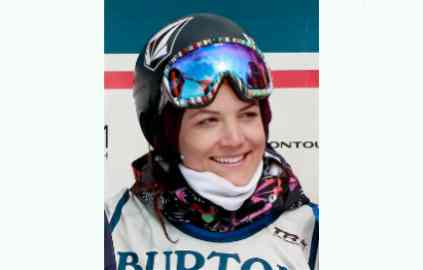
Elena Hight (South Lake Tahoe) rode away with the silver and 16-year-old rookie Arielle Gold (Steamboat Springs, Colo.) landed on the podium with bronze.

Elena Hight

Elena Hight

Clark’s win comes after dominating the Burton U.S. Open at Vail earlier this month. Clark has now won double X Games gold along with her win in Aspen in February.

Hight’s run: Method, frontside 720 Japan-grab, cab 720, backside 900 mute-grab.

Hannah Teter (South Lake Tahoe) just missed the podium, finishing fourth.

Gretchen Bleiler (Aspen) placed fifth, a great result for her this season following a serious eye injury.

Heavy snow, poor visibility, swirling winds and accumulating snow in the base of the pipe created an all-around tough competition.

The final consisted of 100 percent American athletes due to injuries and scheduling conflicts with other international riders.


Snippets about Lake Tahoe

barton• Barton Memorial Hospital’s Skilled Nursing Facility recently received the highest rating of five-stars from U.S. News & World Report in the publication’s best nursing homes list for 2013.

• California Tahoe Conservancy is putting on a two-day workshop about the Upper Truckee River restoration project. Click on the flyer for more info about the May 2-3 event.

• Have you voted for Corral Trail on the Bell Built Grant Facebook page? Voting ends April 12.

• Brendan McGill of the Hitchcock restaurant in Bainbridge Island, Wash., is Food + Wine magazine’s People’s Best New Chef. The California winner is Matthew Accarrino of SPQR in San Francisco. Truckee’s Jacob Burton of Stella’s was a contender.

• The 81st Annual Far West Ski Association convention is June 6-9 at the Grand Sierra Resort in Reno.