California timber industry buzzing post-recession

By Shan Li, Los Angeles Times

Even before dawn breaks, workers at the lumberyard in Lynwood were bustling around, getting a move on the day. Men in yellow safety vests drove flatbed trucks stacked to the brim with planks of wood. Others were buzzing around in forklifts, ferrying more boards.

It’s a scene that had John Cencak smiling in satisfaction and relief. After years of anxiously waiting for the economy to rebound, the vice president of Jones Wholesale Lumber Cos. was seeing an upswing.

“You see this new truck?” Cencak said as he pointed to a glossy Freightliner truck, its white and green paint gleaming even in the dark. “We just bought three of them. That’s a half-million-dollar investment. It’s all part of the economic recovery.”

Timber from the South Shore Fuel Reduction Project may be more valuable this season. Photo/LTN file

Timber from the South Shore Fuel Reduction Project may be more valuable this season. Photo/LTN file

Thanks to a housing rebound in which new homes and apartments are being built, California’s timber industry is slowly on the mend after being devastated during the economic downturn.

Sawmills that cut timber into boards are reopening and hiring again. Truck companies that haul that wood out of state are revving up. Lumber prices have soared more than 40 percent over last year.

“The last few years have been a slow recovery from the recession for wood products,” said Phil Tedder, a forestry consultant at Resource Economics. “The main consumer was new housing, and that obviously wasn’t very good. But now things are picking up.”

Sierra Pacific Industries, one of the biggest timber companies in the country, has hired 140 lumberjacks, machinists and electricians for its reopened sawmill in Sonora after closing it in 2009 when the housing market crashed. An additional 26 jobs were added at a mill in Chinese Camp.

“It’s a combination of new housing and repairs and remodels,” said Mark Pawlicki, spokesman for the Anderson company, which operates 11 mills in the state. “The low interest rates for housing are helping. We are seeing an uptick in demand for windows, a lot of which go into remodels of homes.”

Jones Wholesale’s sales plummeted 50 percent in 2009 compared with three years earlier. It laid off nearly 20 workers — the first layoffs in its 89-year history. It also cut back on contractors that provided cleaning and security work.

“During the recession, we said we had to work twice as hard and make half as much,” Cencak said.

But things appeared to be turning around as the company’s 17-acre lot hummed with activity.

Workers hustled through the yard and swarmed around tall stacks of wood, which are unloaded, cut, stored and then reloaded onto trucks to be sent throughout the Southland and beyond California. The brightening outlook prompted the company to hire 10 workers last year. Now two or three times a week, trucks carry lumber all the way to Las Vegas, up from once a month in 2009. Workers have received promotions and long-overdue pay raises.

Cencak said sales in 2013 are projected to be 15 percent to 18 percent above last year’s, thanks in part to banks’ greater willingness to extend loans to businesses and home buyers.

“Everyone is gearing up,” he said. “The banks didn’t want to touch the industry for a while. Now they are picking up our calls.”

That’s welcome news for workers like Edgar Herrera, 33, who expects to be hired soon as an assistant dispatcher after working there four months through a temporary agency. After more than a year of unemployment during the recession, the Bellflower resident said he’s glad just to be getting a job, much more one that comes with health insurance.

“It’s really a big stress off your back to finally land something solid,” Herrera said. “After I had to extend unemployment the first time, I was really worried.”

But not everyone is betting on a cheery future.

Logging companies complain of environmental regulations that they say strangle the industry in California and contributed to a decades-long decline. Some gripe that new legislation signed into law by Gov. Jerry Brown last year — which was designed to protect the state’s timber companies by restricting legal damages for wildfires — won’t stop the slow decline of an old Golden State industry.

Over the last decade, Berry’s Sawmill and Lumberyard in Cazadero has laid off nearly 75 percent of its workforce, said general manager Bruce Berry. A recent uptick in sales has yet to prove sustainable.

“There is some positive stuff happening,” Berry said. “We’ll see if it continues.”

Experts say the recession has forced out weak players in California timber and encouraged surviving businesses to stay lean and increase efficiency, which will benefit them in the long run. Sierra Pacific, for example, has no plans to reopen two of the three mills it had closed. But it has worked on installing high-tech machinery that reduces waste.

Jones Wholesale also plans to make upgrades.

Cencak pointed to deep cracks in the floor near its sawmill. He said the company hasn’t repaved its yards since 2007, and that’s what concrete looks like after years of pounding by trucks, piles of lumber and heavy work boots every day. But now he is thinking about putting some money into smoothing over its potholes.

“Paving another 5 acres — that’s what a recovery looks like,” Cencak said.



Ski report: Conditions are good

ski report logoA great spring day to enjoy winter conditions.

Here is the March 22 ski report.

— Curtis Fong


Report: El Dorado County one of the healthiest in state

edcA national report ranked El Dorado County the sixth healthiest county in California.

The University of Wisconsin’s Population Health Institute and the Robert Wood Johnson Foundation published the report.

Counties were ranked on key factors that affect health such as: smoking, obesity, binge drinking, access to primary health care providers, rates of high school graduation, rates of violent crime, air pollution levels, liquor store density, unemployment rates and number of children living in poverty. Researchers used data from 2005-11.


Funding issues force CTC to scale back projects

By Kathryn Reed

Maintaining its nearly 5,000 properties and paying the people to do so are the priorities of the California Tahoe Conservancy in this era of austerity. New projects, while important, are farther down the priority list.

This was the bleak news delivered to the board on Thursday at its meeting at Lake Tahoe Community College.

That is not to say the Conservancy won’t be funding projects – just not to the level or at the frequency as some in the Lake Tahoe Basin may have gotten accustomed to.

CTC logoAlmost $2.3 million has been set aside to buy the Alta Mira building and Johnson Meadow in South Lake Tahoe. The building is at the far end of what is to be the second phase of Lakeview Commons. Demolishing the structure would open a view to the lake and tie the area into the Commons that was completed last year.

About the same amount of cash is being put toward the Sustainable Communities Investment Program.

The CTC’s Kevin Prior, who went over the numbers with the board, said this money would be used to acquire coverage outside town centers, tourist accommodation units and commercial floor area. (The Tahoe Regional Planning Agency has made a commodity out of hotel rooms and commercial square footage.)

Just more than $900,000 is set aside for the South Tahoe Greenway Bike Trail that one day will go from Meyers to Stateline. The Homewood and Dollar Creek bike trails have $1 million in CTC funding.

The CTC has budgeted $1.4 million for restoration of the Upper Truckee River Marsh. That project will be before the Tahoe Regional Planning Agency board on the afternoon of March 27.

The capital outlay budget is expected to drop to less than $12 million for fiscal year 2014-15. It’s just more than double that this fiscal year.

“We can no longer rely on a percentage of bond sales,” Executive Director Patrick Wright said.

In the past, bonds were the primary source of the Conservancy’s budget. And while a water bond is still being talked about for the 2014 ballot, the original $100 million earmarked for Lake Tahoe is likely to be dramatically diminished or not exist at all. That is one of the warnings Wright delivered March 21.

Plus, a poll that came out this week shows voters are growing less enamored with the idea of a water bond.

“We hope by 2016 one or more new funding sources will come through,” Wright said.

The CTC divides its pot of money into two main categories – support and capital. The former deals with salaries, maintaining its assets – this includes fuel reduction projects, and the day-to-day operations of the agency. The capital budget is for acquisition of property and upgrading those parcels.

The support budget, which for 2013-14 is slated to be just less than $5 million, comes largely from license plate revenues. The CTC gets money from the Tahoe specialty plate as well as the environmental license plate fund.

A marketing campaign has the goal of increasing the $1.2 million Tahoe plate revenue by 10 percent in the next year. Instead of going after individuals, the CTC wants to get companies to buy into the program. About 30,000 vehicles in the state have the Tahoe plate.

The Conservancy also recognizes it has not done a great job in educating people about how the bike trails and other projects are the result of the those new and annual renewals of the specialty plate.


TRPA announces Best in the Basin winners

Lakeview Commons continues to win awards. Photo/LTN June 2011

Lakeview Commons in South Lake Tahoe continues to win awards. Photo/LTN June 2011

The Tahoe Regional Planning Agency will recognize recipients of the 2012 Best in the Basin Awards at its March 27 Governing Board meeting beginning at 9:30am in Stateline.

This is the 23rd year TRPA’s Best in the Basin awards program has recognized projects that demonstrate exceptional planning, design, and compatibility with the Lake Tahoe environment. Local professionals in the fields of landscaping, planning, engineering, water quality, and resource management judged each category.

The 2012 Best in the Basin project winners are:

Stormwater BMPs

El Dorado County, Donaldo Palaroan CE, for the BMP Retrofit of the Shakori Drive Maintenance Yard, 1121 Shakori Drive, Meyers.

Residential Remodel and Green Building Project

David Reichel and Katharine Miller for the Ottawa Drive Garage and Guest House Project, 1330 Ottawa Drive, Meyers.

Residential Rebuild Project

Bill and Sue Parker for the Parker Family Retreat, 6900 West Lake Blvd., Tahoma.

Commercial Project

Alan and Martha Bryan for the Cedar Glen Lodge Remodel, 6589 North Lake Blvd., Tahoe Vista.

Restoration Project

Incline Village General Improvement District, Brad Johnson PE, for the Third Creek Restoration Project Final Phase, between Highway 28 and the lake, Incline Village.

Restoration Project, Honorable Mention

Nevada Division of State Lands, Elyse Randles Land Agent, for the Burgundy Hills Soil and Stream Environment Zone Restoration Project, Country Club Drive, Incline Village.

Erosion Control Project

Washoe County, Kris Klein, and Nevada Tahoe Conservation District, Megan Kelley PE, for the Hybrid BMP Project, Village Boulevard between Ace Court and Golfers Pass Road, Incline Village.

Public Service Project

Incline Village General Improvement District, Brad Johnson PE, for the Diamond Peak Skier Services Building, 1210 Ski Way, Incline Village.

Forest Fuel Reduction Project

Meeks Bay Fire Protection District and Area Homeowners, Come Again Meadow Fuel Reduction and Meadow Restoration Project, 3 Ring Road, Rubicon Bay.

Forest Fuel Reduction Project Honorable Mention

Tahoe Douglas Fire Protection District and Logan Creek Community Homeowners, Logan Creek Community Defensible Space Project, Glenbrook.

Recreation Project

Tahoe City Public Utility District for the Lakeside Trail, a 1-mile segment of trail connecting the “64 acres” to the Tahoe State Recreation Area, Tahoe City.

Shorezone Project

South Lake Tahoe, Hillary Roverud, and California Tahoe Conservancy, Bruce Eisner, for the El Dorado Beach Improvement Project at Lakeview Commons, Lake Tahoe Boulevard and Lakeview Avenue, South Lake Tahoe.

Other/Mixed-Use Project

Tahoe Yacht Harbor LLC, Jim Phelan Manager, for the Tahoe City Marina Master Plan, 700 North Lake Blvd., Tahoe City.

—-

For 2013, the Best in the Basin nomination period will run from Jan. 1 to Dec. 31 for projects that are completed between Oct. 12, 2012 and Dec. 31, 2013.

The updated nomination period will allow the judging panel to attend project tours the following spring or early summer when snow has receded and vegetation is at its best, rather than dodging changing weather conditions and visiting winterized sites in late October or November as has been the practice.

For additional information, call Jeff Cowen at (775) 589.5278 or email to jcowen@trpa.org.


Letter: Ski patrol volunteers indoors

To the community,

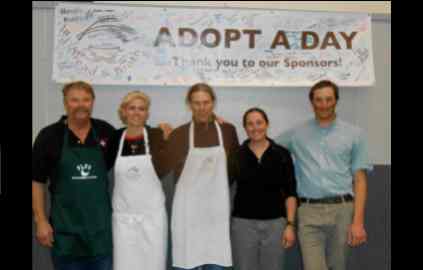
On March 4, members of the Heavenly Ski Patrol put aside their skis and put on Bread & Broth aprons to help feed local residents at the evening meal served at St. Theresa Church Grace Hall. The members of Heavenly Ski Patrol donated $250 to host the B&B Adopt A Day of Nourishment and five of their members volunteered to spend three hours of their personal time to work side by with the B&B volunteer crew.

Heavenly Ski Patrol, from left,   Left to Right - Tom Burkart, Kristin Burghard, Chip Morrill, Sarah Lowman, Andy Johnson, at Bread & Broth. Photo/Provided

Heavenly Ski Patrol, from left, Tom Burkart, Kristin Burghard, Chip Morrill, Sarah Lowman, Andy Johnson, at Bread & Broth. Photo/Provided

Heavenly Ski Patrol members work hard on Heavenly’s slopes to ensure guests have a safe and fun skiing/boarding experience and the Ski Patrol volunteer AAD sponsor crew which consisted of Sarah Lowman, Kristin Burghard, Tom Burkart, Andy Johnson and Chip Morrill put in the same effort at their B&B dinner. They helped with the “give away” bags, served food to the dinner’s guests, manned the dishwasher and helped with the dinner’s cleanup. The B&B volunteers were very impressed with and enjoyed working with the Ski Patrol volunteers.

Bread & Broth salutes the Heavenly Ski Patrol for their great work ethic and their concern for the welfare of the less fortunate of our community. Their donation of time and money to the B&B program is greatly appreciated.

If you would like to join Bread & Broth in feeding the South Shore’s hungry, please contact me at (530) 542.2876 or carolsgerard@aol.com.

Carol Gerard, Bread & Broth


Poll: Californians’ support for water bond sinking

By Bettina Boxall, Los Angeles Times

Judging by a new statewide poll, California lawmakers were smart to pull an $11.1-billion water bond off last fall’s ballot.

The Legislature has twice postponed the bond measure’s day at the polls, worried that it would go down to defeat at a time of high unemployment and budget woes. Though the economy and budget problems have eased a bit, support for the bond has continued to decline.

A poll released Wednesday by the Public Policy Institute of California found that 42 percent of likely voters favored the funding measure, compared with 51 percent of likely voters a year ago who said they would vote for it.

The water bond would bring money to Lake Tahoe. Photo/LTN file

The water bond would bring money to Lake Tahoe. Photo/LTN file

Among those polled, 44 percent said they supported the bond — now headed for the November 2014 ballot — and 48 percent were opposed. Seven percent were undecided.

Pollsters found that the bond fell short of majority support in all age, education, gender and income groups. Opposition was greatest in the Central Valley and among Republicans.

But overall support jumped to majority approval when respondents were asked how they would vote on a smaller bond.

Passed in 2009, the funding bill was immediately criticized as too big and laden with pork. The $11 billion would pay for projects around the state, including new storage, watershed improvements, recycling and restoration of the Sacramento-San Joaquin delta.

The poll results were based on a survey of 1,703 adults, who were interviewed in English or Spanish on land-line telephones or cellphones.


Volunteer at U.S. Freestyle Championships at Heavenly

Ready to get up close and personal with today’s best freeskiers?

Then volunteer for the March 29-31 U.S. Freestyle Championships being hosted by Heavenly Mountain Resort. On snow and off snow help is needed. Volunteers are needed in mogul course and big air jump maintenance, banner set-up, food and beverage runners, registration, zero waste warriors for the recycling team, and more positions. No experience needed.

For more information or to sign up, contact Tiffany at (530) 542.5180.

The competition on the California side of the resort includes moguls, aerials and dual moguls.

Sho Kashima returns to home mountain the last weekend of March. Photo/Provided

Sho Kashima returns to Heavenly — his home mountain — the last weekend of March. Photo/Provided

Leading the U.S. team are Olympic and world champion Hannah Kearney (Norwich, Vt.) and Stateline’s Sho Kashima. Kashima will be competing in the moguls event on that Friday.

The weekend hits a high note on that Saturday with live music by Liquid Blue followed by fireworks. Event admission is free, and spectator seating will be available on a limited basis.

Heavenly will also host the U.S. Championships following the Olympics in 2014.


Lamb becoming popular with locavores

By Debbie Arrington, Sacramento Bee

It’s lean, local and literally a different animal. Today’s lamb has become the locavore’s sustainable meat of choice, grass-fed and sourced from family farms.

“It’s quintessentially celebratory,” said butcher Ryan Harris of Napa’s The Fatted Calf. “It has so much flavor. If you get lamb from the right place, there’s nothing like it.”

Lamb is a popular Easter meal. Photo/LTN

Lamb is a popular Easter meal. Photo/LTN

And California is lamb central, producing more of this flavorful meat than any other state. That’s good news this spring holiday season, when lamb is a traditional favorite for Easter and Passover.

“Lamb sales always spike in spring, at least double the rest of the year,” said Megan Wortman, executive director of the American Lamb Board.

Local lamb is now available year-round, particularly in California. More than 4,000 farmers raised about 600,000 sheep and lambs in 2012. Births are timed to keep a steady supply.

“Just five or six years ago, you could not find lamb consistently at the grocery store,” Wortman said.

Overall, U.S. lamb consumption remained flat through the recession, averaging less than one pound per person a year. By comparison, Americans eat about 270 pounds of beef a year. In recent years, chefs and consumers have switched from imported New Zealand lamb to local sources. American lamb now accounts for about half of total U.S. sales.

“That’s really exciting for us,” Wortman said. “The meat hasn’t traveled 10,000 miles. In Northern California, local lamb is everywhere.”

Almost a century after the U.S. government waged an “Eat No Lamb” campaign to increase wool production, lamb still battles bad perception.

One issue was taste. Today’s lamb tastes better. As demand for wool went down, many ranchers switched to meat breeds with milder flavor.

Overcooked, any lamb can be tough or stringy. Its outside layer of hard fat burns at a lower temperature than beef and can smell gamey. Lamb from older animals can taste gamey, too.

“Someone can have one bad experience and never come back,” Wortman said. “That’s why we recommend to always cook lamb medium-rare. Pull it from the oven at 135 degrees and let it rest 10 minutes. It will be perfect every time.”

Another issue: price.

“People think it’s expensive; rack of lamb (the prime rib of lamb) is the highest-priced menu item,” Wortman said. “But there are many other flavorful cuts.”

For example, Harris loves lamb neck. “It has a lot of meat, bone and fat, which means a lot of flavor. It’s a braising cut and really good.”

The Fatted Calf sells McCormack Ranch lamb raised in Rio Vista. “It’s always in high demand,” Harris said. “It’s really phenomenal lamb.”

Karin and Keith Sinclair are among those local lamb farmers who sell directly to the public. At their Penryn ranch, the Sinclairs started raising sheep in 1998 when their daughter Kristina turned 9 and joined 4-H; a ewe was her first project.

Now, the Sinclairs have about 100 ewes, 130 lambs and counting. They raise Dorset, Hampshire and Cheviot sheep among other breeds.

“In California, we have mild weather and good grasses,” said Karin Sinclair, president of the Gold Country Sheep Producers Association. “That means very mild-flavored lamb.”

Sinclair enjoys the less expensive cuts such as kebabs, shanks and sirloin roasts.

“I think a lot of people are intimidated by lamb,” she said. “They think it’s pricey and needs expensive seasoning. I marinate (roast or kebabs) in apple juice, rosemary and garlic overnight in a Ziplock bag. It’s awesome on the grill. Really, nothing is simpler.”

Lamb 101

Nutrition: Lamb is very similar to lean beef in its profile – often with fewer calories. Grass-fed lamb tends to have less fat than its grain-fed meat counterparts such as beef or pork.

The leanest lamb cuts are leg, sirloin and shank, with 2 to 3 grams of saturated fat per 3-ounce serving. Containing the same protein as beef (23 grams), 3 ounces of lamb averages 160 calories, almost 30 less than 90 percent lean hamburger. But a quarter-pound ground lamb patty has about 20 calories more than its beef counterpart.

Besides protein, lamb also is a good source of vitamin B12, niacin, selenium (an antioxidant) and zinc.

Selection: Lamb has less marbling than beef, which makes for lean meat. A 6-pound leg (which is always a back leg with some sirloin attached) will serve 6 to 8 people.

Shoulder cuts – such as arm or blade chops or shoulder roasts – are the No. 1 retail cuts, according to the American Lamb Board. Shanks come from front legs.

Rack of lamb – the tenderest and most expensive cut – is the prime rib of lamb. One rack contains seven to eight ribs. “Frenching” means the meat on the rack was trimmed back to expose the rib bones. A crown roast is two racks, trimmed and tied together.

Younger lamb has milder flavor. Look for fresh pink or cherry red; it denotes a younger animal (under 1 year old). Baby lamb looks pale pink, like veal. Dark purplish red meat usually means the lamb was closer to 1 year when it went to market. By USDA regulation, lamb must be younger than 1 year.

Storage: Cook or freeze ground lamb or smaller cuts within three days of purchase; roasts will keep up to five days. To freeze, wrap tightly in plastic wrap. Use within three months for ground lamb, six months for other cuts. Cooked meat will keep three days in the refrigerator.

Always defrost lamb in the refrigerator and not at room temperature. It keeps the moisture in the meat.

Preparation: Use lamb like beef – roast, grill, fry, braise. Because of its lower fat content, lamb tends to cook more quickly than beef. Be careful not to overcook; past medium, lamb gets tough. Keep it pink.

For roasts or leg of lamb, roast at 325 degrees until the meat reaches an internal temperature of 135 degrees. That’s about 15-20 minutes a pound for bone-in roasts; 20-25 minutes a pound for boneless. Remove from oven and let rest 10 minutes. The internal temperature will reach 145 degrees.


Sketch of S. Tahoe robbery suspect released

Police officers still have not caught the man who on March 7 robbed the El Dorado Savings Bank at 3443 Lake Tahoe Blvd. in South Lake Tahoe.

bank robbery suspectBut they have released a sketch of the suspect. He is described as white, between 22- and 28-years-old, 5-foot-11inches, thin, wearing a dark colored sweat shirt with the hood up. He wore a letterman-style jacket over the hoodie and had ski goggles on.

Anyone with information is asked to call the police at (530) 542.6100.

– Lake Tahoe News staff report