Future of Tahoe City Golf Course being discussed

The four partners who purchased the Tahoe City Golf Course last year are gathering public input on concepts and designs about current and future uses.

There will be two open houses — March 26 from 6 to 8pm and March 27 from noon to 3pm — at the Golf Course Club House, 251 North Lake Blvd. in Tahoe City for people to voice their opinions.

The meetings are hosted by North Lake Tahoe Resort Association, Tahoe City Public Utility District, Truckee-Tahoe Airport District, and Placer County.

The four agencies purchased the 46-acre golf course to keep local community control of the popular amenity in the heart of Tahoe City and to enhance opportunities for open space, economic vitality, community character, recreation, conservation and safety.

The Tahoe City Golf Course is currently operated by Tahoe City Public Utility District under a five-year lease to Duncan Golf Management.


Ski report: Spring is in the air

ski report logoThe slopes are turning to spring conditions with areas of firm packed snow softening with the daytime temperatures.

Here is the March 24 ski report.

— Curtis Fong


Then and now: Evolution of South Shore lodge

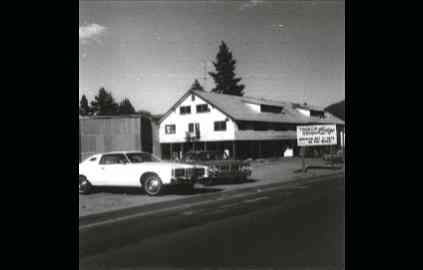
oldStarting in the 1920s as Connolley’s Bijou at the South Shore, it evolved from tent cabins and beach to include this large white frame building between Highway 50 and the shoreline for lodging, dining, and recreation.

Before being razed in 1973, the building had a varied history, including Connolly’s Pancake House (note changed spelling) and lastly, Nel’s Tahoe Supply.

The demolition sign in this photo announces: “Timbercove Lodge, opening October 1st, 1973, on the Beach.”

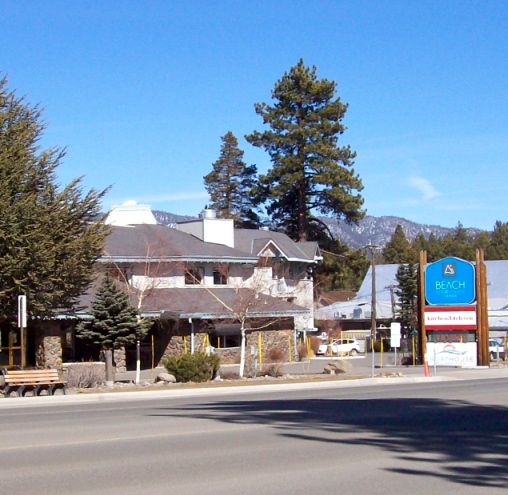
newsThis 2013 photo at the same location indicates the recent rebranding as Beach Retreat & Lodge at Tahoe. I want to think those are the same two historic trees (behind) in both photos.

Connolly Beach still exists and is publicly operated by the city of South Lake Tahoe Parks and Recreation Department.

— Bill Kingman


Royal Gorge ready to return to its glory days

By Kathryn Reed

NORDEN – First impression – a muddy parking lot and tired looking lodge – is not the lasting image of Royal Gorge.

Endless open terrain. Rolling hills. Pines scratching the sky that is as blue as Lake Tahoe. Sun beaming down to where short-sleeves are all that’s needed. A choice of skiing in tracks or skating outside of them. A bit of exhaustion from not being accustomed to this much skiing.

Those are the lingering memories of Royal Gorge.

At 6,000 acres, it is the largest cross country ski area in the United States. With routes for all ability levels, it is seemingly an endless network of trails near Donner Summit. Some are nestled among the pines, others take skiers to otherwise hidden alpine lakes and then there is the 4,414-foot deep Royal Gorge that is due east of Summit Station – the starting point.

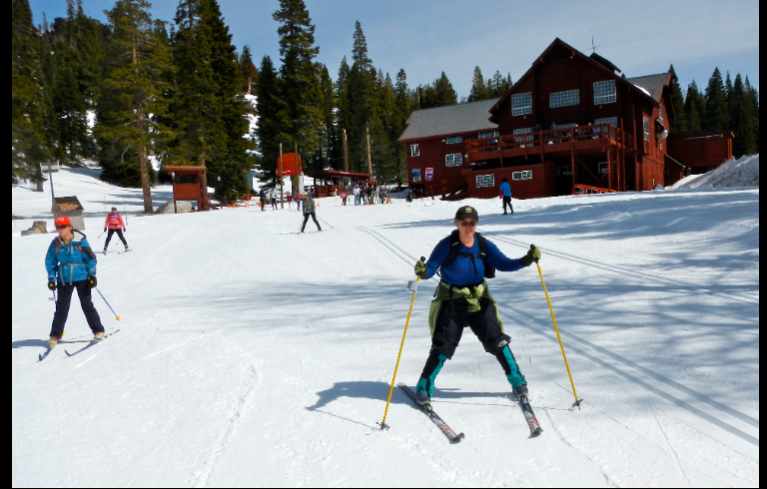
Trails go in nearly every direction from the Summit Station Lodge at Royal Gorge. Photos/Kathryn Reed

Trails go in nearly every direction from the Summit Station Lodge at Royal Gorge. Photos/Kathryn Reed

Royal Gorge had fallen on rough times. Owners changed. Money was scarce. Development proposed. The Wilderness Lodge was completely destroyed by fire in 2004 and never rebuilt.

Then came a massive fund-raising campaign led by the Truckee Donner Land Trust. In December, the property changed hands again – this time with the trust taking over.

Six leases are involved in the whole trail system, with the trust having control of 3,000 – or half – of the acres. There are 200 kilometers of groomed trails, with some loops allowing dogs.

It cost $11.2 million for the trust to buy Royal Gorge. Armed Forces Bank had taken over when the previous owners defaulted. With about $13 million being raised, it means there is money leftover for improvements.

And while $700,000 was spent at the start of the season on wayfinding signs, grooming machines and cleaning up the lodge, more improvements are in the works.

They are needed. At least one warming hut looks unstable. Signs are broken off. Employees of the base lodge couldn’t say if the upstairs bar would open any time soon.

The amenities at Royal Gorge are anything but royal. But that is destined to change as a recreation and forest management plans are created.

Sugar Bowl, which by vehicle is just down the road, but on a map is the Nordic center’s next-door neighbor, is operating the cross country area. And talks are under way for the downhill company to take over operation of the lodge.

Royal Gorge has never been available to the public for summer use. That is about to change.

“We could do cross country biking. We are looking at a mix (of ideas),” John Monson, spokesman for Sugar Bowl, told Lake Tahoe News. A network of bike trails created mostly by locals already exists.

When the Crows Peak lift at Sugar Bowl goes in – which could be this summer – it will “bridge the gap between Sugar Bowl and Royal Gorge,” Monson said.

Today it is possible to ski across the Van Norden meadow to get from one ski area to the other.

Also new this season, Truckee has added a bus stop at Summit Station at Royal Gorge so people don’t have to drive.

ngg_shortcode_0_placeholder (Click on photos to enlarge.)


Reno art director to give talk in Incline

William L. Fox, director of the Center for Art + Environment at the Nevada Museum of Art in Reno, will present an illustrated journey of art made during the Anthropocene, an informal geologic chronological term that serves to mark the evidence and extent of human activities that have had a significant global impact on the Earth’s ecosystems.

The artwork ranges from landscape painting to earthworks and beyond.

William L. Fox

William L. Fox

This is part of UC Davis Tahoe Environmental Research Center’s monthly lecture series.  The event is April 18 at 5:30pm.

Fox has variously been called an art critic, science writer, and cultural geographer. He has published 15 books on cognition and landscape, numerous essays in art monographs, magazines and journals, and fifteen collections of poetry. Fox has researched and written books set in the Antarctic, the Arctic, and the deserts of Chile, Australia, and the United States. He is a fellow of both the Royal Geographical Society and Explorers Club, and recipient of fellowships from the Guggenheim Foundation, National Endowment for the Humanities, and National Science Foundation. He has been a visiting scholar at the Getty Research Institute, the Australian National University, and National Museum of Australia.

TERC is at 291 Country Club Drive, Incline Village. The event costs $5.

For additional information, contact Heather Segale at (775) 881.7562 or hmsegale@ucdavis.edu.


Mediator picked to resolve transportation lawsuit

Mark Shinderman with Milbank Tweed, Hadley & MCloy LLP in Los Angeles has been selected to be the mediator in the MV Transporation-STATA case.

In January, U.S. Bankruptcy Court Judge Gregg Zive sent the case to mediation.

Fairfield-based MV Transportation used to run the South Shore bus system known as BlueGo. STATA – South Tahoe Area Transit Authority – was the overseer of the transit company. STATA was made up of public and private entities that had financially contributed to the BlueGo bus system. STATA filed for bankruptcy; MV in 2010 filed a complaint to be paid.

The cost of the mediator is $25,000. Half of that will be paid by the defendants. It will come to about $1,000 per entity. The other half will be paid by the liquidating agent, also known as the trustee for STATA.

While the mediation dates have not been set, speculation is the parties will convene this summer.

— Lake Tahoe News staff report


Editorial: Nevada is wrong in busing mentally ill to California

Publisher’s note: This editorial is from the March 19, 2013, Sacramento Bee.

Nevada state mental health officials acknowledge that they bought bus ticket tickets for at least 99 psychiatric patients and sent them to California since last July.

They acknowledge one mistake, sending James Flavy Coy Brown, a 48-year-old man who had been housed in Rawson-Neal Psychiatric Hospital in Las Vegas, on a bus to Sacramento with a three-day supply of the antipsychotic medication thorazine and a few bottles of Ensure.

For the rest, they suggest, the practice is humane. They say their intent is to try to reunite mentally ill people with their family and friends. They say they’re adhering to the wishes of patients who want to leave Nevada for California.

In reality, they are abdicating their responsibility to care for vulnerable people. They are engaging in Greyhound therapy and they are dumping patients on California.

In a hearing in Carson City last week, Nevada health officials acknowledge sending 99 patients to California. That doesn’t count patients they may have sent to other states. Given California’s experience, authorities in Arizona, Utah and other neighboring states ought to be aware of Nevada’s proclivities.

Senate President Pro Tem Darrell Steinberg called on U.S. Health and Human Services Secretary Kathleen Sebelius to investigate Nevada’s dumping of James Brown. Now that Nevada admits busing 98 other human beings to California, Sebelius should expand her inquiry.

To understand the magnitude of what Nevada admitted, consider that a top mental health official in Arizona told the Bee in an email that she could not recall any instance in which that state had bused a psychiatric patient to California.

And in a recent six-month period, Oregon returned only one psychiatric patient to California, said a spokeswoman for the Oregon state hospital. That individual’s family paid transportation costs, indicating that the person had a place to sleep upon his or her arrival back home.

As the Nevada division of mental health policy states, “it shall be the policy … to assist patients who may be transported back to their home community in order to provide more appropriate care and to remove the burden of treatment from the state of Nevada.”

Most mental health care workers view their work as a calling and an honor. The Silver State, by contrasts, believes it is important to remove the “burden of treatment” by cutting funding for mental health care and busing seriously mentally ill individuals out state.

Nevada officials seek to justify their use of Greyhound buses by claiming they have a large number of transients. No doubt that is true. But California attracts far more wandering souls than does Nevada.

To be sure, there have been outrageous instances of patient dumping in California. But mental health officials here find virtually no instances in which they bus patients to other states. When they do, their policy is to make sure that someone is at the other end to meet and care for the individual.

Nevada authorities cite patient privacy laws to support their claim that they can provide no details about how the individuals fare once they arrive in California. Our guess is that Nevada authorities have no clue what becomes of the individuals they place on buses.


Ligety caps stellar season with win at Squaw

By USSA

OLYMPIC VALLEY — Triple World Champion Ted Ligety (Park City) capped a career best season Saturday with massive 1.48 second wire-to-wire slalom victory to close men’s competition at the Nature Valley U.S. Alpine Championships in Squaw Valley.

Ted Ligety

Ted Ligety

A week ago, Ligety won the final Audi FIS Alpine World Cup giant slalom of the season to add to his record season that resulted in a fourth World Cup giant slalom title. It was his seventh U.S. Championship gold and first since 2007 when he won both the giant slalom and combined titles.

Earlier in the season Ligety won three gold medals at the FIS Alpine World Ski Championships to become the first man since Jean Claude Killy 45 years ago in 1968 to win three or more gold in one World Championships.

Will Brandenburg (Spokane) nabbed silver to clinch the combined title with 2011 slalom champion Colby Granstrom (Lake Stevens, Wash.) in bronze.

Brandenburg was also crowned the U.S. combined champion which pairs the fastest combined time from both super G and slalom. Super G podium finisher Mark Engel (Truckee) and Robert Cone (Killington, Vt.) earned combined silver and bronze respectively.


South Shore Polar Plunge

Brave “swimmers” plunged into the bitter cold water of Lake Tahoe at Zephyr Cove on March 23 in the annual Polar Plunge to raise money for Special Olympics. The outside and water temps were about the same — 41 degrees. This video shot by Bill Kingman shows the fifth of five groups of participants.


Fresh eggs become couple’s calling

By Dan McGee, Northern Nevada Business Weekly

A dachshund got Paul and Joy Schouweiler of Hadji Paul’s Chicken and Feed into the chicken business.

Paul Schouweiler’s wife, Joy Schouweiler, who breeds dachshunds, planned to trade a puppy for chickens in late 2007. Thinking she would get 40 chickens in exchange for the puppy, she got 100.

“I thought, ‘What am I going to do with all these eggs?’ So I went and got certified to sell them to the Great Basin Community Food Co-Op.”

Paul and Joy Schouweiler

Paul and Joy Schouweiler

Soon afterward, her husband headed to Iraq as a military contractor. Back on the small family farm in Palomino Valley north of Spanish Springs, Joy Schouweiler accumulated chickens.

Says Paul Schouweiler, “Over the next two years we got about 300 more chickens. When I came back in 2010 that’s when we had 700 chickens, became an LLC and got a business license.”

Choosing a name — odd as Hadji Paul’s Chicken and Feed sounds — was easy.

While he was in Iraq, Schouweiler was nicknamed “hadji,” an Arabic sign of respect for anyone older than 50. He kept the honorific when he came home.

As egg sales grew, businesses sought them out.

“Actually, Whole Foods came to us wanting to get more local people into their store,” Schouweiler says. “They came out to the farm, checked everything as they want to make sure you’re legitimate, how you’re treating your animals.”

Demand spurred by word-of-mouth kept growing as they participated in several farmer’s markets. They use their website, as well a Facebook presence, to keep consumers informed where they’ll be selling eggs.

They also have several commercial customers such as Campo, which orders 100 dozen eggs a week, and the 4th Street Bistro, which uses four dozen a week. The list also includes Homage Bakery, Buenos Grill and Pathways at UNR.

In the winter, when hens lay fewer eggs, the Schouweilers restrict orders for retail customers so they can fill their commercial orders.

A larger flock will compensate.

“We could sell three times as many,” Schouweiler says. “Right now we are trying to expand the business to bring our chickens to over 2,000 laying hens.”

All the hens, who have a prime egg-production span of two years, live in predator-proof coops — allowing them room to run — with a shelter that keeps them out of the elements.

“The biggest challenge is the cost of the feed. As everything goes up, you’re trying to keep your price at a competitive level and reasonable for our customers that have been with us for years. That’s kind of tough,” Schouweiler says. “Since we started doing this the feed has gone up 100 percent in five years.”

The rising demand for organic eggs, meanwhile, requires a special and costly feed.

Chickens eat about anything, and the Schouweilers have plans to build a greenhouse for vegetables to help feed the flock. Three restaurants in the area also have show interest in purchasing vegetables produced from the greenhouse.

The couple is working with the Nevada Small Business Development Center at UNR to develop plans for expansion — and plans to ensure the business survives after they retire.

“We’re already hadjis,” says Joy Schouweiler with a laugh.