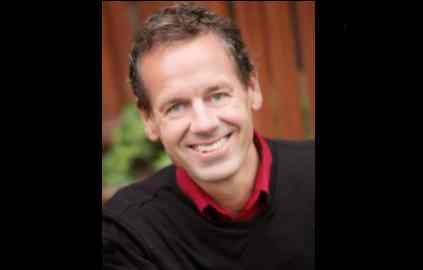
Poet to give talk in Incline

Laura McCollough is the author of four books of poetry. Her fifth book “Rigger Death & Hoist Another” is forthcoming from Lawrence Press.

She founded the Creative Writing program and Visiting Writers series at Brookdale Community College.

McCollough will give a free public reading March 29 from 7-9pm in TCES, room 139-141, on the Sierra Nevada College campus in Incline Village as part of the Writers in the Woods Series.

McCollough will also conduct a writing workshop (free to SNC students; $50 for community members) from 9am-noon on March 30. Click here to register for the workshop.


Boarding for Breast Cancer at Sugar Bowl

Sugar Bowl & Royal Gorge are teaming up with B4BC (Boarding for Breast Cancer) for the Shred the Love event on March 30.

The resort will be hosting an open rail jam in the Switching Yard Terrain Park, with all entry fees from the event benefiting the foundation. A silent auction, sponsor village, raffles and live music will be featured throughout the day.

This year’s event will also include a cross country ski and yoga retreat at Royal Gorge on April 1.

The pre-party is March 29 at the Pastime Club in downtown Truckee at 8pm.

The boarding event is $25 on Saturday. Register between 8-10am at the Mt. Judah Lodge. The rail jam is from 11am-1:30pm.


Report: California community college enrollment plunges

By Katy Murphy, San Jose Mercury News

California’s community colleges – the nation’s largest public higher education system – have lost so many teachers and classes that students are being driven away.

With the number of course sections down systemwide by as much as 20 percent since 2008, enrollment rates have hit their lowest point in two decades, concludes a Public Policy Institute of California report released Monday.

The community colleges’ ideal of open access for all, still dear to many Californians, barely resembles the reality on campuses today after years of budget cuts.

Students take a culinary class at Lake Tahoe Community College. Photo/LTN file

Students take a culinary class at Lake Tahoe Community College. Photo/LTN file

“I expected to get the classes I needed, but I was wrong,” said Rigo Navarro, a second semester student at Chabot College in Hayward. Navarro wants to major in criminal justice and engineering but said he has yet to find space in a math or a criminal justice class.

Alexandra Olivares, 18, had it even worse, at least at first. Every class she tried to take in the fall at Chabot was full. She cried as she joined wait lists, thinking she would have to delay her career and find a low-wage job. Eventually, she got in.

Such stories have become more of a rule than an exception. The community college chancellor’s office reports that a half-million students have been shut out of the system in recent years because they couldn’t get into classes. The system counted 2.4 million students in 2011-12, down from 2.9 million students in 2008-09, according to the report.

The problem can be especially acute for those beginning their college careers, such as Olivares and Navarro, as they often must wait to register until after returning students have a chance.

The number of young, first-time community college students in California fell even further behind the number of recent high school graduates between 2008 and 2011 – a trend that, combined with lower California State University and University of California enrollment, “does not bode well” for the state’s workforce, the report’s researchers concluded.

Even though voters last year approved a tax hike and the governor wants to infuse the schools with an additional $210 million, the report authors say that’s far from enough.

The state and the colleges must come up with a long-range plan to restore the system, whether through increased state revenue, local parcel taxes or student fees, the authors concluded. The report also listed online education and larger classes as possible ways to reach more students. A bill introduced this month by State Senate Pro Tem Darrell Steinberg, SB 520, would allow public college students shut out of classes to receive transfer credits for some online courses offered by the private sector.

“The saddest thing of all, for me, is that the one magnificent system that was open to all Californians has begun to ration what it can and cannot do,” said Rita Cepeda, chancellor of the San Jose-Evergreen Community College District.

Statewide, the number of for-credit classes fell by 14 percent between 2008 and 2011; the number of noncredit classes, such as English-as-a-second-language, dropped by more than one-third. The noncredit decline is noteworthy, as the governor wants to make the colleges responsible for teaching ESL and other adult education classes now offered by K-12 districts.

Since 2010-11, Chabot has closed about 12 percent of its classes, including some sections of the popular mass communications course.

Last semester, class instructor Chad Mark Glen tried to ease the damage, letting in every student who tried to register for his introduction course. The cap was 44 students, but he invited more than 90 into a little lecture hall – basically, packing two sections into one. Students sat on the floor and poured into the hallway.

Glen said the class was vibrant and fun to teach. It was also draining. This semester, he said, “I told my dean, ‘Put it back to 44.’ I just felt I couldn’t do it again.”


USFS firefighting budget cut despite dry terrain

By Chuck Raasch, USA Today

Dry conditions have persisted in many of the areas ravaged by fires last year and bark beetles have invaded millions of acres in western forests, creating a tinderbox of dead wood.

Persistent drought and an infestation of tree-killing insects have left broad swaths of the United States vulnerable to unusually fierce wildfires for the second straight year just as the U.S. Forest Service is dealing with cuts in its fire-fighting budget.

Areas most at risk include Southern California, Arizona, New Mexico, the eastern Rockies and Florida, according to the federal government’s most recent fire analysis.

In 2007, 254 houses burned and bout 3,100 acres -- mostly USFS land -- on the South Shore of Lake Tahoe. Photo/Lake Valley Fire

In 2007, 254 houses burned and about 3,100 acres — mostly USFS land — on the South Shore. Photo/Lake Valley Fire

More than 9.3 million acres of public and private land — an area larger than Maryland — burned in 2012, the third most-active wildfire season since 1960, according to the Forest Service. The agency spent $1.4 billion fighting them.

Mega-fires from Oregon to New Mexico made headlines from Father’s Day to Halloween. Dry conditions have persisted in many of the fire-ravaged areas. Bark beetles also have invaded an estimated 46 million acres in western forests, creating an additional tinderbox of dead wood over an area bigger than Missouri.

“Our predictions for this incoming fire season are almost identical to where we were a year ago at this time,” said Tom Tidwell, the chief of the U.S. Forest Service, whose agency manages 193 million acres.

Tidwell said that spending cuts imposed by Congress and the White House will force his agency to hire about 500 fewer firefighters than the 10,000-10,500 it normally employs. He said the Forest Service will “mitigate the impact” by pre-positioning firefighters in vulnerable areas and moving them around more rapidly when outbreaks occur.

Fires are burning hotter and faster than a decade ago, a condition Tidwell attributes to warmer, drier weather. That creates drier vegetation and better fuel for fires.

Last year was the warmest on record for the continental United States, according to the National Oceanic and Atmospheric Administration.

“There is no question we are seeing these large fires become established more quickly, and at times they are almost explosive,” he said.

A fire near Los Alamos, N.M., two years ago burned 40,000 acres in its first 12 hours, Tidwell said. A decade earlier, a fire in virtually the same location took seven days to reach 40,000 acres.

He also said that over the past decade, warmer weather has extended wildfire seasons by 60-70 days a year.

The fire season normally begins this month in the East and progresses westward.

Areas of the Southeast, particularly Florida, are also coming off a drier than normal winter, raising concerns there, too. A fire in St. Lucie County over the weekend forced the evacuation of about 2,500 people, said James Karels, director of the Florida Forest Service.

Karels said he is worried about federal cuts on top of already stretched state firefighting budgets.

The feds “are partners in this kind of fire business, especially (in fighting) the big wildfires,” Karels said. “There isn’t anyone that can do it alone, and when we see further cuts in the federal end, that is a partner that is not going to be able to come to the table as strong as in the past. And that is a concern.”


Drug charges levied against 2 S. Tahoe residents

South Tahoe officers arrested a member of the Brotherhood motorcycle club on March 25 and confiscated weapons. Photo/Provided

South Tahoe officers arrested a member of the Brotherhood motorcycle club on March 25 and confiscated weapons. Photo/Provided

Two South Lake Tahoe residents were arrested Monday on drug charges.

Police Officer Travis Cabral allegedly saw Ryan Marino, 29, buy drugs in a parking lot at the Y on March 25. Marino, who is a member of the local Brotherhood Motorcycle Club and an ex-felon, was stopped by Cabral outside a residence in the 1800 block of 10th Street. (Marino was riding an unregistered motorcycle.)

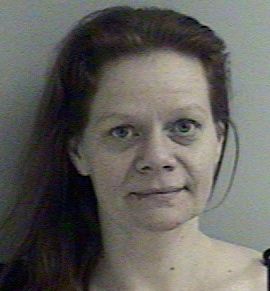
Shaleen Pierson

Shaleen Pierson

Cabral said he saw a fixed blade hunting type knife under Marino’s arm affixed to his vest, which led to Marino being frisked. During this search, Cabral said he found hypodermic syringes inside Marino’s vest and clear plastic packages

of what is suspected to be about a half ounce of methamphetamine in each baggie.

Ryan Marino

Ryan Marino

A warrant to search Marino’s residence was obtained.

Officers said in the room Marino shares with his 37-year-old girlfriend Shaleen Pierson they found a sawed-off shotgun, 12-gauge shotgun ammunition, a flare pistol and paraphernalia used to package illicit drugs for sale. Pierson was then arrested.

Both were charged with maintaining a residence to sell controlled substances, as well as a variety of drug and weapons offenses.

The investigation is continuing and additional arrests may be forthcoming. Officers intend to pursue with the District Attorney’s Office enhancement against Marino and Pierson for allegedly committing criminal offenses in the furtherance of a criminal street gang.

— Lake Tahoe News staff report


Study: Knowing a gay person impacts marriage beliefs

By Maura Dolan and Jessica Garrison, Los Angeles Times

SAN FRANCISCO — For Ohio Sen. Rob Portman, knowing that his son was gay helped change his mind.

For President Obama, talking with gay White House staffers and learning that his daughters’ friends had same-sex parents proved influential.

Today, Jean Podrasky, a 48-year-old accountant from San Francisco, will be sitting in a courtroom, where her first cousin — Chief Justice John G. Roberts Jr. — and the rest of the U.S. Supreme Court are hearing a challenge to California’s ban on gay marriage. It’s a ban that prevents her from marrying her partner of four years.

Podrasky said she does not pretend to know her cousin’s views on gay marriage. But her decision to publicly disclose her relationship with Roberts reflected a growing conviction in the gay rights movement that the way to win support for gay marriage is to put a personal face on the issue.

Attitudes on same-sex marriage have shifted rapidly, and polling data consistently shows that knowing a gay person is a strong factor.

A poll by the Pew Research Center for the People and the Press, released last week and conducted in mid-March, found that 14 percent of Americans say they have changed their minds about same-sex marriage. Roughly a third of them told pollsters it was because they know someone — a friend or family member or other acquaintance — who is gay.

The poll also found that more Americans now say they support gay marriage than oppose it. Roughly 49 percent of Americans now say they support gay marriage, with 44 percent opposed. By contrast, 10 years ago, 58 percent of Americans opposed gay marriage, and just 33% were in favor.

“It kind of puts a name to a face,” said Erik Schott, a USC clinical assistant professor of social work. “So it makes it a relatable issue.”

Though having gay friends and relatives may influence views, opponents of same-sex marriage balk at the notion that the issue boils down to whether you know someone who is gay.

Frank Schubert, who ran the campaign for Proposition 8 and whose sister is a lesbian, estimated that 75 percent of people in California have a member of the family or an acquaintance who is gay. Being in favor of barring same-sex couples from marrying does not indicate antipathy for gay relatives or other gays, he said.

“The premise is, if you oppose redefining marriage you must be anti-gay, and that premise is false,” said Schubert, who believes the high court will uphold Proposition 8.

Indeed, several prominent activists in favor of restricting gay rights have had gay relatives, including former state Sen. William J. “Pete” Knight and the conservative activist Phyllis Schlafly, both of whom had gay sons.

The late Justice Lewis F. Powell, while considering Bowers vs. Hardwick, a 5-4 decision in 1986 that upheld sodomy laws, told his then closeted clerk that he knew no one who was gay. The clerk later regretted that he had not revealed his sexual orientation during that conversation. “There is no doubt that knowing his clerk was gay could have shifted the balance,” said Kate Kendell, executive director of the National Center for Lesbian Rights.

Emma Tate, 67, the daughter of a Baptist minister, said her views on same-sex marriage changed after getting to know her friend’s lesbian daughter. The daughter told Tate that she wanted to marry because otherwise her benefits and pension might not be transferred to her partner if she died, said Tate, a resident of View Park, north of Inglewood.

“It made good sense to me,” Tate said. “If you’re there and you love them, and they’re supporting and taking care of you when you’re ill, they should be entitled to the benefits.”

Tate said she also was moved when she saw the care her friend’s daughter received from her partner when she became sick and bedridden. “I really saw their love, their connection. I just felt that it was beautiful to have someone love you that much,” Tate said.

Susan Russell, a pastor at All Saints Church in Pasadena, recalled that the late gay rights activist Harvey Milk urged gays to make their sexual orientation known to others to help defeat unflattering stereotypes. “And that was when it was not safe to be out,” she said.

Over the last few years, the gay rights movement has emphasized the importance of relationships in obtaining rights. Major public figures, including CNN’s Anderson Cooper, have publicly talked about their sexual orientation.

“People have not just stood in the street with signs or lit candles,” said Russell, a lesbian.

Scott Barclay, a senior scholar in public policy at the Williams Institute, a think tank at UCLA Law School that studies sexual orientation, said Americans’ views on same sex marriage have shifted “phenomenally” quickly.

“As far as we can tell, these seem to be the fastest shifts that have gone on for major social movements,” he said, citing public opinion polls showing that support for gay marriage is gaining 1.75 to 2 percentage points a year.

But being supportive of gay marriage rights does not always mean embracing the full gay-rights agenda. Portman, who was on Mitt Romney’s short list of potential running mates in 2012, told CNN that he favored letting states decide their marriage laws.

Still, no matter how the arguments go, Podrasky said she hopes to introduce her partner to her cousin the chief justice after the hearing.



Ski report: Sun is going away

ski report logoUnsettled weather will be moving through the area in the next few days with a chance of snow in the higher elevations.

Wind could be a factor today on the upper lifts.

Here is the March 26 ski report.

— Curtis Fong


Liberty Utilities’ N. Shore system inadequate

By Kathryn Reed

Liberty Utilities’ plans to upgrade the power supply to the North Shore are not moving forward as quickly as the company had hoped.

The U.S. Forest Service wants more detail than what the company had originally provided. Much of the land that would be affected belongs to the USFS.

Originally the power company thought it would be in the permitting phase by now, with construction starting this year. Now the company hopes all the paperwork will be in place by the end of the year.

“In general the two existing lines we are upgrading are following a similar path to what exists today, with minor variations,” Sam Rohn, the environmental, health, safety and security manager for Liberty in California, told Lake Tahoe News.

One issue the Forest Service wants more clarity on is how many trees the company plans to fell.

“Presently, the north Lake Tahoe transmission system does not have adequate single contingency reliability, meaning, if one of several critical lines is lost as a result of an intense storm event, fire, or downed trees, a severe and sustained power outage could occur in the system service area,” the scoping document says.

The project calls for lines going from the Kings Beach generation site to Tahoe City and one to Truckee. The plan is to upgrade the substations from 60 kilovolt (kV) to 120kV to allow the entire transmission loop to operate at 120 kV.

“We are strengthening the reliability on the North Shore. We will increase what the voltage lines are able to carry, handle additional load build-out at Martis Camp, Squaw Valley and Northstar, and other infrastructure that is going in on the North Shore,” Rohn said.

liberty map

Proposed route changes to Liberty Utilities’ North Shore lines.

All of the areas Rohn mentioned are either building now or have plans in the works. And they will all need more power in the future than they do today.

Plans call for replacing existing wood poles with steel, which are more reliable and apt to survive a wildfire.

Liberty on Jan. 1, 2011, took over NV Energy customers on the California side of the Lake Tahoe Basin, Truckee and Alpine County.

And while rate increase took effect Jan. 1, 2013, it wasn’t to pay for the North Shore project. Once that’s in the ground and online, Liberty can go back to the California Public Utility Commission and ask ratepayers to write bigger monthly checks.

Every three years public utility companies must file a rate increase or decrease with the CPUC.


Lecture about Living in Abundance

Living in Abundance is the title of a talk to be given by international speaker Evan Mehlenbacher on May 13 at 7pm at Lake Tahoe Community College — 1 College Way, South Lake Tahoe.

Evan Mehlenbacher

Evan Mehlenbacher

Mehlenbacher is in the public healing practice as a practitioner and teacher of Christian Science. He is a member of the Christian Science Board of Lectureship. Mehlenbacher says his experience in the family farming business after graduating from Stanford University helped him see abundance in a new way. Mehlenbacher left the business and went into the full-time ministry of helping others find spiritual healing.

Mehlenbacher’s ideas are based on the teachings of Jesus as recorded in the Bible.

This free public lecture is presented by First Church of Christ, Scientist — South Lake Tahoe.


Classes will provide basics to grow veggies at home

The University of Nevada Cooperative Extension is offering eight new Grow Your Own! classes to help Nevadans who want to get on a path to more sustainable, local, healthy living by growing more of their own food.

Cooperative Extension offices in Carson City, Elko, Eureka, Fallon, Hawthorne, Lovelock, Owyhee, Pahrump, Reno, Tonopah, Winnemucca and Yerington will once again offer the April 3-May 22 series, providing gardeners and health buffs in the state with a back-to-the-basics guide to great harvests in Nevada. The workshops will be Wednesdays, 6–8pm.

 Eight back-to-basics courses for great harvests available in 12 cities. Photo/Provided


Eight back-to-basics courses for great harvests are available in 12 Northern Nevada cities. Photo/Provided


April 3: Seeds vs. starts: planning and planting your garden

April 10: Insects and other garden pests

April 17: Efficient irrigation for the home vegetable garden

April 24: Gardening in Nevada’s soils: A hero’s journey

May 1: Nutrients and fertilizers for your vegetables

May 8: Edible herbs and flowers

May 15: Berries and brambles

May 22: Selecting fruit tree varieties.

Extension experts will touch on garden planning, controlling pests, best practices for growing herbs and vegetables, and the best fruit varieties for Nevada.

To register for any or all of the upcoming Grow Your Own! classes, contact Ashley Andrews at the Washoe County Cooperative Extension Office at (775) 784.4848. The class fee for Reno residents is $15 per class, or $60 for all eight classes. Class fees in other locations vary. Carson City, Elko, Eureka, Fallon, Hawthorne, Lovelock, Owyhee, Pahrump, Tonopah, Winnemucca and Yerington residents should contact their local Cooperative Extension office for information on attending the series in those locations.