Report: State should not operate every park

By Matt Weiser, Sacramento Bee

A study released Monday by the Little Hoover Commission recommends that California should consider divesting some of its state parks and permanently turning them over to local agencies.

The 120-page report is the result of a year-long investigation that began before financial scandals emerged in July 2012 at the California Department of Parks and Recreation. Among other things, department leaders were found to be hiding $22 million even as they moved to close 70 of the 278 state parks due to state budget cuts. Numerous other investigations have probed these events.

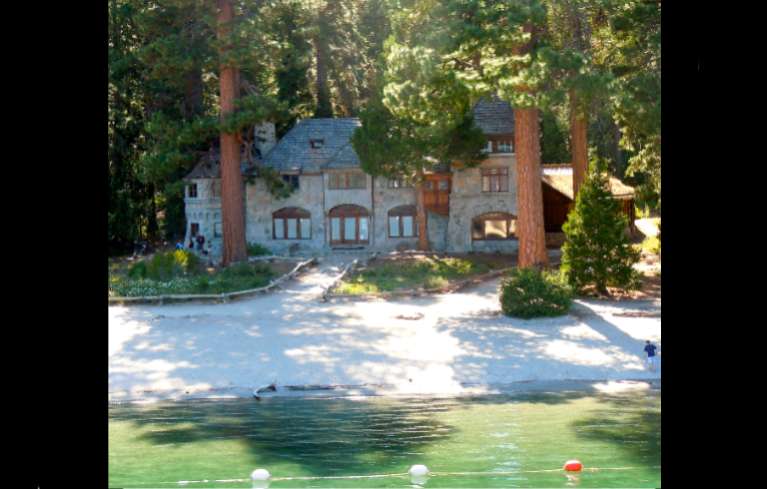
Vikingsholm at Lake Tahoe. Photo/LTN file

Vikingsholm at Lake Tahoe. Photo/LTN file

The 14-member Little Hoover Commission, appointed by the governor and Legislature, chose to focus on long-term survival of the state parks system, the largest in the nation.

“We felt it was more important to push harder on everything else that needs to be done,” said Stuart Drown, the commission’s executive director.

The commission found that the parks department is burdened by an obsolete management structure; it can’t raise enough money from visitor fees to replace cuts in funding from the state general fund; and land acquisition using voter-approved bonds has outpaced maintenance budgets.

“A great public institution is falling apart,” commissioner Virginia Ellis said in a statement.

The most controversial of six recommendations calls for appointing an advisory council to decide which parks have true “statewide significance” and which serve more regional or local needs. Those in the latter category should be transferred to local agencies.

The primary reason is that the department, heeding voters’ wishes, used bond funds to add 168,000 acres to the park system since the 1990s. But operational funding declined, partly because of general fund cuts by the governor and Legislature.

As a result, today there is a maintenance backlog in the system that exceeds $1 billion, and many of the state’s finest natural resources and historical treasures are in severe decay. Interpretive programs and park ranger staffing have also declined.

“The growth curve for the department is no longer in acreage, but in deferred maintenance,” the report states.

It commission recommends other reforms, including adding a new job classification of “park manager.” This would allow employees other than park rangers, who must have peace-officer training, to oversee a park.

It also urges the governor and Legislature to commit to a consistent level of general fund support for parks, and to allow parks to keep more of the money they generate locally. The department should also commission an independent study of crime trends in the parks and hire more park rangers accordingly.

Carolyn Schoff, president of the California League of Park Associations, was pleased by the study but said the idea of eliminating parks from the state system will be controversial.

“Certainly we want to keep our park system intact,” she said. “But if this is a recommendation that will keep the parks as open and available as they were intended to be, I think it’s a possibility.”


LTUSD has multiple principal openings

By Kathryn Reed

Lake Tahoe Unified School District on Monday will be posting jobs for three principals, a vice principal and instructor to oversee the Sports Medicine Academy at South Tahoe High School.

The school board created the vacancy at Bijou Community School Tuesday night when the five unanimously agreed to move Karen Tinlin to Mount Tallac High School as principal.

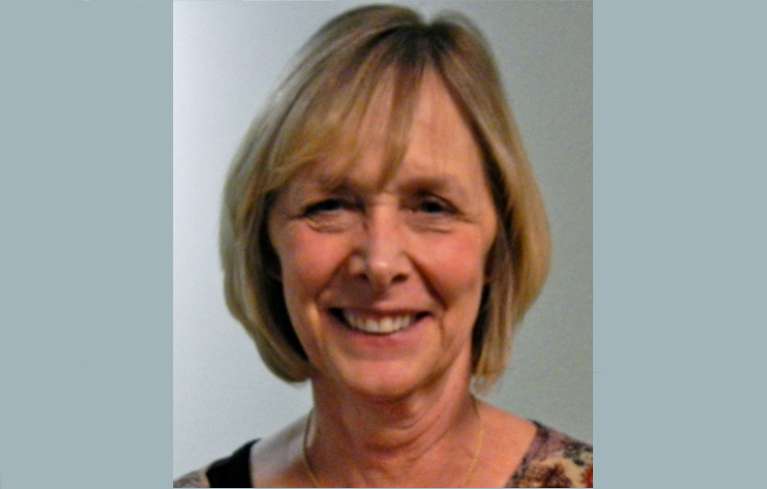
Karen Tinlin is moving from Bijou to Mount Tallac starting in the 2013-14 school year.

Karen Tinlin is moving from Bijou to Mount Tallac starting in the 2013-14 school year. Photo/LTN

The Tallac opening is because longtime Principal Susan Baker is retiring at the end of the school year. She is responsible for creating the Young Parents Program at the continuation school, which provides a nursery-day care for the children of students.

Other openings:

• Mark Romagnolo, principal at Tahoe Valley Elementary School, is retiring.

• Superintendent Jim Tarwater is giving up his principal duties at the environmental magnet school. He is also in charge of human resources for the district.

• Pat Hartnett is going from South Tahoe Middle School to South Tahoe High School as vice principal.

• The sports medicine job is new. The facility will open in August for the 2013-14 school year.

The district will be looking for someone who is bilingual to lead Bijou. The hope is this will make the 6-year-old Two-Way Immersion program even stronger.

While STHS chemistry teacher Joel Dameral has been an administrative intern at the Meyers elementary school, he must apply for that principalship like everyone else.

At Tahoe Valley, the candidate for the top job must have a performing arts background because in the 2014-15 school year it will have that as its focus.

Tinlin’s move to Tallac is not completely voluntary. Bijou per the federal No Child Left Behind Act became a program improvement school in 2004-05, having been put on notice two years prior.

While significant gains were made in test scores in 2010, they reversed course for the last two years. The rule makers say move the principal if things aren’t working.

Tarwater said he would not have made the change if not forced to by the state.

“The system and structure created this type of situation,” Tarwater told Lake Tahoe News after the March 26 school board meeting.

He has long been vocal in his dislike for the Academic Performance Index standardized test because it compares one grade level to another instead of calculating if a class is improving or not from year to year. Special ed and English learners are given the same test as everyone else and expected to know just as much.

With more than 60 percent of LTUSD’s students on free or reduced lunches, it proves people are struggling. And studies have shown students from poor families don’t have the academic success middle class families have.

Time will tell if moving the principal will change the test scores.

In the meantime, Tinlin told Lake Tahoe News she is excited about the challenges and changes coming her way. This will be her fourth school in the 37 years she’s been with LTUSD. She was also principal of what was Meyers Elementary School and the now closed Al Tahoe Elementary. She also taught at Meyers and Bijou. She has been principal at Bijou for the last eight years.

“I think it’s an advantage to have contacts and connections. It will help with the transition,” Tinlin responded when asked if she or someone new to the district might have an easier time taking over from Baker, who has been entrenched at the Gardner Mountain site for years.

She’s worked with many of the agencies that are involved with Tallac students. And Tinlin is bound to know some of the students, which she believes will help her. And while her career has not been with this age group, she has raised four children and many of their friends call her mom.

“I think change is good,” Tinlin said. She is looking forward to finishing her career – which will probably be after two more years – at Mount Tallac.


Ski report: Time for a snow dance

ski report logoKeep your fingers crossed for measurable snow as these series of storms pass through.

Conditions are still very good on the slopes with machine groomed corduroy and spring conditions.

Here is the March 27 ski report.

— Curtis Fong


Snippets about Lake Tahoe

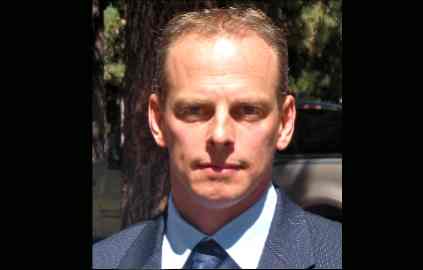
Johnny Poland

Johnny Poland

• South Lake Tahoe police Officer Johnny Poland’s next federal court hearing has been pushed back to May 1.

Travel & Leisure has released its list of America’s Coolest River Walks and Reno comes up No. 9.

Andrew Sanford, who is accused of killing South Lake Tahoe teenager Richard Swanson in 1980, will be tried in El Dorado County Superior Court in Placerville starting Oct. 1.

• The Bicycle Advisory Committee of the South Lake Tahoe Recreation Facilities Joint Powers Authority will meet April 1 from 9-11am at McDonalds Y parking lot, then Motel 6 parking lot, and then the parking lot adjacent to the Presbyterian Church. This is to look at the various bike trails.

• Animal Planet sent a film crew from “Finding Bigfoot” to the Lake Tahoe Basin. Watch for the segment to air in the summer.


Growing dome at SHES on shaky ground

By Kathryn Reed

Advocates for a growing dome at Sierra House Elementary School have discovered they need to nurture their idea a bit more for it to sprout into a reality.

This means learning that permits are needed, a thing called coverage is an issue in the Lake Tahoe Basin, that the school board needs to OK something like this and the state gets a say, too. It also means finally admitting the Truckee dome that has been highly touted as a model is not on a school site – that it is actually on private property.

People have been working on this greenhouse of sorts for a year and just now came to the school board. But it was only on presentation Tuesday night and not something to vote on.

What the dome at Sierra House might look like.

What the dome at Sierra House might look like.

Soroptimist International South Lake Tahoe was under the impression the school had all the necessary permits and approvals in place to erect the dome on the South Shore campus. Wrong.

And because the Lake Tahoe Unified School District board has yet to approve the structure, let alone the Division of State Architect signing off on the project, the Soroptimist will not be handing over the $25,000 check at lunch today as was expected.

Based on SHES Principal Ryan Galles’ presentation to the school board on March 26, the dome advocates’ input and board member Sue Novasel’s comments, today’s action will come as a surprise. And Novasel is the incoming president of Soroptimist.

Soroptimist told Lake Tahoe News prior to the school board meeting that its board would discuss at its meeting next week how to proceed. It’s possible the money could be set aside for one fiscal year with the anticipation the dome people will get the necessary approvals. It’s also possible the Soroptimist board will distribute the money to another organization.

While the school board said it likes the concept of the greenhouse, the members all want more info before saying build it.

Galles told the board how the dome would have multiple educational purposes. For one, it would be a hands-on science lab where students would be growing vegetables year-round. It would complement the composting program that was started this year. It would show kids that food comes from someplace else before it reaches a grocery story. And it will give them something healthy to eat. The state has curriculum in its Garden in Every School program that could be used.

“It will build lifelong healthy habits, not just with kids, but with families,” Galles said.

About one-third of the full boardroom was comprised of people who were there solely to show their support for the dome.

School district officials said the Tahoe Regional Planning Agency supports the dome project.

TRPA told Lake Tahoe News planners have gone over drawings and specs with the dome people, and told them what to include with their application. But no application has been submitted.

A soil analysis needs to be done, still.

Steve Morales, LTUSD facilities director, said even though Sierra House is out of coverage, that issue can be resolved. But he said the board would need to consider what the future for the school is in terms of coverage for other structures.

He explained to the advocates how the state works. And with the millions of dollars LTUSD has put into facilities in the last few years Morales is intimately familiar with the process.

And while the advocates said they know politicians who are on their side, they seemed to forget they were addressing five elected officials. Morales and other staff pointed out the state Division of State Architect doesn’t bend to political pressure, but instead follows stringent guidelines.

Morales will be working with the advocates to get the state what it needs.

The dome group has revised its budget to be close to $100,000 for permitting and to meet the state’s needs. Of the $36,500 Galles told the board is in the bank, the reality is $25,000 of that is from the Soroptimist. And now that is on hold.

So, even if the district and state give a green thumbs up to the dome, the money to build it, operate it and maintain it still needs to be secured.


Critical view of former governor’s book on his Vegas past

By John L. Smith, Las Vegas Review-Journal

Consider it the memoirist’s prerogative: He gets to recount his life’s events any way he wishes, and readers expect he’ll place himself in a sympathetic light.

Whether he flashes a glimpse of stocking or lets it all hang out, the writer of a memoir needn’t adhere to the biographer’s bibliographical standards or share in the investigative reporter’s obsession with documents and law enforcement sources. Like Frank Sinatra with a laptop, the memoirist can recall it his way.

bookThe trouble with a memoir by a longtime public figure, however, is that his recollections of high-profile events might not match the memories of others who experienced those same events. And when those clashing memories concern the quicksilver days of the mob’s substantial presence inside the Las Vegas casino racket, the subject matter can be tender, indeed.

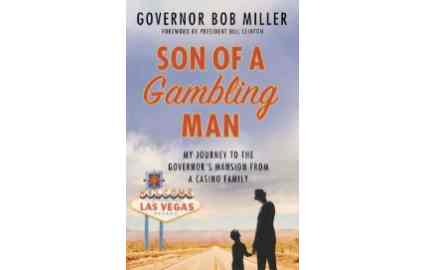
Such is the case with former Nevada Gov. Bob Miller’s memoir about growing up in the long shadow of his father, old-school gambling boss Ross Miller, “Son of a Gambling Man: My Journey from a Casino Family to the Governor’s Mansion.”

With a foreword from former President Bill Clinton and jacket endorsements from Senate Majority Leader Harry Reid, “America’s Most Wanted Host” John Walsh, and business magazine scion Steve Forbes, the book is a neatly packaged inoculation of Miller against the ravages of time and Nevada’s tumultuous and tawdry gambling and political history. The gambler’s son spends substantial space attempting to come to terms with his father’s streetwise stoicism and undeniable notoriety.

As a practical matter, he needn’t have bothered. His life’s legacy should rise and fall on its own merits. And, frankly, Miller would have been better served if he hadn’t opened some of the doors of memory. Other doors easily could have been secured with more thorough editing and a clearer appreciation of the ghosts lurking behind them.

At its best, “Son of a Gambling Man” gives insight into the complex psychology of the offspring of casino men and the sociology of our neon-lighted privileged class. In that regard, it ranks with the late Susan Berman’s memoir, “Easy Street: the True Story of a Gangster’s Daughter.”

Miller tells us his father had been a bookmaker and nightclub operator with some notorious relationships, but he can’t quite bring himself to admit his dad was a loyal Chicago Outfit representative whose Las Vegas opportunity was essentially sponsored by hoodlum friends in the Windy City.

Instead, we get a toe in the water. It’s almost as if the son of the gambler is still sensitive about his old man’s past. Although Ross Miller’s memory gets the usual Al Phillips-the-Cleaner treatment — a ringing character endorsement by no less a paragon of ethics than former Sheriff Ralph Lamb — even cursory research reveals a side of the gambling man that made him look very much like a mobbed-up casino overseer.

In addition to beating a casino skimming investigation that took down his peers, Ross Miller had a decidedly old-school approach to addressing dealers suspected of stealing. In January 1963, he punched a Riviera dice dealer in the mouth and ordered his hotel goons to drag him into a backroom, where he was terrorized. (The dealer sued and in 1965 won a settlement.) In that same incident, the Review-Journal reported, Miller ordered security to take the dealer’s suspected accomplice out behind the hotel and “break his arm.”

Memoirist Bob Miller, of course, needn’t recall that anecdote. Certainly no one could blame him for wanting to forget something that made the newspapers when he was a high school kid.

More problematic are his depictions of the relationships with his father’s green-felt protégé, convicted mob casino skimmer Carl Thomas, and family friend Allen Dorfman, the consummately organized crime-connected Teamsters Central States Pension Fund and Las Vegas casino insider.

Bob Miller admits writing a post-conviction letter to a sentencing federal judge on behalf of Thomas, in connection with skimming on behalf of the Kansas City and Chicago mobs at the Tropicana.

Invoking William Faulkner, Miller eloquently observes, “The past, they say, is never really past. And after I became district attorney, my past — or should I say Ross Miller’s past — became the present.”

He goes on to recount how, against the advice of political adviser Billy Vassiliadis (to whom he dedicates his book), Miller decided to write the letter in July 1983 to U.S. District Judge Joseph E. Stevens that attempted to show Thomas in a sympathetic light.

Miller then focuses on how a political challenger later attempted to make campaign hay of the letter. What he fails to admit is that the letter was a huge embarrassment to the community and to the office of the district attorney, the county’s top prosecutor.

It was inappropriate, but unsurprising. In Nevada politics, friendship almost always trumps duty.

Equally incomplete is Miller’s treatment of Dorfman. Miller acknowledges that Dorfman was a family friend, and on a wiretap uttered some embarrassing statements about their relationship, but he doesn’t finish the story.

The reader is left to ask, “Hey, whatever became of Allen Dorfman?”

The felon was considered such a key player in the mob’s presence in Las Vegas that the FBI devoted a team to taking him down. With wiretaps, undercover agents and confidential informants, the government was pressuring Dorfman to cooperate.

On Jan. 20, 1983, just a few months before DA Miller penned his apology on behalf of Thomas, Dorfman pulled into the parking lot of the Hyatt Hotel in the northwestern Chicago suburb of Lincolnwood and exited his Cadillac. Investigative reporter James Neff writes in his meticulously researched book “Mobbed Up:” “Eight rounds from a silencer-equipped .22-caliber semiautomatic handgun struck Dorfman in the head at close range. Allen Dorfman had just kept thirty years of Mob secrets the hard way.”

So that’s why Dorfman doesn’t write, doesn’t call.

How close was Dorfman to the Miller family?

“Dorfman himself was a secret owner with Chicago gangster Ross Miller of the Bingo Palace, while Miller’s district attorney son held stock in a blind trust in the casino, (Teamsters boss and FBI informant Jackie) Presser said,” wrote Sally Denton and Roger Morris in their best-selling Las Vegas exposé, “The Money and the Power.”

The memoirist can remember as much or as little as he wishes, and owes no one an excuse for the sins of his father. But “Son of a Gambling Man” is a reminder that when you open those creaking doors of Las Vegas past, there’s no telling what ghosts will come swirling out.

Bob Miller outgrew his father’s shadow long ago, but after reading his memoir I’m still not sure our state’s celebrated son of a gambling man believes it.


Letter: USFS, CTC negligent landowners

To the community,

“The Big Burn” by Timothy Egan is about the wildfire of 1910 that burned an area the size of Connecticut. And it is about the birth of the Forest Service and conservation in the U.S. The fire began in Idaho and spread to Montana and Washington. It is about good guys and bad guys. For examples: the role of the 25th Infantry, the Buffalo Soldiers, black men who saved the town of Avery, Idaho. And the book tells about the attempts of the timber and railroad barons to kill the Forest Service and the conservation movement.

Bill Crawford

Bill Crawford

“The Big Burn” compels me to focus on the role of the Forest Service and the California Tahoe Conservancy in the city of South Lake Tahoe. Both agencies own lots in the city; lots that are not maintained to help prevent fire. High grass and pine trees are a good mix in a dry season. We have had two dry years back to back.

It’s ironic that the Forest Service was created in 1905 with a top priority of prevention of wildfire, especially in the West. When I look at Forest Service lots in the city, that priority is on the back burner. The same can be said about the CTC. Pine trees aren’t properly limbed and high grass isn’t cut. If a crown fire with high wind happens, it’s disaster for the city. Most of us in the city live in a subdivided pine forest.

I realize that some fires can’t be prevented, but citizens and public agencies should do their best to help prevent wildfires. The Forest Service and the CTC have failed to do their job. So far the city has been lucky. How long will good luck hold?

Bill Crawford, South Lake Tahoe

PS: Doctors say an ounce of prevention is worth a pound of cure. That should be the rule for wildfire prevention.


Truck nearly crashes into liquor store

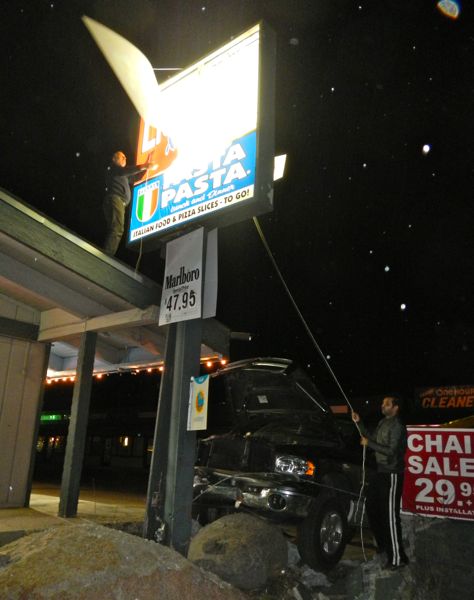
Keys Liquor workers on March 26 work to secure the sign. Photos/LTN

Keys Liquor workers on March 26 work to secure the sign. Photos/LTN

A rock stopped the truck from taking out the post.

A rock stopped the truck from taking out the post.

A Dodge Ram 1500 tried to do some urban four-wheeling, but instead ended up being towed Tuesday night.

South Lake Tahoe police Sgt. Jeff Regan said alcohol was not a factor in the 8:22pm March 26 accident. The driver and passenger refused medical treatment.

Regan told Lake Tahoe News the driver had been drifting on Highway 50 when the passenger woke up, grabbed the wheel and then caused the truck to veer into the front post of Keys Liquor.

Employees of the store that night were trying to secure the sign for the store and Fasta Pasta so it would not flap in the wind as rain started to sprinkle on them.

The truck, according to the tow truck driver, was likely totaled based on the damage to the undercarriage and both air bags having gone off. The truck was resting on a boulder that was in front of the post. Had it not been there, the post would have been taken out.

— Lake Tahoe News staff report


Expect smoke in Meeks Bay area

U.S. Forest Service fuels management crews will begin prescribed fire operations near the Meeks Bay area on March 27.

Crews expect to burn approximately 30 acres near Meeks Meadow. Operations may continue through the week, weather and conditions permitting.

Residents and visitors can expect to see smoke from this prescribed fire project area. Smoke may be visible on Highway 89. The Forest Service strives to minimize the impacts of smoke on local communities.

Smoke-sensitive residents should consider staying indoors and keeping doors, windows and outside vents closed. To directly receive prescribed fire updates, send an email to pa_ltbmu@fs.fed.us.


Businesses see dollar signs if Nevada reverses gay marriage ban

By Andrea Domanick, Las Vegas Sun

“Loosen his bow tie and snuggle up, you two,” says Las Vegas photographer Linda Quackenboss, directing a camera-shy couple sitting for portraits in her studio.

Reaching out, Phil Pineda does as he’s told and loosens Mel Cole’s bow tie. “There’s my GQ smile!” the 53-year-old tells the couple, who will be celebrating their fifth anniversary this fall. “Maybe I can shoot your wedding soon.”

For Quackenboss, who estimates that 30 percent of her clientele are members of the lesbian, gay, bisexual and transgender community, the suggestion is more than friendly conversation. It’s marketing.

Gay marriage is on the horizon in Nevada. A bill was introduced last week in the Nevada Senate that would begin to clear the way for legalizing gay marriage in Nevada. That news came just days before the U.S. Supreme Court is scheduled to hear oral arguments in a pair of cases challenging California’s ban on gay marriage and the federal Defense of Marriage Act. Polling suggests a majority of Nevadans support gay marriage.

That shift, in Nevada and nationwide, is being noticed by wedding industry professionals like Quackenboss, who is among local business owners positioning themselves for the opportunities that will come with legal gay marriage in the Wedding Capital of the World.

“With the economic climate the way it is, people are watching what’s happening around the country with a careful eye and will open up as soon as business demands it,” Quackenboss said.

According to economist M.V. Lee Badgett, research director of the Williams Institute for Sexual Orientation Law and Public Policy at UCLA, legalizing gay marriage would generate $23 million to $52 million in business revenue and $1.8 million to $4.2 million in tax revenue over the next three years in Nevada.

The brunt of the revenue impact from gay marriages, however, would come from out-of-state couples bringing their ceremonies and celebrations to Las Vegas: Eighty-five percent of the 86,203 marriage licenses issued in Clark County in 2012 were to couples from outside Southern Nevada.

“Vegas’ strengths lie in the fact that it is an event town,” said Kathryn Hamm, president of GayWeddings.com. “It has a vibrant collection of wedding chapels, it’s a destination location for many, can serve bachelor and bachelorette parties and honeymoons alike, and has featured on its stages every gay icon who has ever electrified and unified and entertained our community.”

The same-sex marriage industry in New York offers some inkling of what to expect in Las Vegas. In 2011, the first year gay couples could legally wed in New York state, marriage license fees, celebrations and wedding-related purchases helped shore up New York City’s economy by $259 million, according to the New York City Clerk’s Office and NYC & Company, the city’s tourism and marketing bureau.

Dianne Schiller, owner of Renta-Dress and Tux Shop in Las Vegas, said she can hardly wait. “It would definitely increase my business and add another dimension to it,” said Schiller, whose shop presented a fashion show at last month’s LGBT Wedding Expo at Circus Circus and has been marketing to gay couples for years. “If we really want to sell ourselves as the Wedding Capital of the World, we need to open the doors and embrace everyone.”

Same-sex marriage ceremonies would come at an otherwise dour time for the wedding business. Marriage licenses issued in Clark County are down 21 percent from 2007, and Schiller’s sales have dropped 20 percent this quarter.

“The last place people are spending their money now is on vacations and big weddings,” she said. “But generally speaking, gay couples do tend to have more disposable income and are higher up on the earning bracket. They have the dollars, and if they could spend it on weddings, I think they would love it.”

For Angie Kelly, owner of Peachy Keen Unions, a Las Vegas-based wedding officiant service that bills itself as a provider of “ceremonies for unique and eclectic couples,” the anticipated boost in revenue would be less important than the level playing field that would come with the legalization of gay marriage. She’s one of the few officiants in town who openly advertises as serving LGBT couples, and she acknowledged that she may be losing business by doing so.

“I think officiants have a tricky spot with same-sex marriages. If you advertise to same-sex marriages, there’s a chance you’re losing your highly religious couples, as well. It doesn’t matter to me, but it is a risk that I take,” she said of the 200 ceremonies she performs per year, a handful of which are for same-sex couples. She explained that while many other ministers and officiants won’t advertise to same-sex couples, they may still perform commitment ceremonies if asked. “I think there will be a big sense of relief that they can just breathe easy and serve this market. A lot of us are gunning for it be legalized.”

For other local businesses, welcoming gay marriage is a natural next step in their marketing efforts to the LGBT community. Caesars Entertainment is one of a number of resort companies already offering commitment ceremony packages at its properties, including planning services, floral design, photo shoots and commitment certificates. The company has helped attract such popular LGBT events as Dinah Vegas, or Girl Bar Dinah Shore Weekend, an offshoot of the long-running Dinah Shore Weekend in Palm Springs, and is among the businesses that signed an amicus brief on Feb. 27 urging the U.S. Supreme Court to strike down the Defense of Marriage Act and recognize gay marriages.

MGM Resorts International, which in 2004 became the first company in the gaming and hospitality industry to offer health benefits to gay employees’ partners, similarly anticipates gay marriage in Nevada with open arms.

“Legalization in Nevada would be a significant step forward in leveling the playing field, as we’d be in a better position to compete with destinations where same-sex marriage is legal,” said Alan Feldman, MGM Resorts senior vice president of public affairs.

The Las Vegas Convention and Visitors Authority, which launched its LGBT marketing campaign in the mid-2000s, declined to comment for this story.

Although many local businesses are primed to take advantage of the potential revenue boost, others, including Las Vegas’ numerous faith-based chapels, do not serve same-sex couples for religious reasons. They say that probably won’t change, even if the law does.

“I have gay people who work for me and I love them dearly and I have nothing against them. But we’re a Bible-based chapel, and we go according to the word of God and what he says in his word,” said Charolette Richards, the Christian owner of the Little White Wedding Chapel, which does not offer commitment ceremonies for gay couples. “If the law changed, I’m not saying that I would or that I wouldn’t either, but it’s against my religion. I’d have to pray hard to find what God would have me to do.”

Chapels that cater to same-sex couples say that just means more business for them — but that any economic gains are ancillary to the reason many of them began serving the LGBT community in the first place.

Just two doors up from the Little White Wedding Chapel is the Viva Las Vegas Wedding Chapel, which performs more than 5,000 weddings, vow renewals and commitment ceremonies each year, and is perhaps known best for its campy, Elvis-emblazoned neon sign beckoning visitors on the north end of the Strip. The chapel’s owners are gay, and they also operate under the name of Gay Chapel of Las Vegas. As one of the first wedding chapels in Las Vegas to cater to gay couples — it began performing commitment ceremonies more than 15 years ago — being able to perform legal marriages for the LGBT community is a long time coming.

“For us it’s a big deal. It would not only be a chance for us to provide more weddings and beautiful ceremonies, but also a chance for customers who are gay to have the same legal rights,” said Brian Mills, the chapel’s general manager and an Elvis wedding performer. “This being Vegas, all of us who work here are performers and have friends and people we know who would be affected by the social impact. And it’s about that more than anything.”