Bomb hoax closes Hwy. 50 in Stateline

A Minden man pulled over Saturday night on suspicion of drunken driving ended up closing down Highway 50 in Stateline for several hours on what turned out to be a false bomb scare.

Adam Smith, 29, was stopped about 10:58pm near Kahle Drive by the Sushi Pier restaurant. Douglas County sheriff’s deputies saw a wire going from the front seat to the trunk. When asked what it was, deputies said Smith told them it was a bomb.

Tahoe Douglas' bomb robot determined there was no bomb in the suspect's vehicle. Photo/Provided

Tahoe Douglas’ bomb robot determined there was no bomb in the suspect’s vehicle. Photo/Provided

Eric Guevin of Tahoe Douglas Fire Protection District told Lake Tahoe News people will say things that like to “divert attention” from why they were originally pulled over.

The fire department’s bomb squad, including the robot, was then called out.

Highway 50 traffic was diverted around the area for several hours.

It wasn’t until 4am March 31 that it was officially determined Smith’s allegations were a hoax.

Smith was arrested on charges of driving under the influence and making a bomb threat.

 — Lake Tahoe News staff report


Win 2 tickets to an April Giants game

Opening Day 2010. Photo/LTN file

Opening Day 2010
Photo/LTN file

Is this the start of three championship seasons out of four?

It’s official — baseball season is here. The Giants open in LA on Monday as they take on the Dodgers.

Post what you think the final score will be of the April 1 game as a comment. The first person who guesses correctly will win two tickets to the April 10 game at AT&T Park when the Giants host the Rockies that afternoon. All comments must be posted before the end of the fifth inning.

Anyone may participate. However, you must agree to have your full name published on Lake Tahoe News.

If no one guesses correctly, we will randomly award the tickets to a responder who is part of the NEWS Team. Fill out this paid subscriber form to be part of the team.


Ski report: Hop on over to the slopes

ski report logoHappy Easter! Lots of Easter family activities are offered at the resorts.

Snow showers and possible thunderstorms today.

Fresh snow is reported in the higher elevations and wet packed snow starting at the lower elevations.

Here is the Easter ski report.

— Curtis Fong


East Coast aerialists dominate at Heavenly

By USSA

With a band playing and a rocking crowd on the hill, Emily Cook (Belmont, Mass.) claimed her sixth U.S. aerials title at the Sprint U.S. Freestyle Championships Saturday night at Heavenly Mountain Resort.

Dylan Ferguson (Amesbury, Mass.) took the title for the men, scoring a U.S. Champs three-peat.

Kiley McKinnon (Madison, Conn.) and Alex Bowen (Springville, N.Y.) took second, while Madie Gorelik (Park City) and Jonathon Lillis (Rochester, N.Y.) walked away in third place.

The event was judged in the traditional aerial two-jump format which combined the athletes’ two jump scores, so each jump counted.

Despite the warm March weather, the hill was in good shape because of mannmade snow and the cold temperatures Saturday night.


Then and now: The Y before it was outlet stores

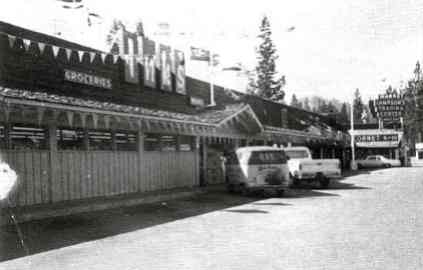
old-1In the 1950s and 1960s, the Inks brothers of Sacramento had grocery stores at various times in Bijou (now CVS), Al Tahoe (now market and Video Library), and Tahoe Valley (now Factory Stores at the Y).

The 1966 photo (courtesy Bob Rockwell) shows Inks at the Y with the distant Lampson’s Trading Center sign above the Cornet 5-10 store. Just beyond the Cornet store (but not visible here) was a popular watering hole called Tahoe Tropics, on roughly today’s Subway site.

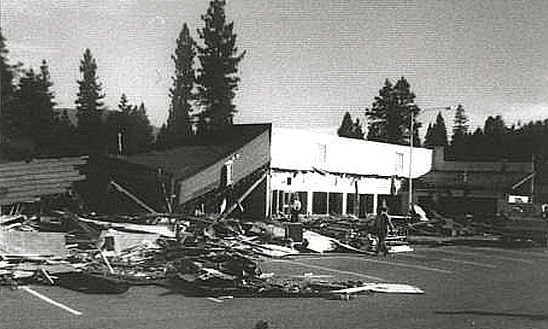
A much earlier Lampson’s Trading Center also included a market, bank, real estate office, U.S. Post Office, and a old-2two-pump 76 gas station.

The 1973 photo (mine) shows the razing of the complex which was replaced by the Lampson Plaza with a sparkling new (but short-lived) Lampson’s Market.

That space became a sizable Thrifty Drug Store, but it closed, too.

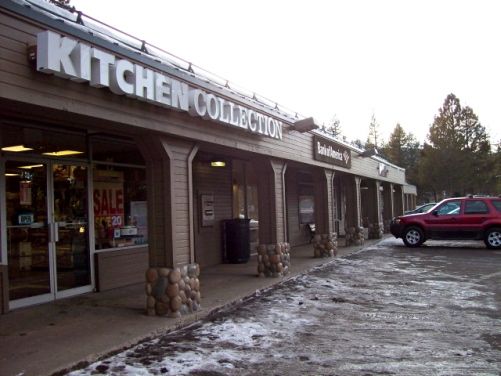
Approximately 1980, with the sudden popularity of “outlet stores,” Lampson Plaza became rebranded as today’s Factory Stores at the Y.

old-3The color photo (mine) today is about where the 1966 Inks’ market was, while the newer-built 1970s Lampson’s Market and then Thrifty Drug Store each were located in the wing most-recently vacated by Adidas and about to become Big 5 Sporting Goods.

— Bill Kingman


Sugar Bowl expanding number of homeowners

By Kathryn Reed

New development at Sugar Bowl is more rare than a powder day has been this ski season.

It was 2005 when the last subdivision sold out.

One day the resort off Interstate 80 expects to have 250 dwelling units. With the recent release of 25 single-family home sites, the privately held company is almost halfway there.

Originally there were 54 homes, which included the 12 Snow White condo-apartments. There are 67 single-family home sites – which includes the 25 just put on the market. And there are 24 townhomes. There are no plans for more townhomes. The Jerome Creek Lodge was of part the Judah expansion. Three more phases are part of that project, for a total of 39 units. With there being no market for condos, there is no time line for when that will be developed.

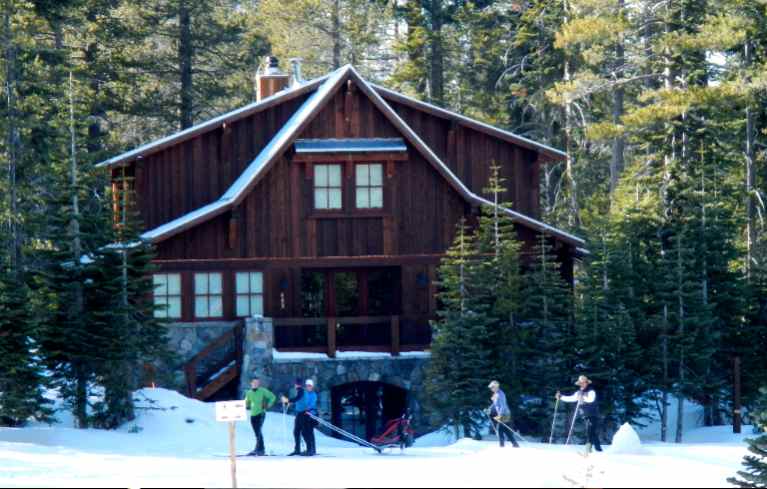
Sugar Bowl homeowners have cross country trails outside their door. Photos/Kathryn Reed

Sugar Bowl homeowners have cross country trails outside their door. Photos/Kathryn Reed

When Sugar Bowl started in the late 1930s the investors had stock. And then the homeowners did. These folks are still responsible for the operation of the resort and the homeowners association.

But a significant difference with the 25 Summit Crossing sites is they don’t come with shares in the corporation.

Of those 25 lots, two are sold, two are in escrow and four are reserved. Lots range from $250,000 to $750,000.

“All have direct access to Royal Gorge. You can step out any home site and be on a Royal Gorge trail,” Rebecca Meyerholz, who is with the resort’s real estate and development team, told Lake Tahoe News.

A lift of some sort, possibly a rope tow, is expected to be put in this summer. That will take residents to the base of Nob Hill and Disney at the downhill resort.

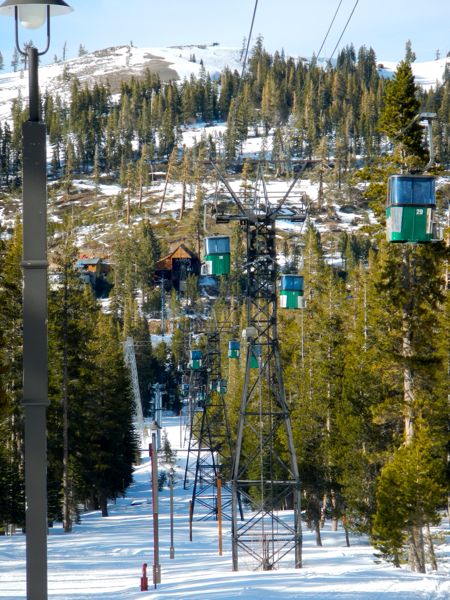
The gondola takes skiers and residents to the slopes or homes.

The gondola takes skiers-residents to the slopes-homes. Lights illuminate the paths.

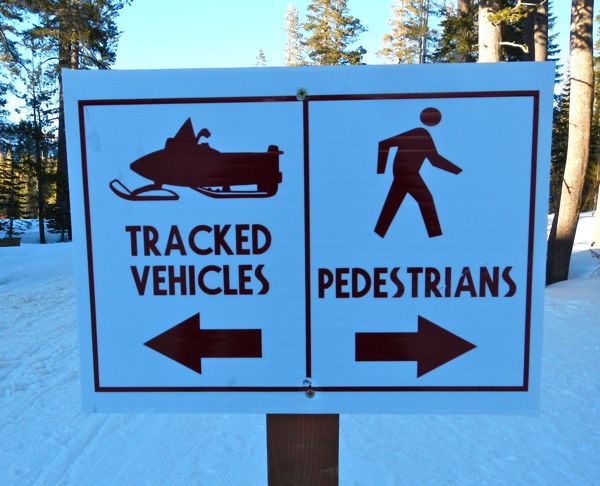
Signs help trail users be safe.

Signs help trail users be safe.

Throughout this little enclave are paths for people to walk or ski on. Signs clearly delineate the sides for those on snowmobiles and those under human power.

These are second homes. And mostly it’s Bay Area residents buying into this enclave. In fact, some families have multiple houses to accommodate the multiple generations.

“Primarily it’s winter uses,” Meyerholz said. “We are seeing more summer use with more summer amenities.”

With homeownership comes buy-in to Village Services. It means having groceries in the fridge and cupboards before arrival, a spot to park in the garage, and an exclusive line just for them at each chairlift. When the sport house aquatic center is complete, this will be another benefit for residents.

To get to the houses during winter requires taking a gondola across. This runs 24 hours a day during the season. When the lifts close, the homes are accessed via the Judah area.

“It’s a more classic alpine experience. It’s a safe, secure environment where you can let your kids out,” Meyerholz said.


Kashima 2nd in dual moguls

By USSA

Joe Discoe (Telluride, Colo.) won his third U.S. title Saturday in the dizzying dual moguls competition at the Sprint U.S. Freestyle Championships at Heavenly Mountain Resort.

In the women’s duals, Sophia Schwartz (Sun Valley, Idaho) won her first U.S. Championship title on the soft course at Heavenly.

Joe Discoe

Joe Discoe

Local favorite Sho Kashima (Stateline) took silver, along with Mikaela Mathews (Frisco, Colo.). Dylan Walczyk (Breckenridge, Colo.) and defending U.S. Champion K.C. Oakley (Piedmont) took home the bronze medals.

World Cup winner Hannah Kearney (Norwich, Vt.) and teammate Heather McPhie (Bozeman, Mont.) didn’t compete in the dual moguls event.

Brothers Bradley and Bryon Wilson (Butte, Mont.) also chose not to compete after Bradley took his first U.S. Champs title in the singles moguls on Friday.

Due to incoming weather, officials moved up the dual moguls event from Sunday to Saturday to prevent delays or cancellations.

Saturday began as a beautiful California day, with the frozen course softening throughout the day. Clouds arrived in the afternoon.

The really large jumps lent to big crashes, upsets and an all-around exciting competition.


Forest managers told to protect rivers

By Dana M. Nichols, Stockton Record

McCLELLAN — State and federal scientists met here this week to consider something most Californians take for granted: The health of the rivers flowing from the Sierra Nevada.

It may seem obvious that the humans who drink that water and the fish who swim in it benefit if it is clean and plentiful. Yet it is only recently that the officials in charge of the place where those waters are born have had marching orders to make sustained flow of those rivers a priority.

“The national forests are located in the headwaters of the major rivers,” said Barry Hill, a U.S. Forest Service hydrologist who spoke Wednesday during the opening session of a dialogue between government scientists and advocates for various other groups including anglers, conservationists and the residents of rural counties.

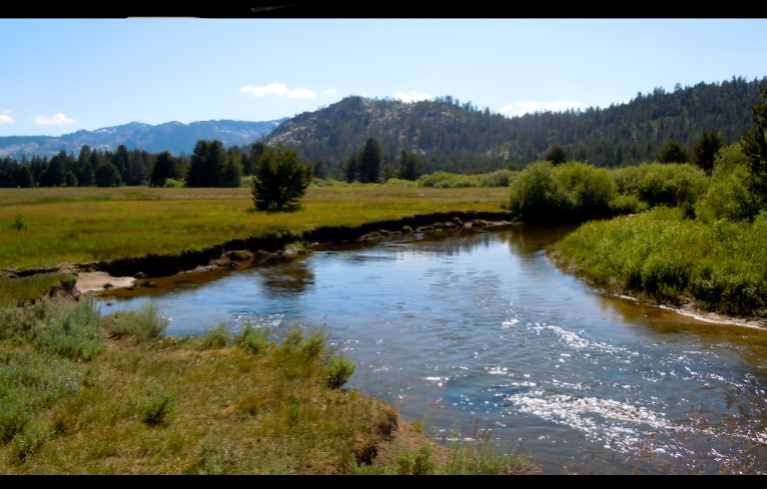
The Upper Truckee River is part of the Lake Tahoe Basin Management Unit. Photo/LTN file

The Upper Truckee River is part of the Lake Tahoe Basin Management Unit. Photo/LTN file

Under the new National Forest Service rule for creating forest management plans, the work is being done publicly and is supposed to take into consideration the long-term sustainability of the forests and of the economy.

Last year, the Forest Service adopted a new rule for forest planning that requires forests to make sustainability a priority, and defined that as making sure that the needs of the present generation are met “without compromising the ability of future generations to meet their needs.”

That means that for the first time, forest managers are required to adopt practices intended to ensure just as much clean water for fish and people in the future.

In contrast, the Forest Service previously followed a “multiple use” approach that tried to balance the demands of interests such as logging, ranching, recreation and water, but was not necessarily focused on long-term sustainability.

Also, for the first time, the new rule emphasizes the sustainability of human communities as integral to the health of forests and rivers.

“Who knows it better than the people?” said Jo Ann Fites-Kaufman, an ecologist on the planning team for the Forest Service’s Pacific Southwest Region that serves forests in California.

Forest management has a huge impact on water.

Scientists say many forests are overgrown after decades of fire suppression by humans. That means they tend to burn hotter when they do burn. Hotter fires do more damage to plants and soils, allowing sediment to flow into reservoirs and reducing the ability of soils to hold snowmelt and release it slowly.

Other human activities such as road building, cattle grazing and mining also can pollute rivers or reduce their flows. And then there’s climate change, which scientists say is reducing average snowpack and sending more precipitation as rain.

Yet it was clear during Wednesday’s session that coming to a consensus on what to do about all these changes will be difficult.

One current debate, for example, is whether forest thinning projects should emphasize the use of mechanical cutting by human crews, or instead rely more on periodic fires, whether set naturally by lightning or deliberately by humans.

Conservation groups tend to advocate for more fire and less cutting. Their argument: the road networks required for cutting contribute eroding sediment into rivers and fragmenting habitat for fish and other wildlife. Also, Sierra Nevada plants and wildlife need the periodic fires to replenish nutrients in soils and support many plant life cycles.

“Mechanical treatment alone can not replace the ecological function that fire plays,” said Greg Haller of Pacific Rivers Council, conservation director for Pacific Rivers Council.

Yet there are scientists who say the net benefit of mechanical cutting outweighs the harm done by machines and roads. At the same time, many mountain communities are benefiting from the jobs created by forest thinning projects.

Bill Wickman of the Sustainable Forest Action Coalition advocates on behalf of rural communities seeking to put more people to work restoring forests. Wickman said lighter cutting machines available in recent years do much less damage to forest soils.

Questions remain over the future of cattle grazing in the Sierra. Conservationists at Wednesday’s meeting expressed frustration at spending money to repair mountain meadows only to see those meadows trampled and degraded the following year by cattle.

Forest officials admit that they feel pressure to allow continued grazing despite the problems.

“There are some concerns about grazing,” said Hill, the Forest Service hydrologist. “The status quo is not working very well.”

Inyo, Sequoia and Sierra national forests will be the first three in California to revise their forest management plans under the new rule. Forests farther north, including Stanislaus, will follow suit in coming years.

Fites-Kaufman noted another change under the new planning rule: All the development of the proposed plans is being done publicly and documents in process are posted online.

Previously, forest managers drafted the plans in private and once they were largely finished held public meetings during the environmental review stage.


Is the secret to olive oil in its scent?

By Anahad O’Connor, New York Times

Why is olive oil, the crown jewel of the Mediterranean diet, so good for your health?

Nutritionists point to its abundance of antioxidants and oleic acid, a monounsaturated fat that protects the heart. But new research suggests that some of the benefits of olive oil might be contained in its aroma.

The research found that compared to other oils and fats, extra virgin olive oil was more likely to increase a person’s feelings of satiety after a meal. But another phase of the study showed that just imparting the scent of olive oil to food – by adding an aromatic extract – reduced the amount of calories people in the study consumed and improved their blood sugar response.

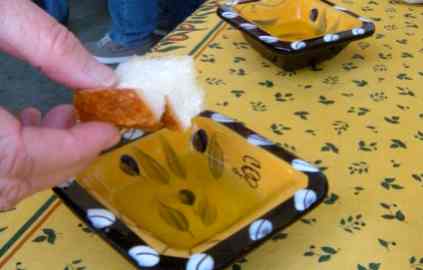
An olive oil tasting in Northern California. Photo/LTN file

An olive oil tasting in Northern California. Photo/LTN file

Smell and taste, it is well known, are two senses that are strongly tied together. Previous research has shown that manipulating the aroma of certain foods can influence the amount of them that people choose to eat. Intensifying the smell and flavor of a dessert, for example, can prompt people to take smaller bites.

The goal of the new study was to take a closer look at the factors that make some foods more filling than others.

Many products in supermarkets nowadays attract consumers with labels saying “low-fat,” but eating low-fat foods can cause people to compensate by overeating later on, said Dr. Malte Rubach, a nutritional scientist who helped carry out the research with colleagues at the German Research Center for Food Chemistry, a government-financed institute based outside of Munich that published the report.

“We wanted to see whether there was a way to reduce the fat content of food without losing its taste or aroma,” Rubach said.

The researchers, who received no funding from producers of olive oil, began the study by comparing the effects of four different fats on feelings of satiety: lard, butter, olive oil and canola oil. Canola oil has less monounsaturated fat than olive oil, but less saturated fat as well, and is often recommended along with olive oil as a healthy alternative to other cooking oils.

The researchers recruited 120 people and randomly split them into five groups. The participants were told simply to eat 500 grams of yogurt every day for three months. In four of the groups, the yogurt was enriched with one of the four fats. The fifth group, which served as the control, ate plain, zero-fat yogurt.

The subjects were followed closely and regularly given blood tests. They were not told specifically what was in their daily yogurt, though for ethical reasons they were informed that it might be enriched with animal or plant-derived fats, Rubach said.

After eating their yogurt, the olive oil group showed the greatest increases in blood levels of serotonin, a hormone associated with satiety. They also reduced their normal caloric intake most days to compensate for the extra daily yogurt, which prevented them from gaining weight, a pattern that was also seen in the butter and control groups. The canola and lard groups, however, did gain weight during the study period. Instead of cutting back on other calories, they added the yogurt to what they were already eating on a regular basis.

“You could see that those who felt really satiated reduced their total energy intake,” Rubach said, “whereas the others didn’t reduce their energy intake and they gained some weight.”

The researchers were particularly surprised to see that weight and body fat increased in the group that was fed canola oil, despite its similar health properties to olive oil. So they designed the next phase of the study to see whether there was something other than the nutrients in the two oils that accounted for their different impacts.

This time, subjects were split into two groups that were given zero-fat yogurt. In one of the groups, the yogurt was mixed with an aroma extract that imparted the scent of olive oil without adding any fat.

Those who ate the plain yogurt showed a drop in serotonin levels and reported less satiation after eating it. They also did not cut back on other calories to compensate; instead, their intake increased an average of 176 calories a day.

The group eating the olive-oil flavored yogurt, meanwhile, reduced their calories from other foods and showed better responses when given glucose tolerance tests, which measure blood sugar control. Abrupt swings in blood sugar are part of what drives hunger and satiation.

The researchers attributed the impact of the olive oil scent to two aroma compounds that are particularly abundant in Italian olive oils, including hexanal, which is said to resemble the scent of freshly cut grass.

Rubach said that because the study was small, it would not be a good idea to draw any general recommendations from it. But the findings do suggest that consumers should be aware that the physiological impact of a meal is not limited to what they can see on the plate.

“This is the first time where we’ve really looked at the effects that things other than fatty acids, protein and carbohydrates have on satiety,” he said. “Everything that completes our impression of a meal can have an impact.”


Hotel guests want experience over amenities

By Nancy Trejos, USA Today

Hotels used to try to keep guests indoors at their bars, restaurants and spas.

Now they’re dragging them outside.

Hotels are taking their concierge role to a new level, offering tailored experiences that expose guests to the history, foods and attractions of the community surrounding them. The experiences are often exclusive. Sometimes they’re free, but most often, they’re not.

Food and wine events leave lasting memories when average foodies get a change to meet celebrity chefs. Photo/LTN file

Food and wine events leave lasting memories when average foodies get a chance to meet celebrity chefs. Photo/LTN file

The more expensive they are, the more elaborate they become, such as the $10,000 “Bucket List” experience offered by the Ritz-Carlton, Charlotte which is available to one guest at a time. The experience changes once it is sold. In April, it will include four floor seats to an NBA Charlotte Bobcats game, a player meet and greet, two nights in a suite, and a few meals. The full amount goes to a local charity.

Chekitan Dev, an associate professor of marketing and branding at Cornell University’s School of Hotel Administration and author of “Hospitality Branding”, says it is an extension of the pre-recession amenity wars. Now that the economy is getting better, hotel guests value experiences more than they do “stuff.”

“Travelers faced a dizzying array of amenities on the bathroom vanity,” he says. “Housekeepers had to keep the items stocked, and hotel owners faced bigger bills … Research that suggests people value experiences more than they value stuff has led many brands to rework their amenities that’s less about stuff and more about high value unique experiences coupled with exclusive access.”

Some examples:


At the Carlyle, a Rosewood Hotel in New York, young guests can get the “Super Sophie Experience” based on Kelly Florio Kasouf’s children’s book series, “The Super Adventures of Sophie and The City”. Children get loaner iPad minis to follow Sophie’s virtual tour of favorite spots such as Grand Central Station, the Chrysler Building, and more. It’s included as part of a package starting at $835 that includes a stay for two and gifts such as an Oscar de la Renta children’s dress inspired by the books.

At the Hotel Indigo Long Island-East End, guests can take wine and spirits tours through the “North Fork Uncorked Tour Package.” In addition to an overnight stay for two, they get tastings at three vineyards or distilleries, breakfast and snacks. The price: $270 on weekdays and $329 on weekends, plus tax.

At the Mandarin Oriental in Washington, D.C., the concierge arranges a behind the scenes tour of the U.S. Capitol, during which guests can step out onto the balconies overlooking the National Mall. Exclusive tours of the Bureau of Printing and Engraving are available as well. Prices vary depending on timing and number of people. Another D.C. establishment, the Ritz-Carlton, Washington, D.C. is offering two tickets to the new Newseum exhibit marking the 50th anniversary of President John F. Kennedy’s assassination. It is part of a stay for two starting at $489 a night.

Guests with more limited budgets can still experience unique activities.

At IHG’s Holiday Inn Resort Los Cabos in Mexico guests can take a bike tour, free with a stay, through the adjacent estuary, a natural preserve that is home to more than 350 different species of fauna. The tour also takes them through downtown San Jose del Cabo and seasonal attractions such as the local rodeo.

The Fairmont Mayakoba in Mexico’s Riviera Maya has recently started to offer to all hotel guests complimentary sea kayaking close to the Mesoamerican Reef, the largest in the Americas.

“Our guests are … interested in going ‘off the guidebook pages’ at times, and we look to develop activities, oftentimes with our neighbors and partners, that give them that extra insight or an experience that they haven’t had before,” says Mike Taylor, a Fairmont spokesman.

Radha Arora, president of Rosewood Hotels and Resorts, says he believes offering guests unique experiences sets Rosewood hotels apart from the competition.

“Rosewood has always strived to offer unique, personalized experiences which acquaint our guests with the destination and provide them with access they may not otherwise have,” Arora says.

Maryam Wehe, senior vice president at Applied Predictive Technologies, which does hotel consulting, says hotel guests might rate a hotel stay higher because of a unique experience,

“Leisure travelers who have chosen a hotel for a destination stay are looking to the hotel to create unique memories,” she says. “‘What was memorable? What stood out during this vacation?’ are becoming benchmarks for rating hotel stays. In response to this challenge, hotels are looking to go beyond the pool and palm trees to create ‘Do you remember when…’ experiences.”

But, she says, the strategy doesn’t necessarily work at all hotels.

“The question that hotels need to ask is which types of locations and with which guest segments (do) these ideas really work, and where they do not work?,” she says.

Adam Weissenberg, vice chairman and U.S. leader of Deloitte’s travel, hospitality and leisure sector, says that offering experiences “could potentially build loyalty if they are interesting offerings to the guests.”

But he considers them more “ways to attract leisure customers on weekends to hotels, which are full during the week for business travelers.”

“I think this has always been the challenge for hotels,” he says. “They are just now coming up with more creative ideas.”