Letter: Make gay marriage legal and move on

To the community,

As a lawyer, I find all this excitement around the Supreme Court about gay marriage to be strange. Surely the court will notice that we have a Constitution that ensures that we will not discriminate against anyone and that we already tried separate but equal and it did not work.

There are weird and wonderful folks in all groups, racial, religious, young or old.
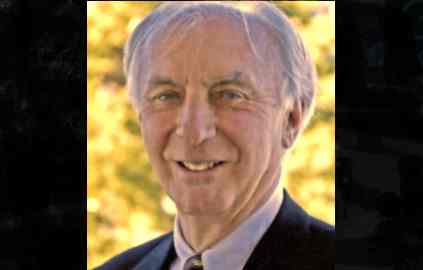
Ted Long

Ted Long

I believe that the resistance to gay marriage rest on people’s fears and secret dislike of the lifestyle. Fear mostly.

Marriage was introduced by men; men who wanted a solution to the inheritance issue, to make sure property stayed in family hands. And perhaps more important, to stem the spread of syphilis, the deadly disease that was spreading out of control at the time. The notion of children and religion is a recent innovation.

Those opposed say gay marriage will undermine the family and the notions of marriage. In my experience most people get married cause they like each other or they have a hidden agenda, used to be to have sex, but all that has changed.

But what about the facts? First of all the notion of family has changed dramatically in the past 60 years or so, with both parents working, married or not, and the ever increasing number of single parents. Perhaps they should attack the notion of a two-job family, seems like that takes more parents out of the home then a gay couple. The most disturbing fact is divorce. If any thing is a threat to marriage, it is divorce. From a religious standpoint divorce used to be treated like their notions of present day gay marriage. In many organized religions divorce was forbidden. You were cast out and no doubt would go to hell or face some other fatal state. That all changed. Why? Public pressure, and today no one thinks twice about it.

I wonder how those opponents justify the fact that they can stand in front of their god, in the church of their choice and swear, “For better or for worse” and later get a divorce. It seems to me that this is far worse, in their god’s eye than two same sex persons committed to one another wanting to share a life together. The fact is over 53 percent of all marriages end in divorce and I would be willing to bet some of those gay couples will divorce also. Seems to me they are just like the rest of us.

For me any way, marriage is no more about all the religious, or so called scared family stuff then a person’s color or gender or size or any thing makes them any different from the rest of us. I only hope that we can stop this silliness and address the real issues, like poverty, war and education. Could it be those that don’t want you to question those things are delighted that they have so many of you engaged in these silly issues?

Time to face your fears and stereotypes, and get on with it.

Ted Long, South Lake Tahoe



CalStar adds clot stabilizing drug to medical kit

CalStar is the first air ambulance in the United States to introduce a new clot stabilizing treatment to its arsenal of medications.

Tranexamic acid (TXA) could save hundreds of lives in California and thousands across the country, according to David Duncan, CalStar’s medical director.

According to Duncan, this old drug now has a new job — it has been shown to decrease the mortality of critically bleeding trauma patients by about 30 percent if given in the first hour. He predicts TXA will become widely used.

CalStar flight nurses can administer the first dose of TXA when on a scene or while in transport. A second dose, given over an eight-hour period, may be initiated by CalStar nurses or by the receiving center. Because of the newness of the drug, CalStar flight crews carry enough medication to give to the receiving medical center.


History: Looking back at South Shore of yesteryear

Publisher’s note: The following is a walk through history by South Lake Tahoe resident John Spinola.

Walk with me … Farfy’s Fundominiums, Cantina Los Tres Hombre (they had one in North Shore, too), The Cook Book, 89th St. Bar and Grill, The Egg Works (hats everywhere), Accurate TV at the Y by what used to be AAA, Marlee Crafts (both at the Y and in the Rural Squirrel building), Al’s Chevron Way, Handy Andy, Frank’s, Straw Hat, Winchell’s, Happy Steak, Tahoe Records and Tapes, Sierra Bookshop, Sports LTD (at the Y only), Lampson’s Plaza, 25 cents ice cream at Thrifty, San Francisco Deli, Nautilus, Sprouse-Reitz, Miller’s Outpost, no Blockbuster, no Staples, 50’s Drive In, Holland’s Donuts (one in Harrah’s too), Kinney Shoes, Los Aquires, Juicy’s Burgers, Tahoe Bike Shop, The Jewelry Factory, The Outdoorsman, the superslide with burlap bag and wax paper, The Cuckoo’s Nest, Long John Silver’s, Flukey’s arcade with highball, Poor Pedro’s, Hoss Hog’s, Rico’s Pizza, Max’s Market (I knew Max), Tep’s (Samurai location), Wienerschnitzel, Orophino’s, Killer Chicken (this was a garage at one time), Lake Tahoe Community College, Bayer’s Bagel Bakery (this was also a hi-fi store, shoe store and auto repair), Chapel of the Bell’s was at one time a fruit stand and record store, only one Red Hut, Whittlesea taxi, Payless/Lucky with the inside connection, The Dead Head, New York Pizza on the end of their building, main post office at Cork and More, STI (South Tahoe Intermediate), Women’s Center was a church, Tag’s Toys, Sutton and Son, Hot Dogger, Steve’s Deli, Tawny’s Naturally, The Fresh Apple, Sambo’s, Lyon’s, Pet N Co, Tahoe Savings, Swensen’s with the indoor connection to the bookshop, Shakey’s (Teps’), The Drive-In (yes kids Tahoe had a drive-in), Fantasy Inn with their “local flood rates”, Chevron and Mc D’s in different locations, Mt. High Records, Bandanas, Two Guy’s from Italy, “Lake Wildwood”, The Tiltin’ Hilton, Keno Bob’s, Crescent V Center, Lawrence’s, Monks Pizza, Greyhound Bus Station(all by itself), Bob’s Big Boy, Cecil’s Deli, Paul Kennedy’s Steakhouse, Harrah’s parking lot on the California side(Embassy), Turtle’s, Sahara Tahoe, High Sierra, Lily’s, Barney’s, Park Tahoe, The Nugget, First Draft Choice, Midnight Mine, After Dark, The Warehouse, no traffic lights at 3rd Street, Black Bart or Al Tahoe.


Workshop focuses on using LinkedIn

Business owners, entrepreneurs, employers and managers who need the tools to join the LinkedIn conversation are invited to attend Using LinkedIn and Social Media, Drive Business Leads and Potential Employees to Your Company Page on April 8 from 9am-noon at the Hampton Inn located at 11951 Highway 267 in Truckee.

The world of recruiting is changing. Prospective employees search LinkedIn by keywords too. Be prepared if you want to hire these social media savvy candidates.

At this seminar sponsored by the North Lake Tahoe and Truckee Donner Chambers of Commerce in partnership with the Sierra Human Resources Association, participants will also learn six ways to attract high-quality business leads, build relationships and earn referrals.

If your LinkedIn profile isn’t generating sales, clients or attracting employees, register by April 7 and pay safely online; at $39 for SHRM members, $49 for chamber members, $59 for non-members.

Beverages and snacks will be provided at 8:30am.

As founder and CEO of ChristineHueber.com, workshop speaker Christine Hueber has been assisting organizations to improve their marketing productivity and performance since 1997 and currently has 20,000 members in her online and offline programs worldwide.

For more information about the workshop, call Laura Moriarty of SHRA at (530) 573.0224.


Mom’s Morning Out — a day of relaxation

Moms of all ages are invited to enjoy a free morning of education, inspiration and relaxation on May 4 from 8am-12:30pm in the Commons Area at Lake Tahoe Community College.

This is the third annual Mom’s Morning Out is sponsored by Barton Health.

Beyond providing a place where moms can relax for a few hours, the event also provides opportunities to learn about the importance of taking care of themselves at all stages of their lives.

The line-up of events:

· 8:15am – Yoga, by The Studio Lake Tahoe

· 9am – Coffee and Brunch, by Blue Angel Café

· 9:30am – “What Happened to My Sweet Child?” Tracy Protell, Barton Pediatrics & Psychiatry

· 10:30am – “In-Shape Motherhood” by Kenneth Spielvogel, Barton Women’s Health

· 11:30am – “Jump Start your Day!” with KAIA Fit.

Beginning at 9am attendees will have the opportunity to browse nearly 30 booths, relax in the Zen Room and enjoy a little pampering.

For more info, call (530) 543.5537.


Strokes not limited to older adults

By Richard Knox, NPR

Most people (including a lot of doctors) think of a stroke as something that happens to old people. But the rate is increasing among those in their 50s, 40s and even younger.

In one recent 10-year period, the rate of strokes in Americans younger than 55 went up 84 percent among whites and 54 percent among blacks. One in 5 strokes now occurs in adults 20 to 55 years old — up from 1 in 8 in the mid-1990s.

These are people like Melissa McCann, a nurse in Maine who spends most days on a helicopter, accompanying sick and injured patients to a distant hospital.

McCann had a stroke at age 37. It began with a weird sensation.

“I had a very euphoric feeling,” she tells Shots. “It’s hard to explain, but everything felt very cartoonish to me. It felt very bizarre.”

Then she found she couldn’t dial the number to respond to a page. Light began to hurt her eyes. She couldn’t speak. Because she’s a nurse, she realized she was having a stroke.

“It was very scary, really,” McCann says, “because I know what could possibly happen.” She could die, as her father-in-law did, or be permanently disabled.

New data show that younger stroke survivors are at great risk of premature death. Within two decades, 1 in 5 stroke survivors will die, according to a study in the March 20 issue of the Journal of the American Medical Association. The death rate is even higher among those with the most common kind of stroke, caused by a blood clot in the brain.

Dr. Frank-Erik de Leeuw of Nijmegen Medical Center in the Netherlands, who led the study, says the results surprised the research team.

“We had the impression that [younger stroke survivors] were doing quite well,” de Leeuw tells Shots. “But now that we have followed all of them — and also the patients who didn’t show up in our outpatient clinic anymore — it turns out that their prognosis was poor. To me, it was a true surprise.”

He says it means doctors should pay a lot more attention to these patients. They should make sure their blood pressure and cholesterol are under control, and work harder to get them to lose weight and stop smoking. Increases in obesity and diabetes are thought to be factors in the rising incidence of young-adult stroke — though not the only ones.

“The risk is increased for decades after their stroke,” de Leeuw says. “So we can’t just send them back to their homes and say, ‘Well, we’ve seen you now for one or two times after your stroke — take care.’ I think that’s not possible anymore.”

His warning applies to this side of the Atlantic as well.

“It’s extremely alarming,” says Lee Schwamm, a stroke specialist at Massachusetts General Hospital. “These data suggest to me that we still have a sort of cavalier attitude toward secondary prevention — particularly among younger patients.”

Secondary prevention means preventing another stroke, heart attack or other catastrophe in someone who has survived a first one.

Schwamm says laypeople and doctors alike need to realize that young adults can suffer strokes. The new study shows that even a minor stroke, called a transient ischemic attack, or TIA, can increase later odds of an early death to 1 in 4.

“Many of the young patients who end up in my office either dismiss those symptoms themselves, or when they sought emergency medical care [they] were told that it was likely not a stroke,” Schwamm tells Shots. Often they “had only a CAT scan, which didn’t show any injury, and were sent home. So stroke is still underdiagnosed in young patients.”

By one estimate, 1 in 7 strokes in young adults is misdiagnosed.

In Melissa McCann’s case, it was clear she suffered a stroke. And fortunately the symptoms cleared pretty quickly without treatment. But doctors couldn’t find any reason for her stroke at age 37.

“I wasn’t satisfied with that response,” she says. “‘Take one aspirin a day and hope it doesn’t happen again’ is not an acceptable answer to me.”

So McCann sought out Dr. Schwamm in Boston for a second opinion.

“She came to me with a list of questions,” Schwamm remembers. “She knew what the right questions were to ask. She really wanted to understand was there a treatable, preventable cause here that could be modified so that her risk in the future would be lower.”

An ultrasound scan of her heart revealed an abnormal hole between the two upper chambers. She’d had the congenital abnormality all her life. Doctors think that eventually it allowed a blood clot to move to her brain, causing the stroke.

A surgeon repaired the hole, and she went back to work six weeks later. That was almost three years ago.

“I’m working full-time,” she says. “I have a grandson that’s 3 years old. I’m watching my youngest son go through college. Yeah, you might have to take some medications. But you can get yourself back to your normal life.”

And now that she has addressed the probable cause of her stroke, McCann hopes that life will be a long one.


More states want in on the sports betting game

By Joe Drape, New York Times

It is a lucrative time of year for Nevada, where more than $200 million will be wagered in sports books on the men’s college basketball tournament, a pot of money that has budget-crunched states across the country pushing for a piece of the action despite strong opposition from the NCAA and professional sports leagues.

Voters in New Jersey passed a referendum by a 2-to-1 margin making sports betting legal, and last year Gov. Chris Christie signed a law legalizing it at Atlantic City’s 12 casinos and the state’s four horse racing tracks. Illinois is considering allowing sports betting, and California lawmakers are looking to reintroduce a sports gambling bill that the state Senate passed last year.

All this has the sports’ governing bodies on high alert. The NCAA has filed a lawsuit with the NFL, the NHL, the NBA and Major League Baseball claiming that sports betting in New Jersey would “irreparably” corrupt sports in the United States. This year they were joined by the Justice Department, which defended the constitutionality of a 1992 law banning sports betting outside Nevada and a handful of other states that had long allowed gambling.

The NCAA also canceled several tournaments and sporting events in the state and said it would bar New Jersey from hosting events in the future if sports betting was put into effect.

Last month, a federal judge ruled against New Jersey and upheld the ban on sports betting. The state is appealing, and legal experts expect that the case will reach the Supreme Court.

As gamblers poured into Las Vegas in anticipation of three weeks of betting on unpredictable tournament action, the NCAA sounded this warning on its official Twitter account: “Student-athletes, coaches & admins: A reminder that betting on #MarchMadness isn’t worth the risks,” with a link to a release detailing the arguments against wagering on sports.

In a statement, the organization was concise in explaining its opposition. “The NCAA maintains that the spread of legalized sports wagering is a threat to the integrity of athletic competition and student-athlete well-being,” it said.

Nevertheless, the money being wagered on the tournament will more than double the record $98.9 million bet on this year’s Super Bowl.

The federal law on sports betting, which was championed by then-Sen. Bill Bradley of New Jersey, a former professional basketball player for the New York Knicks, was intended to limit its expansion beyond Nevada, Delaware, Oregon and Montana. But New Jersey and advocates in other states say there are too many dollars at stake for that policy to continue to make sense.

Nevada took in more than $3.4 billion in bets on sports last year, generating $15 million to $20 million in tax revenue. The FBI estimates that $2.6 billion is bet illegally on the college basketball tournament, while the National Gambling Impact Study Commission says $380 billion is bet annually with bookies or offshore betting operations, often controlled by organized crime, on all sporting events together.

Last March, Nevada sports books handled $288.5 million in bets on basketball, an estimated 70 percent of them — or $201 million — on college games, according to the Gaming Commission.

In Britain, where bookmaking shops are ubiquitous and online wagering is readily available, bookmakers paid 900 million pounds in taxes (about $1.36 billion), 24 percent of it, or roughly $343 million, on sports and horse racing, according to a study by Deloitte on behalf of the Association of British Bookmakers.

The predawn scene at LVH last week served as a vivid illustration of Nevada’s special lure. At 4:30 a.m., a group had claimed a table in the sports book area of the casino, and within three hours, hundreds of people were in a line that snaked through slot machines and onto the casino floor.

“This is the only place to be during the tournament,” said Laurie Moss, a Denver software architect who has made the pilgrimage here for 13 years to bet on college games.

The growing acceptance of legalized sports betting has been reflected in an array of polls. Most recently, one from Fairleigh Dickinson University’s PublicMind in December 2012 found that 51 percent of registered voters favor legalizing sports betting in states where it is not currently legal. That was up from its March 2010 poll, which showed 39 percent of voters supported expanding sports betting.

In court, the NCAA and sports leagues have argued that wider sports betting would compromise their image and offer a powerful temptation for their athletes to fix games. It is an argument advocates of sports betting claim is disingenuous, considering the leagues have coexisted with gambling in Nevada since 1949.

Dennis Drazin, a lawyer who advises Monmouth Park racetrack, which has announced plans to set up a sports book, said the leagues long ago made gambling part of their enterprise.

“If gambling is really hurting the leagues, why does every sports show talk about point spreads and favorites and underdogs? And why does every office in America have a pool on the NCAA tournament?” Drazin said.

A.G. Burnett, chairman of the Nevada Gaming Control Board, said perhaps the best way for sports leagues to protect themselves was to allow betting to expand in legal and regulated fashion.

“We have been in this business for decades and haven’t had any problems with … any of our universities,” Burnett said. “The game-fixing scandals have happened in other states where gambling is illegal. What we have here is a regulatory process specifically to monitor what happens on both sides of the counter. This is all we do, and we’re good at it.”


Free tax preparation on South Shore

AARP is sponsoring free tax preparation to residents of California and Nevada of all ages.

This service is available:

April 4 2-6pm

April 5 9am-1pm

April 6 9am-1pm

April 11 2-6pm

April 12 9am-1pm

April 13 9am 1pm.

Bring your Social Security card, ID, 2012 tax documents and last year’s tax return to the South Lake Tahoe Senior Center, 3050 Lake Tahoe Blvd.

For more information, call (530) 573.3130.


Weather alters cross country race location

Challenging late-season snow conditions have forced a venue change for the USSA Super Tour cross country races. Royal Gorge, which will be hosting the Hill Climb race on April 8, will now also be hosting the National Distance Championships with the women’s 30K race on April 10, and men’s 50K race on April 11.

The Super Tour Finals is a mini tour with cash bonuses not only for race winners, but also for the best climber, best sprinter, and best young skier (under 23). The first two races – a 3.2k skate prologue on April 4 and a 10/15k classic mass start on April 5 – were moved from Tahoe Donner Cross Country to Auburn Ski Club Training Center due to low snow. Auburn Ski Club Training Center will also host the classic sprint competition on April 6.

The mini tour finishes with a Hill Climb, which this year will be a grueling test of endurance at Sugar Bowl Resort on Donner Summit. The race takes competitors from Sugar Bowl Village down to Van Norden Meadow on the Royal Gorge trail system before sending them over 1,100 vertical feet to the top of Mt. Disney. The Hill Climb will feature a “pursuit” start – competitors will start the race based on how far behind the leader of the mini tour they are after the first three events, and the first racer to the top wins the Tour overall. Spectators will be issued a free pass to ride the gondola into Sugar Bowl Village and walk partway up the course. An awards ceremony and party will be held at Village Hall in Sugar Bowl Village after from noon-3pm. Spectators will have a chance to meet the athletes, and join in the festivities.

The 30/50K National Distance Championship is part of the week of races, but separate from the mini tour. These races will also feature junior race of 15/20K, and will be on a 10K loop at the Summit Station of Royal Gorge Cross Country Resort. Discounted spectator passes and free “foot spectator” passes will be offered, and spectators can see plenty of action from the Sun Deck at Summit Station. The awards ceremony and after-party for this event will be at noon on April 11 at Tahoe Donner Cross Country.

These are all important qualification races for the 2014 Olympic Games and will be attended by the best athletes in the U.S., as well as a number of international athletes.


Ski report: All resorts closed for the day

ski report logoWatch out for pranksters on the slopes (or writing LTN headlines) — it is April Fools’ Day, after all.

Here is the April 1 ski report.

— Curtis Fong